World Psychedelic Forum
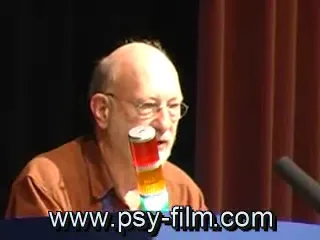
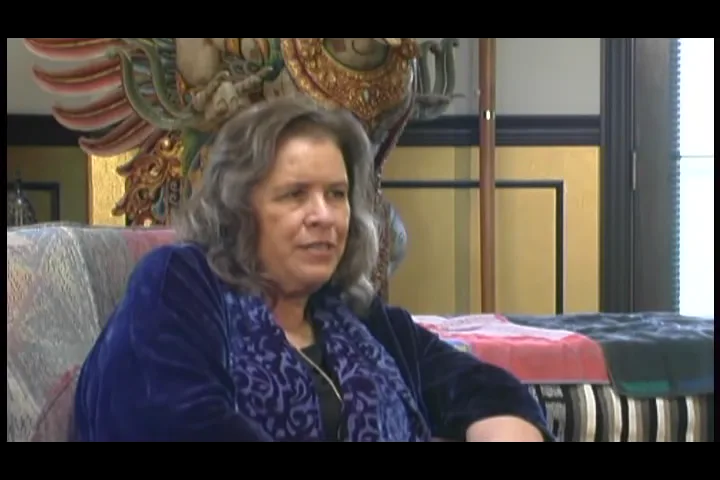
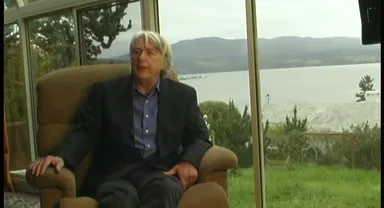
Dennis McKenna's opening keynote at the 2008 World Psychedelic Forum in Basel, where he recounts visiting Albert Hoffman with Franz Wollenweider and discusses psychedelics as molecular messages from Gaia at the mind-matter interface. He covers the interdisciplinary nature of psychedelic research, the need for humility despite scientific progress, and how these compounds serve as tools for understanding consciousness and ourselves rather than mere drugs. The talk emphasizes that we remain monkeys who only think we're running the show, that psychedelic study touches anthropology, chemistry, neuroscience and philosophy, and that these substances might help us save the planet by increasing our reverence for nature.
transcriptmachine-transcribed, unedited
I'd like to say I'm delighted to be here and I want to thank Lucius and Dieter for all the hard work and planning that's gone into the organization of this stellar event.
It's wonderful to see so many old friends here.
Usually I have to travel at least as far as California to see many of the people that are here, so it's great to see them in a new venue and it's great to make so many new friends.
This is a rather amazing group.
You know, I'm always amused when I come to events like this because a conference that is supposedly devoted to substances
that dissolve the ego.
It's interesting to see that probably some of the largest egos in the known universe are drawn into these types of events.
We all have a lot of work to do on the ego front, no doubt about it, and we have the tools to do that.
Among the crowd there are undoubtedly a number of candidates.
For the new messiah.
And I can't wait to see who will be crucified first because the line forms on the left.
I was invited to join but I said if nominated I shall not run and if elected I shall not serve.
But seriously, I am very happy, honored, and humbled, but not much.
To be invited to this gathering because this is a seminal event in psychedelics and we're all here because of this common interest.
Yesterday I had the great honor and pleasure to meet with another one of our Hefter board members,
the director of the Zurich Hefter.
Dr. Franz Wollenweider.
He is probably one of the world's leading researchers in consciousness research in the world,
if not the leading researcher.
And he kindly took us to visit Dr. Albert Hoffman in his home.
We had a wonderful two-hour visit.
And after that we went by car from Dr. Wollenweider's home,
to Zurich, to this psychiatric hospital where Dr. Wollenweider's research is conducted.
And they're using these molecular probes, these psychedelic drugs, as the key tools.
They are working at the mind-matter interface.
And they are making some wonderful discoveries.
And it's this enormously hypertrophied,
and complicated human brain,
the generator of ideas of everything that we know or experience or think we know,
that makes us humans, that makes us different from the primates.
On an evolutionary and historic time scale,
it's this hypertrophied human brain that's got us into the mess that we're in.
You know, on the ecological and societal and political front.
And so it's important to understand how we got here.
And it's the only thing that's going to get us out of the mess that we're in.
Our ideas, creativity and thought.
At the end of the day, we're still monkeys.
As ayahuasca tells me again and again,
every time I check in with it,
which is pretty often,
you monkeys only think you're running the show.
And I think that's an important lesson.
That's maybe the primary lesson.
We need to remain humble.
And while we come to a forum like this,
to celebrate how much we know,
it's important to remain humble,
and to remember always how little we know.
Because for every discovery that we make,
for every constellation of understanding,
there's an infinity of things that we have yet to understand.
I see we're on the frontiers of neuroscience.
Every science is always on its own frontiers.
But I don't see any end to the frontier here that there is to explore.
It is indeed as large as the known universe,
and it may not be different from the known universe.
So it's a very exciting time to be alive,
to be engaged in this research,
and to understand it.
The study of psychedelics is inherently interdisciplinary.
And it is one of the few areas
of academic research that crosses over
into virtually all activities of human culture.
From anthropology, to chemistry,
to neuroscience, to philosophy,
to religion, metaphysics, you name it.
Psychedelics touches on all of these things.
So it is inherently a holistic subject.
It is in fact the subject of ourselves.
It's not about drugs.
It's about us.
We're trying to understand ourselves.
We're trying to understand how we got to this situation.
And I think that within this group,
drawn here either because you're involved in this research,
or you're fascinated by it,
or you have your own personal reasons
for being interested in psychedelics,
there are different ways to approach this understanding.
I'm fond of telling my students sometimes
there's no such thing as a bad drug.
But there are plenty of ways that human behavior
with respect to drugs can be very, very bad.
And by the same token,
human behavior with respect to drugs
can be very, very good.
And we can use them for tools,
for understanding,
to improve the human condition,
to make us a better species,
to increase our reverence for nature,
and hopefully to motivate us
to save the planet,
because we're not separate from it.
We're all in the same boat.
And if psychedelics have any message
for us as a species,
because ultimately these compounds,
whether created in the laboratory
or coming from the natural kingdom,
they all ultimately harken back to the natural world.
And in some ways you can think of these compounds,
these sacred substances,
as molecular messages from Gaia,
from the community,
from the biospheric community of consciousness,
to our species,
which has gotten a little bit out of control.
And we've gotten a little bit full of ourselves.
And we need to pause and think
how we're going to,
if not fix it,
at least not break it.
We don't know what the real significance of psychedelics is,
because our species has only been exploring this
for, oh no, the last 60,000 years.
That's a blink in evolutionary time.
And it's an unfolding process.
But I said, you know,
one analogy I like that occurred to me once
in a state of inspiration or not,
I said, you know, psychedelics are kind of like
a starship that's crashed in the jungle.
And we're a swarm of monkeys
that have come upon this thing.
And we have no idea what it is.
But we're distracted by the pretty lights.
You know, it's very nice.
We can break off pieces of it and wave it around.
And it does things like cure diseases
and that kind of stuff.
And we said, oh, well, that's what it's for.
You know, that's great.
We can cure many of the ills that plague mankind,
humanity, I should say.
And that's kind of the era that we're at now.
We're trying to understand how can we utilize,
if you will, this alien technology
that nature has given us.
But where I think it's leading
is into the transition of the post-human,
you know, post-historical era.
And where that will go,
Gaia only knows.
Thank you very much.
That make them different,
that make them more affecting.
I mean, this comes up, for example,
you know, which with all the myth
and all the hype around Amanita muscaria,
you'd think this would be a mega hallucinogenic.
But when you actually take it,
it's pretty disappointing.
You know, I mean, it's not that interesting.
I mean, you know, after the chills,
after the sweating,
after the nausea,
after the, you know,
blurred vision and all that,
you might get a transient feeling
like you've drunk some cheap wine,
you know,
for a week or twenty minutes.
You know, not my idea of a transcendent experience.
But there are ways to,
people say if it's dried a certain way,
then it may be different.
There's a whole issue about chemical races
of Amanita muscaria.
There's indications that some of the Himalayan ones
may actually have tryptamines
and psilocybin-like things in them.
Then there's the whole issue about metabolism
because traditionally in Siberia,
they take it and then they piss it out
and they take it again.
For the woman, no?
The woman takes it?
I think the men drink the piss from the woman.
That's probably it.
Usually the women do the hard work, right?
Yeah.
And they take it out.
And it turns out this may be very important
because that cleans it up
and in some ways potentizes the acting principle
and detoxifies some of the interfering things.
That may be very important.
I'm waiting to hear the report of somebody that,
like Jonathan,
I don't know if he's done that,
but some brave,
psychonaut like that
who does these things very carefully
and keeps careful records
to report on that.
What's it like when you eat it?
What's it like when you take the same mushroom
and eat it and drink your piss?
That may seem,
well, we have cultural squeamishness about that,
but drinking piss is not that,
it's not dangerous.
There are people who drink it for therapy.
Urine therapy.
Yeah, urine therapy.
I'm not into it.
But there's an interesting video out there
on the net someplace.
It's called the Pharmacratic Inquisition.
And actually Jonathan Ott has written a book
by the same name,
but he did not produce this video.
But a lot of what this Pharmacratic Inquisition is about
is it's about aminata muscaria.
And very interesting video.
And they talk about this business
about how you have to piss it out.
And apparently you can keep doing this.
You can recycle it maybe up to five times.
Dennis.
Yeah.
Is there any danger in taking iboga
if you're not using other drugs?
I heard a few cases of people dying from iboga,
but was that because they then overdosed on heroin?
Oh, here's the expert.
No.
She works at the clinic.
Yes, I do need the intake and screening.
So you were asking if the danger is
the risks around...
The alleged death cases for iboga.
Right.
But then Daniel was saying
the shaman there were encouraging to eat a lot,
not using a scale,
not using any kind of measurement.
Well, I mean, that's iboga.
We use ibogaine.
Right.
Okay.
That's much safer.
Well, I mean, the dose...
Yeah, the dose is much easier to control
than eating iboga.
I don't know about eating iboga.
I've never been to Africa.
I mean...
But you do drug screens.
Yes.
And I think the main thing is that they...
We do...
People not be on opiates, they have to what?
Yeah.
They have to be off short-acting opiates for 12 hours
and off long-acting opiates for 24 hours.
We can't treat people who are on antidepressant medications.
We can't treat people who are on...
Most medications contraindicate with ibogaine.
Even MDMA, I think?
Oh, sure.
You wouldn't want it.
Absolutely.
Yes.
You know, what we strive...
It's an MDMA.
You can do candy flipping with ibogaine.
No.
Ibogaine should not be mixed with any other substance.
No.
Right.
No.
And the same may be said of ayahuasca.
No SSRIs.
Yes.
It should not be mixed with MDMA.
I'm aware of people that do, but I think they're asking for trouble.
It shouldn't be mixed with anything.
I mean, it can be mixed with other...
Tryptamine.
Yeah.
I don't advocate other...
Other tryptamine.
I know people that mix it with mushrooms, but I don't advocate that.
Right.
I think, you know, in a way there's something to be said for being purist.
If you want to take an orally active tryptamine, you could take ayahuasca or you could take
mushrooms.
They're both orally active tryptamines.
You don't need to add mushrooms to ayahuasca to make it stronger.
You need to drink more.
You know.
Right.
it's not getting you there you just need to have a booster now in my case I can't
take a booster because I immediately throw up so I just try to drink enough
to begin with you mentioned you you're about yourself that you're taking a lot
of ayahuasca or retinol often that you use it often but when okay but it's not
like every week or no no I would though if I probably not every week I take it
easily I could do it once a month and that's probably about the right amount
for me but I don't do that I do it I tend to go you know maybe six months and
then I'll go for a weekend someplace and do it three or four times you know in
succession and that's how it works for me that's why these
things like at wasiwaska are really very good because you're in a place where
you have a chance to take it and then you skip a day and then you can take it
and wasiwaska you might do ayahuasca as much as six times in a 12-day session
each session builds on the last one I mean not only is it not totally washed
out but you're processing the information every time and I think
that's really therapeutic
master plants other plants are combined if not at wasiwaska right not yes
generally in that's right there are other plants that you can diet with if
you're gonna seriously try to like study as a prince of shaman or something you
have to do this diet there are these many other medicinal plants so which may
not even be overtly psychoactive but they do things they
tune your body to make it you know possible to to become an ayahuasquero to
use the medicine better they kind of work together they work together it's
it's just a part of the practice you know eat right
when you don't take a substance for a long time when you take the first it's
likely your body is fighting with the substance and after maybe one day you
feel more comfortable and taking more I think you have to prepare your body
because that's the first thing if you take one alphanier and I take something
and I I don't feel comfortable when I take the food that's that's the best and
after I can go up that's one of the benefits of these multiple sessions of ayahuasca because
the first session with you the toxic you might not do much more than just throw up
you know and you'll feel better and then the next one you could begin but I think if
you try only the first you don't have a good opinion of a substance because your body is
all the time fighting with that not always because my first ayahuasca experience was
but you think you take one first time I used it and yeah you probably look like
a pretty healthy guy you probably eat well I'll bet you get lots of exercise I own a health food
store so yes second time I took ayahuasca in Rio with the UDV I went you know it was when we
were down there for that conference and I come from you know this
states and I've been eating crappy food and all this stuff plus I was jet lagged
tired you know just screwed up I threw up for six hours straight you know I felt great the next day

a 2008 documentary exploring prophecies surrounding the mayan calendar end date of december 21 2012 and the quechua pachacuti tradition

a 2007 documentary exploring the mayan calendar's 2012 end date and what it means for humanity. terence mckenna examines timewave theory, galactic alignment, and the shift in consc