Appreciating Imagination

This is a Terence McKenna audio lecture exploring imagination as the defining faculty of human consciousness. Beginning with evolutionary biology and predator strategy, McKenna traces how imagination emerged as humans developed the unique ability to strategically imagine possibilities - especially around food and reproduction - independently of immediate sensory stimulus, setting us apart from other primates and top predators. He connects imagination to consciousness itself, touching on quantum physics and non-locality, arguing that imagination may function as an organ of perception rather than merely creative generation. The talk ranges across art, evolution, psilocybin mushrooms, and the role of throwing in human cognitive development, building toward a vision of imagination as central to what makes us distinctly human.
transcriptmachine-transcribed, unedited
I can't imagine a domain of human endeavor that isn't impacted by the imagination.
I mean, teasing the imagination apart from the talking monkey is not an easy thing to do.
Imagining ourselves without imagination is itself a paradox.
And yet, what is it and why is it?
If you take the view that biology does nothing in vain and evolutionary economics are incredibly spare,
then why have this faculty that allows one to command and manipulate realities which do not exist?
I mean, that's, to my mind, the basic function of the imagination.
Some people might argue and say,
Well, for most people, the imagination is the coordination of mundane data.
In other words, if I work this hard and if I have this much money, can I afford that car?
To my mind, this is not putting great pressure on the human imagination.
The human imagination, as I suppose it, is almost an extension of the visual faculty.
Imagination is something that one beholds, something that takes, people speak of castles in the air,
or something like that, one idea that is worth entertaining, because it is entertaining,
not necessarily because it's the truth, but is the idea that the imagination is actually a kind of window
onto realities not present.
In other words, it's very clear, from an evolutionary point of view,
that our body and our sensory perceptors are organized in such a way as to protect us,
to warn of danger, to give you the muscles to respond to that danger when it comes.
The imagination doesn't seem to work quite like that.
If the imagination runs riot in the dimension of the mundane, it's paranoia.
In other words, if you believe every cop on the corner is looking at you,
every chance heard comment is about you,
the imagination is, in that situation, pathological.
It is taking the raw data of experience and giving it a maladaptive spin.
So then, where is the imagination appropriate?
And it seems that it is most appropriate in the domain of human creativity that, in fact, separating art from imagination
is simply the exercise of separating cause from effect.
Art, sculpture, poetry, painting, dance, is like the footprint of where the imagination has been.
And, you know, the abstract expressionists, west, Polak particularly, always insisted that a
painting, a Polak, is not what the process is about, the process is about making a Polak, being Polak in the act of creation.
What the rest of us are then left with is a husk, a tracing, something left behind which says imagination was here, imagination acted in this place, and this is what is left.
A very interesting thing that's going on in physics at the moment is, and I don't want to spend too much time on this because it's slightly off subject, although it certainly is fascinating, the great bridge between art and science that was supposedly built in the 20th century hinged on this thing called the uncertainty principle.
It was the idea that as you know more and more things about certain aspects of a system, an atomic system in this case, certain other parts of it lose focus and become less and less clear.
For example, if you know velocity, you don't know position.
As you hone in on exact position, velocity becomes smeared out, and probably more ink and more breath beating has been shed over this aspect of modern physics than any other.
Now, to the great embarrassment of all the people who held workshops and wrote books and pontificated on this matter, it appears that this is what it always looked like, fuzzy and confused thinking.
And that the Heisenberg uncertainty principle, or rather the Heisenberg formulation of the quantum theory is now not to be preferred.
The preferred understanding now is the version of quantum theory formulated by David Bohm.
The difference between these two theories mathematically is precisely zero.
There is no difference.
But they make different assumptions.
And the reason originally the Heisenberg formulation was preferred was because it was felt that this uncertainty principle, which was a hard swallow, was not as hard a swallow as a piece of baggage which the Bohm theory carried embedded in it.
And that piece of baggage was called non-locality.
The two theories produced identical mathematical descriptions of nature.
But one had this uncertainty principle in it.
The other had built into it non-locality.
Non-locality is the idea that any two particles that have been associated with each other in the past,
retain across space and time a kind of connectivity such that if you change a physical aspect of one of these particles,
the law of the conservation of parity will cause the other particle to also undergo a change at the exact same moment,
even though they may by now be separated by millions of light years of space and time.
This was thought to be so counterintuitive, so preposterous, that the Heisenberg uncertainty principle was chosen as the lesser of two evils.
But it turns out, over the past ten years, experiments have been done in the laboratory, not thought experiments,
actual apparatus experiments, which secure that non-locality actually is real.
But there is, below the ordinary surface of space and time, ruled by relativistic physics,
there is this strange domain of instantaneous connectivity of all matter, of all phenomena.
It raises the possibility, then, that the imagination is, in fact, a kind of organ of perception,
not an organ of creative unfoldment, but actually an organ of perception,
and that what is perceived in the imagination is that which is not local and never can be.
So, I myself am up in the air about this, or as you get to know me better you will see,
I don't feel the need to believe or disbelieve, to proclaim this true or untrue,
but it is useful at this stage for understanding our mental life.
I've spent a lot of time talking to people and thinking about the origins of consciousness,
and in one sense asking the question, what is the imagination, is a different way of asking the same question,
what is the origin of consciousness?
And as some of you know, to distraction, I believe that psilocybin mushrooms played a role kick-starting human evolution.
I don't want to repeat all that here. It's been taped many times.
But what I want to point out is that we can see in nature, I think, the declension from the full-blown human imaginative capacity
back into the organization of the animal mind.
We can see the stages through which this must have unfolded.
The interesting animal to look at in all of this for the moment are the top carnivores.
This is not PC in a vegan environment, but a thought just has to lead you wherever it leads you.
It's very clear to me that top carnivores coordinate data in the environment very judiciously.
Cows have very little to say about grass, but hunting cats have a great deal to say about their diet,
because a top carnivore, to be successful, must, in a certain sense, think like its prey.
And so at the very point of the emergence of these coordinated strategies held in the mind, there's a paradox.
The earliest consciousness is consciousness which apes other consciousness.
In other words, the top carnivore that is most successful is the carnivore that can think most like a weasel,
or a groundhog, or a rabbit, because this ability to think like the prey gives you a leg up on the prey.
And if you've ever seen, not domestic cats, but small jungle hunting cats or jaguars or something like that,
in the sudden presence of a chicken a hundred feet away or something,
they fall into a fit of imagining, because they can almost taste it.
They probably can taste it.
And they fall into a strategic mode that is clearly an intense state of imagining.
But it is triggered by the presence of the prey.
What is interesting about human beings is we went one step beyond that.
We, for reasons which don't need to concern us here, acquired the ability to strategically suppose,
not in the presence of the stimulus, but in fact back in the back of the cave around the fire with our bellies full,
telling tall tales.
And it's interesting that the imagination is the land of what if.
And what if is almost like a statement in a computer language.
If is a Boolean operator, if you know what I mean.
If breaks the flow of reality into two possibilities.
If A or B or more.
And this ability to contemplate worlds which are only in potentia is the basis of the imagination.
And I would submit to you, since we all are sitting here in monkey bodies,
that it's pretty clear that the stimulus for all this if thinking comes in two forms.
Food and sex.
In other words, we think about what we are going to eat.
We construct our behavior along an if tree.
If I go to the water hole.
If I take my sharpened arrows.
If I lie in wait.
If the gods favor me.
I will bring down dinner.
The sexual game is played the same way.
If I approach the desirable female with the correct offerings.
If her mood is correct.
If my gifts are found pleasing.
Then some wonderful thing will follow from all of this.
So animals, I don't think, think like this.
They may think.
But they don't think like this.
It seems to be a unique human ability.
That probably has to do with, as I say, in our case, there were many different factors.
For example, we became the top carnivore on the planet.
But who would have placed their bet on a monkey to be the top carnivore?
When there were saber-toothed cats walking around that weighed 1,100 pounds.
How were we able to insinuate ourselves into a more powerful position than these enormously powerful animals that we once shared the earth with?
And that, in fact, we hunted to extinction.
It's our destiny and our fate to have removed the so-called megafauna from this planet.
It is now generally agreed by paleontologists that the disappearance of the megafauna and the appearance of the human beings are linked in time.
Well, we did this by imitating those carnivores.
And imitation is an act of the imagination.
We like in our story about ourselves to think of ourselves as bold hunters.
But the evolutionary truth of the matter is probably that as the first wave of primate radiation into the grassland occurred,
as the diet was in transition, we were scavengers of carrion.
We were not noble hunters bringing down mighty animals.
We followed along behind lions, lion kills.
There's one school of evolutionary theory that believes this is why our olfactory senses are so diminished.
Because, quite frankly, we had our face in rotten meat for a million years.
And if that doesn't dull your appetite for keen smells, nothing will.
And, least you despair, I'll tell you that there's a counter-theory which says,
no, no, we lost our sense of smell when we stood upright because it lifted our face off the ground.
In either case, there seems to be the idea that when you get away from the olfactory action,
the energy to support the maintenance of that scent collapses.
For whatever reason, we made our way to the brink of the imagination.
In other words, I don't think we require a deus ex machina to take ourselves to the position of being top carnivore on the planet.
We have a mean throwing arm.
And, you know, you may notice no animal throws things the way we do.
Other primates hurl excrement down on agonized explorers.
But, fortunately, not with great accuracy.
And anyway, that particular material is rarely deadly anyway.
But a human being, for example, a big league baseball pitcher, can at 125 miles an hour put a baseball across a 17-inch plate over and over again.
One theory of the origin of consciousness wants to say that throwing something is an interesting action, activity,
because though it may appear to be the same activity as digging grubs or scratching your ass or something like that,
in fact, it requires coordination toward a future outcome that is highly mathematical.
In other words, you may not think in numbers, but you must somehow sense the concept of trajectory, coordination of target and intent.
And when you get all this up and running, according to some people, you have enough brain power left over to write the Fifth Symphony,
invent quantum physics, and paint the Last Supper, if you like.
This seems preposterous to me.
I think that how the imagination got such a hold on us was that we accepted into our diet catalysts that we were unaware of
that pushed our mental state around, specifically psychedelics of various sorts.
And a reasonable working definition of psychedelics, what they do, whether you're for it or against it,
whether you think it triggers paranoia or ataraxia, they are catalysts for the imagination.
They catalysize thought.
Thought becomes more Baroque.
It reaches deeper into reality for data.
It sees forms of connectivity that previously escaped it.
It makes assumption, leaps of assumption, not always correct, but sometimes correct.
So what it does is by, to some degree, transferring chaos into the mental world, it creates a much richer dynamic.
And so thought processes become more complicated.
And in a sense, then, language becomes the behavior which expresses the imagination.
It can be expressed in a limited form through dance, through gesture, and of course it can be expressed very well through painting.
If you've reached the stage where you have painting and are not chipping rock or drawing in blood in the sand or something like that.
But if you have really a rich technology behind your artistic intent, but that rich technology would never have arisen without the intercession of language.
And so these two things, which make us unique among nature's productions on this planet, imagination and language, seem to be almost like the exterior and interior manifestation of the same thing, the same phenomenon.
And what it is, is it's a facility with data, an ability to connect it in novel ways for one's own entertainment and amusement, if nothing else.
Storytelling is obviously this kind of activity where modules, a ghost, a princess, a lost kingdom, a disturbed father-son relationship, these modules are manipulated to entertain people.
And, you know, it's a cliche that there are only five stories.
And I think Robert Graves in The White Goddess argued there's only one story.
And we keep telling variants of this story over and over again.
Well, what history then is, or what culture is, is the phenomenon that attends the rise and spread of the imagination in the human species.
But because the imagination works on this what-if model, it always tends toward idealism.
In other words, it is not simply a networked process.
It's a networked process with a vector field.
In other words, it's going somewhere.
It's not just a random walk.
It's headed somewhere.
We idealize.
If you're going to play the game what-if, most people who are psychologically healthy don't sit around entertaining dire possibilities.
What if I get a terrible disease?
What if I'm run over by a truck?
No, people say, what if I make a lot of money?
What if I meet somebody who gives me a lot of money?
And, you know, it begins to tend toward idealism.
And we are obviously ruled by ideals and ideas.
We haven't found a good one yet, but we certainly have sacrificed a lot of blood and time in the process of discovering a whole bunch of bad ideas.
And we haven't lost our faith in ideas.
Even though human history is the record, not one idea has survived from the distant past in its original form.
And some of the most persistent ideas, I would argue, are some of the most pernicious ideas.
I mean, the idea of man's inherent flaw.
That's an old, old idea.
And how much suffering has existed because of it.
But culture then is the record of the human imagination.
Well, that's fine.
That's of interest to anthropologists and somebody else who knows.
What gives the whole thing a lot of bite is that more and more the imagination is where we spend our time.
You know, there's a lot of talk these days about virtual reality, an immersive state-of-the-art technology in which you put on goggles and special clothing or enter special environments.
And then you are in artificial worlds created by computers.
And this is thought to be very woo-woo and far out.
But in fact, if you're paying attention, we've been living inside virtual reality for about 10,000 years.
I mean, what is a city but a complete denial of nature?
And say, no, no, not trees, mud holes, waterfalls, and all that.
Straight lines, laid out roads, class hierarchies reflected in local geography.
Meaning the rich people live here, surrounded by the not-so-rich people, all served by the poor people who are so glad they're not the outcast people.
So, you know, urbanization is essentially the first of these impulses where society leaves nature and enters into its own private Idaho.
And the growth of cities and the growth of the immediacy, I guess you would say, of the urban experience has been a constant of human evolution since urbanization began.
Now, the only difference that the new technologies offer is we are going to do this with light, not mortar, brick, steel, aluminum, and titanium, which are incredibly intractable materials.
I mean, it's amazing to me, we started with the toughest stuff.
And, of course, it cost enormous amounts of human blood and treasure to work with such intractable materials.
It's always been amazing to me that the largest buildings human beings ever built are, in a sense, the first buildings human beings ever built.
Because the pyramids of Egypt are enormous, even by modern scale, and yet they were among the earliest buildings ever built.
In virtual reality, the difference between a hundred-story building and a ten-story building is one-zero.
That's all in a line of code. You specify 100 over ten, and you get a hundred-story building instead of a ten-story building.
What this should tell us is that in the domain of light...
So...
You might want a connection between two different buildings.
You might have a connection between a trusted property and a two-story building.
And that's all.
And that's all about the other...
So...
Let's talk about...
To get started by the produit and the purpose of this is a housing problem.
A-
The intractability of matter is overcome.
And so we are on the brink of a time.
We have arrived.
We are at the time where the human imagination now need meet no barriers to its intent.
And so we are going to find out who we are.
And we are going to discover what it means to be human when there is no resistance to human will.
Now, this is, I suppose, like a litmus test for paranoia.
Is this going to be a nightmare of, you know, 24-hour-a-day sadomasochistic pornography?
Or is it going to be, will we literally build heaven on earth?
Knowing what I know about the human animal, I suspect it will be both and.
Because we are not going to get everybody marching in the same direction on this.
And one person's hell is another person's heaven.
But the imagination, which to this point has been a human faculty
and the consolation of artists, is about to turn into real estate.
You know, as real as any real estate there is.
And in a way, I think the shamans, who for the past 50,000 years have been,
essentially they leapt over the material phase of imagination engineering
and went to nanotechnology 25,000, 30,000 years ago.
By nanotechnology, I mean reliance on machines to achieve your goals,
machines that are under one nanometer in size, smaller than a billionth of an inch.
We don't think of drug molecules as machines, but in fact they are machines.
And they perform their work in the synapse like machines.
So shamanism didn't use matter to build its realities.
It was more sophisticated than that.
It directly addressed the capacity of the human mind
in the presence of unusual neurochemicals
to produce unusual phenomena and unusual sensoria of experience.
Now, what's happening is these two strains of development,
let's call it the pharmacological, nanotechnological, low-tech, natural, shamanic path,
and the high-tech, material-manipulating, macro-physical technologies,
are encountering each other and meeting in the domain of the modern computer.
And this is fascinating.
The world is becoming more and more defined by the imagination.
And those of us who are involved in creating this,
I think have the feeling that it has in it a kind of built-in dynamic toward finality.
In other words, this is not a process that can go on for hundreds of thousands or even hundreds of years
because the human imagination is so endlessly self-transcending.
Whatever its most advanced creation of the moment is,
it's in the process of obviating and denying it and seeking to go beyond it.
And, you know, I think it was Plato, I'm not sure he said it first,
but said, if God does not exist, human beings will create God.
Well, I think the truth is they're not even going to wait to find out.
It's easier to cut to the technical solution and sort the whole thing out later.
And if the God we make and the God we find are in conflict with each other,
they'll just have to duke it out.
Maybe they'll Marduk it out, I'm not sure.
Because, you know, there's a wonderful phrase in Myths, Dreams, and Mysteries,
a book by Mersiliad, where he's talking about powered flight of all things,
the Wright brothers.
And he says, whatever we make of this as an engineering feat,
it speaks volumes about the human psyche's desire to transcend itself infinitely.
And so, you know, in a sense, the powered flight is a psychological breakthrough
because man flies.
Well, then, spacecraft, we break beyond the embrace of gravity.
And these technological breakthroughs are always presented
in terms of overcoming some set of boundary constraints imposed by nature.
And in virtual reality, all boundary constraints are overcome by nature,
just as in the imagination.
But the imagination metabolically sustained,
in other words, you eat well, then you smoke a lot of hash,
then you enter into an imaginative reality.
But as metabolism ebbs and flows, as your food digests,
as the drugs leave your system,
this reality, whatever it is, falls to pieces and it's washed away.
But the reality, the virtual realities created in code are more enduring.
They are, in fact, as enduring as the code maker.
And so we're beginning to talk in terms of dreams which don't go away,
worlds of the imagination which one can work on for months
and then lead one's critics through
and collect their critiques and make the corrections
and dot the I's and cross the P's according to the way
one's critics and friends think it should be done.
And so what this means is
somehow the imagination,
always among the most private of domains,
is like everything else under the impact of the new technologies,
being redefined so that there is no private and public distinction anymore.
So we are on the brink of losing, in a sense,
a part of our individuality.
We are going to be able to build hallucinations
and then walk through them
and discuss them
and edit them
and re-edit them.
And, you know,
to this point we've been doing psychology
sort of like a blind man polishing a Cadillac in total darkness.
You know, if you keep excellent notes
and don't lose your place,
you form a kind of a notion
of what a Cadillac must be.
But what we're about to do
is just turn on the fluorescent lighting
and look at the thing.
And I don't know what this will bring.
I think it will redefine this.
We are a great mystery to ourselves
and to each other,
but not in principle,
only through limitations imposed by the physical body
and limitations of technology.
And so I think, you know,
what our yearning for community,
for collectivity,
for telepathy,
for universal human understanding
is in a sense going to be self-fulfilled
by simply opening up the imagination,
not as a private dimension,
but as a public and shared dimension.
And this will be, I think,
incredibly enriching and surprising.
We are going to find out
what the human critter really is
and what we are really capable of.
And I'm not afraid of this at all
because I think,
well, basically I'm a Platonist.
And Plato identified the good
and the true and the beautiful
as the same thing.
But notice,
notice it's very hard to know what is good.
And it's quite difficult,
even more difficult,
to know what is true.
But it is intuitively understood
what is beautiful.
So beauty is the easy way in.
Beauty leads to the good and the true.
And we are on the brink, I think,
of taking a stride toward beauty
that is the greatest stride
in that direction
since the emergence of language
in the human species.
And the emergence of language
in the human species
was the first shoe-dropping
in this enterprise.
And the building of virtual realities
that can be shared and critiqued
and understood
is the dropping of the second shoe.
A true civilization lives
in its own imagination
and lives through its imagination.
And when this is
an accessible possibility
to most people,
I think a great deal
of our inhumanity
will simply fall away from us.
because it is not inherent.
It is the product
of misapprehension,
misapprehension of each other's goals
and intent
and its aesthetic.
So I think that's about all
I have to say about that.
I get spun into it
and I can't stop.
I don't know whether I'm talking
to yourself or to me,
to you or to me,
but this is some of what
we'll talk about this weekend.
This may be the longest
single uninterrupted spiel
you hear from me.
As I said,
these things are best driven
when people inject their agenda
into it.
But these are the things
I'm thinking about.
History feels very risky
to a lot of people.
I think that it is risky,
but it is because
the stakes are so high.
We really have an opportunity
to transcend ourselves
and to fulfill
the human enterprise
on this planet.
And, you know,
I'm so aware
of the limitations
of the people of the past,
their agonies,
their concerns.
I mean,
how many children died,
were born stillborn?
How many women died
in childbirth?
Nine times
in the last five million years,
the glaciers
have ground south
from the poles,
pushing everything
in their path.
Those people
didn't drop the ball.
The amount of human suffering
and agony
that has gone in
to carrying us
to this moment
of privilege
and opportunity
is incalculable
and can only be redeemed
if we bring
this inherent human beauty
into the world
as spiritual food
for ourselves
and for the human community.
Well,
it's very interesting.
I am working
on a book now.
A lot of it
is about
the subject
of language.
It's a little hard
to talk about it
in English
because in English
the word language
both means
the general
linguistic facility
and it also
is heard
as meaning
speech.
And as I
looked into language
and studied it
and studied
what other people
had said about it,
there were some surprises.
The first surprise
is that
the straight people
in the field,
what is taught
in the academy
is that language
is no more
than 35,000 years old.
This was astonishing
to me.
I just,
for some reason,
my own intellectual biases
assumed
that the conservative
academic position
would be
that spoken
language
is old
because it seems
so basically
a part of us.
How can it have
arrived 35,000
years ago?
That makes it
something as
artificial
as the bicycle
pump
or a transistor
radio.
Well,
the problem
here is
that
this word
language
is misheard
in English.
So,
in writing
this new book
I had to make
a very clear
distinction.
Language
is old.
Honeybees
do it.
Dolphins
do it.
It's even
possible
when you think
of chemical
communication
that flowers
and ants
do it.
Nature
is knit
together
by communication
which
good in a
rain forest
or any
species-dense
environment.
It's alive
with signals,
with sounds,
with odors
that are
carrying messages.
These things
are not just
produced for
aesthetic effect.
They have
intended
hearers
and so forth
and so on.
language
in human
beings
is old
because
we know
that we
evolved
from
pack-hunting
primates,
socialized
primates,
that had,
as we
observe the
behavior of
primates
alive in
the world
today,
very complex
repertoires
of signals.
Signals which
mean
dive for
cover,
an eagle
is cruising
the area
or
here is
food
enough
for a dozen
of us
and so forth.
Complex
pack
signaling.
What
happened
and
I
it was
the greatest
technological
leap
we've ever
made
and in
some ways
the cleanest
and the most
astonishing.
It's almost
like a
resonance.
Remember
last night
I mentioned
how strange
it was
that the
largest
buildings
people ever
built
were the
first
buildings
they ever
built.
Well,
the greatest
technological
revolution
so far
ever launched
by human
beings
was in
a sense
this early
one.
I won't
call it
the first
because there
was tool
making
before that
there was
fire
before that
but
somewhere
in Africa
no less
than 40,000
years ago
and this
means a
time when
human beings
who look like
you and I
maybe a little
pigmentation
differential
but basically
people exactly
like you and I
had already
radiated all
over the planet.
I mean by
40,000
years ago
nobody argues
that people
weren't
everywhere.
Recent
finds in
Australia
have pushed
back the
date of
aboriginal
penetration
into Australia
to 120,000
years
and that's
not
woo-woo
that's
Wollongong
University
Department
of Archaeology
stuff.
120,000
years
so
people were
all over
the world.
well
did they
communicate?
They certainly
did communicate.
They communicated
with dance
with gesture
and
leading back
to your
question
with music.
They communicated
in all
kinds of
ways
but
we now
know
from the
study of
the introduction
of media
media that
if a
medium of
sufficient
power and
bandwidth is
introduced into
a population
it will
abandon
all previous
forms of
media in
favor of
this.
We saw
this in
America
after World
War II
when a print
literate
society within
a decade
became a
television
society.
we are
seeing it
now
where in
the space
of five
years
the
internet
goes
from being
say
what
to
indispensable
for
huge
numbers of
people
and that's
in the
space
of five
years.
someone
in
Africa
probably
loaded
experimenting
with
singing
and chanting
and sound
had
the
was
lifted
out
of their
plane.
In other
words
they actually
had a
breakthrough
in the
imagination
and they
said
how would
it be
if
this amazing
word
the power
of if
how would
it be
if
we
decided
that a
certain
sound
is
associated
with a
certain
thing
and let's
play a
little game
every time
I make
this sound
you think
of this
thing
and let's
make a
little list
let's
take five
sounds
and assign
them to
five
common
things
and now
I'll make
the sound
and you
think
the thing
well
behind
all
this
is
the
organizational
architecture
of the
human
organism
which
onto
a game
such
as that
will
effortlessly
lay
what is
called
syntax
and
Chomsky
and others
have shown
that
what is
called
the rules
of
transformational
grammar
or the
deep
structures
of
language
are
genetic
all
languages
in order
to be
intelligible
have to
obey
these rules
the language
which does not
obey these
rules
is not a
language
is not
intelligible
so
through a
breakthrough
in
imagination
a kind
of
stepping
sideways
from the
by then
old
enterprise
of
entertaining
each other
with funny
mouse
noises
language
was produced
probably
I mean
literally
at a
definable
moment
in space
and time
a
person
you know
the mother
or the father
of all
media
discovered
utterance
and
it
was like
an
intellectual
virus
spreading
through
the
population
and
moving
as quickly
as human
beings
could
carry it
because
it
was
a
superior
form
of
media
before
communication
had been
I imagine
highly
slanted
toward
emotional
state
and
time
bounded
state
you know
you go up
to somebody
you take
hold of
them
you look
at them
and they
understand
we're either
going hunting
or we're going
to have
sex
and it
will be
spelled
out
in just
the next
little
while
that
kind
of
thing
and
this
kind
of
communication
was
the
a
sufficiently
viscous
social
glue
to hold
small
hunting
gathering
groups
together
as
society
complexifies
and spreads
out
through
space
and time
it
either
loses
its
coherency
or it
evolves
methods
of
communication
to keep
it
in touch
with
itself
I
am
not a
linguist
I
read
a lot
of
this
linguistic
literature
without
really
understanding
it
but I
know
that
the
people
who
give
their
lives
to
this
believe
that
they
can
extrapolate
the
rules
of
spoken
language
of
the
Indo-European
of
modern
European
languages
to
reason
backward
toward
a
language
that
was
spoken
to
10,000
years
ago
called
Indo-European
or
Proto-Indo-European
and
this
was
thought
to
be
the
great
achievement
of
linguistics
as
of
or
years
ago
now
a
new
generation
of
people
have
pushed
it
further
back
there
is
a
language
called
Nostratik
that
was
spoken
on
the
Anatolian
plateau
and
this
was
all
done
by
Russians
by
the
way
the
Russians
hold
the
high
ground
in
linguistics
it
was
the
Russians
it
was
Russian
insights
that
cracked
the
Mayan
language
too
but
Shavroshkin
and
his
people
are
now
talking
about
a
language
called
Old
World
and
Old
World
is
the
first
language
ever
spoken
on
this
planet
by
higher
priming
beyond
Old
World
there
is
inarticulate
silence
and
Old
World
is
a
35,000
year old
language
how
can
we
know
such
things
you
have
to
push
into
linguistic
literature
and
you're
a
better
man
than
I
am
but
there
are
websites
you
can
go
to
where
people
speak
in
Old
World
and
you
can
hear
what
it
sounded
like
and
sounds
like
a
bunch
of
really
primitive
people
well
a
funny
this
is
an
interesting
area
you
know
one
of
my
sub
themes
is
novelty
and
that
supposedly
reality
becomes
more
novel
as
we
approach
the
present
and
this
is
certainly
true
of
biology
and
many
phenomena
but
there
is
an
important
exception
so
I'm
told
I'm
not
yet
entirely
convinced
of
this
but
convinced
enough
to
pass
it
on
and
that
is
though
this
obviously
contains
a
paradox
languages
seem
to be
more
complicated
as
you
go
back
in
time
structurally
and
in
number
of
is
considerably
richer
in
certain
areas
than
modern
English
now
I
say
probably
what's
happening
is
that
technical
vocabularies
are keeping
the boat
roughly
at
equilibrium
but
you know
for
every
widget
word
a word
describing
some
subset
of our
technology
if we're
losing
words
that
indicate
emotional
nuances
or
nuances
of
rapport
and
understanding
then the
language
is being
impoverished
most
scholars
of
English
believe
that
you know
Shakespeare
caught
the
wave
Shakespeare
is not
only
a
phenomenon
of
immense
human
genius
focused
in
one
person
but
it's
also
a
moment
of
incredible
linguistic
richness
and opportunity
that didn't
exist
200 years
before
and didn't
survive
years
after
well
but as I
lay in the
tubs
at Esalen
a vast
vocabulary
of subtle
gradients
of interpersonal
states
of angst
longing
need
rejection
triumph
and defeat
are
passed
in front
of me
and
frankly
I'd
rather read
my manual
on my
hard disk
sometimes
but I'm
a tough nut
to crack
but this
does lead
on to
an aspect
of all
this
that I
wanted
to talk
about
which
is
language
is
I mean
I'm
sure
you've
heard
it
said
it's
a
double
edged
sword
because
it
liberates
as it
enslaves
all
clarity
is
achieved
by the
sacrifice
of
true
identity
you know
the world
is actually
a messy
and difficult
to articulate
place
and if you
can make it
all seem
very simple
and smooth
running
then you're
a con artist
of some
sort
yeah
I mean
as soon as
I speak
I already
lie
yes
well
one group
of linguists
suggest
probably
the big
impulse
producing
language
originally
was the
wish
to lie
said
if only
I could
deceive
people
more
and
I always
you know
along this
line
the wonderful
thing
which
Winston
Churchill
said
at the
height of
World War
II
he said
truth
is so
precious
that she
must always
be accompanied
by a
bodyguard
of lies
that's an
interesting
point of
view
that truth
is not
something you
trot out
and show
everybody
that you
surround truth
with lies
so that only
the discerning
you know
we simple
straightforward
plain
dealers
don't
think
like
that
but
believe
me
you get
with
an
Amazonian
shaman
or someone
like that
he is not
operating under
a strong
moral obligation
to tell you
the truth
the whole
truth
and nothing
but the
truth
as quickly
as he
possibly
can
no
it's all
about
leading you
this way
and then
dropping
you
and watching
you wiggle
and then
leading you
another way
and eventually
because truth
is guarded
this is
in our society
the commodification
of information
has made it
something that you
want to deliver
with maximum
punch to its target audience as fast as possible and cash the check and get out but that that is not
traditionally how it's done well it divides the seamlessness of reality
into the articulated and the unarticulated you know trumbull stickney who's not exactly a household
name uh was one of those poets who died in the trenches of world war one the golden generation
and he wrote a poem called meaning's edge and he said in that poem i do not understand you
it is because i lean over your meaning's edge and feel the dizziness of the things that you have not
said and it's that the dizziness of things unsaid that always surrounds
the enterprise of communication especially spoken language now to go back to this thing about the
evolution of language and technology and are we getting better or worse at it communication
um i discern at least if you look at the evolution of media the way we would look at the evolution of
a species or a group of genera in an organic situation a a very pronounced preference for the visual
we you know from the simply the idea of colorful and rich speech which was all we had for
a long time gives way in the early 19th century to photography and it's still and it's black and white
but immediately the people who invent it can think of nothing but color and motion and by 1900 they've got
that under control and then there's stuff like stereophonic sound and on and on clearly we view
the language forming enterprise as a task not yet brought to completion one of the things that seems to
always come up in these things is the fact that so-called primitive or aboriginal or pre-literate people
using psychedelic plants that melt local cultural conditioning seem to access
a place where language is much more of visual enterprise uh ayahuasca circles sing
but the singing is critiqued as though it were pictorial activity in other words the after the shaman
stopped singing you hear people saying i like the part with the orange spots but i thought the olive
drab magenta section was self-indulgent or something like that
and you're thinking you know this is a critique of a song it no the song is the sound is the carrier
the acoustical wave is no longer in the foreground of the uh experience of appreciating the performance
it has become the carrier of something visible and uh you know a lot of people think that somewhere in the human
future lies telepathy and it's usually imagined as you hear what i think uh a kind of extension
uh of what we have but i think it's more likely to develop along the lines of you see what i mean
uh in other words we add dimensionality to language uh and we then can walk around in it i touched on some of
this uh uh last night with the virtual reality because virtual reality in the service of the ideals that
i'm interested in would become a technology for showing each other the contents of our imagination
with less ambiguity than we have ever had before yeah well i suppose every technology has created
more opportunity for deception uh you can't have complex illusionistic realities unless you work in
pictorial space yes i don't think these technologies will reform uh the human character also i'm not sure
subterfuge is a major part of art it certainly is a major part of of leisure domain
uh every sentence is essentially a conjuration and you know the rabbit of meaning is pulled out of the
the hat of constructive syntax so uh you you cannot have uh truth unless you allow for the possibility
of error you know this is the point that illuminates why predestination is a waste of
time predestination is the idea that the universe is a kind of film and it's running and it's all
determined how it's going to come out and there's nothing anybody or anything can do to affect it god
created it and it's unfolding well the uh the thing that makes predestination theory
worthless in my estimation is notice that if that's true then you think what you think because you can't
think anything else and that puts the enterprise of seeking truth in a preposterous position in order to
seek truth one must have the option of screwing up and then it's the dichotomy between the screwing up and
the finding truth that creates the sense of dynamic uh existential completion well this is now you're
at the cutting edge i mean yes yes and yes sound is the fourth dimension uh sound is a very effective
way for transducing energy into the body the body is virtually transparent to sound uh the mushroom said to
me once apropos of absolutely nothing it said what you call uh man we call time and time and metabolism
metabolism metabolism is permitted by time and somehow time is caused by metabolism and then sound is in
there as an energy transducer and uh yes i think a future technology of of sound probably will cure disease and
set people right all this business that goes on in shamanism with blowing on the body and projecting sound
into the body obviously some of it is misunderstood and marginal and showmanship but at the core
sound is i think not yet been given its complete role in all of this
the fact that you can see sound uh under certain conditions you know there are there's a phenomenon
called sonoluminescence where that creates temperatures 20 times greater than the surface of the sun
this is done in a test tube by simply using acoustical waves and bubbling fluid to collapse and create extremely
high pressure states um so it's sonoluminescence there's a website you can visit isn't there always
yeah yeah al well i guess what i'm sort of saying is that once you have the concept of of nanotechnology
then you see that drugs and prosthesis or computers or tools are are categorically migrating toward each
other you've probably heard me say uh you know the only difference between computers and drugs is that one is too
large to swallow and and our best people are working on that very problem uh so uh
yeah i i think that from the middle of the 19th century on without really much drugs to help them along
i mean a little ether a little hashish uh poets and artists in europe were obsessed with synesthesia
there's a wonderful new yorker cartoon maybe some of you saw it a bunch of guys in
suits are sitting around what is obviously a corporate board room and in the background there's
the profit and loss chart and it's clearly headed into hell and the chairman of the board is saying
to a small smiling man sitting at the other end of the table you're right higgins a deliberate
disordering of the senses worked for rambo but would it work for us
so this is a reference to a symbolist poet of of the 19th century and uh and the belief that we need to
erase the boundaries between the senses and create a synesthesia a hallucinogenic a psychedelic
if you will reality i mean the late 19th century the pre-raphaelites the jugend steele impulse
that was all like uh you know they could smell psychedelics in the air of the future they
couldn't quite get high but they were definitely bird dogging in the right direction so uh yeah that
the trick if we're going to design our own states of mind is to make sure that we don't dump the baby
out with the bath water we want the net to be as haunted as possible we don't want to lose its
atavistic connections back into the darker resources recesses and resources of uh of the unconscious
that's why bill gibson's novel neuromancer is so prescient because here it is this super technological
fantasy but at the center of the net the gods of voodoo are reappearing and i i came to the
realization thinking about the internet um you know the other is within us uh when the other finally
if it ever comes into full manifestation it won't come in mile wide ships of titanium
that position themselves over the secretariat building of the un it won't come like that it will come
out of human hands and human dreams it will be fully other i'm not copping out here it will be fully
other but it can only be built through us this addresses what i was beginning to get at
last night when i talked about non-local information the alien is real but the alien is not here in the
stupid sense the alien can only manifest itself through us but this probably means that given a sufficiently
resilient technology it can manifest completely through us so uh in a sense the internet
is a kind of landing pad there has always been in our fantasies of extraterrestrial contact
the notion of the pad which has to be built for them and people claim it's the nazca lines and
all you know it's an archetype the idea of the prepared space that awaits the arrival of the other
but now because of the nature of the internet because you can't see who's coding uh you can almost
imagine that we're calling the thing forth and i think it will probably appear as a website and uh you
you know when it's when it's sorted out you'll realize my god http colon double slash zeta reticuli dot
org is really coming from zeta reticuli but through through virtual uh through uh non-local bombian space yeah
it's totally separate in the sense that it is somewhere else in the universe and evolving completely
along its own lines and not in any way under our control but then you turn the coin over and
the division between it and us is completely seamless because of
the non-local nature of information in other words this is an incredibly empowering idea
if true i mean it will make a revolution in psychology that few people have yet even sensed
coming what we're talking about here is putting the union idea of the collective unconscious
first expanding it to the size of the cosmos and then showing with physics exactly how the trick is
done so we are not separate from any place obviously when you evolve inside an animal body localized in
space and time you get a hellacious set of reflexes and muscles designed to deal with immediate
threat in the environment but at the core of the oyster is you know this portal into universalism
which we have denigrated to what we call the imagination uh it it is a pr it is there is a third eye
the third eye exists but it doesn't look out at this world you've got two perfectly good eyes for doing
that the third eye looks out at the holographic matrix of informational totality and then the problem
for that form of perception is filtering
well atman means soul or being or yes i mean it's simply that
that consciousness is distributed and holographic and nobody has their brand on it what we have been
calling human consciousness is the only consciousness there is uh it's something you tap into not something
you evolve out of yourself i mean you you required a local language to
create a local model of this universal input if your local language is insufficient then you abide in a
in a domain of intuition and i would that's what i would call animal consciousness it's a domain of intuition of
being animals into it being but given a more advanced nervous system a more advanced cultural toolkit
uh the intuition changes into a a direct perception and you begin to make poetry and experience loss and feel love and and
you begin to feel the emotional outlines of the enterprise of being and how far one can go into that
uh i assume it's infinite or at least appears infinite from our limited position so the local language is
well the local language is is a necessary compromise uh it would be it's interesting uh
the thing that makes psychedelics so central to a discussion like this is they are the only thing
which pulls the plug on the illusion the illusion created by local language that's why people are both in love
with it and terrified of it because it addresses a fundamental aspect of reality and it addresses it
incontrovertibly and people who feel culture as a safety zone that is keeping at bay the black
oceans of god knows what are not interested in taking psychedelics on the other hand people who feel confined
by the cultural dream and who want to cross the black oceans of who knows what to see what's on the other
side they embrace that same experience as a god-sent gift but it's the same phenomenon so it it addresses you
know one's own fundamental relationship uh to the unknown local languages like local cultures and
architectural styles and everything else are designed to create i think uh an a a an infantile
sense of security one of the bees up my rear end these days is the idea that culture is not uh our friend
that we have been very naive about uh about what culture is and how it is something designed for the
convenience of the species and you know it could turn you into a janitor or a banker or a celebrity or anything
else with no interest or concern for whether that's good for you it plays with individuals and uh you know
most people think or at least here i think most people think that when you get to be i don't know 30 35 40
or something you have jumped all the hurdles you got your college degree you had some children you made some
money you lost some money maybe you had a marriage maybe you had several and anyway people sort of get the
feeling well i'm i've done it actually the major adventure still lies ahead and the major adventure
is to claim your authentic true being which is not culturally given to you the culture will not explain to
you how to be a real human being it will tell you how to be banker politician indian chief masseuse actress
whatever but it will not give you true being and maybe this is the voice of somebody who just turned 50
talking but i thought it would get simpler it doesn't because this rejection of culture thing
uh is uh is uh is the last and hardest step to take and there are all kinds of impediments
to taking it the fact that in middle age if you've played the game right you get a lot of money that's
totally stultifying in most cases in terms of going forward to the next level it's almost as though
culture is an enterprise self-organized to buy you off at the moment when you might be most dangerous
to its values and goals well you know in in revelation the the ancient of days is described as
as uh there's a a sword which comes out of the mouth it's a very hard image to picture but a sword the
turning sword which comes out of the mouth uh and of course the whole western myth of creation is a the
world was made by an utterance in principio ad verbum ad verbo caro factum est in the beginning was the word
and the word was made flesh and in some sense i think the the what is not stated there is that then
out of the flesh the word must be redistilled that's the second half of the historical process
in this book which i may mention at some point
to the statement is made god created man in order to taste the bitter fruit of time
uh in the dmt flash the this the entities that appear their entire program is a program of language
language acquisition and you know this is a point that's brushed over in science fiction films because
it's actually such a conundrum those of you who saw and you suffered as i did uh mars attacks uh the the
the little role for rod steiger in there as the german guy with the translation machine
well if you think about alien contact real alien contact we cannot assume
that universal understanding is easily achieved the very first aspect of true alien contact would
probably be a language lesson of some sort because the aliens don't want to communicate
about our gross national product or our political system if they do they're not really aliens they're just
odd-looking people from far away real aliens have something really alien to communicate and it can only be
communicated in an alien language so i think it's very suggestive that these invisible entities that we
contact when we dissolve the local language boundaries and they are they're like mud walls
built around our little hut of mental you know our collection of goats and stuff that we've pushed
together and then we dissolve the walls and you know there's alien people there's alien minds out there waiting to trade with us
they probably have always been trading with individual geniuses through dream through insight through imagination i mean many of
you know if you've read thomas kuhn's book the structure of scientific revolution
you know that even in as constipated and self-conscious and enterprise as science the real breakthroughs occur
in situations of delirium frenzy drunkenness inspiration and then guys usually it's guys spend the whole rest of their
professional life trying to make it all sound reasonable and rational and how it proceeded from earlier work done
by other people and so forth and so on this is just a fantasy a kind of way of attaining respectability
well yeah i mean hinduism and hebrew and i think those are the two biggies have
really elaborate theories of the power and the trend and the the place in the universal scheme of things
of certain tones and and and it's as i was sitting i was thinking sufi and then i was also thinking pythagorean
i mean some people call this the pythagorean impulse the belief that basically the universe is
harmonious and exists as a series of octaves and that if you know the mechanics of this
you can converse with angels you can ascend to higher levels
uh yes again it's an issue of language i mean some languages fill your pockets with lead
and some languages you know give you a helium balloon for plunging into these metaphysical areas
one thing i wanted to talk about this morning and maybe this is the place to get into it is
is we've spoken of the imagination as a seemingly boundless realm but it's not rule
and people who who encounter it without rules
often have very difficult experiences the most difficult of which can be raving madness i would think
and so if we're going to embrace the imagination as the new benchmark of uh of being then we need to talk
about what what the rules are that obtain in the imagination you know the 14th century nominalist
william of ockham dealt with questions like can god do anything yes god can do anything then can god make a rock
so heavy that god can't pick it up and then if not why not and and what does this mean well this is an effort to tame
the imagination and occam concluded from exercises like that that even god must follow the rules of logical
necessity otherwise becoming trapped in self-negating uh paradox so i i am thinking about this i listed three
uh three uh areas where rules might be gleaned that could be applied to the imagination uh the the first two are
linked somehow uh mathematics uh mathematics is not what
you think it is. Mathematics is basically rational thinking about defined sets of
entities. And since the imagination is nothing but defined sets of entities,
the rules which govern them are worth learning. In practical terms, what this
comes down to is logic. And one of the problems that I think haunts the current
cultural impasse is the fact that there is a lot of hostility to science, and it has
spilled over. And science we should be very suspicious of. It's a wonder worker.
It's a magician dealing its wares in the marketplace. So we should be suspicious of
science. But this scientistic paranoia has spilled over into a suspicion of reason.
This is too much. If you abandon reason, you will have nothing to guide you but the
emotional depth of the situation. This is what Heidegger called the depth of the
call. And in the 20th century, the history of following the depth of the call has not
been a happy one. We cannot trust the call of the blood uncritiqued by reason. Reason
is primary in this situation. Well, so then many people say, well, mathematics is
impossible. Logic is difficult. Isn't there a third possibility? Isn't there yet
another way to get a handle on this? And the answer is yes, but I'm not sure it's
easier. It may seem at first easier. But that is aesthetics. The imagination must serve the
ideal of the beautiful. I talked about this a little bit last night. That which is tasteless
is to be avoided at all cost. And 90% of the difficulty in your intellectual life would
never have happened if you had just had better taste. Am I not right? You know? I look at this
heaven's gate thing in amazement because of its tastelessness. That's all.
I mean, it is utterly unappealing for that reason. I don't even have to reach for the club
of logic. If it had been better scripted, I might need logic. But the aesthetics of the
situation are just so overwhelmingly, ugh.
The suicide cult that eliminated itself in San Diego. Yeah.
I'm going to get up with somebody for a second. Well, usually, I mean, usually people ask me,
what will happen in 2012? And I say, it's like asking a man facing east at 2 a.m., what will
sunrise look like? In other words, it's too early to ask. I mean, in terms of classic technology,
I think that, A, I don't have an answer to the problem of the bully and the slave, unless, as the
Marxists claim, that is inimical to disparity of wealth. Because I think disparity of wealth is a
transient phenomenon based on a limited technology. But it is entirely possible that we can make everyone
a king and we will still have bullies and slaves. So if the Marxists are wrong and the addressing of the
economic disparity doesn't change the structure of the human soul, then we will have to go deeper.
And I don't know how this is going to look. There's a lot of tension in any community that discusses this
kind of stuff over what, where the body lies in all of this. Can we solve our problems and maintain our
individual existences? Or are we, in fact, furiously building a level of hierarchical control above the
level of the individual that will make things like states and corporations seem like pale soup indeed?
Are we, in fact, trying to create a superorganism? What is the relationship of an idea like that to
classic fascism? Well, what about the internet? You mean, is it the coming of the superorganism? It is
prosthesis on an incredible scale. It is going to define, to redefine what it is to be human. I think
technologies are neither gods nor demons. It's what you do with it. But the dilemma of human freedom
is that we don't know, we don't know where we rest in the universal hierarchy of good and evil.
In other words, what would we do if we could do anything? Would our transcendent impulses drive us to a kind of angelhood?
Or, as James Joyce says, would we flop on the scenic side? And the answer normally given is some would do
one and some the other. Yes, but what if we erase that possibility of individual action? And is there then only one destiny? And then what shall it be and who shall decide?
I would be fairly pessimistic if I saw this all going on on a level playing field. But it isn't going
on on a level playing field. Transcendence is favored. Nature seems to be in the business of building systems which
transcend themselves. We can see that as far back in time as we care to look and throughout all of nature.
So, it seems like we actually have a hell of a tailwind helping us toward the transcendent other.
Probably that is what will make the difference. We couldn't have done it by ourselves, but we happen to be in a
universe which is itself involved in the process of bootstrapping to higher levels.
Yes.
Well, traditionally, meaning since the invention of print, the artist has had this role where the eccentricity
and the bohemian lifestyle and so forth of the artist was tolerated because the argument was the artist
is a kind of antenna for this mysterious thing called the future. And the artist would sound the alarm and
bring the news. In a sense, we don't hear this kind of talk anymore because this is the future.
You know, we have become the very thing our parents warned us against.
We, those cheerful dreams of endless progressivism that built up the 19th century and early 20th
century have given way to a much more cynical and sophisticated understanding that
our buildings may become taller, our automobiles shinier, but somehow the human animal is not
moving forward at the same rate as our technology. So, what we have to do then is give people opportunities
and let the devil take the hindmost, at least create a world where those who aspire to transcendence
are not blocked in the aspiration. And of course, it's not that some of us are these pure aspirants and others,
the haunters of the sleazy side of the internet. We each play all these roles and move in between
them according to taste and mood. I mean, one of the great falsities of print is the making illegitimate
of schizophrenia. I mean, we are all just swarms of personalities. The idea that a healthy person
has a unified identity is just a silly idea. It's like believing that sexual preference comes in only
two flavors or something. It's one of those incredibly weird simplifications that once made,
everybody lines up and salutes, no matter how much agony it causes every individual.
Well, last night what I said was that I was a Platonist and that Plato felt that the world was
approached through three paths, the good, the true, and the beautiful,
but that goodness is controversial, and truth difficult to discern,
but that beauty has a kind of resonant self-evidence. And so following beauty,
it's my faith, will lead to the good and the true.
I mean, I'm a fan of extreme forms of beauty. Hieronymus Bosch and Redon and James Ensor. I mean,
the beautiful can be grotesque. Of course, this then opens up a whole aesthetic can of worms that maybe
we don't want to get into.
Well, beautiful art is never bad. Yes, I think grotesque, the beauty of the grotesque is the unique
modern contribution to the discussion of beauty. And it's a higher form of perception. I mean,
it's all very fine to find beauty in wild flowers and women dancing in diaphanous dresses and
harpsichord music. And it's quite another to find beauty and ripped up railway tickets and found
objects and smashed machinery and that sort of thing. The modern sensibility has been unsentimental
and has in that sense, I think, advanced the canon of beauty.
Modernity, I'm feeling much better about now that it's over.
It's such a huge enterprise to look back on, you know. I mean,
what faith, what simplicity, what naivete those people possessed. I can hardly get over it.
The 20th century, for all of its brutality and its
flirtation with the dark side of the human soul, the counterpoint to that was its incredible
optimism and idealism and simplicity. I mean, the simplicity of fascism, the simplicity of Marxism,
the simplicity of democratic political theory. I mean, these are ideologies that clearly never met a
human beings. Well, the idea of an attractor, you see these huge thought structures that we live inside
that we're not even aware of. And one of them is the idea that
that causes precede their effect. This seems like a non-statement to most people. Of course,
causes precede effect. But in fact, processes, if causes always preceded effects, then many, many
processes would be unpredictable that are in fact predictable. And this has to do with this word we
introduced last night briefly, the creode, the runnel. A given process, the destiny of a people,
or the evolution of a political system, or the growth of a series of interconnected scientific ideas,
is not in fact free to develop in any direction it wants. It is going on in an epigenetic environment of
of intellectual confinement of some sort. And in the same way that water runs downhill,
a given idea developing in a given time and place will predictably develop in a certain direction.
One of the very large creodes that we can see at work in nature and society
is what I call the conquest of dimensionality. Biology is a strategy for moving into and occupying
ever more dimensions. And biology begins as a point-like chemical replicating system attached
to a primordial clay in a proverbial warm pond somewhere at the dawn of time. And as life develops,
it folds itself. It becomes a three-dimensional object. It replicates itself in time. By that means it
claims the temporal dimension. After two or three billion years of that, it has evolved itself to the point
where with strong muscles that can move through space. With superb visual organs, it can coordinate
its exterior environment. And finally, through the advent of language, it can tell its story. It can move
information around not present. And as soon as you begin to code that information into stone or magnetic
medium or whatever, in a sense, time has stopped. You are moving outward now. And this very large creode
seems to inform not only biology, but the human enterprise as well. So when I talk about stuff like
the evolution of photolithography and moving pictures out of photography and the evolution of surround sound and the global
airline system and these kinds of things, these are dimension conquering phenomena designed to shrink
the earth to a point. And of course, the internet is the mother of all dimensional conquest. I mean,
in a single 40-minute session on the internet, I may talk to computers in Helsinki, Australia, Paris,
Vanuatu, you name it. And I don't even notice that this is happening. Yeah, it doesn't matter. It's meaningless
to think in those terms. Because in fact, you might as well think of it all being inside
your CPU sitting on your desk. It has the same effect. And what that is, is it's the sum total of human
knowledge being daily augmented and the fury with which people put their thing on the internet. Everything
from how grandma's recovering from her stroke. I visited a language site the other night that had 122
syllabuses for 122 languages that were philological engines for searching these languages. I got there
through the Vonich manuscript site. Yes, that all still goes on. That community is at work. So apparently,
we will not rest until all space and all time is brought down into, for all practical purposes, a single point.
And this is an idea that has been around in various forms since at least the 16th century. I mean,
it's the alchemical idea of the philosopher's stone, a universal panacea, a medicine which makes you wise,
immortal, all-seeing, all-knowing, all-good,
but interestingly conceived as an artifact of technology, conceived as something brought into being
through the effort of a technological worker in concert, in resonance with the intention of nature,
which is to do the same thing. The human world is simply a catalyst for nature's intention.
We are speeding up nature's program of dimensional transcendence.
It is. It is that, and it is in a sense the Jungian unconscious, but no longer unconscious.
In a sense, what we're saying is, you know, we all, before the internet, you were who you are,
you knew what you knew, and you knew there was a great deal that you didn't know.
You had once known it, but forgotten it, or never learned it, but somebody somewhere knew it.
And because we had this
vast, dark companion, the unconscious,
bad things keep jumping out of it.
It was remarkable to me that throughout the Cold War period,
were a planet ruled by carnivorous monkeys, filled with ideological hatreds,
under immense economic and social pressure, and yet nobody ever used atomic weapons,
except once, the two Japanese instances. And in a sense, they don't count,
because they didn't know what it was.
They had to use it to see what it was, and once they saw what it was,
remarkable restraint set in.
I would never have guessed that we would have been capable. I mean, remember how deep the fear
of the Soviet Union was. Remember that for 35 years, a thermonuclear strike was a possibility
within a half an hour of any undue movement on the other side. And yet, somehow we got
thought through that. So there is, in the human animal, an effort to awaken.
You know, it was H.P. No, no. It was H.G. Wells who said,
history is a race between education and catastrophe.
And, you know, it's a white-knuckle enterprise. You know, catastrophe edges inches ahead, education moves ahead.
And again, if it were a level playing field, I'd be betting on catastrophe,
because I believe that nature favors the good, the true, and the beautiful. I've got all my money on education.
I think we'll make it, but I think we have to scare ourselves to death in order to keep focused.
You know, we're primates, and we don't really dig in and get rolling until we're painted into a corner.
Yeah, man. I guess the answer is to, you have to somehow make it your friend.
You have to make it your friend. There are ways to do that, actually. I made a little list. You played right into my hands.
The first and probably oldest friend, older even than psychedelics, is dreams.
Dreams are hugely important. I was in Australia in February, and I did a lot of reading up before I went down.
The aboriginals of Australia have been at the cultural enterprise for a long, long time,
along a different path than the rest of us.
I mean, I've spent time with Amazon tribes and with people in Central Asia,
and yes, they're funky, and yes, they're different. But these Australian aboriginals are on to something quite other.
Many people barely open their eyes.
People sit silently. People don't talk.
This, again, relates to what we said about language.
In Australia, among these people, you get the feeling that they don't talk because they're not sure it's here to stay.
If an aboriginal wants to communicate something to you, they would far rather walk with you a half mile
into the bush and point at it than to simply describe it back at camp.
So, the dream time and the Jungian unconscious and the unconscious made conscious by the internet begin to sound like the same things.
I previously didn't have much interest in the Australian aboriginals because I was slightly irritated by reliance on psychedelics.
And so it was like, what am I supposed to do with these people?
They're clearly very loaded and very far out.
And how do they do that without drugs?
It was paradigm agonizing to me.
Well, it turns out that they just are better at keeping secrets than the people in the Amazon.
There's a revolution breaking over ethnobotany.
We have been saying for decades that South America was the most hallucinogen rich ecology on the planet.
And why was that?
And wasn't it fascinating?
And so forth and so on.
In the next 18 months, some Australian ethnobotanists and trippers are going to publish data that shows that the Australian aboriginal worldview is entirely running on DMT.
It's simply that the aboriginal culture is even more secretive than other aboriginal cultures in other parts of the world.
And only very, very slowly is this information being let out.
So dreams are one of the great friends of the imagination.
Yeah, that's what I'm saying, basically.
There'll be more.
It's not for me to take the thunder.
Very good people have hundreds and hundreds of pages about to be published.
And they've got the data and they've done the analysis.
Well, I pretty much take the position that there may be people who can do it on the natch, but there's no technique.
It's something you have to be born to, and there's no culture that can do it.
I think throughout the human population, there may be one person in a hundred who has a futuristic set of synapses.
Because I occasionally, in a group like this, somebody will come up to me and say,
well, I've never taken a psychedelic drug, but I know exactly what you're talking about,
and I see visions and so forth and so on.
I used to just think that these people were nutcases.
I've now encountered enough of it that I modify my position to say,
these are just incredibly fortunate people.
And you can't tell how much of it is personality and how much of it is chemically real.
Again, how much of what I'm saying to you right now, it's being processed differently in every head in the room.
Some people are seeing pictures, some people are hearing words, some people are logically building on what I say,
and for some people it's just music.
And so it's very different, and again, it's something very hard to share because it's so subjective.
But throughout the world, there are what we would call primitive or aboriginal cultures,
and some are drug users, and some are not.
And it isn't a matter of ecology, it's a matter of something else.
In eastern Ecuador, you have tribes that are just totally druggy,
and across the river, people who never touch anything.
Living basically what appears to the unschooled observer,
two cultural systems not that different from each other.
But generally speaking, the psychedelic cultures seem more, let me put it this way,
the psychedelic cultures seem less dogmatic.
Shamanism comes in two flavors, at least two.
There's what I call a traditional shamanism is very rigid, and ritual-driven, and usually non-psychedelic.
And the other kind of shamanism, there are rituals, but they are basically for the consumer, not the producer.
And what shamans in these psychedelic cultures are, are simply alienated intellectuals.
You know, I've been in situations in the Amazon where you fly into some remote place, and the people come, and the women come, and they want to touch the airplane.
And they want to look at your camera, and touch your clothes, and all this.
And so while this is going on, meanwhile, standing off is the shaman.
And he doesn't give a shit about the airplane, or your camera, or any of that.
He is interested in you as a person.
And what he is, is he's alienated from the values of his culture.
The keeper of the values is the one person who knows that the values are bullshit.
That's what they're doing in that function.
It's like somebody has to know, and so all the people are, you know, kowtowing and going through their business.
But the shaman at the top realizes, my God, we stare out onto an abyss.
We do not know.
And they're like scientists.
I mean, they are scientists.
Yeah.
Well, this is an interesting question.
There's a hard and soft answer.
It depends on whether you think the need to commodify is so basic to human beings that it can't be removed.
If that's true, then the internet still holds out a certain amount of hope.
A hardcore anti-capitalist position wants to eliminate capitalism because it sees it as an unreclaimable evil.
But it's possible that the only thing wrong with capitalism is that it manufactures, distributes, and commodifies physical objects.
What if there was a capitalism that only commodified information and light?
That might be more tolerable.
I, you know, in the future, not that long in the future, if you want to live at Versailles, it'll cost you $149 to buy the software package and set it up and live in it.
Well, if Versailles can be made to cost $149, how much is it worth?
And the answer is only what the market will pay.
So, I think for a long time, this process of raising standards of living has been underway.
And it is certainly true that today in the world, hundreds of millions of people live better than emperors and kings two centuries ago.
So, I think the important thing, well, before we totally dismiss capitalism, we should see if it can operate in a virtual informational environment less destructively.
If it can't, then something else will have to come along.
But certainly capitalism based on the extraction of resources and their fabrication by cheap labor population into objects to be sold in a central economy, that's finished.
That's a dinosaur, that's self-limiting.
Because there is not an ultimately exploitable resource base, the end of that kind of capitalism is easily discerned.
Well, that's an interesting question.
Is there a kind of natural selection of means in the marketplace?
There probably is.
For example, imagine governments deal with information completely differently than corporations.
If a government obtains a proprietary technology, its impulse is to classify it, move it out of sight, and exploit it for political advantage.
If a corporation achieves a proprietary technology, it drops a huge amount of money on promoting it, rushes products based on it to market, and tries to spread it everywhere as fast as it can.
This certainly has caused an evolution of certain kinds of technologies.
But the two systems, the capitalist corporate system and the governmental system, value and put emphasis on different kinds of technologies.
For example, nation-states use war as an instrument of national policy.
Corporations almost never do that.
Corporations don't like war.
It busts up environments.
It makes products difficult to move around.
And where you had happy, healthy customers, you now have hollow-eyed refugees standing around with their hands out.
But those were national interests.
No corporation could have launched a war like that.
It wasn't Exxon who had a knife poised at their throat.
It was the economies of France, Germany, and the United States.
Also, that war was generations ago.
A completely different set of political rules were in place.
That was probably the last of those sorts of wars, I would bet.
What capitalism does with war is it exports it to already burnt-out market areas like Rwanda, Bosnia, Albania.
They don't care what people do to each other in those places because there's no market there anyway.
Let me go on with my list here.
I think I got through dreams and drugs, which were probably the biggies.
This is friends of the imagination, in case you lost your place here.
Fiction and the enterprise of fiction, not necessarily science fiction.
Although it's interesting, if you look at the golden age of science fiction, the magazines that created that had names like Amazing, Astounding, and If.
These are the very words and themes that we've been pursuing around here.
But fiction is, until we get virtual reality up and running in the hands of a master,
the best way we have of showing each other the contents of our own head.
Any of you who have made your way through the remembrance of things past,
Proust's enormous novel about syndesiac life in Paris,
There are thoughts uttered there that are so fragile and delicate that when you read it,
you think you were the only person who ever thought this,
and you never bothered to mention it to anybody because it seems so ineffable.
And yet, Proust has gotten it down on the page.
So it shows you what human beings are.
And of course, our world... Pardon?
Can you give an example?
I'm trying to think of an example.
There's an example where they're going to a beach town,
and he's riding with this dowager woman, a great society woman,
and he's watching the trees go by the carriage,
and he notices that the nearer trees move faster than the trees further away,
and then over this spatial metaphor is mapped temporal metaphor about people changing in time.
And, you know, God knows what it is in French,
but even in English, it's this exquisitely complicated thought
that you wouldn't think anybody could actually do justice to the feeling,
and yet there it is in its completion.
The other great friend of the imagination is travel.
Travel is another way, a more gentle way, to break down cultural conditioning.
I mean, what we call culture shock is when you go to Afghanistan or Albania,
and you realize that your expectations of how a table should be set,
what a toilet looks like, how a bus ticket works,
and how a telephone is supposed to operate were just so narrowly defined
that now you're confronted with a telephone and a toilet,
and you don't even know which end is which.
And it's not for nothing that the vocabulary of psychedelic experience
has borrowed from the vocabulary of travel.
So we take a trip, we have a journey, we go to an alien landscape,
and then finally, the great friend of the imagination is the future,
because it's in the future that we place our hopes, our fears, our suppositions.
I mean, the future is a land of things imagined,
things that have not yet undergone the formality of actually occurring.
Yeah.
As a friend of the imagination,
well, did I not mention last night that the two great motivators
were food fantasies and sex fantasies.
And yes, the sexual imagination is at a very early,
I almost said primitive, but I don't mean that,
but I mean early level, because if I'm understanding you correctly,
it revolves around the if operator.
If I approach the desirable female with the proper blandishment,
if, and then, of course, just sexual fantasies,
then we will do this, then we will do that, and so forth and so on.
It certainly is a vehicle for altered states,
whether I would call them imagination or not.
I suppose I would.
But now that I'm thinking about your question,
I think, you know, there are pitfalls in the imagination,
and probably the sexual pitfall is sentimentality.
Well, tastelessness is in there too.
Sentimentality is a virulent form of tastelessness.
And sentimentality is very hard to root out.
You may think you're a hard cookie,
but I'll bet there are areas of sentimental delusion
so broad and deep in every one of us.
And some people carry that to the grave.
They're the lucky ones.
The rest of us have divorces, bankruptcies, muggings,
and what have you, and slowly our sentimentality is pounded out of us.
And, you know, it's a good thing to lose sentimentality
because it's a false aesthetic, and I think we recognize it.
It's also very easily manipulated.
It is truly a false aesthetic in the hands of modern media
because it is a great ploy for buying.
If you can induce sentimentality in people,
they will buy the object of that induction.
Yeah.
Well, your word idealism is good here
because it brings me to something I always eventually get to,
which is in line with this thought,
culture is not your friend.
Ideology is not your friend.
And ideology, some people think what we're trying to do here
is sort out good ideologies from bad.
Should I be a Marxist?
Should I be a deconstructionist?
And the answer is no, none of the above.
All ideologies are viral infections of some sort,
mimetic infections that erode your functionability
and your comfort with yourself.
Ideologies set up polarities that are based on discontent,
and ideologies are always, always, always based on false premises.
Whatever the, I mean, name an ideology,
and I'll tell you the false premises that it's based on.
So part of this process of cultural maturity that I've been talking about
is to get beyond ideology without embracing cynicism.
It's not a fuck you thing.
It's a deeply saddening awareness that we are not yet angel enough
that we should take ourselves that seriously.
Yes, I would say sentimentality is the feeling of attachment we have to our ideology.
So for instance, someone says,
well, you know, Marxism, maybe we didn't have the right answer,
but we certainly had a sense of a mission and a wonderful, you know, we knew who we were.
And that's crazy talk.
You know, if it was wrong, it was wrong.
I mean, it's like old Nazis sitting around the thing, the great old days, you know.
What was so great about the old days?
You want community?
Join a bowling league, for crying out loud.
Yeah.
No, that's a lesser evil.
That's nostalgia.
Another impulse for marketing frenzy.
Yeah.
But romanticism, I think, is a legitimate impulse and well situated in historical context and so forth and so on.
Sentimentality can break out anywhere, anytime, and can find anything for its object.
Sentimentality is a lazy form of thinking, I think.
You know, people don't want to think the hard thoughts.
And yet, I find the hard thoughts very paradoxically liberating.
For instance, here is the hard thought.
I don't want anybody to burst into tears on me, so gird your loins.
But, you know, I've spent a lifetime taking drugs, knocking around the world, having affairs, being married, being unmarried, this, that, and the other.
If somebody asked me, so what do you know?
What have you learned?
I would have to say, what I've learned is that nothing lasts.
There's a hard thought.
Is that a cause for joy or despair?
Well, if you're thinking about everything you loved and how it's going to turn into mush as you're shoveled into the grave, it's a hard thought.
But, on the other hand, if you think of all the jerks who've oppressed you, it's a great consolation to know that they, too, will go down into that good night.
If nothing lasts, nothing lasts.
That is not a cause for joy or despair.
It's a cause for expanding one's feeling in the moment.
If nothing lasts, then there's a conclusion, not a feeling, to be drawn from that observation.
The conclusion to be drawn from it is then the felt presence of the immediate moment must be what life is for.
And somebody who could take that perception and use it that way could immediately transcend all kinds of neurotic behavior, longings, regrets, doubts, fears.
No, you're just saying no, the felt presence of immediate experience.
Yeah.
Sentimentalism.
Yeah.
Well, first of all, let me comment on the Buddhist thing.
I'm not that friendly to that formulation because it still is postponing gratification.
It's saying death is the bouquet of life, you should live toward death.
I would say the bouquet of life is this moment.
But to the more important point of longevity, I certainly am not interested in living forever, whatever that might mean,
because I suspect if you live forever, you miss the point.
In other words, I think you miss the bouquet.
On the other hand, I don't see anything wrong with, well, no, that's too much to say.
The only problem I have with living past whatever, three score and ten, is you do get into political issues of,
are people buying time at the expense of somebody else?
One of the weirdest things about this culture is we've invented a sin for which there is no name so beyond most people's ability to conceive.
And this sin that we've invented is we steal the future from our children.
You know, we do it with our medical health care plans where we know that all this fine surgery and stuff that you're getting is at the expense of the next generation of people.
We overuse resources, leaving nothing for future generations.
I don't know how that would all be sorted out.
I am attracted by the idea of living as long as I want to live.
I wonder how long that would be.
And, of course, if you make people comfortable, probably they would like to live a lot longer.
What reason is there for a person to check out of a comfortable situation?
In a sense, what nature does is make the body a less and less comfortable place to be,
until finally you just say,
All right, already, you know.
Take and beam me up, Scotty.
But then, you know, the other possibility is what if there were forms of existence that were dematerialized?
How would we feel about going into circuitry for a few rounds of eternity?
And what are the moral implications of that?
I don't know.
I've had this argument with Robert Anton Wilson.
He's a big enthusiast for life extension.
It depends on what you think death is.
And I've managed to talk myself into the idea that death is probably not simply dissolution and chaos,
not because I have received any guidance from on high,
but just as I observe nature, she has a wonderful parsimoniousness about her behavior.
And clearly this form, which is basically an unraveled DNA molecule,
that is now making a lot of claims on resources in the environment in order to keep this body going,
is nature put a lot of effort into this.
And I think that the best model for what life is, based not on religious thinking but on biological thinking,
is life is what you get when a hyper-dimensional object protrudes into ordinary space.
In other words, if we take this cup and cut it in two, it doesn't change.
It just becomes a cup in two pieces.
But it doesn't bleed, it doesn't rot, it doesn't lose its essence.
If we take any living being from a bacterium to a brontosaur and cut it in two,
the entire system falls apart very quickly and we've created a mess
and we see that the thing that we had is no longer there.
So I think what biology is, is the intrusion into three-dimensional space and time of hyper-dimensional objects.
And the other clue to that, that seems an argument for it, is that we do have this thing called the mind,
but we can't find it anywhere.
It doesn't seem to be anywhere.
Even when you get down to the level of electrodes in the brain and saying words to people and watching oscilloscopes,
you still can't seem to quite nail it down.
So I think probably these objects retract back into hyperspace, higher space,
and that this is what the soul is.
There is something to this idea of a morphogenetic field.
And we clothe ourselves in matter, but we are not matter.
And so to actually complete a human cycle of existence, you have to go into death.
It's where you came from, in some sense.
I mean, we put a lot of attention into death.
We don't look very much at birth.
We think we understand it.
I mean, we all know the story about the sperm and the egg and all that.
But before that, what is going on?
You know, whence cometh these forms?
We seem to have the matter down pretty good.
But really what a being is, is the intrusion into space-time of a form.
And the form is unique, and then it retreats.
I think it would be one of the great jokes of human history,
if here at the end of the 20th century, at the end of the millennium,
with all this techno-hypola surging around us,
if we were to actually gain insight into the after-death state.
And one of the reasons I'm so keen for DMT is because
when I have given it to people who were purported experts in the after-death state,
Tibetan llamas and shamans and this sort of thing,
they come back and they say,
yep, that's the territory, all right.
And so in my highest state, I have had the insight,
which I will convey to you without saying it's true,
that this is the most limited form of existence you will ever know.
You can't be deader than this.
This is the bottom line.
And so the good news is, it's only up from here.
But of course, you have to bet the farm on this cheerful rap.
And there's no whining if you're wrong.
This is an all-or-nothing bet.
And so naturally, it brings your heart into your throat.
But that's the kind of enterprise life is.
All risk and the race to the swift, I think.
One last...
How does it take you?
Well, I don't know.
And I wonder what I will think as I approach the great divide.
It's easy in the pink of health to speculate and play the philosoph and all that nonsense.
But the last dance you dance, you dance alone, and nobody will be watching.
But I have seen people die, and it is an inspiration.
I hope to have that equanimity of mine.
The other thing about death that needs to be said is we all imagine, I think,
that we will have a leisurely, philosophical death.
That's what we all want, you know.
Months to get used to the idea, to say goodbye, to gather friends,
to make our bequeasments, to speak our final wisdom.
And, you know, but death for most people comes messily and unexpectedly.
And so I don't think you should live in an anticipation of the drama of your deathbed scene.
Better to repair to the moment.
You know, being a realist primarily, what I find always waiting when I return from these flights of philosophical fancy and imagination
is my body, my history, my space, my time.
And these things are all good.
It's a great space, a great time, a great body, a great being to be.
So the real message of the psychedelic experience and of the anti-historical thrust of the critique we've been carrying out here
is to take the moment.
the felt presence of immediate experience.
This is all you know, it's all you will ever know.
Everything else comes as unconfirmed rumor,
innuendo, unrealized possibility,
fading memory, conjecture, lie, hope.
Who knows?
But in the moment of being,
we have the completion of being.
It is always complete.
Every moment.
And to the degree that we force ourselves to look beyond it
or cannot find ourselves within it,
we betray it.
And then we have more work to do.
Well, that's enough, I think.
Well, you have to somehow exercise
that invisible muscle that tolerates strangeness.
My brother had the notion of what he called extra-environmentalism.
He said the reason we are fascinated by the alien
is because we want to become the alien.
And the alien, this is this thing I keep coming back to
about the need to graduate from culture.
I mean, I'm really into this.
It's not about recovering your Irish, Jewish, Slavic roots.
We're beyond that.
It's about discovering and acting from your uniqueness
and not defining yourself as a member of a class or a category.
That's a print-created mental error.
Things like racism, sexism,
all these forms of averaging and leveling
are sloppy forms of thought.
Have you ever noticed that race, for example,
is a quality that adheres only to large groups of people?
To speak of a race, you have to have a bunch of people.
It's not a quality that adheres to an individual
any more than an individual water molecule is wet.
Wetness is something that only emerges
when you have millions of water.
And yet, and I think this is a print-created phenomenon,
this overuse of simple categories
is a kind of genuflection to the simplification of the world
that takes place through print.
So, for instance, we analyze social problems
through the use of the category class.
We say, well, the ruling class is screwing the lower class
or the working class isn't getting its fair deal.
This kind of gross oversimplification
makes the solution to problems almost intractable
because the objects that your model seeks to manipulate,
classes, is an illusion in the first place.
And we see, I think, in the 20th century,
the bankruptcy of this kind of thinking about human problems.
A friend of mine says of mushrooms
that every time he takes them,
the goal is to stand more,
to stand more.
And what is meant by that is,
A, it ain't easy to go the limit,
and that the thing is constantly able to challenge
your categorical maps,
no matter how advanced your categorical maps are.
It can always raise the stakes painfully higher.
And so the goal is to stand more.
And the more you stand,
the more your own place of intellectual origins,
your own cultural then,
recedes into quaintness.
This is what you were talking about,
about getting beyond culture.
Culture is a simplification and a lie.
It's the currency by which fools navigate the world.
Smart people get beyond it.
And you can choose when to do that.
I don't think for myself
it happened until my middle 40s.
And then suddenly,
because experience and maturation
somehow found each other
and carried me forward,
I began to think like this.
Before, I was, in a sense,
a true believer.
For all the psychedelic experiences
and political activism
and so forth and so on,
I hadn't yet understood
that culture was a vehicle
that could only be ridden so far.
And then beyond that
lies the great
and to be defined
unknown of one's own individuality.
And many people never get beyond
the imposed neoteny
of cultural conventionalism.
As I said,
it's insidious
that in middle life,
circumstances tend to deliver us money.
Either our parents die
or our professional activities
finally pay off.
And that money
is usually the final nail
in the coffin
of ever evolving
beyond cultural convention.
Why should we?
At last,
we've achieved
the fruits of our labors,
the good life,
the comfortable dream.
But it's the dream
of anesthesia.
You know,
that feeling you feel
is the gurney
that's rolling you
toward the tissue disposal
of and so.
Anyway.
Yeah.
Yeah, it does.
I mean,
you're right
that cool then,
if you aren't cool,
you go to incredible lengths
to achieve it
by ersatz means
by buying $3,500 sunglasses
and getting tattooed
and, you know,
but it can't really be faked.
But the whole engine
of marketing
is designed
to make you think
that it can be faked.
I don't know
if I'm cool or not,
but I am incredibly resistant
to any effort
to make me think
I'm uncool.
In other words,
because the answer
always lies
in commodification.
You know,
I'm not using
the right body cologne.
I'm not wearing
the right Italian designer clothes.
I don't slump
with a half sneer
on my face.
All of these things
which are marketed
as the accoutrements
of cool.
So you get
a clueless culture
aping cool,
and, of course,
real cool
can't be commodified.
That's what makes it
so cool
and so maddeningly
distant
from the uncool.
As long as we're
on this kind of tack,
this morning I talked
about the imagination
and its friends,
and you recall the list,
and I won't refresh it,
but I thought
it would also be useful
to talk about
the enemies
of the imagination.
We've talked about
culture as the enemy
of imagination,
and I think
we've done enough
of that.
The other thing
that I think
is the enemy
of the imagination,
and this may seem
paradoxical,
and it may raise
hackles,
and it may bring
controversy,
but it has to be said.
There's always been
a strain of this
in my thinking,
in what I'm about
to say,
but my son
pointed out
to me
that I needed
to hammer
this particular
key harder.
My son is
sort of my
surrogate
in the culture.
He goes out
to the highways
and byways
and listens
to the murmurings
of the people
and then tells me
what's going on,
and this brings us
to the subject
of relativism.
I'd never quite
heard it put this way
until he put it
to me this way.
What is relativism?
Relativism
is the idea
that your ideas
are as good
as anybody else's ideas,
and all ideas
are equal in worth
because nobody
can tell
what's going on
anyway.
It's the
live and let live
laid-back approach
to doing
intellectual
heavy lifting.
I'm a nihilist,
you're a Nazi,
you're a Christian,
you're something else.
Hey,
no big deal,
let's just hoist
a beer
and party on.
Well,
I have to defer.
It's a problem,
especially in California
where this thing
has gone
from being
a pathology
to the defining
mode
of normalcy,
but it allows
stuff like
Heaven's Gate.
It allows
Jonestown.
Nobody ever
said to those
people,
you're full
of shit.
You know,
don't think
like this.
This will lead
to catastrophe.
Instead,
people said,
hey,
cool.
See you
in the sky.
And people say,
well,
but now,
this sounds like
you're advocating
acrimonious
and emotionally
painful
judgment-making
that will leave
some of us
disenfranchised
from our belief
in the space
people
or the
presence
of
great
Atlantis
or something
else
that's
very
cherished.
Yes.
We have
loosened
our girding
sufficiently,
folks.
We are now
open-minded
enough.
You don't
want to
become so
open-minded
that the
wind can
whistle
between
your ears.
And
there are
logical
razors
and rules
of evidence
that can
be brought
to bear
on any
situation.
So,
for instance,
our culture
is awash
in claims
of all
sorts.
Religious
claims,
the thousand
various
religious
offerings
on the
market,
and then
it moves
over into
medical
claims,
dietary
claims,
claims of
superior
sources of
knowledge.
I can
read the
Dead Sea
Scrolls.
You can't.
She's talking
to the
space
people.
You
can't.
This guy
is accessing
past lives.
You
can't.
There are
all these
whisperings
and intimations
of special
connection
and uniqueness.
If you
are passive
in the face
of this,
I think your
intellectual arteries
will just fill up
with mental
cholesterol
and eventually
you'll have the
equivalent of a
coronary thrombosis
at the
intellectual level.
It's very
important to
hone intuition
and logical
raisers so
that reasonable
questions can
be asked.
And it
may break
the mirrored
surface of
we're all in
it together,
the illusion
of community
maintained by
nobody ever
criticizing
anybody else.
But this
nobody ever
criticizing
anybody else
brings the
intellectual
enterprise
and the
refinement of
human knowledge
to a screeching
halt.
The way
in which
the intellectual
enterprise
moves forward
is by being
critiqued,
analyzed,
subjected
to tests
and
you've all
heard me
knock
science
and I
have many
bad things
to say
about
science.
It has
to answer
for some
of its
sins.
But the
great thing
about science
and the
thing which
makes it
unique
in the
history
of human
intellectual
endeavors
is it
is a
human
intellectual
enterprise
in which
you get
lots of
credit
for proving
that you're
wrong.
Scientists
really respect
each other
for proving
that they
are wrong.
If you
have a
theory that
you've defended
for 15
years and
then you publish
a paper
saying I've
been over it
again, I've
looked at the
data again,
and you know
what, fellow
colleagues,
I botched
it, I
was wrong.
They promote
you for
this.
They say this
is the essence
of intellectual
honesty.
We know you
do good
work because
we see how
you trashed
your early
accomplishments.
Religion
doesn't work
like this.
In the
religious domain
you never
admit you're
wrong.
You further
elaborate the
story to
save whatever
preposterous
notion has
been exposed
and you
never deny,
you never
recant, you
never go
back.
And so what
you get is
error based
on error, based
on delusion,
based on
illusion, based
on lie, based
on half-truth, based
on supposition,
based on
somebody thought
it would be
nice if.
And it's
no wonder
that there's
not a great
deal of
spiritual
juice in
that.
So I think
there are many
things to be
said about
science, that
it has
relied on
probability to
great an
extent and so
forth and so
on.
These are
technical issues,
but in our
personal lives
it's a wonderful
thing to take
as a model.
always seek, A,
the simplest
explanation.
This is called
the principle
of parsimony,
otherwise known
as Occam's
razor.
Sounds very
fancy.
All it means
is always
prefer the
simplest
explanation.
Try the
simplest
explanation
first.
If it
fails,
complicate it
as little
as you
have to
to go to
the next
level.
But we
live in a
culture where
the simplest
explanation is
never
accepted.
Somebody sees
a light in
the sky.
Immediately,
it's a
UFO invasion.
The possibility
that it was a
meteorite, a
piece of
aircraft in
trouble, something
like this, is
not entertained.
And so
consequently,
people's
intellectual
lives become
incredibly
baroque, but
unanchored in
the world of
observation and
reasonable
discourse.
And God
knows, the
world is so
tricky that
without rules and
razors, you
are as
lambs led to
the slaughter.
and I'm
speaking of
the world as
we have
always found
it.
Add on to
that, the
world based
on techniques
of mass
psychology,
advertising,
political
propaganda,
image
manipulation.
corruption, you
are, there
are many
forces that
seek to
victimize us,
and the
only way
through this
is a
rational
analysis of
what is being
presented.
It amazes me
that this is
considered a
radical
position.
I mean,
this is what
used to be
called a
good liberal
education.
And then
somewhere
after the
60s, when
the government
decided that
universal public
education only
created mobs
milling in the
streets calling
for human
rights,
education
ceased to
serve the
goal of
producing an
informed
citizenry,
and instead
we took an
authoritarian
model.
The purpose
of education
is to
produce
unquestioning
consumers
with an
alcoholic
obsession
for work.
And so
it is.
But as
people who
may have
had one
foot in
this system
at one
point,
another
foot in
it at
another,
I think
it behooves
us to
be alarmed
and to
attempt
to recapture
our soul
essentially
from the
nets of
propaganda,
market
management,
commodity
obsession,
money
fetishism,
these various
extremely
infective
means that
are spread
everywhere.
Yeah,
a birthright
to be left
alone.
This is
why it
was
interesting,
you know,
the debate
that went
on in
the first
Clinton
administration.
There is
no right
to privacy
in the
Constitution.
It's
something we
all talk
about and
assume,
but in
fact you
can't find
a strong
legal basis
for this.
It needs
to be
articulated.
We need
a dimension
that is
free from
the potential
incursions
of those
who would
manipulate us.
The Constitution
enshrines the
right of a
person,
I believe,
to be secure
in one's
home and
possession,
but that's
not a strong
enough statement
to nail down
the right
of privacy.
This may be
the single
greatest
right
which
everyone
is being
denied.
Many other
people are
oppressed
in other
ways,
but we
are all
denied
the right
of privacy.
Interestingly,
years ago
when I
got
divorced,
at some
point in
these
proceedings
you have
to file
some kind
of a
court
document.
I guess
it's an
intent or
a declaration
to divorce
or something.
Within
five days
my mailbox
was crowded
with invitations
to join
singles groups
and it
was very
clear to me
that people
were going
over these
court records
and getting
the names
of guys
between
ages 30
and 50
who were
filing for
divorce
and hitting
them
before they
got home
from the
courthouse
with invitations
and it's
insidious
that we
are accessible
to this
kind of
manipulation
and seen
as victims.
I mean,
here's a
tremendously
private
personal
tragedy,
but for
a whole
segment
of society
it's not
a private
personal
tragedy,
it's a
marketing
opportunity.
You have
pain,
we have
answers.
Yeah,
somebody
over
here.
Well,
yes,
I mean,
for example,
before drugs
were an
issue,
if we
take a
subset
of the
population
like
white
college
students,
this was
without
contest
one of
the most
law-abiding
subsets
of the
population.
White
college
students
are more
law-abiding
than
white
stock
brokers
or
almost
any
other
segment
of the
population
you
can
name.
But
if you
turn
cannabis
into a
Schedule
One
drug,
a felony,
suddenly
all of
these
people
who
never
felt
inspired
to
dissent,
never
felt the
heavy
hand
of the
government
are
automatically
members
of a
criminal
class.
And
what
this
does
is
both
radicalize
the people
so
persecuted
and in
a feedback
loop of
paranoia
drive the
government
then
into a
frenzy
of trying
to penetrate,
understand,
and control
this minority
group.
the idea
that states
of mind
are
matters
for
legal
manipulation,
it's
amazing
that that
discussion
is even
taking place
in the
democracy
founded
by Thomas
Jefferson.
You know,
how does
it happen
that
American
conservatism,
which used
to stand
for the
free market
economy
and a
laissez-faire
attitude
toward life
becomes
instead
the purveyor
of the
most draconian
and invasive
approach
to social
management
ever
conceived
of.
And
what I'm
talking about
is the
piss test,
the idea
that any
civilization
would tolerate
that level
of invasion
into the
lives of
its citizens
and that
those who
would advocate
it would
dare to
call themselves
conservatives
in all
the whole
Marxist
episode.
Nobody
ever was
asked to
piss in
a cup
in the
Soviet
Union
or Mao's
China
to establish
their loyalty
to the
government
or the
corporation
and yet
that went
down here
with
barely a
murmur.
Yeah.
Yes.
For
parents.
Well,
this is a
society based
on paranoia.
I can
remember in
the 50s
when we
were being
dinned with
the evils
of communism.
They would
tell you,
finally,
they would
reach for
the most
outlandish
bummer they
could imagine
and they
said,
you know,
in Russia,
children are
encouraged to
report on
their parents
if they
criticize the
government.
well,
my God,
now in
America,
if children
report on
their parents
and the
parents are
dragged away
to prison,
the mainstream
straight people
stand up
and applaud.
This is a
wonderful example
of the
nuclear family
functioning
at its
maximum
best.
What is
the program
that's being...
Oh,
no,
there are
numerous
examples
of this.
I don't
know what
to say
about this.
I don't
have any...
I despair
of right-wing,
left-wing
political
solutions.
I think
everybody
is so
corrupted
by the
agenda
of capitalism
that it's
amazing
that we
have any
rights
at all
left.
And,
you know,
thank God
for Jefferson
and thank God
for the
Constitution.
Every time
I go to
England,
it just
gives me
the absolute
willies.
I mean,
these people
have no
Constitution.
If you get
into some
kind of
complicated
wrangle
in England,
the old
boys club,
guys in
powdered wigs
in locked
rooms decide
what happens
to you
and your
fate.
And, you
know,
England is
not exactly
Tajikistan.
We tend
to think
of it
as a source
of democratic
ideals.
But,
in fact,
in the absence
of a written
Constitution,
it's just
what the
establishment
says the
law is,
what the
establishment
says it
is.
Yeah.
But,
what are
you going
to do
about it?
I mean,
to convince
the Heaven's
Gate people
that what
they believe
is?
Well,
first of all,
let me say
I'm a member
in good
standing
of the
ACLU,
and they
saved my
ass in
Los Angeles.
I don't
really see
the
contradiction.
We cannot
abandon
culture
completely.
One could.
In other
words,
it's perfectly
clear to
me that
because of
psychedelics,
if I started
eating mushrooms
and didn't
stop,
I would,
in a day
or two,
have to
move up
onto the
ridge,
and I
would begin
to browse
on the
local
flora,
and in
a week
or so
discard
my clothes,
and in
a year
or two,
my eyebrows
would grow
down along
my face,
and I
would be
like the
monk on
Cold Mountain.
I could
do that.
You could
do that.
Once you
find psychedelics,
there's nothing
that stands
between you
and a
complete
checkout
from your
cultural
heritage.
The only
cost
to you
is the
complete
abandonment
of everything
you've ever
known and
loved.
And if
you can
give that
up,
these
monkish
people,
these fuzzy
people,
these people
who hang
out with
dragons in
the clouds,
you could
become one
of them.
Most
spiritual
seekers
drive
whatever
spiritual
vehicle
they've
rented
with their
foot
on the
gas
pedal.
Once
you get
to
psychedelics,
you begin
asking,
where is
the break?
Because you
have now
the power
to transform
yourself.
If the
search was
for power,
you found
it.
Now,
but you
see,
searching
for answers
is the
position
of a
non-xing-nu.
It's the
journey of
the fool.
What I
assume all
of you
people have
to grapple
with in
different
degrees is
the fact
that by
chance or
design or
good fortune,
you have
found the
answer.
Seeking is
over with
in this
room, but
what you have
to do now
is a much
more demanding
and grown-up
thing.
You have
to face
the answer.
And you
have to
take the
measure of
yourself
against the
answer.
You said
you wanted
to ascend
into the
dragon realms.
You said
you wanted
these
spiritual
realities
to become
vivid
for you.
But now
there's nothing
between you
and it
except the
decision
to make
it happen.
And where
do you
come down
on that?
So when
I push
things like
extra
environmentalism
and critique
of culture
and all
that, I
mean it
in a very
way.
wussed-out sort of way. If I really meant it, I wouldn't be here saying it.
I'd just let you all figure it out yourself, and I would go off and be a
legend, and you could follow me into it if you wanted. I love things about the
culture, and I define this loving of things about the culture as a kind of
weakness. I'm not proud of the fact that the highest I can get is to teach at
excellent. I'm not at all proud of the fact that that seems to be where I top
out. Had I greater courage, I would go further, but I don't. So I'm hoping that
you people, my graduate students, as it were, will sacrifice yourselves on the pyre of
going further and report back. The thing is a paradox, and you either live
with the paradox, I think, and that contains a certain amount of hypocrisy, and
hypocrisy was a word we used earlier, or you become so individuated that from the
point of view of everybody else, you're mad. And I've been that, too. And that it's
very hard to do it and remain in society. I don't think I could have done it. My
episodes of madness occurred, thank God, 700 miles up a jungle river in Babu
Nasholia, but had it happened in Manhattan or something like that, it would have
quickly set up ripples that would have inexorably complicated and made
my life much more difficult. What do you think? I read a quote once from Oscar Wilde,
saying that the first duty in life is to be... The duty in life is to be as artificial as possible.
And sometimes I deal with this paradox. I always go back to that quote. I don't know what that means.
I know, it's an interesting quote. It meant something to him completely different than what it
must mean to us. And I always kind of refer to that whenever I feel like I'm a hypocrite.
Well, I'll tell you a little boring little secret about how I got to be who I am. I grew up in a town in
western Colorado where if you read Time magazine, you were suspect of being some
kind of left-wing intellectual. I mean, this was this was podunk. And as I grew up
there, I became aware of all these extremely strongly expressed cultural values. And most of
them were hostile to something. Either Jews were bad, or black people are bad, or people who didn't work
were bad, or people who made messy paintings were bad. All of these things were bad. And one day,
it occurred to me, I will take the position that all these things are good. These things are good.
Abstract expressionism, Jews, black people, science, good, good, good, good. And everybody said,
look, there's something wrong with this kid. But, and I didn't understand my own position. I mean,
I would look at a Pollock and think, you know, it is messy. It may be horseshit, but we must never admit
that. We must defend that. We must defend the genius of Pollock unto death because we don't understand it.
And by taking that position, slowly, I actually did understand some of these things and make them
my own. And I discovered that that was the path to wisdom, a total rejection of my own, of the culture
I came up with. Well, now, I don't know how that would work if you were born of Jewish parents in New
York who were members of the Communist Party and always took you to wonderful art exhibitions and
made sure you got to Carnegie. If you rejected all that, you'd become a jerk like the people
around me in that small Colorado town. So this is not a fail-safe prescription. But in my case,
by an embracing of everything artificial and antithetical and opposed by and sneered at by the
people around me, I made my way to, you know, real depth, real worth, real culture. Things, not that I
assimilated these things, but at least I came to live in the light of them. It's a great puzzle. I mean,
all of you who have children, and I have two, know that we are alienated intellectuals. I mean, broadly
speaking, this is what we are. We are alienated intellectuals. And so we bitch about the government, and we
critique the monetary system, and so forth and so on. Well, then you see your children on the brink of reason, and you
say, you know, geez, my alienation has brought me alienation. But I can't let the kids grow up to be
marked, to be pawns of the market economy and the propaganda machine, people scratching their heads
trying to figure out whether they're Republicans or Democrats. I can't put that on my children.
And so then you say, well, okay, then they must join in the alienation. They must be taken out of the
culture as we were taken out of the culture. And this is a momentous decision because this act of
separating from the culture is unambiguously alienating. And yet it seems to be the only way to find the
self. Otherwise, you never contact the self. You contact a commodified cartoon of the self that finds
meaning in outboard motors and basketball and, you know, all this other crap that's peddled as reality. So
our relationship to our culture, I think, is a very uncomfortable one. And of course, psychedelics
exacerbate this. And you know, I think, if you have children, that it's one thing to talk alienation. But
once they get to the place where they're asking to take LSD or to take psilocybin, then, you know, Kafka said the
wonderful thing. I think it's in the penal colony. He said, you can choose to be free, but it's the last
choice you'll ever make. And, you know, that's sort of the dilemma in which we find ourselves.
Wouldn't it fulfill all of our personal mythologies if I could now detail a long history of persecution,
nobly born by me? But the truth is, they don't give a shit. They are so confident of their control
that I think when, if I appear on their screen at all, they just say, this is some egghead,
some spouting character who talks to a bunch of rich people in small rooms. And we don't care. I have
the feeling there's something which I call the 5% rule, which is as long as any school of descent
remains below 5% of the population, no money is budgeted to destroy it. You know, it's just,
they are, they have learned about noise in the social circuitry. And they just say, yeah, these
people, they gripe. And we are held up as an example of what a free society this is. You say,
you think we have a controlled society? You think we tell people what to say? Go down to Esalen and
hear what Terence McKenna is saying. We tolerate this. What clearer proof do you need that we are
magnanimous, generous, open-hearted, and liberal? We tolerate this kind of thing.
I think, of course, that they do not understand the nature of the game. But it's a good thing,
because if the game is played on their terms, we lose. What they don't understand is the power of
means and the fact that psychedelics are a touchstone of creativity. And creativity can always provide
breakouts from any situation, no matter how confined. And also, they have a horrifying fascination with us,
because they, as the managers of society, probably know more about its internal contradictions and its
failings and its shortcomings than we do. I mean, the information we have available to us is the
declassified, downloaded, cleaned up stuff. Recently, I was in London, and the hotel,
the conference was at the ICA, which is down near Buckingham Palace. And so the hotel was on
Vincent Square. So it was about a 20-minute walk from Vincent Square down to the ICA. And it's right
through Whitehall. It's where all the intelligence agencies and the Ministry of Defense and all this.
And we would stay late at the ICA. And walking back at 2 in the morning, the lights in Whitehall are
burning at 2 in the morning. The lights at the Ministry of Defense and the Ministry of Economic
Planning are on at 2 in the morning. Why? Because people are sweating blood in those buildings. They
are working around the clock to keep the entire system. Look at these rainforest clearing statistics.
Look at this oil slick. Look at this. This is costing us money, gentlemen. What about this? And
the answer is you can manage some of the futures some of the time. And you can manage all of the futures
some of the time. But you can't manage all of the future all of the time. It keeps breaking loose
in the most unexpected fashion. The internet is a perfect example. Here was a privileged instrument
of the intelligence community and the scientific elite that served it. Ultra high security, totally
out of the reach of the common man. And meanwhile, over at Raytheon, they're trying to, this was in,
you know, years ago. They were trying to develop a chip to guide a heat-seeking missile for the Navy.
And they had certain design specifications which had to be met. And the project had ground on for
a couple of years. And they couldn't make this chip meet the specifications. Finally, the project was
canceled. The chip is thrown in the trash. And then some engineer digs it out. And he says,
you know what we could do with this? We can't hit a plane in flight with a missile with this thing.
But you know what we can do with it? We could make a little desktop computer with this. And these guys
said, why in the hell would we want to do that? We have enormous computers. We have computers the size of
a city block. Why would we want to do that? You say, no, no, you don't understand. Not for us. We have the
godlike technology. It's a commercial thing. We can sell it to the Marx. And they can word process with it or
something. And so it came to be. But then they didn't understand that these things, it's a pretty harmless
thing. A computer sitting on a desktop with word running on it. But you sell 20 million of them.
And before you realize, my god, they can all be connected together. And then people just plug
them in and an entirely new beast springs into being a technology so powerful that the head of the CIA
10 years ago didn't have that kind of access to information, that kind of access to real-time imaging,
that kind of access to econometric data and that sort of thing. And so it escaped. And so while they were
watching various, you know, while they were keeping us from building nuclear weapons, they seemed to do
that rather well. No terrorist has ever set off a thermonuclear device so far as we know. So they were
watching from the ramparts for that because it was something they could understand. This thing came rushing
in the back door and now the cat is out of the bag. Yeah. Was it Scott? I'm sure that that's true. I'm sure
that that's true. You know, the fact that the IRS is running on 20-year-old computers. I mean, the government
is just being left behind. And the world corporate state doesn't care. It finds governments a huge and
boring nuisance. You know, in the same way that after the Thirty Years' War, basically there was an
enormous social shift in Europe. Before the Thirty Years' War, Europe was ruled by popes and kings. After the Thirty
Years' War, it was ruled by parliaments and peoples. I mean, that's a generalization.
But true. Well, now the nation-state is being put out to pasture. It's being told, as the church was
told in the 17th century, you care for the poor. You take care of the highways. You bury the dead and you
educate the children. But all the stuff which makes money, we, the new streamlined form of social
organization. We'll take care of the money-making enterprise. And your job is to keep the roads
cleared and the dead out of sight. And so this is happening. When I understood this, it was like a
bolt of lightning. When Jesse Helms stood up on the floor of the U.S. Senate and called for the
assassination of the American president, I realized this has become a circus. These people are yahoos.
When was the last time a governor of the World Bank threatened the life of an American president?
When was the last time that someone who sits on the board of directors of the IMF felt the need to
physically threaten the life of a president? No, it doesn't happen. Real power doesn't act that way.
Only pseudo power, yahoo power, thug power, acts that way. And so government has become largely
irrelevant. And I don't know whether this is good or bad. It certainly is complex.
War was an instrument of national policy for governments. War is not an instrument of policy
for corporations. They hate war. But governments kept cultures in a deep freeze.
You know, we spend a lot of time lamenting the destruction of aboriginal cultures, this
rainforest tribe, that central Mexican language group, so forth and so on. But while we're lamenting
the loss of these exotic cultures, notice that your culture is being erased. If you were,
you know, raised in a close-knit Jewish family, if you were raised in a small town in the Midwest,
those cultures are gone for most people. We have all been given mall culture and commodification
of values. It isn't only happening to the Witoto and the Huichol, it's happening everywhere. And
this uniformitarianism of culture is entirely for the convenience of market economy. You know,
if you can get everyone drinking the same brand of vodka, it's much easier to sell and market vodka than
if you have to appeal to ethnicity and local tastes and so forth and so on. So everyone, everything is being
leveled, dumbed down, and subjected to a hideous homogenization process. No, I think people, I mean,
this leads to the brink of the question about paranoia and conspiracy theory. I am very puzzled by the
popularity of conspiracy theory. It seems to me it must just indicate a paranoid tendency in the population,
because what I see is the more you aspire to control, the more frustrated and maddened you must be
by the situation. So, you know, an example would be the Communist Party of the USSR. Infinite power to
penetrate the lives of people, to manipulate media images. You have total control of the newspapers,
total control of TV, total control, total control, and then the top guy dumps the whole thing.
So, I think that no one is in charge, and that this is a very good thing, because it allows the internal
dynamic of the situation to express itself. Everybody who wants to control the situation is fighting a
losing battle. And if you bank with chaos, your stock just keeps growing exponentially.
Chaos is spreading. It's the place to put your bets. All efforts to ideologically or economically or any
other way channel the global process seems to meet with incredible frustration. Nobody is in charge.
The so-called great successful conspiracies of history are so successful they don't even think of
themselves as conspiracies, you know. If you've been running a given piece of turf for five or six
hundred years, you don't run around in conspiratorial mode. You stride boldly across the landscape. It's
yours. You own it. You think. You suppose. Oh, you mean if only Hitler were alive in Argentina,
calling the shots. It would all make so much more sense then. That would explain things. In the absence
of an overarching demon like that, it's a little hard to explain things. I don't know. I don't feel this
need for intellectual closure. I don't see why things should make sense. They never have.
And they're always in process of formation. And as soon as any given goal or benchmark is achieved,
it's abandoned and redefined in favor of something else.
No, I think conspiracy theory is a very disempowering thing because what it says is you can't control
the world or it's more difficult to control the world than you think it is. Not so. I've had a very
different experience. My experience with the corridors of power, if you want to put it that way,
is that there are an immense number of clueless people. It's almost like McKenna's law. It's that
as you advance in social hierarchy, the percentage of smart people does not increase.
So, you know, we could now, let's move to a cabinet meeting of the Clinton administration.
There are as many stupid people, truly moronic people sitting in that room as there are sitting
in this room. It doesn't seem to make any difference because people don't find their seats according to
intellectual or social merit. Every human situation is bedeviled by morons. No matter how high you rise,
you're surrounded by fools. And you're lucky if you're not one of them. I mean, that's the basic thing to
try and guard against. And the other thing is, at the top, it's remarkably empty.
You know, you think, if you've never been there, that toward the top of the control pyramid,
there must be many people standing in line, eager to take the helm, eager to make big decisions and
establish their reputations and do whatever they do. Instead, what you find is fear as you go up
the hierarchy. My God, if I make this decision and it goes wrong, I will lose my chairmanship,
or I will lose my something or other. So as you approach these enormously powerful levers for
manipulating society, everybody's holding their hands behind their back. They don't want their
fingerprints on the lever because they know, you know, there could be war crimes trials if you stumble
and get it wrong. I mean, you may have thought you were on a golden crusade. Suddenly, you're looking
at 12 guys in powdered wigs who think you're a jerk and they're going to hang you for the stunt you pulled.
So it's like that. I used to think it was not true that all spiritual work began with oneself.
You know, I felt like that was a way of disempowering people and saying, you know,
if you wait until you're an avatar, you'll never join the people rioting in the street.
And I used to say, you know, if you see people rioting, you have a moral obligation to join.
You don't even have to know what it's about. The people rioting is a sufficient imperative to
political action to be there. Well, I'm not 25 anymore. That provided a lot of fun.
But I now think, you know, you do not make an unflawed contribution unless you have first
gotten your ducks somewhat in order. I'm not saying you have to be able to walk on water,
but you have to have at least considered your own life and your values and that sort of thing.
You know, it's pretty simple, the ethical life. It's just demanding.
Many of you have heard me say this. This is Father McKenna talking to me. The moral life
does not consist of wheatgrass diet or affirmations or any of that. The moral life is,
unless you're at Esalen, you should clothe the naked, you should feed the hungry, comfort the afflicted,
bury the dead. And there are a couple others obvious things to be done. It's not about how many
prostrations you do or what lineage you've associated yourself with or how much cholesterol is in your diet.
And somehow we have confused the ethical and moral dimension with the dimension of physical practices,
probably because we have been too infected by the means of tired Asian religions that long ago gave up
moral philosophy in favor of rotational activity, because the social problems of Asia are overwhelming.
You know, that's a response to an overwhelming human tragedy, the quietism of Asian religion, I think.
Yeah. Well, and it's flawed is what you're saying. Yeah, I agree. I mean, the person helped by that person is still advanced,
but the whole system is not served by misguided do-gooderism or the large noblesse oblige is an
insulting attitude to take, because, you know, the real nature of the human condition is that we're all in it together.
This is one of the reasons why I am so hostile to all forms of spiritual hierarchy.
I have never seen a truly superior person, I don't believe. And if I have, they were so humble and self-effacing
that they never would have claimed that superiority is their own. If somebody tells you they're a superior person,
my God, they're automatically to be taken off the active list. That alone screws the pooch right there.
And, you know, and it's tremendously disempowering. The mushroom said to me once, and I've said it to
many of you many times, it said, for one human being to seek enlightenment from another is like a
grain of sand on the beach seeking enlightenment from another. Don't you get it? It's the same flesh.
It's the same flesh. Nobody knows anything you don't know. And even if they do, it's not your knowledge.
So, what good is it doing you? The idea that it's okay for you not to understand mathematics or not to
play the violin because somebody else does it very well is a complete cop-out. You will be held
responsible for what you know and what you can do. And using the excuse that you lived in the same
world with Yasha Heifetz is not going to get you off the hook of not knowing how to
play the violin. I say this as someone who does not play the violin. It's fun to
take responsibility. It's fun to test the water. The hardest thing to put across to
oneself and to other people is that the universe is a more friendly place than
we have been told. Paranoia, culture is institutionalized paranoia. And it's very
hard to decondition oneself from this. No matter how deconditioned you may think
you are, there is more and more work to be done. And I think the essence of Taoism and
why its roots in nature are so powerful is because what Taoism is saying is if
you will quiet your mind, and if you will pay attention, you will discover that you
are supported and cared for by the dynamic of the universe. This should be obvious
by virtue of the fact that you're even alive. I mean, how unlikely is your
existence? I put it to you, pretty unlikely. And yes, here you are. Well, do
you just think it was the greatest series of well rolled dice in history? That's silly. That's
ridiculous. Probability would never have delivered us to this room this afternoon. Probability sculpted
by loving intent has delivered us to this room this afternoon. Once you can sense that living intent and,
you know, make it an object of familiarity, that is the antidote to cultural paranoia and to the acceptance of
your identity through imposed definition by other people. And, of course, psychedelics figure in here,
because they dissolve more dramatically and more effectively than anything else, the cultural and
linguistic and habitual assumptions that are masking that presence of Tao. You know, it really is true,
as the Bible says. You must become as a little child. That means you must become pre-culture. You must
recover who you were before the engines of culture went to work on you and abused you and made you afraid
and dumbed you down and distorted your values and so forth and so on. Yeah. Yeah. See, I think what's happened
is at the top of the culture. It's profoundly intellectually bankrupt. There is no plan except to keep peddling stuff
basically until the forests are gone and the oceans polluted and it and this is not malevolent.
It's not malevolent. It's simply they are clueless. They have run out of steam. And so the answer is to try and keep the game going as long as possible with daytime TV, with casino gambling, with lotteries, with endless distractions, with pop culture fads, with cults of celebrity, with spectacular trials.
And gory mass murders and gory mass murders and endless circuses, while the people at the top are saying, you know,
sooner or later, the shit is going to hit the fan. Sooner or later, the dam will burst.
And they say, well, let's make sure it's later, not sooner, because I've got two kids at the Sorbonne.
I'm paying off a Mercedes and I need to get this taken care of before it all falls apart.
So in the absence of any cultural plan imposed from the top, this strange dynamic is happening.
This is probably, this has happened before in cultural history, where some huge enterprise,
like Christianity or patriarchy or something like that, after playing, running its games for millennia, it just runs out of steam.
And often there's nothing to rush in and fill the vacuum, nothing that is consciously engineered to do that.
And so then in those situations, an actual creative bifurcation can take place,
because what is about to happen is not in the hands of human managers.
It lies deeper in the dynamics of the whole system.
And we all feel, I think, this sense of excitement and the approach of the unimaginably new.
And we don't know whether it's the aliens coming to pull our chestnuts out of the fire or virtual reality
or a new drug or a new style of sexual behaving or star flight.
We don't know what it is, but we can feel that it will transcend the categories of our managers.
And they and we will then have to make sense of whatever this new reality is.
And, you know, it terrifies some people.
It liberates others.
It's the same reality.
You know, Stephen Vincent Benet says something about, at the end of John Brown's body, he says,
when the prophets of strange religions ball out their bizarre despair,
do not join them on the mountain.
Say only then, it is here.
It is here.
Because it is here.
I mean, that was 1927 when he wrote that.
And he spoke then of technology as our humble servant, already half a god.
And that was in 1927.
You can imagine then what that technology is today.
Yeah, a manager class.
I'd rather talk about a point in history where there is no more commodities.
Yes, I don't think there will be a manager class.
A manager class, you manage toward ideology.
If we could transcend ideology, the way to manage society, I think, would be self-evident.
The problem is trying to force it into the service of some kind of ideological vision.
And then, of course, it becomes intractable.
Because no ideological vision we've ever had has been true to our humanness.
You know, the Christian version of what human beings are, the Nazi version, the Marxist version, the secular, market-oriented version.
These all somehow insult various parts of our humanness.
And so when an attempt is made to push us into these things, it doesn't work.
And you get instead war, anxiety, and Q forces swamp the social system.
I think the managing of society would be fairly simple in the absence of ideology.
But we're addicted to ideology because somewhere along the line, we've gotten the idea that you can't understand the world without an ideology.
When, in fact, ideologies are incredible impediments.
No more bosses.
Well, I suppose as long as we are disparate entities, there will be hierarchies of control.
That seems obvious.
But it seems as though we are playing with the idea that we may not be disparate entities.
Or that we may be only provisionally disparate entities.
You know, we are a peculiar creature, somewhat, and we human beings, as a mass phenomenon, we're somewhat like a slime mold.
We have a life cycle where part of our life cycle, we appear to be completely separate individuals.
But apparently, if you view our development over the past few centuries, we're entering into some aggregation phase, triggered by pheromones spread through technology.
And we are beginning to create some kind of a superorganism.
And the fear of some people is that once inside this superorganism, we will be forced into a permanent status as a sublevel of the hierarchy.
In other words, you will have to give up your individuality and you will just become a kind of liver cell or brain cell or something in this organism.
But I don't think this is the case.
I think we have the unique ability to combine these two modes of existence.
This is why we have this notion of society and the private reality of the individual.
And probably, in the domain of society, there will always be forms of, I don't want to say control, but management of the distribution of commodities.
But the idea, I think, is to empower this other dimension, to spend as much time as possible in the individual free-swimming, free-agent mode.
In other words, not to see membership in society as a goal and value to be conserved, but to see it as a necessary evil.
You know, we need social organization, but in minimal doses.
And when we go on a bender of addiction to social normative behaviors, then you get a psychic epidemic like National Socialism, where people voluntarily abandon their individuality to act in concert with some kind of mass impulse.
This is extremely evolutionarily retrograde.
It's not what we want to do.
So, I guess what I'm pleading for is an enlightened form of alienation.
And not simply an emotionally driven alienation, but a strategically driven alienation.
Alienation can be used not to create neurosis, but to attain freedom.
Creative alienation.
Alienation that embraces itself as the source of inspiration.
Inspiration.
Nobody ever said it was going to be comfortable to be a human being and to ride one of these bipedal bodies from the cradle to the grave.
I mean, it's an uncomfortable, but I maintain manageable situation.
But you have to have the lights on.
You have to have your emotional responses in order, your intellectual responses in order.
You have to have garnered some sense of how we got to this situation, and you have to have some sense of the tools available to transform it.
Yeah.
Well, it's certainly true that the human classroom is the most untransformed portion of society over the past 200 years.
I mean, we basically still pass on our cultural values to our children the way it was done two or three hundred years ago.
This may be changing.
Again, I don't mean to make the internet the panacea of all problems, but it seems to me here is a problem that the internet can address.
And you don't have to be a technocrat to see how it has enormous power because education is a process on one level of putting correct information in front of people.
And in the present form of education, the great choke point is the limitations of human teachers who, while as finely and nobly motivated as they are, inevitably they pass on their own limitations to their students.
In the presence of the internet, this is somewhat mitigated, and there's a great leveling going on in the educational process.
The quality of information available to all of us, if we learn how to make our way to it, is orders of magnitude more dependable than it was a generation ago.
I mean, we have basically traded in cultural illusions for hard facts.
Did you want to say something else?
Well, would you discuss the...
Well, McLuhan...
Yeah.
No, McLuhan talked about this.
He talked about what he called electronic feudalism, and he said that the rise of electronic media would bring re-tribalization of
culture and that the nation-state would completely disappear.
And I think this is happening.
It won't disappear completely, but in the metaphor I made a few minutes ago, it will sort of take on the role of the church.
It's largely irrelevant.
Corporations now call the shots.
The print, you see, has what are called hidden biases.
And it allows and, in fact, makes inevitable certain kinds of ideas that once you get outside the domain of print conditioning, these ideas appear, if not absurd, then at least simply provisional.
And what I'm thinking of is ideas such as the idea that all men, apologies to women, but all men are created equal.
This is a face of print-created society.
There's absolutely no evidence that this is true.
In fact, there's considerable evidence to the contrary.
But the argument against not believing it is that if we don't believe this, we can't have social justice.
So we must embrace an obviously preposterous idea in order to achieve social justice.
Why is this preposterous idea so attractive?
Well, it's because print is linear and uniform.
Every lowercase e looks like every other lowercase e.
Therefore, if the world of print is made out of these interchangeable and equally weighted entities,
so must be the society that practices print culture.
So we get the idea of one man, one vote.
Another example, a different example, is assembly of objects out of interchangeable parts.
Before print, if someone made an object, it was a unique object.
The idea of an object, let's say a water wheel or something like that,
where if it broke down, you got in touch with the company and they sent the part,
and you then took out the bad part, put in the good part, and the pump merrily proceeds.
That's a print-created idea, interchangeable parts.
And so we begin to see that the conventions of the printer's shop
become the conventions of an entire society.
And how it does its politics and how it assembles its commodities
are all dictated by the invisible assumptions of a form of media
that nobody really looked at its potential effects before it was put in place.
McLuhan saw that this kind of rational, linear, compartmentalized, uniformitarian culture
would be completely broken up by electronics, and so it has come to pass.
The great forms of print media are what are called one-to-many.
A publisher publishes a book and many people read it.
These one-to-many or top-down forms of media are perfect for controlling large numbers of people.
You have the idea of the ministry of truth, you know,
where truth is something dispensed by governments
and received with grateful, upturned faces by bewildered citizenry
that would otherwise apparently have no access to truth.
This is madness talking.
The new electronic media are what's called any-to-any.
If I want to speak to you or I want to send email to you, that can be done.
If you and I want to send email to 500 people, that can be done.
Any-to-any communication is anti-hierarchical.
There's no assumption of expertise or power or anything else
as you ascend the pyramid of information transfer and dispersal.
And so it's almost like the Wizard of Oz effect.
Suddenly people say, you know, you're not all-powerful.
You're not the wizard.
You're a fat man in a stained overcoat pulling levers behind the scenes.
And then the whole illusion drops away.
The illusion of leaders, of privileged ideologies, of special forms of understanding.
This is resisted by some people, usually control-free,
because they say, well, in the absence of these illusions you would have chaos.
Yes, indeed. Indeed.
The mother of all progress.
The source of all innovation and creativity.
The wind that blows the ship of paradigm shift.
Chaos.
And the idea somehow that the human mind should interpose itself between society and this expression of chaos
is just an illusion of control-free.
Well, an ideology is the simplification of reality, where the vast, seething, messy, baroqueness of being
is put through some kind of rasher of language and comes out grossly simplified.
And because it's grossly simplified, it becomes like a kind of algebra of idiocy, where now you can set up these little equations,
and they solve themselves, and you get a feeling of satisfaction from that.
But, in fact, the whole thing betrays the human enterprise.
And to give you a graphic example of what I'm talking about, I'm thinking of a scene from a novel called
Corelli's Mandolin by Louis de Bounieres, where a guy who's a communist in the Greek partisan during the war
beats a villager to death who has given shelter and food to some non-communist partisans fighting in the mountains.
And the protagonist of this particular part of the novel says to this guy as he's beating this old man to death,
he says, why are you killing this old man?
He is harmless.
And the guy, without even missing a stroke, turns to him and says, it's a matter of historical necessity.
This is the voice of absolute fanaticism speaking, and this is the voice of pure ideology.
In other words, unconscionable acts, the Holocaust, up to that level of unconscionable acts,
become intellectually defensible in the presence of a complete corruption of language.
And so ideology always paves the way toward atrocity.
Well, ideals and ideology are not quite the same thing.
Ideals are simple and don't knit themselves into vast intellectual structures.
In other words, an ideal of mine is to do as little harm as possible.
I may not meet this ideal, but it is an ideal of mine to try and do as good a job as I can.
But in the name of that ideal, it doesn't lead on, there isn't a therefore.
Therefore, what?
Therefore, I should become a Mormon.
Therefore, I should no longer eat meat.
Therefore, I should no longer have sex.
Therefore, no, there isn't that kind of implication.
But ideology always implies implication.
If man is, as Marxists say, an economic creature,
then the following must follow, and the following must follow from that.
So I think ideals are very close to our emotion.
They're things that spring from the heart,
and their boundaries are not well defined,
and the implications are not clear.
I mean, if I say my ideal is to do good for mankind,
the next step is not at all clear.
But if I profess an ideology,
the next step is always deceptively clear.
So I think ideologies flatten complexity.
You know, people don't like paradox.
I'm not sure why this is.
I think it's a quality of print culture.
People want closure.
They want every program,
or every intellectual argument,
or every examination of a phenomena
to end with a conclusion.
Q-E-D.
Therefore, this is what it is.
But you don't have to be a rocket scientist
to notice that this betrays the complexity of the world.
The world is never one thing, or even several things.
The world always has dimensions which exceed the descriptive machinery
that you're applying to it.
And I don't know who it was,
George Bernard Shaw, or Nietzsche, or some other 19th century bad boy.
But it has been said that the essence of intellectual maturity
is being able to simultaneously hold two contradictory thoughts in your mind at the same time.
Now you are actually approaching the beginning of intellectual maturity.
But if you're always saying,
Well, if it's this, then it can't be that.
And if it's this, it can't be that.
Then you have been hoisted on the petard of dualism.
And it's more than a joke to say that dualism is the root of all evil.
Of course it is.
It's the root of all good.
And what really we are given is a seamless continuum of phenomena
that we are asked to not to understand.
That's preposterous.
Why should talking monkeys understand reality?
But to feel.
We can feel.
We have an extremely complex body and nervous system and perceptual apparatus
which ushers us into feeling.
So you have not mastered a situation when you understand it.
When you understand the situation, you are probably on the road to catastrophe.
When you feel the situation, you are probably moving into a good position then to act in that situation.
And often we, in fact usually, we do not understand our feelings.
That's a strange thing to ask of one's feelings.
If we understand our feelings, it's simply a footnote on our intellectual housekeeping.
It is neither necessary nor sufficient.
What is necessary and what is sufficient is feeling into the moment.
I think this is where we got to at some point earlier in this.
That the felt presence of immediate experience is the defining phenomenon of being.
If you don't, if you can't reach it, you are in trouble.
You need some kind of help, psychedelics, therapy, loving-kindness, something.
And if you can reach it, then you have contacted the authentic domain of being.
I almost said of humanness, but it goes deeper than that.
Because the animal world is living in that space.
Well, I think because of the good offices of quantum physics and some other things,
we are beginning to realize that things like chaos, like paradox,
these are not names for intellectual black holes.
These are names for the sources of life's richness
and its creative advance lies in these things.
Reducing, as we have done over the past 200 years,
the universe to a machine, some kind of a machine,
then robs it of meaning.
And then we stand back and look at our lives and our societies and say,
how come they have no meaning?
It's because we labored like demons to make sure that they didn't have meaning.
And now we have no one to blame but ourselves for the gross simplification of reality
and the betrayal of experience that we achieved in that process.
You know, years ago in Canada,
there was a political party called the Social Credit Party
and they had a very complex scheme that nobody could understand.
And they ran on the platform under the motto,
you don't have to understand social credit in order to vote for it.
So this is sort of what you're talking about.
Feelings are primary.
The primary datum of experience is feeling.
And then out of that comes a logical reframing of experience.
And then still lower on the rung,
and I maintain low enough on the rung that one shouldn't go that low,
is an ideological recasting of experience.
And it's a delicate thing.
I mean, I'm not offering a simple answer here.
It requires constant fine-tuning and intelligence.
And every day, I think, we have to...
It's almost like we need...
What is it that the Marxists used to do?
Criticism, self-criticism.
We need to be alert to ideology.
It's constantly seducing us.
Yeah, dialectic.
But the idea of criticism, self-criticism,
that you constantly, you and your colleagues or comrades,
constantly search your behavior for betrayal of the ideology.
I think we need to constantly search ourselves,
not for the betrayal of ideology,
but for the embracing of it.
And say, oh dear, I'm starting to believe something.
Slap, slap.
Ah, that feels better.
Because these ideologies are incredibly draining and distracting.
They get in the way between us and true feeling.
On the other hand,
if you don't apply logical razors to experience,
then feeling is open to all kinds of interpretations
that become somehow themselves springboards to ideology.
I think it's really important
to try to keep things as simple as possible,
because they will still be hellaciously complex
if you are true to experience.
The simplest explanation of what is going on here
is still maddeningly baroque.
So throwing on flying saucers and papal plotting
and the plans of great Atlantis
only further exacerbate the problem.
If you just deal with the given
of the fact of your history and your destiny,
things are quite complex enough.
And of course, again,
what the psychedelics do
is provide a reference point in organisms.
It's like a reset button.
It says beyond ideology,
beyond cultural programming,
beyond language,
beyond hope,
beyond fear,
beyond expectation,
there is the raw datum of experience.
Here, have a dose.
Didn't work?
Have a bigger dose.
And if we keep returning
to the raw datum of experience,
then these other things,
they will recrystallize around us,
but not with the imprisoning intensity
that they have for straight people.
We know that behind all this constipated social stability
lies the chaos of the psychedelic experience.
It's important to keep it in mind
in very un-psychedelic situations.
But people who have never broken through
the cultural dream
take it to be reality
and to commit crimes based on delusions
about what is and isn't reality.
Well, not to speak of whales and dolphins specifically,
but nature as a dynamic field of activity
beyond the reach of politicians,
image makers,
and so forth and so on.
Nature is the constant psychedelic companion
of the human experience.
I think we know this.
That's why we crowd into cities
and build walls
and keep nature at bay.
If you go into nature alone
and don't eat much
and don't speak much,
within 72 hours,
the hills speak
and the winds confer with you
and you are conveyed
into an animate,
caring,
living,
natural dynamic.
But it's threatening to the ego.
This is the first time in two hours
I've used this word.
But the ego is a maladaptive,
tumor-like growth
growth in the personality
that has been inculcated into you
by the toxicity of culture.
It is literally the response
to toxic culture
is the growth of ego.
The more toxic the culture,
the more the ego is revered
as a natural value
within that culture.
So responding to dolphins
and whales
and ant hills
and termite swarms
and these kinds of things
is an opening
to the natural dynamic
that's all around it.
Many people never observe nature
except when psychedelics
force it upon them.
But this is a very...
I think if you feel afraid
of psychedelics
but you want the juice
that you may sense there,
take up wilderness camping
and do it assiduously.
And though it's a slower process
and you may not have
specifically colored hallucinations,
the conclusions
that you will emerge with
are essentially the same
as the psychedelic voyager
emerges from.
Nature is deep,
ordered,
dynamical,
and caring
for the project of being.
And so should we be.
And the order that we seek
is the natural order
of our bodies
and our minds
in interface
with the world,
not the unnatural order
of ideology,
commodification,
propaganda,
and a misuse
of communication.
No, I think it's very difficult
because the process
of education
without anybody
quite knowing
where the crime
was committed
has turned
from a handing on
of cultural values
to a handing on
of this neurotic behavior
around commodification.
And people are clueless
and they're being used
and abused.
People,
seemingly intelligent people,
behave in incredibly
stupid ways.
The phenomenon
of the respectability
of aimless shopping.
Shopping is unconscionable.
It's stupid.
It's tasteless.
It's murderous
toward the earth.
And yet,
people who teach
at esalen
will suddenly drop
their guru persona
and whip out
the charge plate
and head for Robinson.
What kind of thinking
is going on here?
They are clearly
not alienated enough.
Alienation may be
for them
just a stance,
but where they're
really comfortable
is down at Barney's
racking up
the charge card.
Somehow,
the message
has to be put across
that there are no
exceptions
to the obligation
to decommodify
experience.
And anybody
who feels alienated
from this orgy
of consumerism
is going to have
to look elsewhere
for their values.
I don't quite,
I feel blessed
because I guess
I'm just so alienated
that it doesn't touch me.
But recently,
for some reason,
I had to lay out
my income
for an attorney
and say how much
I spent every month
on things like
entertainment
and so forth and so on.
So he called me
on the phone.
He said,
you declared
$15 a month
for entertainment.
He said,
based on your income,
do you know how much
would be a standard
deduction for entertainment?
And I said,
how much?
He said,
$700 a month.
I said,
that's inconceivable to me.
What kind of idiot
would I be?
And I said,
and I put down
the $15
because I knew
you wanted something.
But in fact,
I don't think
I spend $15 a month
on entertainment.
What is entertainment
anyway?
So,
you know,
I suppose
it just sounds
like preaching
a kind of monkishness,
but what is
the charm
of all this craft?
Can anybody
explain it to me?
I heard a story
about the Dalai Lama.
I mean,
let this ricochet
around in your mind.
The Dalai Lama
came to Los Angeles,
and so the committee
that was there
to receive him
and make his visit
comfortable
wanted to do
something with him
in L.A.
that would be
uniquely L.A.,
but that would
be amusing
for Dalai.
So,
they decided
to take him
to Rodeo Drive.
And basically,
they just turned
him loose
with his translator
and said,
you know,
we'll meet you
back here
in an hour
and a half
and check it out.
This is a unique
place in American
culture.
So,
then,
after it was over
and they were all
having their double
espresso
or the Kampari
or whatever
they were having,
the Dalai Lama
said,
I want to thank you
so much
for making
this experience
available to me.
I feel
I understand
Americans
so much better
now.
I saw
so many
things
I wanted.
This is the Dalai Lama
talking.
He saw
so many things
he wanted.
Well,
if the Dalai Lama
is not immune,
my God,
what chance
have you and I?
If the Dalai Lama
can't hold
this stuff
back,
you know,
you might as well
buy that Hermes
scarf.
Just give up.
Give them
the $200
for the damn
thing
and enjoy it.
Yeah.
Well,
as an old
anarchist,
I can tell you
efforts
to organize
anarchists
are so fraught
with contradiction
that I
wish you luck
and I'll make
a small donation,
but I don't
think it
can be done
that way.
I think,
yes,
you will
definitely give me
$15 worth
of entertainment
per month.
I'm listening
to this
and I'm thinking
what my father
would say
if I told him,
yes.
Well,
I hate to tell
you this,
but I would
never do
what you are
doing.
This may be
the ultimate
teaching.
Do not
ever again
spend money
to see me.
my God,
how much
income
is going
down the
drain
as the
ultimate
oral
empowerment
is given.
Yeah,
you run it
off.
Okay,
as long as
you take
it as
entertainment,
that's fine.
I have
one more
little story.
I didn't
tell you
the story
about the
two rabbis,
did I?
Good.
This is
my ending
story for
the afternoon.
I don't
present it
as a
summation,
but it
amuses me.
For those
of you
who don't
like Jewish
jokes,
you will
notice as
this joke
is told
that it
is easily
translated
into a
Zen
mode,
a Sufi
mode.
I just
like the
Jewish
flavor.
There
were two
rabbis,
extremely
advanced
high
rabbis,
Talmudists,
great
men of
accomplishment.
And they
were at
the temple.
And one
of them
prayed.
And he
said,
Lord,
he stood
up and
he spoke
aloud and
he said,
Lord,
I am
nothing.
And then
he sat
down and
the other
guy got
up and
he said,
Lord,
I am
nothing.
And there
was a
guy there
sweeping
the floor,
a custodial
person.
And he
thought,
well,
people are
praying.
Get a
prayer in
here.
So he
stood up
and said,
Lord,
I'm
nothing.
And the
first
rabbi
looked at
the second
rabbi
and he
said,
so look
who thinks
he's
nothing.
That's it.
That's a
story about
the
imagination.
the time
wave is
a variable
wave scaled
against
time and
can be
scaled against
very large
amounts of
time,
even amounts
of time
larger than
the life
of the
universe,
thousands,
millions of
times larger
than that.
And you
might ask,
what's the
point of
scaling a
temporal
description
over periods
of time so
vast that
there is no
reason to
assume they
ever existed?
Well, the
answer is
that at
these
transition
points,
these
dramatic
shift
points,
the
software
automatically,
as in the
course of
running the
algorithm,
keeps track
of days
to end,
days until
you get
down here
to a
hypothetical
end point.
Even if
this is not
billions of
years,
but trillions
of years,
it will keep
track of
this day
count
number.
And what
we discovered
to our
bewildered
amazement
was these
day counts
were almost
always prime
numbers or
the product
of two
primes.
Well, I'll
answer your
question, but
it isn't
relevant to
what I'm
talking about.
What I'm
measuring, what
this is
measuring, is
the ebb and
flow of
novelty and
habit.
And you've
actually led
me back to
the main
track, so
we'll get
serious and
get out a
pointer.
That's always
a sign that
we're really
serious.
I don't
want to
give my
ordinary
time wave
lecture because
I've given
it enough that
the meme is
actually established
in the culture
and there are
dozens of
tapes of it
and written
versions and
fights on
the internet
and so why
should I explain
it to you all
over again?
I'll just
assume that in
the course of
talking about
specific issues
that relate to
it, you will
pick up the
rules of the
game and
then if you're
just too
excruciated by
your confusion
you can ask
a question and
I'll try and
answer it.
The basic
assumption is
there is a
quality to
reality which
science has
overlooked.
Some people in
the East have
called it
Tao.
I want to
divorce myself
from the
freight of
that tradition
and I want
to call it
novelty.
Novelty is
the quality
in nature
that seeks
complexity.
That's what
it is.
And its
countervailing
force is
called habit.
So what I'm
proposing to
you is that
we live in
a universe
ruled by
two fundamental
forces that
are larger
than physics
and
electromagnetism
and all of
those good
things.
And these
two forces
are habit
and novelty.
And in
every situation
whether it
lasts a
millisecond
or a
billion years
the struggle
between these
two tendencies
of the
universe
can be
discerned.
Now
it's pretty
self-explanatory
what these
terms mean
but I'll
run through
it.
Habit
means
repetition
of previously
established
pattern,
continuation
of a
equilibrium
situation,
a tendency
for a
system
to degrade
entropically
under the
aegis of
the second
law of
thermodynamics,
a conservative
tendency,
a preservationist
tendency,
habit, right?
For crying out
loud.
Okay.
The other
thing is
novelty,
the opposite
of habit.
What is
novelty?
It's the
new,
the untried,
levels of
complexification,
previously
unachieved,
unusual
connectivity,
creativity,
surprise,
novelty.
And these
two things
are locked
in struggle
over vast
scales of
time.
Notice I
did not
say eternally
locked in
struggle.
They are not
eternally locked
in struggle
because the
good news is
novelty is
winning.
Novelty is
winning.
If you get
big enough
chunks of
time,
though there
may be
vicissitudes,
ups and
downs,
ultimately
the situation
ends up
more novel
than it
started out.
Ilya
Prigozhin,
who got the
Nobel Prize
for work
in non-equilibrium
thermodynamics,
called this
the principle
of order
through
perturbation,
a
counterintuitive
phenomenon
in physical
chemistry
because for
a very
long time
one of the
strongest
held
faiths
in physics
was that
the universe
is undergoing
thermodynamic
degradation.
In other words,
everything is
tending to
fall apart.
Prigozhin
showed that
this is not
true, that
even in
physical
systems,
there can be
simple physical
systems, there
can be
spontaneous
mutation to
higher states
of order.
So what's
really going on
in the universe
is a struggle
between these
two tendencies.
Biology
represents the
emergence of
a very
novel set
of chemical
strategies
for the
preservation
and maintenance
of novelty.
The emergence
of higher
animals and
culture and
language and
technology,
these things
are also
novel strategies
building on
previously
achieved,
previous
achievements
in the
novelty
department,
building toward
our dear
selves.
And one
of the
interesting
things about
this kind
of thinking
is it
gives a
new
importance
to the
human
world.
Science
will tell
you that
we're lucky
to be here
and we're
simply the
awestruck
witnesses to
some kind
of incomprehensible
thing that
has nothing to
do with us
anyway.
Novelty
theory would
say,
no,
human
complexity
represents at
this point
the apex of
accomplishment in
the domain of
novelty and
hence somehow
the cutting edge
of universal
evolution in
this moment in
space and time
has come to
rest in
ourselves.
So what else do
I want to say
about this?
Well,
let's look at
this screen
for a minute
and I'll
sort of
explain the
rules of
the game.
This is
a span
of time
portrayed
along the
horizontal
axis as
you're used
to seeing.
In this
case,
it's seven
billion years
simply because
we set it
to be so.
And this
represents the
ebb and
flow of
novelty.
Now,
here's one
moment in
the next
two hours
if you pay
attention.
This is the
moment.
When the
wave moves
up,
habit is
increasing,
not
decreasing.
It's
counterintuitive
if you're
into the
stock market.
In the
stock market,
we always
want it to
go up unless
we're selling
short, but
none of you
would do
that, I'm
sure.
So in
this case,
the excitement
is where
the wave
moves down.
And if
this is
seven billion
years,
notice that
what I
said is
true of
this screen.
We end
up in a
far more
novel
position than
we started.
We started
out up
here.
Habit
won,
was winning
the battle
for at least
700 million
years along
here.
then it
lost its
foothold and
novelty surged
forward almost
uninterruptedly,
although this
is quite a
hiccup.
It probably
lasted 200
million years,
this hiccup.
And if you
want to get
a notion of
the scale of
what we're
looking at,
then life
emerged from
the primordial
oceans at the
top of this
pimple.
All this
is what's
called the
archaeozoic and
the prebiotic
phase of the
earth's
existence.
Yes.
Good
question.
It derails
my plan
for economy,
but since
you had the
intelligence to
ask it,
you should
probably be
told.
The basic
data,
and I
don't want
anyone to
laugh.
My God,
you laugh
before I
tell you.
So that it
doesn't hurt
so much.
the basic
data comes
out of
the
chain.
And,
oh,
thank you for
being so
polite.
If somebody
had told
me,
this is
the most
powerful
attack on
this idea,
and it
begins like
this.
So,
you want
to make
a revision
in physics
based on
a Chinese
occult
divinatory
system,
are we
getting
this
correct?
Well,
in spite
of the
sneering,
let me
see if
I can
make it
make a
little bit
more sense
to you.
I'm not
going to
review what
the I Ching
is in
an environment
as exotic
as this.
That would
insult
our
other forms
of
sortilage
seem
much less
certain.
Here's
what I
think is
happening.
First of
all,
let's look
at the
Western
notion of
time as
we derive
it from
Newton.
The Western
notion of
time is
that time
is what
is called
pure
duration.
All time
is in
Western
physics is
the place
where you
put
process
so that
it doesn't
all happen
at once.
Time has
no quality.
It's
pure
duration.
Think of
it as a
perfectly
smooth
surface.
The only
modification
to this
doctrine
in the
past
years
is
Einstein
came
along
years
ago
and
said
in the
presence
of massive
gravitational
fields
this
perfect
smoothness
is
slightly
distorted
over
very
large
scales
so we
go from
perfectly
smooth
pure
duration
to very
slightly
curved
space-time.
But the main idea, which is contiguous through all of these intellectual
evolution, is the idea that the local fine structure of time can be portrayed as a
zero-dimensional space. If that's too technical for you, it means that
locally it is okay to think of time as perfectly smooth. I say it isn't.
Why should it be? This has to do with a form. Remember, we talked about sentimentality and how it can distort thinking?
This adherence to the idea that time is perfectly smooth is a sentimental notion
left over from our infatuation with perfect geometrical shapes when Greek science kicked off about 2,500 years ago.
It took a Kepler and Copernicus to demonstrate that the orbits of the planets were not perfect spheres
because God loves perfect circles, because God loves perfect circles.
And one by one, the perfect objects of Greek mathematical and geometric theorizing have been laid aside.
The planets do not move in perfect circles.
Nothing else has been found to have mathematical perfection, except that this idea of pure duration has been hung on to.
And there's a reason for this, and I apologize for the digression, but it's very hard to snip the loose ends on a thing like this.
The reason this idea of pure duration has been hung on to is because science, modern science, does its business through a series of hat tricks called probability theory.
Probability theory.
And probability theory is the idea that you can learn something useful about a phenomenon.
Let's say, for instance, you want to know how much voltage is running through a wire.
The strange thing about this value that you come up with is this.
It is not necessary that it correspond to any one of the thousand measurements that you took.
It's entirely possible you will get a value that is not congruent with any one of your measurements.
But we say with confidence, well, it's the average.
It's the average.
Lurking behind this notion, average, is the unexamined assumption that time is completely uniform,
that it does not matter when the measurement is made.
And now, why do we assume that?
Is there any reason to assume that?
Well, not looking at nature, no, there is no reason to assume that.
Looking at science, hell yes, there's a reason to assume that.
You can't do science unless you assume that.
Because science depends on what is called the experimental method.
An experiment is you arrange a funny little unusual situation,
which is designed to cause some phenomenon normally lost in the noise of being
to be thrown into high relief.
And basic to the idea of the experiment is what is called the restoration of initial conditions.
In other words, we're going to roll a ball bearing down a ruler and measure its velocity.
And we do this.
And then we say, restore initial conditions.
That means pick up the ball bearing and move it back to the top of the ramp.
But now notice that time has passed since the first time the ball bearing rolled down the ramp.
If time is not uniform, then you cannot restore initial conditions.
If you cannot restore initial conditions, you cannot make sense of probabilistic data.
So we have assumed and preserved this sentimental notion of Greek science because it makes it possible to do modern science.
If we were intellectually honest about what's going on, then what we really should say is that probability theory and modern science is the study of those natural phenomena so coarse-grained that an assumption of a restoration of initial conditions does not destroy the integrity of the phenomenon.
In other words, it's a lens that can be focused only to a certain depth.
And beyond that, it begins to give false data.
Of course, ball bearings always roll down ramps the same way.
Of course, two liquids always mix together in the same way.
But who cares about these things?
What we're interested in are love affairs, dynastic transitions, corporate takeovers, political revolutions, family feuds.
And the interesting thing about these things is they never happen the same way twice.
Have there ever been two identical births, divorces, love affairs, corporate takeovers?
Of course not. We would not even expect such a thing.
We understand that the complexity of those phenomena ensures their uniqueness.
Well, when it comes to talking about the uniqueness of something, I think it is safe to say that the mind of Terence McKenna was about as unique as anything this universe has produced so far.
And we'll have more of Terence in this workshop about imagination in my next podcast, but first I want to do a little something different.
As I mentioned at the beginning of today's program, I'm going to play another little conversation for you, but it is much more recent, just about a month ago to be exact.
And the reason I feel compelled to play it for you right now is simply to let you know that whenever you get together with a few friends, maybe have a talk or two and then get involved in a rather heady discussion, then you are doing the same thing that fellow psychonauts are doing all over the planet these days.
What I'm about to play comes from my friend Alan Lundell, who you probably remember from his work on Mondo 2000 and other influential publications back in the day.
The occasion on which this recording was made was the recent Luscious Libra live sushi and birthday party, which also included DJs, Fire Circle, Hot Tubbing and the ever popular Hookah Lounge.
So, as you can tell, it was just your average California weekend get together.
Now, at one point during this little event, which included a bunch of experienced trippers ranging in age from 28 to 71, and many of whom were uber geeks, I should add.
Well, when one of them brought up the topic of neutrons, Alan grabbed the famous physicist Nick Herbert from the Hookah Lounge and brought him into the conversation that was taking place around the fire circle.
And that's about where the following audio recording begins.
Now, my guess is that about the only difference between this conversation and one that you might have with your friends in a college dorm room tonight is that Nick Herbert is one of the world's top physicists.
And the other people in this conversation are also at the top of their professions.
My point here is to show you that your ideas are probably as good as the next person's ideas.
It really doesn't matter if you've got a dozen degrees or if you've educated yourself by reading, going to lectures and other ways.
Because once you've picked up a few bits and pieces of ideas here in the salon or over on KMO's Sea Realm podcast or on one of the Dope Fiend series of programs or any of the many other great podcasts that are out there right now,
well, you're as well equipped as anyone to add your two cents to what is ultimately just a lot of semi-informed speculation on most of our parts.
However, I do have to admit that there are some people like Nick Herbert who who happen to be considerably better informed about most things than I am.
So now let's sit in on a typical California conversation among a few fellow psychonauts.
Maybe we'll see how many of the world's problems can be solved in just a few short minutes.
And for sure we're going to learn that even among the tribe there are generational gaps and shocks about the ways in which our sacred medicines are sometimes used.
Nick, I wanted you to meet a fellow mad scientist from the mountains. You probably know. I don't know.
He's talking to me. He's mumbling some serious physics shit and I thought, you know, you might see if this could be for real.
What about neutrons being exactly equal?
Hi. My name is Nick.
Hi Nick.
Michael, Nick, and Andy. Andy.
Andy. Yeah.
And so...
Al wants me to moderate this discussion.
Yeah, I'm just kind of curious what you think of this.
Yeah, I am too.
This is something you think about all the time, so I think it would be...
My speciality is quantum physics.
Excellent.
Oh, yeah.
And you were saying about neutrons?
Well, I was saying that from what I've understood, and I was an undergraduate physics major, not a...
Nothing is dangerous.
I actually scattered them myself.
My experiment took deuterons and hit them in their carbon target.
A deuteron is a neutron and a proton.
Right.
And this carbon, it just...
We were trying to graze the target so it would minimally separate the two.
And then we were going to study the properties of a deuteron by looking at an almost deuteron.
That was our hope.
So I was looking at...
We couldn't measure the neutrons.
They just went through everything.
But we did measure the protons.
Oh, yeah.
Sure.
And I was trying to measure the polarization.
That was my thesis.
Fantastic.
And you're the first person I've ever talked to about this in 50 years.
Once I got done with that experiment, I wanted nothing to do with...
What?
Is that when you...
I was so bored.
Is that when you took acid?
Well, yeah, I took acid too, but...
That helped.
Yeah.
Well, it helped me realize what priorities were, that physics was just, you know,
that way down at the bottom of where the mysteries were, that the real mystery is up here.
But I couldn't think of anything to do.
I mean, except take more drugs.
To get a degree in doing that?
I don't know.
Just imagine taking acid right after an AI final, when in AI you're trying to replicate up here in the brain.
It just made your job a hundred times harder, didn't it?
Yeah.
I don't know.
That was just the best trip of my life, though.
That's all I'll say.
But you realize what a problem...
Well, not what a problem.
What a gift or what a puzzle of consciousness is after you take an acid.
Yeah.
Before, you know, you're living a life...
You've had some experiences down here and up here.
You've had that experience.
You think you know what life is all about.
You take acid.
Wow!
Now you see all kinds of possibilities that could be, you know, up here.
Before then, you fondly thought that you were actually seeing things with your eyes.
What was that?
And I thought I was pretty arrogant.
I thought I knew, you know, not only what I knew, but what I didn't know.
I thought I knew all the areas.
But acid showed me that there were a zillion things that I don't know.
Right.
Especially about the mind.
The mind is really big and hard to understand.
I wasn't too disappointed on my first acid trip.
It's just that I was kind of expecting more.
You were expecting more?
I did about five...
Second generation.
I did at least three hundred and fifty bikes.
It was probably like Owsley Acid.
Because I was getting all of that, you know.
I was getting Owsley stuff.
But you had heard something that was even greater that you thought you might experience?
No, it was just that there was a lot of hype about it.
You know, it was like the pre-experience hype.
I thought that acid is supposed to be hallucinogen, right?
Right.
You're hallucinating.
You see things that aren't there.
Yeah.
And when I looked, I just saw what was ordinarily there, except when you close your eyes.
Oh, yeah.
Right.
But then later, I learned that everything that you see is a hallucination.
So, that showed that really, you know, my expectations were way off at the beginning.
Well, just the fact that most of the time we don't see any auras on each other, that itself is a hallucination.
Right.
Yeah.
Absolutely.
Well, because, you know, we see things the way a, you know, an ape.
We see things that apes need to see, you know, and slightly advanced apes.
But all the other shit, what I would like, we were talking about what we'd like, you know, technology.
Yeah.
I'd like some tech that would help me smell like my dog.
Yeah, absolutely.
You know, a nose where I could amplify things about a hundred times.
A million times.
Wouldn't that be something to see, to perceive that world.
Talk about a different world.
Yeah.
Yes.
And I've, I've, I've read hypotheses why we don't have a sense like that.
We'd never get anything done.
With all these sets going around, you know, you'll follow, you'll follow.
Isn't that where the robots come in?
Yeah.
Well, maybe we didn't need it way up in the trees.
Yeah.
We are wired for survival.
Our perceptions are narrowed down to what we need.
That's right.
To what we need to, to survive.
And so, yes, our assets in a way is an anti-survival thing.
Right.
Except for the researchers, except for, in, in LSD, My Problem Child, by Hoffman.
I love that book.
Yes.
He, my favorite scene in there was where he was walking with some other German professor,
and they're walking in the black forest, they're stoned to the gills, and they're saying,
this is too good for the peasants.
Only minds like ours can really enjoy LSD.
And there's some truth to that.
There is, yeah.
A lot of people treat it like a party drug, and don't look for any particular insights,
and therefore don't find any.
But the way, the more mind you have, the more fun you have when it's fucked up.
Oh, yeah.
That's another thing, I think.
I was certainly glad I didn't take acid when I was a teenager.
Because, you know, now I had really an amazingly complex thing to screw up.
Well, the thing is, I was already reading books by, you know, Alan Watts and R.D. Lange, and, you know, all of them really.
Leary and all that stuff, way before I did LSD when I was a teenager.
So, when I finally got around to it, like, at age 15.
Fifteen?!
My first acid trick.
I don't know, I took Hoffman's advice and waited until I was like...
Well, I waited until I was twenty.
Oh, late comer.
Good boy.
That was about the time for me too.
Yeah, yeah.
Yeah, me too.
But anyway, it was fifteen years old, and it was just...
That's statutory rape.
It is!
No, no, we were all teenagers, we all had it.
And we were New Yorkers, you know, we were all sophisticated kids.
And we were all playing electric guitars and stuff.
Up the line.
And I remember listening to The Who, before we went out, I was with a couple of friends in Brooklyn,
and three of us went out at night.
It was at night, and before we left, we listened to The Who.
He actually put on...
What, you took acid and walked into New York City?
I lived in New York City.
Yeah, I know, but...
Well, anyway, let me finish.
Anyway, go on, go on.
No strangers in Amsterdam.
This is very interesting.
So, anyways, what happened was, you know, this friend of ours, he had already done acid,
and he had already, he was already like to the west coast and back.
And I had another friend that was an acid dealer that went, you know, from the hate to here,
and, you know, and so anyway, he was programming us with music, and he played,
every song that he played, he just kept changing records,
Hendrix, Are You Experienced, The Who, I Can See For Miles, you know, Moody Blues,
you know, In Search of a Lost Core, whatever, you know, all this stuff,
specifically designed to prep us.
And then he said, okay, let's go out.
Woo!
And we took the subway to Manhattan, and it was late at night, and I remember the subway turned into a serpent.
Wow, inside the esophagus of a serpent, you know.
And I remember at one point, there was this group of people that walked by, because people passed through cars, you know,
and they walked through, and they all looked really deformed, and like, what they might be.
Listen, do you know what they might be?
Extremely deformed, like, certain limbs were out of kilter with the length of other limbs,
and just really weird, you know, and they were walking through, and I remember the feeling I had wasn't so much shock
as semi-social embarrassment, because I didn't want to say anything to make them feel embarrassed,
they really were that way.
It was really funny.
That's good thinking.
And for the whole train ride, one guitar solo was going through my brain on a loop,
and it was John Cipollina's solo for a song called Joseph's Many Colored Coat on the album Shady Grove,
and if you ever get a chance to listen to that solo, think of me, man.
That was a nice moment.
But anyway, so we went to Central Park, and we spent a lot of the acid trip.
Was this during the day?
No, at night.
It was probably about 10 p.m. or something.
Uh-huh.
Nobody was in the park.
It was really dark.
Nobody but the muggers, you know.
But you were...
How many...
They were afraid of you.
Well, how many were...
You were a little too weird.
How many were they of you?
Three?
Yeah.
Three, uh-huh.
And it was great, because I remember we'd walk up these little hills,
and it almost felt like night vision.
Maybe the moon was full.
And as I'm walking up the hill, the feeling of, like, pressure under my feet from gravity
as I'm walking up the hill made my body feel smaller and smaller and smaller,
and so I felt like I was shrinking and shrinking.
Then I got to the top of the hill, and gravity was releasing, and I felt like I was growing.
Ah!
Wow.
I do remember that, you know.
And, uh...
Did you check to see if you were deformed or any body deformed?
It was not that easy.
If you looked in the mirror, you might have seen it.
Oh.
Well, no, this is what shocked me most of all.
I looked in the mirror, and I looked normal.
The mind is amazing, isn't it?
Ah!
But maybe they could see you in the park, you know, the muggers and all.
They were like, whew, what's up with that guy?
But that, speaking of shrinking, that brings us back to the original topic,
which is, uh, uh, you know, turtles all the way down, basically.
Um, you know, there is this theory that in physics that, uh, there are worlds within worlds,
and that it just continues to infinity.
It turtles all the way down.
But it seems to me, from what I've read of quantum mechanics,
that there's reason to think that that's not true.
That at a certain level, below the level of the neutron, maybe quarks and electrons,
you come to a point where there isn't any inner world.
That, uh, um, that things like all new, things like, uh, Fermi-Dirac statistics,
and Bell's theorem, uh, uh, indicate to us that there's no inner structure beyond a certain point.
That if there were, you would have, you wouldn't have Fermi-Dirac statistics.
You would have statistics like we have in the macroscopic world,
where when you throw two coins, for example, you have a 50-50 chance of getting heads, tails,
and heads, tails, and tails, heads, because the two coins are different.
You can distinguish between them.
And that down in, uh, in the, in the sub-microscopic quantum world,
you have like a one-third chance of that.
One-third chance of all, heads, tails, and heads, and tails.
One-third for each of them.
One-third for heads, tails, and tails, heads, because you can't distinguish between them.
And the reason why you can't distinguish between them is that all subatomic particles
of a given type are absolutely identical.
Wouldn't that be something if, all of a sudden, our kind of coins did that?
Yeah, absolutely.
Wouldn't that be, wouldn't that be...
Change money?
Yeah.
Well, isn't that, doesn't that be the case for the crazy wisdom school of Buddhism?
Well, it would seem like there's a lot of resemblance between things like Buddhism and Hinduism and physics.
I only use coins.
I think there is a...
In my view, science has been invented twice.
Science was invented once back in ancient India, and they looked at an inner world,
and again, in, let's say, Galileo, 400 years ago, looking at an outer world.
What did they discover?
I mean, what is Indian inner physics?
You know, I kind of wish there was such a thing that you could read about in books,
where they would talk about the structure of the mind,
and funny little things you can do.
Like, if you close your eyes and inhale two or three times, you travel to Mars.
It's a real inner technology.
Well, supposedly...
I don't see any.
In the Yoga Sutras, for example, you have this phenomenon of Samadhi,
where the brain can focus in, in a type of total concentration,
and basically identify itself with things in the external world, or the internal world.
And it's at least claimed that that's another route to knowledge than external scientific experimentation.
Now, whether it's true or not, I don't know.
It could be checked.
I think it's a perceptual validation of science.
I've heard that some Hindu texts were very helpful when...
Who was the guy who was inventing the bomb?
I've heard it, but I don't know. It's not confirmed.
The atomic bomb?
Yeah, the atomic bomb.
That they consulted Hindus to design?
No, no, the text.
Could be.
Because all perception of the text was influenced through...
When the bomb went off, he was standing in the desert, and he says,
I have become Shiva, the destroyer of the world.
Right.
That's what he quoted.
And then when you look at Vishnu, for example, the other, you know, over-god of Hinduism,
in Vishnu, Vishnu is asleep, dreaming, and the dream is the world,
which is basically a simulation of reality, as far as I can tell.
He is simulating our world by dreaming it.
People that do DMT claim that they see that.
It's an inner hydrogen bomb, you know?
Yeah.
But they claim to see the mechanisms of the world, and they are kind of dreamlike.
Definitely an inner detonator.
What's that?
At least an inner detonator.
DMT.
I've never had it.
Oh, I do.
I haven't either.
Okay.
You know Will, right?
Sure, yeah.
Is Will going to be here tonight?
I invited him.
I haven't seen him for a long time.
Well, he presented me to my first full-on DMT experience.
Now, did that meet your standards?
Yeah.
That's what I've heard.
I've heard that.
He put me in a room, and the room had posters of Tron and all these things.
It was kind of high tech.
And there was something about the things in the images that kind of affected my hallucination.
Yeah.
So, I felt like it was a real comfortable leather chair.
And you gave me a pipe load of it.
A pipe?
A whole bowl of it.
Yeah.
You smoke it.
A pipe.
And I felt like I was an astronaut.
I was in there.
I was feeling this g-force.
And all of a sudden, I closed my eyes for a minute.
And I saw hallucinating.
I was going through this long tunnel.
And it was like a Fellini movie.
There were these little alcoves on either side with these strange people in their faces.
But as soon as I tried to look, it was going so fast.
You know, it was really weird.
Wow!
And the thing is, I started seeing that with my eyes closed.
But then I opened my eyes and I kept seeing it.
Oh, my.
Yeah, that's an interesting thing.
You know what happens?
There's no reason why not.
Inter-reflecting the outer and vice versa.
It kind of mixed in a little and blended in.
When you see with your eyes, you're really seeing with your brain.
And your brain can project anything on the inner projection screen.
And if it wants to line the two up, it can easily.
Oh, yeah.
Whatever is occupying your attention more.
I did five MEO DMT, but I didn't get a strong experience.
I just kind of tripped for a minute or two.
Ah, well.
You'll know it when you do.
That's kind of like the...
Well, I think it was just a combination of things, you know.
I did a pretty large bowl full.
Ooh.
What do you have to take before you see big, luminous things connecting all of us?
And these things shimmer and make noises.
I mean, like my heart and you and my lower chakras.
On Mescaline.
On Mescaline, that happened.
You take Mescaline and you begin to see the things that connect people together.
Yeah.
When I was like 16 years old and I had a Mescaline trip with Moondog's daughter upstate New York.
We were on a camping trip with my sister and her fiance and some people having fun.
The four of you took it?
A few of us did, my sister and her.
But we were up all night and I remember it was warm and it was all this grass all around us, you know.
We were sitting like in lotus positions or whatever.
And I remember I was looking at her and she was really trippy because I don't know who you remember Moondog was.
But he was a pretty fantastic character at Google.
Anyway, we looked and she said she saw something around me.
Like, you know, she saw like colors around me.
And when she said that it looked at her and her saying that all of a sudden it opened it up and I saw it all around her too.
Were you connected with colors too?
Colors too?
Yeah.
It was kind of like a ripple.
Ripples.
You know, coming out of each of us.
That's pretty good.
I mean, my experience was more of a reboot.
Reboot?
Yes, sir.
Mr. Tech Head over here.
You totally go out.
I mean, it dissolves your ego or any identity of being alive like dirt clods in water, you know.
The hydrogen bomb is not a bad analogy.
Are you still there?
You come back.
You recoaless.
Yeah, you recoaless.
This is like you must trust in your wetware.
It's a surrender.
But you always come back, you know.
Isn't that something?
I mean, that's one of the most amazing things.
It's like a reboot, I tell you.
It's a reboot of our bodies.
But that's one of the most amazing things about psychedelics.
Almost all of us have reached a point and said,
I'm never coming back.
I've destroyed my mind completely.
I'm never coming back.
You always do.
Most of us.
And it is so amazing.
At least you think you do.
That's what's significant.
It all depends on how wise you are.
If you think you do, you do.
It all depends on how wise you are.
If you think you come back, it's a real thing.
If you do extremely high dosage, you move back, set and set.
But if you're lucky, you remember some of those.
Some of those, yeah.
So anyway, you actually came back from the reboot.
Yeah, it took a while.
So, this theory has probably not stormed the intellectual battlements of Western civilization,
for one reason, because it poses so fundamental a challenge.
Science cannot swallow the time wave.
You have to choose one or the other.
The time wave is not occult.
It is not occult.
But it is not science as we have done it for the past 500 years.
Because it assumes that one of our primary intuitions is actually true.
The intuition that every moment is unique.
It treats that as the central starting point for an entirely new metaphysic of being.
And so, the smooth duration, the simple answer, the parsimonious good try, has to be put aside.
Now, why the I Ching?
Because in the same way that Western culture evolved a maniacal obsession with matter that ends with atomic fusion,
sequencing of the DNA, room temperature superconductors, Buckminster fullerenes, and all that,
in the same way that Western intellectual methods were relentlessly pushed toward an understanding of matter,
In the East, a different obsession held sway.
For cultural factors not needing to be discussed here,
people were interested not in matter, but in time.
The other great mystery given to us in this dimension, time.
And if you're interested in time, you don't conquer time by building vast instrumentalities and seeking a primary particle and all that.
The way you understand and investigate time is by moving inward into metabolism.
The human body is a knot in time.
It is a non-thermal dynamic state of equilibrium maintained by the miracle.
of metabolism metabolism is a slow controlled chemical burning of organic
material a so subtle a form of burning that the energy is trapped in various
membranes and cytochrome cascades and and put to the work of organism and if
you imagine then at some time thousands of years in the past people possessing
techniques which today we would call yogic but what they really are are simply
probably what are now called spilling of the heart techniques techniques for
suppressing gross bodily function in other words
noticeable breathing noticeable heartbeat noticeable pulse techniques for
spilling all this it turns out that as if this can be done and it is persistently
claimed that it can be done as noise leaves the physiological circus circuits
the mind falls inward into a world of
interiorized phenomena for which we have no language but the language of idiots because
this is not our cultural obsession so we say well it's dream it's hallucination it's
who knows let's see what's going on with the eleven o'clock news but in other
cultures complex vocabularies were produced to study these states
vocabularies as complex as our scientific vocabularies and in the same way that in
the 19th century Mendeleev and those people came to discern that all matter is
produced out of the combination of a limited number of elements and there were
arguments about how much how many but it's generally assumed under a hundred and
ten and that's generous out of a hundred and ten basic elements the entire world of
material phenomenon emerges similarly in the inspection of time it was realized that
that time too comes in flavors if you will not fifty thousand not three hundred million not four not
eight but sixty four and this probably has to do something with the cube root of four and certain
things having to do with the dimensionality in time and space I mean why this number is it is a
reason for speculation it's a number based built into biology too there are sixty-four codons
coding for the eight amino acids this is no coincidence it's something about the the basic grammar of being
itself arises around these numbers well they not only saw that time is made of these elements but they saw
that they occurred in certain fixed patterns of recurrence at different levels at different speeds and that from the
point of view of this I Ching philosophy a given moment in being at some locus of space and time is a kind of
interference pattern created by moving levels of let us call them influences and these influences
interpenetrate each other on many levels and all of this can in fact be quantified and
mathematicsized and portrayed in the universal language of mathematics and that's what I've tried to do I'm sorry this
answer ran so long but I want to make it seem reasonable to you that there are categories in time as well as in
matter and that the if you can discern these categories you can gain as powerful and intellectual
understanding of time as we have of matter now let me get back to how this thing is read and then I want to
move forward here when the wave moves up habit is increasing when the wave moves dramatically down novelty
is increasing and time on all scales is made out of a sense into habit plunges into novelty novelty trough and
further a sense into habit and you can feel these things in your own life you know when the luck is running
with you nothing can stop you when the wave is against you god help you and this happens to empires it happens to
political careers it happens to species it happens to entire orders of biological life a hundred million
years of endless radiation into all kinds of niches across the planet then suddenly a planetary cooling and
a mass extinction and uh the the novel forms or disappear but over long periods of time as i said
habit is vanquished and novelty is concentrated and that's part of the story half of the story the other half of
the story is that this process of movement into deeper novelty is speeding up always has been speeding up
goes faster and faster and faster so if this is seven billion years you can see back here things were deadly slow
here life appears once life appears the pace quickens once life leaves the ocean at this scale the thing is
practically uh a direct descent into novelty though when we blow this up as we can do we will see that what
looks here like a smooth straight shot into the lap of god turns out to be you know the old rugged path that
we've followed for a long long time every theory has a hard swallow the the hard swallow in ordinary
science is the big bang notice that it's the limit test for credulity if you can believe that the
entire universe sprang from nothing in a single instant for no reason what would you resist as a hypothesis
it's the limit case for improbability as far as i can tell and nevertheless science says you know give
us one free miracle and we can then go from there and never ask the favor again so apparently you get
one free miracle in your system building i prefer to locate my miracle at the end and you may say well
is that just arbitrary why december 21st 2012 well uh obviously if the theory has any utility if this idea of habit
and novelty has any instructive value at all then we should find novel events clustered in these troughs
and we should find periods of constipated recidivism on these upsweeps so now we have two data fields with
which to play we have the formal and mathematically defined and utterly inflexible wave and we have the
vicissitudes of natural and human history on the natural history level uh asteroid impacts glacial
glaciation extinctions fluctuations in incidental incoming solar energy cooling of the oceans enormous
volcanic eruptions this sort of thing in the human world wars revolutions technological innovations
migrations of people introductions of new technologies uh and so the idea then is to take the
mathematically defined wave and the admittedly messy data of natural and human history and seek the best fit
between them and when you impartially get them lined up so that it seems that
most major episodes of novelty that historians or people who care about these things agree on
and most low points in the wave line up with each other then you simply go to the end of the wave and
look at the end point and it kicks out a date and i did this and i will show you my correlation
as a big picture i think this is pretty accurate to how most educated historians would view what has
gone on on this planet in the last six thousand years it's telling us that 4500 bc a descent into novelty is underway and it didn't
start very far back here uh quite a steep descent into novelty and in fact what we find here is sumer ur
chaldea babylon egypt full and so a series of civilizations each leaping beyond the accomplishments of the other
the other until we reach the pyramid building phase of egypt the old kingdom and then right down here
there's a kind of uh novelty trough egyptian civilization rages across here and in fact it does fulfill the
the intuition of theosophists and other people but egypt achieved something that was not surpassed in
novelty until early roman times in other words clear all this happens but you don't get this level of
novelty so you get over here to about 220 bc and i maintain technologically and so forth and so on
that's probably just about right this upswing back into habit the historical record is characterized by
brutal civilizations the hittites the metani imperial assyria you know
motorcycle gangs with chariots is what we're talking about here if we were to blow this up we would see
that there were some interesting plunges into novelty phonetic alphabets expansion of phoenician trade routes
and so forth and so on but the turning point is up here and as far as western history is concerned what
happens up here is homer sings his song and i maintain symbolically and literally that's what started it
off that's what set the last phase in motion i had a professor maybe i'm echoing his prejudice but a
philosophy professor in college and he said you want to know where it all went wrong
i'll tell you where it all went wrong when the greeks stopped being fishermen and pulled their boats up on
the shore and started to talk philosophy it all went wrong well i don't know if it went wrong it certainly
went in a different direction homer sings his song and it begins an almost unbroken cascade
into modernity i want to talk about this one for a minute because there is an aspect of this theory
that i find very appealing that i haven't touched on yet which is if you've been paying attention
you've noticed that screens repeat themselves uh remember i showed you a screen where i said at the top of a
certain mountain homer sang his song this is that same shape but we're now not looking at thousands of
years we're only looking at 52 years well what's the deal well because
uh because this thing is a fractal it has like in uh uh uh built into it automatic resonances
so uh it gives you a very rich data field to work with uh if this is a span of time from 1944
to 1996 it on another level is a span of time from roughly late egyptian time
to the umayyad caliphate with homer singing his song up here on the short scale the 52 year scale
this is 1967 now these two things are in a a according to this theory in a in a situation of resonance or
geometrical relationship to each other is there anything about the world of homer that is like the
world of 1967 and i maintain yes that a tendency to easy lifestyles loose shoes and
sophomoric philosophy uh characterized both theories and you see it's a it's a way of explaining such
transient phenomena as fads and fashion why are we suddenly putting lion claws on on the legs of our
bathtub well because we're passing through a period of resonance when that was done in the past in other
words the orthodox theories of history and time would tell you that the most important moment shaping this
moment is the moment which just preceded this moment it was as it were the conduit for the wave of causal
necessity to arrive at this moment but i'm saying something different i'm saying that
every moment in time is an interference pattern made by other moments in time that are related to each
other not through linear seriality but through this much more complex scheme of relations so you know if
you suddenly walk into a room and there's a a heavy hit of black granite inverted corners and silver shadowing
it's a jugend steel resonance and i live in a kind of waking hallucination
uh i have a little aphorism which covers this it's rome falls nine times an hour it falls more than
that and less than that but let's say it falls nine times an hour well then your job is to notice every
time it falls in other words what we think of as our random musings and our personal mental furniture
is in fact our subconscious awareness of these systems of temporal resonance operating around us
so you know as i look out at a crowd like this if i let myself go you know i notice that
kant is sleeping in the corner and that madame lafarge seems to have just come in from the baths
and taken her seat and uh cleopatra is headed for the john and so forth and so on how real is this
who knows you know i mean it's it's a matter of discernment yes well what i would say i mean first
of all let's let's get a little more honest here there's a lot of argument about where homer actually
sang his song we can only really pinpoint it to within about 150 years it's up here somewhere now
if i could zero in on this but 1967 is here 1968 is just over the top the first moon flight is there
well now suddenly we have the homeric resonance what is homer but a story of noble men
on a long and far voyage and eventually the homeward return and then the heroics of that
echoes over the centuries and probably the only heroic episode of the 20th century that's
unsullied by hypola and manipulation and so forth is the flight to the moon i mean that was pretty
amazing you know i don't care about the politics or any of the rest of it i mean what it took to do
that you notice we're not doing it we don't have the gumption the technology or the national focus to do
that uh and in a sense so it i take the moon flight to be in a sense the capstone of modernism
i consider post-modern time to begin after that i mean what was the 70s but a whining reprise of the 60s
uh and then everything else has followed from that yeah i i i myself am more provisional i will advocate
this but i'm aware more i think than many in my audience how unlikely this is i'm basically a devil's
advocate because i'm fascinated with the fact that i thought this up and this is not my style
it's hard for you to believe that because i've been now talking about it since 1971
so it has become me in a sense but it isn't me this is not how i think this is not how i ever thought
i had to be led by the hand i'm sloppier than this i'm not precise this was told to me
and it's eerie it's turned my life to science fiction because i don't know what this is all about
i don't know why i'm here talking about this i don't know why you're here listening to it
uh and i'm puzzled that outside this room the world is moving towards not this theory but these
kinds of conclusions is that the millennium well this isn't about the millennium this says forget the
millennium it's a complete waste of time a speed bump on the way to the real event
uh i've tried to think of rational explanations for why why this theory and i've had to go pretty far
afield here's a rational explanation suppose the millennium is so psychically charged
that there's a danger of mass hysteria of some sort mass suicides or something like that perhaps the
collective unconscious senses this and my mission is to smear the expectation in other words what this
does is it says don't get excited about the millennium and then once the millennium is passed
people will say well and don't worry about mckenna either in other words it's a way of cheating you
past the millennium if there weren't people running around saying 2012 2010 28 26 2004 there would be so
much energy concentrated on the millennium that there might be various forms of mass hysteria i mean
i don't know but it's it's a more reasonable explanation than that the secret of universal
temporal architectonics has been handed over to an irishman by a mushroom for the edification of mankind
i mean that is too much i'm i'm amazed that because you see it's so precise
and i i i don't know if you can tell from what i've said this evening but it's very clear to me that
it's not about being right some of the time if it fails once it fails completely there's no wiggle room
that's why it's so interesting to try to trap it this is not something where if we get seven out of ten we're
going to keep preaching this thing must be right ten thousand times out of ten thousand tries
and as i offer it to you and to other people because i think smarter people than me ought to be able to
destroy it you know my i remember when i talked about how science gets points for you get points for
proving you're wrong if i could prove this was bunk i would get a lot of points if anybody could prove it
was wrong absolutely wrong but it's amazingly slippery so slippery in fact that it's almost like a living
thing just when you think you've pushed it into a corner that it can't escape from you know you get a
martian meteorite full of fossils right in your lap so we're struggling to say you know is this a message
is this meaning or is this self-generated hallucination i don't know i offer it as part of this weekend on
imagination because this is my best trick in the imagination my little theory of evolution is no more
than a conversational rap how would it be if this is considerably different because it rests on a
mathematical foundation and don't forget it does come genuinely from the yi ching so we have this
peculiar three-pronged situation we have a pattern in the king wen sequence taken by an irishman and
contorted into a mathematical wave which gives a prediction for the apotheosis of the world which
matches the assumptions of a vanished mesoamerican civilization huh why where does it end well
this question when i calculate my own personal wave first of all i'm not i do entertain the idea that we may
each have our own time wave uh sort of following the model of astrology but i'm aware and i'm sure those
of you who are professional astrologers are also aware that the natal horoscope is essentially a commercial
con in other words astrology the royal art of astrology was invented to guide the destiny of
peoples and and kings pharaohs and courts but in the late roman period the world's first yuppies came into
being or the one of the world's first instances of yuppies and they thought well the emperor has his
horoscope cast am i less than the emperor i too should have my horoscope cast and enterprising
hollinistic astronomers were only too pleased to oblige uh otto neugebauer published a wonderful book of the
natal horoscopes of rich athenian and roman citizens and it to some degree i think it is a it is a slight
uh distortion of astrology for astrological purposes nevertheless in terms of the time
wave a reasonable question would be well how if this is true then how come i can have a bad day while
you're having a good day in other words if novelty ebbs and flows according to this schedule shouldn't
we all be having good days and bad days together and obviously we don't so what then must be happening
is that we are on different places in the wave system and then if that's true then in a sense
this huge wave could be thought of as the summation of all the little waves which comprise it it's
perfectly obvious let's say this were a huge scale of time several thousand years well then this might be
a period of time as long as an entire lifetime but not everybody alive in the world at that time would
experience their life as an uninterrupted plunge into novelty no so a large percentage of people might there is
this phenomenon of the zeitgeist you know and to the degree that we participate in our time we our life
is in concert with the the larger wave this wave has durations of cycles in it and one of the cycles the cycle we're living
through now stretches from 1945 to 2012 it actually stretches from the hiroshima bomb blast
to the the summer the winter solstice of 2012 well i was born 18 months after that event so if i have
a personal time wave it will end 18 months after the end of this wave how can that be when this wave
seems to dictate the end of all lesser waves another mystery uh to be unraveled by traversing
the territory yeah well i don't know what the time wave is is portraying i mean in other words novelty how is it
transmitted how is it is it detectable can we build a meter other than this time wave could we
build a parallel technology which would confirm the existence of this thing you know what can you
do with novelty the electromagnetic field it turned out you know you can transmit information
light city smelt metal if you know how to do the trick what you could do with this uh i'm not sure
you see if the last cycle from 1945 to 2012 is real then in a sense all larger cycles are compacted
into it in a sense from 1945 to 2012 we're reliving the entire history of the world if that's true
then we have reached roughly a thousand a.d that means that between now and 2012 we must traverse
uh a i don't even have the words for it a domain of cultural change equivalent to the domain we
traversed between 1000 a.d and the present in other words a slightly more than a thousand years of
resonances have to be compacted into the next 16 years consequently there's this feeling of things
moving faster and faster in a universe which was actually built on this kind of architecture imagine
this a universe that actually had this kind of closure where it was a series of uh where each time cycle
was 164 the size of the one that preceded it before a universe of that structure reached the domain of
plank's constant 6.55 times 10 to the minus 25 erg seconds it would undergo half of its unfolding into
existence in the last hour and 35 minutes before the crunch in other words if this is the kind of universe
that we're living in half of the unfoldment into novelty will occur in the last day of the existence that's how
huge these rates of acceleration are so when people ask the question what will happen in 2012
they're asking you to see around the corner nine times it can't be done language fails apparently
as far as i can tell what novelty what will happen as novelty asymptotically increases
in the final months hours minutes milliseconds is boundaries will dissolve all boundaries they're already
dissolving we see the nation state dissolving but wait till to wait till the atomic field dissolves
everything is apparently crunching together in some kind of meltdown it's the equivalent of a black hole but it's not a gravitational collapse
it's a novelty collapse we are collapsing into a black hole of novelty and i've tried to imagine
how could this happen what could happen without god's direct intervention
a and b fleets of extraterrestrial starships appearing over every city on the planet in other words is there
anything that we could self-generate that would fulfill this kind of a scenario
and it turns out i found at least one answer which is time travel
if in fact what happens in 2012 is that we begin the conquest of this previously unscratched dimension
called time then it is perfectly reasonable that a linear depiction of the ebb and flow of novelty
would stop at a certain point because once time becomes non-linear you can't portray it on a cartesian graph
anymore you need a higher dimensional matrix it starts coming at you out of the screen
the novelty overflows the dimensional container you've built for it
uh interestingly when i had this idea 15 years ago there was no idea in greater contempt
in the scientific journals i mean time travel ha ha ha the grandfather paradox this and that and the other
thing now it's a perfectly respectable thing to discuss there are schemes for time travel on the books
that would work it would require some godlike technology i mean in the word you have to be able to spin a
cylinder that is the size of jupiter nine tenths the speed of light but if you can spin such a cylinder
at such a speed and travel along its horizontal axis you will in fact be moved backward through time
everybody agrees on this they just say you can't do it whoa hell where have we heard that before we can't do it
but yes if you can think of it you can do it and if there's a crude brute force way to do it
then there's a subtle tricky easy way to do it that comes along a little bit later i mean the vacuum tube
was not the end of that line of development and what we're talking about here is a vacuum tube version
of a time machine uh and a time machine may not be what we think it is you know the future is not like
the past except that it hasn't happened if you were to suddenly find yourself in the future
it's a vector storm of unrealized possibilities you've never seen an unrealized possibility all
you've ever seen are realized possibilities and you don't know what an unrealized possibility would look
like there are a lot more of them than there are realized possibilities and they fill the space called
the future if you suddenly found yourself in the future you wouldn't even recognize it as that you
just think you've gone mad i think so uh i i i don't know i should wrap this up but the basic notion
is this is what i learned from psychedelics this is my show and tell uh it's an indulgence of my ego
to do this because most of what i tell you you could learn somewhere else i just have read the books and
can regurgitate this stuff point you toward the plants lead you through the philosophical issues
talk about the medical stuff it's not particularly flashy it's just a mental shortcut for you this is
original and nobody has ever tried to rest it from my grasp that's how original it is nobody else wants
the hideous responsibility of defending this particular piece of intellectual baggage uh why i i like it is
uh i believe that the the idea which is the most fun is probably closest to the truth and i find this
idea to be absolutely uh uh delightful it also has a kind of weird uh completeness about it even though
nobody has made any contribution to this theory but me in other words i thought it up talk to bottom
start to finish it doesn't feel to me like a human being could do that it feels to me like it would take
that that this is the product of an entire civilization it must have taken hundreds of years
many workers spread out in space and time i can tell it and i was told it that's how i know it but no single
individual and certainly not myself could have dreamed this up from scratch yeah you mean before i had the
whole thing from 1971 to 75 uh and and it was interesting and this i cannot ever share with anybody else you'll
just have to believe me but the way it was revealed was very odd because it never let me see where i was
going i couldn't figure out what i was doing i mean it said go buy graph paper go get your eaching look
at the king wen sequence draft graph the first order of difference and at i would try and guess
what are we doing are we discovering an ancient chinese calendar are we what why are we doing that
and said no no don't worry about that just keep you know next step and it it always hid from me where i was
headed it still hides from me where i'm headed uh you know and the the software has been written the
controversy rages on the internet i even now have critics that's good that shows that it is moving out of
the realm of private idaho into the realm of debatable cultural artifact uh and i think
that if it's true or if it has a part of the truth we will know before 2012
in other words a lot of people observed not a lot but a few hundred maniacs observed
this prediction about 1996 and then watched the ensuing debate my critics my defense their response
so forth and so on so it's being watched and the mean
spreads and apparently will be helped by things like simply where we are in relationship to the calendar
uh simply because we're approaching a millennial turn the producers of nitwit tv shows want to talk to me
and say i understand you have a way of predicting uh the future given to you by ufos i heard
uh we we want to put you on the air well you know i'm not sure uh about the wisdom of all of this but
i figure you know let the meme fight for its life in the uh in the jungle of competing models of reality
when i pull back from the specificity and the fact that i invented it that's my biggest problem if i
hadn't invented this if i just heard that somebody invented it and this is what it was i think i would
find it very interesting but since i know the inventor very well i'm very prone to doubt the thing i mean
this is not a guy you would want to put a lot of pressure on um so uh i i don't know i'm puzzled
and i offer it as an unsolved puzzle i preached here earlier that you mustn't seek closure
and so i don't with this if it's a communication it's a very curious communication if it is non-communication
it's even more curious if it's a delusion why is it so mathematical for mathematically formal if i'm
pathological why aren't there attendance sequela why just this very defined thing uh
uh the whole thing smacks of the impossible it's even pushed me toward the idea that
maybe this is not actually a reality we're trapped or i'm trapped i don't know if you're trapped but
we're in some kind of piece of fiction it's like a philip k dick deal you know we're in some kind of
simulacrum and the clue to the fact that it's a simulacrum is this impossible idea and so the point
of the idea is not to believe it but to use it as a wedge to fight our way out of this labyrinth and back to
whatever reality we were in before we fell into this situation something like that anyway i have
the feeling that i'm blathering and spinning my wheels are there any is there some final question
that brings this all to a yeah oh yeah that is an interesting question like people say well now are you
is this some kind of permission for irresponsibility are you saying that the world is going to transform
itself no matter what happens i'm enough of an old political activist to sense the anguish behind
that question because i don't want to say yes don't worry about the palestinians don't worry about the
bangladeshis it's a done deal it's all fine you can take your eye off the ball and your foot off the
pedal i that seems crazy to me to give advice like that and yet this thing seems to be saying it is a
done deal it's going to be fine it's going to arrive on schedule under budget you don't have to preach
it you don't have to worry about it and so then apparently what where it lies is that it is a done
deal but how the deal is done is not a done deal that there will be a deal is sealed that is written
into the laws of physics if this is correct no escape from the transcendence but how we
present ourselves to it is our contribution it does not say what will happen it simply says where the
novelty will cluster and apparently it is still open to what happens is still a matter of human decision
and of the unfolding of causal necessity so in a sense it's saying there is a safety net under you
but you still should make an effort not to fall yeah i i hear what you're saying yes a strange thing
about the mayan calendar is it begins in i believe 3135 bc and it ends in 2012 the mayan civilization
began as far as anybody can tell around 300 bc and was a done deal by 790 a.d
so here was a culture that lived by a calendar that seemed to have no relationship to its own cultural
origins or ends that's odd i mean that's not how people do a calendar the other the weird thing about
the mayan calendar is it begins on a slow thursday in august in other words it doesn't begin at a solstice
it doesn't begin at an equinox it doesn't begin with a special astrological configuration in the sky
it begins on nothing burger day in 3135 bc
well but it runs forward to a winter solstice and ends precisely on a winter solstice whoever heard of a
calendar that was formed by calculating backward from a point thousands of years in the future what
kind of squirrely culture would do that and the answer is we don't know but yes this is a great puzzle
that the the mayans seem weirdly disconnected from their own calendar oh yeah there is
the amazing the reason the maya are so fascinating is because they had astronomy they had politics poetry
architecture and they don't owe anything to greece or egypt or sumeria or babylon or ur or chaldea they
thought it up themselves they did it themselves they met problem after problem after problem
and solved them in astonishingly unique ways and you know it's just a matter of cultural accident when
cortez sailed in to the bay of campeche the difference between medieval spanish civilization and the
civilization of the aztecs in terms of technological level and understanding they were practically on a par
i mean they're the spanish had no antibiotics they had no advanced weaponry no advanced communication
they had better ships but had the had the voyage not been done that way 150 years later the aztecs might
have landed on the coast of spain and claimed it for a montezuma successor that's how nearly in parallel
they were but then of course the bifurcation was tremendous one civilization wiped out and the other
through the looting of the former finances its way into modern science and 500 years later we have atom bombs and
antibiotics and dna sequencing anyway that's it for this evening thank you for your attention and your
indulgence i'm very grateful to you
well first of all let me say i don't know but then here's what i think uh the model that i've always carried
in my head is of a target like a bullseye and at the center of the bullseye is the dimethyltryptamine
high dose experience which you know even though i spent my whole career raving about how strange it is
i always hit low i mean it is beyond description language fails your language my language everybody's
language and as you move out from that maybe the next circle out is uh high dose ayahuasca followed by
high dose psilocybin or maybe those two are reversed and then further out uh lsd
and then further out things like 2cb and then yet further out things like uh ecstasy and what's
leaving the picture are first of all intense three-dimensional hallucinations then intense
two-dimensional hallucinations and the more exotic transformations of the mental state
but i have the feeling that we're always aiming for the center of this mandala somebody else might have
a different model of consciousness roland fisher had a toroidal model and various states of arousal
but to my mind if you raise the dose of any psychedelic
it becomes more and more like dmt you have to take over 500 micrograms of lsd for it to be like dmt very few
people these days do that much acid because it brings a lot of physical stuff with it
uh ayahuasca at moderate doses is the classical hallucinogen of amazonian shamanism that you've all read
about but double that dose and it becomes indistinguishable from dmt same with psilocybin a
uh if a five gram trip is a classic psilocybin trip an eight gram trip is like a dmt trip
so now some people are saying about the salvinorine that it's much stronger than dmt it's much more
frightening and bizarre um just to save my sanity i choose not to believe that uh because i'd if there's
i've been saying for years if there's something stronger than that i don't want to know about it
because that definitely pushed me as far as i wanted to go i my son i think has more experience
with all of this than anybody else i know and i said him where would you put it and he said it's almost
as strong as dmt and so it's it's sort of like that but then over this set of values and comparisons i've just made
you have to overlay the fact that like your blue eyes your height your body weight your intelligence and
everything else about you that makes you unique your uh inherited uh uh uh uh allotment of drug synapses
is unique and this is why some people are sensitive to drugs some people insensitive some people
extremely sensitive and one of the things about exploring consciousness with
substances is you have to sort of learn what works for you you may have gotten the idea from hanging out
with the wrong people that the way you explore drugs is by doing as many as possible and in as many
combinations as possible i couldn't do that i have never done that and i can't do that my body just can't
take it if i want a more intense drug experience i take more of one drug but part of exploring this area
is to learn what works for you for example the most dramatic and easy to understand example i think is
cannabis most people after a preliminary brush with cannabis which may last years
others tend to decide that it somehow interferes or that it they have memory problems or feelings of social
paranoia or something and abandon it some small percentage of of of people experience no short-term memory loss and
basically can't live without it i i speak from first-hand knowledge of this condition
so uh learning what works for you is uh is very important and then pushing that push that uh to its limits
what fascinates me just i'll just unload my personal opinion on you are the tryptamine halicinogen uh i always
found lsd too what i call uh abrasively psychoanalytical i don't want to endlessly reflect on my childhood
upbringing and whether i'm a good or a bad person i mean i'll do a little bit of that but i think i got
that under control i i i'm i'm not interested in myself in quite the way some people are interested in
themselves what i'm interested in and what's always been the holy grail for me are visual hallucinations
and people have said you're you're a nut on this subject but the reason i'm so into visual hallucinations
is because when i'm seeing something that i could not previously have even imagined
then i am completely convinced i'm in the presence of an other because i couldn't think that up and yet
i'm looking at it uh low doses of psychedelics or moderate doses of psychedelics transform the quality
of thought you think faster think deeper think odder think broader but you need more
more for that to burst through into into hallucination and that always has fascinated me as a it's just i
guess in my personality i was thinking some months ago about the books that have really influenced me
in my life and you know we try to make a respectable list that makes us seem profound so you know
moby dick spinning in his way whitehead yeah say okay that's the public list what are the real books
well bartholomew cubbins and the 500 hats that was the biggie but a really important book for me
was a little book that aldous huxley wrote almost as a throwaway i'm sure he barely gave it a thought
uh it's a book called the art of seeing seeing and it basically the message of this book can be given
in one sentence pay attention to what your eyes are telling you the eyes are it and it's the visual thing
that is so thrilling so sexy so infinitely deep and in that book huxley tells you how to look at a
painting by basically clear your mind open your eyes stand still that's very important when viewing
paintings stand still and let it come in and then he gave advice and you know this is advice which
i've seen acted out in both of my children incredibly simple advice in the world of child rearing and
incredibly important and the advice was draw from nature literally with a pencil draw things
because drawing things forces you to look at them and don't draw from pictures
if you want to draw a bowl of fruit get a bowl of fruit and then what you look at is you see how
you say oh i see when an object is red its shadows are not black
Its shadows are deep pink.
And when an object has this curvature,
then it spreads light around itself like this.
And as you learn to look,
this is a very impersonal process.
You're not thinking about your childhood traumas
or any of that stuff.
You're really getting into the world.
And this is how the world can communicate back to you.
The world is something to look at.
And that attitude in the presence of psychedelics
will throw open a cornucopia of riches to you.
Did you want to say something?
Oh, well, whenever I...
I mean, cannabis is in a different category.
I mix cannabis with air, with light,
with being awake, with being asleep.
There was a period in my life
when I used to awaken at 3 a.m. in order to smoke
because I couldn't go from 11.30 to 6 without it.
I mean, granted, I was in Asia
and the rules were different.
No, I don't know what life is like without cannabis.
I hear there is such a thing.
But, no, what I mean is, you know,
I know people who say,
well, we had a really far out time Saturday night.
We did 120 milliliters of ketamine
and followed it with ecstasy a half hour later
and then we broke out the nitrous
and somebody had a little 5-MeO with them.
And then I say, how was it?
And I say, far out!
And I don't doubt it for a minute.
But, well, one, I think I always want...
I don't want to go any place
that I can't find my way back to
because I might want to show somebody.
And, you know,
it's sort of like the multibody problem in mathematics.
You know, you can calculate every point in a system
if there are only two bodies,
but you only have to add a third
before it becomes beyond calculation.
And drug synergies are an absolutely unexplored area.
You cannot go to the medical literature
and find any papers
on what happens when you combine LSD with 2CB.
There isn't such a paper on this planet.
So if you're going to do that,
just know that nobody has ever been there before.
And I don't mean intellectually,
I mean physiologically.
I don't know very much about the death of this writer
who calls himself D.M. Turner,
but he did die.
And his book,
his best-known book,
is a book that I felt was completely irresponsible
because it advocated these multiple synergistic drug doses.
Stuff like I just said,
2CB plus ketamine plus nitrous plus E plus this plus that.
That's not how I would do it.
I say, you know,
single pure substances,
and if you're unsatisfied with the experience,
as Dr. Leary used to say,
when in doubt,
double the dose.
But he didn't say,
when in doubt,
empty the medicine cabinet.
Just double the dose.
Thank you.
And Tim was a pretty reckless and wild-ass kind of guy.
So if he took that position,
I think we don't have to be ashamed
to line up behind that.
Yeah.
Ketamine.
It has a lot of enthusiasts.
First thing,
the most effective way to do it
is by injection.
Automatically,
this raises flags of alarm for me.
I just somewhere picked up the idea
that banging things is a bad idea.
But let's move past that
because it can be snorted.
And anyway,
ketamine is what's called
a disassociative anesthetic.
It is not an alkaloid.
It is a veterinary anesthetic.
In other words,
if you have a racehorse
and you need to put it,
wrap its tendon
or work on it in some way,
this is the drug of choice.
I cannot deny
that the experiences that I had
and I only had five
were very, very interesting.
I always did it
in the presence of a physician.
And I always did quite,
as I understand it,
quite high doses.
In other words,
I did around 140 milliliters.
Yeah, milliliters.
One of the things about ketamine
is it's active over a huge range.
Some people who roll it
into their lifestyle
tend to do small doses
like 40, 50, 60.
When used as an anesthetic
in pediatric surgery
and stuff like that,
600 milliliters IV push,
that would be like being hit
by a freight train moving
at 10 times the speed of sound.
You would never know
what hit you.
It's a kind,
for me,
I'm just speaking subjectively,
it was a sort of empty space.
It was a light-filled space.
And the metaphor
that came to me was
it's like a new skyscraper
and they don't have any tenants.
So there are these endless hallways
lit by fluorescent lights
and wonderful water coolers
every 300 feet,
but there's nobody there.
And I talked to Rupert about this
because one of the things
we've kicked around
over the years
is the idea that
drugs are like morphogenetic fields.
And so, for instance,
when you take psilocybin,
it takes you.
And in a sense,
you are participating
in every psilocybin trip
anybody ever had.
And because it was taken
for thousands of years
by Mesoamerican shamans,
it's been decorated
by them,
in a sense.
It has their mark
on it.
And so the morphogenetic field
is extremely stable.
Nothing you can do in there.
You may be able to carve
your initials
on a picnic table
or something,
but you're not going to be able
to make major changes
in that landscape.
But suppose we have a...
Suppose you're a drug chemist
and suppose you read
one of Sash's papers
where he tosses out
the thought
that the O-methylation
in the four position
of the trimethoxy isomer
of the this and that
might be hallucinogenic
and you make it.
Nobody has ever taken
this drug.
It's a synthetic drug.
You have made it
and now you're going
to take it.
And in a sense,
if you come down
saying,
this was an incredibly
beautiful,
visionary experience,
the next person
is very likely
to have a beautiful,
visionary experience.
If you come down
saying,
it was nightmarish
and I felt bugs
crawling under my skin
and stuff like this,
what's happening
is the morphogenetic field
is crystallizing
around this drug
and the feeling
I had with ketamine
was it's really
pretty undefined territory.
The one thing
I learned
from ketamine
and I actually
have to give it
credit for this
is I got so loaded
on that stuff
that I lost
the concept
loaded
and that's
never happened
to me before.
I couldn't
understand
what was happening
because I
couldn't remember
what being high
is.
And so
here I am
and I
sort of
come into awareness
and I say
what is this?
And then
the answer is
who knows?
Next question,
who's asking?
Answer,
who knows?
And so
I just look at it
for a while
and then
suddenly
out of left field
this
aha
experience.
I must
be stoned.
And then
it's like
everything
crystallized.
That's it!
I'm a human
being.
I took a drug.
I'm lying
on the floor.
This is a trip.
He said,
oh, this is a trip.
Gotcha.
Now I know
what's happening.
We're having a trip.
Okay, let's have
the trip.
But until I got
that sorted out
it was like
the biggest
huh?
so I would not
I don't prefer it
because part of my
ethic
I guess you would
say
is that you
should be able
to communicate
your experiences.
It's almost like
an obligation.
It's like if you
go fishing
on our lake
you should give
some of the fish
to the village.
If you go fishing
and catch a lot
of fish
and eat them
out in the boat
and come back
with nothing
but bones
for the village
then this is
kind of
bad behavior.
So
I stay
clear of ketamine.
I have a
bias that used
to be stronger
against
synthetic
substances.
But again
in fairness
I have to say
these drugs
people have
different kinds
of experiences.
Like I've said
to people
on ketamine
you don't really
hallucinate
in the way
that I want
to hallucinate.
People say
oh no
I had fantastic
it was beyond
DMT.
So again
the individual
thing
and then
what's
the final
thing
and then
just
physical
things
about
ketamine
I don't
like a drug
so strong
that the house
could burn down
around you
and you would
never bat an eye
and that could
certainly happen
on ketamine
at height
you have
not a clue
they could
remove your
head
and you
would not
bat an eye
and the
other thing
I noticed
about ketamine
is it really
sticks to
your ribs
in other
words
the experience
lasts an hour
you come
down
but the next
day
you're driving
on the freeway
and comes
away
where you say
oh my god
you know
what is this
and I think
it sequesters
in fatty tissue
or something
and so
that makes
it a little
dicey
I hope I can
rain on
anybody's
parade here
the people
who are
into it
are passionately
into it
I accused
one guy
one time
of being
a monopharmophile
I said
my god
you know
you won't
take a drink
you won't
have a hit
you won't
do
but this
stuff
five times
a day
well I'm
as interested
as you
are
I don't
have any
special
information
I did
talk earlier
in the
weekend
about this
model
of
the
hyperdimensional
object
intruding
into
three-dimensional
space-time
and through
the miracle
of metabolism
wrapping
matter around
itself
for a few
years
and then
when the
hyperdimensional
form
retracts
out of
this
lower
dimensional
matrix
the matter
that it's
organized
simply
falls apart
I like
that
model
my
DMT
trips
as I
I think
I mentioned
this too
I've given
it to
some Tibetan
guys
and they
said
you know
you can't
go further
than that
and return
what he
actually said
was
it's
the lesser
lights
the lesser
lights
appear
at the
beginning
of
the
bardo
the
thing
about
DMT
and we
didn't talk
about it
much
this
weekend
is
that
it
is
an
inhabited
space
a
huge
percentage
of the
people
who
wombats
and foxes
but entities
with intelligence
of some sort
with language
of some sort
well remember
I talked about
the principle
of parsimony
of preferring
the simplest
explanation
first
well when you
have a drug
which conveys
you into
an inhabited
space
even the
simplest
explanation
is going
to be
pretty
baroque
some
people
including
myself
wanted to
leap
to the
conclusion
well these
must be
the aliens
we finally
found
their
hive
it isn't
under the
Atlantic
trench
it isn't
inside
Mount
Everest
it's
they're
hiding
inside
this
organic
molecule
but I
think
in service
of the
principle
of parsimony
preferring
the simplest
explanation
these
things
must
be
human
soul
it's
easier
for me
to
believe
in
the
human
soul
than
to
believe
in
a
colony
of
extraterrestrials
camped
inside
an
alkaloid
but it's
not that
easy
for me
to believe
in
human
souls
but
still
the
feeling
you
have
from
these
things
is
one
mission
from
zinebel
ganubi
this
intense
love
we're
and
so
I
dare to
hope
having
deconditioned
myself
from my
catholic
childhood
and gone
through
existentialism
and all
that
now I
dare to
hope
that
maybe
there
is
some
kind
of
existence
beyond
the
grave
one
of
the
funny
feelings
there
are
a
number
of
how
could
you
call
it
thematic
layers
in
the
DMT
experience
but
one
of
the
thematic
layers
is
weird
as
this
place
is
that
you
burst
into
it's
somebody
very
strange
worked
very
hard
to
produce
a
place
that
they
thought
would
be
reassuring
to
a
human
being
and
the
analogy
it's
stronger
than
an
analogy
the
feeling
that
comes
through
is
this
is
like
a
maternity
ward
it's
as
in
space
maybe
to
them
nothing
more
than
the
equivalent
of
those
extruded
plastic
geometric
shapes
that
we
hang
on
a
string
over
a
bassinet
and
if
you
ask
a
child
psychologist
why
do
we
do
this
they
say
well
it
coordinates
the
child's
ability
to
see
spatial
and
so
forth
and
so on
it's
very
like
that
you
have
been
born
into
an
alien
world
and
the
only
thing
you
can
do
is
gape
basically
gape
in
utter
amazement
and
everyone
is
surrounding
you
and
they're
saying
welcome
it's
okay
be
happy
well
then
if
it
is
like
a
maternity
ward
then
one
can
know
as
much
about
whatever
universe
that
is
as
one
could
deduce
about
this
universe
from
looking
at
the
four
walls
of
a
maternity
ward
in
a
small
hospital
in
say
Salinas
in
other
words
if
you
were
to
actually
die
rather
than
smoke
DMT
then
if
we
follow
this
model
then
you
would
be
in
that
place
but
there
would
be
back
to
this
world
after
five
minutes
instead
there
would
be
the
next
five
minutes
in
that
place
followed
by
the
next
five
minutes
and
I
can
tell
within
hours
you
would
be
beyond
the
reach
of
all
human
anything
you
have
ever
called
humanness
or
thought
of
in
other
words
this
isn't
a
doors
in
the
middle
of
the
night
it
appears
like
once
out
of
the
body
this
incredibly
enfolded
and
compacted
field
called
the
soul
begins to
unfold
into
its
death
right
I suppose
you could
say
and
quickly
one would
become
incomprehensible
to this
world
and all
that is
retained
is
the
affection
for
us
in
our
limited
situation
of
course
thinking
along
these
lines
I've
looked
at
the
literature
of
near
death
experience
what
those
people
are
describing
is
something
far
more
mundane
than
a
DMT
trip
either
they
are
dumbing
down
the
DMT
trip
and
suppressing
the
oddness
of
it
or
they're
having
a
quite
different
experience
because
what's
being
said
in
the
near
death
thing
generally
is
a
tunnel
and
then
loving
relatives
reassuring
and familiar
people
the DMT
thing
is a
tunnel
but
it isn't
loving
relatives
waiting
at the
end
it's
and
they
help
you
through
so
I
would
suggest
without
great
heat
that
if
we
want
to
study
the
near
death
and
after
death
experience
that
actually
you
come
far
closer
to
dying
whatever
that
means
on
DMT
than
you
do
in
drownings
and
things
like
that
well
any
situation
can
be
looked
at
from
a
point
of
view
that
reveals
the
whole
fractal
in
other
words
what
it's
saying
is
experience
is
holographic
on
one
level
but
linearly
sequential
on
another
level
in
a
way
this
leads
into
or
this
is
a
continuation
of
this
discussion
of
death
because
if
we
leave
off
the
historical
modeling
and
turn
toward
the
modeling
of
an
individual
life
with
the
time
wave
then
again
there
is
a
message
of
hope
it
says
the
most
novel
and
amazing
thing
that
will
ever
happen
to
you
is
the
last
thing
that
will
ever
happen
to
you
and
I
would
like
to
believe
that
I
would
like
to
believe
that
we
gather
our
experience
we
become
wiser
we
meet
people
life
becomes
more
novel
we
have
children
they
have
children
we
have
success
we
have
failure
our
life
you
just
get
if
you're
living
right
your
life
should
just
get
more
and
want
us
to
believe
let's
put
it
that
way
this
is
definitely
and
then
people
say
well
then
if
the
world
is
fractal
if
then
is
it
not
true
that
the
evolution
of
an
individual
could
be
extrapolated
to be
the
evolution
of
the
whole
system
and
then
that
leads
to
the
mildly
unsettling
possibility
that
what
this
great
transition
we're
moving
toward
is
not
T1
for
everybody
but
D1
for
everybody
in
other
words
death
is the
thing
that
really
stirs
us
we
don't
know
what
it
is
we
don't
know
whether
we're
supposed
to
flee
from
it
or
then
is
it
possible
that
just
to
take
the
date
as
a
marker
is
it
possible
that
everyone
would
die
it's
possible
I've
looked
a lot
at
asteroid
impactors
because
the
people
who
study
these
things
know
that
this
is
not
an
act
of
God
or
a
miracle
that
this
happens
it
has
happened
it
will
happen
and
things
like
meteor
crater
in
Arizona
50,000
years
ago
everything
within
miles
of
that
impact
died
instantly
50,000
years
ago
but
million
years
ago
an
object
the
size
of
Manhattan
impacted
in
the
Gulf
of
Campeche
and
nothing
on
this
planet
larger
than
a
chicken
walked
away
from
that
well
now
you
talk
about
ecological
disaster
there's
never
been
one
like
that
in
the
history
of
the
planet
thousands
tens
of
thousands
of
species
died
entire
orders
of
animals
were
wiped
out
the
continents
were
rearranged
but
guess
what
the
flowering
plants
of which
we are
so
fond
and
our
own
dear
selves
of which
we
are
even
more
fond
would
never
have
had
a
chance
to
insinuate
themselves
into
the
evolutionary
life
of
this
planet
had
there
not
been
that
clearing
out
of
the
reptilian
climax
so
then
you
look
at
this
you
say
well
was
this
the
greatest
mass
extinction
in
history
or
the
greatest
leap
forward
for
biology
in
the
history
of
the
planet
and
the
answer
is
it
was
both
out
of
enormous
death
comes
an
enormous
surge
in the
domain
of
organic
novelty
I
prefer
to
think
that it
is not
a
planetary
catastrophe
or a
mass
dying
and I'll
tell you
why
and this
is a
place
this
is
now
we're
working
from the
notebooks
in other
words
this is
not
prepared
for
public
consumption
this
is
something
I
meditate
on
in
the
bath
I
can't
help
but
notice
that
as
novelty
increases
in
time
according
to
this
model
that
the
spatial
domain
of
its
focus
narrows
so
for
instance
in
the
early
phase
of
the
time
wave
the
stars
are
condensing
and
the
galaxies
are
forming
we
could
say
that
the
entire
universe
is
moving
toward
novelty
but
once
carbon
chemistry
appears
the
cycles
of
fusion
in
stars
and
production
of
heavy
elements
and
things
like
this
are
stabilized
and
the
domain
of
novelty
becomes
biology
and
for
billion
and a
half
years
biology
evolves
and
adumbrates
its forms
and moves
from the
prokaryotes
to the
eukaryotes
to the
multicellular
the conquest
of the land
begins
but
but then
with the
emergence
of language
using
and tool
using
higher
primates
in a sense
novelty
leaves the
domain
of organic
life
and organic
life becomes
metastable
and evolution
and mutation
happens
but where the
action has
moved to
is in
to the
epigenetic
domain
entirely
defined
on this
planet
by human
activities
and so
the human
beings
are the
carriers
of novelty
and that
has gone
on
until
about
oh
pick a
number
but
basically
3,000
to 2,500
years ago
and
then
the
novelty
seems
to
concentrate
itself
in
southern
Europe
the
Greeks
take
some
kind
of
step
that
no
other
people
have
ever
taken
you know
even
today
if you
go
around
the
world
and
visit
tribal
people
and
ask
to
see
their
art
they
show
you
if
you
ask
to
see
depictions
of
human
beings
that's
what
an
african
mask
is
that's
what
a
sipek
river
carving
is
these
are
symbols
of
human
beings
the
greek
mind
crossed
an
invisible
boundary
and
somebody
said
let's
take
a
block
of
marble
or
some
clay
and
let's
not
symbolize
a
human
being
let
us
make
a
perfect
topological
simulacrum
of a
human
being
a
face
that
looks
like
a
face
flesh
that
looks
like
flesh
it
was
as
though
the
Greek
consciousness
rose
to
the
surface
and
left
the
unconscious
behind
and
the
eyes
were
opened
and
no
longer
saw
through
symbolic
filters
but
instead
said
nature
in and
of
itself
this is
the
foundation
for
science
and
art
as
we
know
it
so
the
novelty
then
was
largely
in
the
hands
and
largely
I'm
rushing
here
exceptions
are
obvious
in
the
hands
of
what
we
human
mind
and
so
it
has
been
for
a
couple
of
thousand
years
we'll
then
pick a
number
a hundred
years
or so
ago
it
further
contracted
the
novelty
it
further
contracted
itself
into
the
high-tech
industrial
democracies
and
now
it
has
further
retracted
one
of
the
problems
we're
having
in
our
society
is
there's
a
bifurcation
going on
in
society
part
of
us
are
going
with
the
new
novel
technologies
that
knit
us
together
and
make
us
dimensionless
telepathic
creatures
through
the
internet
and
some
people
are
digging
in
their
heels
and
saying
oh
no
beyond
newspapers
I
can't
go
and
so
those
people
are
being
left
behind
they
are
people
they
practicing old-style culture in an equilibrium state.
So now it isn't even all of the high-tech populations of the industrial democracies.
As we get closer to 2012, if this process proceeds,
then the source of novelty will constrict even further.
And I guess it may eventually come down to one or two people or a group of people,
and maybe those people will make a machine.
And then the machine will be the source of the novelty,
and all of us will be put out to the pasture of equilibrium
and maintain the rest of the world as it was.
But the novelty will have focused to some kind of incredibly intense point.
And so looking at it from that model,
it's hard to see how it could be an asteroid impact or something like that,
because that would affect all biology, all geology.
It would completely violate this long-standing tendency of the novelty to concentrate itself.
Well, now the Buddhists have an interesting perspective
that maybe has something to do with this.
There are many schools of Buddhism, and I don't want to get into that,
but there are schools which hold the following doctrine,
that if a single person could attain enlightenment,
enlightenment, then all sentient beings in the cosmos would attain enlightenment instantly.
In other words, that only one person or one being
has to break through the boundary for the entire state system
to collapse and rearrange itself.
It's December 21st, 2012,
and through the worldwide VRML hookup of the Internet,
everybody with an IQ above 10 has gathered in the great collective space
to witness the first attempt to send a human being through time.
And at the World Temporal Studies Institute at La Charrera in the Amazon,
the president of so-and-so makes a speech,
the lady time traveler makes a speech,
she straps on her helmet,
she steps into the machine,
the fanfare for the common man is played,
a button is pushed,
and off she goes into the future.
Now, what has always been put against time travel schemes
is what's called the grandfather paradox,
and this is easy to understand.
It goes like this.
If time travel were possible,
I could travel back in time
and kill my grandfather.
If I did that,
I wouldn't exist,
so I couldn't do it.
Therefore, there's a closed loop of paradox.
Therefore, time travel is impossible.
I put this to the mushroom,
and it said,
well, time travel is possible,
but you can only travel backward in time
as far as the moment of the invention
of the first time machine.
You can't travel further back in time than that
because there were no time machines before that,
so it's a kind of barrier.
Well, so then I thought,
so then here was my model
of what would happen
when the lady temponaut
sails off into the future.
Let's forget about her
and ask the question,
what happens next in our world?
And my first guess
was what happens next
is thousands and thousands
of time machines arrive
from all points in the future.
They have come back through time
to witness the first time machine take off.
It's as though you had a Piper Cub
that you could fly to Kitty Hawk, North Carolina,
to that windy morning in late December
when the Brothers Wright
rolled it out of their bicycle shop
and fired her up.
And then I said,
well, but wait a minute,
we haven't dealt
with the grandfather paradox.
One of these time machines
from the distant future
on its way
to the first time flight
could stop off
and kill the grandfather
of the driver
of that time machine,
and we haven't gotten anywhere at all.
So then I produced
a slightly more complicated model,
but it works,
and so here's what it is.
And it's that
because the future
is not what we think it is,
well, here's a metaphor
which makes it more clear.
In this world
that we're living in right now,
we have people
such as Bill Gates
and his research
and development teams,
and we have people
such as the upriver people
in that I spent time with,
bare-ass people
living at a very
minimal cultural level.
Gates and his people
and this Amazon tribe
occupy the same planet
and the same moment
in history.
But who is influencing who?
Very few people
in the world
are taking up
the Amazonian lifestyle
or point of view.
Millions and millions
of people
are going Gates' direction
and more and more will.
So what I concluded
from that
is that
advanced states of culture
tend to squeeze out
or mitigate
less advanced states
of culture.
Now let's return
into the time flight.
What happens
when the lady
at Temponaut
goes into the future
is not the time machine
arrive from all over
the future.
What happens is
that the entire rest
of the history
of the universe
happens instantly.
In other words,
a future,
evolutionary developments,
conquest of the galaxy,
vast technologies
that allow star flight
and wormhole travel
and all that,
the fruits of all that
are delivered instantly
to our doorstep
in 2012.
I call it
the God Whistle Model.
In other words,
we end the whole thing.
We collapse
the state vector
and everything goes
into a state of novelty.
And what happens then,
I think,
is the universe
becomes entirely
made of light.
This is a sort of
the cherry on the cake.
You know that there is
something in physics
called the principle
of parity.
This is that particles
can appear
out of nothingness
as long as they appear
in pairs,
such that
after a certain period
of time
the two pairs
and the two
portion,
the members
of the pair
encounter
and annihilate
each other.
When this happens,
physicists say
parity is conserved.
Now,
it's known
in quantum physics
that there is
a phenomenon
called vacuum fluctuation.
A vacuum fluctuation
is a situation
where
in absolutely
empty space,
suddenly
out of the
quantum subspace,
particles
jump into existence.
They follow
trajectories,
they encounter
each other,
they annihilate
each other,
parity is conserved,
and so
it's okay.
It's okay.
So then
you talk
to these
quantum physicists
and you say,
well,
how large
can one of
these vacuum
fluctuations
be?
And they say,
well,
most of
they last
milliseconds,
nanoseconds.
You say,
well,
is there
a theoretical
upper limit
on the size
of a vacuum
fluctuation
dictated
by theory?
And they say,
no,
no.
It's simply
that the
longer
the fluctuation
lasts,
the rarer
it is.
So,
in other words,
the longer
a fluctuation
lasts,
the less likely
you are
to encounter
one.
Well,
then you say,
well,
is it possible
that this
entire universe
is such
a vacuum
fluctuation?
You say,
well,
yes,
but that would
be very
rare to have
such a
long one
you say,
well,
hell,
you only
need one.
Calculating
the probability
of a
unicate event
is a fool's
game.
I mean,
it's either
100% sure
or zero
sure.
So,
here is a
model,
and I took
this from
the Swedish
physicist,
Hans Olven,
who hasn't
gotten enough
credit,
but who's
really a
very interesting
thinker.
imagine
imagine that
the universe
is this
kind of
vacuum
fluctuation,
a 17
billion year
long
vacuum
fluctuation.
Well,
what it
means then
is that
at the
Big Bang,
not one
universe
was born,
but two,
and they
sailed off
into
super
spaces
and have
no connectivity
with each
other,
or they
have
bell
non-local
connectivity
or something,
but anyway,
they are
distinctly
separate,
but they
are unbeknown
to each
other
on a
collision
course
with each
other.
Parity
must
be
conserved
eventually,
and a
model like
this
holds open
the possibility
of the
instantaneous
transformation
of the
entire
cosmos
because the
collision
of these
two universes
would not
occur in
three-dimensional
space.
It would
occur in
a higher
dimensional
space.
So this
cosmological
model holds
out the
possibility
that all
matter in
the universe
could be
instantaneously
canceled
in this
encounter
with the
anti-matter
twin that
was born
at the
beginning
of the
cosmos.
Okay,
if you're
still following,
we're almost
to pay dirt.
Every
particle
known to
physics
possesses
an
antiparticle
which is
locked into
this parity
conserving
thing I've
laid out
for you
with one
exception,
one
astonishing
and amazing
exception.
The photon
has no
antiparticle.
there is
no antiphoton.
So this
universe
that is on a
collision course
with itself
in hyperspace
at the moment
of the
conservation
of parity
all matter
vanishes
and what is
left
is a universe
made entirely
of light
and we
have no
model
for, or I
have no
model
for a universe
made of light.
There would be
no gravity
because gravity
is a property
of matter.
Such a universe
could be
modeled
and then the
question is,
well then what
would happen
to forms?
What would
happen to your
body, my
body, this
planet?
The answer
is no
one can
know, but
it is very
interesting that
the esoteric
traditions of
nearly every
religion talk
about light
a great deal.
Talk about
ascent to the
light, cultivation
of the
light, the
after death
vehicle as a
thing made
of light.
So, I
just put
this out
here because
it occurred
to me.
My imagination
in an effort
to make
the assumptions
of novelty
theory congruent
with the
known laws
of physics,
I discovered
this sounds
like wild
hair stuff,
but no
violation
of the
known laws
of physics
is involved
in this
scenario.
So, perhaps
what enlightenment
is,
it happens
to an
entire
universe
when it
drops its
matter and
antimatter
out of its
structure
and it
becomes entirely
made of
light.
That would
certainly
fulfill
the novelty
theory.
Anyway,
that's enough
of that
malarkey.
Well, you
see, the
way the
novelty
theory is
structured
is you
have this
wave
and it
iterated
on
different
scales
and
iteration,
if you
have a
given
level,
let's
call it
A,
above
A is
a larger
level
that is
A times
64.
Below
A is a
smaller level
that is
1 64th
of A.
And wherever
you are in
the hierarchy,
this is
true.
Levels
above,
64 times
larger,
levels
below,
64 times
smaller.
Well,
modern
astrophysics
says they're
arguing about
it right now
that the
universe is
between,
is under
20 billion
years old.
Everybody
agrees on
that and
the question
is, is it
9, 12,
13, 14,
but it's
under
20.
The
time wave
has a
cycle,
the largest
cycle I
have found
necessary,
except for
the prime
number research,
is a
72 billion
year cycle.
So let's
call that
the top
cycle,
the A
level,
a 72
billion year
cycle,
plenty of
time for
the universe
to evolve
to its
present
state.
below that
level is
a cycle
164th
that size.
What would
that be?
Roughly
1.2
billion
years.
At the
initiation
of that
cycle,
I don't
know,
some
dramatic
thing
happens
in
biology.
Below
it
is
another
cycle.
If
the B
level
is
1.2
billion
years,
then the
next level
is
1.64th
of that,
I think
it's roughly
275 million
years.
Next cycle,
divide it
by 64,
whatever it
is,
750,000
years.
Next cycle,
you see
where I'm
going.
Well,
eventually you
get to a
cycle that's
4,306 years
in duration.
That is
basically the
cycle of
late history.
Certainly there
was history
before 4,000
years, but
the continuous
march of
global
civilization
over the
last 4,000
years.
Well,
then the
next cycle
down is
only 67
years long.
And I
mentioned it
last night
from 1945
to 2012.
Each cycle
begins with
a bang,
literally.
Below the
67-year
cycle,
there is
a 384-day
cycle.
And that
will run
from late
2011,
somewhere in
November 2011,
to the
end of
2012.
And I
call that
the year
of the
jackpot.
It's a
13-month
year.
But the
entire history
of the
universe will
be reprised
in that
384-day
period.
Well,
then comes
a six-day
cycle.
By this
time,
either I
will have
gently
bowed out
or the
entire world
will be
aware of
what is
happening
because the
novelty will
be so
intense.
Imagine a
six-day
cycle in
which the
entire
previous
67-year,
4,306-year,
up to the
top level
are all
being
compressed
and replayed
in six
days.
Well,
then comes
the
hour
and
35-minute
cycle.
Then
comes
the
minute
and
a
half
cycle.
Then
comes
the
1.3
second
cycle.
Now,
at that
point,
1.3
seconds,
if we
assume
that the
cycles
cannot
be
iterated
beyond
the
level
of
Planck's
constant,
which
is
6.55
times
to the
minus
23rd
seconds,
the way
for you
to think
of that
is as
a
jiffy.
It's
the grain
of the
universe.
We don't
feel the
need to
go
to
discuss
lengths
of time
shorter
than that
because
there
aren't
lengths
of time
shorter
than that.
Time
comes
in those
packets
of that
size.
Well,
if you're
at 1.3
seconds
cycle,
you still
have
cycles
to go
through
before you
reach the
realm of
Planck's
constant,
and you
have come
through
cycles.
So,
the universe
is only
half
done
1.3
seconds
before
its end.
That's
why
asking
what will
happen
in 2012
is preposterous.
The mind
fails.
Half
of the
universe's
evolutionary
unfolding
will occur
in the
last few
milliseconds
of its
existence
because
of the
asymptotic
acceleration
of the
expression
of novelty.
So,
it's
this thing
which
began
very
gently,
very
stately.
the
march
of
the
atoms,
you
know,
the
condensation
of the
stars
and
the
galaxies,
the
emergence
of
biology,
the
emergence
of
higher
animals,
the
emergence
of
and just
into
then
a
screeching
photo finish
where all
this stuff
is bundled
together,
squeezed
together,
connected,
transformed,
lifted into
higher
dimensions.
And,
see,
this is not
a process
we can
take
responsibility
for
innocence.
This is
the cosmos
itself
tearing
loose
from its
previous
constraints
and
moving
ever
faster
toward
ever
greater
freedom
with
ever
more
appetite
and
momentum
until
it
achieves
its
goal
which is
infinite
novelty
throughout
all space
and
time
holographic
connectedness
god-mindedness
you know
whatever your
vocabulary
is
yeah
oh yeah
this is a
completely
legitimate
move
I mean
it's
mind-boggling
to think
of this
in human
scales
of time
that half
of the
universe's
becoming
occurred
in a few
milliseconds
but
dig the
fact
that is
the position
of orthodox
physics
as we
sit here
it's
simply
that
they say
it happened
at the
beginning
I say
it'll
happen
at the
end
what
they're
saying
in
physics
now
is
that
the
universe
came
in
the
big
bang
occurred
and
then
some
you know
a few
nanoseconds
after
the big
bang
there was
this
thing
called
the
inflationary
expansion
phase
it
lasted
a few
nanoseconds
and in
tens
of orders
of magnitude
larger
than it
was
so
it's
a
legitimate
move
in
physics
however
counterintuitive
it may
seem
on the
human
scale
yeah
well
the problem
with the
many worlds
theory
is
it
just
it
violates
the
principle
of
parsimony
in
other words
that
is
not
the
simplest
explanation
that's
an
do you
all know
what
this
is
it's
the
idea
that
whenever
a
process
in
the
universe
encounters
a
bifurcation
point
that
it
goes
both
ways
in
other
words
and
so
the
multiplication
of
possibilities
in a
situation
like
that
is
staggering
and
I
just
don't
see
I
just
don't
feel
the
need
for
it
if
I
understood
Wheeler's
mathematics
better
I
might
but
that
theory
has
been
around
since
the
middle
70s
and
he
has
a
very
respected
position
at
Princeton
but
he
doesn't
seem
to be
able
to
sway
his
colleagues
which
doesn't
mean
he's
wrong
I'm
just
saying
it
it's
a bit
baroque
for my
taste
well
once
beyond
the
zero
point
by
definition
novelty
must
mean
the
simultaneous
realization
of
bifurcations
of all
sorts
in other
words
what
ultimate
novelty
must
mean
is
anything
we
say
it
means
there
are
no
limitations
when
novelty
soars
to
infinity
the
universe
is
a
series
of
impediments
to
the
expression
of
novelty
and
when
it
has
overcome
all
those
impediments
there
is
a
flawless
higher
dimensional
matrix
throughout
all
being
I guess
is how
you put
it
yeah
no
that's
another
can
of
strings
and
you know
that's a
different
thing
and
more
exotic
there's
a lot
of
this
stuff
going
around
you
know
I
am
by
no
means
the
strangest
cat
on
the
block
it's
guy
Alan
Goof
have any
of you
looked
at his
website
this is
a
guy
who's
being
paid
a
salary
by
MIT
for
god's
sake
and
his
thing
is
all
about
making
universes
and
he
says
we
can
make
universes
and
put
them
on
the
shelf
you
know
made
this
one
in
February
botched
that
one
in
March
and
talks
about
how
the
ultimate
proof
of
the
direction
in
which
modern
physics
is
moving
is
to
make
a
universe
after
all
if
they
begin
from
an
area
smaller
than
the
diameter
of
the
hydrogen
atom
a
major
laboratory
could
of
course
the
question
is
what
are
they
good
for
what
do
you
do
with
a
universe
once
you've
made
one
but
as
an
exercise
in
the
imagination
I
you know
take a look
at what
this guy
is
into
let me
just try
to sum
this up
not
certainly
to sum
up
the
ideas
because
the ideas
are not
really
that
important
they
don't
apply
the
feeling
that
I
hope
you
take
away
from
all
of
this
when
you
are
most
self-reliant
you know
maybe you
don't
understand
10-dimensional
vector
calculus
then
don't
use
that
tool
to
understand
hone
the tools
that you
have
and try
to create
models
and
understand
that
all
models
are
provisional
this
is
the
antidote
to
the
idea
of
ideology
is
when
you
believe
something
passionately
models
are
when
you
dispassionately
attempt
to
define
the
operation
of
a
system
and
the
word
model
implies
that
you
are
perfectly
willing
to
discard
the
model
when
a
better
model
comes
along
I
guaranteeing
the
talking
monkeys
should
be
able
to
understand
the
universe
if
you
met
a
termite
who
told
you
that
he
was
on
a
quest
to
understand
the
universe
a
certain
lip
curling
cynicism
would
ensue
well
do
you
think
you're
better
positioned
than
that
termite
to
undertake
that
so
the
thing
is
to
understand
what
one
understands
and
then
to
build
outward
from
that
and
the
tools
are
mathematics
drugs
attention
to
phenomena
intuition
community
and
inspiration
and
these
things
may not
solve
your
marital
problems
or
increase
your
earning
power
but
they
will
put
you
in
touch
with
the
larger
dynamic
of
being
I
think
being
is
most
appreciated
when
it is
understood
that's
raises
my
hackles
worship
is
what
animals
do
to
the
mystery
because
they
can't
assimilate
or understand
it
if they
even
deal
with it
at all
but
true
religiosity
is
signified
by
honest
intellectual
efforts
to
model
and
understand
and it's
by that
process
that we
increase
our
connectivity
to the
universe
and the
depth
and richness
of our
connectivity
to our
community
that's
what it
really
is all
about
that's
our
glory
to
understand
to
model
to
describe
to
explore
to
appreciate
so
meet me
at the
waterfall
at the
top of
the river
thank you
very much
terence mckenna on the UFO phenomenon, examining contact experiences, jung's depth psychology, and the notion that UFOs may be an assertion of the feminine into the male-dominated
terence mckenna on shamanism, psychedelia, and the archaic revival. he argues the psychedelic experience is a doorway out of dominator culture and back to the paleolithic conscious
terence mckenna explores the origin of consciousness and why humans emerged from millions of years of simpler biology
terence mckenna presents his theory that psilocybin mushrooms catalyzed human evolution by enhancing visual acuity for hunting, increasing sexual arousal to boost reproduction, and

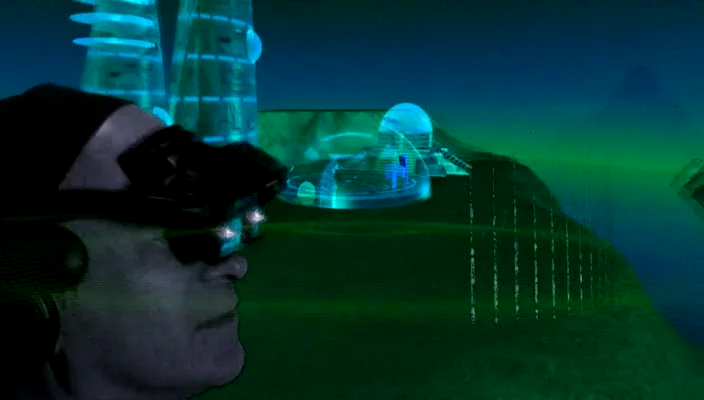
mike kawitzky's 2009 documentary. some twenty thinkers, framed by terence mckenna's archive recordings, on five questions about evolution, consciousness, god, science and death.