OmniBus 2012 - Topography of Arousal
This is a twelve-minute episode from Terence McKenna's OmniBus 2012 series recorded in 2012. McKenna explains his provocative theory that psilocybin mushrooms were the evolutionary catalyst that separated early humans from other primates, drawing on Roland Fisher's 1970s research demonstrating measurable improvements in visual acuity at sub-perceptual doses. He describes how enhanced edge detection would have improved hunting success, while the arousal phenomenon increased sexual activity and birth rates among psilocybin-using groups, creating a demographic advantage that outbred non-users over generations. The episode culminates with McKenna's argument that psilocybin dissolved rigid male dominance hierarchies by pushing primate sexual expression past a critical equilibrium point, chemically suppressing brutal social structures for perhaps a hundred thousand years and creating the conditions for language, culture, and consciousness to emerge.
transcriptmachine-transcribed, unedited
In seeking, admittedly as a propagandist for ways in which I could make the psychedelic experience
palatable to the intellectual establishment, I've tried to look at ways that it might have
influenced us or contributed to our situation that would appeal to the theater of rational discourse.
And here's the story. It's about a poor, a primate, poor and of humble origins, who
sets out on a great adventure. And along the way, there are many pitfalls and there are helpers and
hindrances. And finally, the great pearl of consciousness is attained and the little primate
is vindicated and so forth and so on. So all evolutionary theory is,
narrative of this cheerful sort. The human relationship to the grasslands, the mushroom,
the cattle began slowly seven or eight million years ago. And there was a vectoring of factors
together over millions of years so that by 100,000 years ago, which is my date, but you have nomadic
pastoralists.
You actually have domesticated cattle, human beings domesticating cattle,
living with them in the grassland, in a desert round, in a situation of established tradition and
cultural values. And here's why psilocybin is the suspect.
Psilocybin measurably increases visual acuity. If you take low doses of it,
doses so low,
that you can't feel them, you do better on standard eye tests.
This was demonstrated by Roland Fisher in the 70s. They had an apparatus in which there were two
parallel bars and by punching a button, you could signal when the two bars were no longer parallel.
Consistently, people on low doses of psilocybin could detect this variation before
they could feel the effect.
And Fisher said to me in his heavy Viennese accent, he said,
and so we see, my young friend, that here we have proof that through the use of the drug,
we are getting a better picture of reality than if we leave it alone.
Which he thought was a big ha-ha, you know, but which I took very seriously.
Because the kind of visionary acuity that's being
promoted there is edge detection, which is precisely a lion moving through the tall grass
toward you. You get one, you know, you get one chance to see it. And if you're
dreaming or lose your edge, you're dinner.
Similarly, a gazelle sneaking away through the bushes
is trying to evade your peripheral vision. You get one shot.
If you see it, you eat.
If you don't, you don't.
So imagine, I don't think you have to be a rocket scientist to see that if there was something
lying around in the early proton hominid environment that was like a pair of vegetable
binoculars, and these people were hunters, that those who tolerated the psilocybin in the diet
would have a measurable advantage over the non-psilocybin-using individuals.
Step one.
Increase of visual acuity means greater hunting success.
At the second level, psilocybin, like all alkaloids,
CNS stimulators, central nervous system stimulators, creates what's called arousal.
And arousal is something we're pretty familiar with. I mean, it's a double cappuccino.
You're restless.
Your attention is on you.
You're on the environment.
You're moving around.
You can feel your body.
And in highly sexed animals like primates, it means male erection, consistently.
Well, so then if you haven't had the good offices of the Church of England and 10,000 years
of religion shoved down your throat, usually erection leads to what anthropologists without
a trace of humor call increased instances of sexual arousal.
So, if you haven't had the good offices of the Church of England and 10,000 years of religion,
usually erection leads to what anthropologists without a trace of humor call increased instances
of copulation, which, again, you don't have to be a rocket scientist to see that increased
instances of copulation will lead to increased instances of pregnancy.
It's promoting a higher birth rate through a higher, a slightly higher sexing of the,
and it's not a problem because the very same people who are having more children
seem miraculously to be having better luck hunting.
Because they are seeing better in the field.
So they can support the added burden of another child in the course of the lifespan.
Well, do the demographic mathematics and you see then that those individuals reluctant
to admit psilocybin into their diet would begin to be outbred.
Because their neighbors are having more children than they are and
and raising them to sexual maturity,
which is the name of the game in evolutionary theory,
get your offspring to sexual maturity.
So there would be a tendency to outbreed
the non-psilocybin using members of the population.
The sexual stage raises many interesting issues
because one of our big problems politically as a species,
I'm sure I don't have to tell you,
is gender conflicts.
And the fact that we're not utilizing
the female portion of our population,
its creativity, its integrity, and so forth,
has been through cultural factors
messed with and suppressed and all that.
So this theory has something to say about this as follows.
All primates tend to form male dominance hierarchies.
And this simply means that the hard-bodied,
long-fanged young males are in charge.
They control the females, they control the food supply,
they control the elderly, the young, the ill,
the homosexual, the handicapped.
Everybody is under the thumb of the alpha male
and his henchman in primate land.
And that's how it is.
As we sit here, I mean, we have a bunch of
fancy rhetoric and so forth and so on,
but basically our world is ruled by mafia's
run by middle-aged fat guys
who have very evil friends who carry out their orders.
But we have a lot of conflict about this.
Why is it even an issue?
Why don't we just accept this level of brutishness?
The psilocybin has a very interesting effect
on sexual expression.
This raising, raising the level of sexual expression,
of the level of sexual tension or activity this arousal phenomenon in the
presence of a psychedelic which is dissolving boundaries it's you can tell
by looking at human culture that our sexual behaviors are not under genetic
control and what I mean by that is this most important of all matters in
evolution how we have sex and how we propagate and how we choose mates
there's no rules and in the human world we have monogamy we have polygamy we
have polyandry we have cultures where brothers share
a
brides this is assumed this is culturally validated very interesting
that this most important matter is culturally determined in us apparently
in the primates in the advanced primates the sexual expression is freely it is at
what I would call near a point of disequilibrium you know push somebody
just a little bit this way and there are rabid monogamous
this and then you push them just a little bit thisencies that again
exactly what is that
the Tyler simply
bean
growing
this is so clear
or sexual expression is so close to this equilibrium point acceptance of psilocybin into the diet
the pattern of male dominance and for perhaps a hundred thousand years male dominance increased and for perhaps a hundred thousand years this delicate relationship that has a way of transforming the system with male dominance drive us back to miejsce and the precise point of the body in this endless repertoire of sillus and to don't bother dangerously
dominance was chemically suppressed by an item in the diet. Not genetically removed,
but chemically suppressed. And I believe that a chimp style gave way in human beings to
a bonobo style for as long as the psilocybin using ritual was maintained. Who knows how
long? 100,000, 50,000 years. But point being that it's in that window of opportunity that dance,
poetry, theater, altruism, philosophy, astronomy, mathematics, music, everything about us that makes
us human emerged in the situation of chemical suppression of male dominance. And I think a
kind of equilibrium paradigm.
Where men and women were at peace with each other, human beings were at peace with the
land, everything was hunky dory. What led to the descent into hell.



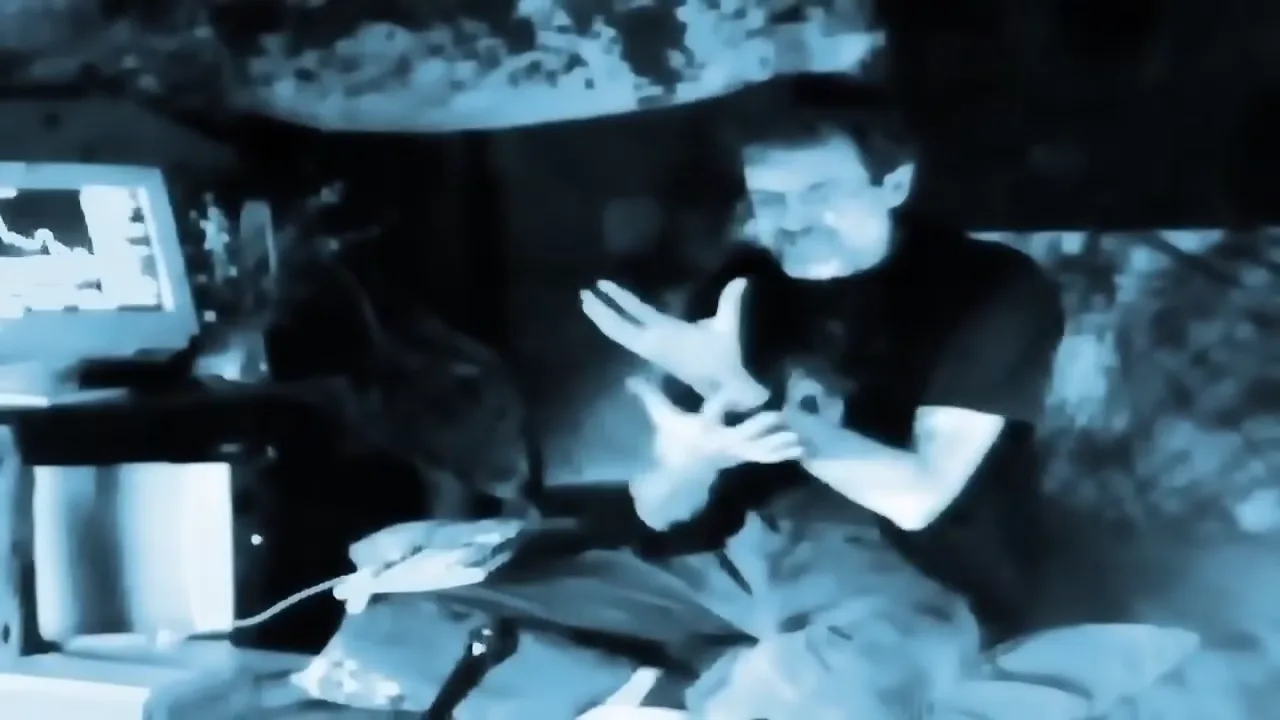
terence mckenna explores the origin of consciousness and why humans emerged from millions of years of simpler biology
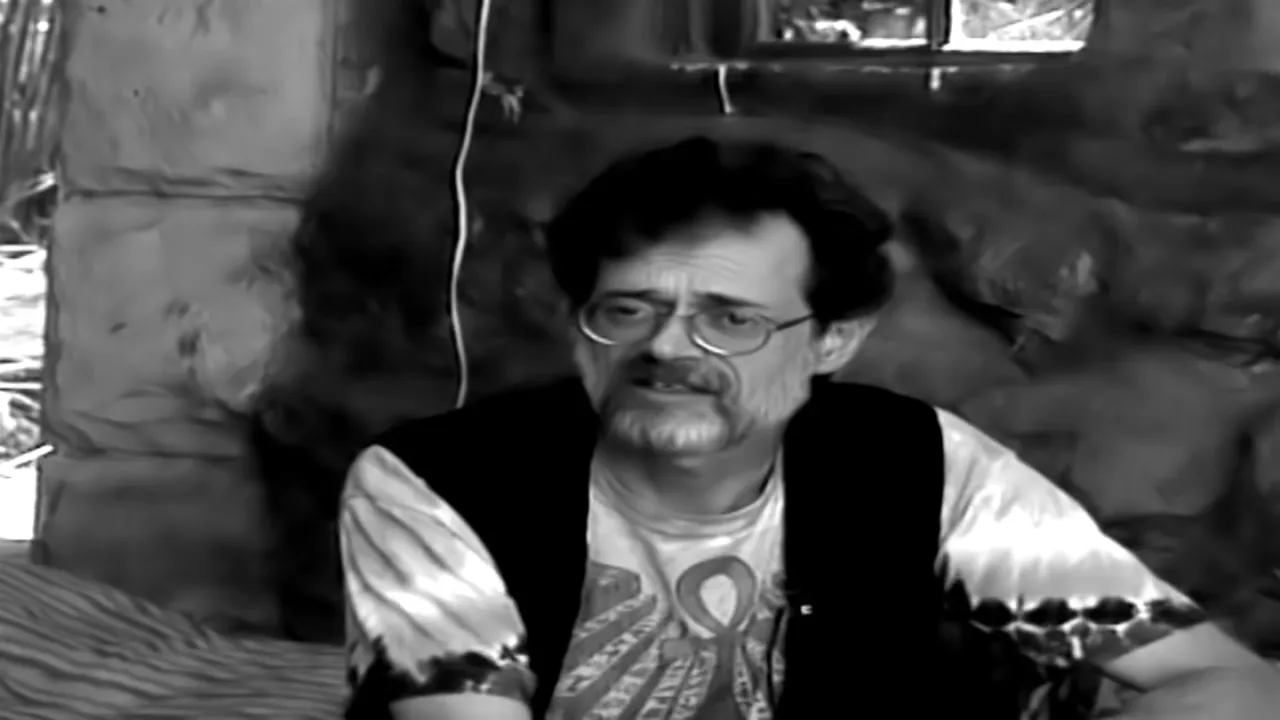
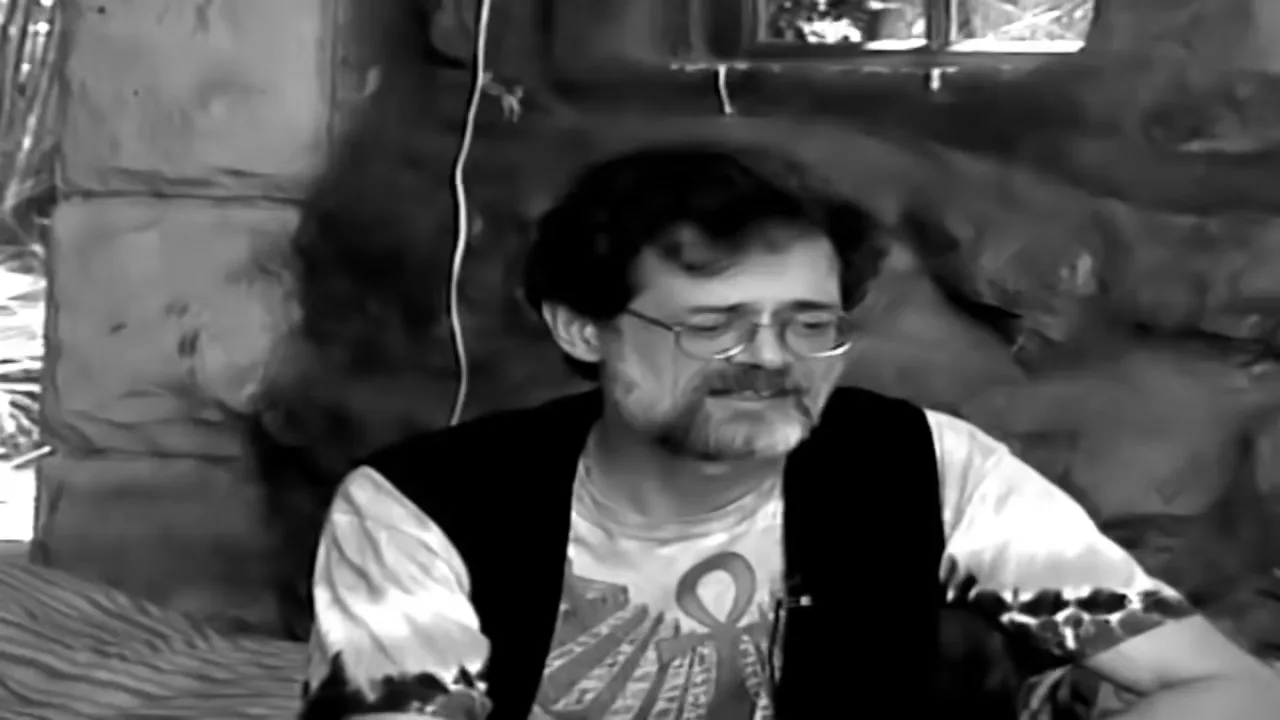
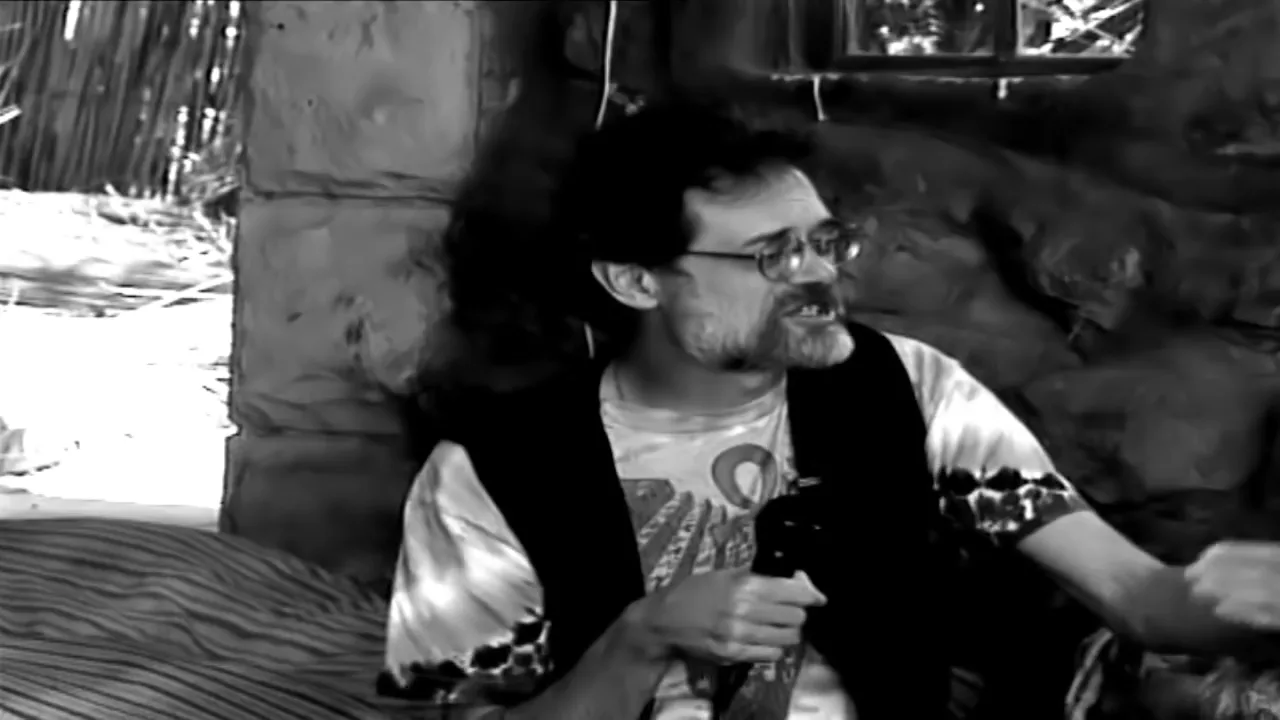
part 3 of 12 from terence mckenna's 2012 omnibus series where he argues culture is not your friend but an intrusion on identity that demands conformity in exchange for unsatisfying
terence mckenna explores the origin of consciousness and why humans emerged from millions of years of simpler biology
part 3 of 12 from terence mckenna's 2012 omnibus series where he argues culture is not your friend but an intrusion on identity that demands conformity in exchange for unsatisfying