OmniBus 2012 - Who Are We
This is part 3 of 12 from Terence McKenna's 2012 OmniBus series titled "Who Are We". McKenna examines the tension between individual consciousness and cultural conformity, using the 1960s conflict between government war agendas and psychedelic youth culture as his primary example. He argues that culture operates as an intrusive force that demands submission to collective values in exchange for material goods that cannot satisfy deeper human needs. The lecture connects intelligence to the ability to perceive the inherent absurdity in social existence and political systems.
transcriptmachine-transcribed, unedited
Well, but when a social movement is only the sum total of individual attitudes,
for example, the 60s in the U.S.,
what made that so crazy was the government wanted to fight a war
which the people didn't want.
So it was a moment where the government really wanted the people
to pull together and follow it down this certain path.
And instead, the children of the war planners were manufacturing LSD
and giving it out at college.
And they said, and that just enraged them
because it eroded this consensus that they were trying to build.
A democratic consensus for war is as ugly as a Nazi consensus for war.
I mean, you get people in stadiums chanting death
to the Indians.
That's an ugly sight, no matter who the enemy is
and no matter who the people doing the chanting are.
And for that kind of mass-mindedness where people are actually ready to die
for some bullshit trip they can't even understand,
you have to have a kind of mass hysteria.
And psychedelics cause people to die.
And that's what caused people to die.
I mean, like, take Vietnam, for example.
The assault wave put soldiers...
Vietnam.
You want to go kill some brown people
and then die in a ditch with your brain shot out
and you're 24 years old?
Does that sound like fun?
While attacking a huge Viet Cong installation.
No, but if you listen to enough political demagoguery,
it sounds like you'll be a man
and you'll, you know, it's insane.
This is the force of 20th century man.
There are all kinds of situations
in which the goals of society do not serve the individual.
This is something we talked about on the first day
and it's a funny message to give anywhere in the world now
and maybe even slightly odder in South Africa
because there's so much stress here on cultural identity
and everybody wants to be a man.
Everybody wants to think they're a tribe.
The Afrikaners, everybody.
But culture is not your friend.
Culture is...
It's like a Masonic order lurking around
that wants to induct you into a bunch of weird ceremonies
that you may not really be comfortable with.
You know, I think when you get to be approximately my age
and maybe some people get there sooner than I did,
you begin...
You begin to realize all this.
That so much of social existence is an inconvenient con
and an intrusion on your identity and your freedom
and then you just say,
well, I'm not going to do it anymore.
I may not even work as hard as you want me to
and I'm certainly not going to fight your wars
and I'm not going to design your war machine
and I'm not going to joyfully pay your taxes.
And I'm not going to affirm your community values.
Piss on it, you know.
Con 20-year-olds.
But I've been through it.
I've had it.
I've been around the block too many times
to once again be led into the alley
by the government and the church to be beat up on.
I've been lenient.
And the great thing about the youth culture
is I think they're figuring this out
without putting in 30 years in the corporation.
The army, the university and all that other bunkum.
It's baloney.
And, you know, we are very uncomfortable.
I mean, yes, we have Mercedes and we have jacuzzis
and we have this, but is it worth it?
Does it make you feel, you know,
can you face yourself in the mirror?
So, you know, they want your life
and they pay.
In garbage.
They have no other medium of exchange to pay in.
All they can give you is stuff.
All they can do is appeal to your object fetishism.
And, of course, it is completely unsatisfying.
The number of suicides, divorces, so forth and so on
are testament to the fact
that that cultural style is completely bankrupt.
One thing we need to do,
is by strongly rejecting it,
you know, I was thinking,
I don't know if I said this to you,
I can't remember what I think in my room
and what I say to you guys,
but I was thinking this thing recently somewhere
about how the smarter you are,
the funnier it seems.
That, you know,
it's almost an index of intelligence.
Intelligence.
The level of hilarity you perceive in the situation.
People who have the right idea
can hardly keep from giggling aloud
as they walk around doing their daily business.
And I think if you correctly assimilate the time wave,
you will laugh aloud.
You know, you will laugh aloud.
Just as Oscar Wilde said,
any person with...
Oscar Wilde said you'd have to have a heart of stone
to not have laughed aloud
when you heard of the death of Little Nell.
Little Nell was a character in a Dickens novel
and was being followed very avidly in America.
It was being serialized in newspapers.
And Dickens gave Little Nell pneumonia
and then she hovered at the brink of death
for weeks and weeks.
And when the packet ships would arrive in Boston
with the next installment,
people would come down onto the docks
to get the news on Little Nell.
It was sort of the first daytime TV show type phenomena.
And then Oscar...
And then she died.
And Oscar Wilde said you would have to have a heart of stone
to not have laughed aloud
when told of the death of Little Nell.
It's a kind of...
It's a very profound...
Not joke, but pun of some sort.
And we are very profound puns.
I mean, we are puns in matter.
The condition of being alive
is somehow to be...
the Word made flesh.
I mean, we are the Word made flesh
and hence under the control of syntax, presumably,
and hence subject to being puns
and to carrying...
different levels of meaning in all situations.
And the only proper response to that
is a small smile.
You know, people who take life seriously, I think,
are going to find it slipping through their fingers
in a very maddening fashion.
It's a joke, right?
Right.
You see, people say, well,
but the world is in a terrible...
situation.
Well, it is and it isn't.
I mean, and in the first place,
what can you do about it?
One thing that really impresses me
is how...
immune to noticing change people are.
There has been enormous change
in this world in the last ten years.
The whole Soviet Union thing,
which basically was the threat of...
thermonuclear war on every man, woman, and child
on the planet.
I grew up with it.
We thought we would live with it to eternity.
It disappeared,
and nobody basically even gave a shit
or could bother to write an article
analyzing what happened.
You people have an amazing capacity
for being sanguine.
I mean, the number of people who have told me,
well, you know, nothing's really changed.
It's all been sort of...
Really?
Great!
If you can pull this kind of stuff off
and walk around telling yourself
nothing has really changed,
that's pretty good protection
against panic and hysteria, I would think.
But if every society could change
as much as you have in the past ten years
and walk around telling visitors,
well, you know, it's really business as usual.
They just sort of twiddle the players.
An astonishing assertion.
And I have Russian friends who come and visit me
and I want to know about Yeltsin and Zhirinovsky
and this and that.
And they say, well, you know,
it's just really hasn't changed much.
Same old, same old.
Amazing.
I saw graffiti once on a wall in Colombia
and it said it had a picture of the mushroom
and it said,
in Spanish,
without this, you are not yourself.
You know, accepting that idea
would change our relationship
to the whole question of drugs
because we're told, you know,
un-intoxicated, un-stoned,
as you stand here,
you are somehow the beloved of the almighty.
Loaded, you are somehow the scourge of the earth.
Well, this would play with those categories.
And give us a different relationship
to what we call intoxication.
We're, over time, it's fascinating.
On the other hand,
we have days of this ahead of us.
And I'm usually available in the bar
in the evenings and the mornings.
Thank you for your attention to all of this.
Thank you.
So just keep telling yourself,
same old, same old,
as the internet rises,
borders are erased,
philosophies disappear,
whole new races of people are empowered,
and on and on and on.
And everybody sing.
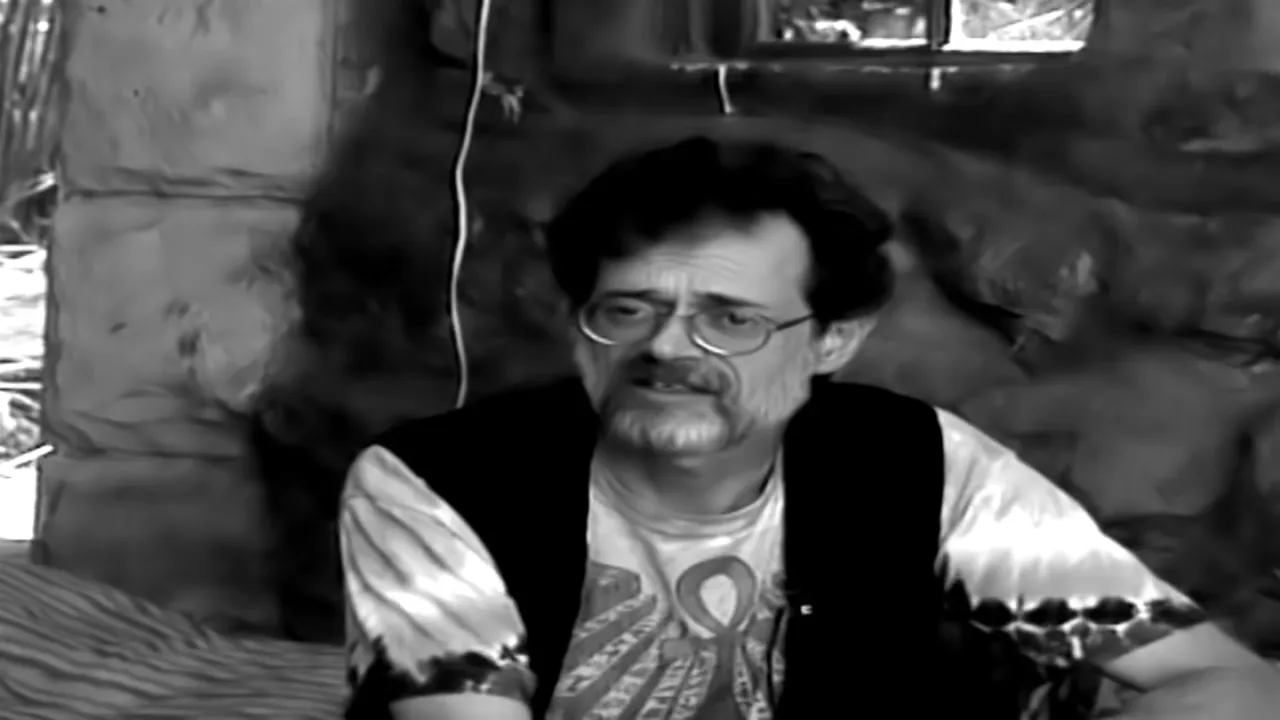
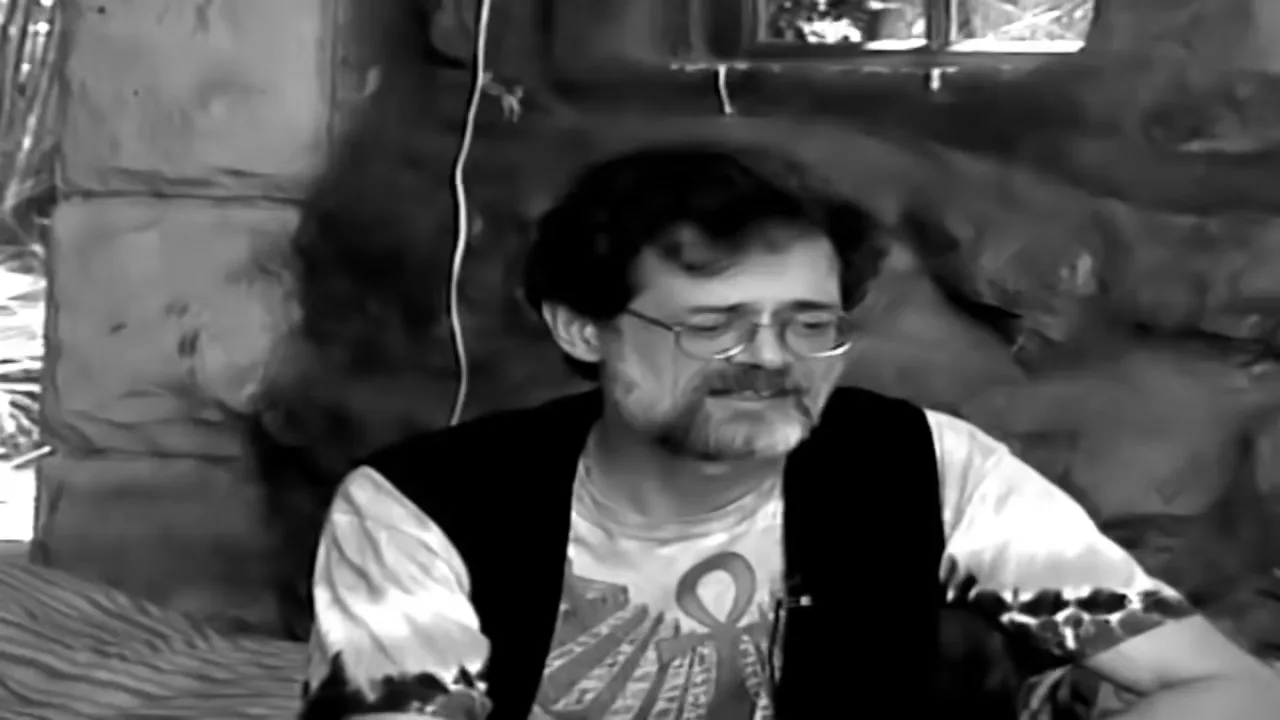
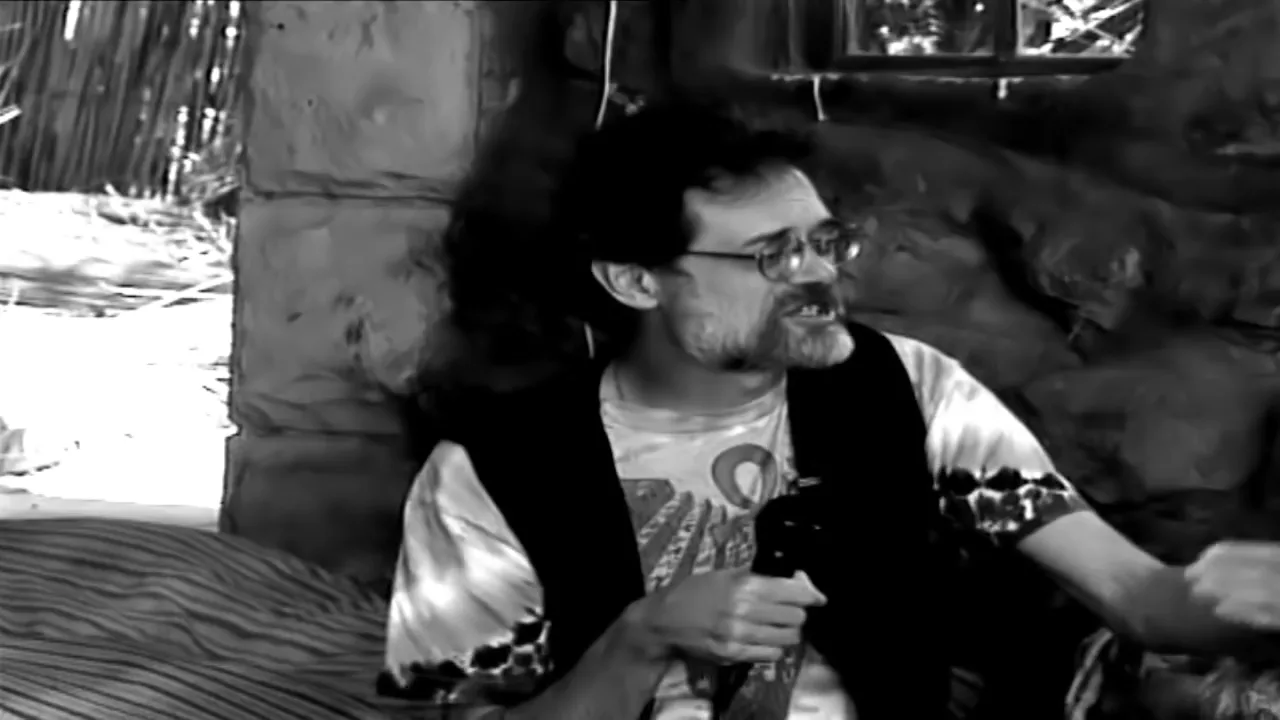





terence mckenna presents his theory that psilocybin mushrooms catalyzed human evolution by enhancing visual acuity for hunting, increasing sexual arousal to boost reproduction, and
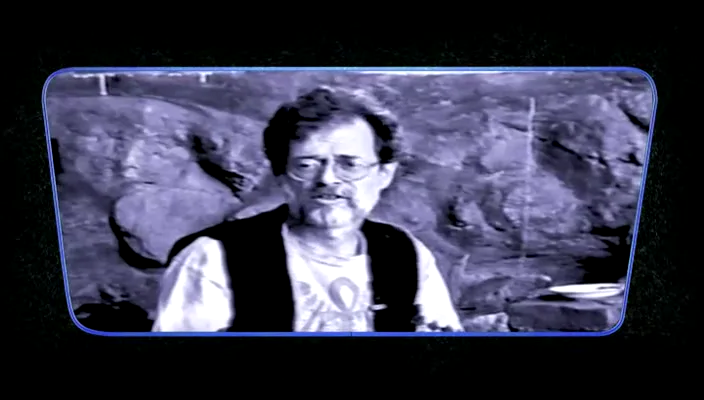


mike kawitzky's 2009 documentary. some twenty thinkers, framed by terence mckenna's archive recordings, on five questions about evolution, consciousness, god, science and death.

terence mckenna explores the origin of consciousness and why humans emerged from millions of years of simpler biology
terence mckenna presents his theory that psilocybin mushrooms catalyzed human evolution by enhancing visual acuity for hunting, increasing sexual arousal to boost reproduction, and