Present Future

Terence McKenna frames earth's technological future not as a crisis but as a planetary developmental process. Drawing on Michael DeLanda's work on geological material movement and human structures, he proposes that artificial intelligence is an extension of earth's own strategy for self-transcendence. He argues that human consciousness and technological intelligence are locked in a symbiotic relationship where each depends on the evolution of the other. The psychedelic experience, he suggests, is the crucible for expanding human consciousness to the level required to partner with superintelligent machines. The work ultimately proposes a worldview that honors all dimensions of human experience, from biology to technology to transcendent human values.
transcriptmachine-transcribed, unedited
so uh now i've lost my way here ah yes no no optimism so i sit in hawaii and i look at all
this and i try to contextualize it and and come out with a good story because i think the best
story will win so if you can if you can get together the best version of how it should
all come out so shall it be and i work at this because in the past i've been very very happy
with the results between my interior fantasy and the unfolding of historical developments
i mean i i wished for lsd and then it happened then i dreamed of the internet and then it
happened so i should keep at this uh and i i recently read a very interesting book called
a thousand years of nonlinear history by michael delanda and if you get a chance you should take
a look at this and he made the point which caused me to expand his point into this little thing i'm
going to tell you now but his point was that human beings are very involved in the movement of
geological material that as a species we move rocks around on a very large scale and of course it's
interesting that the early some of the earliest human structures are the most physically massive
and the way like the great pyramids um so delanda made this point about our relationship with the
the geograf geological stratigraphy of the earth and that cities were a kind of geological extension
of the process of crystallization carried on through the intermediation of a biological unit
i.e intelligent primates who are building these structures and uh i thought that was very
interesting i had never considered it before i'd all i've talked about virtual reality and i've said
that uh it's nothing new that ur was a virtual reality and chatol hiyuch was a virtual reality but done in stucco and fired ceramic and stone and that when the medium is so intractable as stone the epistemic assumptions that get formed about what reality is are very different than if you can build
at the click of a mouse button, but nevertheless it's the same. But embedded in my reading
of Delanda was I've been thinking a lot and I talked to you a lot last year about artificial
intelligences and minds which are not human, minds which are very different from us, intelligence
which is very different from us. While the naive are scanning the stars, our appliances have
become telepathic. There is a very strange kind of intelligence being called into existence
by ourselves, strangely enough, and this is the connection to Delanda, this artificial
intelligence which is being called into being by human activity, is made of the same materials
as Ur and Chatalyuk. It's made of ceramics, glasses, and metals. It's that, uh, so then I took
this on board and thought about it and I'm, I've sort of come to some kind of cyber pantheistic
Emersonianism, uh, which is, uh, here I'll give it to you as a headline and then work backwards
so that in case I forget what I'm saying, it won't be lost to suffering mankind.
The, the Earth's strategy for its own salvation is through machines, is what it is. And human
beings are some kind of, uh, we are the deputized spouse. We are the bride in this alchemical rarefaction
of glasses, ceramics, metals, and, uh, and volatile materials. Apparently, the Earth is like
some kind of an embryonic, uh, or fetal thing. And at the end of its gestation, what is happening
is it is ramifying its nervous system, is appearing in its developmental, in the unfolding of its
morphogenesis. And as we contemplate nanotechnologies and see ourselves working through bacteria and
this sort of thing at the engineering level, you have to be blind to not then reflect back
upon the fact that in some sense we are already working at that kind of level at the behest of
it is not clear who. Because nobody ever asked the question in quite this way before. The
answer to who, I think, is, is the Earth. And that what lies ahead at the end of the linear
tunnel of, of Western subjectivist, positivist, structuralist assumptions that we've been operating,
when we hit the end of the tunnel and burst out into the larger mental space of cosmic evolution,
what we are going to find is that we are partners, actors, in a cosmic drama that involves the
Earth at one polarity and machines at the other polarity as the expression of the will of the
Earth toward a kind of self-reflective transcendence that is achieved through machine-human biotic
symbiosis. And that, and this is, you know, it won't, there will never be a headline which
says this. Some people won't even notice that it's happening because these large scale processes
can be described by many metaphors at many depths. But I'm telling you, I think this is what's
going on. The reason I like this story is because it's not a story about processes out of control.
It's not a story about human guilt. It's not a story full of we musts and we shoulds. It's a story
which gives honor to every part of the unfolding experience field. In other words, biology, technology,
human culture, human traditional values, transcendent human extopian values. It's a story of things
on course on time and under budget. And I assume that's how nature really operates. And that we live inside
some kind of anxiety-producing culture that is a necessary, I don't want to say evil, but a necessary response
to conditions of stress. There are processes which let, you know, waste, nuclear waste buildup, urbanization,
land disturbance. There are processes which if allowed to run on indefinitely would wreck the whole system and pitch it into chaos.
But Confucius said no tree grows to heaven. And what he meant by that is it's fruitless to project any process to infinity
because any process projected to infinity creates some kind of catastrophic scenario. If no fruit flies died in six months
the earth would spin out of its orbit from the weight of fruit flies. No, I don't think that's true.
But what an image.
Somebody once told me if the earth completely disappeared except for its nematodes that you could still see the outlines
of the continents if you were standing on the moon. I thought, now just, who gathered this back to all of you?
So then, to bring this back around a little, where is the psychedelic experience in all of this?
Well, it used to be called, or at one phase it was called, consciousness expansion. And consciousness expansion in human beings is going to become an absolute necessity.
Because we are summoning out of the woodwork of cybernetic technology machines that are going to require super intelligent humans to direct and have discourse with them.
This is happening. It is already happening. I mean, the internet is this. I mean, it doesn't tap you on the shoulder and remind you to brush your teeth.
That's a half a second point.
I think it has to be the case in this.
I think it was one of the worst things like this.
What else do you think about it?
That's what I think about it.
It's a kind of a thing that I think about it.

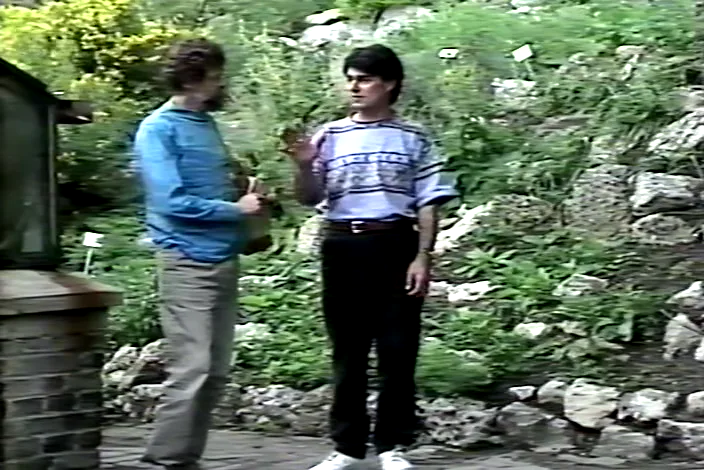
terence mckenna interviews thinkers at the international transpersonal conference in prague czechoslovakia

terence mckenna's 1982 esalen workshop on psilocybin as a path to altered consciousness and human evolution. explores how tryptamine experience anticipates the future development o
terence mckenna explores the origin of consciousness and why humans emerged from millions of years of simpler biology
terence mckenna presents his theory that psilocybin mushrooms catalyzed human evolution by enhancing visual acuity for hunting, increasing sexual arousal to boost reproduction, and
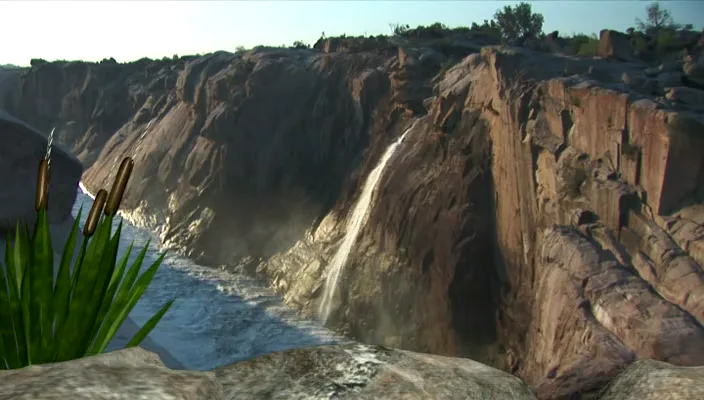
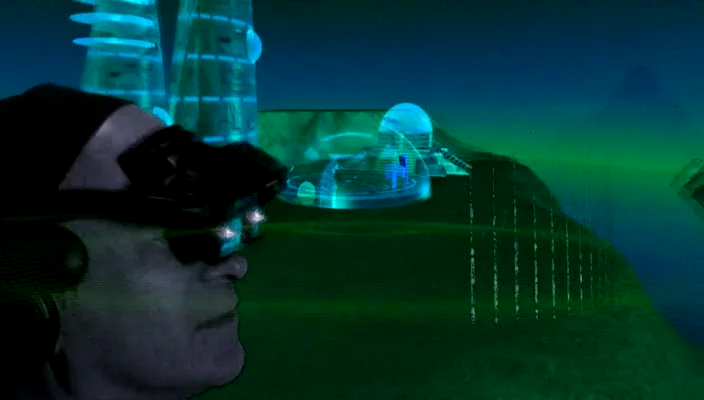
mike kawitzky's 2009 documentary. some twenty thinkers, framed by terence mckenna's archive recordings, on five questions about evolution, consciousness, god, science and death.