Trialogue Jun 1998
This 1998 trialogue was recorded in Santa Cruz, California, featuring Terence McKenna, Ralph Abraham, and Rupert Sheldrake in conversation about skepticism and epistemology. The trio examines the crisis in contemporary science, particularly its overreliance on statistical analysis, and debates the boundaries between rigorous scientific inquiry and unanchored speculation. McKenna argues for a return to William of Ockham's methodological principles to distinguish legitimate alternatives from unfounded claims, while the group wrestles with who controls scientific funding and what gets legitimized as valid knowledge. Abraham and Sheldrake bring counterarguments rooted in philosophy and biology, raising concerns that overly rigid dismissal of anomalous phenomena may exclude important discoveries. Three brilliant minds grappling with how science lost its footing and what epistemological principles might restore it.
transcriptmachine-transcribed, unedited
Greetings from Cyberdelic Space.
This is Lorenzo, and I'm your host here in the Psychedelic Salon.
Well, I just couldn't put this off any longer, but I'm afraid I'm in need of another little
hit of McKenna, Abraham, and Sheldrake in one of their trial logs.
But I don't want you to get worried now.
I'm not going to go into another one of those long series of nothing but trial logs.
I just needed a little McKenna fix, if you know what I mean.
The conversation I'm going to play today was actually recorded on June 8, 1998, at Santa
Cruz, California.
And in the box of cassette recordings of these trial logs that Ralph Abraham loaned to me
for this project, this trial log was the most recent one.
Actually, there were three tapes with that date on them, and they're each about an hour
and a half long.
So right now I'm going to play the first hour of the first tape, and we'll get to the rest
of that tape in another podcast later this week.
But since today's program is so long, I'm going to dispense with most of my usual chatter and
join you in listening to Terrence McKenna, Ralph Abraham, and Rupert Sheldrake talk about
skepticism and the balkanization of epistemology.
What I thought it would be interesting to discuss as part of our new series of trial logs, because
I think it's an issue that more and more people are becoming aware of, is the whole question
of skepticism and what I call the balkanization of epistemology.
And what I mean by that is that somehow as a part of the agenda of political correctness,
it has become not entirely acceptable to criticize or demand substantial evidence or expect people,
when advancing their speculations, to make what used to be called old-fashioned sense.
And I think this tolerance of unanchored thought and speculation is confusing the evolutionary progress
of discourse, but I'm also aware that if you draw the parameters too tight, the baby goes out
with the bathwater, or you become a defender of scientism or some kind of orthodoxy.
So in my own situation, I've been trying to both understand what is strong and to be supported
in science, and what needs to be criticized, and equally to look at the alternatives to science,
the counterculture, the new age, and to ask myself, what is strong, what serves the evolution
of discourse, and what is in fact this type of unanchored thinking that I'm concerned about.
So first, let me talk a little bit about how I see science.
If any one of us were to take what is called a scientific approach to many of the phenomena
that interest us, psychic pets, the source of the content of the psychedelic experience,
et cetera, et cetera, if we were to take a hard scientific view of these things, these phenomena,
which we know exist, and which we find rich in implications, would simply not be allowed
as objects of discourse.
They would be ruled out of order.
So there's something wrong on one level with scientific, what's called empirical, empiricism,
skepticism, positivism, it has different names.
On the other hand, if we go to the other end of the spectrum, and are willing to admit the testimony
of iridologists, crop circle enthusiasts, victims of alien abduction, those who channel Atlantis,
those who suspect undetected planets, those who believe vast alien arcologies,
dot the planes of Mars, and so forth.
And pro bono, better get that in.
Yes, pro bono proctologists from other star systems, making unscheduled house calls
late at night in our homes.
Yes, I mean, both of you realize, I'm sure, that medical professionals, regardless of their
species, or star system of origin, do not make house calls anymore.
So, I see then this problem.
Science is too tight-fisted.
It misses much of what is interesting.
To abandon the approach of science is to just be without rudder in an ocean of strident claims
and counterclaims, many of which are preposterous, and certainly not all of which can be true.
So, after thinking about this for a while, my approach was to say, well, science went from
superstition to its present positivist position through a process of evolution, temporal unfoldment.
So, using a method I've advocated in other situations, I conducted the following exercise.
I said, I will move backward through the epistemological history of science to the last same moment science knew,
and then analyze what that consists of, and I'm not completed in this process, but what I find is that
a curious betrayal has occurred in science, that with the rise of capitalism and industrialism,
science has actually become, uh, has allowed assumptions to be made that betrayed its original intent.
And, what I mean by that is, uh, modern science relies on statistical analysis of data, you know, measure ten times, add the values, divide by ten,
and this tells you how much rain is falling, how much voltage is flowing through a wire, something like that.
Uh, this, uh, approach to phenomena mitigates against unusual phenomena.
Inevitably.
Because they are statistically insignificant.
That's the phrase that is actually used.
So, I, we can talk about this in detail.
I don't want to spend a lot of time on it, but I think you see my implication.
That the method of statistical analysis, true, produces general formalizations of nature's mechanisms and wonderful products,
which can be sold and patented and so forth.
But, it's a coarse-grained view of nature, and what it mitigates against seeing are the very things which feed the progress of science,
which is the unassimilated phenomena, the unusual data, the peculiar result of an experiment.
So, looking at that then, I said, well, where are we in the history of science where this happened and how was it before?
And you may wish to correct me a hundred years either way, but I'm very interested in sort of, uh, bringing back and re-appreciating William of Ockham,
who, aside from the things I'm saying about him here, which are very nice, also had a notion, uh, not much appreciated,
of what he called unlimited progress.
And it comes very close to novelty theories, belief that the universe progresses unto merging, emerging with the nature of God.
But the thing about Ockham that bears on all this is, of course, his famous razor, which simply says,
it's been interpreted in many ways, but hypotheses should not be multiplied without necessity.
Or, to put it more simply, the simplest explanation of any phenomena should be preferred until found inadequate.
Explanation should not be complexified beyond the demands of the problem against which it's being brought to bear.
So, what I'm feeling is, if we abandon statistical analysis of nature and realize that probably the assumption of temporal invariance
that that assumes about the underlying fields of nature is, in fact, a cheerful assumption, untested and unprovable.
So, we should get rid, in my hypothetical reformation of epistemological dialogue,
we should get rid of statistical analysis.
We should dial science back to the late medieval period of Ockham.
And we should do science that way.
And applying Ockham's razor, we are quickly able to cut away the underbrush
that these peripheral and alternative people have brought to the table.
Some of it's good.
Things like hypnotism, acupuncture, nutrition therapy, rational approaches to telepathy, clairvoyance.
None of this is what I have a problem with.
I don't have a problem with people proposing new models of nature.
What I have a problem with is unanchored, eccentric revelations taking their place at the table.
The channelings from the Palabians, for example.
The Sichunite reconstruction of the ancient Near Eastern archeology.
The Arguellian distortion of the Mayan accomplishment.
I find these things pernicious and easily dealt with if we use Ockham's razor.
But when we go too far into statistical analysis of nature,
then we begin to cut away at our own beliefs and assumptions about nature.
Yours, Rupert, of the morphogenetic field.
Mine, of novelty theory.
And there must be some aspect of all this that would threaten you, Ralph,
if extremely empiricist and positivist criteria were brought to bear.
In other words, we've all been called soft in our time.
But in fact, I think our softness indicates a failure of science.
Science has hoared itself to the marketplace and to technology.
And interesting high-order phenomena like societies, economic crashes, complex system behavior
is going to remain forever blurred in our understanding as long as we rely on statistical analysis.
It's a tool that had its place.
But to hold onto it indefinitely is going to retard mathematics' ability to give a deeper account of nature.
A perfect example of this, and then I'll stop, would be the enshrinement of the so-called uncertainty principle in physics throughout the 20th century.
You know, the supposed great bridge between science and mysticism.
Well, it turns out it's just malarkey.
There is no uncertainty principle.
David Bohm's formulation of quantum physics gives perfect knowledge of velocity and position without ambiguity.
It calls forth the notion of non-locality.
That's why the Heisenberg formulation was preferred.
But again, non-locality accepted permits some of the things we're interested in.
Telepathy, information from other worlds arriving via the morphogenetic field, and so forth and so on.
So, I haven't been maybe as rabble-rousing as you expected by naming in turn various heresies to be consigned to the flames,
but I do think there are too many loose heads in our canoe,
and that no revolution of human thought that I'm aware of succeeded through fuzzy thinking.
Well, I've certainly got a lot to say about all that.
Very interesting.
I think that the, first of all, we have to see that there's a regional problem here,
that scepticism and ockermism and so on are carrying different social balances in different parts of the world.
You live in Hawaii and visit places like Maui quite frequently.
Ralph lives right here in Santa Cruz, California, where you only have to mention the name to anyone in England who knows California at all.
And they immediately say, oh yeah, where all the old hippies hang out.
And it's the kind of, it's a totally alternative place.
And as we've seen in our joint appearances in Santa Cruz, there's a level of weirdness among some of the theories people have,
and the crank obsessions they follow, which from outside the perspective of the West Coast,
most people would recognize as typically California.
There's a kind of level of weirdness and cults and these, I mean most of the phenomena you've named,
a phenomena of Hawaii and California.
When you live in England, things take on a rather different perspective.
There's a general level of popular scepticism, such as that the general tone of an English pub is one of sort of scepticism.
Well, there aren't crop circles and Graham Hancock all homegrown British phenomena?
They are, but every single one of them in any single pub where it's debated would always have sceptics in the discussion.
You're never going to have a kind of thing where you have all believers, except in small crank societies of true believers, which exist.
But the thing is, the general cultural tone is one of scepticism.
And so the need for a great deal more of scepticism doesn't feel quite so urgent if you live in London as it does if you live in Hawaii or California.
That's my first point.
But secondly, I think that the scientific scepticism you talk about is indeed a serious threat,
and I think that's done more than anything to drive science in this direction.
It's a kind of dogmatic scepticism that rules out at any cost weird phenomena like telepathy, non-locality, etc.
And so to rule those out, you have to say that a lot of phenomena don't really exist, like telepathy and stuff.
And if non-locality happens, it's just a peculiarity of the details of quantum theory.
The statistical anomaly gets rid of all problems.
So you can take these points of view, but the sceptical, those kind of dogmatic sceptics,
who I find myself confronted with quite often, the sceptical enquirer crowd, who are on my case whenever they can be,
because they've classified me with the pro-brono promptologists from distant star systems.
So the thing is, I've had the experience of being put in that category by sceptics, including the editor of Nature.
And the sceptics in Britain who regularly appear, and good for a quote any time by the press,
my old friend, Professor Lewis Walpert, at any moment, and to any journalist, several times a year will say,
can't take this kind of thing so seriously.
And then last year, when he said, but Professor Walpert, don't you think you should keep an open mind about some of these things?
He says, not so open that your brain drops out.
So that kind of sceptic has done a great deal to force science into this narrow thinking mould.
It's forced the investigation of telepathy into more and more ridiculously detailed and unrealistic parapsychology-land experiments,
seeking to provide the statistical proof of regularities.
However, what I've found is with the staring experiments and with the psychic pet experiments,
one can achieve results, positive results, which fit with all this normal statistical thing.
They're repeatable, positive, they meet all these statistical criteria.
They're not evanescent phenomena like human synchronicities.
These are regularities of nature.
So the old-style statistical approach can actually take us much further, I think.
I'm using old-style statistical methods in my own research
because I don't want to change both the content and the style at the same time.
I want to show that by the old methods, these are valid criteria.
So they're valid phenomena.
They actually happen and you can prove them in the old-style scientific way.
But I do agree that the kind of discussion we have in science doesn't need to have all these things.
What I like most, I think my most heroic example in the kind of thing I do,
is none other than the great, late Charles Darwin.
And like most other biologists, I greatly admire him.
But what I see in him and admire is different from what others admire.
I like the way he draws on information from non-professionals, plant breeders, pigeon fanciers, horse trainers,
cabbage breeders, rose planters and specialists, horticulturalists.
He draws on all these people's experience, colonial explorers,
sailors who tell of feral peaks on remote islands and how they've gone wild and so forth.
All this is what Darwin draws on and he discusses it in a common sense way.
There's no statistical test, chi-squared test, 5% levels of probability.
It's wonderful science.
It draws on experience and treats it in the light of common sense using rules of evidence.
But without rigid statistical test, rigid methods.
And it's wonderful science.
He discovered a great deal.
He'd never heard of 5% levels of probability.
And yet it's great science.
So, I think that there is a possibility to return to a more common sense approach.
And common sense of the British pub type and probably of standard American kind too,
will often deal quite satisfactorily with the pro-brainu proctomagists from outer space.
Anyone who claimed that in the British pub would be,
this would be the butt of a great deal of humour within minutes.
No pun intended.
Yes.
Well, let me just say about that, there is a political problem.
You're right.
Though the British have this reputation in America for being the epitome of politeness,
actually in a British pub people are willing to blow the whistle on what they perceive as absurdity.
Five jokes.
Yes.
Always with humour.
In the new age, it is utterly humourless.
And the reigning paradigm of political correctness demands that you treat all of these testimonies
and bits of news with complete equanimity.
And it's thought to be rather out of sorts to suggest that anybody shouldn't be taken seriously.
The belief is that truth can't be known.
And so all there is is opinions.
So, you know, you speak from your knowledge of the calculus and world history,
and this person speaks from their latest transmission from fallen Atlantis,
and this is all placed on an equal footing.
And it's crazy-making, and it also guarantees the trivialness of the entire enterprise.
I mean, I just don't think any revolution in human history can be made by fluff heads.
Well, I think we, in order to understand what you're saying, I have to really try to figure out what a fluff head is.
Yes.
This is the crux.
I like your historical approach, as we agree that science is rather in a bad place now.
We can look back, find where it went wrong, go back there, start over again.
This is exactly what fundamentalists do.
Our ethics are gone.
We're going to go back to the first speeches of Muhammad or something.
So, William of Ockham, I feel uncomfortable with his idea of simplicity.
I mean, the modern form is probably Komal-Gorov's measure of complexity, which would be given a data set.
What is the length in bytes of the smallest computer program that can approximate the data set within epsilon or something like that?
And the problem with this, technically speaking, is that last year's technology would give a Komal-Gorov measure of this much.
This year's technology would give a much smaller measure, because we've learned a new trick of building models.
Or it may only depend upon the computer language, more or less, that's used to build a model.
So, in other words, there is no simple measuring stick of simplicity.
And given three explanations, we're not sure what is the simplest one.
There's no mathematics that could really be applied.
It becomes a subjective judgment.
And therefore, I think that this whole question works.
I think that you've suggested a one-dimensional scale of fluff headness within a fluff scale,
where down at this end, we have what even Walpert thinks is okay.
And over at that end, we have the test that can be applied to Pleiadians to see if they're real or not.
So, in this scale, I think you've marked two points.
There's the point at which you think to the right of this is too fluffy and to the left is okay.
And then there's another point where science agrees it's okay.
You see that you're ruling out, like the channeling, no, but the telepathy, okay.
But Walpert says the morphogenetic fields is not okay, but DNA is okay.
So, I'm thinking of these two points that you described as being on some linear scale of fluffness.
And I'm thinking that this entire scale of fluffness is not, I mean, you'd like to appeal to mathematics
and to some kind of real science, that there is a real science, that the community or the religion of science
has gotten off the track of the real science, and that there, this is what bothers me.
And I wish that this were true, but I have no faith in it, that there is somewhere in the sky
or in the deepest bowels of the earth, a measuring stick, where we could somehow measure the truth of something,
even if it's just a degree of truth, as, you know, in chaos logic, you don't have true and false.
You have a truth as a percentage between zero and a hundred percent.
And is only, chaos logic would be a good alternative for you.
The truth of a proposition, let's say, a formal logic, like Zeno's paradox, is only a temporal assessment,
but it is the input of the measuring stick of truth, after which we get another measurement.
You see, so now, under what we know so far, it's 60 percent true.
Now, we assume that it's 60 percent true, that's the input to another assessment,
when we find out it's 66 percent true.
Without the input of another assessment, then it's 64 percent true.
Hopefully, this process of successive judgments, which could be regarded as the history of science
from the past through William and Malcolm on into the infinite future, would converge on something.
But in chaotic logic, it doesn't converge, because certain kind of propositions,
which are circular in a way, like Zeno's paradox, they, in circling around,
they have a chaotic attractor, and so they're always giving different results, never settles down.
It gives a dense set of estimates between zero and a hundred percent.
And from this perspective, which is the successor of Aristotelian logic,
which served science up until the year 1985 or something,
you can't have a clear measuring stick of truth, and you can't have a clear scale of fluff.
And so, the attempt to make something perfectly clear might be doomed to failure.
We understand it, then, as something psychological.
So I just want to give a... I'm applying Ludwig Fleck here to you.
And Ludwig Fleck is the founder of the sociology of science,
where you sort of do Freudian analysis of the scientific community as a social...
as a flock of sheep, as it were.
And with... like in the 60s, we were, as parents, very libertine with our children.
Now we see those children have drawn up, and my children are having children,
and they're having much stricter.
And there's the idea that in successive generations,
people are more or less strict with their children.
And I think they're more or less strict about fluff also.
So the fluff scale is actually a sociological aspect of a given culture or civilization,
which fluctuates wildly in time.
And I think that this is just one of many theories for you personally.
And maybe we are also affected by this, that as we age,
and then we are in contact with young people,
and then we are receiving input from them,
as far as the morphogenetic sequence of a fluff scale is concerned,
that we're affected by them, and we're becoming a little more critical, you see.
So then we become critical of ourselves, in a way,
because a decade ago we were more open.
So our fluff scale is changing, and therefore we have to rearrange all our social grid,
that some people that were previously okay are not too fluffy for us,
and their brains have fallen out.
Well, let me say a couple of things about this.
First of all, I think I agree with almost everything you say.
On the end of pointing out that its truth is a very difficult thing to assess,
you didn't mention Kurt Gödel.
But certainly his proof that no formal system produces all true statements,
shows that even ordinary arithmetic is subject to debate,
and represents a kind of circularity.
So, on one...
...
And I completely agree with you that truth is a very complicated concept.
And why shouldn't it be?
It's motivated thinkers since thinking began.
And we as yet have no certain index for it.
You mentioned that you thought my approach was one-dimensional,
and I agreed from your example.
But much of your criticism was couched in the vocabulary of symbolic logic,
analytical deconstruction.
Here's a way we might go at this.
Agreeing that it's a messy problem,
let's agree that the solution may also be somewhat messy.
So, for instance, we perhaps need to talk about kinds of fluff.
I immediately identify two kinds of fluff.
One is unscientific speculation,
persistent throughout history,
and with a consistent provenance.
How do you religion?
Well, mythology.
I wasn't going to attack religion.
I was thinking of more marginal ideas,
but religion is a good example.
I was going to suggest alchemy.
Alchemy believes certain things about matter,
which science absolutely abhors and rejects.
The history of alchemy is far older than the history of science.
It has always been in existence.
Its thinkers have always evolved
and adumbrated their field of concerns.
So that's one kind of fluff.
Fluff with punch,
because it has historical continuity.
But what are we to make of someone who brings to the idea
a complete cosmological model
generated in the past ten years
by themselves alone?
They never read Plato.
They know no mathematics.
They never read the Bible.
They never read Wittgenstein.
They just got it all in one download.
And it is, on the face of it, preposterous.
It's a faith that tells you that vegetables lose their auric fields
unless peeled with wooden implements,
that major earth changes have already happened
but are invisible to most people,
that there are only 100 real people alive on the planet anyway.
Everyone else is a simulacrum from another dimension.
In other words, preposterous on the face of it,
historyless, idiosyncratic,
and utterly unanchored to any body of previous human thought,
sanctioned or unsanctioned.
So the question before us is,
how do we distinguish all these books
from one that superficially might appear to be a genre,
the invisible landscape?
How do we make a division
between the invisible landscape on the one hand
and the rest on the other hand?
Well, I think the invisible landscape,
the category of the invisible landscape
is I Ching commentary.
I'm writing one right now.
Well, they've been,
the I Ching is a legitimate object of speculative discourse,
has been since pre-Han time.
Okay, so let's say we accept a two-dimensional model for fluff,
where there's deeper fluff,
like I Ching commentaries,
and more superficial fluff,
like the entire manifest universe
is the circulation of a single electron.
Let's use the Urantia book as an example.
So in this case,
Oh, the pattern we were given last night,
a spiral form of the base.
I have one here.
Made as wire.
So I think that I'll give you a point here
in that Occam's razor is intuitively a good way
to describe this new dimension,
the simpler and more complicated explanations
for an effect which, as a matter of fact,
not established.
So this is my worry about the anti-fluff posture
that you now project in public and so on.
I'm just sympathetic with a lot of things,
and we're worried greatly about the pattern.
And the problem with this strict parent approach to fluff
is that some important discoveries
may be shuttled aside,
as Wolfert shoves aside Rupert's idea
of the morphogenetic field.
What is it that science hates?
Besides Rupert,
science hates homeopathy,
acupuncture,
or alternative medicine altogether.
Science hates cold fusion.
I mean, there are certain things to say,
well, you know,
too open-minded.
To even think about being too open-minded,
too much in conflict.
So a lot of things would have been missed.
You think of these paradigm shifts
of the past of science.
For example, the Continental Drift
or the Ice Ages, I can see.
You know, this was a really terrific discovery
of mountain climbing guides
of the Ice Age,
which is that we don't take for granted,
rejected by science for 30 or 40 years,
and is one of the few successful examples
of a paradigm shift in science.
This scientific community is so...
I've never even thought of it as a paradigm shift.
Oh, it's a terrific story.
I have to tell in great detail
in my book, Pascay Aros,
including a heroic picture
of Agassiz himself.
He was taken into the mountains
by these peritone,
a mountain climbing guide,
said, look here,
these are mountains,
the limestone mountains.
What are these clumps of granite doing here?
They've been brought here
from over there
where we know where the granite is.
You mentioned 30 or 40 years, Ralph.
I think one way of thinking about this problem
is some school of fluff
should be given a certain amount of time
to advance their agenda.
It's very messy.
But if after 20, 30, 40 years
they've gotten nowhere,
they should not lose their place
in the discourse
or move to the back of the room
or something.
And I think this should be applied
to science as well.
For example,
science has been beating its breast
since 1950
about how they were about to elucidate
the mechanism of memory.
I think it's time
to just pull the plug on that.
You've had 50 years
to flail at this
with every tool available
and you have zilch
to show for it.
Similarly,
if the flying,
the people who believe aliens
from other star systems
are visiting this planet
with great plans for mankind,
they've been running that rift
since 1947.
It's time for them
to lower their voices
and let other people
have something to say.
For maybe a century or two,
why are you so tight?
Because if there is
no progress,
there are other fields
have created
multiple revolutions
in the same timescape.
Progress is very subtle.
So while looking for memory
endgreens in the brain,
they didn't find them,
but they did figure out
how to do a certain kind
of surgery
so that if you have a tumor
or something,
they can do a really good job
of helping you out.
So...
Well, I would challenge you
to make a list
of spin-off effects
from the New Age
that have eased
the suffering of mankind.
I mean, there have been a few
backscratchers
and some nutritional supplements
and a mantra or two.
But in terms of the money
consumed,
the lives distorted,
the hype
that we've all had to put up with,
the...
But we feel nervous
about the censorship.
I think, okay,
if we were the
National Science Foundation
and we'd been funding
channelers for years
hoping that they would find
gold in South America,
I mean, we might
withdraw our funding
at this point,
but we can't make it
illegal somehow
for them to channel.
No, no.
What we have to legitimize
is critical discussion
so that when someone
stands up
and starts talking about
the face on Mars,
people behave
as they apparently behave
in British pubs
and just stand up
and say,
malarkey, mate!
And, you know,
force people
to experience
a critical deconstruction
of their ideas.
The face on Mars thing
is a perfect example.
Here in, what, 76,
Voyager sends
a low-resolution image
might be a face.
All of these
self-promoting
so-called
ex-NASA scientists,
I mean,
when I hear the phrase
ex-NASA scientists
in the New Age,
I reach for my revolver.
So all of these
ex-NASA scientists
gather around,
proclaim this thing,
an alien artifact.
When the first Mars orbiter
fails at orbital injection
around Mars,
they scream conspiracy.
Mankind isn't ready
for the truth.
Eighteen months later,
the second Martian orbiter
goes into orbit
flawlessly.
NASA,
responding to the
previous hullabaloo,
actually moves
this site up
in its photographic agenda,
photographs it
exactly under the conditions
these people say
it must be photographed on.
It's clearly
an eroded
Mesa,
part of the Martian landscape,
no different
from any other.
And immediately,
the face on Mars
people scream
that the data
has been tampered with,
that all kinds
of terrible things
have gone on.
One guy sent me
email saying,
well,
there isn't a face
on Mars,
but there will be
in the future.
And someone else
wrote me
and said,
well,
obviously,
the aliens wouldn't
leave an artifact.
The face on Mars
is cleverly disguised
as an eroded Mesa.
Well,
I agree,
but I'm not sure
that it's good
to rant against
the face on Mars
because there's
no way
by William of Alchem
or whatever
that you could have
ruled out the possibility
that there was really
a pocket watch
on Mars.
And now,
in fact,
they do,
like,
there's life
here and there.
There's water
on the moon.
There's a pocket watch
on Mars.
There's not a face
on Mars,
but there's something
that nobody suspected
that was found
by going there.
So my fear
is that by
drawing the line
too tight
that many discoveries
will be
missed.
They'll be missed.
And that a certain
amount of
open-mindedness
is necessary
to,
for novelty
to come in
and to nourish
the evolution
of the collective
mind.
And I've got an answer
to this,
a political answer,
because however much
we choose to make
criteria or define
what,
we'd have no power
whatever to enforce
them unless
we were on a funding
committee of the
National Science
Foundation or the
government or the
British Medical
Research Council,
or we were an
editor of a prominent
journal like
Nature or Science
and so forth.
Under those conditions,
through controlling
grants or through
controlling editorial
policies of major
journals,
you really shape and
influence the science
community.
You are the ones
that draw the line
about what papers
are published in
Nature.
People like Sir John
Maddox,
who opposed my work,
declared in public,
in an editorial,
this work,
seemingly scientific,
by someone with
seeming scientific
credentials,
etc.,
was actually outside
the possible area
of rational
scientific discourse.
So there was a
line drawn,
put on an index.
So there are people
who do that,
but we're not in
those positions,
nor are people
in those positions
very likely to listen
to what we say.
So the
realistic question
is how,
in fact,
does all this work
and how politically
could the system
be reformed?
Here I rely on
a book by
a dissident
Cambridge biochemist
who wrote a book
called
The Economic Laws
of Scientific Research
and his name
I forget,
but I remember it.
But anyway,
in this book
he shows that
if you look at
the structure
of scientific research
funding,
you find that
in the 19th century
when there was
a great deal
of scientific creativity
and originality
in both Britain
and America,
there was
a great diversity
of sources
of funding.
There was very
little public money
in science,
practically none.
And it came
from innovators,
companies that
needed to do
the science
in order to make
the chemicals
and stuff.
No one was
going to tell them
or give them
they had to do this.
Engineering research,
a study of the
Adam Smith's study
of the Industrial
Revolution
in Lancashire
found that
the improvements
in spinning jennies
and steam-driven
machinery came
not from experts,
not from
mathematicians,
but it was mostly
done by
literate technicians
who were improving
the machines
that they ran
and understood
from day to day,
the mechanics.
And this innovation
was mechanic.
New technology
came from
old technology,
science had
nothing to do with it.
He showed
if you study
the history
of technology,
most of it,
most new technologies
were in this way.
Science was funded
by a diversity
of bodies
and was quite diverse.
On the continent
in Germany
and France
where they had
centrally state
controlled policies
in the 19th century,
the universities
were funded
by the state
and there was
a ministry
of science
and they had
central institutes.
It was highly
professionalised
and institutionalised
with professors
with great power.
In Britain
science in universities
and now
after the
Second World War
the biggest change
happened after
the Second World War
when people
like Van Amar
Bush
got the idea
of a military
industrial complex
with big science
huge government
funding
for defence
research
which linked
in the universities
to a huge
government funded
programme of research
and then
with the
National Science
Foundation
this model
was extended
to medicine
but the
primary one
was the military
research budget
billions and
dollars
driving research
in laboratories
Los Alamos
Lawrence Livermore
and so forth
all around the
United States
and in the
major contracts
with universities
then you have
a centralised
system of science
funding
through
we have it
in Britain
through research
councils
central government
research councils
which define
spending for
engineering research
sociology research
medical research
who gets
the grants
and these
are run
by small
committees
of professors
and expats
you know
people like
Edward Teller
were on these
committees
and they decide
the science
funding
the structure
of what's
permitted
and funded
through the
whole system
this imposes
a kind of
monopoly control
a kind of
uniformity
of thought
which is
the enemy
of deviant
thinking
that doesn't
fit within
that system
however well
or badly
the lines
are drawn
you can't
do anything
that's not
within the
central
the only
answer
to this
he suggests
because he's
an Adam
Smith
follower
is not
to follow
Bacon's
idea
which is
Francis Bacon's
vision
of central
government
spending
an academy
of scientists
state
owned
like a sort
of state
priesthood
of scientists
and then
they think
of new
ideas
which then
go to
the mechanics
to turn
into new
technologies
and science
fuels this
progress
he shows
that in fact
technology fuels
technology
science hasn't
got that much
to do with it
if you look
at different
science spending
in different
advanced countries
pure science
as such
has not
that much
to do with it
but the pure
science people
have to do it
on the centralised
funding programme
in accordance
with defence
aims
the war
against cancer
AIDS
you know
all the great
agendas
set by centralised
science
molecular biology
and biotechnology
now taking over
the life sciences
the only answer
in practice
is a free market
answer
whether you
abolish
or greatly
reduce central
government spending
science is then
paid for
in accordance
with enough
lobby
any interest
group
that's got
enough
lobbying
power
would vie
for it
there's a huge
organic
consuming
community
they'd lobby
for money
to be spent
on organic
farming
research
and at the
present it
gets practically
nothing
because it's
not part of
a central
agricultural
research programme
geared towards
Monsanto
chemicals
and so forth
so if you
in fact
this central
monopolistic
legacy
of the
Baconian heritage
which is really
what he was
the Lord
Chancellor of
England
it's an old
style
monarchical
church and
state
top down
hierarchical
structure
run by a
small elite
accountable to
nobody
who's
these
priorities
were set
by popular
opinion
pet research
would be
top of the
biological
agenda
not the
sequencing
of more
proteins
the cloning
of more
sheep
to help
the biotechnology
industry
but instead
pet research
isn't even
on the
agenda
so it's
set by a
small elite
who bear
no relation
in their
interest
to the
voters
in a
democracy
who actually
provide the
money
but on
the other
hand
you would
have
then
the
astronomical
budget
would be
entirely
spent
looking
for UFOs
no it
wouldn't
because if
you had
you would
give
you'd have
some kind
of funding
agency
which would
get matching
grants to
organizations
if a new
fair organization
applies for
a grant
for UFO
research
you'd have
a sort
of advanced
funding agency
which could
fund this
country
if you had
a central
funding agency
it would
be
either
have
many
more
subdivisions
or
sub-offices
or would
have a
great
deal
more
less
hierarchical
structure
it would
be done
on a
regional
basis
a state
basis
anything
to allow
for quirkiness
and deviation
and multiplicity
of decision
making
but all
of these
would be
answerable
if you
got a
grant
for your
UFO
project
for five
years
you've
got $50,000
a year
for five
years or
something
at the
end of
the five
years
you submit
a report
and this
is published
in scientific
journals
which are
open to
this kind
of thing
like the
Journal
of Scientific
Exploration
it will
publish
scientific
papers
on the
face
on Mars
but anyone
can write
in and say
why they
think this
isn't good
enough
evidence
and the
debates
there in
the
journal
and you
can see
both
scientists
they do
this
they've
done
the
face
on Mars
then the
new
evidence
someone
publishes
a new
picture
the new
evidence
the face
on Mars
and the
person
who wrote
the original
can write
a reply
but for
most people
a kind
of new
consensus
we've developed
that there
isn't much
in it
well one
of the
things
I've noticed
in talking
to people
about these
problems
is that
pseudoscience
is very
difficult
for most
people
to discern
in other
words
if you
dig into
the face
on Mars
problem
you'll
find
all kinds
of articles
with pretentious
titles
higher
dimensional
reconstructions
of the
data
so that
before
the
spacecraft
arrived
we
supposedly
had
terrain
models
of what
it was
going to
see
based
on
extrapolation
of the
early
data
and
inevitably
these
people
are
all
PhDs
and
they
use
these
technical
languages
very
adroitly
so
you know
along with
the idea
that there
should be
some kind
continuity
and I
agreed
diversifying
the
hierarchical
spending
patterns
would help
the other
thing is
there needs
to be
some way
of
and this
has never
been done
in science
because I
guess it
was never
necessary
because the
collegial
atmosphere
was self
policing
but there
should be
a way
of looking
at the
messenger
I'm not
very keen
on your
messenger
point
because it
leads to
ad hominem
arguments
you see
the classic
thing you
should avoid
in proper
rational discourse
traditionally
is ad hominem
arguments
attacking the
messenger
and not the
message
and ad hominem
attacks
where people
who say
things that
you don't
like
they can be
destroyed by
smear campaigns
like Randy
trying to
smear Geller
or Geller
hitting back
by saying
Randy is a
pederast
and a
pedophile
and a
totally
dishonest
and
disreputable
character
pervert
and so
on
and this
kind of
ad hominem
argument
is all
too
common
in
practice
when
Randy
attacks
Geller
on the
ad hominem
grounds
look at
the
messenger
a guy
who
did cheap
music hall
acts
in Israel
and stuff
and then
comes
he's just
a showman
he hits
back
you see
but that's
where you
get
with
ad hominem
arguments
you get
Geller
and Randy
is supposed
to be a
rationalist
well
it's a
problem
I mean
I would
like to
know
these
things
about
someone
I was
debating
but I
agree
with you
it's not
a valid
point
to bring
forward
but if
for example
you're
dealing
with the
supposed
guru
but you
know
that he's
done
time
for
fraud
embezzlement
and
auto
theft
I think
that in
a debate
about
his
theology
that would
not be
proper
to bring
forward
but on
the other
hand
you certainly
would want
to know
that
yes
but it
is
a venue
you get
the kind
of
the worst
kind
of
prairie
and
popular
press
ad
hominem
attack
where anyone
in public
life
immediately
they're going
to find
out if
they've got
mistresses
or legitimate
children
and blaze
the stuff
all over
the papers
that means
that people
in public
life
politicians
and so
on
the slightest
sexual
affair
etc
now becomes
enormous
I mean
Clinton
no one
outside
America
can believe
this fascination
with whether
or not
there's no
fascination
72%
of the people
would like
to get
on with it
you see
it's a slow
moving
coup d'etat
driven by
religious
maniacs
of the
external
I don't
think it's
a religious
mania
I think
there's
some kind
of
this
kind
of
ad
hominem
business
it's
the stuff
of popular
TV
the press
etc
there's
too much
of it
in the
modern
world
would mean
you don't
believe
that's
capable
I think
I mean
the monopolistic
control of
the financing
of scientific
research
worldwide
is bad
and it's
important
and so on
nevertheless
the National
Science Foundation
does rely
on the
judgment
of these
peer reviewers
and group
of experts
and so on
finally
is there
opinions
that direct
the flow
of money
and that
would also
be true
if
there was
no central
control
and had
every
industry
financing
its own
research
actually
there is
that
you get
more
opinions
in the
cat food
industry
there are
two or three
companies
that are
outstanding
for their
research
on the
dietary
needs
of cats
and dogs
and they
do this
research
industry
model
it still
exists
to a
degree
and even
in those
companies
there is
a group
of people
who are
deciding
how to
spend
their
money
and maybe
they are
influenced
by the
criminal
records
of some
of the
researchers
and so on
but finally
it is the
opinion
of any
even a
person
in the
street
with a
dollar
to give
to the
Martin
Times
or something
it is
a question
of opinion
and that is
where
Ludwig
Fleck
comes in
the sociology
of science
these journals
are important
what you can
publish
that is
why we
do not
like
censorship
people should
at least
be able
to voice
their
theory
about
the face
on Mars
or whatever
the pattern
and so on
so it is
I think
very important
who can
publish
and not
publish
in
magazines
like
Magical
Blunt
and even
if we
aren't
on
committees
of the
National
Science
Foundation
if we
do speak
and give
opinions
about
these
magazines
and so on
then we are
affecting
their
editorial
policies
how do
they decide
whether to
publish
or not
the hope
that there
is some
measuring stick
of truth
that you
could be
clear-headed
like to use
like Aristotelian's
logic or something
you want to be
clear-headed
it's very hard
to distinguish
we do not
have a science
as a matter
of fact
that allows
us to
distinguish
one theory
versus another
Occam's
razor
or any
other way
we don't
have
finally
we're
going to
use our
intuition
and we
may take
into account
arguments
ad hominem
while
doing so
secretly
of course
and while
saying the
opposite
we nevertheless
consider the
gender
and so
on
so I
don't
this is
what's
worried me
about things
like crop
circles
the pattern
and so
on
I do not
stand up
and speak
against them
because I
do not
trust my
own bias
against them
it could be
true
a face
on Mars
could be
discovered
a channel
containing
a quartz
crystal
watch
could be
found
under the
left paw
of the
sphinx
I mean
I'm not
sure
that these
claims are
not true
I think
they're not
very simple
there's some
things that
aren't
interesting
I don't
care if
there's
a face
on Mars
or not
I do
think
the age
of the
chopped
pyramid
is kind
of an
interesting
question
because
the whole
skeleton
of history
Newton wrote
a book
called
the
chronology
of ancient
kingdoms
amended
to be
getting
the
chronology
of the
Old Testament
into the
proper order
and so on
well I think
we're all
interested
in these
things
the thing
is not
to be led
astray
by people
who have
for whatever
reason
a different
notion of
evidence
a different
notion of
truth
than we do
well
the medical
profession
I think
that
you know
it's based
on good
science
and so
on
now I
believe
in vitamin
C
I don't
believe
in it
but I
have
I take
vitamin C
I took
some
today
ten years
ago
my doctor
the best
doctor
convergence
of
opinion
enough
consensus
really
that he
could have
faith in
and among
the people
who are
to question
authority
that's
something
that is
making the
conversation
difficult
and it
has to
do
I'm sorry
to have
to cut
this
off
right
here
but
we're
already
a little
over
the
one
hour
time
limit
I
try
to
impose
on
these
podcasts
and as I
mentioned in the
beginning of this
program I'm going to
keep my own
comments to a
minimum and get the
rest of this
trial log out to
you in the next
couple of days
there are only
about 30
minutes or so
left in this
conversation about
skepticism but
there are several
comments from our
fellow salonners that
I think are
important and I
don't want to
just squeeze them in
in a hurry here so
I'll get to those
comments and the
rest of this
trial log and I'll
get them out in a
separate podcast as
soon as I can
in the time I have
left however I do
want to thank our
fellow salonners
Terry, Corey,
Patricia and
Adam all of whom
sent in donation in
the past couple of
weeks it's
incredibly wonderful of
you all to do that and
I want you to know
that your gifts will
reach a lot of people
because they're going to
be used 100% in
support of these
podcasts so
many thousands of
fellow salonners the
world over also
thank you for your
support of the
psychedelic salon
without you guys and
the others who have
sent in donations to
help with equipment and
hosting expenses I
might have given up
doing this a long time
ago but the fact that
so many of you feel so
strongly about these
podcasts that you send
some of your hard
earned cash this way
well it brings tears to
my eyes to know that
you care that much
it really does and I'm
also talking about all
of you who have told
your friends about
these podcasts too
you know each each
week hundreds of new
you
listeners join us it's quite amazing really to see how much interest there is in the area of
consciousness expansion i don't know where we're going with these podcasts but i do know that it's
a very enjoyable ride at least for me and so thank all of you for your kind words and support and
in particular thank you again terry cory patricia and adam who are among the salon's staunchest
supporters it's good to know you're here with us in cyberdelic space and as always before i go i
should mention that this and all of the podcasts from the psychedelic salon are protected under the
creative commons attribution non-commercial share alike 2.5 license if you have any questions about
that you can click on the creative commons link at the bottom of the psychedelic salon web page which
you can find at matrixmasters.com slash podcasts and if you still have any questions about that or
anything else just send them to lorenzo at matrixmasters.com thanks again to my good friends
jacques cordell and wells who collectively go by the name chatul hayuk for letting us hear your music
here in the salon and thanks again to ralph abraham not only for participating in these amazing
conversations but who also provided the recordings for me to use in these podcasts and thank you again
to bruce damer who not only made the arrangements for the use of ralph's tapes but uh who also stayed
up with me for several nights as we digitized them so uh hey thanks again bruce and for now this is
lorenzo signing off from cyberdelic space i'll be back with you soon but uh until then be well my friends
greetings from cyberdelic space this is lorenzo and i'm your host here in the psychedelic salon
well i hope you haven't given up on me getting a podcast out this week and to be perfectly honest
i didn't think i'd get this one out myself i've been kind of under the weather so to speak ever since
hosting my last program and once the pain and agony part was over i was left with practically no energy
and i've been kind of lethargic these past few days so when i finally fired up my computer and
logged into the net this morning it wasn't with the expectation that i'd get a podcast out today
but then i checked my email and i had a whole bunch of wonderful emails from some of our fellow saloners
waiting for me and on top of that i discovered that several of you have very generously made donations
to keep these podcasts coming and so now i'm fired up once again and i'll keep them coming so my thanks
go out to all of you who have written and especially to janice gate creative james h jason h john m michael
better known as a dime short william r and bailey otherwise known as beaded bohemian and i also want to
thank yarov i hope i'm pronouncing your name correctly yarov uh sent a donation last february
and while i thanked him in an email i don't think i remembered to mention him in one of the programs
sorry about that yarov i very much appreciate your support in fact the generosity of all of you
touches me deeply so much in fact that you have succeeded in restoring my energy to the point where i
once again feel like coming back here to the salon to be with so many of my good friends
i guess one of my motivational issues is that there's so much to talk about regarding some of
the comments our fellow saloners have sent in that i just kind of keep putting off recording this week's
program until i feel more like talking for a while so i'm going to get back up to speed and stages and
by that i mean i'm right now going to take the easy route and play the second tape from the june 8th
trialogue with terence mckenna ralph abraham and rupert sheldrake the tape runs about an hour and 20
minutes but i'm only going to play part of it right now and then i'll finish it off in a shorter
supplemental podcast in a few days where hopefully i'll quit procrastinating and also read some of
the interesting emails i've been receiving so let's get to it and join the merry trialoggers in yet
another of their famous conversations monday june 8 1998 jewish in the afternoon trialogue number two
okay family fields i'm interested as you know in the fields of social groups flocks of birds schools
of fish and packs of wolves groups of human beings and i think all of these have morphic fields and i
think that the morphic fields underlying schools of fish flocks of birds insect colonies help organize
the movements of the different animals within them and the ones in packs of wolves enable them to
keep in contact with each other over many miles i think these fields underlie the telepathic bonds
between wolf and wolf or between separated animals and other separated animals and the same things
apply in the human realm telepathy mainly occurs in the human realm between mothers and daughters
sons parents children close friends lovers and the great majority of spontaneous telepathic cases do not
involve guessing xeno cards in darkened rooms but rather feeling of a sense of emergency by a mother
she calls home and the child's had an accident someone feeling a sudden disturbance and suddenly flash
about somebody feeling they're in great distress or some sense of alarm it turns out they've died
this kind of thing this is true of dogs and cats too it's mostly to do with these sorts of feelings
that telepathy's involved emergencies alarms and so forth rather than with the transfer of
visual information for its own sake anyway these fields i think underlie all social groups
and in the dog and owner thing i'm looking at the fields between pets and their owners but when we
look at human families these fields should also be at work in the human family to be a classic example
of a social field in chimpanzee groups in horse groups these live as family groups usually and
female with children and an associated male sometimes young males they're free of the social group in many
species they do but they're very often family based groups horse groups usually no more than about five
in wild and feral horses and wolf packs are usually female with her clumps and a male and then some sort
of grown up more grown up wolves but in their family groups and so in human family groups we'd expect the
same kind of morphic field now this is rather a general and abstract kind of consideration
uh but it would mean that family fields with their morphic fields would have a kind of memory from
the families that contributed to them the father and mother's families of origin would come together
in a family you'd have the the husband and wife the father and mother they you've got a fusion of
always a fusion of family fields coming together into a given family one with their histories
and patterns and in fact a whole science or therapy or practice of family fields has been worked out in
recent years in germany by what i think the most interesting therapeutic um person i've come across
for a long time uh bert hellinger have you heard of hellinger no h-e-l-l-i-n-g-e-r hellinger's work is
extremely well known in germany and has a large influence and there's a great deal of interest in
his work he has people following his methods and so on hellinger used to be a benedictine
he then went or perhaps as a benedictine went to africa where he spent a long time living with the
zulu and although he says this isn't the direct influence on his therapy the sense of the ancestral
connection that the zulu have the more traditional people have the role of the ancestors
is a major part of his therapy
anyway he does he i've been to one of his things in london and i'm meeting him again soon and i've
become quite friendly with him and his followers because the main theory they use to try and
understand what's going on in these family fields is morphogenetic fields morphic fields they think
the different theories or models they think he's a therapist of human families yes human families
um that they think this is the most appropriate kind of model you need a field that links the
members of the group together and there has to be a kind of memory in it that's what they want and
that's what their family fields are and morphic fields are that i mean there may be other fields
that could perhaps give the same effect but anyway so that's why i i was interested in their work and
and their interests in mind and i have been to that and i've been very impressed by and telling this
work how it works is that you have somebody comes and they present their problem they tell
handling it this is done in a group with a lot of people in the kind of audience and they say what
their problem is and what why they're upset or disturbed or something and then he asked them to
constellate their family field and what that means is that they he asked them your mother your father
how many brothers and sisters and so forth then he says now please pick anyone to be your mother
and they pick someone from your names pick anyone to be your father they pick them
your brothers and so on but the members of their primary family
and their family of origin and then he asked them to arrange them
in order put place them
and when they play on the stage sitting in chairs and sort of tableau and stand on this is like a tableau
yes and when they do that you get the most interesting things you see how some people are
placed close to each other facing each other some are placed on the periphery sort of facing away
from the rest of the family and these people can make models each one is completely different and
quite surprising these models i saw two or three days of this and a whole series of different family
models and you see these extraordinary patterns uh which immediately for the person there this is their
best representation of the the family field from the family they come from but when you see this
there's a whole gestalt like a snapshot of a system of relationship who's close together who's
further away who's facing who who's related to whom and um sometimes this is so obviously sort of
dispersed and not in relationship but then the question is how did if that one's right out there
facing their back to the rest you know what's happened why are they there not sort of closer to the others
and what dynamics are involved in this whole family group and in order to understand that he often has
to go to the family of origin as the father or the mother in the family field so then he'd ask the
person to constellate the father's family field for example and then you know there's they pick
someone to be the father and then if the father had two three brothers the brothers and the father
parent and they have to put them where they were they and sometimes they don't know that well so
they have to guess but they constate this field and it often turns out that the pattern in that first
family field and mirrored in the second one you can see you can just see it in front of you
you know similar patterns uh it sometimes happens that something extraordinary happened in the first
field say for example an uncle drowned as a as a boy you know a 10 year old boy in that family was
killed drowned in a pond and then they have they often leave them out and then he then says was there
anybody in this family that died as a child or that died at birth quite often they say yes he says find
someone put them in and very often the whole imbalance in the field is rectified when the
missing member is put in even if it's say somebody committed suicide or a child that died in infancy
in a previous family field unacknowledged members of the group cause grave distortions to the system
and his method by putting them in creates a whole field so that can be rearranged he then rearranges
these fields by so what would happen if sensei was brought in he asked the person bring them into
there bring them into there and then in the father's field uh ask them to acknowledge the
child that died and put them in and then the child they they say we acknowledge you the people
actually say we acknowledge you and then they put the child that died in the right order of
children right in their place between the first born the second born the third born because the order
of birth has a huge impact on these fields and the number of siblings so here you have a system
practically used by hellinger and his followers a fascinating thing and when you see these missing
members in the field constitution then that the family of origin of the person that field is sort
of readjusted to see a whole field pattern and their role within the field pattern is incredibly
therapeutic and releasing for a lot of people they see that a lot of problems they thought were just
their problems are actually their relations to this whole field of interaction in the family
so they take seriously a field model of this process and with these sort of tableau representations
one can see this and so that made me think whatever the merits or demerits of having a system which I
think is very interesting apparently very effective the idea of making models of family fields seems to me
something that one could address in a more general sense because there would be certain patterns of
dynamics you'd expect if you have a family consisting of mother father and then one child the simplest
one is two three four five what kinds of flows of energies some of this would be kind of common sense
in eldest children and in relation to second children most people have had two children say that the
oldest ones were more trouble as babies how to deal with the younger ones somehow much easier to get on
there but then you get this kind of rivalries going up sibling rivalries and so on then families more
complex family fields where you have stepfathers or stepbrothers stepbrothers and sisters then you get
on his stage that you get these very complicated family fields and what happens in those in real life
those are common nowadays so one could make certain models of these fields one could also see how the
balance the balance of energies if you have a field model like this you take someone who's in the model
move them further away in whatever space he models in and turn them to face out from the rest of the family
what kind of dynamics happens there with the rest of them what happens to them in any group into which
they enter some of any new family they form how what effect does this have one could perhaps model this kind of
thing so i wanted to suggest that maybe it's possible to make this family field thing more scientific
investigate it further make models and in some way perhaps come up with tests or empirical studies that could
further the science or investigation of family fields
well that certainly sounds very interesting i'm not sure i understand to what degree the use of the word
field is justified here and uh do do they think of uh like an extended
spatial field like the gravitational field or something is associated with with the family and the
individuals have a field like vibrating aura or something or does it just mean the field in a general
sense that could be described uh let us say just by giving for any two individuals in the family some
strength of the connection plus or minus or something that would be represented in the tableau when the
actors are placed on the stage uh by the geographical distance to them or something so that bringing
one member in closer would correspond in this model to just strengthening the community the bandwidth of the
communication channel or the positivity of the regard or some other like simple parameter that would be a
more of a connectionist model with like a um undirected graph with nodes and links and so on
is it like links between the people could be just represented by a number or would it be essential in
order to understand the experiences of helmer to actually have a kind of extended three-dimensional
spatial field around each individual that has memory and so on well maybe a connectionist thing with nodes would
be an adequate model but then you could say that what can the connections the nodes you could just sort of
draw a line around the whole thing say this was a set of connections or something which would be
perhaps just a different way of trying to model the field um you see the connections in so far as you
draw it say there's a connection a b and it has a given strength you're presupposing an invisible bond
between people that would work when the other person was in the next room at the very least and
therefore you're proposing a bond which whose reality is not physical in the normal sense it may be
mental emotional uh psychic i mean whatever word you choose but it's not sort of smell touch
hearing i mean those are involved if you're in the same room and so the really advantage of the
field model is it frees you up from thinking that the connections must be normal face-to-face
communication but then they can still exist even if you're apart i see so the the family field
of the flock the school and so on is this kind of a extrapolation backwards of psychic pets into more
of the psychic bonds in the wild well i think that the bonds even between them for the family you know
when people go away and they're that they they want like me i mean i'm attached to my family so
from here i fear the strong need to ring up my children to speak to me as they go into bed even
though i'm six thousand miles away that bond is a straight strong bond for me and so and for most
people if they're nearest these bonds are not severed by getting on an airplane so whatever model you
have is the connections the connections have to be of such a nature that they still persist
well i'm suggesting to whatever the model is to have the same model as the model we have for
the psychic pets because ethologists which is a therapist like the animal equivalent of hellinger
that analyze cats for example they describe the relationship of the cat to the owner person as
a form of the relation of the cat to the cat's mother that's been replaced the cats even as they
age regardless of themselves as kittens as it were with the owner as the mother cat the way they play and
rub against you and so on are derived behaviors from what um the cat version of hellinger would
describe as the family field on the cat yes level and and therefore if we are as we have been uh been
thinking about mathematical models for the the field uh that describes the attachment of the cat and owner
when we would be tempted to use the same model for the family field in the human family for example
or flutter sheep and so on and that would be then uh some kind of well telepathy is the word i think
or a non-specific uh communication channel between the people or animals at a distance
yes although telepathic communications wouldn't need to be passing between the tools and maybe a
connectionist model would be fine yeah as long as you leave open the nature of the connection
so that the connection is it doesn't have to be presupposed to depend on normal sensory communication
you probably didn't know in a in a neural net if you took one and it was capable of say parsing
natural speech or something and then you took one of the nodes out or broke one of the connections and
wouldn't be able to do that anymore so this uh the connectionist model might be adequate for uh modeling
this having a strategy of bringing in the missing sibling or something replacing the node and the
connections which make a functional unit yes or what happened what would have happened as well before the
sibling died the family field had a different structure because it included that sibling if the
that the death of the sibling changes the field but his point is unless it's acknowledged and unless
in some sense the ancestors are acknowledged and unless the dead siblings acknowledged and recognized
within the field their presence within the field is recognized their unrecognized presence can cause
terrible distances so some used to recognizing a kind of virtual node in the field let's see how that
would be i don't know how to model that how could that be important that what is what is this
recognition consist of so you are a fish okay now you recognize you as a fish is it would they're coupled
oscillators and the family thing works because people really are complex chemical systems
with genetic affinities you could even suppose a kind of physical mechanism they are coupled oscillators
that impart their waveform to the local space which encounters the waveforms of these other oscillators
which are very similar to them physically more similar to them than any other person or thing
and so there's a kind of entrainment often the things are these feeling toned something has happened to someone or i should call it
something so it indicates they are like coupled oscillators so the recognition the non-recognition means
well the oscillators are coupled and therefore this one is and then it's not understood because you're not aware of my father's
sister carrie died when he was young so she was never even a person she was not real
if i had um interactions with a place in some structure or say our family field where she belonged
but i didn't acknowledge it then i would always be confused about what's going on in my life something like that
yes because the whole structure of the family field is you see that if it had or you see there's a kind
of memory in these fields and so that the fields and the dynamics of the field are influenced by the
memory oh i see it yes of the person who was there but no longer there and so the memory is actually
working in the dynamics of the field because all these fields have this kind of memory but if you
don't recognize it so you don't understand what's really going on in the interactions and you're always in
the dark as to why certain puzzling conflicts or whatever or suicides there are cases where amazing
cases where you get members of families young people commit suicide in a way that mimics the
unacknowledged death of an ancestor like suicide by drowning when an ancestor of one or two generations
before has committed suicide by joining but they've never been told about it because it's never acknowledged
and you get these extraordinary patterns that repeat sometimes literal ones like that other times sort
of morphed ones maybe we have to think of um different models for the same thing so that there'd be a
model like a connectionist diagram of a family as it were and then there's another drawing for
the family as i see it and that if i haven't acknowledged my aunt kerry then in my model of
the family there's nothing there that's right uh but in this other model of actual interactions
so it is there maybe you need a a directive graph where the channel between you and me for example
would have two lines one going that way as when i speak or send you a message and another one going
this way yes they'd have to do the connections would have to have sort of directed both directions so
there could be in the case of a family member who's not acknowledged that there's a directed line from
that one to me because i'm receiving but not knowing yes and then i'm sending nothing back because i'm
not acknowledging yes so that the acknowledgement of a missing family member would just consist of
the addition into the model of one link that's right that would be enough and in his in his therapeutic
workshop where he does this for the family and the whole therapy of the particular person they
last half an hour three quarters of a mile with constellating these fields and then in these things
he he asked the person to come say that the members of the family have there's somebody representing
them you see in the family field there's somebody standing in for themselves they're sitting outside
it with him oh so say that it was your family field you choose someone to represent you oh i see so
there'd be ralph in there and so you're sitting back telling you now see ralph in relation to us from
outside and then you see how it's remodeling it's remodeling yes and then you see the other ones and
he readjusts the field and puts in the absent members and then he asked the members actually
standing there to acknowledge the unacknowledged ones or whatever and then he asked you to go and stand
in the position of ralph in this remodeled field and turn to the unacknowledged one and say you were
my aunt i acknowledge you and turn to the others and so on and experience that new constellation from
within and this has a dramatically dramatically changing effect on family fields it brings them
to consciousness it recognizes these things and the acknowledgement is done and it changes them
so any model of the fields you see would have meaning the kind of thing you were saying is to
apply you turn the model of the field so as you have a map of it's perceived today and if you're able
to bring about the remodel or at least bring your model of the field into much more into place connection
with what the field actually is or was then this has a therapeutic effect this is the opposite of
institutional therapy where people go into a corporation for example which has um an actual
structure and then the directors have the model and instead of changing the model fit of actuality
they change the actuality to fit the model yes but they're in a company where you've got you can
actually have a more board model of flow diagram i mean it's sort of artificial organizations
but family organizations um although there's a kind of archetypal model like the nuclear family
model or something like that although there are sort of idealized models socially approved and recognized
each family is different and which is different in its own way to paraphrase Tolstoy
every happy family is the same but every unhappy family is unhappy in its own way
um so there's a sense out of shape as it were yes the field is somehow distorted or whatever
so his his um model any model were made would have to take into account those two things so it's a
question of how far can one just say well this is an interesting therapy it's just one among many and
it's just this is its particular trip but how far can one take says the idea that family dynamics are not
an arbitrary invention of having there an obvious reality and we don't have adequate models for these
family systems nor the influence of ancestors within them which my interest in morfitt resonance makes me
very keen on the fact that there must be this historical memory habit dimension well then the network
can be extended indefinitely it's simply that people outside the family but in the neighborhood
uh or in the past are weekly coupled important teachers in primary school yes things like that
sort of thing they're weakly coupled yes yes and then you can have you can have the way that a given
you could then extend this arnold mendel is the person who's pioneered this model in different in
non-family groups are you familiar with this one i am you know arnold mendel but in his book the year one
he talks about the modeling of social groups how you have a social group and that each social
group is a kind of organism and therefore there'll be different roles taken up by different people
within the group and in lots of groups for example there will tend to be somebody who's a grumbler
or a complainer and who sort of focuses and vocalizes the sort of grumble takes on the role of
of making complaints which other people
you
and the group might be too shy or too restrained to make,
but somehow they haven't made.
And then they can also project onto the grumbler
a kind of negativity or hostility.
This is a dynamic that happens within groups.
And quite often, if one grumbler leaves the group or is expelled,
someone else has to take on that role of being a grumbler.
So he has a kind of field theory, what I'd call a field.
I don't know if he calls it a field theory,
but I'd call it a field theory of groups,
which is less interesting than Hellinger's
in the sense that Hellinger has this family dimension,
this time dimension, with innumerable examples.
He has hundreds of videos of his doing this with different family groups.
You can see one after another of these groups before your eyes in video.
They're very interesting.
But Mendel is a more abstract theory based on him working with groups
in therapy sessions or in town meetings or workshops.
We've got 30 people for a few days.
It doesn't have the same kind of historical depth,
but it's still dealing with the same kind of Greek model.
Well, the idea of memory, then,
Hellinger's interest in memory in the field concept
has to do with having the ancestors in the tableau.
Is that right?
Yes.
Well, how do you understand the influence
of an acknowledged or unacknowledged ancestor generation
or two back on this part of the family unit
that consists of the currently living members?
How do you understand that?
If it was, say, two generations back,
you've never met them?
What's the difference?
How do you understand it?
Well, because, say, when you have a partner,
you get married or not married,
it's the case may be,
you have children.
You then have a family field.
And assuming the parents are together,
your expectations of the way you've behaved your children,
no one's ever trained you how to raise children.
You've never mentioned at school.
So, how do you know how to treat your kids?
Well, the only model you've got
is either looking at friends doing this,
or the one that runs deepest for you
is what happened in your own family.
And so, you bring to the situation
a kind of memory of the whole dynamics
of your family of origin.
And the same goes for your wife
or your partner or the mother of the children.
She brings to it the dynamics
from her whole family of origin.
You then, you and she then
have different expectations
of how the family is going to work.
Because you've got two different kind of fields.
And she may expect quite different things of you
and of the way you treat the children
and of the kids
than you expect of her and of the kids.
And this can either lead to some kind of compromise.
In fact, over time,
somehow it has to accommodate in some way.
But it can also lead to a lot of conflicts.
They're different models and expectations.
So, you bring these fields with you
as it were unconsciously
because they're the fields
in which you were in that group there
with the sort of field pattern.
You're now in a new family group.
And you helped.
You bring that field pattern in
and it sort of fuses with that of your partner.
But that's the only thing.
You can learn from other models.
You can know other families.
You can live with other groups.
So, basically,
you bring it with you.
So, then, do you think cross-cultural marriages
are more fraught
than marriages within class
and cultural domains?
Well, that would be an empirical question.
You know, one would predict
that there would be certain kinds of problems.
Say you take marriages
between English people and Indians
or Pakistanis.
Then, you could do a model,
the Hellinger-type model
of the Indian family field.
You know, you could interview Indians,
look at Indian family structures.
They'd probably have quite different
sort of expectations
and field patterns
from the people from nuclear families
growing up in suburbs
in England or America.
And, if that's the case,
you could actually predict
what would happen
when you put these two,
what kinds of conflicts
are likely to result,
what kinds of expectations
the man and woman
from these different kinds of backgrounds
are going to have within this.
And, you could talk to people
who deal in marriage counselling
with mixed marriages
and see whether these are, indeed,
the kinds of recurrent problems
they encounter.
So, you could,
by talking to sociologists,
social workers,
and people who actually deal
with dysfunctional families
of various kinds,
or functional families,
you could,
this would be an empirical study
on family dynamics
from different backgrounds.
So, you could actually approach it all.
You could make models
and you could actually test them
because there's all different kinds
of families and fields
coming together.
So, I think the model, then,
of the family field
would have to consist of more
than the nodes
and the connections
and so on.
The creation of the tableau
with the patient
with the director
includes not only
where the actors are standing
but also which direction
they're facing.
Yes.
And, maybe their posture
or any kind of
body language representation,
facial expression,
things like that.
Yes.
Well, it doesn't usually,
it can involve posture.
Because when we think
of animal behaviour
in the sense of
how you raise your children
and so on,
there are many, many attributes
of a node,
an individual member
of the family
and their attitude
of servitude
or their willingness
to sacrifice, compromise
and all these things
that we know
varies from culture
to culture
and so on.
They're called the roles
of the division
of labour
of the mother
and father
and so on.
The father drives
the other species
of birds
away from the nest
and so on.
So, some kind
of modelling
or even simple representation
of these behaviours
would have to be attached
otherwise
the model would be
too simple
to really indicate
the difference
between different generations
and people
from different families
coming from different
family groups
marrying and so on.
Yes, well,
it might help.
The geometry
wouldn't be enough.
Well, it might help
in starting these models
with different species
of birds,
for example,
where you've got
more standardised patterns
and where you can
actually observe
what happens
because there is
a division of labour
with birds
and say a gander
will defend
the nest
of the goose
and young.
Some birds
play it in cuckoos
do it a totally
different way,
of course,
baby cuckoos
like a pathology
in the nest
of other birds.
So,
there are all
different patterns
among birds
in the division
of labour
but they're fairly
consistent
within the species.
So,
if one had a model
that would work
for these,
the family fields
are more complicated.
Human family situations
are far more complicated
than those
of many animals
and the beauty
of looking at
bird families
is that you could have
20, 30 different
kinds
of behaviour
already documented
by naturalists
the family life
of different birds
the number of little birds
they have
the way they teach
and fly
whether they have
social groups
or not
like flocks
some birds
have flocks
some don't
there'd be a lot
of scope
anyone who could
come up
with a good model
would have a large
amount of natural
history at their feet
as territory
to explore
with this modelling
technique
because right now
the kinds of models
that ethologists
have
of groups
are not terrible
well their focus
has been distorted
by the Richard Dawkins
type people
where it's all
the selfish genes
and it's seen as
individual competition
and struggle
and maybe that perspective
has something to offer
to this modelling process
but it hasn't
led to any
kind of emphasis
or
attempts to model
the dynamics
of these groups
very effectively
the other thing
you have to take
into consideration
is
a family
is an organism
evolving
through time
the arrangement
the tableau
is a snapshot
in time
it also
I mean
one could assume
it's the patient
or the client's
relationship
to their family
at the present moment
but on the other hand
if you're going to bring
in ancestors
is the
is the ancestor
influencing the field
as a child
as a middle-aged person
as an elderly person
did their influence
on the field
change through time
and then
there seems to be
sort of a
dichotomy
there's a static
now
but it's being
modified
by a shifting
past
as these ancestors
exert
differing influences
on the situation
depending on
where
in their own
life history
they are
yes
and in
in some
tribal cultures
like the
Sura
in India
this is the kind
of thing
ancestors
made the role
of the ancestors
actually been
documented by
anthropologists
there's a whole
body of
anthropological
data here
there's the
Sura
where
my friend
Piers Vitebsky
was an anthropologist
and I visited him
in the field
in Bihar
no in Orissa
in Karakut district
of Orissa
he was living
in the Sura village
he was living
with the Shema
and they had
a whole
very complicated
doctrine
about what
happened to you
when you died
say you died
by suicide
you went to the sun
if you died
of smallpox
you went to a kind
of leopard spirit
and there were
so there were
different groups
and the ancestors
who died of that
all went to the same
place so you were with
them and you wanted
to get the living
into your group
when they died
rather than
someone else
because you wanted
to be with them
so you were always
competing death
spirits
different modes of death
containing ancestors
competing for the living
and the best way
to deal with this
is to make peace
with them
and to make offerings
every year
there's these buffalo
sacrifices
for the ancestors
so if you give blood
and appease the ancestors
then they'll be happier
and they won't feel
so medium
they're not going to
try and grab you
so much
so you buy them off
but after two
or three generations
their individual identity
their names
begin to fade
and they're
sort of liberated
over time
from that
sort of obsessive thing
until the souls
are sort of set free
at which time
they become butterflies
so when you see
butterflies
flying around
you in the forest
from the village
these are the liberated
souls of distant ancestors
whose influence
is no longer
particularly important
in this whole economy
of death
and recruitment
well this is the memory
model for the
conspiracy theorists
yes
except that there's
lots of different
it is like a competing
it's not so much
conspiracy
well there are
sort of competing
conspiracies
yes
and there are
certain stones
you can trip over
in the forest
there are certain
ones that catch
people who stumble
and make you stumble
in the forest
but you have to be
on good terms
with the ancestors
and what being
on good terms
with them
above all
means acknowledging
it means in a
sacrifice
of blood
that you name
and acknowledge
the key ancestors
you acknowledge
all the dead
in your lineage
and if you miss
anyone up
they're going to be
angry
and if they're
angry
that means
trouble
so this is
their cosmology
and the way
they see it
and each tribe
each group
has its own
theory of the
ancestors
the Japanese
and Chinese
especially the
Chinese
have an elaborate
sense of the
world importance
of the ancestors
with all these
offerings they make
of paper houses
and what not
and I think
one
if one were looking
at this empirically
in the human realm
maybe one would
perhaps have
models for
different species
of birds
but coming back
to the human realm
to compare the
dynamics which
you could do
partly from
anthropology
and partly
from modern
sociology
of say
Chinese families
typical Chinese
families
where there's a
high degree
of acknowledgement
of the ancestors
with modern
American families
or western
families
fragmented
dissociated
chaotic
where there's a
very low degree
of acknowledgement
of the ancestors
and see what
kinds of patterns
occur there
and then you
could look at
Chinese Americans
who may have
abandoned all the
ancestors worship
thing and just
assimilated to
mainstream American
society
do they have
particular qualities
or do they just
become like
Americans
they stumble a lot
they must
because a lot of
angry ancestors
were accustomed
to a great
real
well you'd
expect that
you see
but maybe they
go on
acknowledging them
a lot of
the Chinese
are very
traditional
so
you know
there's a whole
field of research
here
the role of
the ancestors
because every
culture has its
own way of
dealing with them
and its own
way of acknowledging
them
and in the
Christian tradition
the festival of
all Hallows
and all Souls
Halloween is the
eve of all Hallows
November the 1st
and all Souls
day November the 2nd
is when requiem
masses are offered
for all the dead
all the departed
in which you can
particularly
hand in the names
of particular
ancestors
or the particular
people don't
have their names
read out of the
requiem mass
so I do this
myself
so there's an
acknowledged social
form in our
culture for
acknowledging and
naming the
ancestors in a
traditional ceremony
so there are
great variations
in our own
culture between
the degree to
which people
within different
families and
traditions
acknowledge the
ancestors
the Roman
Catholics do it
more than the
Protestants
because of this
phenomenon of
requiem masses
and the
observance of
all Souls
day which
Protestants
don't observe
so it's a
rich field for
investigation you
see in
sociology
anthropology
multi-building
etc but as
yet more or less
unexplored
do you think
these ideas could
be extrapolated
to non-human
families with
any degree of
that you would
learn anything
useful
yes it
would have to
be exactly
the same
perhaps simpler
like bird
families
maybe all
the behaviors
that we
could quantify
are ones that
mythologists had
been traditionally
observing and
they might have
missed a lot of
things like the
role of the
ancestors among
birds I don't
think they ever
noticed
was the
ancestor
acknowledge
are there
any bird
families with
three generations
and I guess
you could ask
what is a
family does
an insect
come have a
family
well termite
certainly does
on the
social scale
yes but for
instance well
the social group
it wouldn't have
to be a family
whatever group
that you can
observe that
you observe a
school of fish
you might not
know the
ancestry of the
kinship diagram
but if you
could quantify
the observables
whatever
ethologists
observe about
birds
the gander
is aggressive
and attacks
other birds
so that would
be a number
from one to
ten of
aggression
then the
mother
nourishes
by going
getting food
treated up
spitting in
their mouths
and being
nourished
is another
parameter
so whatever
the ethologists
observe more
or less
defines the
model that
they have of
bird groups
or families
and likewise
whatever
species have
been observed
i don't think
there is any
mathematical
modeling effort
that's been
going on
among ethologists
or anthropologists
for that matter
but really
this theory
is saying
that it's
genetic
similarity
that
engages on
the strength
of the bond
or
it may or
may not
so twins
would then
be in a
special position
well they are
in a special
position
as traditionally
acknowledged
and revealed
by modern
twin research
they are
but genetic
similarity
is you see
but the
mother and
the father
the children
have a genetic
similarity
to the mother
and the father
the mother
and the father
have no
necessary
genetic
similarity
and it's
also possible
for members
of a pack
of wolves
you know
groups
and exogamy
marrying to
a group
outside the
familiar group
is the rule
rather than
the exception
so although
you so
that one
at least
one member
of the group
the father
or the mother
is going to have
a different
unrelated
genetic nature
so it's not
a necessary
feature of
these bonds
to have genetic
similarity
they may or
may not have
it and
it may be
they're stronger
in the social
insects
where you've
got all these
casts of workers
derived from
the queen
and sharing
half the
genes
of their
sisters
with each
other
they have
a great
many genes
in common
yes
this may give
a kind of
more telepathic
type connection
between them
but
I wouldn't put
genetics as
our key
it's not going
to help us
much in this
particular
so can you
imagine a
strong link
between a
person
and
their great
grandfather's
second wife
to whom
they have
other than
that
oh no
if it's
the second
wife
it would
be
relatively
irrelevant
and
Hellinger
if one was
doing this
modelling
one would
look at
what he
thinks
it's
the family
of origin
what would
matter
is the
time
when your
great
grandfather
was
born
his family
of origin
it may
later include
when he's
his father
marrying
again
or something
but it
would be
the origin
field
and these
later ones
have
relatively
small
effect
so
you know
they've
already got
their ideas
about what
weightings
you'd give
to these
different
people
but the
difference
between
birds
and people
is that
the general
pattern
of a bird
family
is given
instinctively
it's by
a morphic
field
I would say
with such
a deep
and strong
morphic resonance
you've got
a kind
of basic
pattern
that the
whole species
lies within
and if
you have
a deviant
family
subsequent
ones
would get
morphic
resonance
from their
own
deviant
family
of origin
but they'd
also get
resonance
from sort
of a huge
runoff
in creative
family life
now in the
human world
where there's
no genetically
determined
family structure
because it's
cultural
and a great
little human
cultural
evolution
is sort
of decoupled
from genetics
it's the
difference
between
Italian
and English
families
and American
families
and stuff
and families
in New
England
and California
is not
particularly
genetic
it's cultural
and the fact
that families
have changed
through divorce
etc etc
over the last
hundred years
much smaller
family sizes
hundred years ago
most of our
ancestors would
have had six
seven siblings
minded
now you've
got much
smaller nuclear
families
higher rates
of divorce
it's changing
so it's not
genetic
it's much
too quick
so genetics
doesn't really
help us
much
and that's
why in the
human realm
the only
model that
you can rely
on is not
a genetically
inherited model
because we
don't have that
whereas animals
do
but there's
the cultural
experience in
which you grew
up and the
cultural models
around you
so that's
why I think
that although
one could
have a certain
class of
models that
would handle
human families
and bad families
the human one
is always going
to be much
more complicated
much more
complicated
because you
have to model
the cultures
as well
so maybe
birds are
easier because
they're monocultural
in a sense
but culture
is also
simpler
but once a
class of models
had been built
up in one
field it
would be a
matter of
extending it
to the end
wouldn't it
yes that's
why it would
be easiest
to start
with the
simplest models
simplest
cases
and then
easily
extrapolate
upward
into human
species
and eventually
to whales
and so on
is it a
metaphor
I hate to
cut this
off right
here
but my
energy levels
are running
low
and so
I'm going
to call
it a day
for now
but I'll
get the
remaining
part of
this
trialogue
out as
soon as
I can
hopefully
in the
next few
days
I haven't
heard the
end of this
conversation
yet myself
but already
Rupert has
given me a lot
to think about
along the
lines of
family
morphogenic
fields
in fact
it may
even open
up a whole
new line
of dialogue
between my
cousins
and myself
at least
I hope
it will
while I'm
thinking of
it I
want to
say something
about the
sound quality
in some
of these
podcasts
believe it
or not
I actually
do edit
the talks
I play
and in
some cases
I've even
been successful
in cleaning
up the
sound
significantly
but there
are some
instances
like today's
trialogue
that were
recorded
with a
hum in
them
and as
hard as
I tried
I wasn't
able to
remove
that hum
without
causing a
little
I decided
the hum
was less
annoying
than the
voice
changes
and left
it just
as it
was
recorded
I also
know
that there
are among
us here
in the
salon
quite a few
audio
experts
like
Brian
and John
H
and I
sincerely
appreciate
your offers
of help
and that
goes to
all of you
who have
written
to offer
technical
assistance
my
problem
is
that I've
got kind
of a tiger
by the tail
here and
I don't
want to
let go
until I
fully
understand
my exit
strategy
the tiger
of course
is the
psychedelic
salon
and to
be honest
I never
really gave
any thought
to having
much of
an audience
and so
I figured
it was
a nice
hobby
that I
could
drop
if I
ever
got
tired
of
you
writers
out
there
know
how
easy
it
is
to
find
something
to
do
other
than
to
do
what
you
came
here
to do
and
I
do
realize
that
if I'm
ever
going to get
back to work
on my new
book
I'm going
to have
to figure
a way
to offload
some of the
back-end
work involved
in these
podcasts
and maintaining
several
websites
so
I've
been
working
on a
long-range
plan
to
turn
the
salon
into
more
of
a
community
project
which
of course
would
allow us
to bring
in more
of the
work
being
done
by
many
of
our
regulars
here
in
the
salon
my
reason
for
mentioning
this
right
now
is
that
I
know
some
of
you
are
getting
frustrated
at
going
here
you
know
when
I'm
recording
these
podcasts
I
really
do
feel
like
I'm
sitting
there
beside
you
and
having
a
conversation
and I
don't
want
to
do
anything
that
will
change
that
feeling
for
me
because
if
this
becomes
a
job
or
something
I'm
not
wanting
to
do
most
of
the
time
well
then
figure
out
how
to
continue
growing
our
connections
and
exchanging
ideas
among
the
worldwide
psychedelic
community
and
sometime
after
this
year's
burning
man
festival
where
I
hope
to
kick
around
some
of
these
ideas
in
person
with
you
I'll
let
all
of
you
volunteers
and
potential
volunteers
know
what
I've
come
up
with
once
we
get
back
from
the
burn
and
we'll
figure
out
how
all
of
you
can
become
more
involved
long
term
survival
and
that
is
the
hope
that
comes
from
increasing
our
understanding
of
psychedelic
substances
well
that's
a
little
heavier
note
than
I
planned
on
ending
on
but
I
know
that
you're
okay
and
hey
be
well
my
friend
now
before
I
go
I
want
to
mention
as
always
that
this
and
all
of
the
podcasts
from
the
psychedelic
salon
are
protected
under
the
creative
commons
attribution
non-commercial
share like
2.5
license
and if
you have
suggestions
about
these
podcasts
well
just
send
them
to
lorenzo
at
matrix
masters
dot com
and
thanks
again
to
Jacques
Cordell
and
Wells
otherwise
known as
Chateau
Hayuk
for the
use of
your
music
here
in
the
salon
and
a
big
thank
you
again
to
Janice
Gate
creative
James
Jason
John
M
a
dime
short
Yarev
and
William
this
one
being
here
I
really
enjoy
the
time
we
spend
together
here
each
week
and
I
know
that
you
probably
feel
the
same
way
so
for
now
this
is
Lorenzo
signing
off
from
cyberdelic
space
be well
my
a 1998 trialogue between terence mckenna, rupert sheldrake, and ralph abraham. three perspectives on the evolution of consciousness and the evolutionary mind.
terence mckenna on coast to coast am in may 1997, discussing time as a fundamental force, the acceleration of novelty, and altered states as gateways to consciousness.
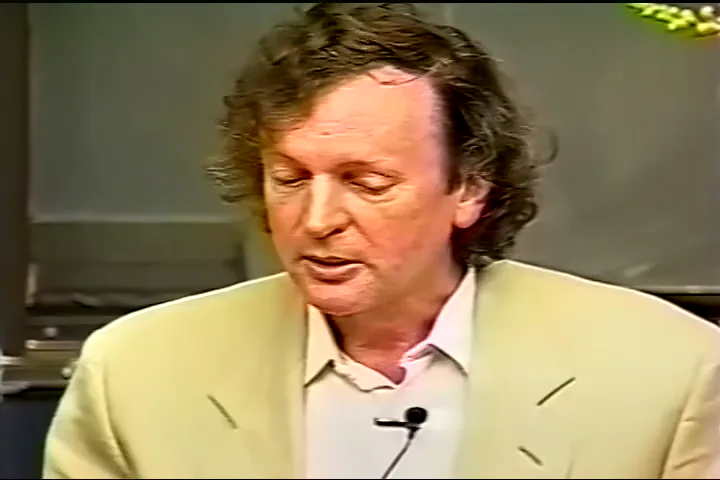
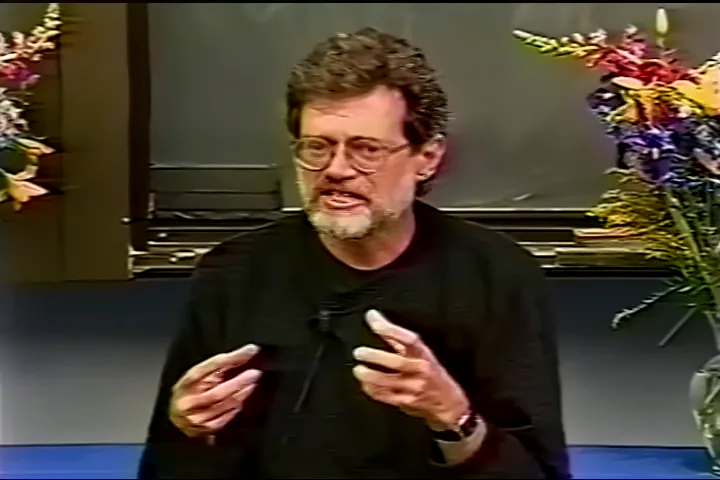
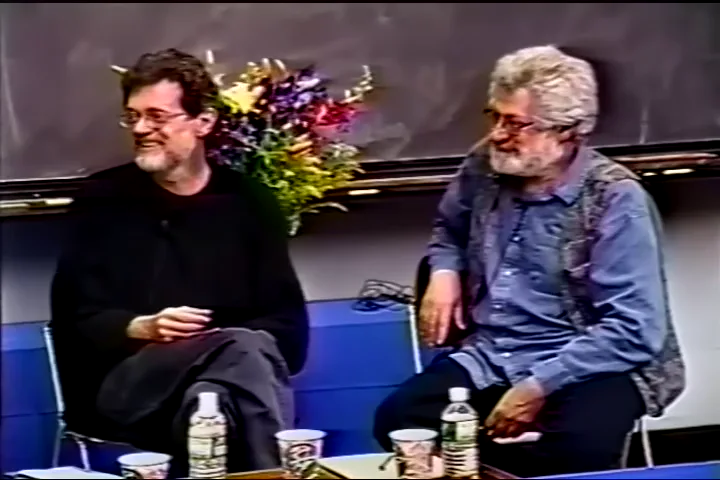
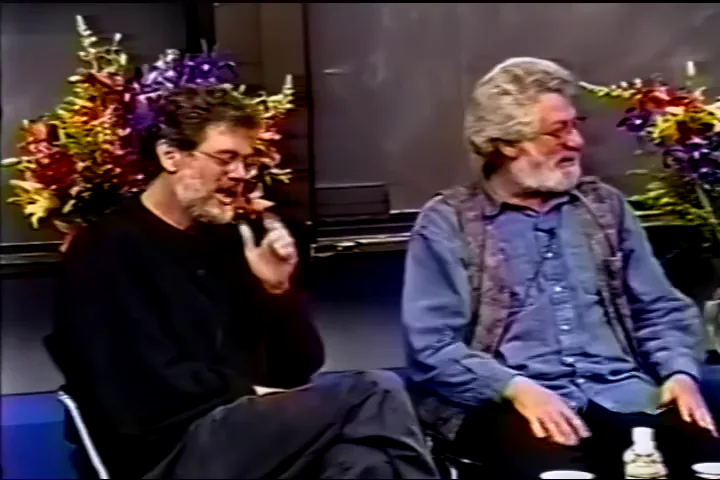
terence mckenna, ralph abraham, and rupert sheldrake's 1998 trialogue on evolutionary psychology, consciousness, and the mind's development through human prehistory.
a 1998 trialogue between terence mckenna, rupert sheldrake, and ralph abraham. three perspectives on the evolution of consciousness and the evolutionary mind.
a 1995 trialogue at esalen institute with terence mckenna, ralph abraham and rupert sheldrake on chaos theory, morphic resonance and the nature of reality