Manifesting the Mind
A 2009 documentary exploring shamanism and altered states through psychedelics. McKenna examines archaic techniques of ecstasy, from psilocybin mushrooms and Bufo toad 5-MeO-DMT to Mazatec mushroom practices rediscovered by Gordon Wasson. The film discusses entheogens versus psychedelics, shamanic medicine versus recreational use, and how these substances serve as non-specific amplifiers of mental states capable of revealing infinite love, self-forgiveness, and deep interconnectedness with the cosmos.
transcriptmachine-transcribed, unedited
in Eucharist promises a lot and delivers very little. You have to believe. Faith is not necessary
to experience what psychedelics have to teach. You don't have to believe. You can be as skeptical as
you want. The famous ethnologist, Merciliade, called it the archaic techniques of ecstasy.
And it certainly is archaic in the sense that it's probably our oldest religion.
But it's much more than a religion. It's actually a set of practices for achieving altered states
of consciousness, whether with the use of drugs or the use of other kinds of techniques like
ecstatic drumming and sometimes self-flagellation or sometimes different types of physical stress.
But the basic idea of shamanism is to achieve an altered state of consciousness.
And not simply to have the experience, the shaman actually uses the altered state to access
a transpersonal realm, a realm of spirits or supernatural forces, which can maybe be allies
of some kind, which he or she can manipulate, communicate with, obtain information from to help
their, the community, or an individual.
Shamans are medicine men, I guess, in western parlance. And they, so shamanism is what shamans do.
They beat drums, they take drugs, they dance, and they try to cure, they cure people or they attempt to
cure people. They interpret dreams, they find lost objects.
It harkens back to a time when things like psychotherapy and medicine and magic and religion and all of these
things weren't even, you know, fully formed concepts. So the shaman kind of combines all of these roles
of, he's a priest or, and a doctor and a psychotherapist and also often a poet and an artist and someone
that gives expression to the concept.
So, you know, it's, it's, it's, it's, it's, it's, it's, it's, it's, it's, it's, it's, it's, it's, it's, it's, it's, it's, it's, it's, it's, it's, it's, it's, it's,
cultural, you know, myth of the culture.
So he's a, like he was saying, he, and that...
It's, it should be clear, there are shamanesses as well or shaman, women
shamans, it's not a gender specific kind of thing.
But, but the figure of the shaman is a, you know, important spiritual figure in
these nontraditional societies, in these traditional societies.
traditional societies, in these indigenous societies, respected and a little bit feared,
you know, because the shaman is the odd person, the shaman is the person who is in direct
contact with the transpersonal and is kind of the interface for the culture and the rest
of the people.
He or she is the person that gets to actually dialogue and travel in these realms and they
often use psychotropic plants to do this, not invariably, but quite often.
It's quite clear that different kinds of hallucinogenic plants and substances were used, including
from the Bufo toad.
Peter I did some examination of this among the Olmec people, so this is before the classic
Maya civilization, back around 1200 BC.
And the Bufo toad can be the kind of a...
A 5-MeO-DMT can be extracted from the glands on the shoulder of the toad.
You know, there's another compound out there called bufotinine, which was first discovered
in frog skin, actually.
And it's got some kind of psychoactivity, it's a little hard to really pin that down.
It's a naturally occurring, you know, tryptamine as well, though, it's found in blood and brain
and cerebrospinal fluid and urine, any body fluid in animals in which it's been looked
for.
So, they were clearly using psilocybin mushrooms, they were clearly using the 5-MeO-DMT extracted
from the Bufo toad, and possibly a more close analog of DMT itself.
I mean, there's some discussion around the difference between 5-MeO-DMT and regular DMT,
but actually modern explorers...
Yeah.
...with these substances have reported that there are qualitatively different experiences,
but both can be pretty soul-shaking.
So I think within this context, then, you had a whole array of other hallucinogenic
plants being used, the morning glory.
The Mazatec Indians today, when Gordon Wasson visited the Mazatec and Miche regions of Oaxaca
in the 1950s...
Yeah.
...it started this whole revolution in understanding the scope and the depth of the sacred plants
that were being used.
So you have salvia divinorum, for example, is a plant that was used by the Mazatec Indians,
and it's still used today.
That's also where the sacred mushroom cult, the psilocybin mushroom cult, was rediscovered,
a place where the sacred mushroom cult apparently survived up until modern times.
Part of the fear that society at large has of psychedelic drugs is that the only framework
that we have to process these experiences through in Western culture is that of competitive
drinking.
Competitive drinking is sort of the standard that we use to measure what it's like to alter
consciousness, and I think the shamanistic perspective or shamanistic worldview can give
us a new perspective.
Yeah.
The shamanic perspective essentially would say that drugs are not the ideal way to alter
your consciousness, and you shouldn't alter your consciousness with any of these types
of substance until you at least first master altering your consciousness through other
means, such as the use of drums, dancing, paying attention to your dreams.
There's all sorts of different ways of attaining altered consciousness.
Go to the United States, through plants and drugs, through trance, meditation, hypnosis,
drumming, starvation, fasting, un-exhaustive exercise, all kinds of things.
Yeah.
And in terms of an entheogen, what I would define as an entheogen, I'm not fond of the
term, because it kind of requires that you have a belief in theos, which is god or divinity,
I think that the term psychedelic is just a bit more descriptive of what these drugs or plants, you know, do or what they manifest.
You know, psychedelic means, you know, mind manifesting, mind manifesting.
And, you know, one could argue that the phenomena one encounters on a psychedelic drug experience are either internally generated or are externally independent and freestanding.
I think it still kind of dispenses with theological problems that are accompanied by calling a drug something that generates, you know, divinity within, if you don't believe in divinity.
It means God within, generating God within.
And inside theos, God and gen, generate, so that which generates God inside a person.
So, and it's a class of drugs, formerly called psychedelic, but it's a way of sort of softening the bad press of the word psychedelic.
And especially it's to separate it from sort of the party aspect of taking a drug and going crazy,
and showing that these drugs exist.
And these drugs have a spiritual side to them, if you can find it.
A term that I prefer is shamanic plant or shamanic medicine.
Because it's a plant, a psychoactive plant, usually a psychedelic or a hallucinogen, that is used in one of these shamanic traditions, right?
So it's appropriate to call it a shamanic medicine.
Although the same, the very same plant and the very same substance could be not shamanic if you're not using it in a shamanic context.
If you're using it recreationally or taking it in a rave or some other situation, it's not really a shamanic medicine anymore.
It's still the same substance, but if you're talking about substances that are used specifically sort of in this shamanic context, then I like shamanic medicine.
I have problems with the term entheogen, although I know that it's gotten, you know, more popular.
After Karl Ruck, who was a classicist, and Jonathan Ott and some other people proposed it as an alternative to hallucinogen.
Entheogen means manifesting the God within, entheos, within and God.
And that's fine.
But they don't always do that.
I don't like the word because I'm a Buddhist and I don't believe in gods, you know.
So, you know, it's, to me, it's something which helps you to reach your full potential.
You don't need to introduce the idea of God.
I like the term because I have turned very mystical, you know, since taking LSD.
And so my outlook is more skewed in that direction.
I think that what Groff said was that it was a non-specific amplifier of your mental states.
The psychedelic or hallucinogen or fantastica, you know, the psychotomimetic, you know, all of these qualities.
That have been ascribed to the same class of sacraments that we now refer to as entheogens.
I think it's closer for me to the ultimate purpose for which these substances can be used.
The capacity for the human being to experience infinite love.
And total self-forgiveness.
A sense of deep interconnectedness with the planet and with all people and with the cosmos.
This plasticity of our identity.
And helping us to see into realms that
perhaps
are both ancient
because they're the archetypal divine imagination
and they're ever fresh.
You know, because it is transcendental presence that is the creator.
The artist.
The cosmic artist, you know.
Entheogen.
It means connecting with God.
I've been searching for God all my life.
I was a practicing Catholic for many, many years.
And you would think that psychedelics, you know, being mind manifesting,
would show you the God you've been worshipping.
The closest I ever got to God was that,
Hey, Nick, you're God.
You're an aspect of divinity that's looking out at this.
You know, a little spy for God.
And so enjoy it.
I said, well, that's a twist.
I've been looking for a God outside me.
And here I learned that I'm one of God.
And that I'm one of God's apostles in a way.
What a surprise.
So that's what I learned from psychedelics.
At least that's a hypothesis.
So pay attention.
You know, that was the message.
Pay attention, Nick.
You're collecting data for God.
Look with God's eyes upon the world.
So the term hallucinogen is inaccurate.
The term psychotomimetic is inaccurate.
The term entheogen is inaccurate.
It's, you know, it all depends on circumstances.
My personal preference is I like psychedelic.
Because even though the term carries all this cultural baggage,
you know, and everything's psychedelic,
that's kind of something left over from the 60s.
But in the strict sense, psychedelic means mind manifesting.
And I like the term because it leaves it open.
I mean, these substances certainly manifest the mind.
They manifest the mind in some aspect.
And we don't have, you know, we don't have any argument with that.
But how they manifest it, you know, depends on the set and setting.
And like these other terms, you know, sort of are more specifically related to set and setting.
And they also show how difficult it is to really linguistically kind of put this in a box,
you know, characterize what they do.
You know, sometimes they're mystical.
Sometimes they're induced psychosis.
Sometimes they don't do much of anything at all, you know.
But they always manifest the mind in some way.
So I like psychedelic if it could just be divorced from, you know,
all the connotations that it's come to have in our culture.
I think it's almost inevitable that psychedelics have been playing a part
in religious, mystical experiences since the beginning of time.
They are a powerful way for human beings to blow their little egos out of the water
and contact the divine.
I mean, one thing, you know, the whole of spirituality has its roots,
ancient roots, in the shamanic traditions.
We still have those traditions.
And a huge number of them are based on whatever the indigenous psychedelic happens to be in that area.
Because what could be more natural than you pick up a mushroom or something like that,
you ingest it, and my God, you're having visions.
You're seeing life in a new way.
You're seeing through the appearances.
You have a greater understanding, or at least your, your,
the confines of your common sense understanding has exploded.
And it's transformational.
They elicit a whole spectrum of psychological effects.
Probably the ones that people find most interesting as far as alterations of consciousness.
They have profound perceptual effects, emotional effects,
cognitive effects.
They have effects on your sense of self and on your relationship to your body and to your will.
You know, so they kind of cut across the entire spectrum of human consciousness.
It's rare that people rush to repeat it, you know, over and over again regularly.
It's not that you have a craving to take the drug.
You have a curiosity about the experience.
And you often have to overcome your reluctance to take the drug in order to have that.
You see this with ayahuasca very strongly.
You know, if you drink lots of ayahuasca, you actually develop a physiological aversion syndrome.
You know, and this is well known where, with other substances,
where it tastes so bad and you get sick and all that.
And you actually, you know, really don't want to consume it, you know.
But you do.
And somehow you always get it down.
And you're always glad you did.
You know, because you overcome the aversion and you learn so much from it.
You know, but it's definitely not addicting.
Quite the opposite.
I think it is possible for people.
To have an abusive relationship with a psychedelic drug.
Although compared to the other drugs of abuse.
That's certainly a lot less common.
For example, the kinds of relationships that most people have with heroin or alcohol or tobacco.
Those kinds of drugs.
You know, psychedelics, as a rule anyway, tend to be taken sparingly.
You know, once a week, once a month, once a year.
As opposed to daily.
And in fact, in the case of most of the classical psychedelic drugs.
Like LSD, psilocybin, DMT.
If you take them regularly, you quickly develop tolerance.
And you stop responding.
Especially strongly after the second or third day that you take a psychedelic drug.
That's not quite the case with DMT.
But, you know, the debilitating effects of DMT.
You know, tend to limit its repetitive habitual use as well.
No, there's no evidence that antigen are addictive.
I mean, ayahuasca or mushrooms or peyote are definitely.
Or iboga are definitely not addictive substances.
I mean, you can take them and not take them again for years.
I mean, they can be a little bit psychologically addictive.
Like any experience.
If somebody really loves it.
They may want to go back and have the experience again and again.
But generally, you really don't find abusive patterns with people who make use of these substances.
Look in your own pharmacopoeia, you know.
Look at the drugs that you're taking.
And note their side effects.
And how many people a year have died from inhaling marijuana.
Goose egg.
Now, look at how many people die from drinking alcohol.
You know, you've got hundreds and thousands of people.
You've got the people who are completely distraught over the alcohol addiction and things like this.
It's countless billions of dollars and millions of lives.
Or, you know, think of the people that get creamed when the drunk driver, you know, hurts someone.
So there's so many repercussions that are much worse with alcohol and yet it's legal.
And so the idiocy of our current position on cannabis is really sad.
But my prayer is that the grassroots movement will continue to show its obvious advantage.
To our culture.
By a kind of strict integration.
And taxing.
And, you know, so making it a legally available substance.
Which I think would also make us a little more willing to note the importance of the entheogens.
Because in a sense, it's a mild entheogen.
Cannabis.
At the same time, we've conflated them with other substances like heroin, and speed, and cocaine.
Which are more addictive, more artificial, where we've taken, in the case of heroin and cocaine,
we took naturally occurring plant substances but then we did a chemical process to them
to, kind of, amp up the active component and separate it.
So I have a friend, Morgan is an herbalist.
And he makes a distinction.
makes a distinction between, you know, the whole plant medicine approach that
indigenous people were mostly, you know, using and our kind of attitude of just
isolating the agent that causes a certain reaction and then amplifying
that effect so that it leads to addictive patterns. A culture is what it
eats and an individual's personality is often largely a reflection of their diet.
There has not been a human culture that did not bear upon it the stamp of its
relationship to certain plants which altered the individual and mass psyche.
We can think of numerous examples. The influence, for instance, of sugar on the
growth of 19th century mercantilism or the way in which the British manipulated
opium policy in the Far East.
Or, as you mentioned, alcohol, which has always been the drug of choice in Western
culture. Who can imagine modern industrial office culture without coffee?
These are major drug dependencies that have placed their stamp on the lives of
millions and millions of people. It's simply that we choose to linguistically
define it in such a way that the
effect is not something most people are cognizant of.
It's funny that all of these things are lumped under one label, drugs. I come
from a sort of a peasant family. Both my parents were farmers and were just
immigrants basically. And when my mother found out that I was in California that
I took drugs, it broke her heart. And there was no way that I could
explain to her what it was I was doing. Because that word drug just had such an impact on her
mind that it was about the worst thing her firstborn son could ever do.
It was one of the saddest things of my life that I could not explain to mom what it was
I was doing. Mom was a very religious person. She went to Catholic church every day. I could
not find a way to tell her that I was doing the same thing that she was doing.
And I still, you know, would not know how to tell mom, you know, what the difference
was between her going to church and me taking entheogens, searching for God through chemicals.
There's no such thing as a bad drug, right? Because a drug is just a drug. It's a substance
with certain properties. It has no moral qualities. The only thing that has moral qualities is
human behavior.
And there is lots of
bad human behavior with respect to drugs. And there's lots of bad human behavior with
respect to all kinds of things. And good human behavior, too. I mean, again, this comes
back to the context. So the whole war on drugs idea and the idea, you know, it has
nothing to do with protecting people from toxic substances, you know. If that were
the purpose of the war on drugs, tobacco and alcohol, you know, would be prohibited. Tomorrow,
and yet the structure of the law, not that prohibition would do any good, and I'm not
advocating that, right? But if that were really the agenda for drug control, they would say,
well, these are clearly the most harmful drugs. These are the ones that are killing
the most people. So they should be strictly regulated. But in fact, the way the law is
set up, the FDA is not even allowed to classify tobacco and alcohol as a drug.
There are these science fiction cliches like, there is some knowledge man should not know.
So probably, there are probably horrible things like huge devils or places where you shouldn't
go. You know, viruses that would kill all life on Earth or huge, like, things that
make the atomic bomb. There's terrible things. So what does our, our society has a right
to make those things not investigatable by science.
They're too dangerous. So our society decides that among those things is marijuana. That
scientists should not be able to explore marijuana and MDMA and LSD and these certain molecules
because there are things men should not know. And I think that's, as a scientist, that's
laughable. And as I often like to say, I got my degree in nuclear physics and I like to
say, if they trusted me with plutonium, why not LSD?
My gosh. So this makes no sense. So, okay, if that's, if the war on drugs is not about
protecting people from harmful substances, what is it about? Why are all these substances
illegal? It's about control. And ultimately, it's about control of what people can think.
And it's the control of experience. It's essentially the state arrogating itself
to the point where it says, you know, certain states of consciousness are allowed and other
states of consciousness are not allowed. And that's really what it comes down to. This
is about cognitive liberty.
There are these, you know, plants that have these molecules that humans may have used
for thousands of years that produce visions and so on and are often considered to be healing.
In our cultures, we've demonized some of these substances.
And made them illegal, which I would consider to be unfortunate.
It's the state saying, you know, don't go there because if you take this in theogen
or you take this psychedelic, you're going to have funny ideas. And funny ideas are very
dangerous, especially if they don't fit in with, you know, what we're saying should be,
you know, kind of the accepted cultural zeitgeist.
So, that's the danger of psychedelics is they actually cause people to question the
cultural paradigms and say, well, you know, maybe this is not consistent with, you know,
maybe the revelations of psychedelics are not consistent with what Hollywood and Wall
Street and the government and Main Street and, you know, religions and all these institutions
are describing.
So, the war on drugs is really a war on consciousness and who's allowed to think what.
More importantly, I personally don't believe that anybody has the right to tell you what
to do with your own body or what thoughts that you can think. That if you do not have
the freedom to decide what happens to your own body and your own mind, that you really
don't have freedom at its most basic level.
You know, I think it's really ridiculous that they won't allow terminal cancer patients
to take whatever fucking drug they want. I mean, you can't argue it's going to be, if
you're going to die anyway, why can't you take any drug you like? And the extension
of that is once you pass a certain age, I don't know quite what that age should be,
you should be able to do anything you fucking want to your body without being prosecuted.
So scientists and old people should have free access to any drugs they want.
I think I qualify in both camps. I don't even think that's enlightened. I think that's
common sense. An enlightened society would take a look at these drugs objectively and
say which ones can help promote and do we want a society based on alcohol and cocaine
or do you want a society based on LSD, MDMA, ayahuasca? Which of the drugs are we going
to promote?
Our society has picked for some reason the absolute worst drugs to make as its standards.
Potentially psychedelic drugs could be for psychology what the telescope became for
the science of astronomy.
In the right setting, with the right kind of psychotherapy support or religious support
or whatever the context of the support is.
Most importantly, what the person's intention is,
when they take it, if they're an addict or an alcoholic,
they can take ayahuasca, they can take peyote,
they can take these substances,
and it will definitely help them to get over that.
And in the case of something like ibogaine,
it's even more specific.
I mean, there's other things going on with ibogaine
that might interrupt the addiction syndrome
on a physical level.
For many people, actually, who were alcoholics
and things like that, many have been cured
by their use of psychedelics.
So in some ways, it's the opposite of addiction.
Entheogens actually are almost the opposite
of an addicting drug, in that sometimes a person
will only take an entheogen once
and have a very powerful experience
and actually be freed
from some other addictions or habits
that he or she might have.
And in fact, in some ibogaine research,
an African drug called ibogaine,
people are being taken off of heroin and alcohol
with some good success, where other methods have failed.
I discovered ibogaine pretty much 11 years ago
on the internet back home to a friend of mine,
who was a drug addict.
He was the first young man who was addicted to ibogaine.
He was taking ibogaine, which I gave a treatment.
It was in an area of the area addicted.
So I treat him with the roots,
because I never used ibogaine for the detox.
No, I always use a straight root.
So when he went back to his country,
that's how he learned about ibogaine,
and he sent me an email.
I'm like, wow, that's very interesting.
So ibogaine is a,
an extraction from Iboga. So he take the rooty stuff, he do the extraction and it
became the first like a total Acoid. Ibogaine is very effective at treating
certain kinds of addiction, opiates, methamphetamines, cocaine and alcohol.
Ibogaine has five different therapies that we basically became aware in their
use. One is in an initiatory, an initiatory aspect which is the
psycho-spiritual where you get into the deepening dreaming aspects but you have
no active addiction in the body. The second is for physical healing, things
like herpes, asthma, lung problems, blocked energies in the system, scar
tissue. Then there is also a mental treatment for disabilities around
depression, post-traumatic stress disorder, trauma,
anxiety, depression, depression, trauma, anxiety, depression, trauma,
sexual abuse. Then there's a reset therapy that we do with alcohol, cocaine
and methamphetamine. We separate that because those those substances need to
be out of the body for 24 to 72 hours prior to treatment. And then there's
opiate. And in opiate detox we can begin 12 hours after last administering of an
opiate and within 45 minutes it will completely control any symptoms of
withdrawals. I even do
the healing for let's say for women who want to have kids. And let's say they try
in hospital, you know, and the doctor there say, you know, you can't have kids anymore.
But the woman is normal. It's like nothing is missing in her tummy. Why she can't have
kids? How do you do healing of that Ebola? Something that's been discovered recently
by Dr. Deborah Mash and others is that there is a new neurotransmitter created in the brain
after taking ibogaine called norebogaine. And it can stay in your system for up to four months.
And that's the substance that they theorize is continually working on your
psyche to make that reduction of cravings stay in place. So that, you know,
over the long term you have time to break out of that cycle of addiction and
become
a new person. Not only is
it address the symptoms of withdrawals and discomfort,
but it also works in the craving center of the mind. So the individual, by the time
they've completed treatment, has no desire whatsoever
within a 10 days to two week period to touch opiates.
See, that's pretty much the reason why I'm here in the West. I didn't just decide to come here.
I love my country and we're really peaceful there.
Life is also great like here in Mexico.
You know, I would not just like leave my people, whatever I was doing, my family, just to come
here to hang out.
I had a call from the Spirit to spray the woods the word of the word iboga.
Which is like talking with Ibogaine.
To spray in the world cause it's not just for Africans. It's for anybody who needs it.
If it was just up to me I would just say,
let's go from city to city clean up the streets clean up the houses you know we're gonna find
those guys you know with drug addict we're gonna find them and heal them all because that's the
only way this that iboga and and abogan is a last call for anybody we really want to get help
you don't have to spend like thousands and thousands of dollars or or spend months in a
clinic rehab and go back tomorrow and using the drugs no it takes just a couple days to get here
and i'm ready to do you know to do that to have anybody wants to take it just one decision that's
it that's all it takes but the thing is i've also known many people who take a lot of psychedelics
and they're heroin addicts they're alcoholics it hasn't helped them a bit so you know honesty
behooves me to say that this is not
a miracle cure for addiction all these things can do is like open up an opportunity for the person
to examine their lives and resolve to change if that's what they want to do but it won't
compel them to change you know it's not going to force anybody off off drugs um so you know
it's like a lot of other techniques for treating addiction talk therapy or
whatever they work in some people and not in other people since it's illegal in the united
states the only options that an addict has is to go out of the country or to do it illegally
in the united states and there are some people in the united states who are treating addicts
illegally you know they're breaking the law by healing these people however most people
are not sick they're not going to be treated the way they should be they're not going to be
treated they're not going to be treated the way they should be and that's why i'm so excited
about the idea of taking ibogaine and the other countries to take ibogaine i personally i went to
mexico around the puerto vallarta area with a organization called awakeninginthedream.com
and that was a great experience for me and the people there were super nice and it was in a
setting that i think was beneficial to the ibogaine experience in other words it wasn't in a clinic it
completely safe um but there are several clinics in mexico doing this some of them are just right
across the border in tijuana and there's lots of clinics around the world that will take your money
and give you ibogaine they've never taken ibogaine they don't know anything about drug addiction and
they have no idea what that individual is going through in that process you know and that just
frightens the hell out of me i mean in comparison to what the model in the united states this is
not a return visit um a revolving door therapy house we're hoping you can come here once get rid
of that addiction and when you come back again to do more work with the ibogaine if it benefited you
you know without an addiction in the body because then you can go to the next level and then you
work to the next level and this could be a real supportive you know this isn't like going to
meetings every day and believing that you're never going to be anything less than what you are
this confirms that you are no longer
you
in the body energetically there is no physical addiction existing in the system it enables them
to release from the addictive need actually they found themselves after their trips
without the desire for junk and they were all shocked you know like oh my god this is a
you know because they were like waiting for the other shoe to drop
uh
but then they actually felt like wow i am not hooked you know so there was something immediately
uh engaging about it on the other hand it was also very psychologically challenging to begin
with uh and you know it took one into a very deep inner world you maybe you were going to face some
of the shadows that has uh been part of your addictive process this really
sort of crosses over into the shamanic use
of these things i mean the shaman is a person who learns through discipline to navigate in these
realms and this is the realm of you know he learns to pass through both ways through the
doors that the dead pass daily um i think that's high doses of uh psychedelic
uh and i think that's a very powerful way to be able to take on that瘤
ability to do what he wants um but you know i think it's a very powerful way to be able to take on
i think the other way around um so i think that when we go back to this uh level of uh
or something like DMT is very close, probably.
I mean, I've never had a near-death experience.
I hope never to have one until I'm actually dying, you know.
But people who have had them say that they're very similar to high doses of DMT.
And there's even reason to think that the DMT, which our own bodies make,
may be involved in the near-death experience.
That, you know, in the state of stress on the mind and body that is produced when you're dying,
it's not inconceivable that your brain releases a massive flood of DMT and you have this experience.
But all this still is mostly within the realm of speculation.
We still don't really know enough about the normal concentrations of DMT in the body.
And what situations increase it, and in what sorts of conditions the levels are decreased.
Where is DMT found in nature?
Well, a better question would be, where is it not found in nature?
I mean, this is really interesting to me.
The fact that DMT is so ubiquitous in nature.
It is, from the chemical standpoint, structurally, it's the simplest of the psychedelics.
It's a very, very simple compound.
And in terms of biochemistry, it's only two steps away from tryptophan.
Tryptophan is an amino acid.
It's one of the essential amino acids.
So it is universal.
All living things have tryptophan.
Now, not all living things have DMT, probably.
But the enzymes that convert tryptophan to DMT, there are two main enzymes in this process, are also universal.
I mean, I don't know how chemical we want to get here.
But the basic idea is that there's an enzyme that takes off the acid group of the amino acid.
So it turns it from an amino.
And then there's another enzyme that puts methyl groups onto the amines.
So you get, first you get tryptophan, and then you get tryptamine, and then you get dimethyltryptamine, which is what DMT is.
And this goes on, I think, very commonly.
Well, these enzymes are certainly common.
I mean, they're common in all cells, practically.
Do all organisms have DMT?
Do all organisms contain DMT?
I think it's possible that all organisms might contain traces of DMT.
There are many plants that contain DMT.
We know of at least a couple hundred.
And that's only because we've looked.
You know, there are probably thousands of plants.
In fact, my suspicion is that because tryptophan is so easily converted to DMT,
I think if you went out with a sufficient amount of DMT,
a sufficiently sensitive instrument, mass spectrometer or whatever,
and just started sampling plants at random
and shoving those through your gas chromatograph or whatever you're using,
you would find traces of DMT in every plant.
And you would also find it, we know it's very widespread in animals, too.
So we know it's in amphibians, we know it's in mammals, including us.
We know it's in marine organisms.
We know it's in fish.
So it's, yeah, it's odd that, well, maybe it's not odd.
It's just a fact of nature that it's all over the place.
And probably is about as close to being universal as anything is.
It's also related to serotonin.
Serotonin is a neurotransmitter which occurs in all life forms.
It occurs in all life and is most concentrated in the higher primates
and most concentrated there in man.
It is 5-hydroxytryptamine,
while DMT is, as you mentioned, NN-dimethyltryptamine.
So there is a very close structural affinity
between this extremely potent and exotic hallucinogen
and the very common basis for ordinary consciousness, serotonin.
DMT and phybotoxy-DMT and even beta-carbolines,
which are the other component of the ayahuasca combination,
do occur in the human brain and may occur in other places in the human body,
in the adrenal glands, for instance, probably in the gut.
But they definitely occur in the human brain,
especially in the pineal gland.
Especially in the pineal gland.
There are other forms of DMT other than the smokable kind.
In fact, those other forms are the more traditionally used forms of DMT,
such as ayahuasca.
Ayahuasca is remarkable because, as you probably know,
it's combined from these two distinct plant species.
Its two principal ingredients are themselves inactive,
except in the presence of each other.
So what we have in the case of ayahuasca
is an example of a highly evolved folk pharmacology.
And how a discovery like this was ever made in the first place
is one of the challenging questions that anthropologists have to deal with.
After all, in a square mile of Amazonian rainforest,
it is not unusual to encounter 50,000 people,
50,000 distinct species of plants.
How then did these so-called primitive or preliterate people
make the connection between the combining of the bark of one
with the leaves of another,
boiled and put through a number of procedures
to produce an intense visionary hallucinogen?
This is an extremely interesting and, to this day, unanswered question.
It tastes horrible, by the way.
It tastes...
My version of what it tastes like is
maybe four-day-old espresso
that someone had put out a cigarette in
with a dash of lemon.
And so you gag it down, and...
Then, after a while, your mind starts to have a plasticity and an openness,
and it remains that way for about four or five hours,
which can be quite beautiful.
If you've seen any of the tapestries of the Inner Mind Cathedral
in the DMT state,
that extends it for hours.
So it's kind of a shame not to take ayahuasca
if you're going to do DMT,
because, geez, you can extend the journey to several hours.
Well, DMT is a tryptamine.
So is LSD.
LSD is a laboratory invention.
It's a chemical modification of an ergot alkaloid.
But in terms of their...
You know, pharmacology, they're quite similar.
They both impact certain kinds of serotonin receptors in the brain,
through which most people propose that these drugs have their effects.
You know, the...
I would say the main difference is that DMT is quite short-acting,
and LSD is quite long-acting.
But in terms of the...
On the spectrum of effects,
they're quite comparable,
in terms of the perceptual and emotional
and the cognitive responses to consuming the drug or the compound.
Also, DMT is a compound that is found in all kinds of animals and plants,
and LSD isn't a natural product.
It isn't found in the animal kingdom or the plant kingdom.
In ayahuasca, the effects of DMT begin a lot slower,
probably within a half hour, maybe an hour,
and they peak in around two to three hours,
and they're usually resolved between around six hours or so.
So even though it's a slower effect,
the quality of the response is the same.
LSD was always a bit of a commitment,
because you've got at least eight hours
that you're committed to this altered state,
and so you have to arrange your life,
wisely, to support that.
And this is just a little more manageable, I think,
in some ways.
It's also very clean and very clear,
and you don't feel any body load afterward.
You feel uplifted.
You feel, like, vitalized.
You feel like you need less sleep, you know?
And you feel that you've addressed yourself on a deep level.
A lot of deep issues came up for me.
Yeah, well, I've had experiences with ayahuasca and ibogaine.
They've been very profound and important experiences in my life.
And they've helped me, I feel, to grow on many levels.
I've written about them extensively in my books,
Breaking Open the Head and 2012, The Return of Quetzalcoatl.
I feel like they gave me insights into my personal psychology,
visions about better paths to take.
They kind of acted as kind of antidepressants
that lifted my spirits up.
Made me see these other layers or possibilities of reality.
So they've been very important experiences for me.
Telepathic and group mind states are induced
by this particular plant mixture.
And it's particularly interesting in the light of the fact
that the chemical constituents which make it go
are in fact found endogenously in the human brain.
These are not exotic compounds from the point of view
of ordinary human brain chemistry.
So there is a suggestion there that manipulation
of neurohumeral compounds, brain neurotransmitters
and that sort of thing may in fact open the door
to untapped areas of human potential.
One of the games my brother liked to play with the mushrooms
was, you know, in this dialogue situation,
he was always saying,
tell me something I can't possibly know, right?
And that will validate that it's not me, you know,
that this is coming from.
I don't know that he ever succeeded in getting it.
It's very cagey, you know, they're very tricky that way.
It's, you know, but occasionally they do seem to tell people
things that they can't possibly know
or that they've never thought about in quite that way.
Now it's come out, for example, that, you know,
Crick's insight into the structure of DNA
was assisted by LSD, you know,
and he reluctantly but finally admitted
that that was a big influence.
And many computer scientists, you know, Steve Jobs has said
LSD's been very useful for his creativity.
Terry Mullis, the Nobel Prize winner
who figured out the PCR chain reaction
has been quite upfront about it.
LSD gave him the ability to get down with the molecules
and see what's happening.
In some sense, there is a communication.
In some sense, the question isn't even valid
because where do the boundaries between the self and the world exist?
You know, we're not really separate.
I mean, we're part of this information field.
And, you know, this notion that consciousness,
I mean, I do think that consciousness does,
it's like a property of the continuum.
It's like the old physical physicist concept
of the ether or something.
It kind of permeates everything.
And it's not really localized in the human brain
or necessarily even generated by the human brain.
Why does the brain require DMT for normal function
if, you know, this is indeed true?
Yeah, and it's hard to say.
I mean, I think that perhaps one of the functions
of ordinary levels of DMT is kind of like a,
you know, kind of reality thermostat.
If you have a certain kind of narrow window
of levels of DMT in the brain,
it maintains this ordinary level of, you know, perceptual,
you know, consensus reality that most of us live in.
You know, kind of like the endo-matrix in a way,
as opposed to like an externally applied, you know,
psychological or, you know, consciousness kind of matrix
like in the movie.
You know, this is one that's internally generated.
But it may be that the brain is a place
where it becomes focused and concentrated.
You know, the brain may be as much a receiver
of the signal as it is a generator of the signal.
You know, nobody can really say,
but that model in some ways appeals more to me
than the notion that it's all coming from the brain.
The brain is more like a node, you know,
and there's this sort of field of consciousness
that permeates everything,
and to a certain degree, everything is conscious.
I think of the shaman as entering into this net of being
in the higher worlds, in the heaven worlds,
and that's why I've personified the net of being,
this painting behind us,
as this continuum of heads
interlocking infinitely in all directions,
because that points to being as a continuum,
as a network, in a sense, to an infinite realm.
And this is a part of the deep fabric of our being, I think.
Because we sense ourselves as souls related to many.
There is this everyday world,
but you can be in a place where there is no you
and still perceive the world.
That scared me.
Losing my ego was the scariest thing,
and I still don't like it.
A profound state which may be reached
by use of these entheogens, psychedelics, hallucinogens,
whatever you're going to call them,
which is known as ego loss or ego death.
Unfortunately, subsequent to the coinage of this term,
ego has come to be used in a completely other sense.
It has been used in the sense of pride.
And that is not what ego death is about.
Ego death would mean you lose your sense of I for good.
And that's not what happens.
They mean a temporary suspension of the ego,
when ego death is spoken of.
Ego death means the death of you as a concept,
whereas we walk around thinking of ourselves as things.
We think of, I am sitting in the chair.
Therefore, you know, I am a thing.
The chair is a thing.
When we reach the realm of ego death,
or ego dissolution, or whatever you're going to call it,
there is no longer any perceived boundary
between oneself and the chair.
In this state, there are no things.
There is just one continuous experience.
In some sense, all of experience
is an illusion, you know.
Everything that we experience in the here and now
and our state of being is a hallucination,
an elaborate hallucination that our brains construct.
We happen to call it consensus reality.
But it's still, I mean, physics tells us that,
you know, the picture of reality that we build
so that we can navigate through the world,
and not step in front of buses and stuff like that
and do all those, you know,
the world doesn't really look like this at all.
You know, the brain constructs a model of reality
that more or less maps onto reality.
It's good enough that we can survive.
But we're focused in a kind of, you know,
constricted dimensional awareness of reality.
And, you know, for safety reasons mostly, you know,
and we don't necessarily want to know
that we are actual one consciousness
with all beings and things at all times.
So, nevertheless, those dimensions
are all open to our being.
You know, we have a complete freedom
of the continuum of being.
If we change the nature, you know,
we have the model and we have the real world out here
and we have the sensory neural interface
that's taking this information in,
interpreting it, and giving us the model.
If we change the nature of the sensory neural interface
a little or a lot,
if we substitute, say, DMT for serotonin,
you know, the model of the world that we get
changes radically.
And who's to say that that's any less valid
than the model that, you know,
the brain constructs for, you know,
for everyday purposes?
So this idea that, you know,
I mean, it's all illusion.
It's all hallucination.
That's what experience is, you know.
I mean, that's why in some ways
I sometimes get a little impatient
with people that say, you know,
well, a drug experience cannot possibly have
any spiritual validity.
Well, I'm here to tell you that all experience
is a drug experience, you know.
We're all on drugs all the time,
largely because we're made of drugs, you know.
And that's what drives us, you know.
Experience is, you know, sort of the,
what issues out of this biochemical process
of, you know, all these neurotransmitters
and hormones moving around our brain.
I mean, it's drugs.
We've gotten very stuck on the idea
that, like, we're conscious and sentient
and, you know, intelligent and have knowledge
and that nothing else in the world of nature
really is like that.
But actually, you know, we're a very young
experiment on the planet.
We're a young species.
And the plant world has been around
for a really long time.
The fungus world even longer than that.
And they've developed, you know,
symbiotic meshworks
of species interrelationship,
very complicated diplomacy,
interspecies diplomacy.
And it may be that certain plants
have been kind of anointed
or given the role to be the diplomats
and the teachers who work with
the human species to help us
to see if we can evolve
to be less destructive
before we sort of just lose our shit
and top off the biosphere.
Maybe the ubiquity of DMT is,
you know, signature of consciousness in nature
or nature sending a message to,
you know, the big-brained stupid primates,
you know, wake up, look around.
It's everywhere.
You know, mind is everywhere.
I think that their message is,
wake up, dummy, you know,
before you kill us all here,
on one hand.
And the other hand, they're saying,
wake up to your own divinity.
Wake up to your higher capacities.
So they're talking to us every day,
which is true.
But no, we don't, we're not listening
because it's like when you get up in the morning,
you go straight to work,
you work after, after, after, you know,
your day, you get off, you go home,
or you stop at the restaurant,
eat a good meal and go home.
That's it, you go to sleep.
Next day, you do the same thing.
So to answer your question,
herbs, our spirit talking to us every day.
Just be ready.
And to, you know, to know,
what is it?
What is it trying to tell me?
I mean, you have these experiences
and you seem to have a communication, right?
And very often they present themselves
as an intelligence,
something outside yourself, you know,
and you're communicating with it.
You're having a dialogue
or some feeling of, you know,
an other that you're interacting with.
Whether it is a illusion or not,
it's hard to,
it's really hard to know.
Psychedelics sort of make people aware
of realms that are less material,
you know, that the real sort of,
the really rewarding experiences
are not necessarily what Wall Street
or Madison Avenue or Hollywood
wants to be.
What they want is to deliver to you.
I mean, they,
those experiences,
and they're synthetic experiences
just as much as a drug experience
is a synthetic experience.
But they're usually tied with some
consumerist, you know, agenda.
And, I mean,
this is part of the,
the sort of the,
the inconsistent attitude of,
of society.
I mean, they want they,
I don't know,
the corporate hegemony or whatever.
I mean, they want people to be addicted to things.
They want people to consume things.
Not necessarily to drugs,
but drugs will do.
I mean, they want people to drink
and smoke and all these things,
you know,
and they,
and they want people to be addicted to their,
to their cars and computers
and TV and all that.
So, you know,
a lot of what it's about
is kind of keeping people entertained
and focused on these sort of corporate,
corporately massaged,
corporately created versions of,
of reality.
The business of culture,
any culture,
is to perpetuate its cultural models.
And if the hallucinogenic plants
have not been integrated into the cultural model,
then they are definitely seen
as dangerous forces
for an unpredictable sort of social change.
Now, if the hallucinogenic plants
have been integrated into the cultural model,
this is not then a problem.
And this is the case with shamanism.
Shamanism is the culturally sanctified institution
of inner exploration
via psychoactive,
psychoactive plants.
Where psychoactive plants are not present,
shamanic institutions tend to become vitiated,
to rely on ritual or ordeals
or other methods of eluciting,
eliciting these ecstatic states.
Well, the contemporary artist,
therefore,
has felt a great kinship with the shaman
because the archetype of the contemporary artist
is that they stand askance from
or ajar from conventional culture.
And therefore,
these are the creative artists, we hope,
therefore they contribute
a different perspective on ourselves
and something that we can learn from.
And I think that
that's part of the role of sacred art,
ultimately,
is to show us a higher model of what we can be
so that we're pulled toward our highest potential
rather than having our negative
or materialist sense reinforced.
We get that through a lot of our other materialist
and very rational culture.
And theogens are inherently
threatening to the culture.
I mean, that's, I think, one reason that
they're brutally suppressed,
both when capitalist cultures
or dominant cultures
come on indigenous cultures.
You know, they're usually bringing
another religion, an outside religion,
Christianity or whatever,
usually incompatible with the indigenous practices.
So that's the first thing to go
and the first thing to be attacked.
And along with that goes the knowledge
of these plants.
The church was concerned that
the magic of the witches
be seen as real, number one,
and number two, entirely caused
by the agency of the devil himself.
And so the church downplayed
the operational role that plants had
in inducing these states
because, after all, if the devil
cannot lead you astray
without the use of plants,
why, what kind of devil is it?
So in our own historical tradition,
there is a curious blindness
to the efficacy of hallucinogenic plants.
You know, it is possible
that as the visionary experience
becomes more acceptable
in our contemporary postmodern culture,
more and more people may gravitate
to those types of experience.
And at the same time, we can already see
that the traditional religious structures
are in a lot of trouble.
They're causing a lot of trouble in the world.
It probably would be beneficial
for there to be a kind of consciousness evolution
out of fundamentalist belief systems.
And, you know, I think that
the shamanic experience might be helpful
in that evolutionary process.
As institutions, what they have in common is
they discourage individual thought
and they discourage critical thinking
and they discourage questions, questioning.
They encourage that,
okay, here is a body of beliefs
or cultural norms or, you know,
largely accepted beliefs
and you're just supposed to accept it.
You know, don't ask questions.
Sit down and shut up.
You know, accept it
and integrate it
and be a good, you know, citizen, consumer,
whatever role is decided.
And theogens are inherently threatening
because they enable people
or sometimes they compel people to reject that.
You know, and say, well, maybe there's more to life
than, you know, working in a cubicle
for some faceless corporation
so I can, you know, not have health insurance
and die sick
and, you know, without a pension
and, you know, and just spend my time with that.
Maybe it encourages people to, you know,
look for different purposes in life than that.
So that's really, I think, what's going on.
The problem with the psychedelics
is that they dissolve cultural programming
and hence, inherently,
have a political charge about them.
And actually, that's the weakness, you know,
of what I am sort of beginning to call the death culture,
you know.
And these things then actually become,
in a sense, our own bioweapons.
Or if we're on the other side of this divide,
then these plants,
you know, especially the plants,
become very dangerous in this context.
You know, they're trying to suppress them,
but you can't suppress them.
And they're, you know,
they're ways of changing hearts and minds,
so they are definitely very, very dangerous.
But they can be used in a creative way
to counteract kind of the toxic message
that the mainstream culture puts out.
I put a lot of time into making sacred art
in order to download the shamanic
and theogenic and meditative
and, you know, just grace and dream
and shamanic journey
and all of these kinds of modes
of and highly rational thinking about
philosophically what are the implications
of the worldview that I'm expressing
and things like that.
Because for me,
the artist, perhaps at their best,
could be, I love that word,
scintilla.
You know, Terence always used,
could be the scintilla of evolving consciousness.
As we all can be, you know.
But they could express it visually.
And in fact, there are images
that appear to be of the fly agaric mushroom
in some early Christian art.
The fresco at Plain Corral
is one example of this.
And it appears to be Adam and Eve
standing next to this big fly agaric mushroom
that has sprouts coming off of it.
It's not depicted in a way
exactly the way a fly agaric grows,
but the stalk is there
and the cap of the mushroom
and it has white flecks on top.
It looks very much like
an Amanita muscaria mushroom.
Now this has been debated by art scholars
saying that no, this is just the style
that was used, a figurative style,
a way to paint trees.
Why though, you have to ask,
would you start painting trees
that looked like mushrooms?
Unless perhaps you were trying to get across
another message in that painting.
The ceiling of the Hildesheim Cathedral in Germany,
painted I think in 1100 this era,
there's a striking image similar,
very similar to the Plain Corral fresco
of Adam and Eve again standing
not next to a tree like Amanita,
but standing in front of what looks like
a fly agaric cap behind them,
tilted on so it's facing the viewer.
So it's round like this
and Adam and Eve are standing in front of it.
Not only is it perfectly round
like an Amanita cap,
not only does it have white spots,
these actually are silver spots
spread out over like the veil remnants,
white veil remnants on an Amanita cap,
but these are actually metallic hemispheres,
silver metallic hemispheres
that are attached to the painting.
So they're actually raised bumps
just like you'll find on the cap of a mushroom.
The veil remnants are white flecks
that can even be removed.
So this was, in my opinion,
this was an intentional clue
by the artist to show people
what was really being shown here,
what the fruit of the Garden of Eden
really was according to the artist
and according to Allegro
and Wasson as well,
that the fruit of the Garden of Eden
was in fact the fly agaric mushroom.
It's just such a damn attractive mushroom,
I have to say.
It distinguishes itself by its beauty.
I can't think of a more beautiful mushroom, really.
At the same time,
I can think of one that takes you a lot higher
in terms of its psychedelic potency
and entheogenic potential.
I've never had much of a holy experience
on an amanita.
It was slightly more of a deliriant
and a body wank
than a, you know,
something that would elevate you
to the heavenly spheres, you know.
It's the iconic mushroom in a sense.
I mean, it's the archetypal mushroom
that goes way, way back
to at least the Paleolithic.
We know that Siberian shamanism
is where the whole thing is thought to have originated
and that that was...
a lot of that constellated around amanita.
And, you know,
the classic shamanic motifs
of the ascending the world tree
and having the axis mundi
that links the celestial and the earthly
and the underground realms
and in Siberian shamanism,
this is often depicted as a mushroom.
I've encountered the amanita muscaria mushroom
and its symbolism
actually in the material
around the Finnish Kalevala,
the national epic of Finland.
It was collected together
as an oral tradition in the 19th century
and was called the Kalevala.
And it's the ancient legends of Finland.
And there's an artifact or an idea
or a concept in the Kalevala
called the sampo.
And the sampo is kind of this magic mill
that's capable of producing anything you wish.
And it's really a cosmological metaphor
for the starry sky centered on the pole star.
And the stars are called the ciphered cover,
so it's envisioned as this huge sort of umbrella-like thing
that spins slowly with the central axis coming down.
So it's also a huge image
of the amanita muscaria mushroom.
As a cosmological metaphor.
Muscimol,
which is the active,
main psychoactive principle in amanita muscaria,
is a very potent GABA agonist.
So it interacts specifically with these receptors
and not much,
not at all with the serotonin receptors,
except possibly indirectly.
So how can amanita muscaria
produce these transcendent experiences
and there are several possible answers.
Maybe they don't.
I personally am not familiar enough
with amanita muscaria to say that they do.
My own experience with amanita was very limited
because I didn't enjoy it.
But I also,
it didn't seem like a transcendent experience at all.
It seemed like a cheap drunk in a way.
But I,
dealt with,
you know,
I was eating fresh mushrooms
and it's almost always taken dry.
I think there's a great deal of chemical variation
in the mushrooms,
both geographically.
There are many,
there's geographic variation.
The mushrooms in the Himalayas and in Siberia
may not be the same as the ones in Colorado,
just from a chemical angle.
There's,
you know,
so there are many chemical races,
you know,
of these mushrooms.
Some of them may contain true psychedelics.
Some of them may contain tryptamines
and or beta-carbolines.
There is some evidence that they do,
these DMT and this kind of thing,
do show up in some of these things,
some of these amanitas.
It's a complicated picture.
Nobody has sorted out,
you know,
I mean,
somebody really needs to go through
and do two things.
They need to collect mushrooms
very carefully from different parts of the world
and do chemical profiles
to see if they can define a chemical race
or are there certain races that are high
in these tryptamines.
They also,
someone also needs to look at the way
that they're prepared
because I think
I've talked with people
and you have two probably
who insist
that they are really very psychedelic
but you have to dry them a certain way
and they have to be dried over a fire,
they have to be,
you know,
and the fresh mushrooms
don't get it,
you know.
The phyagaric mushroom,
unlike, say,
psilocybe species,
the psilocybin mushroom,
where you can pretty much rely on,
you can go by weight
on if you can take the mushroom,
a certain amount will give you
pretty much a certain experience,
level of experience.
With the phyagaric,
you have no such guarantee.
You can have a mushroom
as big as a dinner plate
that will give you virtually no experience at all
or you can have one much smaller
that can knock your socks off,
metaphorically speaking.
It's because the mushroom contains
both muscimol,
which is the active ingredient,
and a substance called
ebotenic acid,
which is far, far less active
but much more toxic.
Once it reaches your liver,
the liver starts dismantling it
and the first thing it does
is a decarboxylation process
which turns it into muscimol
and then it excretes it.
So you can actually,
depending on the amount of ebotenic acid
in the initial sample,
you can actually excrete
more of the active principle, muscimol,
than you ate.
And so if you were to pass on
your urine to somebody else,
he'd get higher than you did.
Purely because,
and of course he'll pass on
some ebotenic acid too,
which he will metabolize into muscimol.
And so in Siberia,
this is passed from person to person,
rather than being recycled.
And they get,
five or six people high
on the same mushroom.
This is very important.
This may be the secret of Amanita
because it seems to me,
from what you were saying,
that it's not simply that it goes through,
there's a filtering,
there's a detoxification process.
So the first collection
after you eat it
has probably got a lot of things
cleaned out of it
that might make for an uncomfortable trip.
It may also,
I mean this is pure speculation,
but it's possible that
some of the downstream effects
of taking these GABA agonists,
which is what the Amanita,
it might induce the production
of endogenous tryptamines,
DMT plus beta-carbolines,
so that the person
who ate that urine
or drank that urine
after this process
might be getting a lot of things
that is not in the mushrooms,
but actually secondary metabolites
that are produced
by the eating of the mushrooms.
So you get the mushrooms,
you eat the mushrooms,
and you get all these feedback loops happening
and you get possibly things
excreted in the urine.
Possibly these tryptamines
and beta-carbolines.
I don't know that this is possible,
but it's completely reasonable to speculate.
There is actually a Tibetan text
which is a retelling
of the Hindu myth
of how Amrita was first made
by churning the ocean.
But in the Tibetan version,
the Bodhisattva
who's supposed to be looking after the Amrita,
doesn't look after it very well
and this demon comes along
and steals it.
And he doesn't just drink it all,
he drinks it
and replaces it
with his own urine.
And then the Buddhas
decide that the Bodhisattva,
Vajrapani,
who was looking after it,
should drink the urine.
And he does.
And he becomes dark blue,
surrounded by flames
and ornamented with snakes.
Stepping out.
That's what the mystical experience is.
It's one of ecstasy.
And whilst it's difficult to look at the,
specifically the Gnostic and Pagan initiations
and go, oh, this was what was used.
We don't have that.
We can guess.
What we do know is that an initiation,
well, first of all, the word,
certainly in the Greek word that gets used,
doesn't mean, like our word,
the start of something.
It comes from telos
and it means kind of a glimpse
of the end of something.
So what's happening to you
in an initiation
is that you're getting an experience
of where you're going.
So you, oh,
and then you come back
and then you make the journey
back to that place
and you're finding it in yourself.
Now, one of the things
that psychedelics does
is it gives you a glimpse
of something which has been
kind of given to you
from the outside in.
You've needed to ingest this thing
and something's happened
to your consciousness.
It's a very powerful way of doing that.
So the idea that you could have
an initiation, a glimpse of the end
through something which is taken into you
through psychedelics
or also through the influence
of a teacher or a ritual
or maybe all of it,
and then you're on the journey
to find that in yourself
because it's already in you.
That's what I think's going on.
One way or another.
It may be the case
that there were mystery traditions
that made use of psychedelics.
And so, you know,
we've lost track
in our official history
of what that use was
and what went on.
You know, we don't know
what they were doing in Egypt.
We don't know what the Jews were doing
in Sinai.
You know, so there's a lot of
kind of alternative archaeology
and anthropology,
sort of tries to work through
these possibilities.
And it may be that early Christianity
had, you know,
aspects of a mushroom cult,
you know, that may have appeared
in these artworks,
which definitely are, you know,
some of them really are
very suggestive of mushrooms.
However, I think that sometimes
there's a tendency
in the psychedelic community
to almost become like, you know,
entheogenic fundamentalists
and think that all visionary experience,
you know, was mediated
by the psychedelic plants
and that the origin of all religions
was based in, you know,
the experience of using these substances.
And it may be the case.
We just don't know.
And it may not be the case
because people have
visionary experiences, you know,
without psychedelics.
I mean, diet, you know, fasting, drumming.
You know, there are all sorts.
There's a whole range.
You know, yoga.
There's a whole range
of types of experiences
that produce mystical visions,
sense of unity with the cosmos.
So I'm a little resistant
to a strain that I often encounter
in the psychedelic underground
of like kind of fundamentalism
around these experiences.
They were the origin
of all genuine religion or whatever.
So, but they probably played
more of a part
than the official story
gives credit to.
When religions come in contact
with a real mystery, you know,
with a really numinous thing,
they don't like that
because numinous things
are inherently dangerous and threatening.
And a lot of religion has to do
with controlling people.
And, you know, there needs to be
a distance between God
or the numinous archetype,
whatever that is, and the people.
And that's usually the priestly hierarchy
and the, you know,
the infrastructure around that
and, you know, the sort of infrastructure
that filters the message.
One of the things that stood out
in my research in Christianity
was the use of the Eucharist.
That is, going back to the Last Supper
and Jesus' purported words at the time
when he dipped the bread
and said,
This is my body.
Eat it and have life in you.
Unless you eat this,
you will not have life in you.
This is my blood.
And he handed the cup of supposed wine
and said,
This is my blood,
and unless you drink this blood,
you will not have life in you.
Unless you eat my body
and drink my blood,
you will not have life in you.
And this is stressed over and over,
especially in John,
the book of John in the New Testament.
So what could this mean?
Is this all mere symbol?
Why degrade,
ostensibly degrade,
a high spiritual experience
by likening it to eating the flesh and blood
of another human being?
That seems counterintuitive
and completely beside the point.
Unless these were symbols
for something else,
for another substance.
The Christian Eucharist promises a lot
and delivers very little
in terms of,
you know,
in other words,
you have to believe
to get much out of the Christian Eucharist.
And if you believe,
then you may get,
I mean,
you won't get a psychedelic experience,
but you will get something,
you know,
an affirmation of faith
or a feeling that you're,
you know,
in communication with the Creator.
I mean, frankly,
to be honest,
I don't believe.
I mean, I was raised Catholic,
but it never made any sense to me.
And so I don't believe.
So I can't really tell you
what a devout Christian gets
from the Eucharist.
What's different about psychedelics is
they do deliver something.
They deliver an experience
if they're taken
in the right set and setting.
And I think one of the main things
that sets them aside from,
or that distinguishes them
from the Eucharist is
you don't have to believe,
you know.
In fact,
I tell people
faith is not necessary,
you know,
to experience
what psychedelics have to teach.
In fact, that's an impediment.
Get rid of your faith.
Approach it like a scientist,
you know.
You don't have to believe.
You can be as skeptical as you want.
You can take the substance in,
you can experience it,
and you can make your own judgments
what it's about.
If Paul and other people are
eating the body of the God
and having an incredible visionary...
I mean, Paul says, again,
it just completely contradicts
the idea of a historical Jesus,
because he says,
everything I know about Jesus
came to me by revelation.
Where is this coming from?
What is the source of his experiences?
I wouldn't be at all surprised.
I mean,
a chap called John Allegra
many years ago
wrote a book,
The Sacred Mushroom and the Cross,
which was about precisely this.
He believes that
the cultic meal
of sharing the book
was people getting together
and eating some psychoactive
substance together
and having revelations
of the Holy Spirit,
what have you.
So, I'm open
to any investigations
and whatever evidence comes up.
I think it's,
through personal experience,
myself,
one of the most powerful ways
to...
Well, Aldous Huxley himself
went in, is it Heaven and Hell?
Doors of Perception.
When he looks at the bamboo chair,
I think it is,
and he says,
I suddenly...
And this is a man
who spent his entire life
writing about
the religious traditions
of the world,
the mystical traditions
of the world,
but he never actually
had any experience.
And here he was
on Meskinen,
I believe,
looking at this chair
suffused with light
and he says,
hear all these words
that people had used before,
like grace
and all these...
Suddenly,
I was having that experience.
Alan Watts, the same.
Again, a great scholar,
actually had the experience
in this way.
So, if that's happening
to people today,
I think we can safely assume
it's been happening to people
for a very, very long time.
Yeah.
I think that the world
is a universal human dispensation
wherever people live
in connection
with their native land.
It doesn't have to be
through plants either.
There are tribes
that don't use plants
that just do
all-night ceremonies,
ritualistic drumming.
There are all sorts
of different ways
to get people
into altered states.
And actually,
we're learning more and more
about brainwave patterns
and theta states
and alpha states
and so on.
So, yeah,
and I think that
as Andrew Weil talks about,
the desire,
almost the necessity
for people to change
their consciousness
and experience
other states of consciousness
seems to be very basic
to our human nature.
And if people aren't given
constructive and creative outlets
for those types of experience,
they'll choose destructive
and negative ones
just because it's almost natural
that we would want to have
different types of
consciousness experience.
Anybody's experience,
their subjective,
personal experience
of the mystical
has to be considered valid
in some respect.
They may have
a different terministic screen
of a set of words
that they use
to describe
these mystical experiences.
And maybe sometimes
we don't always agree with those
because of the baggage
that's associated with them.
But we still have to be open
to the truth
from those experiences.
Before we completely
just throw the baby out
with the bath water.
A mystical experience
by any means whatsoever,
you know.
And if you can do
Sufi dancing
and attain a state
of mystic bliss
by finding your center
and having a,
being a vortex,
like a gyroscope of being,
you know.
I think there are numerous ways
that people sort of,
sort of align themselves
with this mystic reality.
But I happen to think
that entheogens
and psychedelics
are a powerful way
that could more safely
be integrated into,
you know,
sort of initiatory experiences
that people call into their lives
and stuff.
And I think that the usefulness
of the substances
may eventually,
as if humanity can evolve itself
and mature itself,
there may be an application
in the future
for these substances.
And it's that ability
to take what works
and leave behind.
That's what the evolution
of culture is.
But you don't abandon the past.
All the beautiful music
and the buildings
and the traditions,
we just see it differently.
When the Spanish Inquisition
got to the New World
and they found these Aztecs,
you know,
eating mushrooms
and having a jolly old time
and having these ecstatic experiences
and all that,
I mean,
as if that wasn't bad enough.
But then they were calling it
the flesh of the gods.
Te anana cotl
was the Aztec term
for the mushrooms,
which meant flesh of the gods.
And this just enraged
the clerics.
And they just,
you know,
this was like so blasphemous,
it couldn't be tolerated.
And so they really,
you know,
reacted more brutally
than they might have otherwise reacted
to try to suppress this thing.
Because, you know,
we just couldn't,
they just couldn't have
this kind of thing.
The parallels were too striking.
And their Eucharist didn't do much
and the Aztec Eucharist,
you know,
delivered big time.
So that was another reason
why it had to be suppressed.
With the communion
where you take the wine
and the bread,
it works with people
because it's done
in a ritual context.
People do have profound experiences,
but I think very often,
certainly over time,
you know,
it's a bit of a let down really.
What is probably the case originally
is that the wine would have been
suffused with something.
And also that the bread itself,
there's a psychedelic fungi.
Well that's where LSD is synthesized
from ergot of rye.
And they believe that at certain points
when the bread was infected
and the medieval
St. Vitus dance,
for example,
if the fungus has attacked the crop
before it's turned into bread,
the bread itself becomes psychedelic.
And there were many eruptions
in the Middle Ages,
in particularly damp summers
when the ergot would flourish,
when people would go kind of crazy.
If Jesus, say,
were a shaman
or a hierophant,
which in the Greek term
is what he was,
a revealer of the mysteries,
and he had a mystery.
He said,
I have a mystery.
And he reveals his mystery
to whom he chooses.
Well,
so he acted like a shaman
and perhaps even a higher stage,
higher than a shaman
because shamans aren't necessarily spiritual
in my understanding
and often aren't.
But Jesus' mission
was intensely spiritual
and he wanted to take people to heaven
because he said,
where I go, you will go also.
The things I do,
you will do also
and greater things even than I do.
So the fact that you could take this mushroom,
this flesh and blood like mushroom,
and ascend to a heaven of light
and love and bliss
makes a very literal connection for me
to Christianity
and to the secret message
that I think Jesus was handing out,
not to the mass,
not to the masses,
but to the inner circle.
And this is the problem
with the ancient pagan mysteries in general.
They were mysteries.
Everybody who participated
was sworn to secrecy.
And what's incredible,
the mysteries of Eleusis
were celebrated for a thousand years
in the Greek world.
Many people,
Roman emperors,
Cicero,
Seneca,
all the greats
were initiates.
None of them broke their oath
and told us what happened.
But we know
that initiates drank a drink
before they began on the sacred way to Eleusis,
which was a painful purgatorial process.
They were beaten by people with rods.
It was meant to be
a visceral physical experience.
And it was certainly heightened by fasting.
So whatever,
if they did take anything then,
we know that that would have been intensified
because it always is
when you fast beforehand.
Archaeologists have found opium pipes at Eleusis.
So we've got enough hints to know.
And the ancients were master pharmacopoeists.
They knew all of the intoxicated.
And as Tim says,
it came out of the shamanic tradition.
In the heart of the Greek mysteries,
you know,
the cradle of Western civilization,
there was the Eleusinian mystery cult,
you know.
And you had the enactment of,
I guess,
Demeter and Persephone
and all this going into the underworld.
And then at the height of this
maybe six-day ceremony or something,
they took a psychedelic,
which they called the kykeon.
There is an illustration.
It's used on Robert Graves' Greek myths,
which is one maenad
who were the female followers of Dionysus
holding up a mushroom.
That's true.
Yeah.
So there are numerous hints
that this was going on.
I wouldn't be at all surprised if it's...
I'd go further.
I'd say,
really,
I'd be surprised if it wasn't true.
Yeah.
What we can't say
and the reason that Peter and I
haven't pushed it in our research
is because if you're coming out and saying,
Jesus doesn't exist,
it's such a confronting thing for most people
that we've tried to keep to everything
we can absolutely meticulously back up.
But here is another possibility
which others have looked into
much more deeply than we have.
And yet, really,
it would be such a surprise
to see such a powerfully transformative process going on
that didn't draw on this in some way
because they didn't have the same taboos
which we've now got around changing consciousness.
Yeah.
And now you can look at, like,
Socrates' whole allegory of the cave
and things like that
and you can, you know,
where people say,
where people were just being in their cave
and noticing the shadows
and thinking that was the world
and then somebody turned around
and they went outside
and they saw the sun
and, you know, it's like,
oh, my God, he came back
and wanted to tell all of his friends about it
and they absolutely wouldn't look toward the light,
you know, no matter what he did.
You know, they just wanted to stay entranced
in their shadow worlds.
We are in this cave.
We are watching shadows on the wall
and mistaking them for reality
whilst the true source of light
is from the mouth of the cave.
And Plato even says what would happen
if a wise person came from the sunlight
into the cave and said to people,
look, you're just looking at shadows.
This is not the real world.
And then he says they would probably kill him.
So they say basically that's what happens
with the mystic, you know,
and they've seen the light
in a sense,
and they're trying to tell their brothers and sisters,
you know, about the reality
of their own sort of higher dimensions.
The way to understand religion
is you've gone from
a powerfully transformative event
where you would take these psychoactives
in a ritual context,
probably alongside some sort of ritual death,
and
your state of consciousness
would be utterly transformed
to
a little bit of white wafer
and some tiny sip of wine
in a context where you're going to go back
and sing...
Well, I think it must always be the function
of organised religion
to neuter,
to emasculate
the mystical experience.
Because what you don't want
is people having their own access
to the divine.
So if people are taking the divine
and then having their own personal act,
they don't need you.
The whole point of organised religion
is to mediate the divine.
They are the intermediaries
between you and God.
That's the way organised religion works.
So it must always...
And I think it happened in Hinduism with Soma.
We were looking at the
fly agaric mushroom
at which Gordon Wasson believed was
the
Soma.
But at any rate,
whatever Soma is,
and I don't believe it's the
Muscimol.
I really don't.
I believe it's more like psilocybin.
Or Steve Hager has even said
it's cannabis.
If you read about it,
it's obviously cannabis.
So at any rate,
it was some kind of psychedelic.
And it was a
way for
them to basically
make contact with the divine.
The ninth mandala of the Rig Veda
is entirely devoted to singing
the praises of Soma.
And yet we do not know
what Soma is or was.
Our Gordon Wasson spent
a considerable portion of his life
researching this problem
and reached the conclusion that
Soma was
Amanita muscaria,
a mushroom that is symbiotic
to pine and birch trees
throughout much of the
North Temperate Zone.
However,
scholars have cast doubt
on his identification of Soma.
It's quite possible that
there were several
different psychoactive plants
used in sacramental forms
in ancient India.
In the most
developed forms
of Vajrayana Buddhism,
the amrita that was used
was called pancha amrita,
which means the fivefold amrita.
So there were five separate plants,
I think.
In the literature,
in the scriptures,
we're told of five different meats.
Horse,
cow,
dog,
elephant,
and man,
the great meat.
But,
I believe that these were different
plants.
And that when you
had the fivefold
elixir
to drink,
and you also ate,
in ritual context,
ate a bite of the
five meats,
I think that was really
drinking a concoction
of five different plants
and eating a little
of the raw plant.
And I believe
that they were
all different psychoactives.
Some sort of plant substance
was prepared
and ingested
by a priesthood
who then used
the ecstatic experience
induced by that plant
as the basis
for all of their
metaphysical
and philosophical speculations
on the nature
of the universe.
If you read the Rigveda,
all the Vedic hymns,
out of a thousand,
I think 990
are hymns to Soma.
It is the blood of the gods,
it's the vision of eternity,
it's the white gleaming
swan of eternity.
It's like,
but now in Hindu culture,
Soma is just a milky drink.
And I think the same process
has gone on.
People have realized
if you want to actually
control people,
you have to shut down
their access.
And it's certainly what happened
with Gnosticism.
Gnosticism said,
no, God is in you.
Like Paul said,
Christ is in you.
That's fatal
for organized religion
because then everybody
can have their own
personal relationship
with Christ.
Why do I need to go to church
to experience Christ?
I can do it on my own.
We are somehow told
we are infantilized.
We're told,
you know,
to wander around
within the
of ordinary
over here if you want.
Society is oppressed
as any society
in the past.
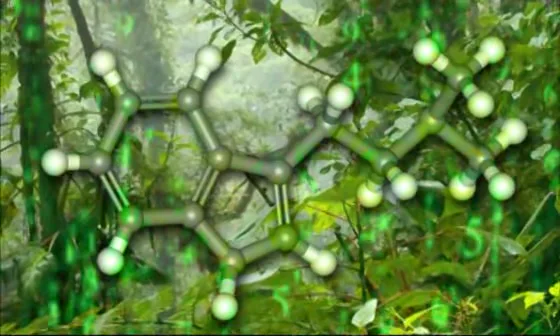

dennis mckenna discusses ufos, psychedelic experiences and his research on dmt and psilocybin mushrooms on the paratopia podcast
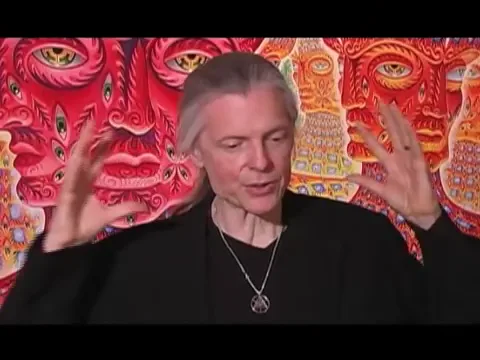
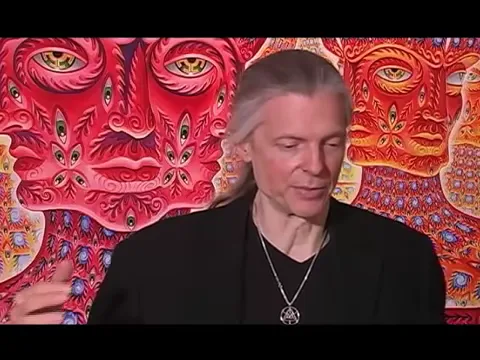
terence mckenna on dmt as reality thermostat and consciousness as continuum property from a 2009 manifesting the mind dvd sneak preview chapter

mike kawitzky's 2009 documentary. some twenty thinkers, framed by terence mckenna's archive recordings, on five questions about evolution, consciousness, god, science and death.
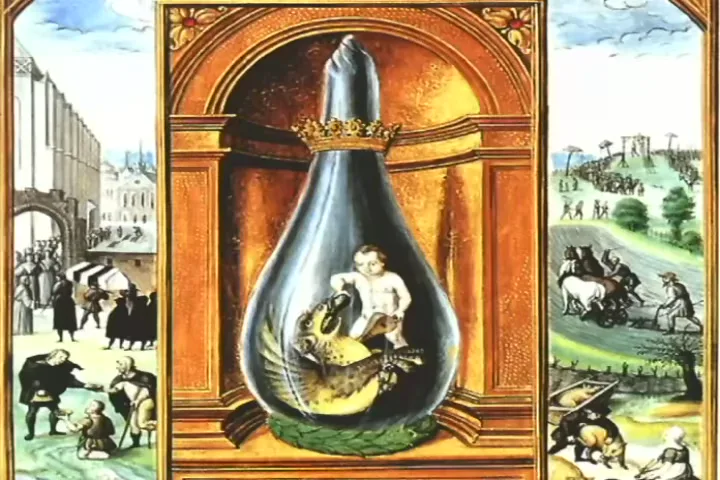
terence mckenna's 2008 documentary on john dee and the alchemical dream of social transformation in renaissance europe.

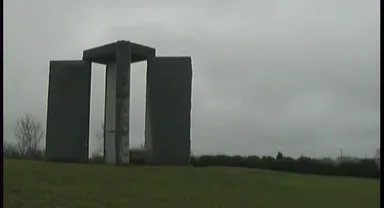
a 2007 documentary exploring the mayan calendar's 2012 end date and what it means for humanity. terence mckenna examines timewave theory, galactic alignment, and the shift in consc