UFOs and Psychedelics (Paratopia)

Dennis McKenna appears on the Paratopia podcast in this audio-only recording from February 2009. The discussion spans his research on DMT and psilocybin mushrooms, his Amazon expedition with brother Terence, and his academic work in ethnopharmacology. The conversation runs over two hours as McKenna shares insights from decades of experience with psychedelic compounds.
transcriptmachine-transcribed, unedited
In a New Age world filled with delusions and wish fulfillment by morons in need of attention,
renowned experiencers of high strangeness and podcasters,
Jeffrey Ritzman and Jeremy Vaney,
received invitations to a tropical paradise getaway called Paratopia.
Little did they know, it was the same type of New Age spiritual retreat they've been avoiding all their lives.
Don't be shy.
Hey, Jeremy, I got us a great, great guest tonight.
Jeff, who's it going to be for tonight on Paratopia?
What the hell is that?
What? It's my new DJ voice. Everyone's got to have a voice for the radio.
Uh, no, you probably don't.
No, you probably don't.
You pretty much just sound like a douchebag. Cut it out.
What do you mean?
That's stupid. What are you doing?
Isn't that what you do when you have a radio show? You sound like that?
Well, yeah, but that's not us now.
Not you, maybe.
You've got to have the real radio voice if you're going to do that.
And we all know who has that.
Yes.
But that's like copyright infringement or something. I can't just do...
Well, it probably is, yeah.
Rob Simone.
All right, well, I guess...
I'll just keep working on stuff until we have what looks like a real decent radio show.
But I won't do it using this voice! No!
Yeah, let's not do that.
Really? That's not doing anything for you?
Uh...
Weird. So weird. It sounded so cool when I was doing it in the mirror.
Well, most things do, don't they?
Yeah. You know, when I look in the mirror and I flex muscles, I can make my breasts go up and down like Hulk Hogan.
Thanks for that mental picture.
Yeah.
So who's on the show? What do we got?
Dennis McKenna.
Dennis McKenna?
Dennis McKenna.
The father of Terrence McKenna. The uncle of Terrence McKenna.
The brother. The adult.
The brother of Terrence McKenna.
Yes.
Excellent.
Yes, that's Terrence McKenna's brother.
And, uh...
Dennis McKenna.
And he's a doctor.
He is. Yes, actually.
Uh, I'm looking at his, uh, little profile here on the University of Minnesota.
Go on.
Where he is a senior lecturer.
Huh.
Uh, what we have here, uh, I'm going to read the little quote that he starts out with here.
It says,
I have a long-standing interest in natural products and in the potential for plant-derived medicines leading to the discovery of new modalities in health and healing.
The integrative, cross-disciplinary perspective that characterize the center make it the ideal venue in which to pursue research and education in the area of botanical,
medicinal medicines, and natural products.
Now, he's kind of like in this center for spirituality and healing, uh, under the, the, uh, U of M here.
But, uh...
Uh, that's, that's all above my pay grade.
I don't know...
Well, yeah, well, here's the part that I'll have a hard time reading.
It says, Dr. McKenna brings more than 25 years of experience in bioscientists, biochemistry, and, and I can't even say this word.
It's pharmacognosy.
Pharmac...
For, for, for that.
To...
Pharmacognosy.
Yeah, sure.
Pharmacognosy.
Pharmacognosy and I don't care.
Did you remember that song when you were a kid?
Uh, and he's a senior lecturer on topics that include ethno-pharmacology and botanical medicines in healthcare.
Hmm.
But, what we're going to talk to him about is his trip...
Pharmacognosy?
Uh, no.
No.
Uh, and we're not even saying that right.
Uh, what we want to talk to him about is his work in, uh, psilocybin mushrooms and DMT.
And his trip...
Uh, with his brother Terrence into La Charrera, down in the Amazon, where they studied these things firsthand, and the experiences that came forthwith from that.
My God.
Well, let's stop talking about it and start talking about it with him.
Yeah, he's right there.
Oh.
Hey, Dennis.
Jeff, you, you got this whole podcasting thing done.
Tell him why he's here.
Okay.
Dr. McKenna, um, as far as, um, why you're here.
It's because I essentially tracked you down...
Why am I here?
Why are you here?
That's the big question.
Uh, I essentially, um, tracked down a lot of work you've done and a lot of work that your brother Terrence did with regard to, uh, DMT and the psilocybin mushroom.
Right.
And, uh, and your, uh, adventures at, uh, La Charrera.
Right.
And, um, uh, I think, I think it's probably going to be a given.
It's not a given that we're going to want to have you back multiple times.
Uh...
Yeah, it's not a given that you'll want to come back.
Right.
That you'll want to.
Yeah, exactly.
My reputation is trashed.
What's left of it.
Right.
But, uh, um, I think, uh, just kind of to lay a groundwork, um, for people who aren't familiar with what DMT is and what the psilocybin mushroom is and what it does.
Can you kind of give us a brief overview of, of...
Like, first of all, what, what is DMT and, and what does it tend to produce in people?
Sure, sure.
I, I, I understand neither of you have had experience, direct experience with either one of these compounds.
Is that true?
No, sir.
Not, not yet, anyway.
Not yet.
Okay.
But you're, you're UFO investigators.
Uh...
Or paranormal phenomena investigators.
An, an experiencer.
So, yeah, that, that'd be more relevant.
I would say more of an experiencer than an investigator.
Right.
Oh, okay.
But, but obviously your experience has been enough of an impact that you're, you know, that you're, that you're preoccupied with this whole thing, right?
In, in some ways.
Yeah.
Sure.
Yeah.
Well, um, okay.
Uh, well, um, both those things, DMT and psilocybin, are probably things that, um, you should try and put on your data point, uh, you know, your data sphere at some point.
Uh, if you can do it.
Because I do think it has a lot of bearing on, on this whole question.
And, uh, just to briefly explain what they are.
They're both hallucinogens or psychedelics is maybe a better term.
Um, and so they're, you know, in the same class that, uh, um, LSD and, and, uh, uh, mescaline and, and these kinds of things...
in but they are in a they're in the same chemical class they're very closely
related to each other chemically DMT is is short for dimethyltryptamine and and
psilocybin is named after the mushrooms that it was isolated from but it is also
a tryptamine it's it's chemically it's called for hydroxy or well for for
phosphoryl dimethyltryptamine but it's converted to its active form in the body
which is called psilocin is the usual name but the chemical name is for
hydroxy dimethyltryptamine so they're very very close chemically to each other
and they're also very close to serotonin which is also a tryptamine and an
important neurotransmitter
in the in the brain it's chemically it's 5-hydroxy tryptamine so it's not a
dimethyltryptamine and I don't know if this chemical stuff you know makes sense
to you or even really is important you know except to point out that this is a
this is a you know family of chemicals and and the chemicals are closely
related to serotonin which is a very important neurotransmitter
in the brain that has a lot to do with our that mediates a lot of what we
experience as consciousness or conscious experience we know that serotonin you
know has got its fingers in many pies everything from the way we eat to the
way we sleep to mood to sexual response to obviously perception and the the the
hallucinogens the true psychedelics as I like to call them which includes
psilocybin and DMT and these other things all target a certain family of serotonin
receptors there are many different sub families of serotonin receptors because it does do
so many things but all the psychedelics as far as we know all target a particular sub
family
you might call out of these serotonin receptors so there's a commonality of action there you know
and they all elicit kind of similar experiences but the tryptamines you know DMT psilocybin and
there are others in the family as in the family of these psychedelics 5 methoxy DMT and bufotinine
um all are kind of
similar family and they have a you know a unique pharmacology and a unique phenomenology they are
well how to put it I guess you know I mean and they have superficial resemblances to the kind of
effects that something like LSD has but an experienced
tripper would never mistake psilocybin or DMT for LSD they are unique sort of and they sort of elicit
this realm of experience which I sometimes call the tryptamine dimension I mean it is it is
qualitatively you know it's got certain qualities that these others just don't have in a blind those
have um if it is specific to a particular type of
person
um
but if it is specific to someone who limited 800 meled
is not orally active. It's destroyed by an enzyme in the gut called monoamine oxidase.
But in traditional South American shamanism, there is a hallucinogenic brew called ayahuasca,
which means vine of the souls or vine of the dead. And it's actually always made from at
least two plants, one of which contains DMT, and the other contains these monoamine oxidase
inhibitors. And in that form, it's orally active. And if you don't take it with an MAO inhibitor,
if you take it orally, DMT is not orally active. Now, psilocin is orally active.
Without an MAO inhibitor, it's just...
Molecularly different enough that it is not degraded by MAO. And so without any preparation,
you know, the mushrooms are orally active. All you have to do is, well, stoop over and eat them.
Yeah, yeah.
Pick them and eat them. It doesn't require this elaborate preparation that ayahuasca does.
How do they discover to merge those two plants, given all the plant life that's in South America?
Yeah, that's what I was going to ask.
That is a profound question. And nobody really knows the answer. A lot of ethnobotanists and
people like that have been asking that question for a long time. Out of all the
80,000 species in the Amazon, how did they figure out, you know, how if you combine these two,
which are not particularly, you know, plants that you'd want to consume. I mean, it's the bark of
one and the leaf of another. So it's not exactly...
You know, they're not succulent looking or anything. How do they figure this out? Well,
you know, interestingly, if you talk to the shamans, how did they figure this out? If you
ask them, they will invariably say, well, the plants told us, you know, the plants taught us
to do this. The plants gave us this knowledge, you know. And like a Western, you know, reductionist,
rationalist person, you...
You know, your immediate response is to say, well, that's just poppycock. That's just ridiculous,
you know. So then you start asking for other explanations or thinking, well, was it trial and
error? Was it, you know, watching animals? How did they figure it out? You know, but they will
always say that, you know, the plants taught us to do this, to make ayahuasca, which is very
strange.
You know, although, you know, in the context of shamanism, it isn't strange at all, because in the
context of traditional, you know, use of these things, the plants are understood to be spirits.
The plants are understood to be, you know, entities that are intelligent, that communicate
with people that are, you know, as smart as we are, and in fact, smarter than we are. You know,
and, you know,
again, this is anthropomorphization of the thing of attributing these human properties to, you know,
to the plants. But, you know, I mean, I'm a 21st century, scientifically educated, Western, you
know, pretty logical reductionist kind of guy. And, you know, in my own personal experiences, you get
into that state.
And it's very easy to believe that you're in communication with another intelligence, you know, because
a lot of what seems to be going on, it's like, I didn't come up with this stuff, you know, and, you
know, on the logical level, I mean, I can, I can, well, obviously, I had to have come up with this,
that this is clearly some part of my brain, you know,
that is split off and is presenting itself to me as another entity, another personality. I mean, that's the
reductionist explanation. But in the face of the experience, you know, that explanation seems, you know, seems a
little bit shallow, because it doesn't, it doesn't seem that way at all. It does, in fact, seem like, with both
the mushrooms and the ayahuasca, they present themselves as, you know, as, you know, as, you know, as a
human being. You know, I mean, it's, you have a conversation with them. And, you know, and it's not a
conversation like we're having now, but it's a series of sort of, I don't know how to describe it,
understandings, you know, revelations. It's like, you know, it's like sitting down and talking, except you're
not talking, but you're, you know, meditating, communing is, I guess, a word. That's a word the
enthusiasts like, right?
Right, okay.
Sitting down, you're communing with this other entity, and you're exchanging information. And it's very much like
that. And, you know, I mean, it's very much like that.
If it's, I know what you described to me the other night, when we, I'm at a distinct advantage, because we had a
nice conversation the other night, you were explaining it as more or less like a voice.
I know that when you had said that, I was curious, in your experiences, has that imparted anything to you in that way?
Yeah, well, sometimes it is a voice. You know, it actually appears to be a voice. But more often, it's more like a
gestalt of understanding. It's like, I imagine, telepathy would be, actually. If you could communicate with a voice,
Mm-hmm.
If you could communicate with somebody, maybe a loved one, or somebody that you're very close with, if you could sit down, and
without saying anything, if you could get, if you could, you know, to borrow another phrase from science fiction, if you could
grok what they were saying, it is, you know, you know, from Heinlein, it's like groking something. It's a very gestalt type of
thing. But there's definite information that is, that is...
imparted, you know. And another thing I should say, you know, most people, even most people who take psychedelics and take
these substances on a fairly regular basis, never really experience this, or they rarely experience it, because they don't, they
don't structure the surface of the human body in the way that it's supposed to be structured. And so, you know, it's, it's a
fact that people, you know, in some circumstances, they don't, they don't organize what Leary called the set and setting properly in
order to have this come to their attention. Most people take mushrooms, and they're fun, and it's a party, and you know, and they
never actually look. They never, most people, even people who take mushrooms, never take high doses. You know, they take
medium doses, and it's a recreational thing. They don't take big doses.
Mm-hmm.
And they don't do it in a place where the purpose of the exercise is to pay attention to what the mushroom is telling them.
Not to see glitters and do all this superficial stuff.
The purpose is to sit down and pay attention with what it has to teach you.
And most people don't do that, you know, which is one reason why it's, you know, in some ways it's good to experience this in a traditional shamanic context.
Because in a shamanic context in South America or Mexico with the mushrooms or whatever, that's the purpose of doing it.
It is not recreation.
It is not a party drug at all.
It's a serious, serious thing.
And you're there to learn things.
And if you take it under those circumstances, I mean, my brother recommended and I do too, you know, with the mushrooms especially, and ayahuasca as well, it's the thing, you know, the best circumstance to take it in is in total darkness.
You know, or as dark as you can get it practically.
And to take, in the case of mushrooms, you know, five dried grams of stropharia cubensis is a good place to start.
Or psilocybe cubensis is a good place to start.
And, you know, taking that amount in a quiet setting in the dark, you know, well, if you do that, you don't really have to work very hard.
I mean, like I tell people, if you do that, you'll be utterly convinced that they've landed.
I mean, it comes on, it presents itself, you know, in this very strange way of, you know, being alien or certainly being non-human.
It doesn't necessarily, you know, say, okay, I'm extraterrestrial or something like that.
It doesn't really present itself that way.
It just presents itself as an intelligence and entity that is, you know, absolutely not human.
But that you can communicate with, you can understand, and that knows things that you don't know, you know, and has things to tell you.
One of the tricky parts, you know, that, again, we used to play this game.
It was like with the mushrooms, it was like, okay, you know, so you know so much and you present yourself as knowing, you know, so much.
So tell me something I cannot possibly know, right?
That will satisfy me that you're real and it's not just part of my brain talking to another part of my brain, you know?
How can you actually present me with information that I cannot possibly have known?
And you'd be surprised how tricky that is, you know?
Because it will.
I mean, it will present you with, you know, it will present you with information like that.
Like, you know, okay, here's a star system, you know, 4.3 light years from Earth.
This is a blue giant with a, you know, and like, oh, wow, well, that's okay.
That's pretty cool.
Prove it, you know?
How do I know?
Or it will often show things.
You know, in these visionary states, it will show things like three-dimensional hallucinations with your eyes closed.
And you can't tell whether they're machines or they look like machines, but they could be buildings because there's no sense of scale, right?
Or they could be organisms or they could be, you know, they could be microstructures.
Or they could be microscopic.
They could be subcellular structures.
You have no damned idea, you know, what it is.
But you do know, I mean, you can see for yourself that they're usually incredibly beautiful, incredibly intricate, and you'd be hard-pressed to think of them on your own, you know?
I mean, normally, I mean, if I'm just daydreaming or something.
I mean, well, I mean, I can sometimes come up with these, but I have a lot of experience under my belt.
But I think that some people, I think that people are not familiar with the state would be hard-pressed to come up with these types of, you know, visions spontaneously.
I mean, they do definitely have this otherworldly sort of thing.
And, you know, so that's kind of the phenomenon.
Let me ask you a question.
Sure.
When you're in...
That state, are you...
Do you have your five senses?
Are you seeing through first person?
Are you aware that you're still in your clothing, even?
All of that?
Is all of that normal?
Absolutely.
Usually, yes.
I mean, occasionally, you get so out there that those boundaries begin to break down.
But in my experience, even in high doses, you know, you're still you.
Your ego or your selfhood.
Your ego may be a little bit setback, but your selfhood is pretty much intact.
You know, I mean, if, you know, you can be in one of these visionary states and, you know, somebody knocks on the door, you know, and it's the neighbor next door or something.
I mean, you can totally come back to your body instantly, deal with the whole thing.
They have no idea there's anything going on.
And then you can go back and go right back into it.
So it does...
It does really involve loss of control, you know.
I mean, some things more than others.
And again, it's a question of dose.
But generally, you're pretty intact.
You know, now, I mean, having said that, I mean, the first few times, you know, because it's such an unfamiliar state, you know, that may not be so easy.
I mean, that's...
Part of what shamanism is, that, you know, I mean, not that I'm a shaman, but, you know, after you get some experience under your belt, you sort of know how to deal with these things.
The first few times that you do it, there's nothing threatening about it.
In fact, it's quite pleasant, usually.
But the first few times, you want to go to an extra...
You want to take extra steps to make sure that you're not disturbed, that you don't have to deal with anything in the real world.
If you can possibly avoid it, you know.
And it's not that you can't, but why?
You know, avoid it if you can, because that does kind of disrupt the whole thing.
Well, the thing that we had this week was we had a young lady on that related an experience from her childhood in which she talked about, essentially,
small, this is the thing I had emailed you about earlier, small, furry, what she kind of described as wolf-like beings around the edge of her bed when she were a child.
And she said they would talk to her.
And I, during the interview, I asked her, I said, well, what would they say?
And I'm in the back of my head thinking exactly what I'm going to hear.
And she said, well, they just kind of, it was just kind of gibberish.
And, and, and...
And, and I said, well, what were they like?
Were they friendly?
Were they...
She said, well, yeah, they were friendly, but there was something like you had to keep your eye on them.
And you had to, you wouldn't, you know, you wouldn't want to turn your back on this kind of thing.
And I'm like, I started laughing just to myself, and I put my head in my hands.
And I said, you know, I don't know how much more connective this could possibly get, because this is exactly what I've heard people talk about when they talk about the DMT experience, which is,
seeing these beings that appear as some sort of self-transforming machines, but you're not sure exactly what they're made out of.
And these are the people that I've, I've so often read about that sing things into existence to show them to you at a pretty, what I understand is a pretty manic pace.
Very manic, yes, compared to what we're used to.
I mean, they're...
Well, now you're talking more like DMT, because DMT is, you know, psilocybin is good, because its clock speed, or whatever you want to call it, the pace of the thing is much more in sync with our regular, you know, clock speed.
I mean, if we're going, you know, 1.5 megahertz or whatever, psilocybin is not that far out of phase.
But DMT is like...
Accelerated, and I often say, in fact, DMT is kind of like the speeded-up Tate version of psilocybin, you know, where you do have this feeling of acceleration.
I mean, you actually have a feeling of moving at sub-relativistic velocities, and it's all unwinding and so fast that you can barely process it.
In fact, you can't process it.
It's quite overwhelming in that sense.
So, you know, all this stuff is unfolding, and you're seeing, and it's quite manic.
It's like seeing a cartoon, you know, and it is very cartoon-like, being shown, you know, at fast-forward on a projection screen or a videotape.
It's like that, so that, you know, you feel like there's a lot of phenomena that's being compressed.
And, you know, at the end of the 10 minutes, you feel like, okay, a lot happened, and I don't really know what the hell happened, you know.
So it's hard to process it, you know.
You don't come away with much, in a sense, except an overwhelming feeling that you've just seen something incredible.
You know, it's very ecstatic.
I mean...
You feel happy.
You feel exalted.
You feel, more than anything, you feel astonished, you know.
I mean, it's like you witnessed a miracle or something.
Is it the same every time?
It's hard.
DMT is pretty much very often, it's, I mean, with variations, it is pretty much the same every time, or very similar, you know.
But, you know, it goes so fast.
And this stuff is presented so fast.
It's this, you know, download of information into the brain.
So you, in some ways, I find the psilocybin experience or the ayahuasca experience, which is essentially very similar,
I find them much more useful than DMT, because it's like you've slowed down the tape, in a way, to a point where you can comprehend it.
You know, and it's like, ah, okay, I can deal with this.
This is much more the rate at which I can sort of process this.
I can interpret it.
It's not like I'm being, you know, thrown down this well of multicolored imagery and crazy stuff that just kind of, it's not, it doesn't have the rollercoaster effect.
But are the, are the, and I guess the way to put this is, is that a lot of people talk about the entities within a DMT experience.
Right.
And I know that Dr. Strassman has written in his book that it's not just the DMT tykes.
It is also, he said there were humanoid-looking people.
There were things that really creeped me out on the way home listening to this on the iPod, which was mannequin-like beings and things like that.
You know, on that side of things, does the, does the...
Well, the first...
Does it represent that kind of effect at all?
Well, I mean, the thing is, you have to remember a couple of things.
You know, one is that, you know, everybody's an individual, right?
So everybody, everybody's experience is unique.
Some people see those things.
Other people don't see those things.
Some people sometimes see those things and not other times.
The other thing you have to remember...
The other thing you have to remember is most of these things are interpretations that you make after the fact.
I mean, that is something that I've noticed particularly with DMT.
I mean, you're scarcely down.
You know, you're scarcely back from the thing where, before you reach a point where the mind is trying to make sense of this.
You know, you're utterly overwhelmed with what happens and you're already constructing hypotheses.
You know, about what did I see, were there entities, were they machines, what were they saying, you're, you know, you're trying to put all this in a framework to make sense of it, you know, because this is what we do, you know, this is what the human mind does, it tries to make sense out of the world.
So I think, you know, people do come up with these similar interpretations, you know, but, you know, that's why it's so tricky.
So hard to get a handle on this because do they come up with similar interpretations because, you know, that's just the way we're built and everybody's got similar neural architecture and, you know, when these experiences happen, everybody's going to interpret it in more or less in the same way.
Or is it because there really is some objectivity to it and, you know, is it really another dimension?
I mean, I hesitate.
I think it's a great way to use that word, but, you know, you have to entertain that possibility, you know.
And the same is similar with ayahuasca and mushrooms, same thing, although, you know, less, because the experience is slower, there's not this scrambling effort to put it all together.
But you see the same types of, you know, mythical themes, the same types of creatures come up, you know, again.
And this is where something like shamanism is very useful.
If you look at the paintings, you know, of Pablo Amaringo, who is a Peruvian ayahuasquero who paints his visions, you know, if you look at those visions, every one of the entities in there that he paints, he didn't just dream these up, you know.
They have a place in the cosmology, you know, of ayahuasca.
I mean, they have names, they have roles.
They tell you what each one is, and, you know, and, of course, their interpretation is religious, you know, or that kind of thing.
Does your emotional state going into this predict the type of outcome you're going to have?
If you're scared, will you see something scary?
If you're happy, will you see something scary?
Not necessarily, no, no.
Going into it, smoking DMT, there is usually considerable trepidation.
I mean, there is considerable fear.
And, you know, you'd be nuts if you weren't, if you didn't have a little fear, you know, knowing what was going to happen.
But, you know, usually, I mean, almost always, you know, that drops away immediately.
You know, that isn't even operating anymore.
It's like, you know, okay, I know I'm going to step over the cliff here, you know, but once you've stepped over,
it's like, okay, you know, I'm in the hands of the gods or whatever, and I'm just, you know, floating along, and I hope I land safely.
So the fear goes away.
With mushrooms, with ayahuasca, there can also be an element of fear.
Sometimes the things you see are frightful or ugly.
Or it ought to be frightening, but are not.
And that's the odd thing.
I mean, they can be, you know, as frightening as any horror movie, but you're sort of separated from them.
I mean, it's like watching a movie, in a way.
I mean, it's like you can choose to be afraid, or you can choose to be, oh, okay, you know, I'm looking at this, fine.
You know, what else you got, you know?
Does their reaction to you change with whatever you give to them emotionally?
It does.
Yeah, it does.
It actually does.
You can modulate the experience quite a bit.
You can say, okay, you know, I don't want to, you know, I don't want to see all these monsters anymore, you know.
Show me something beautiful.
And it'll be like, okay, well, how about this?
You know?
And so there is a certain degree.
You know, there's a certain degree of control over the thing.
So do you see commonalities in the abduction literature and what you've experienced?
Well, yeah, I do.
I mean, Strassman's written about this, you know, a lot.
And the people that he was working with, you know, he was giving them DMT.
He was giving them high DMT.
He was giving them high doses.
He was doing a dose escalation study.
He was giving them, he was giving it to them intravenously, which is, you know, about the most direct way you can give that drug.
And things didn't really get interesting for those people.
Well, they got interesting, but they didn't get into this alien abduction territory.
Until they got to really.
You know, it was a pretty substantial doses, you know, and then it began to manifest.
And I have to admit, I have probably not taken high enough doses of DMT to really go to that place.
But I certainly have had enough experiences like that with high doses of mushrooms.
And it's a very similar kind of thing.
And it's, you know, I mean, it's.
You know, it just had to be there kind of thing.
This is why, you know, you have to do this to to really get what I'm talking about.
You know, you have to you have to do it under these controlled circumstances and you'll see what I mean.
You know, I mean, it's like they're very matter of fact about it.
I mean, this this is the odd thing.
You know, if you take high doses of mushrooms under these circumstances.
It just pretty much manifests and says, you know, yeah, you know, we are well, if not, if not extraterrestrial, at least alien entities, you know, we've been we've had an evolutionary relationship with your species, you know, ever since the beginning.
And, you know, we know a lot and, you know, we're basically controlling evolution and we're controlling the.
You know, emergence of intelligence on this planet and, you know, and the world is not like you think it is, you know, because, you know, you I mean, I say jokingly about ayahuasca, but I mean it seriously.
I often say, you know, if I get one message from ayahuasca, you know, it is you monkeys only think you're running the show, you know.
Yeah, it it's very insistent about that.
It's like, no, you're not running the show.
And you don't know shit.
Why is it that you would be able to, you know, take a substance and have that kind of very clear message come to you?
But if you're an abductee, you know, there's all of this just, ah, just complete terror and no concise message like that.
I mean, have abductees been included in these experiments?
No, that that is a that's a good question.
And I think.
I think the answer is complex.
I think for one thing, when you take the drug, you know, you there's a degree of control, you know, something strange is going to happen, you know, you expect something strange is going to happen.
So you might be afraid, but you're also in some sense, you know, pumped up for it.
You're you're ready for something strange to happen.
And so.
When it starts to happen, you don't get, you know, you don't get too upset abductees.
Apparently, these things happen to more spontaneously.
I mean, I know I would be quite alarmed, you know, if that just if it just started happening.
I mean, I mean, I would I would wonder if I was losing my mind.
I was wonder, you know, being experienced with psychedelics, I would wonder, has somebody.
Given.
Me a psychedelic without me knowing, or is there something, you know, even stranger than that going on, you know, so I think part of it is the spontaneity of it, I think, also, I think part of it, you know, we don't know, you know, we don't know, really, and this is very slippery, you know, to get your hands around or get your head around, because, you know, we know that there are certain states like temporal lobe epilepsy.
For example, I don't know if you've gone into the literature or looked at that at all.
Have you a little bit personally?
Yeah, personally, personally, no, personally, no, no.
Well, temporal lobe epilepsy is pretty interesting because temporal lobe epilepsy is is not where it's a lesion in the temporal lobe of the brain and the temporal lobe is a part of the brain that is involved with.
Kind of your place, kind of orienting you in space and time and orienting you in terms of your relationship with the rest of the world and all that, and when people who have temporal lobe epilepsy have these spontaneous experiences, which you might call mystical experiences or a better term is probably transpersonal experiences where suddenly they feel.
You know, these feelings of oceanic oneness, you know, they feel, you know, in contact with everything they have ecstatic experiences, they have revelations, they have, you know, and they often there are certain, you know, they have personality types, you know, which seem to be a characteristic of the.
Of the epileptic state, they're often preoccupied with metaphysical questions, you know, they will think about philosophy and religion and all this, and they often write long screeds, they do hypergraphia, they have wild theories about how the world's put together and they are compelled to put these things down.
And they have, you know, and they're prone to saying things like, like, you know, suddenly it was all.
Clear to me or, you know, the moment I've been waiting for all my life, you know, has come right and they have these types of experiences that I'm not, you know, don't get me wrong.
I am not trying to reduce this to illness and I'm not trying to reduce it to like a brain thing necessarily, whether it's a brain damage or or something.
I'm not really.
Trying to put it down.
I'm just saying that, you know, in the in the realm of phenomena that can be looked at, you know, and probed scientifically, which repeatability is an important criterion in science.
That's why the psychedelics are so interesting in this respect, because, you know, they are molecular probes that enable us to look at these altered states at these.
Very peculiar states of mind, like alien abduction type states, you know, under controlled circumstances.
And so they're very valuable.
It's very hard to, you know, one of the problems with the whole study of the alien contact alien abduction phenomenon is you can't set that experiment up.
You know, you just have to wait and hope that it happens and hope that, you know, you've got your wits about you when it happens or the cameras are.
Running or whatever it is.
But things like temporal lobe epilepsy and psychedelics, you can actually approach this stuff in an experimental way.
You know, you can set up an experiment and then you can pull the trigger and see what happens.
So I think that's very useful.
You know, another thing.
I mean, as long as I'm raving on these on these these neuroscience issues.
You know, there's a lot of similarity between the DMT state, the so-called out of body state and the near death experience.
And, you know, Strassman talks about this.
And there's a lot of similarities between those things and the alien abduction.
Contact with, you know, lights in the sky or disc shaped objects.
I mean, there's very little difference between approaching.
You know, a shining silver disc and approaching, you know, a shining light filled passageway, which is what happens supposedly when you have a near death experience.
And it very often happens with DMT.
It's a very similar thing.
And DMT is in the human brain.
I mean, you've read Strassman's books, so you already know all this.
You know, it's in the human brain.
You can.
Make a case that at the moment of death, the human brain, the brain is probably flooded with a massive release of DMT as long along with a lot of other things.
But that this may be a reasonable simulation, if not, in fact, the near death experience, it definitely comes close, you know.
And.
And as people say who have experienced the near death experience and return to talk about it, they don't feel afraid, you know, they feel ecstasy.
They feel only joy, you know, as they move toward this, this singularity, this tunnel, this white light, whatever it is, you know, they feel they feel a great deal of joy and ecstasy.
And that's what DMT is.
Well, that gets me to one question that I wanted.
To ask you about, which was separate manifestations outside of psychedelic states for you.
And I know that in True Hallucinations, which I'm still reading, when you all were traveling and I believe you had stopped at at one place before you reached La Charrera, which was kind of like the place where you met the.
Where everybody kind of unloaded their baggage to a certain point to lighten the load for the hike into the jungle.
And Terrence wrote in there that you all had seen a light in a field that that apparently apparently was was there and and and you all were trying to kind of chase it around or get up to it.
And then later on in the book, of course, Terrence talks about his UFO sightings.
Which was pretty profound, in my opinion, because I've heard identical similarities to that that I spoke to you about on the phone, which was the typical, you know, Georgia Dabbski, completely, you know, I mean, I mean, vacuum cleaner, hubcap, you know, like that self-contradictory thing.
So it was a joke, right?
Yes.
And and that's.
That's that's the other thing about DMT and especially about the mushrooms, you know, ayahuasca less.
So ayahuasca is more sort of stern, but the mushrooms are very mischievous, you know, and very funny, you know, I mean, it's like they're playing with you.
It's like they have a great sense of humor and they're very sort of elf in that way.
And it's just the sort of thing you would expect them to do.
Right.
Yeah.
I mean.
I mean, what what do you say to that when you when you hear about and experience yourself things that are outside of a psychedelic state that are manifesting that look similar to what you see in a psychedelic?
In other words, that bleed over.
I mean, what are we really supposed to do with that?
Because what are we?
Well, yeah, I don't know.
I don't know what we're supposed to do with it.
I mean, you know, I don't know.
I mean, that's the thing, you know, at the end of all this.
Talking and speculation, I come around to saying, I don't know, you know, what the hell is going on, you know, and it's very sort of frustrating.
I mean, I guess if we knew we wouldn't have to talk about it.
I'm not sure, you know, but it's something about it's something about the way that the you know, that the that our brains are the brain mind, you know, synthesizes reality.
It puts it together and I think maybe that's what it is.
I don't believe for a minute that, you know, the aliens come from, you know, other star systems.
I mean, I think there may well be aliens in the galaxy and there may well be other, you know, enough for starships, but the likelihood that they are here hanging around and and
carrying out, you know, proctological examinations on people that they, you know, sort of randomly abduct from lonely places.
It just it just described it strikes me as so unlikely.
I mean, doesn't it strike you that way?
It strikes me as more or less that that that whole human attribution of trying to put it in a box.
And this is just the first thing that we thought of.
And I don't know if I told you or not, but when Jeremy and I went to Washington, D.C. to take part in this basically like a disclosure conference of sorts, we usually go to kind of do our little interviews and talk to different people in the field.
And and at the end of this, Jeremy stood up in front of all the the panels were laid out and the the whole crowd.
And he said, you know, I'm just curious, you know, you all are laying out this big.
Diplomacy pattern for what's going to happen when this is all disclosed and you don't even really know that it's extraterrestrial or do you?
And what proof do you have that it is extraterrestrial?
And I think that one of the most frustrating things about that was that one of the most senior members on that panel, a guy named Dr.
Bruce McAbee, who I have nothing but respect for and what he's done in this field.
But he he kind of almost irritated me with.
His answer, though, is, well, you know, when you're talking about extra dimensions, I don't really know where to go with that, you know, and my answer is, OK, since we don't know where to go with it, that means we just go with the easy way and.
Yeah, that means that means you just dismiss it.
Yeah, right.
I mean, that's exactly right.
I mean, when you don't know what the phenomenon is, I mean, this is I think we touched on this a little bit in our previous conversation, you know, about crop circles.
Yeah.
And things like that.
I mean, crop circles are another example of, you know, I mean, they are definitely an anomalous phenomenon.
I do not believe that all crop circles are, you know, done by drunken Englishmen having a good time after they've left the pub.
It just doesn't it just doesn't make sense.
It's not pot.
That's as crazy an explanation as anything.
So here's a physical phenomenon, clearly of intelligent origin.
And yet all the SETI people, you know, totally dismiss this.
I mean, they say, well, you know, it's not a radio signal, so forget it.
You know, I mean, this is the weird thing, you know, that the people.
I mean, the phenomenon that puzzles me about this whole thing is that the people who are most deeply involved in this stuff on the public level, you know, the SETI people, you know,
the serious scientists looking for signals from outer space and even the the serious, you know, supposedly serious UFO people have an almost embarrassing lack of imagination.
Right.
You know, I mean, they have no vision at all.
You know, oh, we're talking about other dimensions.
Well, we can't be bothered with that.
You know, we have nothing to say.
We don't.
You know, that's woo woo stuff.
You know, you know.
And this is why it's very difficult when you bring up the subject of drugs, you know, like, oh, yeah, God, you know, now it's like, oh, well, you know, you're just, you know, these crazy, whacked out hippies, you know, who have no.
So you can't even talk about, you know.
And yet here is a a tool, a pharmacological tool, if you will, that in that gives you the ability to look at a lot of this phenomenon.
Experimentally, but, you know, they don't want to hear about it.
I mean, they're, you know, I mean, they want it to be.
There, I think on some level, I think they're afraid that it is something really, really, really strange and they don't want to go there.
They want it to be extraterrestrials.
OK, we can deal with that extraterrestrials who are have.
You know, they have the technological capabilities, they build ships, they come here, it's all good, you know, they're basically like us, you know, they're tinkers and they move around in space and time.
No, no, it ain't like that.
Yeah, well, we've had that conversation enough on this show.
I mean, it's it's been and we've covered the gambit before.
I think Jeremy and I talking last night were saying that, you know, it's there.
There is a monetary value.
To say, you know.
Stick into your guns and defending your theory.
And then there's the people who are so deep into that theory that they can't get out of it because then they'll really be thought uncredible if they just abandon their theory that they've been married to for thirty five years.
Yeah.
And I'm always the one that and Jeremy as well.
We're the guys saying, you know, why isn't Jacques Vallee, you know, he's certainly a well-known figure.
But why isn't his.
His outlooks and his.
Postulations on on different avenues to look at.
Why didn't he get a better reception than he did?
Why?
Why didn't he get a better?
Exactly.
And.
Well, yeah, because basically these people, you know, they don't really want to understand it.
And they're afraid.
I think they're afraid, basically, that it doesn't fit into any paradigm that they can wrap their heads around.
And so people like you and Jeremy coming at it from from one direction and people like me coming at it from, you know, this other direction.
I mean, we're just, you know, we're just completely dismissed, which is why I don't even bother anymore.
You know, I mean, I mean, how does it feel to be such a wacko that you're dismissed by the wacko?
The fringe of the fringe, as my friend Tim and I'll say.
Yeah.
The fringe.
Right.
Exactly.
So, OK.
Well, so all right.
You know, whatever.
Well, I'm in pretty I'm in pretty good company then.
I mean, that's I mean, that's great.
But the thing is, they'll never understand.
What did the what do the shaman say?
Do they have a delineation between like do they believe in gods and aliens and whatever these plant intelligences are?
Do they have separations like that or is it all one thing to them?
What do they say about all of that?
It's all pretty much one thing.
I mean, to them, they're totally matter of fact about this whole thing.
You know, I mean, they live in this world, you know, pretty much all the time.
You know, they take ayahuasca, but they're you know, they're they're pretty much in this state all the time.
And they're they're I guess what you'd call animists, you know, and that's kind of where I'm at with it.
You know, I mean, they think everything's intelligent.
Everything has consciousness.
You know, of course, the plants are intelligent.
Of course, the dolphins are intelligent.
You know, and and so they live, you know, in this magical world, which which I think is a lot closer to, you know, sort of the magical world that everyone lived in before.
You know, we had we had writing.
We had print.
We had this way of perceiving the world that, you know, is so filtered through.
You know, sort of our assumptions and our our vision and our, you know, our Western education and all that to the shamans.
It's a very different world, you know, and they're pretty much in touch with it all the time.
I mean, just as an illustration, just as a trivial illustration, you know, I I've been I'm an ethnobotanist.
That's partly my day job.
And I was researching Amazonian animals.
And I was trying to figure out, you know, what are the plants that we use to treat schizophrenia?
You know, I had a grant to do that.
So I hung out with a number of shamans.
I got to know one pretty well.
And I said, so, OK, what plants do you use to treat schizophrenia?
I said, well, we have two.
You know, he said, when you're if the person is hearing voices, then we use this plant.
And, you know.
Because that's a nice Western, you know, symptom of schizophrenia.
People hear voices.
So, OK, great.
They use this plant.
But if the person has been enchanted by the dolphins, then we use this plant.
And I'm like, oh, OK.
And he was just that was to him.
One was as real as the other, you know, and and they live in a in a different reality, you know.
And I think.
And this really comes back to the way that, you know, I mean, our brains, you know, this idea, this conversation about drugs, you know, is so stupid to my mind.
And so, so trivial.
So sort of superficial because, you know, I mean, I teach a course on drugs, culture and society at the university.
And I put a quote up from Salvador Dali, who said, I don't take drugs.
I am drugs.
And if you think about it, that's really true.
You know, we are made of drugs.
You know, we are brains or biochemical engines that are made of drugs.
And that's why drugs work.
That's why drugs from the outside world work.
You know, you can take them.
And they interact with these receptors.
And these receptors are the co-evolutionary relationship with the fact that we've we've co-evolved with all these plant chemicals, you know, and over the course of evolutionary time.
And basically what I'm getting at is that, you know, the brain, what we call reality is really a hallucination.
You know, we are living inside a hallucination.
And, you know, what we call reality.
And, you know, what we call reality is a fiction or a myth that is constructed by our brain in order to enable us to navigate through the world.
And, you know, in order for us to, you know, make sense of things and survive and not step in front of buses and things like that.
I mean, it has a certain, you know, correspondence with external reality.
And the model of reality that our brains construct, it looks nothing like reality, you know.
I mean, the physicists tell us this.
You know, our instruments tell us that reality looks very different, you know.
And it's, you know, electromagnetic waves and things like that and qualities like color and smell and texture and beauty and, you know, all of these things.
But reality is applied by the brain, you know, by the human perception that, you know, takes in information from the outside through this sensory neural interface, filters it, interprets it, mashes it together, synthesizes it all together and creates the reality hallucination, you know.
And then you step into the reality hallucination and that's where you live, you know.
That's where we all live.
And, you know, we have a close enough correspondence between these different realities that we all live in that, you know, there's definitely something objective there.
We have a shared, we're sharing the hallucination to a certain degree.
But, you know, we can change the signal slightly.
I mean, it's kind of like tuning a radio or something.
You can tune another channel.
You can take a drug and change the nature of this signal.
You can change the sensory neural interface.
And things change.
But it's still the same reality.
Only our model of it and our interpretation of it has changed.
What do you think about the possibility that, as a species, we, you know, on the whole anyway, stepped out of magical thinking into this rational materialist mindset so that we could build ourselves up in that way and become more almost individuated as a species to then reincorporate ourselves in that way?
Do you think that's the next step?
Do you think that's possible?
Yeah.
I think, actually, I do.
I think that's very possible.
I think that may be why we had to go through all this.
In a way, we had to separate ourselves from the matrix.
We had to, in fact, develop an ego, develop a point of view.
We had to eat of the fruit of the tree of knowledge.
I mean, literally, that's what we had to do.
That may be what these psychedelic plants are on a mythological sense.
They are, you know, in a way, you've got your non-conscious, non-linguistic, non-technological primate, you know, kind of living in the jungle, having a great old time, not thinking a whole lot, not thinking in a rational sense anyway.
Not thinking in a rational sense anyway.
And then at some point, and in fact Terence has speculated on this, and I have as well, that, you know, the chance encounter of, you know, with some of these psychedelic plants might have been a triggering event that led to the emergence of consciousness.
And maybe that's what these things are there for.
I mean, this is what the mushrooms, excuse me, but this is what the mushrooms will tell you.
I mean, this is what the mushrooms will tell you.
You know, in the same way that, you know, the shamans say, well, the plants told us, you know, how to do this.
If you take the mushrooms under these experiences, they'll pretty much present this as, you know, this is what's happening.
And it's like they're not presenting it to you.
They're not trying to convince you.
They're not trying to say, you know, try this idea out.
It's like, you know, hey man, this is it.
You know.
Wow.
And you're like, well, you're like, what?
Don't be ridiculous.
You know, but there it is.
The more I hear you talk about this stuff, and I think I mentioned to you that I've kind of been riding this idea for quite a while,
at least as it applies to our interest in all this, is that over the course of years and people that I've spoken with,
it seems to be a constant as far as the experiencers,
as far as the experiencer syndrome that Jeremy and I are a part of,
is that the more attention, the more focus or borderline obsession on the subject,
and not just asking the simple questions, but asking the deeper personal questions,
seems to make things manifest.
And the more I'm hearing you talk, the more I'm kind of getting the idea that is it something that,
I've always said this has a lot more to do with us and our nature of perception than it does,
as I said before, of little green men from Planet X.
But going from that, I'm wondering if, you know, I always kind of had the idea of windows or doors
that somehow thought was opening up or intent was opening up to allow these things to manifest here.
But I'm wondering if, you know,
if what's happening now is the focus of intent or thought changing our,
or possibly altering our perceptions in order to see what's already there,
that we just can't perceive of in a normal state,
or what we define as normal, quote unquote normal state.
Whether that's just that slight shift in perception that is allowing these things to be seen,
as opposed to, you know...
Yeah, I think that's very much true.
I think that's very much true.
It's a way of entraining ourselves, as you say, to see things that are always there,
but that we don't normally see because of the nature of this sensory neural filter that we,
this hallucination.
And the hallucination that we construct for ourselves is not simply
based on our, you know, on our neural architecture, our physiology,
the way our brain is structured.
It's also conditioned by culture and history and all of these things.
This is why, again, if you hang out with these shamans,
you realize that, you know, they live in a different world.
And their reality is as valid as your reality is.
And your reality, you know, it's close enough that, you know,
you can walk down the trail with them and have a conversation and, you know,
all of that stuff, but what they are seeing when they walk through the jungle
and what you see are two completely different things.
You know, they see so much that's going on, you know, that you don't see.
And probably if you reverse that situation, you know, if you took one of these guys
and put them in the middle of Manhattan Island at rush hour,
you know, then you'd be the one that's more on top of what's going on
and they would be very confused, you know.
So I do agree.
I think that that's a lot of what it is.
I think that these are tools that enable us to learn different ways of perceiving.
And I don't know.
I mean, I don't know if there's anything more to it than that.
You know.
I mean, certainly the thing that fascinates me about it is the whole similarity to,
and not as a whole, but there are definite connective threads that I'm seeing
between the experiences that we've had and psychedelic experiences.
Yeah, and other types of, you know, paranormal experiences.
Paranormal, exactly, yeah.
I was recollecting what you described to me the other night
about your lost time experience and being at the Chesapeake Bay
and then being like six hours away.
Right.
And just recollecting that.
You know, phenomena like that are described in shamanism all the time.
You know, there's a word for it, in fact, called bilocation.
You've probably heard of that.
It's being in two places at once.
And, you know, if you go into the literature on Siberian shamanism particularly,
you know, this comes up, you know.
It's something that they know how to do or claim they do, you know.
And it's one of these things where, you know, this stuff all just seems so improbable
from the particular box that we inhabit most of the time.
This rationalist reductionist box.
It's so easy to dismiss all this, you know.
And so, I mean, most of the time, I don't know if you're like me,
but most of the time I do inhabit a rationalist reductionist box, you know.
But, I mean, because it seems like a good, you know, sort of initial stance in some ways.
You know, skepticism is always good.
Absolutely.
In a certain sense.
You know, approach it with skepticism.
But also, you have to keep an open mind.
And that's, I think for me, that's what psychedelics have done.
They've said, okay, you're welcome to your skepticism.
Just remember, you don't know shit.
Right?
Right.
Yeah.
And so, stay humble, you know.
And keep your mind open because, you know, you might learn something.
Right.
Well, there's a question out of your experiences at La Charrera that I've got to ask
because it's pretty much dumbfounded me in the book,
which was you walking through the jungle with no glasses on in the middle of the night
to all of these different locations that your brother described as being a shaman's walk.
Am I saying that right?
Yep.
That kind of experience.
So, what, if you can, describe for us what the onset was and how that happened and what
occurred to you that night.
Well, you know, it's hard for me to describe it because my recollection is poor.
And, you know, I mean, I was in, I don't know what you call it.
A trance, another place.
I mean, I know from, you know, descriptions of what happened and where I went and so on
and descriptions of classical shamanism that that's what it was.
It was a shamanic journey because that's what the shaman does.
He goes, he goes to, he goes on a journey.
That's, that's kind of the classic theme of the thing.
He goes on a journey.
He goes to the world tree or he goes to an axis.
And the axis mundi, the world tree, the axis of the world.
And that is usually visualized as a tree, although in Siberian shamanism it's visualized as a mushroom.
In ayahuasca shamanism it's sometimes visualized as an ayahuasca tree.
Or an ayahuasca vine that stretches up to the sky and is a ladder because the leaves are arranged like a ladder.
But there is some kind of an axis that unites the sky, this world, the middle world, and the underworld.
And the shaman, if he does nothing else, he goes to this axis.
This is the way he gets access to the upper realm.
And the lower realms is by traveling up and down this axis.
And that's what I did.
You know, I went wandering into the jungle.
I found a tree.
I climbed up into the tree.
And then who knows?
Right. Yeah.
I just launched off into it.
I mean, I guess I just sat there for a while.
But I, you know, I was off on a shamanic journey.
And, you know, I mean really shamanism is a good, you know.
A good thing to look into because it's so similar in some ways to a lot of these phenomena.
I have no doubt that you've given both of us and our listeners a lot to read about.
So we have a lot to do.
Yeah, well, there's a, yeah.
I mean, the thing is there is a whole literature around this.
So, you know, it's not like.
And it's outside the.
Writing about UFOs and extraterrestrials.
And yet, you know, I think you can shed light on this.
So one of the things I wanted to ask you about that we didn't discuss.
But I'd like to ask your own experience.
One of the things that I think is part of this whole mix is the.
Are some of these in the abduction experiences are some of these dream states.
And particularly.
Particularly paralytic.
Dream states.
Have you ever experienced anything like that?
Can you give me.
What is a parallel example?
Well, when you're asleep.
Lucid?
And not so much lucid.
Well, maybe lucid too.
But when you're asleep.
And you kind of know you're asleep.
You can't really wake up.
And you can't really move.
And you're unable to move.
And it takes a great deal.
And things are going on.
I mean, I have had these states.
I mean, the closest thing I've experienced to an abduction state.
Outside of psychedelics is actually a state like this.
Where I feel like, you know, I'm on the bed.
There are entities around me.
Not particularly threatening.
Though not particularly friendly.
And I'm not able to respond.
I'm not able to get up and leave.
You know.
And I know I'm in the bed.
And I'm paralyzed.
And this is known as well.
I think, again, from other sources.
Like the experience of the incubus.
And the succubus.
Sure, right.
The old hag.
Yeah, the old hag.
Or the experience of having something sitting on your chest.
You know.
And I've often wondered.
You know.
How often do those experiences happen.
You know.
When you're in one of these paralytic dream states.
And the damn cat comes in.
And sits on your chest.
I mean.
I don't know about your cat.
Right.
But Mike does it all the time.
If you're not awake.
You know.
So.
I mean.
I can't say as I personally had.
Very much of that.
At all.
Really.
I mean.
There's been.
My childhood things.
I think that was a small part of that.
But there was so much more on top of that.
That I can't really ascribe that.
I mean.
What you're describing sounds a little bit like.
Again.
What they refer to as sleep paralysis.
And mine had a really tiny point of that.
In it.
But I can't say that.
That I've ever had that direct of experience.
With sleep paralysis.
To know that.
I've.
So.
In these.
In these experiences.
Of abduction.
Where.
You're in the bed.
And things are.
Around you.
You've had that.
Right.
But it's not.
Well.
Most of mine.
Have been.
While I'm awake.
Which is.
Worse.
I guess.
In a way.
But.
How did you know.
You were awake.
Well.
My wife was with me.
For one.
Particular one.
That was.
That was shared.
So.
I tend to think.
We were.
Since.
We were.
Driving.
But.
Yeah.
Okay.
But.
No.
In.
I'll.
I'll say this.
If I haven't already.
For the show.
Because.
Actually.
It was.
Right after.
Our conversation.
On the phone.
And.
I.
Went.
Downstairs.
And.
I was telling.
My wife.
What an amazing.
Conversation.
I have.
With Dr.
McKenna.
And.
We talked.
For about.
Two and a half.
Hours.
And.
Then.
I called.
Jeremy.
And.
I was telling.
Jeremy.
About this.
Conditions.
About this.
Cause I.
He was trying.
To just.
Watch.
It.
And.
I.
Was being.
In that.
aps.
Yeah.
Absolutely.
kayak.
Hey.
Thank you.
They like.
My guys.
Well.
You're welcome.
I.
I wasn't quite.
Reflecting.
Like.
I.
Think.
I.
I brushed my teeth, changed my clothes, went upstairs, and I got into bed, and I was actually cracking open a book.
About that time, I heard a loud or semi-loud, I guess like a rotating hum sound, which was like woo-woo-woo-woo-woo, coming from the opposite end of the house.
And at first thought, I said, well, it's probably a helicopter, because I have heard them.
We're in a Cape Cod house, so we get kind of a weird...
little acoustic thing going on with the peaked roof.
And it got louder, and it didn't seem to be moving away from us, it seemed to be moving over top the house.
To which, at that point, I kind of just laid there and began to think a lot of what I've read that your brother's written, a lot of what you and I talked about, a lot of what Jeremy and I have talked about, about my fear regarding this stuff.
And I said, you know, I might as well...
stop with that, and just kind of pay attention.
And so I laid there, and I could not believe how loud it got, but it wasn't a shrill sound, it was a very low sound, to the point where the pillow underneath my head, I could feel the percussion of the revolution of the hum in that pillow.
So it was definitely something...
very deep, to be able to pull a percussion off like that, and for a second, I debated, should I reach over and try and wake up my wife Lisa, and she was laying beside me, but when I went to roll over, I noticed that the bottom half of my legs, from the knee down, didn't seem to want to work.
So again, I just kind of ignored that and rolled over, and I said, it doesn't matter, because she's not going to wake up anyway.
Because that kind of...
thing seems to be rather common with my experiences, at least.
And I was talking to Jeremy about this the next day after work, and I was...
It's very hard to explain this, and it's hard to actually know if I'm saying it right, but as perked as I was, and as awake as I was,
I had a real hard time...
trying to figure out, how did I fall asleep during that?
Because I did, because I remember that the short moments right before my eyes were shutting, there was obviously someone standing down towards the end of the bed, but on my side of the bed, and all I got in any kind of communication at all was either hold still or where does it hurt?
And then I...
There's nothing else until morning.
Now, interestingly enough, I was talking about this with a friend of mine, and my 16-year-old is sitting in the chair, and he says, you know, that woke me up.
I heard that, too.
And he says, I had a heck of a time going back to sleep after that.
And I said, well, you know, was it that humming, that real...
He's like, yeah, it was very loud.
So again, I got to wonder, am I...
By the talk and the focus of all this, is that what's facilitating some kind of manifestation of all of this?
That's my big question.
I mean, so you heard this thing, you got up, you went to the other end of the house?
I got up, and I got as far as my doorway.
And I basically kind of twaddled back and got into bed and just laid there thinking, okay,
I'm not exactly sure what it is.
But as the seconds were on, it was pretty obvious that this wasn't a helicopter.
Because after a while, you start to hear the chop of the blades.
And I didn't hear that.
It just continued with that same revolutioned hum.
So why did you go back to bed?
Why didn't you continue on to investigate it?
I have no answer for that.
That's the question, right?
That's the question.
Yeah.
So, you know...
Well...
That's kind of where I'm at.
I mean, I've told you on the phone, I have a great amount of fear regarding this stuff.
And that, I got to say, you know, that was kind of a pretty good milestone for me to
be able to lay there and just wait and watch.
Well, Dr. McKenna, did you notice, like, when you saw the light in the field or when,
you know, Terence saw the Adamski-like craft, do you happen to remember, were you guys talking
about it?
Were you talking about this type of stuff?
Were you focused on it at the time when you saw it?
We were focused on it.
Yeah.
I mean, I was not...
When Terence saw the Adamski craft, I was not there...
I mean, I was there, but I was so out of it at that point, I was off in my own parallel universe.
I mean, I never saw anything like that.
So, in fact, he's the only one that, you know, saw that.
Which, conveniently...
Conveniently enough, right, there's no way to verify that he actually saw that.
When we saw the light in the field, this idea of the light in the field was a theme that
sort of started when we started taking mushrooms as we were moving down the Putumayo and then
up this other river, and we were taking a lot of mushrooms, far more than probably we
should have been.
But this idea that, you know, there was a light in the field, and it was a mushroom
or it was something, yeah, we were very much talking about it, you know?
But of course, we were three sheets to the wind.
I mean, we were, you know, loaded on mushrooms, so what can you say, you know?
But very much at La Charrera, if you've read True Hallucinations, you know, this theme
that, you know, we were trying to...
To follow these instructions that were being downloaded to us by this entity, whatever
it was.
We called it the teacher.
That was as good as anything, I guess, to call it, that was trying to instruct us how
to make this artifact out of, you know, sound and DNA and mushrooms and all of this, and
it was very much...
Like an alchemical process.
In fact, we were both at the time, and really still are, but at the time, we were very much
steeped in Jungian psychology, and Jung, you know, wrote extensively about alchemy.
And so, you know, we understood a lot about the symbol of alchemy and the alchemy is about,
you know...
I mean, on the most superficial level.
It's about...
It's about transforming base metal into gold, right?
That isn't really what it's about at all.
It's about transforming, you know, the psyche.
It's into something different.
And it uses the, you know, the symbols of chemistry, the language of chemistry, and
all this language about distillation and color changes and all that, to symbolize what is
essentially a psychic process.
A process of...
A psychic transformation.
When we...
And the making of the Philosopher's Stone, right?
And the Philosopher's Stone is just another term for the flying saucer.
Essentially, it was the early conception of the flying saucer, of this artifact that
is the ultimate artifact that can do anything.
And that's what we were trying to create.
We were trying to create an artifact.
That essentially would do anything that you could imagine.
Because it would be the imagination in a certain sense.
I mean, this is how whacked out we were.
You know, we actually took this stuff seriously and tried to make this thing.
And you know, and when it didn't manifest the way that we predicted it would, what did
happen was that, you know, something had to give, right?
Something was going to happen.
So what happened was that we underwent this simultaneous psychosis, which could be called
a psychosis, that lasted 14 days or longer, that, you know, but could also be construed
as a shamanic initiation because all of the, all of the themes were there.
The themes of, you know, in shamanism, another thing that comes up again and again in shamanism
the world over.
Is that the shaman...
Yeah.
...undergoes initiation and that process involves being torn apart, literally torn to pieces
and put back together again in a way that is different, you know, so that they are actually
a transformed being.
And like in certain traditions, like in Siberia and South America, sometimes in Australia,
you know, they have this idea that, you know, they put, you know, they incorporate, you
know, they incorporate crystals and things like this into the recreated body, you know,
of the shaman.
So it's very much this death, resurrection, transformation theme.
And that's what we thought we were doing.
That was what we were trying to do.
And that was kind of the, you know, the conceptual framework in which we were doing all this
stuff.
Yeah.
And it seems, you know, over the course of this psychosis stretched over a couple of
weeks and actually longer than that, actually the rest of our lives in some sense, but the
idea was that, you know, in alchemy you've got to condense the stone, right?
There comes a point where you have to condense it.
There's a mercurial stage where it's liquid, it's like mercury, and you have to fix the
mercury into the stone.
It's the final stage before you get the philosopher's stone.
And so a lot of what was going on at La Chimera was our attempts to predict when this stone
was going to condense and when we were going to essentially call it in, you know, call
it in from outside, like calling a flying saucer in or calling, you know, visions in
from outside as shamans will do.
And, you know, in ayahuasca it's very common that, you know, they will go out, they will
go to the edge of the clearing, smoke some mapacho, sing an Icaro and bring the visions
literally in, you know, from outside and suddenly everything is engulfed.
And this is what we were trying to do and, you know, the time wave and all these cycles
that Terence was fiddling with that was obsessive.
Yeah.
And what we were obsessively fiddling with after a while were really attempts to predict
when was this stone going to condense?
When was this philosopher's stone going to condense?
And when we did it at La Chimera we thought, well, it would condense in a few days, you
know, and then it became a few weeks and then it became a few years, you know.
And then finally, you know, he predicted, okay, well, actually based on time, you know,
time wave zero, which is a whole other thing we could talk about, you know, it's going
to happen in 2012.
And you know about that, right, about time wave zero and all that stuff.
I don't think I do.
I know various theories on 2012 and maybe it will sound familiar if you start to explain
it.
Well, he's one of the mean creators about 2012.
It's not only the Mayan calendar, although conveniently enough, the Mayan calendar,
also ends in 2012, but he talks about it in True Hallucinations.
But if you want to learn more about it, you can read The Invisible Landscape, which is
the first book we wrote on this whole thing.
And The Invisible Landscape, you know, presented itself as a, you know, as essentially as nonfiction,
as an attempt for our attempt to make sense out of all this crazy stuff.
And it's heavy sledding, but it's quite interesting.
And among the things he talks about in or that we talk about together in The Invisible
Landscape is this time wave that he constructed, this mathematical object based on the I Ching,
which is an ancient Chinese oracle.
And you know, I mean, if out of, you know, La Charrera and all of the other things that
he's done.
If there was actually an alien artifact that was created, this was it, probably.
You know, it turns out to be a mathematical idea about the structure of time, you know,
and how time is structured and how you could actually predict the end of time.
You know, if you could analyze this mathematical wave in the right way.
Now I have to say.
I.
In the years since, I've sort of become, I've become very skeptical of the time wave
idea.
I mean, I think it's a very interesting idea, but I think they're.
Although he came to 2012 separately from the Maya.
Yes, actually he did.
Huh.
Yeah.
That's interesting.
Yeah.
I do remember this.
Nancy Burns at UFO Magazine wanted me to, to read all about it for a writing assignment,
actually.
So, so I guess, I guess this is the signal that I need to do that.
Right.
Yeah.
Well.
The invisible landscape is the book and, and now there's, you know, plenty of other
writing about it.
You know, everybody and their dog is weighed in on this.
You know, so there's lots out there.
If you just Google time wave zero, all sorts of stuff will come up.
Well, I think we're going to add the invisible landscape to the Peritopia Book Club.
And so, so can we, can we convince you to, to come back in some months?
Oh, sure.
Sure.
Because we're out of time.
Yeah.
No, I'm, I'm happy to, to do that.
Yeah.
Great.
Yeah.
No problem.
Well.
It's been a very nice conversation.
It's not every day you get to talk with people that are as crazy as you are.
That's right.
So.
Well, there you go.
Thank you.
There it is.
Uh, but, uh, seriously, uh, uh, Dennis, we want to thank you so very much for coming
on and, uh, taking time out to talk with us.
Yeah.
Uh, this evening, and it's been awesome as usual.
I'm happy to do it.
I hope you can get something coherent out of this.
Thank you, sir.
It's been a pleasure, gentlemen.
Thank you, sir.
So, Jeff, was that your little dream come true interview?
Was that everything that you had, uh, hoped and wished for?
Uh, yeah, but we still got a long way to go with that.
Um, I think we've got, uh, probably a lot more to talk to him about.
A lot more to, to explore and, uh, and, and, and I think, uh, I think we got to do it.
I think we actually got to do it.
Um, and you've said that to me before that, you know, there's really only a way, one
way to, to understand exactly what he's talking about because some of it is apparently indescribable.
Yeah.
And I'm still skeptical that, that it's, um, the same thing being tapped, uh, it very
well may be.
Mm-hmm.
Or it may be kissing cousins of the same thing, but, but yeah, there's really only
one way to know and that's to do it.
Yeah.
I guess we're, we're, exactly.
So, uh, you know, if, if you audience members would like to hear me and Jeremy, uh, take
a trip on mushrooms live on the show.
Yes.
Send your emails to.
There's nothing, nothing like handling this with the, uh, utmost degree of, of caution
and, uh, and, and sincerity.
Yeah.
No, I don't, uh, that was a joke folks.
I don't think we'll be doing that.
Uh.
Oh, but we will.
But, uh, uh, I, I do, I, yeah, but I don't think we'll be doing it on the air.
Um, so.
Well, if I do it, if I do it, I will record as I go.
I mean, if it's true that, um, that you retain your sense of self and have your wits about
you, then I see no reason to not be like stardate six, six, four captain's log or whatever,
you know, and just go along.
Well.
Kill the mushroom and kill me.
Well, maybe, uh, maybe one of the board members or listeners can chime in on it, but I've got
a, uh, a friend of mine who has pretty significant experience with the mushroom.
Although he admits that he's not taken the, um, the right dose to get the voice or the
presence or whatever you want to call it that, uh, that the, both the McKenna brothers talk
about.
Um, and, and Terrence made it pretty clear that, you know, if you don't get certain effects
with DMT or with the mushroom, you just didn't take enough.
Uh, these guys weren't fooling around with piddly doses.
These were, uh, high doses, uh, just like Strassman's, uh, DMT thing apparently were
pretty high doses to achieve that breakthrough experience.
Uh, but a friend of mine said it, it is kind of weird because.
You're not, it's not constant and maybe somebody on the board or a listener can confirm this
for me, but he claims that it comes sort of in waves that you, you, you start out, you
can feel it coming on.
Now, I don't know what that coming on feeling must feel like, but apparently that's when,
you know, a shadow on the wall can start flapping like a bird and, and you're okay with it.
You know what it is, you know, it's the mushroom doing this.
Um, uh, and that's what he saw was.
Uh, you know, he was in the bathroom taking a leak and he looked up on the wall and there
was a shadow from some towels hanging.
And apparently those shat, that shadows began to move.
It began to wave like a bird.
Um, uh, but he said that kind of comes and goes for a while, but it gets more pronounced
every time you do it until you peak, he says.
And then it starts to go down the other side of the mountain where the effects are less
and less noticeable.
Each wave that comes up.
So, uh, I mean, I was pretty amazed to hear Dennis say that you can sit in your room and
somebody brings the door like dominoes, you know?
Oh, let me get that.
Hold on a minute and get up and answer the door.
And nobody's the wiser.
I mean, I'm, I'm sure at some point you really don't want to move or don't get up or, um,
something like that.
But when I mentioned that, um, uh, to a friend of mine that, uh, you know, it's, you know,
to a friend of mine that, you know, who, who, like I said, has had these experiences
with this, he said, well, there is a point where you kind of almost got to keep yourself
occupied or pay particular attention to the person you're talking to.
If you're in that kind of situation, because your, your mind is easily, um, distracted
into, like, if there's a picture on the wall, you'll start kind of like, Oh yeah, look at
that.
You know?
And meanwhile, the guy's talking to you about, you know, well, sir, that's 1195.
Yeah.
Right.
Number 95.
Right.
Uh-huh.
Huh.
Okay.
Oh, what was it again?
You know?
So I think that, that would actually make me feel a little better knowing that you get
kind of a breather during all of that.
Yeah.
So, uh.
Well, my, you know, my feeling on this is, um, he's saying there's a difference
between ayahuasca, EMT, mushrooms.
I know there's a difference between normal wake state.
Meditative whatever state, um, thing opens in my spine meditative state, alien abduction
type scenario, lucid dream scenario, regular dream scenario.
I mean, so I have given all that, um, I have no reason to really think that these are going
to be mirror images of, um, you know, where your head's at during an abduction.
Uh-huh.
Um, however, that doesn't mean that it's not going to be, uh, opening something
real or, uh, giving you, um, access to other dimensions, let's say for a better term.
Right.
Um, but I, you know, so I really want to find that out and, and if it is something
else, I mean, if I have the wits about me, I'd like to ask whatever this magical intelligence
is.
Right.
All about it.
You know, all about alien abductions.
Do you know anything about it?
Let me tell you what I think you'll hear when you ask that.
Go ahead.
You don't know shit, Jeremy.
Um, that's.
Right.
Which is why I'm asking, asshole.
We'll be right back.
Right.
And then I will have a heart attack mysteriously.
Right.
You'll wonder what happened.
Um, what do you, let me ask you this.
What do you think, being as you have the whole energy thing going on, what do you think its
reaction might be to that?
Um, I don't think anything unless, unless I took the drug in or the mushroom or whatever
and, uh, and then went into that state.
I mean, that, that would be something that I would try to do.
Hmm.
I would try to, you know, immediately enter that and, um, see what happens, you know?
Um, but I don't know.
Have you, um, I mean, you don't drink at all, right?
No.
Um, so really the only, you, you've, you've never had the altered state of consciousness
from any sort of drug at all?
No, the most was, uh, when I was in the hospital with a bad back and they put me on morphine.
And did it react to that at all?
No.
I mean, I didn't.
I mean, it doesn't seem to react really to anything.
I mean, I, um, um, I didn't go into any sort of meditation stuff while I was in the hospital.
Okay.
Uh, I was just on morphine.
And that, and that was great.
So it, it, so it doesn't necessarily.
I recommend morphine.
So, so it doesn't necessarily do anything outside of a meditative state.
It, you can't feel anything as reactionary to any stimulus outside of something that
you.
It, it does trigger itself or sometimes it does.
Um, you know, I'll wake up moving around and realize, oh, I'm asleep and this thing is working.
Um, or I'll just be sitting around, whatever, you know, hanging, you know, hanging out at
a friend's place or something and my hand will start moving or my, my head or something,
you know, or standing waiting for the subway and, and it'll start trying to walk me somewhere,
you know, that, that kind of thing.
Oh, you're one of those people.
Um.
I want to call cuckoo for Cocoa Puffs.
That's a good one.
Yeah.
Um, yeah, I mean, it's, it, it sounds like a very heady experience, but, um, you know,
like I said, I see a lot of really odd, similar things about it.
Now, um, I, that doesn't mean that that's absolutely what it is, but it could be a,
a, a puzzle piece to it.
Um, you know, I, I, I wonder, um, if, I, I wonder
if the, uh, kind of like what I was saying in the interview, which is, it's given me
a new perspective kind of on the more you give, the more you get thing that I've been
thinking about for a long time.
Right.
And, and I do have to wonder if it's more along the lines of our thought is altering
our perceptions at the time to be able to see things that all already there, um, and,
and manifestation comes naturally.
Right.
And then comes next.
See, that's the part that I'm having the problem with is, yeah, you're seeing these things
in the psychedelic state, but why are they manifesting outside of that?
You know, I mean, Terrence had his UFO sighting and he says in his lecture, I wasn't loaded.
Mm-hmm.
Um, I, I was, it was up, I was up all night, I was insomniac.
And, uh, you know, to his, he mentions that to his benefit, you know, somebody would say,
well, you were loaded on mushrooms.
So who knows, uh, if you saw that or not, but he said the good part in his favor is
that he is aware by direct experience of every known, uh, hallucinogen.
And he knows what those effects are because he's experienced them firsthand.
And this was unlike anything he had ever experienced.
So, you know, but he said real, who is to say?
Would you be disappointed if it turned out to only be superficially, uh, the same?
But actually not exactly what your abductions are or, you know, whatever word you want to
use, experience?
Well, I'm hoping that it isn't.
I'm hoping that if, if it is the same intelligence and I can discern that, and I hope that I,
if I can't discern that, that's what I'll be disappointed in.
If it's still as ambiguous as this stuff is, that's when I would go, man, you know, uh,
that work of getting the courage up to actually do this.
Um, that's, that's, you know, that, that would be disappointing if it were, if I could say,
yeah, I think that that's definitely who they are.
This is what it is.
Um, but it didn't act the same.
It acted differently than I would say.
Well, how much of that is the drug giving me, you know, mushroom balls to, you know
what I'm saying?
Yeah.
To, to be able to, to handle it better.
How much of that is that I'm just in an altered state with it and I'm more comfortable in
that, in that I brought this on.
This is not something that walked into my room and shocked me.
You know, I mean, that would be okay.
I'd be okay with that.
But if I do get to have this conversation as Dr. McKenna talks about with another, you
know, I'm going to ask, what was the white square?
Was that this?
Was that, was that, are you the intelligence that, that I've been seeing all my life?
Are you part of this?
And see what its answer is.
Now, by the same token, can you believe it?
I mean, I don't know.
I don't, I don't know.
I don't believe a lot of what, uh, the people in these experiences have told me.
I don't believe, you know, a lot of the things that they've said.
A long time ago, I used to have a saying, you know, never trust an alien.
Uh, but, uh, I don't, I don't know.
I don't know exactly what I'm looking for in it.
I know that there are many, many things that, uh, that are very similar that really couldn't
be known unless you had an, a quote unquote alien experience.
So how are these people experiencing the same thing?
Is it some kind of mechanism that's triggering something in everyone?
That everyone has?
And if that's the case, then that's still pretty interesting to me.
Um, I mean, I've, I've always said that, you know, hey, if this is all in our heads,
which I have very grave doubts that it's all in our heads.
I mean, again, multiple witnesses and people with you during experiences.
So it's clearly not that.
But years ago, I used to say, even if this is something that is all in our heads,
if everybody's having the same experience, that is kind of interesting.
And in DMT, it's interesting.
It's repeatable.
So, you know, that's, that's another famous McKenna quote, you know,
what we drug people that you UFO people don't have is repeatability.
Um, and, and a lot of people report the white room with the, the DMT beings
seeing these things into existence, the, the babbly language.
And, you know, I mean, how would Reagan lead, you know, have seen and experienced the personality
of these small fuzzy beings around her bed, chatting at her in this gibberish.
And she felt them to be friendly, but wouldn't, wouldn't, uh, wouldn't turn their back, her back on them.
That's exactly what people were saying who've experienced a lot of DMT and have been to that place so many times
that they build up a familiarity to it.
They say the same things.
They're like, they're like friendly, but they're almost like, um, the one account that I read was, uh,
a woman compared them to, um, uh, like, uh, uh, uh, stall market people in India where you say,
no, I'm not going to buy that.
It's too expensive.
And they'll literally walk down the aisle behind you, you know, wow.
Five cents, three cents, two cents, you know, and you think, how is this guy could potentially,
this isn't a little scary.
I mean, that's kind of the used car salesman attitude that these things have.
And, and they can also apparently be very friendly.
They can be very, uh, insistent.
Um, uh, Terrance relates that as he went back time after time, uh, and became more and more familiar
that the objects that they were singing into existence became more and more complex.
And they were saying to him, do it, do it, do it.
You know, and he would say, I don't know if, I don't know if I, that's pretty, do it, do it.
You know, he got really insistent.
So there's that.
There's that weird offsetness of they're nice and friendly, but I still wouldn't turn my back on them.
But don't feed them after midnight.
That's right.
Don't feed them after midnight.
So it's all that kind of stuff.
And it's, you know, it's the way the voice is related.
You know, when, when I had the conversation with Dennis on the phone, I mean, the way he was talking,
and just the, the demeanor of the voice and the personality and all of that was like, you're talking like my,
my aliens.
I mean, that's what they talk like.
They're sardonic humor.
They're, they're, they're, you know, you really don't know what's going on, do you?
And, and then when you postulate something at them, it's, are you sure?
That kind of, it's just weird.
I mean, that's what's got me really intrigued with this stuff.
And, and ordinarily I'd be the first guy to say, well, you're on drugs.
But the more you read and the more you see the medical studies on this stuff, it's like there's something there.
I just can't figure out exactly how it fits.
How does it then manifest from a psychedelic experience into something that four people in a row can see?
Yeah.
And there are also obvious, you know, talking about the shaman who, they're torn apart and they're, you know,
they're, these beings place crystals inside of them and all that.
I mean, if that's not your average abduction.
Where they are implanted with something, I don't know what is, you know?
So there's stuff like that, that, that is clearly, obviously similar.
And, yeah.
And, and also, shit, I lost my train of thought.
Ah, well, the other thing.
I mean, there, I mean, I look at it from like the real obvious stuff, like a round white room.
What?
Softened lighting?
What?
You know, I mean, it's just, that's just weird.
And, and, and, and when you think about how bizarre that experience is and how bizarre the alien abduction scenario is,
not the one that is sold to the public, but the one that we've talked about, you know, for episodes now on this show.
You know, you've, you've got that bizarre nature.
Now, of course, you're going to say, well, yeah, it's a psychedelic experience.
It's going to be bizarre.
But, you know, when you start seeing things in it that are so damn similar, it doesn't make sense not to study it and try and look into it further.
Because what have we always said about this stuff?
That the answer is probably far weirder and more ridiculous than we can possibly ever conceive of.
So this would be pretty weird that a, you know, that a plant, you know, can not only open your perception to see things that you can't normally see.
And perception, again, is something we still don't know everything about.
We don't know what it is.
So how can we say that somebody seeing a hallucination is really hallucinating?
We have to define what that means.
But you've also got the, the, I don't know, the whole, the whole aspect of I don't know.
Yeah.
Now I lost my train of thought.
See what you do?
Sorry.
No.
I think the other thing that I can't remember.
Am I already?
Did I eat a mushroom on this episode?
I don't know.
It's just, it's got me really.
I still can't remember what the other thing was I was thinking of.
See how this works?
But it's the whole idea to me that these shamans have to have an MAO inhibitor to make their plant work.
And what the hell do they know about that?
I mean, trial and error.
I mean, unless you're just eating one day because you're starving to death and you eat a couple of plants and this happens.
And then you say, well, it must have been that mushroom.
And then you eat the mushroom.
And that doesn't work.
And then you eat them both.
And you figure, oh, well, that must be it.
Unless it was a stumble upon, which do you know how ridiculously against the odds that would be?
Well, the ayahuasca is not the mushroom.
I mean, what could have happened is they eat a magic mushroom.
The mushroom people are like, hey, you know what?
You want to visit somewhere else?
Right.
Go make this ayahuasca.
Here's how you do it.
Yeah.
I mean, the plant.
The plant's told them what to do.
What to do.
I mean, so, I mean, at that point, you got to wonder.
And you know what kind of, when you hear stuff like that, there was something I wanted to bring up in the show that I forgot about.
And that was a woman that I met really early on in actually getting actively involved in studying people's cases and interviewing people and doing investigations here and there.
I met this, this was probably the third or fourth person that I ever spoke to who had an alien experience.
And she had had many.
And I was just looking for someone to talk to about the experience.
And I met this guy at a UFO conference in D.C.
And he said, yeah, you really should, here's this woman's number.
Give her a call.
She's super nice.
She's super open.
And she's very coherent, literate, really smart girl.
I said, okay.
So, I went and met her.
She was probably, girl, she was probably 50.
When I met her.
And her name was Laurie.
And when I met her, she told me, equal to the bizarre and nature of the experiences that I've had, she was relating back to me.
And I'm like, yes, that's it.
That's, what is this?
And she said that the beings told her that they were spirits of the trees.
And I was like, huh.
Spirits of trees?
And she says, they are, she said, they told me they were spirits of trees.
Which is weird, because it's kind of, I don't know, kind of tandem to, you know, the mushroom told us.
You know, these, kind of perked my ears up with that.
And I'm like, that's a little similar to that.
So, you've got these really weird, connective things.
And I'm not, all I can say is, that's it as far as a direction for me right now to study.
I think.
I've been more enthused over this than anything that's come up in recent years.
And of about the past ten, I've been fairly burned out on theories.
I've leaned more towards the, I guess, the dimensional aspect of it more so than anything else.
I think the ETH is ridiculous.
But I didn't know really where to go to study something like a dimensional or perceptual angle of it.
Maybe this is a possibility of a, of a direction.
You finish your book, we'll do the shrooms, and we'll reconvene.
We'll do a panel discussion with a whole bunch of surprise guests.
Surprises to, not just our listeners, but us as well.
Yeah.
Because we don't know who would be on that panel.
But, you know.
Well, I can.
Yeah.
If we can get a streamer and whoever else.
Have a little powwow.
I mean, I think the biggest.
The biggest thing that I can say about trying it is that we, we have to find out what is the dosage.
You know, what, we don't want to piddle around.
I mean, one pop and done.
And if that's the case, I want to make sure that we're doing what we're supposed to be doing.
Because otherwise, you know, I don't want to be one of those people who says, oh, that's not right.
Because, and then have somebody tell me, well, you didn't take enough.
And then I got to do it again.
You know, unless I like it.
We've certainly got the means.
We know the people who would know the answer to that.
So.
Sure.
Yeah.
I'm with you.
Well, you know, Jeff, I'm really proud of you because this is our second real podcast for Peritopia.
And it's the first one where you haven't, like, pressed any buttons with any stupid sound effects.
Quote, unquote, by accident.
You mean like this one?
Ah.

dennis mckenna explains ethnobotany and ethnopharmacology, the role of the shaman as a specialist in plant-induced altered states, and his critique of fundamentalist religion, in a
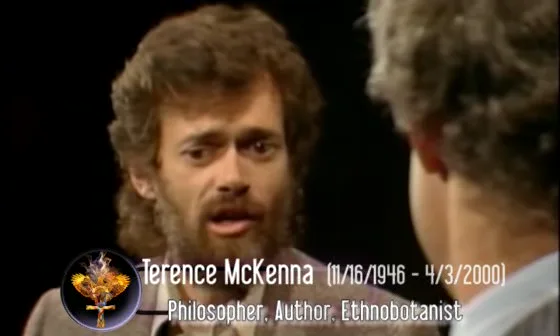
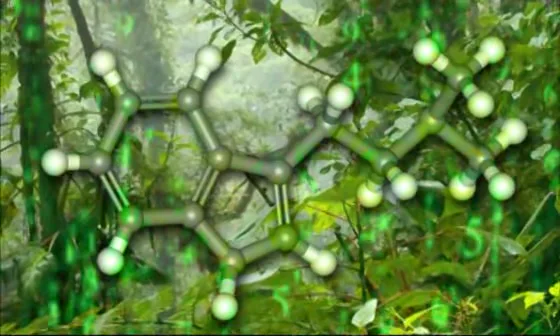

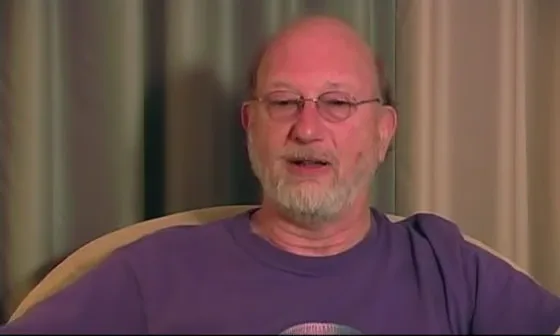
a 2009 documentary exploring shamanism and psychedelics as tools for accessing transpersonal realms through altered states of consciousness. covers ancient practices, sacred plants