The Reality Thermostat (Manifesting the Mind Sneak Preview)
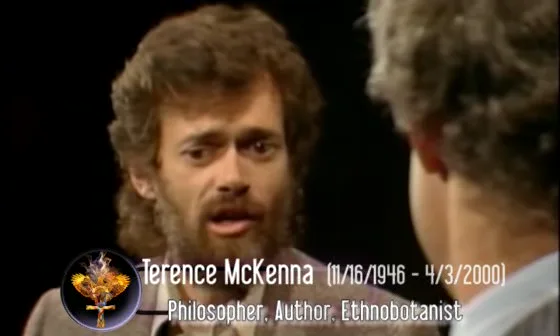
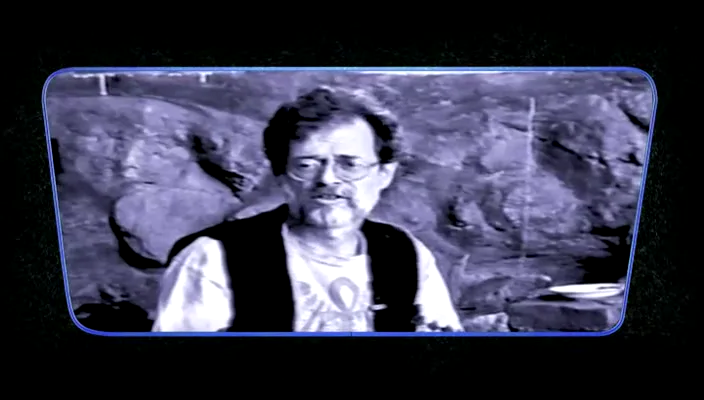
A 2009 sneak preview chapter from the "Manifesting the Mind" DVD featuring Terence McKenna. He discusses his brother's dialogue games with psilocybin mushrooms, Francis Crick's LSD-assisted DNA insight, and Kary Mullis's PCR breakthrough under the influence. McKenna argues that consciousness is not generated by the brain but is a property of a field permeating everything, with the brain acting as a receiver node. DMT, he suggests, functions as an internally generated reality thermostat that maintains ordinary consensus reality. The talk closes with ego dissolution as temporary boundary loss between self and world.
transcriptmachine-transcribed, unedited
One of the games my brother liked to play with the mushrooms was, you know, in this dialogue situation, he was always saying, tell me something I can't possibly know, right? And that will validate that it's not me, you know, that this is coming from.
I don't know that he ever succeeded in getting it. It's very cagey, you know, they're very tricky that way. It's, you know, but occasionally they do seem to tell people things that they can't possibly know or that they've never thought about in quite that way.
And now it's come out, for example, that, you know, Crick's insight into the structure of DNA was assisted by LSD, you know, and he...
reluctantly, but finally admitted that that was a big influence. And many computer scientists, you know, Steve Jobs has said LSD has been very useful for his creativity.
Cary Mullis, the Nobel Prize winner who figured out the PCR chain reaction has been quite upfront about it. LSD gave him the ability to get down with the molecules and see what's happening.
In some sense.
There is a communication. In some sense, the question isn't even valid, because where do the boundaries between the self and the world exist? You know, we're not really separate. I mean, we're part of this information field. And, you know, this notion that consciousness, I mean, I do think that consciousness does, it's like a property of the continuum.
It's like...
The old physical physicist concept of the ether or something. It kind of permeates everything. And it's not really localized in the human brain or necessarily even generated by the human brain.
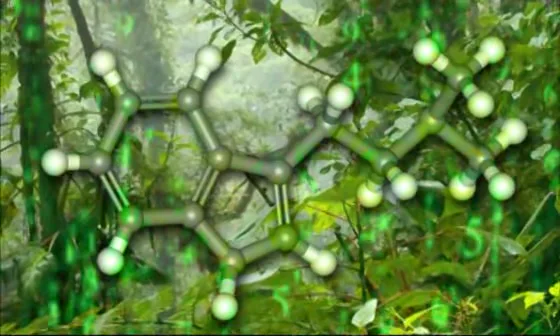
Why does the brain require DMT for normal function, if, you know, this is indeed true? Yeah, and it's hard to say. I mean, I think that perhaps one of the functions of ordinary levels of DMT is kind of...
Like a, you know, kind of reality thermostat.
If you have a certain kind of narrow window of
levels of DMT in the brain, it maintains this ordinary
level of, you know, perceptual, you know, consensus reality that most of us live in.
You know, kind of like the endo-matrix in a way, as opposed to like an externally applied, you know, psychological or, you know
consciousness kind of matrix like in the movie.
You know, this is one
that's internally generated but it may be that the brain is a place where it
becomes focused and concentrated you know the brain may be as much a receiver
of the signal as it is a generator of the signal you know nobody can really
say but that's that model in some ways appeals more to me than the notion that
it's all coming from the brain the brain is more like a node you know and there's
this sort of field of consciousness that permeates everything and to a
certain degree everything is conscious I think of the shaman as entering into
this net of being in the higher worlds in the heaven worlds and that's why I've
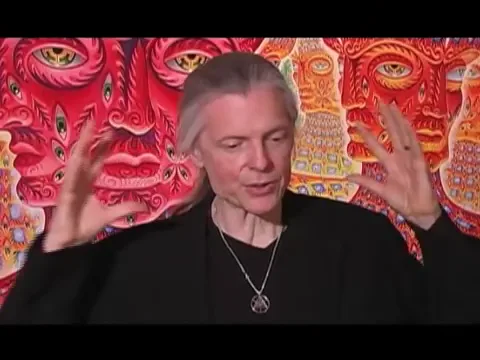
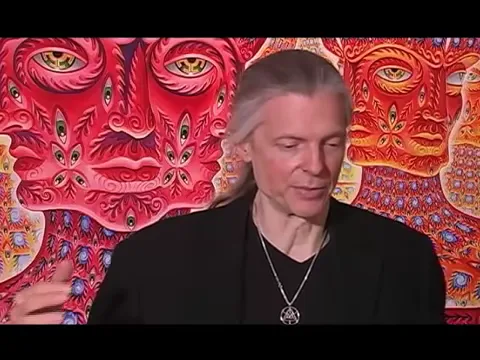
personified the net of being this painting behind us as this continuum of
heads interlocking infinitely in all directions
because
you know
that points to being as a continuum as a network in a sense to an infinite realm
and this is a part of the deep fabric of our being I think because we sense
ourselves as souls related to many there is this everyday world but you can
be in a place where there is no you and still perceive the world
as a whole as if you're in a place where there is no you and still perceive the world
as being a place where there is no you and still perceive the world
that scared me losing my ego was the scariest thing I have and I still don't
like it a profound state which may be reached by use of these entheogens
psychedelics hallucinogens whatever you're going to call them um which is
known as ego loss or ego death unfortunately subsequent to the coinage
of this term ego has come to be used in a completely other sense
um the ego of the spirit that I am and it's a whole other world but it's a whole other sense and that's why I'm here in this moment
and I think we've got some very interesting questions about why we're here in this moment
it has been used in the sense of pride and that is not what ego death is about
ego death would mean you lose your sense of eye for good and that's not what happens they mean
a temporary suspension of the ego when ego death is spoken of ego death means the death of you
as a concept whereas we walk around thinking of ourselves as things we think of i am sitting in
the chair therefore you know i am a thing the chair is a thing when we reach the realm of ego
death or ego dissolution or whatever you're going to call it there is no longer any perceived
boundary between
oneself and the chair in this state there are no things there is just one continuous experience
in some sense all of experience is an illusion you know everything that we experience in the here
and now and our state of being is a hallucination an elaborate hallucination that our brains
construct we happen
to call it consensus reality but it's still i mean i mean physics tells us that you know
the picture of reality that we build so that we can navigate through the world and not step in
front of buses and stuff like that and do all those you know the world doesn't really look like
this at all you know the brain constructs a model of reality that more or less maps onto reality it's
inside the human race but that's another picture in order to be able to prepare us for the real
well-being of the real world i think there's actually a bunch of
uh
but you also have real tools
all open to our being you know we have a complete freedom of the continuum of being if we change the
nature you know we have the model and we have the real world out here and we have the sensory
neural interface that's taking this information in interpreting it and giving us the model if we
change the nature of the sensory neural interface a little or a lot if we substitute say DM
T for serotonin you know the model of the world that we get changes radically and who's to say
that that's any less valid than the model that you know the brain constructs for you know for
everyday purposes so this idea that you know I mean it's it's all illusion it's all hallucination
that's what experience is you know I mean that's why in some ways
I sometimes get a little impatient with with people that say you know well a drug experience
cannot possibly have any spiritual validity well I'm here to tell you that all experience
is a drug experience you know we're all on drugs all the time largely because we're made
of drugs you know and that's what drives us you know experience is you know sort of the
what issues out of this biochemical process of you know all these
neurotransmitters and hormones moving around our brain I mean it's drugs
a 2009 documentary exploring shamanism and psychedelics as tools for accessing transpersonal realms through altered states of consciousness. covers ancient practices, sacred plants
dennis mckenna's 2008 talk at the fourth annual amazonian shamanism conference. speaking without prepared remarks, he explores ayahuasca as a planetary teacher, the scientific stud
terence mckenna explores the origin of consciousness and why humans emerged from millions of years of simpler biology
terence mckenna presents his theory that psilocybin mushrooms catalyzed human evolution by enhancing visual acuity for hunting, increasing sexual arousal to boost reproduction, and
mike kawitzky's 2009 documentary. some twenty thinkers, framed by terence mckenna's archive recordings, on five questions about evolution, consciousness, god, science and death.