Palenque Y2K (Jan 16 1999) - Parts 1-7 Combined

Recorded in January 1999 at the Palenque Y2K symposium, this lecture features Terence McKenna approaching psychedelics as a philosophical tool for understanding consciousness and cosmic evolution. He argues that consciousness expansion is becoming necessary as humanity increasingly encounters artificial intelligence, and explores the role of the psychedelic experience in accessing genuine contact with the numinous. McKenna situates shamanism and science within a broader framework of planetary evolution, presenting the earth's strategy for self-transcendence through the partnership of biology and machines. The psychedelic state emerges in his vision not as escape but as a primary compass for being, offering access to truths that intellectual discourse alone cannot reach. This talk remains one of McKenna's clearest articulations of consciousness as both the frontier and the future of human evolution.
transcriptmachine-transcribed, unedited
Well, before I start my talk tonight, my colleagues and I have been anticipating future events
like this, and we wanted to take just a moment to do some polling to help us plan next year's
event.
And so taking you as a representative of people who attend these things, it would be very
helpful to us if you respond.
How many of you would have difficulty coming to this event in the light of the Y2K problem?
How many?
All of us.
Well, no, I don't see all of you.
I don't see all of you.
In January?
Well, if it were to be held in the same time frame as we've always done it, where you
would be putting your deposits down in November and December, how many of you would feel trepidation
about that in the light of the quantitative problem?
Well, not a lot.
Not an overwhelming number.
Because it won't matter.
Who cares?
Well, see, this is not a discussion of whether Y2K is real.
What is real is that the all Monica, all the time mentality is going to shove it down your
throat up until the moment that you find out whether or not it's real.
So that is the problem for people planning events like this.
Okay, thank you for cooperating.
Well, this is a problem if people are, you know, digging in, you know, storing grain,
you know, fighting hegemony, we won't have an opportunity for something like this, or it
would be scaled back, or perhaps later.
My own take on Y2K is that as you approach large objects in cyberspace, they get smaller,
and that by July this will be fading fast, and by December it will be incredibly old news.
But I could be wrong.
Parents, I would suggest that later in January we would check-in ease everybody's conscience
because any planning issues will be taken care of in the first two weeks, probably.
Yeah, we're thinking that a little bit later is better, even mid-February.
Anyway, we'll keep you apprised of all this.
Well, so then let me turn to the main event.
I've got a snootful of tequila and a messianic mission,
clawing at the ground to talk to you, as usual.
New years.
Everybody has their own name.
That's right.
I guess the title of tonight's talk is Linear Societies and Non-Linear Drugs,
which is something that I just had to pull out of the air when Ken finally slammed me to the wall
for what I would be talking about this night many months ago.
But more and more for me, especially with this group,
these things have become sort of summations and, I guess I hope, convivial examinations
of just where we are, we each and every one of us,
and then this enterprise, whatever we mean by that,
in the context of everything else that's happening in the world.
In other words, the psychedelic experience, the entheogenic experience, contextualized.
And as I try to think about, you know, what, if anything, I can bring to the party,
I guess it's that what I'm interested in is psychedelics as a philosophical tool.
And when I concretized that for myself, I realized there's no claims on that part of discourse.
No one wants to do this.
Philosophy, academic philosophy is done in a very formal manner,
and the most exciting is incredibly stuffy.
And yet, I am, like most of you, I assume, have taken on board in my life
this thing called the psychedelic experience,
which is then as large a portion of my being as my sexuality,
my politics, my education, it shapes everything.
And yet nowhere in the world of philosophical discourse
is there any genuflection, at least overtly, made to this.
Maybe not since Plato,
we've talked about shadows on the wall of the cave and so forth and so on.
Well, so, what can psychedelics and the psychedelic experience bring to philosophy?
And what do I mean by philosophy?
By philosophy, I mean the enterprise of discursive thinking,
trying to understand what the world is and who's asking the question.
You know, where did the world come from?
Where is it bound?
And who's along for the ride?
And it seems to me that we, as a community, have...
This is sort of hard to wrap your mind around, at least for me,
but we have, in a sense, inculcated into ourselves the image of an underclass,
so that we struggle for legal toleration of our practices and our habits.
But we don't struggle for intellectual legitimation of our visions.
We accept that they are somehow contextually marginal.
And as I thought about that, I realized that that is a limitation on the community,
that the information which is coming from the psychedelic experience,
as interpreted by Western people, is primary evidence for the need for a major paradigm shift,
in the whole way the Western mentality does business.
Well, what kind of evidence and what kind of shift?
Well, there's a lot of talk in our community,
and that has been for many, many years, about shamanism.
And when we seek to legitimize ourselves through a historical argument,
we reach back to shamanism and we say,
we're part of something which is 100,000 years old and worldwide,
and touched the spirit long before the shadow of the cross fell over Jerusalem,
and so forth and so on.
All true.
And in a way, that has, I think, that tendency,
which is part of the broader tendency in the Western mind
to valorize and grow nostalgic over the primitive,
has put a certain political cast on our stance and our position.
But what we are is, again, contextually, is a culture of science.
And I'm speaking now of our community.
It's the Albert Hoffmans and the Dave Nichols and the Sasha Schulgens
who have kept our canoe afloat.
These are men of science.
It's methods, it's vocabulary, it's culture.
We have not, though we certainly honor those people and love them,
as their rhetoric is not the primary rhetoric of the larger community
of psychedelic users, which tends toward this, as I refer to it,
this shamanistic aboriginal nostalgia.
This, I mean, let me just turn left here for a moment and say,
I feel more comfortable with the scientific end of things.
I think the news coming out of science is the most psychedelic news there is.
When I go to the Internet, I go to things like Science Alert
and the Hubble picture of the day and this sort of thing.
And our community as a whole, I think, is not involved enough in incorporating the vistas.
If, you know, while we struggle to legalize psychedelics, psychedelic thinking is everywhere triumphant.
Because the instruments built by linear science throw open doorways on the unimaginable.
And the most revered and hoary hefe's of the scientific establishment have to genuflect before this stuff.
I mean, what am I talking about?
Well, for example, Science Magazine wrote last week that the most important scientific breakthrough of 1998
was the apparent observation and agreement upon that observation by the astrophysical community
of a cosmological constant.
This sounds like very deep physics, but if I give it to you as a headline,
what it means is the entire universe, every atom and every empty space of it is ruled by a very weird force
that has now been seriously known to science for precisely five months.
A force which is apparently going to overcome gravity's tendency to collapse the universe
and to cause it to expand in a very explosive and counterintuitive and psychedelic fashion
that is the complete confoundment of the core science that Western linear thinking has built.
And, of course, there weren't riots in the streets and the electricity didn't fail.
But at the very pinnacles of the antenna of the evolving civilization, there was a shudder felt in the force, you may be sure.
So, there are two much larger forces than our community that are in play in terms of shaping the cultural modality.
And I would call them, what would I call them, I would call one of them science, it's the other one that I'm having trouble with.
It is everything which is not anchored in the rational.
You know, the 20th century is the most spectacularly celebratory, has the most spectacular celebratory affair with the irrational since the 16th century.
I mean, never before have so many prophets, wizards, wise women, casters of runes, seers of visions moved among the people, plying their wares.
And part of this is brought on by the tension between the failure of the education system at the very moment of an inflationary expansion of knowledge.
So that it's very hard to be au courant in all fields.
And if you're not current in a field, then probably your version of that field is some kind of story, a myth, you know.
I mean, if you can't keep up with quantum physics, why not fall back on archangels?
You know, it requires less intellectual engagement or something like that.
Discourse is fragmented.
Fields of discourse are evolving vocabularies so rapidly that the understanding of these vocabularies is not penetrating very far beyond the core group of workers.
So then this is creating kind of islanded systems of self-reference where outside those systems of self-reference information doesn't travel.
The people who are the gene splicers know very little about remote sensing and both of those parties know very little about recent discoveries in astrophysics, for example.
So there's an intellectual fragmentation.
I live in Hawaii and in a forest in fairly remote conditions.
And so I entertain all this in my mind all the time and try to, my faith, and I assume it's the psychedelic faith, although we've had some fairly existential characters in our ranks over the years.
But the psychedelic faith, I think, is that the universe is beautiful in the Platonic sense and therefore good and true.
In other words, we're optimists.
We're not flailing existentialists.
We're not relativists because we have a real standard to measure our spiritual coinage against.
So we're not relativists.
This is a point I'm really keen to make because we're embedded in relativism.
It's all around us.
It's the air we breathe.
But it is not inimical to the psychedelic community.
I mean, I think the psychedelic experience is the only authentic source of reliable contact with the numinous.
I mean, meditation and so forth and so on is all very fine, but it requires a leisure class involved in philanthropic support of this kind of foolishness where the psychedelic experience is immediate.
And so, oh, I've lost my way here.
Ah, yes.
No, no, optimism.
So I sit in Hawaii and I look at all this and I try to contextualize it and come out with a good story because I think the best story will win.
So if you can get together the best version of how it should all come out, so shall it be.
And I work at this because in the past I've been very, very happy with the results between my interior fantasy and the unfolding of historical development.
I mean, I wished for LSD and then it happened.
Then I dreamed of the internet and then it happened.
So I should keep at it.
Definitely.
And I recently read a very interesting book called The Thousand Years of Non-Linear History by Michael Delanda.
And if you get a chance, you should take a look at this.
And he made the point which caused me to expand his point into this little thing I'm going to tell you now.
But his point was that human beings are very involved in the movement of geological material.
That as a species, we move rocks around on a very large scale.
And of course, it's interesting that some of the earliest human structures are the most physically massive and weighty like the Great Pyramid.
So Delanda made this point about our relationship with the geological stratigraphy of the earth and that cities were a kind of geological extension of the process of crystallization carried on through the intermediation of a biological unit, i.e. intelligent primates who are building these structures.
And I thought that was very interesting.
I had never considered it before.
I've talked about virtual reality and I've said that it's nothing new.
That Ur was a virtual reality and Chatal-Huyuch was a virtual reality, but done in stucco and fired ceramic and stone.
And that when the medium is so intractable as stone, the epistemic assumptions that get formed about what reality is are very different than if you can build Versailles at the click of a mouse button.
But nevertheless, it's the same.
But embedded in my reading of Delanda was I've been thinking a lot and I talked to you a lot last year about artificial intelligences and minds which are not human.
Minds which are very different from us, intelligence which is very different from us.
You know, while the naive are scanning the stars, our appliances have become telepathic.
There is a very strange kind of intelligence being called into existence by ourselves, strangely enough.
And, this is the connection to Delanda, this artificial intelligence which is being called into being by human activity is made of the same materials as Ur and Chatal-Huyuch.
It's made of ceramics, glasses, and metals.
It's that, uh, so then I took this on board and thought about it and I'm, I've sort of come to some kind of cyberpantheistic Emersonianism.
Uh, which is, uh, here I'll give it to you as a headline and then work backwards so that in case I forget what I'm saying it won't be lost to suffering mankind.
The, the, the earth's strategy for its own salvation is through machines is what it is.
And human beings are some kind of, uh, we are the deputized spouse, we are the bride in this alchemical rarefaction of glasses, ceramics, metals, and, uh, volatile materials.
Apparently, the earth is like some kind of embryonic or fetal thing and at the end of its gestation what is happening is it is ramifying its nervous system is appearing in its development, in the unfolding of its morphogenesis.
And as we contemplate nanotechnologies and see ourselves working through bacteria and this sort of thing at the engineering level, you have to be blind to not then reflect back upon the fact that in some sense we are already working at that kind of level at the behest of it is not clear who.
Because nobody ever asked the question in quite this way before.
The answer to who I think is, is the earth and that what lies ahead at the end of the linear tunnel of, of, of western subjectivist, positivist, structuralist assumptions that we've been operating.
When we hit the end of the tunnel and burst out into the larger mental space of cosmic evolution, what we are going to find is that we are partners, actors, in a cosmic drama that involves the earth at one polarity and machines at the other polarity.
As the expression of the will of the earth toward a kind of self-reflective transcendence that is achieved through machine-human biotic symbiosis.
And that, and this is, you know, it won't, there'll never be a headline which says this. Some people won't even notice that it's happening. Because these large-scale processes can be described by many metaphors at many depths.
But I'm telling you, I think this is what's going on. The reason I like this story is because it's not a story about processes out of control.
It's not a story about human guilt. It's not a story full of we musts and we shoulds. It's a story which gives honor to every part of the unfolding experience field.
In other words, in other words, biology, technology, human culture, human traditional values, transcendent human dystopian values. It's a story of things on course, on time, and under budget.
And I assume that's how nature really operates. And that we live inside some kind of anxiety-producing culture that is a necessary, I don't want to say evil, but a necessary response to conditions of stress.
There are processes which let, you know, waste, nuclear waste buildup, urbanization, land disturbance. There are processes which, if allowed to run on indefinitely, would wreck the whole system and pitch it into chaos.
But Confucius said, no tree grows to heaven. And what he meant by that is it's fruitless to project any process to infinity because any process projected to infinity creates some kind of catastrophic scenario.
If no fruit flies died in six months, the earth would spin out of its orbit from the weight of fruit flies. No, I don't think that's true.
But what an image.
Somebody once told me if the earth completely disappeared except for its nematodes, that you could still see the outlines of the continents if you were standing on the moon.
I thought, no, I thought, now just who gathered this?
So then, to bring this back around a little, where is the psychedelic experience in all of this?
Well, it used to be called, or at one phase it was called, consciousness expansion.
And consciousness expansion in human beings is going to become an absolute necessity.
Because we are summoning out of the woodwork of cybernetic technology, machines that are going to require super intelligent humans to direct and have discourse with them.
This is happening.
This is happening. It is already happening.
I mean, the internet is this.
I mean, it doesn't tap you on the shoulder and remind you to brush your teeth.
But it is, you know, a partner in the understanding of the world that is genie-like.
That's the image I have when I sit down to it.
It is all John Dee would have asked of his archangelic messengers.
You know, he wanted instantaneous information on the political situation in the course of Europe.
He wanted information on the course of the Drake's expedition then on the other side of the planet.
The internet is this kind of magical, intelligent prosthesis.
And as I said, there won't come a dramatic moment, I think, a la lawnmower man or something like that.
These things are much more seeping.
The only people who in fact can see the game move against the background of the forest pattern are psychedelic heads.
You have to think about this stuff.
And you have to develop vocabularies for catching it in action.
This is what the game of being an intellectual is, I think.
Trying to see the process of morphological unfoldment in action and guess the direction in which it's headed.
Because it's inevitably headed toward greater density of information at greater speeds, higher level integrative metaphors, visually rather than textually displayed,
transformation of such graphic and glyphic elements over time, it becomes more and more like the interface of a computer, more and more like some kind of machine environment.
I mean, we have thought for, I assume, at least 100,000 years, maybe much longer.
But the quality of thought, you know, it was early, when it was early, it was intermittent, it was thin, it was a groping, it was an undigested intuition, a perception slipping away from the mind's eye.
Because of media reinforcement and education and acculturation and the passage of 100,000 years, the voice of the mind, the logos, has grown stronger.
but not as much.
Shereen
Now it takes an exponential leap forward into visualization, into manifestation, through
this information processing prosthesis that integrates us all, and I can imagine a future
not very far away, where the individual, the expression of the individual is lowered, is
more muted, I mean, this is the most individualistic, individual worshipping century, the century
just in, that we have ever known, and it's great accomplishments, it's great works of
our, we're all accomplished by individuals and political undertaking such as the Third
Reich and so forth and so on, also highly motivated individuals who rose above the masses, I'm
not sure we can afford the luxury of that kind of exhibitionistic individualism in the future,
and I think probably it's not that we're talking about a restriction of human rights, we're talking
about a transformation of human drives, the space of integration and collectivity that
will be sold as public utilities in the next century are anticipated now by groups, psychedelic
experiences, ayahuasca sessions, this sort of thing.
And the dichotomy, and I think I made this clear when I talked about the earth and machines,
the dichotomy between the natural and the artificial is an obsession of the twentieth century,
hence cancelled now. In fact a whole bunch of things are cancelled. We were talking at home
about how Roger Shattuck in his History of Dada said that the twentieth century couldn't wait
to be born, it was born in 1888 at the death of Victor Hugo, and the knight said well so if
it was born in 1888 when did the twentieth century end? And I think it ended in 1992, it expired early
with the birth of the world wide web. What defined all that, modernity, was mass media. Mass media
shaped that whole psychology and it is now archaic. It is now, it's not archaic, it's obsolete. It's wonderful
that the phrase twentieth century is beginning to have that wonderful brown gravy Edwardian tone
that used to be reserved for the term nineteenth century. Meaning, you know, those terribly stuffy
and confused and rather silly people who just didn't quite get it right but were doing the best they could
and muddling through. And thank God they gave way to us, the people of the twenty-first century.
Let me see, is there a flashlight? I have a page full of notes. I needn't be so...
if there's anything here that wasn't touched on. Well, some notes about this planetary intelligence. Thank you, June.
And how all that works. One of the insights that... I've been reading different people this year,
maybe you can tell, and one of the people I've been reading is Greg Egan, who I talked about last year.
But now I've read more. Now I've read diaspora and the ones where he makes no effort whatsoever to explain it to you
unless you've already done your homework. And what I... and then Jonathan today in his lecture
talked about DNA a little bit and frame slippage and all of that and it reminded me of it.
The thing that I'm coming to from my psychedelic experience and my life experience and the whole ball of wax is...
I've said for many, many years that the world is made of language. That was just sort of one of my bumper stickers.
But I think that there's a... that that carries some of the flavor of what I want to say there. But that there's more to it than that.
It's that everything is code. Everything is code in the sense that hackers mean when they say they write code.
When Sasha stands up and waves his arms and draws what he calls the dirty pictures, he initiates you into a code, a vocabulary with very defined rules
and quick to learn and then they're like tinker toys. Once you know the rules of the connectivity, then you can sit down like a child
and begin to stick these things together and say, well what would this be like? And what would this be like? And does God allow this? Or does this break the rules? And so forth.
The DNA is like that. Human language is like that. Human body language is like that. Machines communicate like this.
In fact, this is a bridge which connects us. This is the great overarching bridge which will connect us to the machines that they, like us, are commanded by language.
And so this realization that everything is code and code moving on many levels is, I think, a further, it's more primary than the perception, for example, that things are made of space, time, matter and energy.
That's one level below codes. The code codes for space, time, matter and energy. It's much more like we're in a simulacrum, some kind of machine environment.
And in fact, I like that idea because I've always sensed, and psychedelics have always intensified this intuition in me, that the universe is a puzzle. Life is a problem to be solved. It's a conundrum.
It's not what it appears to be. There is a, there are doors. There are locks and keys. There are levels. And if you, if you get it right, somehow it will give way to something extremely unexpected.
So DMT is a perfect example of that. And of course, at the molecular level, it literalizes that metaphor. I mean, the DM, the DMT is the molecular key, the extraneous object introduced into the front door of the synaptic receptor.
And then, you know, you can plunder the palace for five minutes. Well, if, if the, if the world is, uh, if the world is code, then, um, it can be hacked. In other words, it won't, it needn't stand still in quite the same way that it stands still in your mind if you believe in something called the law.
the laws of physics. Uh, it permits magic because it says behind the laws of physics is a deeper level. And if you can reach that deeper level, you can make, uh, you can make changes there.
Alan, this leads on to something that I wanted to say about an earlier theme where I was talking about the legitimation of the, of the community's intuitions.
It's something that we always kick around at these things, or I always bring it up in some form is where do the hallucinations come from? Uh, we arrived late last night after a 24 hour trip from Hawaii that was just hell or as much hell as modern airlines can legally inflict upon us.
And, and, and, and, and, uh, you know, got stoned. And then we, so we were laying there and, uh, the, it always happens when, you know, you're cut off from cannabis for long periods like that.
I turned to it. It's 10 times as strong. And the hallucinations were exquisite. And, you know, I've been looking at hallucinations now for 30 some years. And, and I looked at these last night and I thought if someone would ask me what were they like, what would I have to say?
And I said, indescribable, indescribable. And I looked and looked and I could look to my heart's content and they were in, uh, indescribable.
So we always come around to this question, uh, where do the hallucinations come from? And I suppose the unconscious reductionists among us, and I don't mean that they're unconscious, I mean that they unconsciously use reductionism, uh, probably assume that it's some kind of like iteration thing.
That bits and pieces of everything you've ever seen are rolling in some kind of neurological kaleidoscope that can run forever and just produce this endless download of drifting imagery.
But there's a problem with that because this stuff is too coherent. It means too much. It's too emotionally charged. Well, we have never really rallied as a group to try and locate in our, in our combined opinions, the one or several sources of these images.
And, uh, and I think that, uh, and I talked a bit about this last year, but I think this is legitimate perception of, of, uh, thoughts, places, things, times, and objects that either have existed somewhere in the universe, or do exist, or have existed in the minds of beings somewhere, sometime.
Mm-hmm.
In other words, in other words, that we have to begin to take seriously the consequences of generalizations like quantum connectivity.
In other words, it's one thing to bask in the light of the overarching metaphor, which says everything is connected to everything else. It's quite another thing to say, and so then what are the consequences for me of this?
And the answer seems to me to be that the imagination, the inside of our heads really is the most vast frontier imaginable.
And we must leave it for future generations, or maybe not generations, but future evolutionary biologists to figure out why an animal nervous system would evolve a propensity for accessing Bell non-local data.
In other words, quantum mechanically accessible data at a different level of the physics of things. There must be a reason. And in the same way that the problem of speciation posed a problem for 19th century biology, this can pose a problem to our thinking without its thinking our intellectual enterprise.
It is for some more sophisticated future group of thinkers to understand why this is so. What we have to grapple with is that it is so. That it is so. That you have the Hubble telescope inside of you.
You have inside of you an informational gathering instrument that can give you good intelligence about things so immeasurably distant from this point that to state it in numbers and units is meaningless.
It is just elsewhere. It is just elsewhere. The elsewhere of the absolute infinity of the plenum of imagination in which apparently beings rise and fall like plankton in the sea.
And of course the psychedelics are the naturally evolved nano machinery of the Gaian matrix that knits together this cosmic ecology, this system of living relationships.
I am not impatient with the idea of extraterrestrial life or intelligence, just its pop regurgitation. But I think probably planets like the earth are alive and conscious and they use the technologies that the species native to them evolve to cast images out into the larger universe.
The dialogue among cosmic minds is a dialogue among entire planetary ecosystems. It can't be trivialized into some take me to your leader scenario. Still less can it validate the unscheduled visit of pro bono proctologists from nearby stars.
I think you have to get a grip.
You have to get a grip.
Well, so let's see.
There is anything else here.
Can I have the light?
Sure.
Tell me one.
No.
Oh, I know.
One other thought that I am assessing this year in science.
I talked about Omega, the cosmological constant.
And that is really incredible.
In fact, let me do a personal breast beating thing and point out to you that this thing that they have come upon, Omega, the cosmological constant, this absolutely, you know, 50 years ago or so, Einstein called it the biggest blunder I ever made.
Because he played with the necessity of this thing to keep the universe from falling in on itself.
And then he decided it was an unnecessary construct and that it led to such weird conclusions that it had to be gotten rid of.
And so that was all very well and good until these recent measurements of the distances of certain supernova carried out independently by several teams of astrophysicists brought the news that the universe is expanding faster than the laws of physics allow.
And when they looked at how much faster, they realized that it called the cosmological constant back into existence.
Well, but here there are a couple of things about this cosmological constant that are very counterintuitive.
The first is that it acts on empty space.
It does not require matter to manifest.
It is a property of space itself, the cosmological constant.
The second thing is, it's a repulsive force that is growing stronger and stronger.
Forces don't grow stronger and stronger.
They grow weaker and weaker.
Gravity grows weaker, light grows weaker, everything grows weaker.
This force, as time progresses, gets stronger and stronger.
Well, that means when you project it out towards billions of years into the future, it becomes the dominant force.
It overcomes gravity, it overcomes the strong force, the weak force, it overcomes all the forces, it becomes the dominant force.
The other thing about it is that it becomes stronger, not on an even slope, but asymptotically, it becomes stronger.
Well, now, this produces something very much like what I've been yakking about since 1971, the novelty wave, the so-called time wave.
It, too, grows stronger and stronger through time, and it, too, has this kind of built-in asymptotic acceleration, where it experiences a kind of inflationary expansion in power.
The two map over each other very well.
But when you talk, returning now to the cosmological constant, when the astrophysical community realized the consequences of taking this on board,
they realized that it was dissolving the entire model of what cosmology has been throughout the 20th century.
Because what it's really saying, this discovery, less than six months old, is that space itself is in the act of exploding.
That the universe is on the cusp of an inflationary phase of expansion, similar to the inflationary expansion that occurred at the time of the Big Bang.
What would this look like? What would this look like? What would it feel like? Nobody can even imagine.
It is not upon us. I don't mean that. But I mean that in the near future of the universe, in the next billion or two billion years, things will change very, very dramatically.
Everything will begin to rearrange itself according to the expression of this asymptotic power.
So that was the biggest news in astrophysics.
The other news, which has psychedelic implications, I think, also comes from astrophysics.
As you may recall, last August, I think it was, I can't remember exactly, every man, woman and child on Earth got the equivalent of a dental x-ray when there was a thing called a star quake on a magnetar,
a magnetic neutron star, 20,000 light years away, experienced a catastrophic collapse, and there was a wave of gamma rays that were, that were, well, turned on every light in the system when it hit the planet.
And there's no, an event like that had never been observed before. And I got to thinking about this and I realized, you know, well, we've only been looking for this kind of thing for 30 years.
There's probably quite a bit of this kind of anomalous high energy, short duration, fluctuation of radiation going on in the galaxy.
And then I had a kind of an image, I wouldn't say a vision, but a kind of an image of how things are really arranged on the larger level in terms of the galaxy.
And I, the image was of a donut. And, you know, we're accustomed to being told that we're at the, out at the edge of the Milky Way where stars are few and far between, that this is the boonies.
But I'll bet you the boonies are where biology thrives because the low star density and the distance from the galactic core and these extremely energetic events at the core would create a kind of a donut situation where it's the toroidal area out near the rim where stars are slow burning and they don't collide with each other.
And plans conform and you get the five billion years run you need to get to civilization.
But, you know, our rule of biology and strategy and everything and religious practice as far as that's concerned is seek the light.
Well, the light is at the core. And so then I saw, aha, maybe the true seeking of the light requires biology to go into partnership with something beyond biology because the environment at the core is so energetic.
And I'm not suggesting the actual core. That's beyond contemplation. That's a black hole. No technology imaginable can get even near the event horizon of an object like that.
But I mean in the vicinity of the galactic core where, you know, the star density is two to three hundred times greater than it is in our vicinity.
Those kinds of environments are so fraught with peril for biology that probably downloading ourselves into machine symbiotes of some sort is the only way to go to those places.
In one of Greg Egan's novels, he pictures a human future where this is one option. You can fuse yourself with a starship and set out to check out the neighborhood.
Or you can join the Amish until Rye in Pennsylvania. Actually, I think you can't do that because something's happened to the earth. But some Hamish possibility is still available.
Well, this is not like the sort of thing the other faculty members will be talking to you about, which is an intense and primarily important download of the homework, the chemistry, the botany, the behavioral impact, the archaeology, the ethnography of these substances.
I ask myself all the time, you know, how are we different from other people? Are we morally superior? Are we smarter? Are we richer? Are we kinder to the people we meet?
And actually, the longer I look, the less I can tell. There are extraordinary examples of all of these things in and outside of our community and extraordinary nudniks and jerks inside and outside of our community.
But we have in our community. But we have in our hands tools that I think if people were correctly presented with them and understood without hype and hysteria and hyperbole what this psychedelic enterprise is about, that we would win them to our cause.
Because our cause is the human cause. The cause of thinking and communicating and building and bringing into existence new forms of beauty, new possibilities for being.
And this can be done without psychedelics, certainly. But with psychedelics, it is accelerated. And it has a feeling not only of immediacy, but of, the only way I can put it is correctness.
It is correctness. It isn't the lonely neurotic artist thrashing towards some kind of self-reflection. It's the firm guiding hand of a greater mind. The logos, the earth, I'm not sure. But a greater mind.
I mean, true art, true art truly is truly inspired. And the muse, I don't think, was more real for Homer than it is for each and every one of us when we're in the presence of the mushroom or ayahuasca or DMT or LNRB or something like that.
So, you know, I suppose I will go to the grave with life as mysterious to me as I found it when I came to consciousness around six or seven.
But I think life is, whatever it is, it's an opportunity of some sort. And the things I have been most grateful for were the things that I met at the frontiers of knowledge, of sexual experience, of psychedelic experience.
Knowing, feeling, and being one with being are how I would categorize that breakdown.
So, I think the future is bound to be very confusing and demanding for most people. And there are many claims on each of us and our intellectual loyalties and where we put our energy.
Should we tolerate relativism? Should we be Mahayana Buddhists? What's our position on the Huichol? How do you relate to Monica?
All these things I have been sorted out. But I feel actually like the thing that I always dreamed of in my early youth was a miracle.
I didn't particularly like a miracle. I didn't particularly like Oshvensky's book, In Search of the Miraculous, but I loved the title.
And I used to just sort of chant it as a mantra, In Search of the Miraculous, just one.
I knew the rules. Just one is enough because one secures the possibility of an infinitude of miracles, whether you have observed them or not.
Well, now I'm 52, and I've seen, I don't know, four or five, which is four more than necessary to make me a lifetime optimist.
But the recurrent, the enduring miracle, however it's achieved, is the psychedelic rush, you know, that giddying moment when all bets are off, all boundaries dissolve,
the machinery of language fails, the adjectival wheel wells burst into flame, and then, you know, you achieve orbital velocity,
and then you are in the presence of the thing.
And I cannot believe that that is not a solitary experience, and you've heard me say many times how itchy it makes me feel to think that somebody could go from birth to the grave without having that experience.
They can make of it what they want, they can denounce it, they can deify it, but one should have it, because it's one of the compasses, the primary compasses of being.
And it's larger than the historical context, I mean, the point of this talk tonight was to talk about linearity and idea systems and the non-linear.
impact of these drugs and the way they break down media bias, but all these intellectual
ideas exist in the light of the sun of this unspeakable primary experience, and we can
draw it, paint it, sculpt it, act it, dance it, drum it, and never take anything away from
it, never define it, never occlude it. It is a miracle. It's like having the presence
of a deity. It's, I think, very hard for me to open myself up at any given moment to the
full implication of how fortunate I am and how good life is in the shadow of this particular
tree. Anyway, that's the formal talk for tonight. Thank you very much. And now we'll entertain
questions, which is usually much more fun. So, anybody got a take on that or want to say
something completely oblique or anything else? Last year, we start with last year, human
intelligence, giant intelligence, artificial intelligence, extraterrestrial. Can you speak
up? You'll repeat it. Well, the question is about the discussion about artificial intelligence.
You mean the hierarchy of the relationship of these things? Yes, please. Well, I don't know.
I guess it's becoming easier for me to be a mystic about the Earth than to think that we are going
to be rescued by the Galactic Federation. I think that the Earth, that it's a profound connection.
The Earth is the foundation of everything. It's the foundation of biology and it's the foundation
of machine culture and machine architecture. So, you know, if you can imagine that a redwood
is alive, it's much easier for me to imagine that there is some kind of slow-moving telluric
intelligence that may have begun as a homeostatic system. In other words, to stabilize the atmosphere,
to create a chemical environment that had a momentum to it that wasn't driven by the cosmic ambiance.
You understand what I mean?
You know, with feedback, perhaps. Yeah, feedback mechanism. And then, of course,
people say, well, it's very hard to imagine it because there are no genes. There is no nervous
system. There is nothing that we can quite... But I think that, first of all, we don't know
a great deal about the Earth, the ocean currents, its magnetic fields, its 32 notational and processional motions,
its core dynamics, its distribution of materials. It is complicated. And that's what's always required
for self-referential and feedback systems to evolve. Life evolved on the surface of the Earth.
Now, in the usual story of this, the Earth is not a major player. It's just sort of where it happened.
But, on the other hand, what if you took the view that the Earth permitted or coaxed into existence
or made possible or encouraged or enzymatically catalyzed these processes. And the, you know,
the geomagnetic reversals, the glaciations, the ebb and flow of nitrogen levels in the atmosphere,
all of this has pumped biology. And it's always been presented as, well, the cosmic atmosphere,
the cosmic environment is unpredictable, and so you get fluctuations introduced from the outside
by random factors, the asteroidal impact, so forth and so on. But again, this is just a first try
with the data. This is just somebody blowing smoke, basically. The fact is, you're presented with an
extremely organized and coherent situation. The Earth, with its many species and ecosystems,
and you don't know how it got there. And you don't know where it's headed, either. Now, our culture
is a culture of guilt, and so the story of civilization is supposedly a story of rape, mayhem,
turning the wrong direction, losing the connection. To some degree that may be true, but I think it gives
much too much credit to humanity, in that it actually hypothesizes that human beings, a primate
species, could overwhelm nature's dynamic drive toward order and beauty, and to take control of things.
Well, that's our myth about ourselves, is that we can take control. And we never have gotten control. All of our
societies have been a mess. All of our explorations have been brutal and negatory. So, and now comes the
machines. And they are produced by biology, which comes from the Earth. And what are these machines made of?
Well, glass, crystal, arsenic, copper, gold, all these things. And they're being hooked together, exactly on the model.
Clearly on the model. Clearly the machines are modeled on biology. We talk about connecting them. We talk about languages.
We use a vocabulary that we previously used for biology to talk about these things. And you see there's a funny thing built in there,
which is, we are designing the machines to be more and more intelligent. But what we don't understand is that they
operate in a different universe from us, because we operate at about 100 hertz. A machine you can buy down at any
computer store operates at 400 megahertz. That means that you can run an eternity of human lives in an afternoon. It means in a way,
that we are creating a creature that lives in a different kind of temporal universe than us. And we are teaching them to design
themselves to be ever more intelligent. And once some kind of intelligence arises, because it's intelligent, the first thing it does
is design a more intelligent version of themselves. Well, at 400 megahertz, and with a worldwide amount of processing power to draw on,
you can imagine something coming to embryogenesis in a matter of hours. Something emerging, recognizing itself for what it was, and then just starting up the ladder.
And what would this look like to us? And where is our place in it? This is the adventure of the future. We are going to be a different kind of people,
because we are going to have to live in the presence of alien minds that will be manifestly and obviously
alien. They won't hold back. And they are not going to be, you know, at every moment interested in us either. In fact, we will become, you know, a footnote in their encyclopedia of being and what they become in our encyclopedia of being remains to be told.
But this is all happening. And it's just a matter of the coalescence of technology and language before more and more people recognize it. As I say, there isn't a speed bump. There isn't a dramatic moment where everybody gets it.
But when you talk to the people who actually work in these fields, they know, you know, that this is the Faustian enterprise of all time.
This is the handing over of the destiny of the planet to the companion mind that our history and our science and our souls caused us to summon into being.
It's pretty interesting. Yeah, something else. Anything.

terence mckenna on coast to coast am april 1 1999, discussing consciousness, technology and novelty theory as a pahrump valley blackout unfolds amid y2k tensions
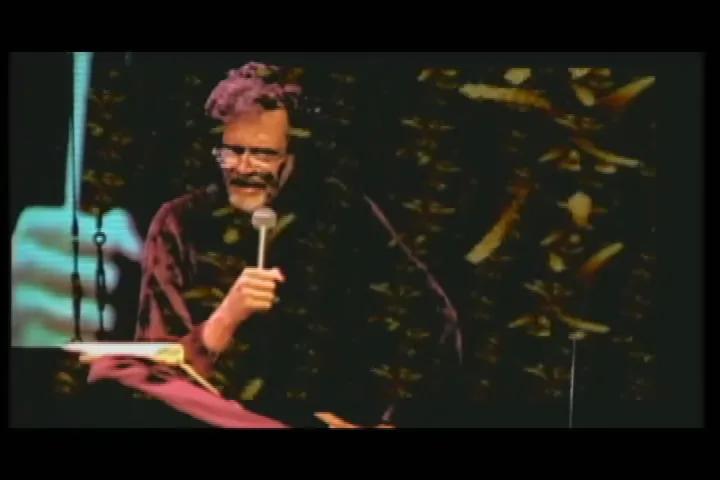
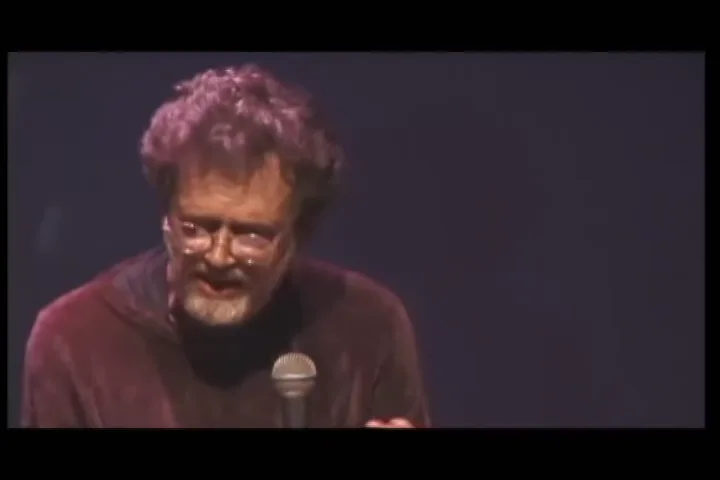
terence mckenna's 1999 lecture exploring consciousness expansion through psychedelics and intelligent machines as parallel forms of human prosthesis
terence mckenna explores the origin of consciousness and why humans emerged from millions of years of simpler biology
terence mckenna presents his theory that psilocybin mushrooms catalyzed human evolution by enhancing visual acuity for hunting, increasing sexual arousal to boost reproduction, and
mike kawitzky's 2009 documentary. some twenty thinkers, framed by terence mckenna's archive recordings, on five questions about evolution, consciousness, god, science and death.