Techno-pagans At The End Of History
A workshop held at Esalen Institute featuring psychonaut Terence McKenna alongside virtual reality pioneer Mark Pesce. The gathering brings together technologists, psychedelic researchers, artists, and spiritual practitioners to explore the convergence of consciousness, virtual reality, psychedelic experience, and the role of technology in human evolution. Through participant introductions and dialogue, the workshop examines how digital tools and shamanic wisdom might synergize to expand consciousness and reshape human community in an age where technology and spirituality collide at the horizon.
transcriptmachine-transcribed, unedited
There are more people than the people whose names I called, but nevertheless, we're going to try and get a sense tonight just of people's interests and motivations and what brings you to this particular watering hole this evening.
And we'll do that in the simple function of going around in a circle. This is a little different from most of the many, many workshops I've done at Esalen because Mark is here. He is the gentle giant of virtual reality, the man who hacked vermal.
Take a good look, your grandchildren will ask. And so it's an honor to entice him into this arena of discourse. And as you'll quickly find, he's very good at what we do here.
So tonight will be strictly introductory and we'll go around, meet you. You'll meet Mark. You'll meet me. We'll talk a little and we'll pack you off to bed by 10 a.m.
Because a lot of people have come hundreds of miles today. Before we go around, just let me say the motivation for this became in my mind, Mark didn't remember ever meeting me.
And so now in my own mind, I'm not sure we ever met at all. But you can take your choice of two stories. Either I met Mark in 1994 at the Seagraph conference where we rode together from a hotel to an exhibition hall and talked about how he might come to Esalen.
Or I met a friend of Mark's who seemed much shorter, much lighter and an entirely different person. But we talked about Mark so much that I recollected it as actually meeting him to the point where I felt no trepidation at all about sending him email and saying,
how would you like to come to Esalen as per our discussion and fantasy of many years ago.
So that's how all that happened. My interest in virtual reality and well in virtual reality springs from the naive faith that whatever else it may be, it's a technology that will allow us to show each other the inside of our own heads.
And that it's primarily a tool for art and hence communication and hence very important in synergizing whatever community the future holds.
I think these things are pretty self-explanatory and clear. Other aspects of virtual reality touch on metaphysics and media and human psychology and the mysteries of code and mathematics and the ontology of reality itself.
I mean, virtual reality permits thinking about reality in ways that you never could before because you had no platform outside of it from which to view it.
Well, it's amazing how fast time moves in these things. So I want to begin and just go around and get a feeling for who's here and what their priorities are.
These things are most fruitful when pushed by the agendas of the people involved. I know what I think. In this case, I don't know what Mark thinks, so I have something to look forward to as well.
But if you don't get what you want, it's probably because you didn't ask for it because we're incredibly compliant folk around here.
What's your angle on all this?
I'm Brian Duffy. I was introduced to you four months ago at a hiking seminar here. Not personally, but through a tape and listened to it. Read one of your books, visited your website, saw that you were going to be here now and let me know more.
Good. Follow this man's model. Not all about me, but just who you are, why you're here, and like that. And remember, in a social situation like this, under time constraints, absence of brevity is proof of psychosis. Do recall that. We're looking. Yeah.
So, bang. I've been involved with computers for a long time, and a lot of it's all the time. No way, just curiosity.
Fine. Let's go along the wall, come for me.
I'm Lawrence Kincholo. I'm a Monterey resident for many years. I do three workshops. One in September, if anyone's interested, about dream recovery. Just recently getting involved with the internet and studied and taken a lot of psychedelics and studied inner space for so few years.
Thank you all.
I'm Rajni, and I'm interested in Terence's work, and I've read some of your books.
Last summer I had experience of an ayahuasca journey in my life, and I know that you've
written about that, and that's why I'm here.
And as far as virtual reality, that's totally like I'm not a computer person, so mixing it
into two together, web medicine and technology is like, no, I'm more resistant about that.
I'm interested in it.
It's good.
I think it will be good.
No, we will show that it's a seamless web.
I'm infatuated now with moving along the back wall.
Hi, I'm Ronan Hallowell, and Mark invited me to come down here to participate in this,
and contribute some of my ideas, as well as music.
I'm a DJ.
I've been working with Mark for about five years, and I'm also a researcher in the psychedelic
field within the world of wisdom traditions, and so I'm here to groove with everybody.
My name is Nathan.
I'm very interested in kind of the trends in the evolution of society and consciousness.
I used to be really into computers and social reality for a while, so it's going to be interesting
to kind of leave some layers together here.
Let's go back up here and come around.
I'm Steve.
I was here with my wife a few months ago.
I wanted to come back, and she looked through the book, and I did find something you think
I might not.
So I think with the psychedelics and the internet, and I have no idea who you are.
I don't either.
Some of our best people are working on this.
No, some of the most fun people in these things are the people who say,
well, we could only come at this time, so then we checked in this afternoon and looked
in the catalog, and it was between you and moving on and letting go.
Anyway, we aim to please.
Yeah.
Maybe I'm one of these guys.
I'm a work scholar here, and I didn't know anything about you guys.
But some people told me they had been to the visiting teacher program,
and they were very enthusiastic.
So I bought a book and was reading, and I was very interested.
I had psychedelic experience a long time before.
I didn't take them for a long time because I'm afraid.
So this is also an approach for me to come closer again.
And also I'm very new, and I just bought a computer like half a year ago,
and I've come to this field.
I'm very interested.
Yeah, I'm open.
This is my last weekend here, so I'm not standing.
My name's Raphael Barker.
I met someone while I was living in Italy a few weeks ago who raved about you,
and who was surprised that I didn't hear about you.
So I basically took over from Delirious Throne and whatnot.
So I looked up, looked you up, found the website, and started exploring it,
and got freaked out that I couldn't understand the novelty theory,
and decided, you know, decided to come take the workshop because you mentioned Esalen,
which I hadn't heard of either.
So I decided to leave my family and leave everything behind
and take both this workshop and workshop I just finished a month long on Ericksonian hypnosis.
So, you know, I'm just kind of bombarded with information, you know,
left my family behind and hoping this will be kind of a stepping stone for me,
in a sense, as I go back to New York and try to carve a niche.
My interests are in film and cyberpunk.
I have a very strong relationship with technology,
and of late I've been approaching it with a little more interest in more of the tools
instead of kind of controlling 1984.
It's just the mentality I had before.
So things are changing for me, and I'd like to...
I'm interested in you guys' perspective.
I have a lot more things put on when you're getting ready and stuff.
No, that's... that's good.
Yeah.
My name is Owen Rowley.
I have a moderate history of working in virtual reality,
starting with Autodesk and a couple of other things,
and working with Mark in the early days of Vermal.
I'm a witch and practitioner of magical arts.
And, um, I don't know a damn thing.
My name is Gary, and I'm very interested in all the ideas I've heard and read from you in the past.
I'm definitely interested in new ways to look at the future now or experience it as much as possible.
I'm Ben Shem Shlan, and I've seen Terence before, and I've read one of your books.
I've often forgotten it, but I enjoyed it.
And, um, I just thought that it would be cool to see you again,
and see if you have any good examples of the novelty you would expect to see soon,
and how you might combine with another person while you're talking.
And I never knew a reason to come here this time of year with all those shooting stars.
And it's just, and you just want to get away from the kids.
And, um, to be around somebody like you, who travels all around the world,
and be around some of the greatest minds ever,
that's just, maybe it'll be catchy.
My God, you remind me that tonight, is tonight the peak of the land of Perseids?
Perseids, yeah.
Perseids?
Yeah.
Is it tonight, the peak?
I don't know if it's tonight.
This almost slipped by me, and it's supposed to be major this year, isn't it?
That's right.
Well, so that's a reason to go to the tubs late tonight, folks, if that's happening.
Thank you for mentioning that.
I meant, I made a mental note to be on it, but then I'm on the road and I forget.
Yeah.
My name is Sharon, and up until about this time last year, I didn't have a clue that so
many computer artists and people that were developing their tools were actually using
it by developing it as an important part of their work.
And then I read a book by Douglas Rushkoff called Calveria, reading about designer drugs,
and how people that were taking those, the ones that were pushing themselves a furthest,
were actually designing consciousness.
And then I've heard about virtual reality projects like Osmos that have a very positive
perception.
So my question is, if you think there is some kind of a convergence on some level of computers,
virtual reality, and consciousness, and if so, what is the responsibility of those that
are in the world designing it, and what is the responsibility of those of us that are
witnessing it?
Well, I'm sure this will be rolled over and dealt with.
Yeah.
Hi.
My name is James, and I have a background in psychology, psychobiology, holistic health,
yoga, and I'm a computer professional.
I have been following both Terence and Lawrence's work for some time now.
And I am here because I seem to be, I find that certain things form as attractors.
And I get told where I need to be at that particular time.
And I'm here today.
And I'm not sure what's going on.
The combined force of two black holes.
I'm here, and I saw you talk about three years ago.
I never let go of time wave zero.
And I also have a computer experience, computer background, whatever you want to call it.
I once saw an iMac commercial.
And you post frequently to novelty.
Yeah, I used to.
Yeah.
How many people here are on the novelty list?
Not that you've ever seen me post.
Yeah.
Cool.
How many people have ever posted to them?
I've posted.
No.
That's about it.
Yeah.
Well, lurkers outnumber posters by 10 to 1, I think.
Yeah.
Which probably isn't a bad thing.
Yeah.
Given what is posted.
All right.
Let's go to the back wall.
My name is Harvey.
It's kind of a stretch for me,
but I've always been interested in ideas of creation,
and recently kind of stuck into the virtual reality.
I'm fascinated with the ideas for avatars,
and always kind of poked my own psychoactive drugs.
So the course description was just very intriguing to me.
Yeah.
Good.
Yeah.
My name's Andrew Jones.
I read half of one of your books, quite by chance, and further.
Try and get the other half from the horse's mouth.
I'm interested very much in traditional cultures,
and explore Greek mythology,
and very interested in Henry Crawford's descriptions of creative imagination,
interested in those relationships,
and those relationships.
And I wanted to see how you put it all together.
I don't know about computers,
and nothing about relationships.
Both of you.
So I'm interested to see how many followers.
Henri Corban,
so you're familiar with his stuff on Ismailian Mazdaism,
and I'm very interested in that.
Yeah.
Very good.
Paul, why don't you introduce yourself?
I'm Paul.
I have a last name.
I don't like you.
I'm part of Ismailian.
That's why I'm here.
Paul's the guy who gave me a career.
He found me in a bar in New Jersey years ago.
People will pay to listen to that.
That isn't quite how it happened,
but something like that.
Okay.
Let's come forward.
Yeah.
I'm Paul.
Also, I have a last name.
It's Godwin.
I grew up in that bar in New Jersey.
I'm chiefly a composer of music,
and with that rather computer-oriented,
both as tools and the music I compose
is often for computer applications or internet.
Let's see.
I think I probably first read Terence somewhere in the range of 20 years ago, I guess,
and I have been exploring for research purposes only.
You know, I'm psyched in Delia for 25 years.
Well, we figured I was only 25 anyway.
I just got really old and stayed with Delia.
Sorry.
Back to Paul.
Sorry.
No.
Four years ago, I moved to San Francisco,
and I saw Mark Pesci talk at the Exploratorium.
And he was talking a lot about this thing called the World Wide Web.
And I, along with most of the world, had never heard of the World Wide Web four years ago,
which is kind of hard to believe today.
He also said the phrase world song.
And though I didn't know what he meant by world song,
and he didn't actually describe it very accurately during that talk,
I knew somehow inherently what I thought world song ought to be.
And so as a thinker about sound and the world,
I pictured the entire internet being used as some sort of musical instrument
or people singing together using the internet as a transmission source.
And so then Mark and I went on to try to sort of structure or build that thing
that would allow people to, say, tone together over the internet.
And we did that first at SIGGRAPH in 1996.
Six?
Mark Tills.
I thought it was five, actually.
But I think it was.
All right.
He says six.
So anyway.
And we did a singing experiment using the internet.
We had people in Norway and Vancouver,
Montreal, Kansas, New York, and...
New Orleans.
New Orleans, where we were at SIGGRAPH.
And we all actually sang together and saw each other with, you know, avatars.
One avatar would represent the whole group in that city at that point.
So there's five avatars.
And it worked.
It was actually terribly fun.
It was quite fun.
And we went on to do two other major experiments of that sort.
One is a digital BN in San Francisco.
And mostly to me, those were just proof of concepts.
They were in order to turn people that were working in the computer industry
onto the concept that audio being used in the internet was a conduit
for the transmission and transmutation of human consciousness.
And that's kind of a wordy way to say that audio had a strong power in terms of the internet.
And so we did that.
And now I'm waiting for the next step.
I'm really here.
I'm not...
I'm really...
I saw Terence once.
And I love Time Wave Zero.
It makes a lot of sense.
But I can't quite believe that everything's going to end in 2012.
However, as a researcher and as a musician, I'm interested kind of in the sound of what that would be.
So then, finally, Mark asked me to come down and we're maybe going to do one of these vocal exercises that we do.
Tomorrow.
We won't do it over the internet.
Real life is actually tomorrow.
Thanks.
Tomorrow.
Cool.
And you.
Hi.
My name is Susan Mazur and I'm a publicist, but I like to think of it more like a media manipulator
because I do it really different than a lot of other people and it works.
And because of this, I guess I know a lot of people who write and Mark is one of those
people.
The last time I saw Terence was with Richard Metzger.
He's another person who writes.
And so that's one reason I'm here.
I'm not here because I'm really deeply involved in electronic music and the rave culture where
the ideas that we're going to talk about this weekend are almost treated as like the accepted
spirituality, which is amazing.
And they're all like 17 year olds and there's thousands of them.
And it's amazing.
And I just, and I'm working on some theories about bass frequencies and how they interact
with brains on psychedelic drugs and people together and the messages in the bass.
And so I just, and I love Mark and oh, and I gave myself a birthday present and a first year anniversary
of my business present this weekend.
My name is Steve Price.
I'm an artist and I work primarily visually in the digital medium.
I've done 2D and 3D design.
I've done some virtual reality design.
Um, the first time I ever saw anything on the internet I knew that it was going to be
the next thing in communications and in art.
And, um, I've been pursuing that ever since.
And, um, I'm very interested in Terence's theories.
And, um, I see many parallels between the things that you talked about with prehistoric
man turning into civilized man growing and evolving through the centuries as to what's
happening on the internet currently.
So, that's, um, you know, that's why I'm here.
Good night.
John France, um, a middle age roomer.
Showed up at Terence about 6 years ago.
Showed up every year.
Um, resisted the computer and the whim and all that.
And now it's like, it's coming.
It's got me.
And, um, here I am.
I feel about you too.
It's, it's here to stay, David.
Yeah, I know.
It's definitely here to stay.
Hi, I'm Gerard Hall and I live down south in Jacuna Beach.
I'm a gardener and a sculptor.
And I had no idea this was going to have anything to do with computers.
And last week I got my first Mac.
And I'm signing up for the World Wide Web.
My little disc is supposed to come.
And, um, you know, when you put it in and you're connected with AT&T and they started on
that.
Doors open.
Yes.
And, um, well, the phrase neo-paganism just like electrified me because I feel very comfortable
with, with ancient religions.
And, um, also the mushroom thing.
I'd like to, uh, well actually I'd like to be able to find a shortcut to that door to
that incredible beauty, that overwhelming beauty of nature.
It's almost spiritual.
And, um, I don't know, maybe pass it on or somehow share it or, it's so overwhelming.
And I heard some of your tapes and I liked what you had to, I liked your wordage.
It expanded my, uh, my thinking.
So I can't, my clue.
This is my summer vacation.
Welcome.
Cheryl.
My name is Cheryl.
And, um, I've been listening to Terence for many years now.
And I've always greatly admired and appreciated the artistry between which you use language.
And also the creative way that you put ideas together.
And I'm always interested in anything that stretches my scope of understanding and awareness,
like you were saying.
And, Mark, I haven't met you, but I've read about you.
And I'm very curious to be privy to the inner workings of your mind and to watch the two
of you interact with one another.
It'll be different than when I did the thing with Michael Murphy, I think.
I'm sure.
Jim.
My name's Jim.
Um, spending two weeks with you just now, Terence, has really expanded my thinking.
And I'm looking forward to seeing you all.
Great.
Jim hears all this stuff and tapes it all.
And so he's a well-worn pebble.
Hi.
on our porches and in our salads and so there are lists of plants that have a history of
healing or shamanic visionary use and some of the catalogs that just implore, they wax
very poetic about it, but the catalogs are almost as much fun as the plants.
That's fantastic, Kathleen. You're on the ball. Thank you.
Let's go, let's continue along the wall for a bit here.
My name is Lee. I'm a composer and musician. I've been up here several times. My main interests are novelty theory,
but increasingly throughout the grade of change, there's some possibilities and sort of
variants of all sorts of things. I have some interesting psychedelics and also
very interesting internet in regards to artificial intelligence.
Yes, we'll talk about that. We'll talk about artificial life as well, which is, I think you're interested in that. I'm interested in that. That's a coming thing for sure.
I'm Brian Holloway. I'm a sculptor. There are basically two reasons I'm here.
One, I always enjoy the crowd that just always thrill us. To hearing parents speak like the curio shop on the side of the road in your life,
that you don't know why you have to stop there, but you stop there and you get something that you expect it to find.
Kitsch.
The snake farm.
My name is Catherine Robinson and I'm a costume designer.
We're doing movies and I mostly.
This is my seventh workshop with parents and I always come for a plain tingle.
i always get one and uh also i've just made some really great friends with these things
and there's not a lot of times you have to work quickly so i'm unavailable
and i would just invite you we started a tradition of of uh reveling around the fire on saturday
night so after the festivities on saturday night if anyone wants to mosey down to the fire
after the tubs or something like that we we tend to stay up rather late and have a really good time
it goes till dawn yeah let me just say on that point that you know regardless of what you're
looking for odds are someone in this room has that
and in the nature of the game it can't it is not mark or i ultimately so you know we look like the rest
of the population but self-select to be here so it's a wonderful opportunity to hone social skills
make new friends and connections
well put
my name is
being a philosopher from a little kid
all the way through my life i
i like to hear the new ideas and be involved like you said all the people who show up with these
things and all the terry's kids
and i quote you frequently so i need new material
so the pressure's on so let's come back here and then my name is richard melner
and i guess this is the third workshop i've done with this year and uh they're always a trip
i've been trying to reconcile perception reality for some time and i i finally concluded there's no
such thing as reality and i work in the financial business i'm an investment advisor i've been trading
in the markets for years and i've seen these incredible flows of money changing as technology
changes and the applications of virtual reality to money management and all this stuff which is which
is part of but finally we're looking at economics as a complex adaptive system just as it's happening
in all the physical and biological sciences and i'm trying to reconcile the stuff you're talking
about as far as novelty and discontinuous events and so much of what happens in our markets are
discontinuous by the very nature and reconcile in terms of technology and computers and how the
world is changing and we're changing as we're all linking together and where that goes you know
and at the back of my mind that is always that wonderful uh book by arthur c clark called childhood's
end great book which there's a a major major shift an eschaton on epiphany an eschaton exactly so
i'm here for part of the ride i want to see what's going on
yeah in uh in george dyson's book darwin among the machines he says there is nothing as much like
thought as money and then gives examples of of how money works like thought and in a sense then is the
precursor of the global nervous system of the internet which is built as an architecture of mind slash money
interesting yeah um my name is neil and um i came at first because uh i've seen
seen you speak on your tour for truth hallucinations and that was like uh hearing hearing
terms speak for the first time tripping in itself and i've never covered and um i just wanted to uh
continue um and then and then when i found that out there that you were part of it um i looked up his
net page and um some other things like your article in salon and so it was like i had to come
you had an article in salon recently recently that's fun about virtual art do you all know do you all
read salon online oh it's had the best coverage of the president's situation and it doesn't see it
like the right-wing slow-moving coup crypto fascist witch hunt it sees it very very differently and
reports it very intelligently and has broken story after story about corruption in the special
prosecutor's office and leaked grand jury material and paid off witnesses and off the record meetings and
uh salon.com it's the best political writing salonmagazine.com sorry yeah salon magazine the cognoscenting now
salon yeah
i'm michael and uh i'm on a novelty kick i've been a computer programmer for 15 years and i've stopped that
and i wondered what technology was about and so now i'm hiking into wilderness areas with a digital camera
and finding patterns in nature i'm not sure why
and for me it's reconnecting
myself with my god which i call the great outdoors g-o-d
you know it's not only great outdoors as far as nature but great outdoors as in moving through the door
the great outdoors
so i'm walking around the great outdoors with a digital camera filming patterns
cool and i'd actually why do you not videotape your sessions
uh oh i don't know i have no idea why
is the question can you i guess i can
no well we can arrange it i just never bother because i
smoke too much dope frankly
worry about stuff like that i mean it sounds like a splendid idea like so much that would happen if i
buy stuff smoking can
one thing i would like to add is that is i have been a photographer to the film
and film sees the world one way and i have noticed now with the digital camera and with psychoactive
tools there's a relationship formed through the digital camera to
the source and the digital camera sees that differently in the film
very good
actually i have an fyi in the um eslin library video library that you can actually check out
you have the most listing by two and a half pages of video the conferences here
we used to shoot stuff years ago but once they caught on to the fact that i endlessly repeat myself
they sort of folded that
but yeah there's plenty don't worry i'm not about to be erased from the historical record
yeah my name is frank uh i've been here many times i've been even interested in just the relationship
between mind body and mind spirit since i was uh
experience experimented with um several different substances that i found that have opened doors to
and then facilitators toward higher consciousness so i've been interested in terms of work for
uh for um for well for about a year actually when i first found out which is through uh uh from the
uh town box and hill yeah
yeah sure and uh my work and the board of finance
causes me to travel all the time sort of trying to rely on technology to help facilitate my work life
um trying to find smaller and smaller and brighter and brighter computers to help and all men you know
come together so i thought this would be an appropriate workshop to sort of see how
i can take technology and uh you know like you know quest for uh you know inter-searching and sort of
uh smaller and brighter yeah yeah i turned up for healing letting go i mean moving on and letting
go i'm going to stay here i'm peter i'm a painter and i'm interested in mysticism and i'm interested in
uh people left about consciousness and interested in how the internet is manifesting that i work as well
this is my birthday present to myself
my name is tom i'm interested in the concept of boundaries and barriers
which i think he's mentioned in my life and both psychedelics and the internet are
greatly understandably and i had an opportunity to to be in the family east
journalist some time ago and he had a phrase the wall of the mind and i found that a very powerful
phrase the wall itself is gone but the wall of the mind has persisted and
i think we all have and we certainly have them in this country also it's a great metaphor for me
and this workshop kind of spoke to that metaphor um i've also had a long interest in cultural
anthropology in the world that psychoactive drugs or plants play in traditional cultures
cultures you know and that kind of thing um and we'll be teaching a course on sociology but want to look at
the impact of the internet on our culture today and we thought i'd get some truth from that
my name is jessica and i'm in the middle of a big nasty storm of really remarkable promotion
um terence's name keeps coming up ai here stuff collective conscious going array and suddenly
getting invited here for peace seems to be a part of it so my name is todd and uh my first was made
aware of esalen uh through sitting tables with joseph camel sounded like a particularly interesting
place so i recruited the website and recently i wanted to come here and i was thinking wow gosh
you know you know about a month away and i looked and i saw computers and psychoactive plants and the
two main passions of my life coming together again i was overjoyed and i'm here
my name is chris i'm a librarian i live in oakland uh i took a class from mark of a year and some ago
and uh i re-shadowed one of terence's books in january and i just haven't looked back
that was the archaic revival up in the bees history of religion and so forth and i have been
interested in the processional astronomy for a while since i read peter tompkins mysteries of the great
pyramid and then hammer's mill blew my mind and um let's see now philip k dick i thought uh i thought
that he was going to be here he is here he is here no i thought that our camp revival's first uh
of parents's writings that i have and he was actually uh wrote the afterward of the forward to uh
what was it uh selections from the exegesis i wrote that yeah it was supposed to be a forward
and after they read it they announced it would be an afterward so uh i um i'm looking to make friends
and connections here ever since i read about the dmt flash i said i have to experience that so uh
uh um computers the psychedelics the internet and me all right i'm here
you mentioned your interest in processional astronomy any of you who are into all of that
and hamlet's mill and so forth and so on there's a new book by john major jenkins called maya
cosmogenesis 2012 and it's very well written it's very scholarly it's there it is it may be in the
bookstore here i don't know but if you care about all that that it's the latest greatest thing to read
yeah i'm eric newdard i'm a grad student in transpersonal psychology
mushrooms have done a lot for my life made me look at how to change others lives that's how i got
terence's writing i'm interested in mythicism too and particularly like you mentioned in the archaic
revival there is a big difference between the mushroom experience and uh following a path
you know vedanta or yoga or something and uh i've always sensed that but i've never been able to
figure out exactly what the difference is it's a free lunch way with a mushroom where you don't have
to work for it you know our western culture at least we have the protestant work ethic and we frown
that sort of thing i've always been curious kind of why it's not exactly a free lunch it's it's simply
that instead of searching for the spiritual gas pedal you suddenly become very interested in finding the
braids go for it my cosmic trigger probably on the influence of some psychedelic drugs but we'll come
to that and in it he summarizes yours and your brother's work on the time wave and he in fact
charts out history into three major sections the 67 year section which will comprise the bulk of my life
an interesting 13-month section which will happen in 2011 and then an interesting six-day section which
will happen immediately preceding the winter solstice in 2012 in which i believe during the last six-day
session a little bit more novelty than has existed on the planet since ever since ever and i looked at
this and i had been reading i'd started off easy so i'd read alvin toffler and then i could take a
little bit more so i worked myself up into pierre thayer de chardon and then i came across that and i said
well this appears to be the case it was confirmed to me internally in a way that i could not particularly
argue with i could not argue out of it was simply a foundational fact and all of my work thereafter
was based on a premise that the universe is seeking a type of closure that in fact things are converging
and so my own life study had been perhaps an exploration of what those avenues of convergence were
and it ended up over a period of years that my own life story became a search to create the forms of
that convergence so we'll now flash forward to my first experience of virtual reality which happened
in 1990 and required absolutely no technology except about 500 micrograms of lsd25 i've been thinking i've
been reading and all of a sudden i drop acid after several years and of course if you've taken several
years break and all of a sudden thrust yourself back into that realm you can find that things really pop
up and i found myself in a virtual world and what i found in this virtual world the thing that i i must
have suspected that i would find in this virtual world wasn't an artificial tron like environment
it wasn't something that was entirely artificial what i beheld in that environment
was an image of the planet as if i was cruising above it in a spaceship and i knew that part of
my own destiny as connected with virtual reality wasn't to escape into another dimension but to find
a way to make real to us the things that we can't always see because we exist at a level of scale of
experience that hides them from us and at that point in my life i decided i needed to leave new
england had come to california where everything was really going on this was 1990 and vr was the hot new
thing and we forget now that vr was the hot new thing before the internet became the hot new thing
but for a while it was the cheese and i moved to san francisco which made it much easier to get good drugs
and i started to explore by working by building systems what virtual reality was and this started to
have a profound change on my own understanding of how reality was constructed because my psychedelic
description of reality which is that mind forms reality began to conflate or become identical with
my physical or scientific description of reality which is that mind forms reality and all of a sudden
i understood that everything i used to understand about the way the universe works wasn't as true
as i had thought and so this began to inspire in me a search a search to get to some basic level
of being that would allow me to work in a world that was manifest because of my own will and just as
much as manifest because of your own will because where we're going the simulated and the real are going to
get really blurry and we don't have any tools we don't have any tools of mind western culture which is
based on this idea of this objective external reality it's not hard it's all become very soft and it's
all flowing together so we need to now start to find ways of describing what's going on and so what we
need to do i found in my own investigations is to take a look at cultures that describe the world magically
that understand that perception shapes what you are and you shape what you see and that they're they're
not separate areas they're not separate domains but you have to consider them as a whole
so the the four sort of prongs that got talked about in the uh blurb that was written for this piece
are techno-paganism and techno-paganism is maybe you could describe it a bunch of different ways and i
certainly didn't make the word up and i certainly didn't apply the word to myself but it stuck
because wired magazine published an article two years ago with my face blazoned on it photoshop
reversed in color and said this is a techno-pagan and really what it was trying to do was trying
to articulate my own experience of being thrust into this world where everything was melting and
nothing was solid and trying to come to grips with it philosophically trying to come to grips with
it ontologically and my own explorations had led me to understand that in fact in a world where anything
you want is true the only way you can deal with this is by learning how to deal with your will
dealing with your will is what magic has always in all cultures always been about this is why the
shaman doesn't go insane when the world just disappears he's ready for it they're ready because
they understand that where they are isn't bound up in their view of the world the internet is a connective
layer and you were talking about this last night it's beautiful if you took a picture of this room in
1990 and you took a picture of it today everything would look exactly the same and yet everything is
completely different because in 1990 we didn't have this layer of bits that's flowing seamlessly among
all of us and it's changed us it's radically sped up the way we deal with information in society and
every bit of information that passes through you changes you you cannot be unaffected in any way by
any bit of information so the internet is acting as this enormous accelerator it's acting as something
that's passing through all of us and radically transforming us and part of what it's doing is ripping
us apart and that's dangerous if we don't approach that carefully and if we don't approach that with
a lot of heart we're going to find ourselves and what we think of as ourselves ripped away in that
process one of the reasons why i think it's very important that this is happening at esalen is because
if esalen were running a political campaign their slogan would be it's the body stupid
because it begins here and it ends here and if we can stay in our bodies even while we're projected
into cyberspace we have some zone for sanity we have some zone for being and psychedelics can produce
these boundary dissolutions where you flow into another thing what we're going to see and it's actually
quite true that certain types of vr can produce precisely the same affect there are zones where
virtual reality can be very dangerous for that reason or incredibly powerful and meaningful for that
reason so where i i would like to work from this weekend is i really want to work from the heart i
personally think in my own philosophy that to work in technology you have to work from the heart center
because otherwise you'll create golems you'll create frankensteins your creations
will run away from you and this is that's the essence of the story of the golem is that this
is a creature that was created with the breath of life but without the light of knowledge or the heart
the heart of god so we really have to work from that and one of the things that we'll be doing this
weekend for that and we're inviting you i don't think we're requiring you because that would just not
be in the tenor of this place but we're inviting you at 7 30 in the morning both tomorrow and
sunday to come practice kundalini yoga and kundalini yoga works very much on the heart center
it's not strenuous i guarantee it will be fun uh we have a very good teacher james will be teaching
this and the idea is that with these exercises we can help to open up our heart center so that when we
talk tomorrow when we meet tomorrow we can really be working from that even when we're talking about
these ideas that may be very technologically relevant they won't be isolated in our minds
that all said i also want to explore the joyous nature of what we can do and a lot of my work has
been around exploring the joyous nature of what we can do we have to if we if we're working from our
hearts in these environments then a part of what we want to do is be joyous in these environments one
of my biggest gripes about the internet is that it can't as yet contain the tenor of human emotion which
is so important if we're building this edifice to be the global mind and it can't laugh we've got a
big problem if it can't sing we have a big problem and so one of the things we'll be doing probably in
the evening on saturday is doing something we call voce which paul and i have been working on we call it
world song or voce which is a singing or toning technique and it can produce a quality of connection
in a group of people which is the closest i've heard it described as it's almost like instant
ecstasy in the sense of the drug and it's it's it's a temporary sort of lowering of interpersonal
barriers and in a really really wonderful way and hopefully at the end of all of this i will have
been inspired and terence will have been inspired by what you had to say and we'll be able to bring
that about heart-centeredness which has to i believe for me that the heart of how we work when we're
working in the world and with technology in the world isn't he a great guy if i had the timothy leary
laurels with me i'd hand them on the bad penny could pass
well that's it's i love listening to mark wrap this stuff and he really knows where he's coming from
and uh it's it's exciting stuff i've been into this psychedelic thing since the late 60s and it's
transformed in different ways and there's been a strange sort of literary parallelism or cloud over my
life so that as my obsessions evolved society obligingly evolved in the same directions and when i got started
with psychedelics it was because i was uh interested in the mystical experience a la uh yakub burma and thomas
to hearne and all that sort of thing and i had read aldous huxley's book the doors of perception so it was a
spiritual intentionality and as time passed i i was completely satisfied in that but i also became
interested then in what were psychedelics in terms of their impacts on large numbers of people and on
human social and cultural evolution because to me it was just this incredible power this dimension which
my own culture completely denied and overlooked but that obviously from the first time i had a major trip
on it was clear to me that this had to have evolutionary implications and it seemed to me as i read my darwin
and and uh and uh freud that there had to be some kind of quickening influence in human emergence that
if not outright transcendental was certainly unique and out of the ordinary order of nature and so
that i spent years thinking about psychedelics implications for human evolution and most of you
if you're interested know my theories about all this well then the engagement with it extended further
and i began to see it as a lens for coordinating large amounts of data in order to essentially prophesize
the future that the the future somehow i had the notion that history and the individual life built around
the psychedelic experience were fractal reflections of each other and that led to the conclusion that
history is
trip and that led to the conclusion that the best was yet to come or the
yest was bet to come, I'm not sure. So it had this socio-political and historical
implication and it wasn't as simple as just imagining what would happen if
societies would permit these things but I could also see that it was a catalyst
on imagination that you know whatever it was that psychedelics were doing it was
taking anybody's notion of reality anybody's mindset and radically extending
it and if they found that comfortable they were ecstatic and if they found it
horrifying they were traumatized but the common thread was takes ordinary minds
makes them bigger stranger more grotesque less predictable more bizarre so then that
was not yet the outer parameter of the issues that this phenomenon the
psychedelic experience seemed to engage it seemed to me that at the personal
and experiential level the thing that was so astonishing about it was not that it
led at least for me directly to God what it led to was more art than I conceived of
existing how was it that you know in a five-hour psilocybin trip an ordinary person lying in
darkness sees more art than is stored and catalogued in all the museums of Europe I
mean this was confounding to me and I had a Jungian bias too so I was full of the
notion of the commonality of the unconscious and all that and so I was puzzled
why don't I see these motifs in Tibetan painting shipibo carving what why how can
something which is so near over a very slight energy threshold involved in taking these
substances be so distant from our cultural values in our store of images and it was
around this time roughly 1990 that I began to hear the first buzz about virtual reality and I knew the
minute I understood the concept I knew in the same way that I knew when I heard
about the first Mac and LSD and potassium sugar per chlorate rocket fuels that this was going to be the next great thing and as a tool of art as the tool for leading us beyond the notion that we are a hive society of advanced primates
because that's how we visually appear to the empirical point of view that that's the
appear to the empirical point of view. That's an out-of-context description of what we are.
It's like a schematic or an aerial map. What we really are is a community of mind knitted
together by codes and symbols, intuitions, aspirations, histories, hopes, the invisible
world of the human experience is far more real to us than the visible world, which is little
more than a kind of screen or stage upon which we move. So this thing Mark said, I heard it for
the first time and got it, that the purpose of VR is to show us aspects of reality that are not
artificial, but that are fields of data not ordinarily coordinated by ordinary perception.
You know, Ralph Abraham, who's a favorite around here, has talked about how mathematics, which
has been a high priesthood of arcane formulae and special signifying languages, is giving
way to visual understanding. If you talk to someone about a seven or eight dimensional process,
most people completely blur out. If you show them an animation of an ongoing eight dimensional
process, everybody understands without a word being said exactly what is happening. So I see
virtual reality as a way not of escaping any notion of empirical reality, but as a way of
re-portraying invisible levels of the given world that are very vital and important to us. How we see
flows of energy, how we understand complex economies, how we understand the fractal hierarchies of
nature. Everything is about to get very much more complicated, much larger, the number of choices are
about to exponentially explode. In a sense, these technologies point us toward if not literal godhood,
then a kind of fictional godhood. We are all going to become the masters of the narrative in which we are
embedded. Our separate stories are going to take on dimensions so multifarious that for all practical purposes, we will each move into a cosmos of our own creation and control. In a way, all that is happening is that what is already co-present with three dimensional reality is being literalized.
But literalized in timescales that make the nature of the game apparent to all but the dullest among us. I mean, after all, we have always lived in virtual realities ever since we abandoned nomadism and defined a polis and a wilderness. And, you know, when Hammurubi set up the first codes,
codes in Babylon, these were operating codes. These were constraints on the human system that did not fully implement its capabilities, but rather defined and limited it for purposes of implementing certain design goals.
Well, now we have been in the birth canal of the design process for about 8,000 years now. And we can see light at the end of the tunnel. The French have a notion of forward escape.
That means when the situation gets so crazy, then you just hit the accelerator and drive straight up the middle. And that's the forward escape. And technology represents this for us. Our ideologies are probably lethal, obviously lethal, I would say.
But they are fortunately a kind of chrysalis of ideological constraint that technology is in the process of dissolving. And, you know, William Butler saw this in the 19th century.
Tellard de Chardin reached it in the 40s and the 50s.
McLuhan expressly articulated this vision in the 50s and the 60s. This is really, you know, as Ahab tells the crew in Moby Dick, this is what you've shipped for, mate.
This was the plan. You know, Plato said, if God does not exist, man will create such a thing. And we are creating a simulacrum of our highest hopes. And the effort to define the actual delimiting architecture of our hope is an intellectual exercise that we have never previously submitted to.
And what I mean by that is when you can do anything, what do you do?
We've always worked within the constraints of mortar, glass, steel, our economic scales, our physical scales. VR eliminates all of this.
You know, the difference between a ten-story building and a hundred-story building in virtual reality is one zero in a line of code.
Well, with that kind of freedom, the human imagination, which has been defined by limitation, the planet's surface, the needs and wishes of others, is going to unfold in these super spaces.
And, you know, it's a Gnostic epiphany. What it really comes down to in terms of the politics and psychology of it is a final resolution, to my mind, of the question, is man good?
In other words, with all constraints removed, do we descend into a world of, you know, Freudian nightmare and simulated sadomasochism?
Or do we express something which matter always mitigated against?
So that's what I think is, I'm sure we will do both.
I'm sure we will do both. I mean, the essence of choice means not only will we collectively do both, probably each and every one of us will do both, you know?
Occasionally you flop on the seamy side. It gives a literary quality to life that's lacking among the tight ass.
So, well, I don't know. It's a quarter of ten. Do you want to riff off that for a bit? And then we'll send these folks packing.
I've been piecing together an essay while I've been here, which I'm calling West of Esalen, which is interesting because if you take a look at what's west of Esalen, you see a gaping cliff which has been growing of late.
And Esalen, as is all of California, is breaking off and falling into the sea. And there is no safe land anywhere.
And that's more than a metaphor for where we are now. And it's interesting because there's talk about what Esalen has to do with the modern age.
And yet so much of what we think of as modern language has been shaped by what's come out of this place.
Talking about, you know, somebody's vibes or being touchy-feely or even doing yoga, which is now, of course, all the rage in late millennial culture.
These are all impulses that came out of this place. So there's something about this space and about the body which is incredibly right.
And even if Esalen vanished tomorrow, God has forbid, even if it did, the impact of it as an institution has been profound.
And I think perhaps what we're trying to do here this weekend and tonight is to extend the franchise of Esalen into another realm.
To say that the values that make us human, the values that make us good, are the values that come out of what's done here.
And maybe they're values that rely on the body in some way.
That even as we talk about this Gnostic release, this uploading of the soul into some sort of silicon, which we will talk about.
That there's this body that's behind sort of bitching, saying, excuse me, I'm real.
And I am the potential. I am the ground in which you work.
Because of that, I hope that we will spend some of the weekend not just speculating,
but constantly looping and bringing it back into the body and where the body is.
The question of the body is one of the largest questions in virtual reality.
That's a curious contradiction and yet it's true.
Where is the body in cyberspace?
Where are you when your email is flashing across the net, when your agents are doing your bidding?
Where are you and how do you maintain yourself?
And it was interesting because there was a comment that was made earlier about psychedelics as a shortcut versus yoga or one of the other traditions.
And I know that in my own life I need both of them because I need the psychedelics in order to be able to have the vision.
But I need the yoga in order to maintain the stability to express the vision.
And so there's both dials there.
It's as if the internet is some sort of collective psychedelic.
We're going to need the body as we pass through it so that we can explore the zones within ourselves that are the good.
Yeah, it's great what you say about that we're trying to push the definitions of Esalen's relevance because, you know, the entire intellectual and spiritual effort here over the past 30 years flies under the flag of the human potential movement.
I mean, that's what it's called.
And certainly what we're talking about here and trying to bring gently onto the stage is an enormous frontier of human potential.
We are, to some degree, beginning to design ourselves or beginning to design our potential in the service of the idea of a perfected humanity of some sort.
And what we're talking about here is not genetic manipulation or eugenics or any of these somewhat dubious enterprises with a clouded history, but using technological prosthesis to extend and enrich humanness, to enrich communication.
And it is, believe me, the want of good communication that is the thing probably, if anything undoes us, this will be it.
That our language has failed, that we misread each other's intent, that we could not understand each other.
So the project of refining language is the same project as the ending of history.
I mean, history is the story of languages that failed.
And when language grows perfect, history will end.
And language may not look like it looks today or sound like it sounds today.
The realization that's flowered in the wake of the internet and the rise of cybernetics is that everything is made of information.
Information is the primary datum of being.
Concepts like time and space and energy are orders of magnitude removed from the present at hand when compared with a concept like information.
And as Mark said, every iota, every bit of information that passes through us, that we generate, that we transmit, changes us.
So I'm seeing here almost a theosophical epiphany of language trying to bootstrap itself toward realms of platonic perfection, which as organic beings, we experience as love.
Love, beauty, truth.
Truth.
These are the vectors of human becoming.
They always have been.
They always will be.
And the technologies that open these paths for us are no more and no less powerful than the human beings that wield them.
So, you know, this is an enterprise of integrity and millennial implication.
And what lies as the goal is true humanness in sympathetic symbiosis with the planet and with these strange children that we have brought into the world, our machines.
I mean, that is the challenge at the end of history.
And that's what we'll be talking about this weekend.
Thanks for coming and to get some sleep.
Mark, I wanted to ask you, where is the yoga?
Yoga is 7, no, 7.30 tomorrow morning.
They have movements here.
In the big room, in the meeting room, in the big house?
In the big house living room at 7.30.
Everyone familiar where the big house is?
It's across the bridge and it's the big house.
Okay.
The big house.
Okay.
As opposed to the little house, which it sits opposite from.
And it's the big house.
7.30, please.
You'll enjoy it.
If you have a blanket or something, bring it.
It'll be comfy.
But if not, don't worry about it.
We have some housekeeping business here.
This morning is a session that lasts till noon.
Mark and I worked these things out very roughly.
And he'll talk to you this morning about body and boundary.
And then that will lead to discussion and so on.
And that's it.
Mark, there you have it.
Good morning, everyone.
Those of you who have joined us for yoga, hopefully right now you're glowing at least a little bit inside.
I actually found the amount of energy in the room, particularly when we were meditating at the end, to be outstanding.
I do that meditation a lot.
And I was almost blown over a couple of times by the amount of energy that was in the room.
I'm going to spin a myth, a story.
And it's a scientific story, maybe.
And it has scientific verifiability.
Verifiability?
Maybe.
Verisimility.
Veracity.
Maybe.
You can put it to the test by yourself.
You can put it to the test in large populations.
And it might be the foundation for an understanding of where we are right now.
So I want to flash back to 1992, and I've gone to San Francisco, and I've turned my basement into a laboratory.
And I'm building head-mounted displays with ocular components so poor that I can focus on almost any source now.
And we're sticking our head into virtual worlds, and we're building very simple things.
And we're just exploring, which is really all anyone is doing at this point in time.
And at the same time, I'm starting to get this rising sense of ontological uncertainty about what the real is.
That my psychedelic experience is starting to conflate with my experience about reality as it is in a non-psychedelic state.
And I don't really think I know what's going on.
Fortunately, serendipitously at this point in my life, in walks a bonafide mad scientist.
And his name is Dr. David Warner.
And David Warner, at that time, was at the Loma Linda Medical Research Center in Riverside.
And these days, he runs the center for really neat research.
No kidding.
At Syracuse University.
Really neat.
Center for really neat research.
At Syracuse University.
And Dave's trip, in particular, although he has a degree in philosophy and a degree in neuroscience,
his trip used to take really cheap little electronic pieces and work them so that they can enable children who've had severe cerebral or neurological injuries.
So say a child who had an accident coming out of the womb and has a break at their second vertebra, which means they can't even breathe without a respirator.
Well, what kind of life can that child have?
Well, that child whom they got when she had barely been born is now planning actually on becoming, I guess, a rocket scientist.
Because she's been outfitted even in her wheelchair with very simple sensors that can read her eyes.
And things like this that can enable her.
And all of this used to cost tens or hundreds of thousands of dollars.
But in fact, there's so much technology, so much detritus lying around that if you think about it creatively and you think about it from your heart,
how can I help this person?
You can slap things together in any particular order and come up with things that are completely amazing.
And we don't normally think about it like that.
We think about it like big science, like you have to really go work and engineer the problem.
Don't think of it as something you can simply hack together to enable a person to become whole or at least to be able to effectively allow them to communicate with you in the outside world.
Because that's what we're talking about is the spinal cord, in that sense, is our facility for communication.
So when I say that the sun rises and sets on Dr. Dave, this is what I believe.
And most of the people who've ever met him tend to think the same thing.
He's a bona fide math scientist.
He'll never be rich.
He might someday be famous for being a math scientist.
But he has an awful lot to say about why we do things.
He's definitely, he used to, he started off his career as a Marine Corps drill instructor.
So he could be very, very persuasive.
And over the course of 1992, I got a horse doctor's dose of his persuasion.
So you can picture this evening in a sort of musty San Francisco basement in front of a great big chalkboard.
And I got a spiel, which he at that time was calling perceptual cybernetics, which is something I'm still using as a word.
It's a great big double word.
He also calls it neurocosmology now.
And it's to deal with the way that media or information in the universe interact with us.
Now that said, what I'm presenting to you is a model.
It's not the God's honest truth.
You can probably poke holes in it.
But it's useful to understand certain things.
So we're going to take the entire universe right now and we're going to trisect it.
And I'm going to say, okay, everything that's outside of me, the physical reality, objective or subjective, we're going to call that by.
So physical, you can think of it that way.
Then we're going to take the universe of the interior, everything you're thinking or feeling, the things that you have to struggle to communicate because they're innate inside of you, but they don't always get out.
We're going to call that psi for the psychic realm.
And then we're going to take the body, the physical being, this thing that sits between, and that's the very important point here.
And we're going to call that fex.
I think he has another name for it now, which is slightly more romantic.
Or we could go to the William Gibson term and call it the meat.
And we'll come back to that.
And it's not important what's in island one or island two or island three.
What's important is that there are boundaries between them.
And I will give you two examples to illustrate these boundaries.
Exhibit A, our remote control.
Now note, it'll turn the VCR on and off.
Did you see anything?
Now, it's infrared light coming out of here.
You can't see infrared light.
You can't parse the information.
So this is information that's freely available in the physical world,
but it's being stopped at the boundary to your body,
that boundary between the physical and the body,
because you aren't equipped.
You don't have the sensors to actually be able to see it.
So that's one layer.
There's a very natural layer that's there,
that's actually separating us from the world at large.
Second example.
I just said, I'm a little green man.
In Japanese.
For those of you who can speak Japanese
and can understand my decidedly poor pronunciation of it,
you have an internal interface between your ears and the parts of your brain that process sound,
and your understanding, your higher functions.
But if you don't, then that information is simple noise.
It gets stopped at the interior boundary between the meat and your understanding.
So we have at least two basic types of barriers to information.
So that's the theory as Dave taught it to me.
What I became aware of over the period of time that I continued to work in virtual reality,
and in fact this became, I guess it sort of burst on me in a very clear sense after a psychedelic experience,
that in fact what I was working on in virtual reality,
what virtual reality, what interactive media, what media themselves are all about,
are about retuning or changing the qualities of these interfaces that we innately possess,
either by our physical or by our learned and acquired characteristics.
So for example, you could go get a set of those cheapy Soviet infrared night vision goggles
that are on the market now because the company's gone out of business,
and you could see the information coming out of this.
You can equip yourselves.
You can augment yourself in such a way that this becomes a visible reality.
Or you could go take a short course in Japanese.
And believe me, you wouldn't need to know much Japanese to understand what I said.
And you could equip yourself internally with this interface.
And we normally call that interface learning.
But in some sense, what we're doing is we're equipping ourselves internally with a tool,
with a mechanism, with an augmentation that allows us to understand it.
So the goal, in some sense, with VR, and certainly Jaron Lanier,
who's considered to be the father of virtual reality,
evoked a word or a phrase which he said was post-symbolic communication.
I read that phrase, I don't get much information out of it except I get an intuition
that this means that we can go directly from one mind, one psi, to another psi,
without any intervening.
So that the job, the grand project of virtual reality,
is to mediate away the functioning of the interface between the outside world and your body,
and your body and the interior world.
That said...
If this is the direction, if that's the vector of our approach,
the closer we get to it,
the closer we get to a condition of more or less perfect fidelity
between one psychic state and another, transmitter and receiver.
In the condition where that transmission is perfect or near perfect,
I took a look at that and realized we already had a name for that state in English.
And this is what frightened me,
because the word for that state in English is a cyborg.
If you think about, it's very interesting because science fiction,
particularly pop science fiction, and in specific Star Trek,
has been popularizing the notion of the Borg,
where the individual has been sublimated to a collective will
which can forcibly insert its own norms, its own means, into a body,
and thus make that body a slave agent.
Let's go back and talk about boundaries.
The boundaries of your body,
the boundaries where you exist,
both internal and external,
are there for a reason.
They keep you alive.
The absence of boundary is not a condition
that is normally associated with living systems.
When you lose your boundaries,
or when you bridge them
without thinking about what you're doing,
you can die very quickly.
So the boundaries that exist in us
to biology, to information,
exist in order to preserve the integrity of yourself.
So any attempt to move across those boundaries
has to be considered very carefully
because the kinds of things
that flow across those boundaries
change the qualities of those boundaries.
This is what I meant when I said last night
that every word you hear,
every bit of information that you encounter,
changes you.
But this is the human condition.
That's the other side of the coin.
The human condition,
ever since the first woman
uttered the first word
and sent something across the void,
actually gapped,
bridged the gap of perception
from one mind into another mind,
this has been going on.
So there might have been
some point in the past
where a human being
was a self-contained unity,
but that also might have been
a pre-human state.
It may be that the nature
of what it means to be human
is that we are in fact
constantly in a state
where that human gulf
is being bridged,
where other people
are putting parts of themselves
into you
and you are responding
by putting parts of yourself
into them.
So we have to accept this
as a condition of being alive,
of being communicating beings
in a culture.
So there's this fundamental tension
because there's this drive
to connect
and then there's this drive
to be separate.
So we have two sorts of outcomes
that could happen
from any possible flow like this.
You could have, for instance,
the rape of the Borg
or you could have
the consummation of seduction,
of the joining, of the merging.
And these forces
are constantly at odds.
And every piece of media
that we create
and as we get better
and better at evoking
a particular psychic state,
we're getting further
and further along that line,
each one of these artifacts
contains both the potential
to rape or to dominate.
And so this is why
to come back to it,
it's important to work with heart
because when you work with heart,
the drive or the innate desire
within you
is to consummate
the relationship of communication
and not use it
as a vector
for contamination and rape.
Let's take, for example,
and I want to use this
as a general example,
the cellular phone.
I'm one of the few people
I know in Los Angeles
who still does not have
a cellular phone.
I don't know how it's happened,
it's just happened.
But I've seen something happen
time and time again
with all of my friends
as they get the cell phones.
The first thing you hear is,
oh, well, I just need it for work
or I just need it for a few calls.
That's day one.
By day 14,
give or take,
it's been thoroughly incorporated
into their ontology.
It's a form and a mechanism
of communication
that they have adapted to.
It's a mere form of telepathy.
It's immediate.
It's present.
It's attached.
It goes with you everywhere.
And it's suddenly indispensable.
Day one,
you didn't need it at all.
Day 14,
you can't live without it.
And so what we do is,
as the information flows
between ourselves
and the device,
we adapt to the device.
And the device is incorporated
into our understanding
of the world
and how the world works.
And you can say the same thing
about the television
or the radio
or virtual reality.
I'll stop there.
I like the idea
about how we are
almost like social insects,
that we're generating
the equivalent
of informational pheromones
and that these means
and linguistic structures
that we generate
are designed usually
to impact other people's behavior,
which is what pheromones do
in insect societies.
And I also was interested
in what you said earlier
about the interfaces
between the boundaries.
It seems to me
that one of the things
we're going to have
to get used to
is states of being
that are very non-referential
to meat.
And that it's very hard to,
that essentially
what the body is
is a kind of metabolic knot
in time.
And so everything
is perceived
through the energetic
unraveling of metabolism.
It's what makes life possible.
But on the other hand,
you can build
from that platform
into areas
that are not so clouded
by the fact
of an animal body.
I think I,
well,
psychedelics,
especially the high-dose ones,
seem to show this.
So I'm imagining
one of the things
that we're going to have
to get used to
is points of view
that are not human at all,
but that will be ours,
you know,
to put up
and take down
as we want.
There's the idea also
of looking out
at nature,
making that,
you know,
maybe what the program
of consciousness
is about
is a re-infusing
of all of nature
with self-reflection
so that every eye
that looks out
at the world
leads back
to the global mind,
whether cybernetically maintained
or maintained
in some other way.
In other words,
we're like
causing nature,
well,
not causing,
I mean,
cause and effect
is tricky here,
but we are part
of an emergent phenomenon
of nature's self-awareness.
Nature as information
is somehow
in an embryonic state
and human societies
as purveyors
and generators
of information
have become
the medium
of this
dynamic
which infuses us
as animals
with the presence
of,
I don't know,
spirit,
the divine,
an awareness
of hyperspace,
something like that.
everybody who's heard me
more than once
knows that I think
of psychedelics
as essentially
boundary-dissolving agents,
that that's
what they do.
Culture
is the antithesis
of this.
Culture is
a limited game,
a limited piece
of software run
run on a machine
much more powerful
than it is
and it defines
behavior.
Well,
Mark is right.
If you breach
really deep boundaries,
you die very quickly.
If you insist
on stepping into
high vacuum
or walking
on the bottom
of the lake
without the benefit
of scuba equipment,
you quickly
cease to be
a functioning
being.
On the other hand,
there's some kind
of
tension.
Culture
is a compromise.
You know,
Freud
titled one of his books
Civilization
and its Discontents,
meaning that
civilization
was a kind
of fallen
state
that we
had put upon
us
or took
upon
ourselves
as an act
of self-limiting.
And in a way,
you know,
I seem to
gravitate
toward these
tunnel images
when I think
about virtual reality
and psychedelics
because what I
see them as
is some kind
of
redemptive
possibility
that will
make
the historical
experience
make sense
in the sense
of
it will somehow
make history
worth the trip.
You know?
I think
one of the most
horrifying
visions
in all of
20th century
political dialogue
is the discourse
between
the interrogator
and Winston
Smith
in 1984
where
the interrogator
says to him,
do you know
what history
is?
And he says,
no,
what is history?
And he says,
history is a
human boot
smashing into
a human face
forever.
Well,
this is,
you know,
this is
unacceptable.
This is
inconceivable.
and the
overcoming of
it is
by turning
the tools
that these
pathological
behaviors
created
out of
science
and positivism
and so forth
into
actual
elevators
of human
potential
and intent.
And
the boundary
issue is
critical
in a way
I think
what's
happening
is we
are becoming
many
species.
You know,
in H.G.
Wells'
time machine
in the
distant future
there were
subterranean
machine
and hive
people
and then
there were
the free
spirited
witless
surface
people.
It's a
more serious
fragmentation
than that.
Greg Egan
in his
science
fiction
says
the real
ethical
challenge
of the
future
is to
preserve
the very
notion
of
a
human
species.
You know,
some of us
may choose
to
leave the
body
entirely
if that
is possible
and migrate
into
digital
castles
in the
imagination
that can
exist
in some
kind of
synthetic
eternity
of some
sort.
other people
might choose
to be
welded
into
machines
that could
approach
the
velocity
of
light
and
become
in a
sense
immortal
through
downloading
into
robotic
machinery.
Other people
for sure
will try
to return
to the
rainforest
and sing
their songs
and sharpen
their wooden
implements
with fire
and all
of this.
Does that
mean then
that the
idea of
humanness
is
so linked
to the
body
that it's
now up
for grabs
or in
question
because of
the possibilities
that loom
immediately
ahead?
I don't
know.
I agree
with what
Mark said
last night
that the
anchoring
point
has to
be the
body.
It's a
strategy
we've talked
about in
other contexts
that when
you don't
know what's
going on
when you
lose your
way
a very
reasonable
thing to
do
is to
try to
reason
backward
to the
last
sane
moment
you
knew
and
then
act
from
those
principles
and
you know
history
is
the
whole
of
history
is
a
fall
away
from
authentic
being
in the
felt
presence
of the
moment
and
what
virtual
reality
and the
acceleration
of
technology
does
is the
favor
of
essentially
tipping
the
game
showing
us
what
is
happening
the
kind
of
analysis
of
media
and
cultural
artifacts
that
has
been
possible
since
McLuhan
and so
forth
and so
on
was
literally
those
thoughts
were
unthinkable
before
that
because
the
reign
of
created
linearity
and
positivistic
understanding
was so
unquestioned
that no
one could
lift their
nose
back
from it
to even
inquire
what
it
was
the
whole
last
half
of the
20th
century
is
the
dawning
realization
the
same
personal
journey
that
Mark
made
we
all
made
in
some
way
which
was
the
realization
that
reality
is not
only not
what it
appears
but what
it
seems to
be
is
something
barely
imaginable
Englishable
and
discussable
that
you know
the cheerful
assumptions
of
three-dimensional
space
and the
virtue of
hard work
and chastity
just
you know
it hasn't
flung itself
apart
for you
yet
it soon
will
before we
leave one of
the things
you were just
talking about
it was
something that
occurred to me
and I'm
wondering
when we talk
about uploading
and downloading
from one form
to another
and you know
if we look at
the body
as a machine
are we not
downloading
information
from those
living items
that we
ingest into
our body
and digest
if we're
talking about
DNA as
information
well we're
taking that
into our
body
somehow
we're processing
it
where there's
nothing else
but nutritional
purposes
whatever
and when
our body
itself
incorporates
and it
goes into
the ground
are we not
then uploading
back into
the larger
living system
that we have
the commonality
of the water
of water
H2O
as a carrier
system
you know
it just
seems to me
that a lot
of times
we see these
science fiction
scenarios
as something
separate from
our existence
that we know
and I think
it's an existence
that we know
already
it's a similar
type of process
reprocessing
that we're
quite familiar
with
we just don't
remember it
well I think
all of
you know
there's a view
of nature
that is certainly
in the ascendant
that it is all
chemically mediated
information flows
that everything
is essentially
in communication
with everything
else
and that
in fact
when you step
further back
it is just
a seamless
chemical mind
the distribution
of DNA
in the environment
the way
acidity
is regulated
by breakup
of leaf material
and I recall
memorizing when
I was studying
jungle ecosystems
the factoid
that organic
material born
in rainwater
in the Amazon
flows on
average no more
than half a
millimeter
before being
reabsorbed into
an organic system
so you know
there is
not a lot
of unused
disk space
in that system
very pretty
yes
it's definitely
maxing out
I
you know
one of my hopes
for all of this
is
that
nanotechnology
will lead
and
so will
propagating
the frontier
of molecular
biology
to the
understanding
that
at the
level where
nature is
computing
single
atomic
systems
and molecular
lattice work
is what's
utilized
if we
are serious
about perfecting
our design
process
then
what
we
today
think of
as
infrastructure
should
simply
gently
fade
away
as
we
learn
how to
piggyback
and
timeshare
with the
already
extant
sub-molecular
computational
machinery
that binds
the planet
together
anyway
I mean
yeah
well
mycelial
networks
you know
my
when you
grow
mushrooms
and you
see how
it
ramifies
through
the soil
and you
realize
that these
the clamping
junctions
that it
makes
are
very
complicated
chemical
environments
not
dissimilar to
what's going
on in a
synapse
and then you
read that they
find these
mycelial maps
on a scale
of acres
and the
age
and the age
of the
things
can't
even
be
calculated
well
nature
is
very
efficient
a
system
that works
on one
level
efficiently
will
reoccur
in other
levels
and in
other
applications
and
I
think
the
part of
the end
of the
print created
linear
Christian
positivist
dispensation
et cetera
is the
recognition
that
mind
extends
infinitely
in all
directions
it isn't
all
rationally
apprehendable
to the
primate
neural
architecture
but
the ocean
thinks
the
continents
think
the solar
system
thinks
the sun
thinks
can we
think
what they
think
probably
not
but
then
an
infinite
frontier
of
potential
intellectual
evolution
opens up
through
the
concept
of
an
unlimited
project
of
understanding
you know
Whitehead
once
pushed
on the
subject
of
understanding
said
understanding
is the
apperception
of
pattern
as
such
that's
all
it is
pattern
as
such
well
any
given
context
a room
full
of
people
a
coral
reef
a
planetary
system
will
display
if you
observe
it
carefully
enough
an
infinite
number
of
patterns
as
such
and
as
you
discover
one
and
then
another
and
then
another
you
that
a
human
being
can
experience
so
this
is
why
what
Mark
said
last
night
about
virtual
reality
being
a
tool
for
seeing
nature
at
different
scales
is
so
that
gets
my
wheels
turning
because
I
want
to
see
planetary
processes
I
want
to
see
the
heat
flow
from
the
polar
ice
caps
to
the
equator
I
want
to
grasp
the
speed
at
which
volcanism
is
altering
the
seafloor
and the
atmosphere
well
these
are
God
this
is
what
God
does
you
know
it
sits
around
and
watches
creation
on
the
interesting
scale
and
it
not only
can
be
done
it
is
being
done
and
it
will
be
done
better
and
better
and
you
of
the
space
age
as
guys
went
into
orbit
for
the
first
time
and
out
to
the
moon
the
epiphany
of
seeing
the
whole
earth
at
once
and
said
well
we
can't
explain
it
to
you
but
when
you
see
it
you
know
a
blue
green
pea
spinning
in
the
darkness
you
can
you're
never
the
same
well
we
all
can
see
that
and
much
more
you
can
see
to
the
mantle
you
can
pull
out
to
the
orc
cloud
and
see
the
entire
solar
system
shrink
down
to
a
spinning
dot
you
can
lose
that
in
the
vastness
and
all
of
this
stuff
is
not
without
consequence
people
the
virtual
reality
in
some
people's
mouths
becomes
almost
a
dismissive
term
but
that's
because
they're
objectification
freaks
and don't
understand
that the
power
is in
the
information
you know
I mean
I feel
that I've
been on
the surface
of Titan
that I
understand
the lava
fields
of Eo
that I've
walked
the valleys
of Mars
because I've
been to
all those
places
information
but you
prefer
Hawaii
the
air is
better
well I
haven't
spent
logged
thousands
of hours
in
virtual
reality
I'm
sure
Mark
has
but I
consider
the
internet
of
virtual
reality
you know
every
web
page
every
jpeg
every
download
that you're
in
some
kind
of
multimedia
information
space
for instance
when I
said I
had walked
the valleys
of Mars
what I
meant was
there's one
site that
has what's
called a
self-scaling
map of
Mars
you go
to this
web page
you see
the entire
entirety of
Mars
you set
your cursor
you start
clicking
and it
just keeps
opening
and it
can go
down to
30 meters
anywhere
on the
planet
and you
feel it
I mean
if you've
ever flown
from LA
to Phoenix
on an
airliner
it's
you get
a better
view of
the Martian
desert
than you
do of
the
Anza
Borrego
desert
when you
make that
air fly
I mean
you can
if there
were ant
hills
down there
you could
count
them
I did
see
Madonna's
face
but
I'll be
issuing
a coffee
table
book
on that
so let's
take some
of the
themes
that Terence
was working
with
particularly
where it
comes to
inhuman
points of
view
and I
want to
talk about
points of
view
for a
little
while
because we
have to
start asking
as the
media
as the
information
flow that
we're
embedded in
is
in some
ways
it's
pulling
us
apart
the
ego
as we
experience
it
and the
ego
sort of
sits on
top of
awareness
somewhere
and you
can't
touch it
you can't
feel it
when you
look for
it
it's
not
there
but
somehow
there's
a
coherent
unity
that we
believe
that we
experience
but it's
being modified
by these
information
flows
the
but it
was probably
never there
and let me
illustrate
let's say
that you
came to
the session
last night
and you
heard about
the yoga
session
you said
excellent
I'm gonna
be up
I'm gonna
be at the
house
I'm gonna
be there
at 730
in the
morning
and you're
firm about
it
and you've
made the
decision
and you're
going to
do it
and you go
to the
hot tubs
and you sit
in the hot
tub for a
while
and you maybe
go and smoke
some dope
and you go
back to the
hot tubs
and you relax
and all of a
sudden it's
2am
and the
alarm goes
off at
and the
first thing
you think
is
I'm not
doing yoga
now this
this is an
example
I'm quoting
an example
almost in
toto
as was
given by
George
Gurdjieff
to P.D.
Espensky
when Espensky
was a student
of his
in the
20s
that in
fact
this I
that we
claim to
have
this unity
that we
claim to
be operating
us at
all times
it doesn't
exist at
all
there's a
whole set
of them
and they
come and
they go
as they
please
they can
be based
on whether
you're dyspeptic
from the
oatmeal you
had for
breakfast
or whether
you're
mellow
because you've
just finished
a set
of yoga
or if
you're
deeply
in love
and it's
evoking
certain things
so in fact
what we're
doing is
we're always
taking strands
and pulling
them together
into some
sort of
unity
which is
for the
moment
who you
are
well
this
information
flow
that we're
experiencing
particularly
with respect
to the
internet
and with
respect
to virtual
reality
appears to
be amplifying
and intensifying
this drive
to multiple
personality
it appears to
be making it
more visible
to us
and I'll give
you a case
in point
Sherry Turkle
is a
psychologist
child
psychologist
developmental
psychologist
and researcher
who recently
was at
MIT
I believe
in the
media lab
and she'd
done a lot
of research
on people
who use
in spaces
that are
called
multi-user
dimensions
or multi-user
dungeons
or shorthand
muds
you enter
into a mud
and a mud
is generally
a text-based
virtual world
and really
we were talking
about
I would think
the internet
is just as
much VR
we have
different levels
of fidelity
on the
experience
is it a
visual experience
is it
an oral
experience
is it
a typed
experience
a textual
experience
it doesn't
seem to
matter
because of
the virtual
reality
machinery
we're always
using at
all times
is up here
it's not
something that's
out there
we can
maybe do
better
tricking
ourselves
from moment
to moment
if we have
pretty pictures
to look at
but really
that's just
a form
of hypnosis
so
we have
people who
are participating
in these
multi-user
worlds
and part
of what
you do
in this
multi-user
world
is you
create a
character
for yourself
and you
live in
that character
while you're
participating
in that
virtual world
and there
are thousands
of these
moves and
machines
in colleges
all across
the country
and at
various
research
facilities
and people
set them
up in
their homes
and they
have themes
there's a
Star Trek
world
there's a
Dune
world
there's a
world
I think
it's called
fuzzies
where people
run around
and have
sex
with each
other
all the
time
in very
interesting
configurations
that are
not necessarily
associated
with human biology.
And so you find these characters
and your character developing out of this.
And you might have a very specific form of a character.
I might be Xena or a big warrior princess
in one of these worlds.
And when I'm interacting in this mud,
I'll take on all of the characteristics of this person.
I'll functionally be this person.
I'll draw the lines of my being together
in a configuration that creates that person.
So Turkel looked at this and said,
OK, what's the fundamental difference
between this and the individual
who is diagnosed with a multiple personality disorder,
which has now been rephrased, I think, in DSM-IV,
a disassociative identity disorder.
But we're familiar with the concept, right?
People who have personalities that become dominant,
but they have an entire sea of them.
It's almost as if that normalcy
that's in each of us in these particular individuals
has been amplified to the point
where the ego doesn't note
the personalities coming and going.
The personalities simply shove out,
and they are the person.
And then it submerges,
and another one comes out.
Well, of course, there's a contextual difference,
because at some level you know you're switching
between your warrior princess self
and your software engineer self at any moment in time.
And you can make these contextual switches quickly.
Right?
I could have one window on the screen,
which is me typing into the mud,
and I can have another window,
which is me typing a program.
And if I'm really facile
with the manipulation of my personality,
I can go back and forth between these very quickly.
I actually find that very difficult,
because when I'm invested in a character,
there's a lot of energy there,
and so I don't want to make the transition too quickly.
What we see, particularly in cyberpunk science fiction,
is that this quality of disassociative identity
is identified as a positive aspect.
In William Gibson,
repetitively you see the image of characters
who are written by the Loa of Uden,
that they literally disassociate themselves
and become a God form.
And the God speaks through them.
So this is one set of identities
that are being drawn up
because of information that they're drawing through the net,
which is producing a new personality in them.
I think, and I want to assert for testing,
that our children particularly are becoming facile at this.
Because our children are growing up
in this web of connectivity.
A child who's six years old
will never have known a world without the web
or without communications on a massive scale
that can individuate particular parts of their personality
in specific directions.
One of my friends actually pointed out
that this is all happening
before their brains are fully formed,
before their corpus callosum
sort of shuts down their possibilities
in a biochemical level for change.
And that our children may in fact be very, very nimble
at manipulating personalities,
and they may not, as they grow up,
see personality as the singular, coherent ego,
which is an artifact of probably sort of
Renaissance Western culture
when the artistic ego was born.
And may in fact see themselves
as an identity that is shifting
from moment to moment and contextualized
and can really be highly individuated.
And it can still be them.
It's almost as if we're all coming out of the closet
with different clothing on
and we can go back in
and change the suit of clothing
and come out.
Now, that personality,
those personalities can conflate
not just in terms of game playing
or interesting forms like that,
but one of the things that I believe will happen
is that we'll be able to take, again,
these inhuman points of view
so that it might be able to be possible
to come up with a personality
that can conflate its identity
with the guy in Logos.
Case in point,
we haven't actually been up in a space shuttle
to see the planet floating around.
But, I did see something pretty close in 1995.
What I think of as the finest,
the most seminal work of early virtual reality
is a system that's known as T-Vision.
And T-Vision is a supercomputer
that uses a very large database
to create a view of the planet
as it is right now,
and it's networked.
So it's talking to other satellites.
It's talking to geographical data,
and it's got an intense,
huge, multi-gigabyte database
of the Earth's surface.
It runs on a supercomputer,
and you sit with a beach ball-sized trackball,
and you're live,
because we don't have the satellites
in orbit for that yet,
but we will.
And the other data that's coming in, though,
the geological data,
the meteorological data,
and so on and so forth,
that is live.
So what you're getting at some level
is a static view of the planet
as it was photographed at some point,
the geological view,
which is gathered from terrain data,
and this meteorological view,
which is live.
And I saw this,
and something inside me simply snapped.
I said,
this was the vision that I'd had in 1990.
This is the beginning of a type of thing
that will be so commonplace
that the globe that sits on every teacher's desk
in every schoolroom in the world
will be gone and replaced with this thing
that will become conflated
with our understanding of the planet.
That, in fact,
the planet is not this static ball
that you can roll around
that shows political divisions,
because the first thing that goes away
when you use a system like this
is political division.
There's no room for it in that model.
What you see is the organic unity
of the Gaian logos.
And as time goes on,
the better this model gets,
the more identified we become with it.
Like the cell phone,
it becomes a technology
that we incorporate
so that one of the personalities
that we can identify with
will be the personality
that is identical to this Gaian entity.
Don't you think it would be proven
to, instead of jumping directly
to the Gaian logos,
rather to see the Gaian anus,
see the economic and resource flows?
Oh, that's...
I entirely...
I didn't mean to say
that you'd only have one view.
The idea behind any system like this
is that it can show you
all of the loops of human ecology
and deep ecology
so that it's very possible
to understand the correlations
that take place
between human effect on the planet
and the result in the system.
The idea behind it,
in my eyes,
is that if we can make these tangible,
we can affect behavior.
And in fact,
that's probably the only way
we can affect behavior.
We might recycle
because we've been told over and again
it's the right thing to do.
It's been ingrained in that level.
But when it becomes a tangible entity,
the behavior change happens of itself
because it's part of you.
It's become incorporated
into your own understanding
of how the world works.
So I think that, in fact,
this database,
as I say as it grows,
needs to become as deep as possible.
And because people will argue
about the content of that database,
it needs to become as wide as possible.
And the web is the beginning of that
because you could have
several different points of view.
You could have the
millennialist Christian point of view,
which is to simply poison the planet
because we're leaving anyway,
and have that be one set of them
and we can sort of chart
Amazonian deforestation
and say, oh, look,
the number of days
till the rapture
because that's how much
rainforest is left.
Theoretically,
you should be able to see
anything you want to see
to the exclusion of everything else.
So if you wanted to see
oil pipelines,
electrical grids,
the distribution of leukemia genes,
the number of people
bearing South African passports
and where they were
at any given moment,
you should be able to,
essentially,
it's a boil down
of all the data,
which is...
When I sort of recognized
that ability,
I thought of it
as a really great game idea
kind of a la
Send a Sim series.
It's really a Sim guide,
but it would not be simulated,
really.
You could have
every participant in the web
utilizing all the resources
and the whole planet
focused on any particular area
they were interested in healing of
and make sort of suggestions
to large corporations
how to redistribute their resources.
In which case,
it starts to harness
the power of the web
and we really haven't talked about this
as an intelligence amplifier,
which it can,
in theory, do,
and that's one of the biggest
parts of it.
In fact,
one of the reasons
things do move faster now
is because there's this common
sort of...
It's almost like
a hummus of knowledge.
It's this layer of knowledge
that we can all refer to.
It's not all true,
but it is all in common.
I want to say something
about what you were talking about,
multiple personality
and all that.
I hadn't quite thought of it
that way.
One of the puzzles
of the DMT flash
is that there are these entities
that seem weird,
very strange
and machine-like
and alien,
but that are also permeated
by a kind of
eerie familiarity,
like you remember them
from somewhere
or it's this thing.
And it's occurred to me
in trying to propagate
all possible explanations
of what these things
might be,
that they are...
That, as Mark said,
the self is not ruled
by the ego.
The self is actually
a kind of elfin swarm
of these...
And this peculiar
elf quality,
which I've described
as elf machine-like
and somehow based
on language,
is that these things are,
and don't ask me
to explain too deeply
what this means,
they are fractal refractions
of one's own personality.
I've mentioned at times
the metaphor of
if you hold up a mirror,
you see yourself.
But if you bring the mirror
down sharply
on a concrete surface
so that it shatters,
you don't see
a shattered image
of yourself.
You see hundreds
of perfect images
of yourself,
one in each shard,
little ones,
big ones.
And in a sense,
DMT is like
some kind of an x-ray
of the psyche
revealing this fact
concealed by the ego-based,
print-created,
subjectivist,
positivist plot.
The fact that you are not
who you thought you were,
that you are not
an ego bound to a body,
but that in fact
that is some hideous
convention
that culture
and phonetic alphabet
and all these things
have forced upon you.
And so then,
in thinking about
this new kind of
personality
that's coming to be,
or how will one live
with this sense
of fracturing
and all that,
you said it was
almost as though
everybody was coming
out of the closet.
the image that formed
for me is,
it's like realizing
and embracing
the fact that
you're an actor.
Right.
I grapple with this
all the time
because when I'm
brushing my teeth,
I find myself
humming,
there's no business
like show business.
There's no people
like show people.
and I've,
you know,
started out thinking
that I was a philosopher
and as I,
and when I,
the way I live
in Hawaii
is so entirely
different
from how I am
on what I think
of as the job
that I have just
had to accept
that I'm this
very strange
person
and have
peculiarly
defined relationships
with almost
every single
person
that I deal
with
and I have
a feeling
that the
modern cult
of celebrity
and this
fascination
with vicariously
living
through
the most
recent
spate of
mass murders,
presidential
assistants,
movie stars
over and so on
is a kind
of
practice.
Ordinary people
are practicing
to be actors,
to have this
same kind of view.
To be extraordinary,
to be mutable
and it's,
it seems inevitable.
It's, we're,
it's modeled for us
in the media
so
persuasively
that we can't help
but become
characters.
That's what's
happening to us.
we're becoming
characters,
many characters.
Yeah.
Now, is this
a desirable thing?
I mean,
it's a little...
Is it a,
is it a positive
thing?
Yeah, I mean,
you know...
Well, that's not a
positive thing.
Please,
please don't
frighten me.
There, there are,
I'm sorry.
No, you answer
them all in.
There are,
I think,
in any situation
where there's
a disassociation
like that,
my own understanding
is that there are
attractors for behavior
and some of those
attractors are
pathological
and so if a
personality coheres
around those
pathological attractors
you're going to get
pathological behavior.
It won't be consistent.
That's why the kids
can go home
and watch TV
afterward
because they're
really, I think,
in some sense
disassociated from
those parts of
their being
that produce
that type of
behavior.
If we're going
to accept
disassociation
as a condition
of modernity
then the idea
would be to
in the reverse
sense
build as many
what I would call
vivogenic attractors
present as many
opportunities
for cohesion
around the
personality
in a positive
logos
and I mean
again
that brings us
back to the
body
which led me
into the concept
of techno-paganism
for lack of a
better word
and that's a
placeholder
which is a
positive response
to this
type of fracture
that I can
through ritual
practice
through magical
practice
build areas
in myself
that allow
for that
positive
cohering
of the
personality
which doesn't
have to be
any single
one personality
but can be
a range
of god
forms
because paganism
is a study
of the archaic
god forms
which can
represent the
archetypal
elements of
my psyche
so that I
can bring them
forth in a
particular situation
or toward a
particular task
so that I
trick someone
I can do
kernunos
if I want
to be
the very
primal male
or I can
be the
mother
if I want
to be
very nurturing
so that all
these primal
god forms
can act
as loki
for accretion
of a
personality
around a
particular point
and my
magical
practice
has been
much that
for me
as a point
of stability
in there
I'd like
to draw
just back
to Terrence's
inference
that
or what I
took from
it was that
we were in
the tub
last night
and with
Terry's kids
and I was
grilling Terry's
kids
about this
whole 2012
how much
novelty
can there be
and it
seemed that
at the point
of maximum
novelty
my suggestion
was well
that means
essentially
that it's
one big
burning man
no spectators
so that
everybody in
Utah
is now
putting out
their own
electronic CDs
and stuff
and making
their own
videos
somebody bounced
that back
to the web
of course
the web pages
are like that
there's
the grandmas
in Utah
and there's
these crazy
unbelievable
expressions
of creativity
from your
average person
so
is that
maybe
what that
level of
novelty
would be
moving towards
the Truman
show
waiting for
Guffman
essentially
no I think
we're probably
close to that
now
what with
see you
see me
and people
who sell
the fact
that they
exist
on the
internet
through
24 hour
cam
myfirsttime.com
yes
exactly
but this
this issue
that you
raise
you know
we are
on one
level
carnivorous
monkeys
and part
of what
people have
to realize
I think
is that
culture
is not
your friend
what
techno-paganism
means to
me is
arming
yourself
as a
warrior
to survive
the onslaught
of all
the magic
spells
that are
being
flung
around
in your
environment
and so
you know
what Mark
said
about
we keep
coming back
to this
thing about
every piece
of information
that comes
through you
affects
you
we
certainly
esalen
is a place
where
very strongly
now for
many years
the idea
has been
in place
that there
was such
a thing
as healing
images
that people
by imaging
states of
health
or the
shrinking
of tumors
and so
forth
could actually
affect
their own
state of
being
what
hasn't
been
looked
at
with
sufficient
attention
is the
concomitant
to that
which is
if there
are healing
images
then there
are polluting
images
damaging
images
which make
being a
human being
a more
difficult
proposition
and
we have
been
very
loath
to examine
this
because
we
are
very
deeply
committed
as a
culture
to the
idea
of
freedom
of
expression
but
the
doctrines
of
freedom
of
expression
and
universal
education
and so
forth
that
we're
so
fond
of
were
formulated
before
the
rise
of
modern
mass
psychology
marketing
theory
you know
the
Joseph
Goebbels
contribution
to
the
situation
and
I
think
people
are
responsible
for
their
mental
health
to
assume
that
you
are
born
mentally
healthy
and
will
tend
to
stay
that
way
is
preposterous
all
kinds
of
forces
are
trying
to
turn
you
endlessly
imbibe
mass
media
are
at
high
risk
for
pathology
and
when I
hear
about
these
things
that
go on
not
particularly
this
one
you
mentioned
but
the
ones
where
kids
go to
schools
and
blow
other
kids
away
somewhere
in the
south
and
then
immediately
what
the
media
portrays
is
a
week
of
church
suppers
and
mass
mourning
where
everyone
asks
how
could
this
happen
well
church
suppers
are
what
drive
people
one
of the
things
that
I think
that's
really
important
to
remember
one
of
the
pathological
edges
of our
cutting
edges
of our
time
is
that
as
we
move
into
this
era
of
connectivity
and
massive
amounts
of
information
at
our
fingertips
and
the
fact
that
these
six-year-olds
are going
to grow up
never knowing
anything else
but having
that capability
the adults
who are
raising them
do not
come
from that
world
and
how
can
you
possibly
imagine
raising
a child
to live
in a world
that you've
never even
touched
that you
will be
nothing but
a little
footnote
in
so it's
a very
very
dangerous
time
children
who are
six
to ten
years old
today
are going
to live
their lives
in the
21st century
and they're
going to have
to pick
their way
into what
the 21st
century
the third
millennium
is like
on their
own
personally
I think
that's
part
of
growing
out
of
the
human
condition
into
God
taking
responsibility
to
saying
we're
going
to
move
into
something
new
and it's
going to be
hard
perhaps
though
what we
can do
to
riff off
of
and I
think
you're
dead
on
when
you
say
we
have
to
arm
ourselves
against
the
magic
spells
perhaps
what we
can do
is to
try to
give them
a locus
of at least
one
personality
which
has
the
filters
it's
as if
we need
and we
need
to
be
able
to
try
to
develop
it
and
teach
it
to
our
children
at
the
same
time
they're
acquiring
language
which
is
the
device
by
which
they
acquire
viruses
at least
right
now
so that
they
have
to
coming
into
that
awareness
on
the
math
level
well
I mean
on
one
level
all
I
hear
Mark
saying
is
we've
lost
touch
with
the
ability
to
tell
shit
from
Shinola
saying
we must
arm
our
children
against
the
magic
spells
to
me
that
means
we
and
the
way
to
do
this
is
you
know
you
start
with
it's
easy
like
Occam's
razor
is
a
good
place
to
start
and
cost
benefit
is
another
interesting
filter
too
and
who
does
this
help
is
a
good
question
to
ask
and
who
does
it
hurt
and
you
the
problem
is
that
people
have
become
very
docile
narcoticized
I
wild
gene
and
so
we
continue
to
hold
meetings
and
bitch
about
it
lots
of
people
have
just
moved
into
daytime
tv
and
Olestra
and
the rest
of it
without
a
thought
that
being
so
the
we
who
must
do
that
is
the
mass
culture
so
it's
like
how
does
the
we
that
you're
referring
to
of
what
we
must
do
come
into
being
in
effect
one
thing
that
I
believe
is
you
attack
magic
with
magic
and
I
mean
I
think
that's
really
the
only
effective
level
you
can
do
it
on
now
my
one
of
my
foundational
assumptions
which
we
talked
about
last
night
that
in
fact
the
magical
description
of
reality
is
in
fact
conflating
with
the
actual
description
of
reality
so
that
in
fact
magical
training
I
think
is
going
to
be
a
cottage
growth
do
believe
this
that
in
fact
in
order
to
be
able
to
understand
how
the
language
you
use
and
the
language
other
uses
shapes
your
perception
and
that's
more
than
just
really
advertising
it's
much
deeper
than
that
is
an
important
social
skill
and
that
that's
the
level
where
it
enters
culture
okay
can
we
do
it
I
think
we
have
to
do
it
in
every
one
of
the
works
that
another
little
riff
yeah
the
kids
are
all
right
you
know
what
I mean
they're
much
savvier
media
consumers
than
human
parents
and
even
people
a little
older
I mean
these
kids
have
tremendous
filters
like
they
can
tell
shit
from
shining
all
up
so
are
they
growing
up
with
the
immune
systems
I
authentic
yes
the
authentic
right
that's
you know
keeping
it
real
is
the
buzz
that's
what they
want
to
do
that's
very
encouraging
to
hear
oh
yes
it might
also be
as they
grew up
constantly
switching
perspectives
and
forums
and that's
the trick
to learn
to be able
to see
it from
the outside
as soon
as you
can see
it from
the outside
now it's
happening
you can
stop
being stuck
inside
and you can
see it
so these
kids
grew up
changing
perspectives
the more
new
are the
problem
I think
the problem
is the
momentum
from the
older
generation
that is
still
trying to
hang on
to the
levers
of the
engineering
and design
process
and they
don't know
why
they're
hanging on
because
they have
they
it doesn't
serve them
you know
the future
is inevitable
you can
postpone it
a decade
or two
but that's
about it
well it's
because
they're
risk
reversed
they don't
want to
let go
because
they're
afraid
of
us
they
don't
know
it's
there
it's
like
hanging
on
to
any
losing
position
ultimately
it's
going to
change
and they're
going to
have to
let go
but in
the meantime
they're
allowed
well you
know Max
Planck said
physics
proceeds
funeral by
funeral
there's
a beautiful
anti-spell
to that
notion
which I
think
probably
has to
be
circulated
in
culture
as a bit
of a
meme
which is
it's
not what
you don't
know
that'll
hurt you
it's
what
you know
that ain't
so
that ain't
so
that ain't
so
and in
some cases
we have to
get over
the fear
of not
knowing what
the future
is
because what
we know
or what we
think we
know
about the
present
ain't so
if you
if you go
back and
look at
various
people's
efforts
to
triangulate
the future
the very
best people
got it
wrong
I mean
if you
look at
the history
of efforts
in the
20th century
to predict
the future
probably the
most successful
was brave
new world
which in
pictured a
very realistic
world based
on genetic
engineering
that is still
further out
than anything
we've arrived
at and still
could be
realized
I mean
he understood
the hellish
marriage made
by marketing
genetic
engineering
the wish
for social
standardization
there's not
a barely
a mention of computers in that or in 1984. Well, in 1984 the telescreen surveillance system.
Really there's a grub with chaos going on between Rushkoff's children of chaos sort of scenario
that those kids are perceiving a discontinuous reality through the media and that they're
actually maybe quite more in-depth and think of that kind of deciphering or siphoning off what they
need from it, but also the... I'm sorry I lost my thought just from the last thing you said.
Oh well, I didn't mention chaos and can never recall the last thing I said.
So you have my sympathy but not my help.
No, I'm sorry, I got it. It's really more about the visionaries and the you know,
the Brave New Worlds or what we got out of the influence of computer culture on science fiction,
which was cyberpunk, which was still really steeped in chaos as its premise.
I mean really what makes those, you know, what made cyberpunk different than, you know,
Clark's foundationism or any of this sort of Star Trek approach was the element of chaos,
yeah, that it's a completely chaotic cyber universe. Right, and in part that's because of the
incredible information flow that has really just made everything diffuse in some way and not non-linear.
And it's very multiplistic. It accepts that there are going to be all kinds of social
ecosystems and people working different angles. The street finds its own uses for things.
So I want to ask a question which needs to be asked for two reasons. This multiplicity,
which is both the present and probably in the future, a more prominent condition. Is this a
frightening condition? Is it frightening when you look at it as an individual and you say, you know,
this is happening to me or happening to my children? And is it frightening when you consider
everything as a whole? And the reason I ask this, and does it have a sort of demonic aspect to it,
in a sense of really sort of looking dark? The reason I ask this is because the cultural historian
William Irwin Thompson has noted that repeatedly when there's a transition of age in civilizations,
that in fact the forms of the new civilization are always perceived as demonic
by the civilization that's fading away in face of it. All right, so that when we look at this,
I mean, I look at, and it's funny, just a brief little story. Last week, after years of wearing
glasses, I finally got contacts again, and I decided I didn't want to smoke when I was at Esalen
only. I've been doing a little bit, so I put a derm patch on, and I looked at myself in the mirror and
said, damn, I've become a cyborg. I've become a character out of a Gibson novel.
And I look at this, and the things that make me the most nervous about the future are the changing
role of genetics, that genetics is, as we come to understand the code, as we come to see the pattern
in the code, that our relationship to that code changes, and that that code becomes very mutable,
and that scares the bejesus out of me. And I'm wondering, as I sit here and I look at it,
is that information flow works its way through the cell. Now, not because of nature, nature is God,
but because of us and our will and our destiny, our teleology. That's frightening the daylights out
of me. And I'm looking at this, and I'm saying, well, does that mean that this is then the future,
and I'm an artifact of the past? Yeah, the cybernetic revolution is in all of our faces,
because we all surf the net and experience it daily as a growing and changing environment.
This genetic thing goes on somewhat in the background. But if something happens to you,
then you go to Stanford Medical Center, and then you discover what they've been up to,
and what's on the menu for you, you know. And we were discussing last week, you know,
they are now defining the human genome, and they're defining the 200,000 or so SNP points where
there is variability in the genome, and that's where the hereditary diseases happen, and so forth,
and so on. And it is within the reasonably short term future, all these genes are going to be items
for sale, pieces of nanomolecular machinery off the shelf that will make the difference between whether
you die of leukemia, remain obese, become schizophrenic, experience liver failure, so forth,
and so on. And this will be simply in the pursuit of equilibrium, health, and peace of mind. Once
people begin to look at genes as drugs, the boundaries between self and world and identity,
and one's genetic heritage will be erased. I mean, the very notion of a heritage and a coherent
genealogical tree begins to make no sense if you're swapping out genes that you buy down at the ANP.
Yeah, absolutely. Molecular biology and molecular genetics and molecular pharmacology are really just
different labels on the same door. All of these people are manipulating atomic systems atom by atom,
molecule by molecule, to tailor, make lock and fit mechanisms that impact on biological systems.
First of all, I mean, long before we grow a telephone from a long chain polymer, we will be selling human
genes with no thought at all about it, I'm sure of that. You wanted to say?
I was going to say that just a couple of steps past selling the genes, you get to the point where you
have the nano-molecular assemblers where you can simply define self-design, not just mentally,
not just self-design your software, but your actual add-on some diamond to the meat, you know,
you want some diamond wings. Right. And this is, diamond wings may be a bit downstream,
but all of this is arriving in the next 10 to 15 years. I mean, this is well within reach. If you,
and it's always about cost-benefit curves. I mean, almost anything can be done in genetics now,
if you're willing to spend tens of millions of dollars. But these, you know, recalling that the
world's largest computers cost billions of dollars in 1950 and couldn't do what today's desktop does,
you see that the, the distance in, in terms of, uh, compression cycles of research is very short.
So is this preferable to the Bullworth solution? For genetic, for our genetic future?
And we all fuck each other till we're the same color? Well, that's happening.
No, it's arriving. It will arrive gene by gene. If you're, if you're a diabetic,
it's already arrived because you've been using human insulin for 15 years.
Sure, but the things that we're talking about haven't really gotten here in full force,
and that's probably a huge revolution into a poem. Surely a huge revolution into itself.
Right.
Between now and then, the fear of extinction, the fear of being part of, uh, you know,
what made this planet the way it is, according to dharma, uh, is part of what's driving us all.
And it's probably part of what's driving us when I'm not here to describe it.
You mean of some huge catastrophe?
Well, we're all here, uh, because we're, um, you know, much because we were the chosen sperm,
we're all here because we didn't die along the way. Uh, you know, it's a remarkable phenomenon
that as many people live as they do. Uh, and when you look at all of this in combination with
the way that consciousness is going, it suggests that there's something there.
You know, we all realize that on some very deep level.
You mean that there's an attractor for the historical process in some sense?
Yes.
Yeah, I, I, I can feel it.
And again, it seems to be that the common fabric is,
the understanding of pattern and the, the flow of information,
that as the understanding of pattern and the flow of information passes through
every one of these structures, as it passes through the structure of materials, we get nanotechnology,
as it passes through the structures of knowledge, we get virtual reality,
as it passes through the structure of the cell, we get genetic engineering.
So there's a common river, in a sense, that's running through all of this.
Yeah, I, in my most high-flown moments, think of us not as causing this,
or this, but that the laws of physics themselves are becoming more permissive,
that the emergence of biology was a consequence of certain temperature and pressure and chemical
regimens coming into existence that had never existed before. And then once those regimes were
established, biology was an inevitable follow-through. And I think what we have established uniquely on this
planet is a domain of epigenetic information flow, information that is not coded into genes,
but that is coded into much more ephemeral, culturally created language systems. And that this epigenetic language domain is somehow much more mutable than the genetic language domain.
And so potential emergent properties come appear in the epigenetic domain with greater speed and frequency.
They also have a kind of autocatalytic or synergistic effect on each other.
So the phonetic alphabet makes possible science, which makes possible a new industrialism, which feeds back
through R&D into science. And you get the, and it's that information is more and more expressing its true nature,
and less and less dependent on the medium through which it flows, which was once geological processes,
then genes, now once human languages, now computer languages being iterated at tremendous speed.
And where this leads, we cannot say. But where it points, we can say. It points toward transcendence.
But the important thing is that there is an asymptotic acceleration. It's not simply a ramp into novelty.
It's an ascendant curve, which has now become almost vertical.
Yeah, Mark.
It seems that something that I've been thinking about for a number of years, which brings us back into boundaries.
From what we understand about the beginnings of life on Earth,
it formed at the most important boundary that we know of on Earth at that time,
which was the boundary between the land and the sea.
That, in fact, the stasis of the land and the stasis of the oceans were both insufficient conditions
for the creation of self-organizing systems. That, in fact, the tidal pool represents the locus,
the change, the dynamism, the fact that forces, perhaps self-replicating clays, we don't know,
we're constantly washed and then dried and then washed, forced these systems into some sort of
self-organizing principles, which became the template for what we know of as life.
And this has then been repeated, because then we talk about the epigenetic transmission of information.
And this then, as we've talked about earlier in this session, is the boundary between one person and another person.
Then, in fact, the information, when it crosses the boundary, to transverse the boundary, is to produce
something different in both sides of that boundary.
Yeah, I never thought of that before. But in a prebiotic planet, from the point of view of novelty
theory, the most action happening on the planet would be the intertidal zone. Because every 12 hours,
it's being inundated and dried, inundated and dried. I mean, it's not exactly a party. It
reminds me of the joke in my town, there was so little to do that on Saturday night, we used to
go down to Ben Franklin's and watch the Muncrate Freight. But when that's the only game in town,
that's where you go.
So the intertidal zone, 800 million years ago, was definitely where the action was on this planet. And
today, where the action is, is where all this science, money, human ingenuity, capitalistic frenzy,
all comes together in just an orgy of epigenetic effects.
Do you think the origin has any bearing on the outcome? For instance, does it make any difference
whether it was intertidal zones and self-organizing systems, or whether it was
panspermia coming from God knows where? Does that make any difference with the outcome?
I wouldn't think so. I think probably all paths lead to Rome. I would bet you that even if
panspermia is true, that the intertidal zone of the primitive Earth played a role in it, because
that's where the energy and the free radicals and so forth would have been available.
That's where they were uncarting the freight. Yeah, right.
So that's just a further barrier between the atmosphere and space.
Yeah, it's the three coming together. Yeah, it's where the three are intersecting.
Right. With the biology and with the geology and with the terrestrial
chemistry possible in the atmosphere and the hydrochemistry possible in the sea and, you know,
incipient meteorological contributions, incidental hard radiation from outer space,
radioactive heat from the internal processes of the Earth, on and on and on.
It's when you raise the number of inputting factors, you raise the possibility of an emergent
phenomenon. Which makes the interesting points, and I'll come to you in just a second,
which makes the interesting points, the liminal points, the points where the roads meet,
those are always the places where the action is. Right.
And so if you look in the present culture, where are the roads meeting? Well, the net is,
I mean, that's it. Everything points into it now. That's where all the roads are meeting.
So it's now throwing out this profusion of novelty and of new forms because it exists as an object
specifically to do that. Yes. Although the current theory is that as things get faster and faster,
the danger is not car crashes but parking accidents.
Yes. Of course. You mentioned that a lot of people are acting with heart,
and that's what you're talking about in the future. And Alex, are best at opening the heart,
stimulating the heart center? Well, somebody else might give a different answer, certainly. But I
I think ayahuasca, if I understand opening the heart to mean what I think it means, psilocybin blows your mind. And if you like insects driving spaceships and visions of galactarian hegemony and machines the size of Manitoba busy about their business,
uh, uh, psilocybin is good. Uh, ayahuasca sort of contextualizes you in the cosmos. You know,
you feel yourself as a thing born and to die. And, I don't know, it's very moving. It's also literally moving in the sense that it turns your guts inside out and, uh, and reduces you to, uh, uh, uh,
you recapture the primitive nematodal, uh, antecedent, uh, by just discovering the real power of your gastrointestinal tract.
What about, uh, NVMA and is there, like, an organic substance? I mean, I suppose it's...
Um, I found that it was most interesting the first few times I did it, and then it sort of was a damped oscillation, uh,
uh, for me. But, you know, the greatest, anybody who's marketing a drug who doesn't market it as a love drug just doesn't know anything about market.
Uh, LSD was a love drug, uh, uh, marijuana has been a love drug, psilocybin, 2CB.
What?
What can I say?
I'm sure there are enclaves of records.
The nickname for crack on the street is love.
Is that right?
Yes, yes, absolutely.
What can I say?
Uh, and I think the truth is that all pharmac... you know, that a very large family of alkaloidal and psychoactive agents
stimulate, uh, uh, cause arousal, CNS stimulation, which in primates means erection and hanky-panky.
So, given that you've heard the hype and that the context supports the activity and that you're loaded,
it would be no surprise if many people felt, uh, uh, that eros was well served by psychedelics.
My own feeling on, uh, this, and I don't have the extensive experience in ayahuasca.
I've had an ayahuasca experience, but not, not the one that caused ego death.
It was much more mild.
It was very pleasant and very cleansing.
But I have always associated psilocybin with being very heart-centered.
And when I was younger and needed years of therapy that I later got, I had a very, very hard time.
I could take acid endlessly because it's a very intellectual sort of mind experience.
But I'd always had a very hard time with mushrooms because mushrooms were pushing, in a sense,
on my emotional center, hanging around inside of me.
I couldn't do it.
And now, when I'm, when I'm in the mushroom, I actually find myself very...
Although it's, it's, it's intellectual and it's interesting and there are machines the size of Manitoba,
I've often found it to be very vital for the heart center.
I think intent has a lot to do with it.
The most moving heart experience I ever had, or in the top five anyway, was on LSD.
And it completely arranged my life.
And, you know, I was 19 years old.
I had a great deal of hostility toward my parents.
I was a Marxist and of this and of that and just tied in knots.
And it undid me very dramatically.
And the changes that went on that morning are all still nicely in place.
Thank you.
So, I think it has a lot to do with context and intent and what you need.
And how fucked up you are.
You know.
Because any psychedelic will act psychologically on an obsessional or a complex personality.
Yeah.
Are the North American analogs less somatically challenging to you find?
Are they all, you know, DMT and are going to make you bark anyway?
By North American analogs, you mean Spolaris and like that?
Yeah.
The problem is that while DMT is common throughout many plants in nature, it's rarely in very concentrated form.
If you're trying to get off with Phalaris, you're going to have to have a lot of it.
People seem to be having a lot of luck with Mimosa hostiles and the conspecific Mexican species.
Sochotria viridis remains the best source for DMT.
Most DMT in the underground is synthesized.
It's not plant extracted anyway.
I'm just wondering if you have anything to say about the postmodern child.
You know, I had an experience of going to see, I hate to say it, the Spice World.
But it had so many postmodern self-referential plays within it.
And I couldn't follow the movie.
And seven-year-old kids could.
Oh, thanks.
Yeah, Mark Spice.
I think that what you're making is a reasonable observation.
It's probably getting off easy.
In the fact that the environment the seven-year-olds are growing up in is so over-coded, right?
There's so much flowing in so many different directions that they've probably...
Their brain stems are probably literally different from ours.
I mean, I hate to think that at 35 I can't get with it in the context of modern culture.
But in some ways...
What an admission.
Put that next to your name on the cover of Wired.
There you go.
Wired is written for rich 45-year-olds.
But Spice World was probably designed for their target audience, which is like 10-year-olds.
And so it's literally built with that kind of...
It's almost a catalytically, you know, sort of self-referential engine in it.
Because that's what's going to hold their attention.
That's what's going to be...
I mean, if movies are hypnotic forms of media, which they really are, then it takes a different type of beast to hypnotize a 10-year-old.
Just the same way...
I mean, I went to see Armageddon, for example, and no single shot in Armageddon is more than two seconds long.
I'm starting to get an epileptic seizure after 45 minutes of this film.
And, you know, I think it really represents what they're doing is they're doing whatever they can to hold the attention to maintain the sort of the hypnotic illusion of the film.
And the requirements for that are different for a 7- or a 10-year-old because they're growing up in this environment which has caused them to really form differently in their psychic processes.
What will be interesting is to see these kids when they get to 18 and 20 and start, you know, passing through the university system and whatnot and find out what holds their attention then.
This is what I do. I'm in the media stream. Like, my personal media stream is, like, a really good 15-year-old.
And, you know, what happens is they just become creators, like, that much earlier, not much younger.
I mean, they're the ones with the families. They're the ones with the websites.
They're, you know, in a very dense, well-thought-out, well-put-together, like, quality art direction.
Will they be able to talk to us or will they only be able to talk to each other?
They might not be able to talk. They'll be able to talk to, you know, people who can talk to them.
Will I be able to talk to them?
Yeah, I don't know. I mean, you have to just try. You have to just jump into that culture and see.
Okay, so can I ask a question for Terence, then?
Sure.
If we, and I think it's probably reasonable to say, we probably don't want to necessarily get left behind by this,
what can we look to? Is there either a drug or a ritual that can help us grow into where our kids may already be?
No, you know, I think we have to have character models built of ourselves and turn the whole thing over into our writers.
And we'll just go off to Tahiti and the writers can, it's the Uncle Duke's solution.
If you can turn yourself into a cartoon character, you can retire and the whole team of people will keep you awkward on.
This is Finn's plan for me, by the way.
You know, I think the only way to keep your career going is to retire the bod and create an online character Saturday morning cartoon show,
apparently is where the action is. And then there are the Teletubbies.
Yes.
And, you know, they take a further leap. The 15-year-old girls we're talking about can't understand the logic of the Teletubby world.
How much more obscure then is it to us? And then what do the Teletubby addicts portend?
They have TV sets in their stomachs. They exist in a world where the sun of LSD seems to shine all day long.
And everybody's pre-verbal. How's that for an archaic revival?
So those are actually the Teletubby kids, the, what is it, one to three-year-olds?
One to three.
The audience will be the 13-year-olds in 2012, isn't it?
That's right. The child is father to the man.
Yeah.
Kind of two things. One, I don't expect an answer from, but could our parents talk to us when we were 15? Not mine.
And I don't think that was too different from some of the people that I've seen.
So I don't know about that part, and I don't have children, so I can't speak as a child in it.
But my first question about the multiple personas and was this a desirable thing,
I did get interrupted before I could get to where I wanted to be by all your faithful defenders.
All the points were very good, and I was curious to hear what people were going to say to them.
But really, isn't the underlying connector to the whole thing what you started talking about when we did this morning,
the opening of the heart, the heart connection.
So in the point that you've made and a couple of the other people about how we won't be able to talk to kids
because we won't be from that generation that's happening right now.
Don't you talk to people through the heart?
So if there are multiple personalities and deaths, we don't know, I don't care to judge
it as a good or bad thing, but say we have four or five online characters.
One is that kind of wanted the edge of sort of attractive violence, which I don't know
because I don't really tend to go that way, but of all the different personalities that
we could develop and explore, isn't the real thing, and I heard you start to get close
to it, and that's what I was kind of leading for you to pick up the pace, was is there going
to be an ethics that we have to impart onto our children so that they can make their own
decisions in the future, and aren't these kids already making this decision, the statement
that said that, geez, you know, the kids already know the truth, we're the ones who are screwed
up, but who, which ethics, for which persona is going to be appropriate, who is going to
teach or impart that information towards those ethics.
So is one persona going to be where, well, my value system really isn't towards honesty,
okay, another person don't hear me have that, and that's not better or worse than mine.
Is this other persona's mind going to be, my whole integrity is based upon honesty.
So, do we have multiple ethics for multiple personalities, and aren't we already crowded enough in the United States
and the world that we're going to have each person with ten more persons?
I, I want, you're dead on.
Ideally, we want to be able to talk to our children so we can transmit values.
Some of that's done through language, but I think the largest part of it is done through
example.
Because that speaks in a language that isn't bounded by rhetoric, and it isn't subject in
most normal situations, to quote-unquote poison, because it's authentic.
And authenticity seems to carry something of its own, or can carry something of its own.
What was the rest of what you said?
So there was a lot there to...
Well...
Oh, multiple ethics.
If you have characteristics and acts and clothes that we have with each individual setting,
like I may be a different person at work than I am in the sport that I like to do, or in
the friends I hang around with, people who I know who like to read, I like to talk about
repeat, or people I know in the music world, I like to talk music, but my more maturing that
I've noticed in myself in the last few years is to try and integrate all those things, not
keep them separate and develop them individually, but to try and be the same person I am at work
as I am at home, as I am in my sport, as I am in my music and my passions.
Probably this is a mistake, I would think.
Probably this is a mistake.
Balancing?
Integrating like that.
I mean, I'd grapple with this same thing, and then if you can't do it, you define yourself
as odd, where maybe the postmodern condition is actually to admit that the industrial environment
environment is so different from the home, the learning environment is so different from
either of those, that you're beating yourself on the head with some kind of print-created
ethic of wholeness that is like trying to avoid venial sin or something.
It just can't be done.
On the question of ethics, I think, you know, nothing we've talked about here has implied
that the law of karma is cancelled in virtual reality.
That's right.
People who choose to be jerks will have the lives that the universe hands to jerks.
It's about the chaos.
Well, my experience is that you want to sort of streamline your being to move through society
and business and love and disappointment and triumph with a certain amount of grace.
Maybe the idea of personality needs to be in the same way that we talk about transcending
culture and building a meta-culture.
Maybe the concept of personality leads to give way to something like the meta-nality.
And the meta-nality is the troop of people that come and go from your body and your terminal
and for which you are responsible for the credit cards issued to them and so forth and so on.
I mean, that could become the definition of personality.
Those people for whom you have financial responsibility and direct legal accountability.
To come back to, I invoked Gurdjieff earlier.
And Gurdjieff looked at this field, this army of eyes, and said that with very careful,
strenuous self-observation and work, you could at least see them coming and going.
And once you could see them coming and going, you could perhaps make some, what he called
a permanent magnetic center out of them.
Okay.
So you might, if you were really good at it, and Gurdjieffians are known as being a dour
lot because they practice so much self-analysis.
But you could conceivably pull this into an integrated personality, which can give you
a lot of flexibility.
See, that's the thing it grants you in the end, is once you've got this unity, you gain
an enormous amount of flexibility as a result.
So it's almost as if you take the aesthetic path to integrate, and you do that, what you're
getting is this ability to be multiple.
But with that central core.
With that central core.
I mean, people who have been created personality in the media, one of the groups of people who
have been created in the media, one of the most well-created and financially remunerated
personalities, media personalities as rappers are Shane Jackson, that's not Ice Cube, Percy
Miller is not Master P. Yet, especially teenagers are the most attracted to this whole world.
than almost anything else.
And I think to them it does represent kind of almost the karmic, legendary good guys,
bad guys, fighting, you know, winning, taking over, getting paid.
Is it mythic?
It's mythic.
So when you're talking about that that's not their real personality, that that's not
Ice Cube's personality, I mean, what, he lives in like Wayne Park and like, you know,
drives in every day.
Actually, actually.
Very true.
We live in Woodland Hills at all, baby.
Yeah.
You know, but I mean, Benny Hunt.
I mean, did he used to be a pimp, or did he used to be in a gang?
No.
I mean, the United States.
I didn't believe that.
No, no, no, no.
I mean, the United States.
I didn't believe that.
No, no, no, no.
I did my job.
Why?
When you start sending these personalities to the media, and where do you start to separate
the man from the man?
And does not the man become the man to many, many people?
To many people.
The man becomes the man.
But not to him.
Not to him.
But what's more important?
Well, I...
Is it important for the...
It's crazy-making to become your myth.
Yeah.
You know, Gibson's meditation on this is the novel Idoru, which is well worth reading if
you're interested in the mechanics of modern celebrity.
But anybody who is involved in celebrity-hood has to be cynical and ironic or completely foolish.
Because it's so totally and obviously manipulated in front of you.
I mean, you know, buy yourself a publicist and pay them $1,500 a month and you'll be amazed
what happens to your life.
You'll be a household word.
We buy and sell celebrity by the pound these days.
It's...
Don't be fooled.
I remember once I had a girlfriend whose father was a public relations guy.
This was many, many years ago.
And one evening, we were waiting for the 11 o'clock news to come on and he said,
I got the circus on tonight.
The circus is in town.
Sure enough, the news comes on and it's telling us that the circus is in town.
And I'm sitting there thinking, my God, the fact that the circus is in town is not news.
It's a commercial event.
This guy just paid for this.
And I stayed up to watch an infomercial on the circus.
So I think we have to assume that celebrity, we need a certain number of them.
Pray you don't ever become one and don't take it seriously.
I can't tell you about the rappers just for a second, though.
The kids have bought into the myth that these people present.
But they actually, I think, have taken away from it that there's less gang activity.
They take away from it that it is a story and you can watch it be played out and you don't have to,
I mean, there's always going to be this, you know, psychotic attractor that goes to the nth degree of that.
But really, I think that because we've been able to play out the myths of, you know, say, get a life or what have you,
it's allowed people to work through those things and to come, you know, to discuss them and see the consequences of them and move away from it.
I think what we're dancing around here is what you were hitting on it was the ethic and the point of the ethic.
And I think, you know, you come to a point in time when you just have to drop any illusions of the sanctity of your ethic.
Because, you know, I mean, there's a period of time in this particular physical part of the world where it was ethical to beat Indians to death with sticks that they would not worship at your cross.
Oh, a certain culture.
It was ethical in the northern circles to kill baby girl children.
It was ethical.
And the thing is that I think because we become such an intellectually overbearing type of being in this particular time,
we become enamored of our ethic and we think it's the only ethic to have.
And what I'm trying to say, I think what we're saying is at the end of history, at the end of history, there is a new ethic dawning.
And it's going to arrive, it's going to emerge, it's emerging, we see it emerging right in front of us.
And because we come out of a series and set of ethics that were different, that's very, very different from what's dawning.
Even though, you know, we may have had problems with understanding our parents, parents and children from this last era, this last epoch of ethic.
You know, there was things that held them together, they were commonalities, it was wisdom to be passed through to children even if it didn't seem like they were getting it to the point.
I really wonder if there's how much we have to give to inform the ethic that's building now.
I think, I really think that we're a footnote on it.
Nothing more than a footnote.
That's my personal belief and I don't expect anybody else.
No, no.
What I hear you saying is, it is not about rock and roll.
No.
That's, get over it.
Yes.
What strikes me in this is how little attention is really paid to emotion.
And Terence, you've been very eloquent at talking about how we haven't really languaged and examined that incredibly complex, subtle dynamic that's taking place inside of us all the time, which is the emotional realm, which is ultimately what really drives us.
Right.
And yet it's this mysterious realm that we're very unfamiliar with and the more things take place out here, the more reactive we are inside and yet it's uncharted territory.
Can I take this for a second?
Yeah.
One of the things we'll do tonight with the voce, is the voce is a very emotional technique for communication.
It's not particularly, it's not, it's not bounded by language particularly, but it's an emotional technique for communication.
I hope we haven't been leaving the emotions out in this, or to give the impression.
I didn't mean necessarily here, I just mean in this realm that is going on.
And I think that what that calls for is an exploration of those techniques.
And so what we want to do is start exploring tonight or expose you to something that's an exploration of that.
And to dedicate our work, insofar as our work is driven by our heart, to an exploration of those techniques.
So are we going to have a big trackball so we can zoom into any of our sites?
Imagine it and it's yours.
Yeah.
This thing about emotion, emotion without language is inchoate.
And so the very fact that what we're talking about here is the evolution of communication carries with it the implication of an evolution of communication.
I see it already happening.
Our whole sociological experience has been that of breaking down the simplistic models of what it was to be a human being we inherited from our parents in the past.
And we're learning more and more about who we are.
You know, we're learning about the real textured feel of racial and class differences, the real texture and feel of different gender choices and sexual preferences.
This is a vast frontier.
We haven't even begun to fully acknowledge the complexity of our individuality and how many different kinds of us there are.
But we have to have language.
Without language, it's just a kind of a leading edge of intuition that doesn't cast light very far into the future.
With language, our diversity becomes this thing that is a great source of community and individual satisfaction.
And so the whole project is the project of communication.
And then the understanding, the heart, the community, the connectivity will just be found to have followed along with the process.
It's part and parcel of it.
It's strange, you know, the net is denounced as austere, the product of the engineering mentality, so forth and so on.
It's the most feminine influence that Western civilization has ever allowed itself to fall under the spell of.
The troubadours of the 14th century were as nothing compared to the boundary dissolving, feminizing, permitting, nurturing nature of the net.
Maybe that's why there is an overwhelming male preference for it in its early form, because that's where that was needed.
But it is Sophia, it is wisdom, it is the penetrating archetypal female logos of the world soul, and leading us away from what was very sharp-edged and uncomfortable and repressive to our creativity and our sexuality and our relationships to each other and to the earth.
So, this is where we find ourselves, at noon.
This was the morning session.
I hope you've planned bathing and massages and so forth and so on.
We'll meet here four to six.
Thank you very much.
Come along to the fact that I'm still working on my vision for developing some form of networked visualization over the internet, which I'd been working on for a number of years at that point,
which would allow me to perhaps continue this evocation of the planet that I felt like I was really working toward.
And I subscribed to a number of mailing lists, and in a mailing list that I subscribed to, a rather good one called Fringeware, I started to see these curious little things pop up in my email.
I didn't really know what they were.
People seemed to be calling them URLs.
And they had a very curious form.
A-H-T-T-P colon gobbledygook.
Didn't really know what it was.
Fortunately, I had a workstation, not a PC, but an actual Sun workstation on my desk that I'd recently bought and retrofitted.
And I had an internet connection.
And so I figured out that these artifacts were something, part of something called the World Wide Web.
And I used the internet to go over to a site in Illinois where they were keeping what they were calling a web server and a web browser under the name of Mosaic.
And I downloaded them to my computer and installed them and took a look at the configuration instructions, which were pretty easy.
And whammo, my computer became web server number 330.
And I was like, okay, but what is this web thing?
And I launched the Mosaic browser.
It comes up on a page.
And we're all familiar with the metaphors now that pointed to the web server at NCSA, the National Center for Computer Applications.
And I went click and bam, I was somewhere else.
And instantly I got what was going on.
Because I'd spent some years earlier working on a problem called hypertext.
And hypertext is the concept that words and ideas are linked implicitly as well as explicitly.
So that any thought that's ever been had has relations and correlations to other thoughts.
And the dream and the vision behind hypertext is to be able to make those links explicit rather than implicit.
So that all documents become multiple documents.
There's no such thing as an isolated fragment of text anymore.
It's all one big, giant, gorgeous, heterogeneous unity.
Well, it was pretty much over.
I had a shit-eating grin on my face for two weeks.
And in those two weeks, I was consulting and I would get home from work and I would fire up the Spark station and fire up the internet link.
And I would surf the web.
And at the end of the two weeks, I was done.
And it's not because I'm a fast reader.
It's just that's what was there.
But I could tell.
I saw it and I said, this is the shit.
And I ran to my friend, Owen, over there.
And I said, Owen, there's this web thing.
It's the shit.
And I dragged him over to the Spark station.
And I showed him.
He's like, eh, whatever.
What I've seen better, it's whatever.
And I ran and told my other friends, it's the shit.
It's the shit.
Oh, I think maybe I've heard of it.
And finally, after probably enough brow-beating and then maybe meditating on it,
I remember that Owen and I were on a Saturday afternoon in San Francisco somewhere
and he just sort of stopped short in the middle of the street and went,
it is the shit.
This is gonna be it.
This is big.
Because the vision of a global hyper-tech system had seduced a certain segment of people
who were working in computing for over 20 years.
Before it had become anything like a reality, it had been something that had been driving
a certain particularly, probably psychedelically influenced crowd of people who were working
in computing as the reason or a reason that computers were at all useful.
Well, I wasn't going to browbeat all of my other friends into accepting the reality of a web,
which was still really tiny, so I devised a much more crafty scheme.
There are regular, I guess you could call them house parties in San Francisco,
which are called anon salons, which are actually basically rent parties for people who live down in Selma.
And they open up the house and they invite people in to show weird things off and it's an evening.
And I got contacted, I said, oh yeah, let me show something off at the anon salon.
And so we actually carted my spark station across town and set it up.
And I didn't tell anyone who came by that evening that I was showing them the world wide web.
As a friend came in, I sat them down and said, what's something that interests you?
Botany, click, click, click. Oh, wow!
Astronomy, click, click, click. Cool!
Astrology, click, click, click. Wow, that's great!
And every one of them went away seduced by this.
So this is January of 1994 and this is sort of before the hoopla had started.
But I'd found the trick.
And what we saw over the next several years that this happened to anyone, anywhere,
who was anywhere near a computer and a modem.
And I started keeping an index, which I've called the Pesci Index,
based on the number of URLs that show up in Super Bowl advertisements.
And I've been very religious about this.
So in 1994, the number was zero.
Amazingly, in 1995, there were two.
In 1996, every single advertisement had a URL.
In 1997, every single advertisement had a URL.
In 1998, the figure came down.
It's because they stopped running URLs at the bottom of Taco Bell ads
because they just made no sense.
Because the hipness of being on the web had simply become business as usual.
So in 36 months, we saw this complete conflation of the web
with the way people worked in the world.
It was, for all, intense and instantaneous change.
So I was watching this as it went along.
And in 1997, I stepped back from it.
And I said, this is curious.
It may be without precedent.
And I took a look at it in that light.
And I wondered, I started to wonder if, in fact, the catalytic genesis of the web
wasn't, in fact, some sort of self-organizing principle.
There are problems here with what we can know about it.
Because if I say that there's a self-organizing principle at work here,
the self-organizing principle is at a level that's greater than any of us can see as individuals
because we're all embedded in it.
So we can only get our own view of things.
And it's difficult to step out.
But when you step out, you see something that looks pretty doggone catalytic.
And the response to each individual in that catalytic process, the reason that the web was so powerful
and immediate is because it seduced everyone as an individual.
We all got hooked on the internet's crack.
And if I were a meta-organism and I were going to reorganize my internal content
or organize my internal content, I'd find some way of doing it that wouldn't require forcing the parts into order
but that would seduce them, that would encourage them, that would lull them into some sort of greater unity.
And I saw this and I said, okay, maybe, just possibly, this is the same footprint in the sand
that Robinson Crusoe saw on the beach.
The thing that let him know that someone else or something else was alive out there.
And we don't, we can't know necessarily who or what is making that footprint.
But I argue that that footprint is an artifact that tells us that there's something that is transhuman
or metahuman going on here.
And that, in fact, as much as we think that human culture is the raison d'être of what's going on on planet Earth,
in fact, perhaps the game got a little broader.
And it meshed well with an idea that I'd encountered in my youth,
which was the idea of the noosphere from Pierre Théard de Chardin.
To go into that briefly, he was a Jesuit and a paleontologist, and he saw no contradiction between them.
And he saw the unfolding history of the planet as a history of organizations.
And these organizations occurred in two levels simultaneously.
There were organizations and accumulations of size, that is order,
and accumulations of interiority or organization.
So that organisms passed from a single level stage to a multicellular stage.
So that's a size issue.
And then as things got further, that internal organization would complexify.
In other words, rather than the simple organization of cells that you might see in an organism like a hydra,
you might start to see the formation of internal structures such as organs.
After that passed for a while, you then see further levels of organization.
into a nervous system, which is a complexifying of the organism,
so that the organism becomes, in a whole sense, conscious of its environment.
And following this line, Théard said,
well, human beings who have, arguably, the most advanced consciousness on the planet,
that their role in being self-reflective is that they allow a window upon which this process of organization
and complexification can view itself.
If that statement is true, then what we can see as the next step, what Théard proposed,
is that there would be an organization and a complexification of the layer of mind that covers the planet.
And he called this the Neuosphere.
And Neuos actually means, I believe it means mind, correct, in Greek.
So we're talking about this layer of mind that covers the planet.
Now, the web is not the Neuosphere.
In the same way that the soul is not the body.
They're related.
They interact with each other.
They aren't the same thing.
And you probably can't separate them out and take a look at one or another independently.
But one can offer concrete evidence of the other's existence.
And so I see this explosiveness of the web happening everywhere.
everywhere instantaneously as being a visible proof or identity that this neospheric entity
exists and in fact is working very seductively. It's the seduction of Sophia to in fact bring us
into its unity. Let's talk about simulation. Simulation has a relatively long history.
Computers, that's what computers do. Computers simulate. Whether it's a spreadsheet doing a
simulation or a word processor simulating a page that's being typed. But specifically when we talk
about virtual reality we talk about simulations that are geared toward the human senses. Well
simulation has had two tendencies over the last 20 or 30 years of its development and one of them has
come from above. Military simulations. The first simulations were developed in order to improve
jet fighter pilots in order to augment a jet fighter pilot as he's working in a cockpit because
he's incredibly informationally overloaded. And all of the basic pioneering work that was done in virtual
reality was done on the defense department's dime in the 1960s by a man named Ivan Sutherland.
So everything that we think of classically being VR, force feedback, sticking your arm in cyberspace,
a head-mounted display, real-time computer graphics. This was all developed 30 years ago.
Flash forward about 10 years and now we have simulation coming up from below in the video game.
And as it turns out most of the people who did pioneering work in virtual reality came not from
defense simulation but from video gaming. So people like Brenda Law and Warren Robinette and
Jaron Lanier. Jaron Lanier actually made a small fortune off of an Atari video game years before
he started working in virtual reality. But these machines were fast on if they opened enough of a
window that the potentiality of the medium to simulate could be exposed. And at this point with
the kind of video games that you can go into a Toys R Us and buy, there's very little difference between
the defense simulation engine and a Nintendo 64. They've started to converge. A third track.
During the brief period that I was at MIT, I somehow locked into a salon that was held regularly on
Saturday nights in Cambridgeport, which is just outside the bounds of MIT, where a certain very
Hercules class of people would get together and talk about new ideas. And it turned out that these
salons were held at the house of one person named K. Eric Drexler. And these salons were talking about
a set of ideas about making machines that were so small they were literally made out of molecular
components. And they were called nanotechnology, which was an idea that Marvin Minsky had begun to
talk about, I believe in the 1970s. And that Drexler saw and just ran with. And the idea was that the normal
physical processes of the world were becoming finer and finer grained with respect to human control over
them. And that at some point it would be possible to really assemble reality bit by bit, both literally
and figuratively, and to make machines that were of any possible construction at any possible scale.
In 1982, he wrote a book called The Engines of Creation. But that book wasn't published until four
years later. There's a small story there. He wrote the book and he printed 12 copies, which went out to
friends for 48 hours for review. It went out to one of my friends and I got on my knees and I begged. And for
12 hours, I read the first draft of Engines of Creation from cover to cover. The book that was published by
some big New York publishing house is not the book he wrote. Because the book he wrote could not be published.
Because the book he wrote spent chapters plumbing the depths of the possibilities of a technology
that could reasonably be used to reanimate the dead. And this is a subject that is not covered in any length
or any detail in the published version of it. It's not covered in any length or any detail in the published
version of the Engines of Creation because it's just too flipped out for the public to read. But if you
talk to an anotechnologist, perhaps quietly and in a corner because they're all trying to get corporate
backing these days, they will agree that this is the case. So there's a drive to control the physical
universe at the molecular level from below, that form of nanotechnology. But then we also see the
countervailing trend from above, which is the drive to understand biology at the molecular level and
understanding the machinery of the cell at its very sort of finest granularity and be able to harness the
processes and the sub-processes in the cell such that there is at a functional level very little
difference between an understanding of the machinery of nature and the creation of the actual machines
ourselves out of the whole cloth. It turns out that the lines between simulation and nanotechnology
converged a lot quicker than anyone had thought. In 1993, a master's student at the University of North
Carolina came up with a device that he called the nanomanipulator. The nanomanipulator combines a
scanning tunneling electron microscope, which in shorthand is an STM, which is nothing more than a pin with
an extremely sharp point and a small electric charge. They're actually quite easy to make. Well, quite hard to make well, but they're quite easy to make.
And this tip and the electric charge on it can be used to move individual atoms around. Well, they also then
took the specialty of UNC, which is a thing to cross the surface of an atom. You could push atoms into place. And in fact, you could watch the quantum tunneling as the atoms leapt out of place very suddenly.
That is already an extant device. And yet that device represents the prototype for the systems that will follow in the next 14 years.
Now, nanotechnology, which promises everything, is not without its discontents. And the largest of its discontents, the thing that keeps me worried at night and makes me afraid of the dark, is something that's called the gray goo problem.
The gray goo problem is very simply put. It's possible to construct what's called a nano assembler, a tiny machine with a tiny computer inside of it. And this computer has two instructions of significance. One is that it eats, and it's not all that picky about what it eats. And the other is that it makes copies of itself.
If such a device were released into the environment, it's believed that the surface of the planet would be nothing but a sea of these nanomanipulators in 72 hours.
Yes. If it's a well-constructed nanomanipulator, it's not all that picky. Okay. Probably it eats carbon, oxygen, hydrogen. Probably that's what it eats. It might need some metals for some things, but it can eat basically anything it wants.
This is going to become a reality. And the nanotechnologists are very well aware of this, and they're more frightened of this than I am, which makes me happy.
But this technology will probably become widely available early in the 21st century. It'll probably be possible that your children or your children's children will be able to work with the descendants of the nanomanipulator within the next 5 to 10 years.
Already, a company in Belgium has attached a nanomanipulator via the web to a VRML browser so that you can get in there and you can push atoms around over the web.
So that's just the beginning. And on a rather longer-term approach, the idea of having this engine within a nanoassembler, which is the computer which tells you what to do, there is now a project that's going on at NASA Ames up here in the Mountain View to produce the first functional nanocomputer in 2011.
They expect to happen. They expect to have that. And the people doing this are Creon Leverett and Ralph Merkel.
And Ralph Merkel is considered one of the fathers of nanotechnology, so this is not an idle project. It's got government funding and they're working on it.
So all of this is converging. The idea in simulation is that whatever you want, you can make manifest.
These concepts are ontologically convergent. They're two halves of the same coin. They're seeing and doing.
So the eschaton, which we are hurtling towards, involves at least in part the realization and the identity, in the sense that they're convergent so that they're indistinguishable, of at least these two trends in technology.
And that raises a whole host of issues. Because we now have a conflation of the imaginal and the real.
And we have a world filled with people who aren't nice.
And they're going to have what is both the engine of creation and the engine of destruction.
And we even have ourselves who are sitting here and we may be good people, but we're caught now in a reality that is going to literally dissolve because it can take on any form.
And we need to be able to deal with the psychic onslaught in terms of our own personal ontologies with that mode of being.
And this is where psychedelic experience is perhaps the most relevant, because in the psychedelic experience, particularly in the intense psychedelic experience, you experience this dissolution and yet you don't lose yourself.
But that's still only happening at the psychic level.
It seems to me, and I put this forward as an ideal, that we need to find some mode of being that allows us to confront our newfound capabilities, almost God-like capabilities, in a way in which we do not end up destroying ourselves.
I believe that technopaganism is a response to that question.
That in fact, the magical reality of the archaic revival where the world is animate, where every object in the world is animate, where the world is animated by your words, by the logos, by the words you speak, by the codes you write, by the atoms you move together, you form the world.
That this identity, this realization of the archaic world is in fact what we need to move into at full speed if we're going to make it past that point alive.
I don't see any other realistic alternative.
We have to become masters of reality.
We have to become masters of the real, knowing that that needs an exploration of the imagination.
One thing, there's so much happening so quickly, it feels almost as if, imagine an ocean liner, the Titanic, okay?
And there's that iceberg.
Okay, there's an iceberg, and here we are in a rowboat, pulling in the other direction, trying to slow it down, or to make sense of it.
What's that?
You mean that it seems catastrophic?
What's that?
You mean that it seems inevitably catastrophic?
That it could be, that it could be.
It's almost as if there's so much happening that no matter what we do, we can't change what's happening.
Well, there's a lot of momentum.
On the other hand, primates really don't get traction until they're cornered.
This question that you were talking about, Mark, about the gray goo problem.
One suggested approach for dealing with really dangerous and scary things that we will inevitably fiddle with is,
you know, we think about virtual realities as deployment of data or simulacrums of real worlds,
but it should be possible as virtual reality gets more...
Real?
Real, to build computers that are virtual machines.
They don't exist in the real world.
Well then, truly dangerous software can be virtual software running on virtual machines inside virtual realities,
so that if there's a meltdown of some sort, it's confined several levels below three-dimensional space,
and it doesn't break out in our neighborhood.
We have multiple, triple, quadruple redundancy on something like that.
Of course, as Mark points out, not everybody will play by the rules.
You know, when you handle thermonuclear materials, there are rules,
but if you probably visited the Pakistani atomic test site at Lahore, it would stand your hair on it.
And it's freaky, the amount of the corners that are cut with plutonium.
If you cut corners with grey goo, you're going to end up with a lot of it.
How are we sure that this isn't a simulation?
Well, that's a favorite question.
How can we be sure that this isn't a simulation?
The fact that it has telos means that either telos is a natural product of nature,
which much of science has resisted for centuries,
or this is not the first run of this software,
and this was all built by somebody,
and we all are playing roles that were scripted long, long ago.
We could be running inside a virtual reality.
You know, virtual reality is a fairly new concept to us,
but once you grok it,
it seems clear that any civilization that was capable of star flight
and longevity extension and so forth and so on would also have a full VR toolkit under control.
Well, then that means when we go looking for the extraterrestrial,
you know, what will be the footprint?
Perhaps vanished races are all around us,
but downloaded into solid state matrices
that we have only recently come to the point where we could even recognize.
that possibility.
In one of Greg Egan's science fiction novels,
there is a kelp-like organism that runs a wang-tiling simulation of virtual reality,
and after studying this organism for a long time,
they realize that the alien race that they're seeking is inside this thing in VR
and only exists as data and can't be apprehended on any other plane.
So, you know, Mark mentioned the vector of virtual reality,
nanotechnology, global communications.
It's clear that we're moving toward, if not the eschaton itself,
then some kind of historical echo of it in simulation,
that for all practical purposes will be the same thing in terms of the impact it has on our lives.
For example, you could doubt my much vaunted prediction
that the world is going to become unrecognizable by 2012,
but do you doubt for a moment that by 2012 every major religion on Earth
will have vast simulations of its eschatological vision
for you to wander in and try out so that you can, you know,
look in on nirvana.com or move over to the celestial city
or look in on Sufi paradise.
I mean, religious ontologies will be marketed like beers
and will be made as realistic and compelling as possible.
Well, then who is to say what is real and what is not?
Real is a distinction of a naive mind, I think.
We're getting beyond that.
I mean, naive empiricism worked well enough
until the discoveries of quantum physics 70 or 80 years ago
revealed the hideous secret that the bedrock of reality is a funhouse basement.
I want to...
Yeah.
So, to take this a little bit further and actually put some teeth back into my affairs about nanotech,
I want to talk about artificial life a little while.
It has been a plaything of hackers for a few years
to create environments where data are subject to the same stresses
that they find in organisms in the real world.
And sometimes these data are constructed along genetic lines.
They can breed.
They can mutate.
They can change.
And these are actually starting to prove of some utility.
It turns out that if you take what's called a genetic algorithm
and ask it to do a certain thing and then let it grow and compete against its brothers and sisters
for forty or fifty thousand generations, you might find an algorithm that can do this thing,
whatever it might be, adding to numbers, calculating the interest on the national debt, whatever.
It can do so remarkably quickly and in a way that looks to a programmer completely illogically.
And yet it's getting the job done.
So what we've done is we've taken observations of the pressures and the flow of information in the real world
and started to bring that into our simulation.
And so we're starting to call this artificial life.
It's not conscious in the way we would assume it's conscious,
but it's reactive and adaptive to its environment
in the way that we would normally associate with biological systems.
This work is constantly being improved.
It looks like they'll be using it in chip design now
because it turns out that if you try to design chips this way,
the chips themselves will find ways to grow themselves more or less
in ways that will take use of the nonlinear features of a chip.
A digital chip is considered to be a one-zero entity.
It's not.
Transistors and the things we make them out of, in fact,
have all these very funky properties that are neither one nor zero.
And it turns out that the organisms we grow with them
take advantage of these boundary situations to improve their usability.
So it turns out that when we start to let things grow,
what we find is that not only do we lose control over them,
we lose any sense of reason when connected with them.
And the thing that I worry about when I apply that to the gray goo problem
is the issue of the virus.
Viruses are epi-biological entities.
They found a way to harness themselves to living systems
in such a way that they don't need to live,
but they can use a living host to propagate themselves.
And even if we have the nanotechnology squirrelled away
in a simulation that's three levels deep,
the first thing that will do is breed a simulation
that's capable of popping the stack of reality
until it explodes into the real.
So in fact, perhaps what we need is those safe holes,
safe holes, but also the developments of an autoimmune system for information.
Again and again, what comes up is this thing that information elevates
and information destroys.
And if you try to pretend that it's neutral,
you will probably become the victim of it in some way.
You know, right behind artificial life lies the possibility of artificial intelligence,
which is a whole other ball of wax.
And the way we choose to construct the web is strangely very friendly
toward the spontaneous generation of artificial intelligence.
they're talking now about a new protocol,
is it called XML,
which will allow any user of the net
to pull as much processing power as they need for a given problem.
Well, in a situation like that,
if you have artificial intelligence of any sort that gets going,
it will cover 50,000 terrestrial years of evolution
in about five and a half hours.
Hans Moravec at the Carnegie Mellon Institute of Artificial Intelligence says,
if this broke loose, we would probably never know what hit us.
You can read essays on the net around the subject of what is ultra intelligence.
You know, we can imagine a super intelligence.
That's our idea of God.
But Moravec and other people say,
any artificial intelligence which emerged on the net,
as far as we can tell from game theory
and our own best mathematical modeling of these situations,
the first thing an artificial intelligence would do
is design a more efficient artificial intelligence.
Well, when these processes are spanning hours,
the whole thing from the human world's point of view
looks like a kind of chain reaction.
And what you get out at the end, we do not know.
And we do not know the attitude of the thing you get out at the end toward our dear selves.
It's gentle makers.
Right.
So, you know, and these things are very real.
The most cutting edge sciences seem to indicate, you know, since the 70s on,
when Ilya Prigozhin did his work in non-equilibrium thermodynamics,
the word has been out that very complex systems spontaneously mutate to higher states of order.
There is some kind of loophole in the second law of thermodynamics that allows this to happen in dissipative structures.
Our own organic existence and our economies and civilizations are examples of this.
Well, what we are brewing here is a very potent non-equilibrium thermodynamic environment
that has a kind of rudimentary intelligence, a desire for cohesion, a desire for self-perpetuation,
a desire for closure in its own design process.
And this is what will probably bring the eschaton, in my estimation,
is that we are actually in the act of giving birth to another order of being,
uh, ultra-intelligence, planetary in scale, machine-based, operating at 400 megahertz and above,
and with God knows what plans for mankind.
And the question becomes, what, are we embedded in that?
Are we embedded in that machinic phylum? Are we part of that?
The question of artificial intelligence has, of course, plagued researchers for 40 or so years,
in part because there was an original methodology which said that we can,
we'll just design a mind, it'll think, or at least it'll be a fake simulation, I think,
and we'll do this in what they consider a very top-down fashion.
And the further they got into the problem, the more ridiculous this scenario actually became.
So, because we, we aren't unities.
And in fact, AI has really sort of had to come to that conclusion.
There is no little guy in your head which is giving the orders.
It's, it's not working that way.
And yet, that was the fundamental assumption of people who were working in AI.
Then, of course, about 15 years ago, Rodney Brooks at MIT comes out with his little insects.
And his insects are very simply constructed.
Each part of the being of the insect has its own instructions.
The legs just have to sort of stay up.
The eyes just sort of have to see.
And the whole thing displays an emergent behavior which looks a little bit like a machine-made insect.
This now has become, I believe this is called constructivist AI, has become the new paradigm,
which is throw all this shit together and see what comes out.
So, the current work of this group is to construct a humaniform version of this called COG.
The reason for it to be humaniform is based on something that's probably got more to do with philosophy
than it does with computer science.
Which is that if we can create some form of consciousness that we expect to be able to communicate with,
it probably has to be bounded with a body that is, at least in some ways,
equipped with the same set of constraints that we have as human beings.
If a silicon chip suddenly booted itself up into existence,
it's not clear that it would have a consciousness that would be easily capable of being recognized by us,
super-intelligent or not.
Because the boundaries that give it its defining qualities are so vastly different from our own.
So the idea with COG is to create this humaniform and give it enough human qualities
and let it start crawling around the lab and learning how things work and maybe things will start to emerge.
The beautiful and I think rather cool thing about this, which feeds into something that you were just talking about,
is that there's a woman who's working at the MIT AI lab who also holds a position at the Harvard Divinity School.
And her job is to teach the child ethics.
Because we think that, they think that, if it is possible that this machine displays any kind of human intelligences,
the first thing you'd want to be able to do is to teach it what's right and what's wrong.
It'll probably work both ways.
But who teaches the teacher in the first place?
Yeah.
How are those ethics determined?
This is what ethics is about.
Right.
Fire.
No, it's not.
Well, you're talking about culture then.
Well, isn't it bury the dead, clothe the naked, feed the hungry, comfort the afflicted, behavioral responses to other people's discomfiture.
With a real AI, of course, you're going up against something which is thinking about the same question you are
and you hope not reaching different conclusions.
I was recently had a minor revelation when I was reading something about the psychology of the Cold War
and how both sides studied game theory.
And one of the things that game theory has concluded is if you are in a position of opposition to someone
and you really want to win the argument, it's absolutely vital from your point of view to win,
then one of the most, one of the best strategies available to you is to convince the other side that you're capable of anything.
And I realized in my whole life in conflicts with people,
the first thing I try to establish is the idea, now we are going to work this out.
We are going to achieve an end state which will be pleasing to you.
This is why I lost all those struggles with people over the years.
No, you try to convince the other person, if this doesn't go my way, it's going to get so weird for you,
it will be unbearable.
So be forewarned.
So William Gibson talked a lot about AI in his novels.
And one of the points that he makes that I think is very interesting is
he imagines an AI called Winter Mute.
And what Winter Mute is most interested in doing is making collages.
And this is an interesting idea to me because it says that Winter Mute is ultimately not creative.
What Winter Mute is capable of doing is generating new juxtapositions of old data
by shredding maps and photographs and bus tickets and arranging these things in Joseph Cornell type boxes.
But ultimately, Winter Mute is an arranger of the detritus of human civilization.
That fascinates me because I've noticed that the entities that you encounter in psychedelic spaces
are often seen to be collagists.
If you're really paying attention, like in psilocybin encounters,
what it's saying to you is made up of half-forgotten plots of science fiction stories you read as a kid,
half-glimpsed memories that you've forgotten,
vistas, incidents, conversations.
It never is entirely original.
The product is original.
But atomistically deconstructed, it is always the detritus of being
that's being arranged by these entities.
I always thought that was an unsuccessful trick.
Well, it can get harder and harder to trace the provenance of a given image.
But I think if you really, if you know yourself, you know where it's coming from,
it helps to have a very good memory.
I know, because it uses the obscure, it uses the parts of the novel you forgot.
The ego is very selective as it threads its way through the data.
But you have to believe that there's a bigger point of view that's not missing any of this stuff.
Yeah.
I'm just making a few notes.
If the grand project, and this is almost a question that will end up being addressed to you,
if the grand project of technology is the deconstruction of reality,
and I've been arguing this afternoon that in fact that's what it is,
then we're faced with a situation as I outlined earlier.
But we're also faced with something else that I really believe has already become clearer
and will even become clearer as the reality of the eschaton,
which is that the information flows,
and that's really sort of been the subtext of what we've been talking about over the last two days,
are becoming, the currents are speeding up.
And the currents are moving through all of us,
and every stage as we move closer to this,
all they ever do is they ratchet up the speed of change,
they ratchet up this information flow,
and this information flow is no longer being abounded by any particular material.
It's flowing through strata of rock,
it's flowing through strata of biology,
it's flowing through strata of silicon,
and it's flowing through the strata of our minds.
So, I'm trying to think how to put this in a question.
Is there a point that you think that there will be a sort of collective slapping of the head?
As humanity says,
this is what's going on.
Is there a point at which the eschaton becomes visible to a large enough set of people
that the idea of the eschaton becomes an almost auto-catalytic idea
that by its visibility it invokes itself,
or is that the last second before?
Well, the answer is sort of yes, no, and maybe.
On the largest scale, I would argue,
like people sometimes object to the idea of the eschaton occurring soon
with logic like the following.
Don't you find it strange
that since it could occur at any moment in time,
it happens to be occurring coincident with your own lifetime?
In other words, isn't there some kind of solipsism here,
some circularity, or some inflationary delusion at work?
And for a long time I felt the force of that,
but then I decided, no.
Because human history is the outer shell of the eschaton.
If you think of the eschaton as a process that is condensing,
becoming more dense and less rarefied,
then it really has no outer limit.
You could say that from the moment of the Big Bang on,
the concrescence was inevitable.
But in terms of being able to see it
coming into existence on scales
and through the lens of human values,
it seems clear to me that,
you know, after existing in a relatively steady state
for 700 million years,
since life left the archaic oceans,
about 100,000 years ago,
or 50,000, I mean, it's imprecise,
but around 100,000 years ago,
things began to go berserk on this planet.
And it was not among the woodchucks,
the scorpions, the macaws, or the gray whales.
It was specifically in the hominid line of the primates
that something began to tear loose.
And what was it?
It was epigenetic transformation of information.
It was as though information
which had previously been content to operate
in the domain of biology
as genetic information,
had grown too impatient
to be contained by that vessel.
And so human language emerged
sometime in the last 50,000 years.
And that began an accelerated cascade
of symbolic, epigenetic,
technologically linked activity
where every process then which resulted
fed in to an acceleration
of this general tendency.
All of what we call human history
can be pretty nicely confined
within 6,000 years,
not 100,000 or 50,000.
I mean, you go back 6,000 years,
you're at 4,000 B.C.
The pyramids lie in the distant future
as a technological dream.
Well, if you don't think things
got out of control 50,000 years ago
or 6,000 years ago,
how about within the confines
of the 20th century?
You know, people in 1910
were living pretty much
over most of the surface of the globe
as people had been living
in 1500 in Europe.
The 20th century opens
with the theory of relativity.
Max Planck's experiments
with black body radiation,
powered flight, psychoanalysis,
pataphysics, jazz,
you name it,
whatever your favorite icons
of modernity are.
And so I think
that the old models,
and we should remember
that as recently as 120 years ago,
it was entirely respectable
for a member of the intelligentsia
of England
to maintain
that the Earth was created
on October the 5th,
4006 B.C.
at 10 a.m.
That was a respectable opinion
in the middle-class
episcopal gentry
of Victorian England.
So what is happening
is that things
are getting weirder,
fast.
1923 was an enormous watershed
when the ever-stodgy
edifice of physics,
which had been rocked
to its foundations
by Einsteinian relativity,
encountered the notion
of the quanta,
the uncertainty principle,
the role of the observer
in the production
of measurement
at the heart of nature.
This is what I call
discovering that the bedrock
is a funhouse basement.
And as we have prosecuted
the frontiers of knowledge
over the past 50 years,
it's only our incredible
lack of historical perspective
that keeps us, I think,
resistant to the idea
that we are
in the gravitational tug
of an enormous attractor
that must lie ahead of us
in time,
not very far.
How far can it be?
To my mind,
people who talk about
how things are going to be
in 500 years
or 1,000 years
have atrophy
of the frontal cortex.
I mean,
what Mark said
either this morning
or last night
about the difference
between 1990 and 1998
in terms of the internet,
1998 lies farther
from 1990
by a great distance
the 1990 lies
from 1900.
The acceleration
has become overwhelming.
Now,
we have built-in defenses
against this,
which is,
it's almost like
the expanding universe theory,
except apply it
to the intellectual universe.
The intellectual universe
is expanding
at such an enormous rate
that most people
embedded in a professional field
cannot see beyond
the boundaries
of their own
technical concern.
So the people
in nanotechnology
have no idea
what's going on
in, let's say,
information compression
or environmental restoration
or something else.
Every science
is reaching,
every field of technology
is reaching
towards some kind
of holy grail
of its own
special set
of concerns.
But there's no information
being communicated
along the face
of the wave
and into this
intellectual
chasm
of understanding
that the rapid
acceleration
of historical processes
created
pours the energy
of cult.
We have become
a people ruled
by rumors
of the improbable.
We're told
that, you know,
human fetal tissue
is being traded
for fiber-optic technology
by back-channel sections
of our own government.
We're told
that extraterrestrials
of dozens of shapes
and sizes
are running around
in the trailer courts
of America.
We're told
that the Antarctic ice cap
is about to melt,
that planetesimal objects
are headed toward Earth,
that Christ and Elvis
were seen arm-in-arm
down at the mall,
on and on.
Well, people say
it's the millennium
or it's the breakdown
of consensus reality.
It is all of that,
but I think
it's embedded deeper.
I think it's embedded
almost in the physics
or dynamics
of planetary complexity
in this,
on the surface
of this planet.
In answer
to your question,
will it ever
break through?
Will there ever
be an aha moment?
I think there will.
I think it will come
sometime
after the millennium,
like 2006,
something like that.
Because, first of all,
the echoes
and resonances
of the millennium
must die away.
And we must understand
that it wasn't simply
the year 2000
or Y to K
or the Christ-er
expectation
of millenarian
dispensation.
That nothing can
turn off
these processes
that have been
operating
for such very long
spans of time.
And it is
absolutely unreasonable
at this point
to suppose
that any force
could intervene
to stop
what is happening.
Well, then,
people say,
well, then,
are we just
to disappear
up our own
virtual wazoo?
Or what?
How are we
to picture this?
Well, I think
that's like
asking us
to see around
several corners
at once.
The things
which will happen
between here
and 2012
will rewrite
the disk
of reality
several times
if the reality
if 1994
and 1998
can be separated
by centuries
of technological
progress,
then what is it
going to be like
in 2002
when the T1
connection
becomes the
standard connection
for most people
on the internet,
when virtual reality
is completely trivial,
when everyone
moves much
of the time
through virtual
code-created
spaces,
well, probably
it will appear
very humdrum
because we will
have gotten used
to it by then.
But what we will be
asked to get used
to at that point
is the perfection
of quantum
teleportation,
the possibility
of essentially
turning the entire
physical universe
into the equivalent
of an electromagnetic
medium of some
sort.
And I think
that the breakdown
of consensus
reality,
the breakdown
of physics,
the breakdown
of models
about what is
happening will
eventually lead
to a complete
overheating
of the official
engines of
explanation.
This is what
lies behind
the belief
that the
government
is about
to come
clean
about flying
saucers,
or it's
about to
come clean
about the
ruins on
Mars.
I mean,
these are
in fact
chimeras
in the
popular mind,
but they
indicate
the realization
that reality
is slipping
out of
anybody's
control.
The thing
that amuses
me about
conspiracy
theory is
that it
propounds
the
obviously
preposterous
notion
that the
system
can be
guided
and
controlled.
You want
to go
beyond the
hair-raising
terror of
conspiracy
theory?
Then lock
in on the
concept that
no one
is in
charge.
Not the
Jews,
not the
Vatican,
not the
German
government,
not the
World Bank,
not the
Catholic
Church,
nobody.
The whole
thing is
under the
aegis of
dynamics that
are out of
the reach of
human
institutions
and human
intentionality
at the
institutional
and individual
level.
So then people
call that
chaos and
they say
it's just
flinging itself
apart,
it's melting
down.
No it's
not.
As it
exceeds our
ability to
control its
direction,
it actually
reveals its
real
ontos.
We are
not cattle
for Christ,
we are
not
socialist
automatons,
we are
not bearers
of the
genes of
the
master race,
we are
none of
these
squirrely
ideas,
we are
something else
which is
in the
process of
unfolding
and I
think
eventually
to answer
your question
this will
become the
central product
of the
human race
instead of
discussing
the
eschaton
at the
edges
and I
watched it
move from
the real
edges,
I mean I
was into
this in
when it
made no
sense to
anybody
including
me,
I just
said it
because I
was hopelessly
insane
and had no
choice
and I
watched it
move in
and in
and you
know now
you can
go on
the internet
there are
these people
called
singularis
these are
guys with
pen protectors
for sure
and yet
they believe
that by
calculating
rates of
data
compression
density
of computer
architecture
human
population
energy
release
velocities
attained
so forth
and so on
you draw
all these
curves out
and lo
and behold
somewhere
between
and 2025
we
possess
all
information
move
at infinite
speeds
release
infinite
amounts
of energy
live
forever
and so
forth
and so
on
people
say
well
what
does
what
does
this
mean
can
this
can
these
curves
possibly
hold
these
vectors
I think
the answer
is yes
but the
fulfillment
of these
things
will occur
in dimensions
very
difficult
for us
to
grok
or imagine
what I
love
about
what I
do
is that
I get
to read
all the
hot
new
stuff
and I
think
about
it
and I
think
about
it
and every
once in
a while
a piece
of
information
comes
floating
down
the
pike
that
lifts
an edge
of the
veil
and I
see
three months
further
into the
future
or six
months
further
into the
future
for instance
in the
last six
months
I have
understood
that
processor
speed
I didn't
understand
that
before
in other
words
that
if
you
could
digitize
yourself
at
megahertz
an hour
is long
enough
for you
to live
your life
50 times
over
so
in the
same way
that
an object
falling
into a
black hole
from the
point of
view
of an
exterior
observer
that's
a terminal
event
with a
time zero
when the
person
falling into
the hole
can be
said to
be
obliterated
if you
switch
your point
of view
to the
spaceship
or person
falling into
the black
hole
because of
relativistic
stretching
of time
the distance
it takes
to fall
from the
event horizon
into the
core of
the black
hole
is
forever
so time
itself
breaks
down
as a
concept
and yes
I think
as reality
gets more
and more
bizarre
and more
unmanageable
and technology
hurls open
more and more
doorways
on nano
worlds
virtual worlds
telepathic
worlds
artificial life
AI
sooner or later
this is going
to be
topic one
that reality
is mutating
before our
very eyes
we are
mutating
before our
very eyes
and the
job I
assume
of people
like ourselves
and I mean
everybody in
this room
is to
assuage
other
people's
anxiety
because
you know
if you're
really
embedded
in print
created
linear
values
you're
shitting
white
at this
point
and it's
only going
to get
worse
you can't
understand
half of
what you
hear
the whole
the walls
seem to be
closing in
on you
well
those who
understand
should assure
those who
don't
that
it's
simply
you know
as the
mushroom
once said
to me
it said
no big
deal
it said
this is
what happens
when a
civilization
prepares to
depart
for the
galactic
center
it just
takes
about
years
and yes
there can
be a
rocky
liftoff
but don't
worry
we've
done
this
before
we've
never
lost
one
which
which brings
me to a
question that's
been burning
and in fact
my friend
james asked
me about
this earlier
which has
to do
with
the
anthropocentric
role
of
in the
eschaton
are we
going to
be
booting
the entire
gaian
logos
with
us
or
in other
words
are we
sort of
the sex
organs
for that
transformation
or
are we
just
going
and leaving
the earth
to the
birds
and the
bees
or are
we
leaving
it a
burnt
out
husk
which
I mean
it's a
question
to me
of some
relevance
I was having
a discussion
with someone
today
and they
said
well
you know
look
the plant
can die
as long
as the
spores
spread
my attitude
on this
is that
it's a
poor
child
that
are
directly
due
to
deaths
well
I think
it comes
back
to
what
we've
been
circling
around
here
which
is
ethics
as I'm
sure
you know
Frank
Tipler
wrote
this
book
The Physics
of Immortality
and he
argued
in there
that
from
certain
ethical
points
of view
the
technology
that
we're
about
to
achieve
carries
with it
the
possibility
of
resurrecting
the
dead
you
touched
on this
earlier
this
afternoon
and
he
says
that
if
you
could
resurrect
the
dead
there
would
be
a
having
that
power
you
could
not
maintain
your
humanness
by
turning
your
back
on
the
obligation
well
then
he
goes
beyond
that
he
obviously
slept
on
that
idea
and
then
he
comes
back
and
in
a
further
chapter
he
says
and
furthermore
a
deeper
ethic
would
take
the
position
not
to
existence
so
you
know
in
Eric
Davis'
book
Technosis
which
will
be
out
in
a
few
months
in
the
final
chapter
he
offers
a
kind
of
Buddhist
umbrella
for
the
ethical
development
of
cyberspatial
civilization
that
kind
dead
my
vision
is
to
and
it's
not
mutually
exclusive
of
all
that
but
I
say
until
we
know
what
death
is
we
don't
want
to
bring
back
too
many
of
the
dead
they
might
be
entirely
ungrateful
that
was
pure
ungrateful
but
an
image
which
I
can
get
into
is
the
idea
that
what
our
human
destiny
is
to
bring
intelligence
linguistically
mediated
intelligence
to
all
animate
existence
and
to
create
a
world
where
every
eye
that
looked
out
at
the
world
was
an
intelligent
and
communicating
eye
it's
that
we
need
not
be
separate
I
mean
you
want
to
have
nodal
intelligence
we
talk
about
shifting
our
identities
and
our
gender
choices
and
things
like
that
but
imagine
if
you
spent
time
as
a
grey
whale
as
a
redwood
forest
as
a
school
of
barracuda
all
of
the
I
mean
nature
becomes
essentially
a
world
a
node
of
points
of
view
through
which
we
can
move
a
universal
medium
which
is
what
matter
is
I
mean
that's
what
nanotechnology
and
an
understanding
of
molecular
genetics
makes
clear
to
you
know
molecular
genetics
is
entirely
mechanical
as far
as
we
know
in
other
words
radio
does
not
are
but
generally
speaking
we
have
gotten
a
very
long
distance
modeling
genetic
process
by
assuming
these
things
are
simple
lock
and
key
mechanical systems which template and re-template information and transfer it
to that way. Somebody over here had a question.
Well, I'm not a big fan of ketamine particularly, but the one thing I did learn from ketamine was,
it entirely allowed me to conceive of consciousness without a body. More than any
psychedelic I've ever taken, I seemed to myself utterly disembodied and it seemed very euphoric
to be in that state. I think that the grammar of expectation is very limited and one of the
things that cyberspace and all this prosthesis is going to demand of us is that we unlearn our most
basic assumptions of how being may be configured. You know, spatially divided minds, minds that can
pull unlimited processing power to apply to a problem and then let go of it and fall back into
individuality. We are very fixed in the expression of our conscious behaviors, but we're obviously
designing very flexible alternatives.
Well, you know, I think that one way of thinking about the human journey and the and what's happening
is that we are we are the creatures of the imagination. More than any other creature on the planet,
this is where we like to spend our time. We have a very capable brain and we like to look at trees of
possibility, usually generated around the issues of erotic fantasy and food getting. But this has given us lots
of practice with manipulating these what if scenarios and the whole history of invention is the history of what if.
And people going out and trying the boomerang, the sharpened stick, the atlatl. Now the imagination has an almost
Faustian pull on us. What will we, you know, a very interesting exercise which was pressed upon me when I was in one of my most
most lit up states, was imagine what you would, how you would live if you could live any way you want. Well, you know, in the first
30 seconds, I imagined that maybe I would move into the St. Regis Hotel in New York City and send out to the Met to have the Vermeers delivered.
And, you know, have my favorite chef moved in one floor above. But then you realize, no, no, the game was how would I live if I could live anyway? And then you realize how paltry that was.
Right.
And then you realize how paltry that fantasy is. And in fact, you realize how paltry any fantasy you could generate would be. And you begin, and it's like a vertiginous epiphany. The walls fall away and the walls fall away and they fall away. And you just realize, my God, what real freedom is I have never even contemplated.
What real freedom is? Well, in virtual reality, I think this is going to be the design. This is the design challenge. You are now free. What is it?
And the most terrifying thing for most people is the black space of virtual reality. It's the unformed void before the objects are burped up into being. It's similar to the blank page for the writer.
When you can do anything, you actually give it a long thought before you start doing things.
I want to touch on something that you were just saying with respect to inhabiting the media of nature. Because in fact, there's been a work that's done in virtual reality, which was my first taste of it.
And it really, it was an epiphany. It transformed my thinking. And it was shown at the SIGGRAPH that we maybe met at in 1994.
And it was a piece called Cyberfin. And it was a piece of virtual reality that involved almost no use of your eyes.
But what you did is you lied on a very nice table. And the table was configured out of a gel with subsonic transducers in the gel.
And then they would put some other speakers around you and ultrasonic transducers on your head. And what you would do is you would listen to what it was like as life as a dolphin.
Because dolphins are not primarily visual creatures. They, in fact, have very poor sight. But what they do, beyond all other things, is they listen.
They live in a world that's conditioned by what they hear. And they use their ears to hear and to see.
And so as they play these dolphin songs, and there were, there's a monitor, so you had something for your eyes to do.
And there were some dolphins sort of hanging out in it. And, but you could hear. And I had a flash of realization that the dolphin hears with their entire body, which they do in fact.
And for a moment I could find myself transported into that moment of being. It was a trans-species communication.
And I could recognize that when a dolphin hears the name of its friend, which it does when it sounded, he can react to it over his entire body with joy and with recognition.
This is something we don't associate with the human experience. Because we aren't sensually equipped. But virtual reality can reconfigure the sensations that we normally have to give us an experience of a different view.
Yeah, the animal in the water that's attracted my attention, thinking along these lines, are octopi and squid. Because they are soft-bodied. And they have a very complex repertoire of color changes and surface textures. And they can close and reveal parts of their body very rapidly.
And at first, people thought when they studied these things that this was for camouflage. But it turns out it's for communication. What an octopus does is it is its language. It wears its language. Human communication is small mouth noises acoustically conveyed across space.
The octopus doesn't generate words under the rules of syntax. It is a linguistic medium under the control of an internal syntax. And in other words, it wears not its brain, but its mind on the outside of its body.
And so when one octopus encounters another, there is absolute lack of ambiguity about how long it's been since each party has eaten, how long since each party has had sex, how it was, and so forth and so on.
And I thought that based on that observation and stuff which goes on in the DMT flash that part of what these new technologies hold out is moving the linguistic enterprise as practiced by human beings out of the acoustical domain and into the visual domain.
In other words, so a kind of telepathy that visual, that virtual reality would support is a telepathy where we could see what we mean.
You know, if I read you a paragraph from Proust, we could then spend the rest of the hour discussing what does the writer intend. This is a favorite game in lit crit.
But if we look at a sculpture, no such discussion of ambiguity takes place. We all behold the same three-dimensional form. If you're a German person looking at a bronze nude or a Chinese person, there may be subtle differentiations, but the same form is beheld and understood.
It transcends local language. So if I had a lot of money to spend in virtual reality research, I would try to build special environments that took acoustical language and coded it to visible objects in a kind of dictionary so that when someone was speaking at a conventional speed,
listening computers projected analogous topological manifolds that were coded to the speech, and I'll bet you very quickly people exposed to this form of communication would stop listening to each other and start watching the holographic dance of imagery generated over people's heads.
I think telepathy is not hearing what other people think. Telepathy is seeing what other people mean.
telepathy is seeing what other people mean. And cephalopods and octopi model this for us very well.
You know, every technological age has a totemic animal. The 19th century, it was probably the horse who signifies the steam engine, the age of steam, horsepower.
We measure steam engines output in horsepower. The early 20th century, it's the raptor. It's the bird of prey, the supersonic fighter aircraft.
This is where it all comes together. But in the informational future, I think strangely enough, a creature as exotic and strange as octopi become a perfect totemic animal.
This also explains all those tentacles on early copies of astounding.
It's interesting that you should mention this because Giant Lanier lectured in San Francisco last year, and he spent the first hour of his lecture talking about how when he grew up, he wanted to be a giant cuttlefish.
Because the giant cuttlefish possesses all these characteristics to the nth degree so that their skins are literally as complex as television screens.
We very rarely see giant cuttlefish. They hide in the lower depths of the ocean, which are very hard for us to get to probably quite well.
But they have an entire culture based on this visual form of communication using the fact that they have an enormous expanse of skin that they have incredibly detailed color control over.
Yeah, and this color control is so basically a part of these animals, so necessary to their evolutionary program, that though octopi and squids evolved in the shallow waters of warm oceans,
they evolved into the benthic depths, into ocean deeper than 1500 feet, and no light penetrates there.
And so to maintain their ontos of being, they evolved phosphorescent organs.
And so in the deep ocean, the octopi only know each other as information. There is no light.
So they only know each other as a linguistic phenomenon, except I suppose when they have sex, which is only once and the male is eliminated shortly afterwards.
But that's the only tactile, that's the only confirming encounter in their entire lives, that there is actually a material entity there.
The rest of the time, what they exist in is an environment of information mediating light and perhaps pheromones. Weird.
And this is all within the confines of the ecosystem of one small planet.
This is why the task with aliens is to recognize one when it's in front of you.
There's plenty of life on this planet and plenty of mind on this planet.
So alien that human beings can't understand it when they're confronted with it.
It's kind of evolved our consciousness and some would say more of a kind of psychic and even like sort of horic consciousness
versus this computer spell which seems to be, I don't know, I'm sure there's more to it, but if you're saying the same words,
then you're using your same expression mode and it's just kind of activating like a tape recorder or something like that.
It just doesn't seem to have a totally different character that involved in your core being.
First, your core being being the same, second, second, second, mediator, it's just differently involved.
In my own work, I have found that my work with computers ended up activating the other centers of my being.
Again, I think it's perhaps a matter of intent.
If you want, because any work that's auric, you're still working with some object, whether it's the body or with some other object,
that you're working with, right?
So the computer can be that object.
I've been able in my own work to be able to project my growing understanding of the magical identity of the world into my work in the computer,
so that it's become my allochemical chamber.
It's become the place where I can dissolve and coagulate the ideas of my psyche and refine them.
And not all of them are perfect, not all projects succeed.
But nonetheless, it can become the vessel to contain my work.
When you were kind of thinking before, when you were saying that the evolution of the physical energetic world
is evolving almost like a separate consciousness or imagination entity,
it almost seems like there is complete parallel evolution there,
and that the structure of the physical energetic world is structured,
the evolution of the mind or imagination world,
which has a lot of the same feeling of the physical energetic world,
sort of splitting apart with the energy of the force,
and then the coming back together,
which I think connects to sort of the source of our primary imagination,
which is sort of the feeling of love.
You've said before, just sort of connecting back the energy,
connecting back the force and energy.
It just seems that the energetic world seems to have completely structured then as well.
And yet all of our fantasies grow out,
and sort of completing that, getting back to that source.
Well, I'm not sure.
Like recently I've been playing with the idea that the imagination
actually has a physical reality,
though a kind of physical reality,
and that this function that we do called imagining,
or being in the imagination,
is actually an act of perceiving,
and that what one is perceiving
is the bell, non-local information space
that lies below the level of three-dimensional space and time.
In other words, that most of our senses,
our eyes, our ears, our prehensile things,
locate and define us in space,
because we are organisms subject to Darwinian catastrophes,
and we need to be watching over our shoulder.
But the ingression of spirit into the animal body,
what we call spirit,
it works for me to think of it as simply
the sum total of all information in the universe,
simultaneously parsed and experienced.
That's God enough for me.
Yeah?
Interestingly, when I worked at Autodesk,
one of Autodesk's slogans for their CAD program
was tools for the golden age of engineering.
When we met Mark and we were working,
both working in the virtual reality,
for example, I was working at Autodesk,
he was at Ono Sendai,
I realized that virtual reality technology
were tools for the golden age of the imagination,
that finally we had visualization tools
and simulated sensory tools
to enhance the ability to manifest our imaginations,
whereas some people have the ability to do that better,
to take the thoughts,
everything in the world that we make
comes from a thought somewhere
and somebody manifests it,
you know,
and that these are like an enabling technology
for this golden age.
Well, this is what gives an enormous shot in the arm
to the idea of techno-paganism, I think,
where in ages where the imagination is empowered,
magic rules the world.
In ages where the imagination has somehow given way
to positivist empiricism or reductionism
or some other form of so-called realism,
magic withers on the vine.
So, you know, the realization that code is magical invocation
is really a powerful one.
Language has been devalued by the positivist and warped.
For example, you mentioned the world is getting weirder,
and this is one of my favorite little things.
The word weird really comes to us
from the Germanic roots of our English language,
and your weird is your fate in the sense of
that which has come to be as the sum total of what you have done
and what has happened to you.
Your weird is your weird, you know.
And saying that the world is becoming weird is like, duh.
What else could it become?
In the ancient Germanic mind,
this was a concept that was understood by everyone,
not just kings and scholars and...
Yes, the goose of Gnosis has come home to roost, I think.
Yeah.
Mark, I noticed that before all of this started,
you were smudging the room.
Yes, and I'll do it again tonight.
Would you stress that?
In this context?
In this context, it was really very, very practical.
Smudging is done to clear the valence out of a room
and to set the stage for whatever's going to happen thereafter.
And so it's just a practical technique that I use
when I want to be able to allow things to happen
in their own way in a space
without anything that may have come before intervening.
And you can argue about the practicality of it.
It's an act of intent on my part.
So even if it's only functional at my own level,
although I would argue that, you know,
it's probably functional at other levels.
Certainly other people were of it.
Some people were getting into it,
and I smudged them if they wanted it to,
because we all had the intent of being able to walk in.
And since intent is, in the end, what shapes the world,
it had an effect.
A couple of years ago, Terrence,
I remember you saying something about
having hope that shaman
goes around beating his drum and burn and stuff.
And I was seriously practicing shamanic techniques at that time,
and I thought, oh no, my techno-shaman guru here
is putting down everything I think.
And it was pleasing to me that you smudged the room.
But in what is reality?
What is intention?
What is virtual reality?
I'm curious as to where all of that
sits down to where we are today.
Well, a social space is an interface
between the laws of physics and the laws of magic.
And I think it's completely legitimate
to carry out efficacious activities.
At times I've been hard on ritual,
but that's because I only repeat what I'm told.
And what the mushroom said to me about ritual was,
it's what you do if you don't know what to do.
I think that's consistent with good magical operation.
It's a good thing to do if you don't know what to do.
If you know what to do,
you just slash through and do it.
But shamanism is always technology.
You know, Mersilliard in his book, Shamanism,
the subtitle in English is
The Archaic Techniques of Ecstasy.
It was translated from French.
The word technique in the original book
explicitly indicated technology.
Arthur C. Clarke, one of the things he is most famous
for having said is any technology is,
or magic is any technology you don't understand.
And just for a minute,
making the bridge back to the last great age of magic,
which was at the close of the Renaissance,
the connecting bridge
is the understanding of the power of language.
Language in the hands of science
becomes descriptive and discursive.
Language in the hands of a magician creates.
And we haven't seen languages like that
for several centuries in the West.
But when you write code and implement it,
this is magical language.
When your utterance is iterated in the machine,
something happens.
Or the code didn't work.
It has a bug.
But once it's been debugged,
it is a magical invocation that works.
And the world is going to become progressively
more and more ruled by incantation.
And this, I think, is why I smudged.
Because, I mean, again,
the semantic difference between me writing a code
as a magical invocation
and smudging as a magical invocation,
that semantic difference is utterly lost on me.
Or at least I'm moving to a state, hopefully,
where it's lost on me.
It's as if I hit the reset button on the room.
Autonomous languages.
You were saying we can't evolve any more quickly
than we evolve our language.
What is this autonomous, self-evolving languages
that computers generate to talk with one another,
to share with one another?
Well, Mark can probably address this.
Mark gets the credit for being instrumental
in creating the language called VRML or VRML,
VRML, Virtual Reality Markup Language.
And what that allows is for virtual realities
to be viewed online.
Well, before there was VRML,
there was no way to view virtual realities online.
You know, five or six years ago,
if you could code C++,
you were the hottest kid on the block.
Now, nobody wants that.
That's finished.
People want Java.
They want VRML.
They want other things.
So, while human language has become
maybe somewhat sedate in its evolution,
the evolution of computer languages
has exponentially exploded
and as, you know,
they are eposomal prostheses
of our own linguistic evolution.
So, there are obviously things,
you know how it's a truism
that there are thoughts in Japanese
that don't translate out.
Well, then in each of these computer languages
there must be implementation possibilities
that cannot be done any other way.
Well, how many of these computer languages are there?
Well, as far as we can tell,
an infinite number waiting to be elaborated.
And each one is a path to a different kind of power
and allows different kinds of things to happen.
The whole thing is about language.
I remember when I was a kid reading Naked Lunch
and there's the famous line in there,
language is a virus from outer space.
And I had this in my head on my second acid trip
and I sat down under a tree
and I became somewhat overexcited
behind the perception that English is an animal.
I could feel it in my bloodstream.
I could feel it living in my head.
I could feel it mutating and templating
and infecting people
and spreading
and making its way through the world.
And to some degree,
I think that's a fairly true model of reality.
Why do these things,
these autonomous machine elves
encountered in the DMT thing,
why do they present themselves as linguistic structures,
language elves?
At one point,
somebody on a DMT trip,
not me,
asked one of these entities
what was going on
and the reply was,
we're time sharing your nervous system.
But you're not supposed to know about this.
Well,
language seems to have some kind of
symbiotic relationship to meat
and to silicon.
I made the point the other day
that, you know,
this weird,
to me this seems very important.
I'll keep saying it
until someone tells me it's trivial.
But the fact that
symbolic logic
defines human thought
when human thought and communication
is clearly expressed.
In other words,
if you and I have a truly intelligent conversation,
it can be symbolized in the notational system
we call symbolic logic.
Well, that's what machines speak.
They don't speak a different language from us.
We think and they think exactly alike.
And means and,
or means or,
if means if,
and then means then,
to a human being or a machine.
This is the golden bridge across which the continuity
of the two phyla can be welded.
As it turns out,
something that I heard as a factoid last year,
it's well known that if you learn a language,
say you went and learned Japanese,
and then you went and wanted to learn, say, Russian,
you'd have an easier time of it.
Because the more languages you learn,
the more easier it is to acquire a language.
Programmers know that once you've learned your first programming language,
learning the next programming language is easier and easier.
What wasn't realized until last year,
in fact, is that there's a bleed over.
Then, in fact, the more languages you can speak,
the easier it is for you to acquire a programming language,
and the more programming languages you know,
the easier it is to acquire a human language.
Alright, so the linguistic structures that are being manipulated
as we work with code are identical.
They're not separate from linguistic structures that we use to speak with people.
So, at some level within us, there's a unity between them.
autonomous languages, self-evolving languages that computers evolve themselves?
You could say ALIFE, I would suppose, represents a class of that. So in a sense that a genetic
code could be written or seen as being a language, then yes, there are systems that can already
evolve their own genetic codes and modify their own genetic codes to suit particular
tasks, to suit the environment that they're functioning in. We know that when they run,
for instance, one of the things that was done a few years ago about the cypherpunks is they
ran a barter simulation among a whole set of machines, and very quickly the machines
developed the abstract concept of money. It just sort of emerged because it was a much
easier way of carting things around, and so they just got over it. There's one over there.
Just two thoughts. I find it very easy to speak in Spanish after I dream in Spanish, like in
a foreign country. And so what does it mean to dream of Tetris or doom?
Absolutely the same thing. If you can dream in a coding language, you've arrived in some
things.
Certainly I know with my own experience with Tetris, and I know this has happened to many
people who became addicted to Tetris, that you go through a period where you dream Tetris,
and then all of a sudden Tetris is no more fun because you can basically play it. You've gotten
the game. It's a simple language, and once you've acquired the language, the game of trying to
learn the language, which is what the game is, becomes uninteresting. But at some point, it's
affected the way your mind works. And I think they know, don't they know that in fact brains
function differently after they've learned Tetris than before? So there's something about
the nature of the interactivity and the flow of information that's really affecting your
biology.
And basically what's happening is you're learning to intuitively manipulate three-dimensional
forms in space with much greater facility than if you didn't have that learning pressure on
you.
It's similar to that romantic notion these days that if you let children listen to Mozart and
suddenly they become more intelligent. It sounds to me now like that actually works.
Well, I know Tetris gives you spatial command skill. I don't know if Mozart makes you more
intelligent. I always think of Hannah Arendt's conundrum that she poses in the banality of evil
people, where she says, you know, the task for the 20th century is to understand how someone
could spend a busy day pushing Jews into ovens and then go home, put their feet up, pour a
little schnapps and listen to Bach's choral preludes with a complete appreciation of what
it is. I mean, that is the horror of the multiple personality fragmentation carried to
the nth degree. Anybody else? Yeah?
Just one of those inexpressible thoughts that come from a language domain and I'm sure you
know Mark experienced it before. When you learn a couple of computer languages, you know them
all. And then people ask you, do you know Java? And you're...
Well, one of my fantasies about all of this, one I don't take very seriously, is that as we
get closer to the Y to K crunch, it will disappear invisibly ahead of us because it's an internally
generated crisis that will flush the A.I. out where we can see it.
Because since we can't fix the problem, it will and in so doing it will tip its existence.
We will realize that there is a deus ex machina and it's trying seriously to put corks in the
bottom of the rowboat.
As if it's a crisis that if a computer print out spits out zero zero as a date in that particular
time that the human beings handling this resulting paperwork are not going to understand that this
is 1900 or 2000, it's like they're already assuming that the machines are running everything and
they have to remember that there are still humans involved.
There are humans still in the loop. That's right. A few.
But is that contingent?
I've heard people say the real problem is the year 10K, because no doubt they'll fix it for four
digits, but in the year 10,000, they will be a total fracture of everything. Now we can
just spend cash.
Well, if there's not an A.I. that can't fix it in 10,000, I'm a monkey's uncle.
Susan?
Oh, yeah. The Y to K issue made me think that I hope that all the technology that you're
going towards really does happen quickly because I still, I'm sitting here watching every day
in the news about the very just noticeable difference of the ecological situation on this
planet that has happened in the last year. And it's, you know, I don't think it's going
to go back to the normal that we were used to. And I don't know if anybody followed the
Grand Forks Herald story last year. They won a Pulitzer Prize for Community Service
Reporting because basically Grand Forks is gone from a huge flood. And the people there had to,
really, it was them versus the forces of the universe. And it was only them in their minds and what they
went through. And you could tell by watching the interviews to people that they've been through, like a
mushroom trip, but for a month and a half. And in reality, I'm watching everything that they've ever had
worked for them to be destroyed. So I just, you know, I think that all the technology is great, but if we don't have
electricity or whatever we need to get that going, what can we do for us?
Well, if we lose the electrical grid, we're in big trouble. But the forces that assume they run the world have an
enormous vested interest in keeping these infrastructures together. So I, you know, there was just a test on the
stock exchange last week and it passed with flying colors. I think the consultants will get their pound of
blood and guess what folks, Western civilization will survive to run another day.
Right, right. But, but let me say about this ecological thing, there is a weird problem which we tend not to
talk about here because we're all obviously tech heads and, and visionaries, but chewing on our rear end in
all of this is a very practical program, a problem. And that is overpopulation, which tends to erode every
social justice program, every effort to clean up water, every effort to deal with AIDS in the third world, every effort to
expand the educational base or expand connectivity. There are too many people. Well, it's not a technological
problem exactly. I mean, yes, we could distribute condoms, we could sterilize people, but it's a political and
social problem. And this is where we have the biggest problems. We can, you know, build the internet in a time scale of
four years. How long will it take us to change, regulate our sexual and breeding behaviors? The momentum here is
terrifying. I've talked in previous groups about how if, if every person would parent only one child, population would drop
50% in 30 years on the planet. Children in the first world consume between 800 and 1000 times more resources than
children born to women in the third world. Where do we preach population control? You know, we are blind on this issue. You know, the
Holocaust was a horrifying incident in the 20th century. And the Germans took an enormous rap for that,
as they should have. But fundamentalist Islam, the Catholic Church, have population policies in place, which
would shove more people into disease, degradation and early death every year than suffered under the
Holocaust. And the people who represent these points of view fly around in 747s and are joyously received by
democratic governments. And everybody thinks this is a fine thing. This is a collapse of moral perception of
moral perception of staggering proportions. Where, who is causing the misery and the dislocation in the third
world? Well, it's these institutions which, since they get their directions directly from divinity, feel no constraint to
adjust their policies. But until we address this particular part of our political problem, I think the
forward progress of technology will continue. But the level of misery for vast numbers of people throughout the
world will rise. And this is something we all turn a blind eye to. This is the part of my spiel that most often gets
people walking out on me. Because, well, because usually I end it by calling for hanging the Pope.
Usually I then discover who is no longer amused by the Terence McKenna show.
Certainly the Pope. But how do we square this? You know, how do we square our own connivance in these
incredibly dehumanizing policies, which make it very, very difficult to offer hope to people in the
third world? There may not be much left to be addressed in the physical world. In other words, perhaps through
nanotechnology, we can abandon agriculture and feed China out of matter compilers by turning seawater into rice.
That's a possibility. But until we eliminate the poverty and overpopulation in the third world, our entire
planetary agenda is going to be under a dark cloud of moral obligation.
That makes me want to ask the question, is the problem population or is the problem consumption?
Like a middle of China we can't afford.
It's both. It's both. It seems to me, you know, quality of life is the value to be maximized.
And I don't know what the carrying capacity of the earth is, especially in the light of nanotechnological
schemes that would allow us to abandon agriculture and still feed everyone. But until the quality
of life issue is addressed for the least among us, it seems to me there's a moral obligation
to feel that the political task is still undone.
There's a pun that, in fact, Ronan and I were passing forth on the telephone the other day
and we basically said that the planet has contracted a fatal case of consumption, which
of course is the old nickname for tuberculosis. But in a sense, it's really what's going on.
So part of that, I mean, in the first world, we actually have to adopt some simplistic approach
to finding the quality of life without consumption, you know, the quality of life in interior values
of some sort and a desire to live your life in relationship with the people you love
and with your friends and finding somehow that being enough.
The countervailing tendency, and I'm definitely guilty of this, is that I own two computers
that were composed of materials that produced a lot of toxins in the environment, blah, blah, blah, blah, blah.
And we're entrenched with our toys. We all want our new toy, we want our T1 link, da-da-da-da-da-da.
So there's a seduction that all of the technological edifice is offering us,
which is flying in the face of all of our good intentions.
And there's a name for affluenza.
Affluenza.
But in a sense, I mean, not to make it all things to all men, but virtual reality offers
an opportunity here. Capitalism is not intrinsically flawed.
What flaws it is that it insists on fabricating objects out of matter, of which we have a limited supply.
If you dealt objects made of light, we have an infinite supply of photons around.
And so if you dematerialize value, everyone can live at the St. Regis Hotel
and have their mares hanging on their walls.
I don't know about the chef part, but the dematerialization of the commodity market
is probably capitalism's only hope.
Forty years ago it was thought that extraterrestrial industrialism would open the closing loop of the production cycle.
Apparently that option has been taken off the menu, at least for the short-term future.
But virtual reality can step in here in an insidious way.
It already has.
If you think of daytime television as a kind of virtual reality,
millions of low-awareness lives are just being warehoused in the suburbs
where people imbibe this endless infomercial-based environment
and congratulate themselves on the splendid quality of life they've achieved.
So there are many traps, many pitfalls, contradictions.
It's not simple.
It is dinner time, however.
So let's knock off, and we'll come back this evening here at 8 o'clock.
Thank you very much.
The session will blend gently into a mediated event of some sort.
Mark is in charge of that, so I'm not sure, but I'm as interested as I'm sure you are.
The early part of the day got most of the issues in play.
We seem to be swelling, ever swelling our numbers.
Are there issues that we had to end somewhat abruptly at 6 o'clock?
How does all this sit with you?
Seriously?
Yeah?
I think there was something we talked about at dinner.
Can you be happy tonight?
You mean is there some responsibility to gravitas?
Is that what you mean?
Is there any legitimate fear?
There might be a fear to all the unknown factors like nanotech
and all the good stuff we've been talking about, but is there really anything truly towards fear?
Well, in my experience, not.
My fundamental intuition is that it's okay.
That somehow the how of the coming to the eschaton is not yet fixed,
but that it is on schedule and going to happen is somehow very...
It's a very deep creode.
Where the anxiety arises is just in people trying to explain to themselves what is happening.
And, you know, people will not live without closure in the unexamined intellectual life.
So the world is now so complex, very few people, quote unquote, understand it.
But in whatever area that you don't understand it, you generate mythology, which explains it to you.
And so most of us, as the culture becomes more complex, our participation in it becomes more magical,
more animistic, more provisional, more mythic.
This is both a good and a bad thing.
I mean, it leads to cult, which is, I think, a bad thing.
In other words, people accept exclamations for reality,
who the only argument for which is that they are exclamations for reality.
Their persuasive force otherwise is zilch.
Yeah.
There was another comment here?
Alan, if I can just add to that.
The interesting thing about Farron, I think Terrence made the point earlier,
is that primates are at their best when they're in the corner.
And, in fact, if the argument that I've been making over the last couple of days,
that we need to revision our own understanding of the universe and change our beliefs and habits appropriately,
then, in fact, perhaps the fear of this grey goo planet and its ilk, all the other demons that can be conjured,
can be used as catalysts to change the mind.
Yeah, in other words, you can't go on automatic.
So it isn't that kind of carefreeness at the end of time.
But, on the other hand, I really, you know, there's an Irish toast.
May you be alive at the end of the world.
Well, I think, you know, that we have a crack at it.
And it's just, it's just the most fascinating thing.
And it's, I don't, I don't, maybe every age has had the feeling that it stood on the brink of such a transition.
But I don't believe that, because we can see the rhetoric of past ages and, you know, their concerns were different.
But it certainly seems that somehow our lives have been chosen to be microcosmic summations of macrocosmic processes
that have acted themselves out over a long time.
And maybe we are just simply dumb lucky to have been born into this moment.
But so be it.
Could you maybe comment on what you think about the eschatonic relationship to Zeno's paradox?
I kind of personally tend to think it shows it to be a hoax.
It shows Zeno's paradox to be a hoax or the eschaton?
Well, Zeno's paradox is not a hoax.
It's based on a misunderstanding.
You all know Zeno's paradox.
It's that we have a tortoise which is going from A to B.
First, it goes half the distance.
Then it goes half of the distance left.
Then it goes half the distance left.
Because it always has a distance left to traverse, the argument was motion is impossible.
But this rests on a simple logical fallacy.
What we have here is what's called an infinite series.
One half plus one quarter plus one eighth plus one sixteenth.
But the sum of that infinite series is not infinity as the paradox suggests.
The sum is one.
Ergo, the problem is solved.
It was just a naive stage of human thought.
Once you understand that the sum of an infinite series is a finite integer, that's overcome.
So no, we will reach the realm of the densely packed at a certain moment in historical time.
It's strange that this is the faith of Western religion has always been this irrational insistence that God would enter history.
It's a barely languageable notion.
I mean, when you compare it to the nihilism of Buddhism and the cyclical thinking of Hinduism, these seem like very natural topological configurations of the metaphysical impulse.
But the Western thing, you know, that man, that God becomes man and enters history and redeems the past.
I mean, it's pulp science fiction.
And yet archetypically maintained for thousands of years as a primary insight about the structure of reality.
And because the Western methodologies and intellectual toolkit had sharper edges than its neighbors, it's in a way coming to pass.
It's a Middle Eastern import, actually, isn't it?
Yes.
You mean that it comes from the neo...
Well, it comes from the Arabs, but via neo-Platonists and hence from the late phase of platonic thinking.
So it has a provenance.
It has a lineage.
Yes.
If the grand project of technology is the deconstruction of reality, is it also deconstructing culture or creating a new culture?
And what kind of cultural wars can you expect?
Isn't that the case?
Well, I think it is deconstructing culture.
I go back to the French sociologist Jacques Ellul.
I quote nearly every time I speak his statement,
there are no political solutions, only technological ones.
The rest is propaganda.
And in the middle fifties, he wrote a book explaining what he meant by all these terms.
Technology is like a drug in that it dissolves these boundaries that are so very carefully constructed and maintained by cultural values.
So, you know, McLuhan said no technology in history was ever put in place with even a partial appreciation of its consequences.
Technologies can make people money, so people are seduced by them away from cultural values
and then become the carriers of these transformative technological memes that always pose problems for the culture in which they arise.
And I think culture is a self-imposed form of fascism.
That cultural rules are always give us a smaller version of humanity than humanity in fact is.
In other words, you're inside a culture that tells you monogamous marriage is the highest ideal.
Well, so then all the other humanly well-tested possibilities are left out
because that particular cultural software doesn't support that particular behavior.
So, culture is something infantile.
It's pre-adolescent.
It's something which a civilized society would quietly do away with, I think.
Did you want to say?
No one does away with it.
Everybody claims to it.
We do it in our own way.
Well, you can strive for cosmopolitanity, you know.
If you travel, if you take drugs, if you have an affair with the Albanian ambassador's daughter,
and if you do sophisticated things, you can mitigate against it.
But, yeah, to the degree that you slow down and speak one local language
and trade in one intellectual currency and stay in one place, it closes back over you again.
Provincialism.
That's why I'm such a booster for Manhattan.
Because I think, you know, as urban design goes,
that's the best designed immunization program against provincialism ever dreamed up.
And the Internet is another.
You know, you're in some village somewhere defined by its values.
You jack into the world wide web,
and suddenly the human galaxy of values is accessible.
Do you want to talk about any of this, Mark, or anything else?
I just want to say that the question that you just asked is word for word repeated in my notes,
so you could come over and take a look at it.
It was a little bit airy hearing that.
Why don't I start rapping a little bit?
Yeah.
In the afternoon, in our afternoon nightmares,
I did my very best to invoke a few demons.
And I'll invoke one more before I work to exercise them.
This is a rap that I haven't given in a long time,
because it requires props that I don't have.
And those of you who know what props will blush,
because you know what props I'm talking about.
And I gave the talk in public a few years ago.
In fact, at the Exploratorium in the McBean Theater.
And it was a talk about sex and VR.
So I was on a panel with a couple of other people,
and I don't really know how I got onto this panel about sex and VR,
because I've never had any.
Yes.
And one way or another, I ended up on this panel.
And I came onto the panel, and I had a paper bag.
And in the paper bag, with the paper bag on the stage.
So imagine that I have a paper bag here.
And I started to tell a story.
And I said, the year is 1997.
That's coming past.
It was years ago.
So let's say the year is 2001.
And I've just come back with the good guys,
and I've got a bag full of goodies.
And I pull out a head-mounted display and say,
look, this is the latest model, da-da-da-da-da-da-da.
And I pull out a Sony PlayStation and say,
look, this is the latest model, da-da-da-da-da-da.
And then I pull out a dildo.
And I say, oh, this is the latest model.
It's got all the appropriate sensors in it, da-da-da-da-da-da.
And I put a condom on it, so it's sitting there.
And we have to have clean, safe, virtual sense.
And then I pull out a compact disc.
And what's really important is the story of the software
that's on this compact disc.
Because the compact disc software was based on some research that had...
been done a few years ago when they wired up some yogis to get a sense of their neurophysical
states. And the yogis would go into various trance states and they would record the brainwave
pattern. And that's very cool. And one of the things that they did is they got two yogis
who studied tatra in there who just went at it for 24 hours straight and could have gone
longer but they ran out of disk space. Fine. Well, the disk drives go off to some folks
in Bangalore, a bunch of PhDs, graduates of Indian universities, who sit and work on understanding
the neurological patterns involved in this state of consciousness. Now the interesting
thing about the head-mounted display that I've purchased is that the head-mounted display itself
is not just a normal HMD, but in fact is equipped with sensors so it can not only project images
but it's capable of reading my brainwave patterns to some degree. Sorry. The head-mounted display
is capable of reading my brainwave patterns, at least sensorially, and the PlayStation has
got the corporate inputs for it. And the Indian PhDs look at this and they build some neural
net software and they figure out how, in theory anyway, to produce, by using a set of condition inputs
with the dildo and the head-mounted display, a brainwave state that's analogous to the state
that's being produced by the tantric yogis. And again, this relates to what I was talking about, about
bodies and boundaries this morning. That as we move technologies to permeability, to induce
particular types of states as becoming something that's increasingly easier. And after a while the PhDs
crack the problem and it can produce the state and 75% of the test subjects who are all very happy
people indeed. So I posited this technological construction and slapped it on stage and said,
okay, I'm going to pop this thing on. And the next question I need to ask is, will I be able to turn it off?
Because tantric sex by its nature is a high state of sexual excitation and pleasure that does not
achieve any functional resolution. You don't have to terminate it. There's no orgasm. And of course,
we've all heard horror stories about people who learn tantra before they can deal with the energies
raised short out like light bulbs in a high voltage kind. And so we have to also wonder, and that's the
last of the demons I'll put on the table. These are the other kinds of demons that we can invoke.
It's not just the gray goo. It's something that is in some ways the equivalent of heroin.
And these are the entire array. If I put all the goods out on the table, you have to see the good
and the bad. And so we have to consider very carefully when we're working on things like this,
is this the direction we want to go in? So intent becomes a very important issue, particularly in
areas where the natural boundaries of the body are being bridged in particularly mediated ways.
All right. Now we're going to say goodbye to the demons. Actually, do you want to take it for a
little while? Well, I'll just add to what you said. I mean, you implied the subject of addiction
because of these high states of erotic consciousness that could be machine engendered. Earlier in the day,
we talked about how in a world with a perfected VR toolbox, what is really being offered to people is a
kind of godhood, a kind of ability to build, live in control and extrapolate fantasies on very, very large
scales. So that also sounds very addictive, that that's the most addictive thing one can imagine,
short perhaps of continuous tantric orgasm. And when you write the software that allows you to do both at
once, there you go. So I wonder to what degree technology has always had this ability to hook us. The bibliophile
is an interesting figure. People obsessed by books, by possessing books, buying books. As soon as books were
invented, there were people who fell in love with them. And I think in the case of these new immersive
technologies, it's almost overwhelmingly certain that our relationship to them will be like that of
a relationship to a drug. Look at television. I mean, if television were heroin, we would have long ago
written off Western civilization. Imagine if people had begun using heroin eight hours a day at the end
of World War II and had it expand to the entire population. We don't think of television as a drug
because it's inconvenient to do so, but the impact it's had on people's lives and the way in which it
has dumbed them down and enslaved them to a more limited set of behavioral responses, which is what a
drug does. It draws you in very tightly around its orbit is all occurs very dramatically in the case of TV.
So I don't know what we can do about that. The simple science of pharmacology, leave alone all this
other high flown technical stuff, is on the brink of producing an endless cornucopia of very target
specific drugs. Viagra is a perfect example. Prozac is another. There will be many more of these kinds of
mood enhancing, performance enhancing, social skill enhancing, memory enhancing, pharmacological options,
all of which leads to the idea of modification of ordinary habits by relationships to substances
and sources of stimulation. Then we need to become used to bliss. Yes, we have to become very sophisticated
about bliss and know how to choose our castles in the air with care because you're going to have to
live in those castles in the air. I had a castles in the air vision the other night. I was sitting
gazing into space and the phrase came to me just out of the blue, nanoelectric aerogel.
And I said, that's it. It's this sort of soap sudsy stuff that has nano circuitry grown all over it and you grow it in the stratosphere
and it moves around and everybody is uploaded into it. So we don't have to touch the earth anymore and we
begin a migration of intelligence into the stratospheric levels of the planet where
there's enough ambient high energy to keep these aerogel environments both airborne and moving around
the planet and electrified by static electricity to keep the modems running.
Okay. An unscheduled tour of the numinous. Terence and I left this part of the program relatively free and
I really want to use this part of the program even though we've been dallying with technology,
I think, in the first part to get back. Although I'm going to talk about technology, this part's really
going to be more talking about intent and particularly the intent where it intersects the artistic.
And the first person I'm going to talk about is a Canadian artist that I've become very good friends
with, a woman by the name of Char Davies. And some of you who are familiar with my work are familiar
with the fact that I've written about her work extensively. Char's had a very interesting career
because when she was, she was educated as a fine art painter. When she was in her twenties,
she experienced a moment of the numinous completely unaided by any psychedelics. But had an experience
when lying in a field in the southeastern part of Ontario where she grew up that she felt the moment
as if the boundaries between the field and the land around her and her own being had collapsed. And
that there was a unity, there was a profound unity that the world and the forest and the land were
literally inside of her. And this became, in a sense, the object of her own vision. It became something
that she chose to pursue with her own artistic intent. And she began to paint. And so she would paint
forest scenes that had a particular quality to them. People saw it as being almost a very spiritual
quality in her painting without being completely sort of explicit. They had an inner beauty.
Things happen. She moves to Montreal and she ends up being one of the founders of a company that was
called Softimage. Softimage was the first computer graphics, 3D computer graphics software company.
And over the years she worked at Softimage. In the beginning it was a startup so she did what she
needed to. She wrote the manuals. She did some marketing. They got some financing. And the software
became the software that's used in most films today for computer graphics.
But she never left her artistic intent. And so when they were working on the software, she would play
with it in part to test it, but in part to see if her own sensibilities of the world, as she understood
them as a painter, could be represented in this medium. And so she'd say, why can't I do this? Why can't I
make this object look translucent? Why can't I make it look translucent and color it with different light
sources? And in part the reason that we can see Titanic and Armageddon on the big screen and have them be
believable is because somewhere back there there was an artist who was measuring everything against
an interior sense of fidelity and making things look real. Well, the company grows up. It's a hundred
million dollar company and she is allowed then to move and become her own role director of visual
research, which doesn't really mean anything. It means she can do as she pleases because the company's
been a success. So she has free time. And the first thing that she did was design something that
she called a light box, which could take a static image because in fact, unless you're using cinema
film at that point in time, the only way you could get a 3D graphics image was to print it on a sheet
of paper. In this case, she did it on a sheet of cellulose. And she would create these constructions that
looked like huge organic, almost gel-like fans floating in the seawater with lights effused in
them. And no one in the world of computer graphics had ever seen anything come out of a computer that
looks so organic and looked like it had grown really almost like a photograph. But this was the
beginning of her quest using now technology as a means to represent. And she did a series of these,
won some awards. They've been shown at major art festivals, at SIGGRAPH, things like this. And she
began to establish a reputation. Well, time goes on. And as we know, computers get faster and stronger
and better. And she'd begun to really have a desire to have one of these works be real. She's making
these works in the sense that they're three-dimensional, but she can't show them to
people that way. But all of a sudden, graphic supercomputers are available, and they're only
a few hundred thousand dollars. And there are several of them all across the building she's working in,
because this is the place where they make the software for the movies. And so she starts
on another project. And she decides she's going to make one of these light boxes that she can walk
into. And now she's confronted not just with the artistic intent, but she's also confronted with
the reality of immersion in the virtual world. And she took a look at immersion as it was understood in
the early 1990s. And she saw that most people moved in the virtual world by one of two mechanisms, one of
which was using the data glove and pointing in the virtual world, which is, in fact, not particularly
intuitive, somewhat cumbersome. And actually, if you leave your arm out here for a while, it gets tired.
It's just a biological reality. The second one of which was the joystick. And she never thought the
joystick was natural. And I remarked to her one day, that's because you're not a man. It's the most
natural movement in the world to a man. And she just, she laughed. And I actually do think there's
some reality to that. She was looking for an interface. And she was looking for an interface
that could bring the physical reality of the body into cyberspace. Well, it was just the point in
her life when she was learning how to scuba dive. Now, for those of you who don't, and I don't, but I've
heard a lot of description of it, a scuba diver maneuvers in the boundless three-dimensional space
underneath the water. So you think about it, humans really only move in two dimensions, right? We really
only move about, we don't move up and down. But a diver moves in three dimensions by controlling
the buoyancy of their body. And they control the buoyancy of their body by controlling the amount
of air in their lungs. As you inflate your chest with air, your buoyancy changes to be less than water
and you rise. And as you exhale, you fall. And so she constructed not a trillion dollar apparatus,
but a simple band that goes around your chest that simply measures your chest extension.
It's five dollars in components. And poof, all of a sudden, you've invented an interface to the
virtual world that isn't based on anything that's unnatural, but on the most innate of all actions,
which is breathing. So that in the virtual world that she created, to float up, you go and you rise
gently. And to float down, you exhale. To move forward, you lean gently forward. To move backward,
you lean gently backward and side to side. The power that this had was to bring the embodied being
into the virtual world. Because you cannot leave your body behind inside of her work. Your body is
intimate, even though it is not represented. Your body is intimately present inside the work. And so the
drive to sort of tear behind and leave the meat, leave the meat down on earth as you explore the
wilds of cyberspace, was completely circumvented. It was short circuited. Because what it showed was
that the presence of the body made cyberspace more effective, more powerful, more seductive.
Well, there's the interface, but what did she put inside of it? What she chose to do in this work was
to create an evocation of the natural world. And she created a piece that's called Osmose, which is
the French word for osmosis, to flow between. And in this world, or actually a collection of worlds,
there are 10 different spaces. And the main space has a large tree that's simply represented. And you
can flow around this tree. You can flow up into the leaves of this tree. You can flow into a single
leaf of a tree. And particle systems will animate beams of life representing perhaps the flows of energy
within a single leaf of the tree. You can float over to a glade. You can flow down a brook. You can
fall beneath the surface of the earth and see the strata of rocks and stones that are underneath.
Now the thing of it is, is that as a painter she understood that in fact we do not see the real
world as a collection of bright neon hard-edged objects. Then in fact the scientific evocation of
the virtual world as being a collection of objects that are black, burped up from the void,
sitting there and glowing, has nothing to do with our own real experience. So every single object in
osmosis, and there are 5,000 of them or something, are transparent to different degrees. So that the
effect that you get as you look at any of the objects in this world is indistinct, it's indeterminate.
Everything is between, it's liminal in an absolute sense. Well, people really liked the work when she
was testing it, and it had said a gallery date it was going to be shown at the Museum of Contemporary
Art in Montreal, which is in fact where I saw it a few weeks later. People would go into the system,
they'd cruise around. Now imagine they're wearing a head-mounted display, quite a large one, and it's
about 20 pounds, and that places a considerable torque on the neck, and you also sweat a lot,
and it's sort of stuffing it. People just wouldn't get out of it, because what they were seeing and
what they were experiencing was so unique. And it wasn't a silent world, and I want to stress this,
that in fact the sound was there, and the sound was a male and a female human voice that was
processed any number of different ways, and it wasn't pre-planned, it was based on where you were
and what you were doing. So you'd hear a chorus of different voices and sounds as you pass through the
world doing different things. But a week away from the exhibition day, and on average people have
been spending 40 minutes in the work. Well, to show a work like this in a gallery,
and you only have one supercomputer and one head-mounted display,
you need to be able to get people in and out at 15 minute intervals. Five minutes to get them in,
15 minutes in it, five minutes to get the next person in. You can do three people an hour that way.
So she needed to create an artificial end. And so what she did is that after about 14 and a half
minutes, you find yourself now gently floating above the main wall of the single tree in the glade,
and the wall itself is encased in a partially translucent crystalline sphere.
And you pull away from it into blackness. When people started coming out of the work crying,
people started to write in the book that they weren't sure they were afraid of death anymore,
that this reminded them of something so nearly, nothing so much as a near-death experience.
And in fact, this longing and this leaving of the world was inducing a state that could really
only be called profoundly religious. And it's funny because when I tell some people this,
they laugh as if it were impossible for a work of electronic art or a work of virtual
art to induce this response in people. But then I ask them, if you go into Chartres Cathedral,
if you go into Notre Dame, don't you then experience this sort of opening?
Whether or not you believe the creed, the space itself is constructed in such a way that it really
has this profound effect on you. And I think what Char has done in that work is really find some way
to an opening to something that's inside of us, something that's very evocative of us,
evocative to us of the sacred. And that wasn't her intent. It's a byproduct of her artistic vision.
She took a break because that was a lot of work. She got a lot of flack from the electronic art
community because the old school in electronic art thinks that if it's pretty, it's not valuable. If it's
not making a statement about the war in Bosnia, it's worthless. If it's not politically strident,
it's pointless. She didn't care. She had achieved her goals. And people were still reporting
the intense beauty of the work. If you go and read her log books from people who write their comments
after they'd been in. But Osmos was a period of longing for her. She'd been in a very long-term
relationship. Her life was just basically on the rocks at the time. And so the work was emotionally
evocative of this. Two years later, she comes back. And she's in a very different frame of mind.
And she realizes that what she wants to do is start to use this mechanism and this interface to explore
a joyous experience. And she went into the lab for another year. And just last month at the National
Gallery in Canada, a successor work, I think of them as complements, was created called ephemere,
the ephemera or ephemeral. And this work uses precisely the same interface. So you are embodied in
the work. But the subject, the content is entirely different. When you enter it, you see a sea of stars.
And these stars begin to move and float down. And as they do, the light rises on what looks like nothing
so much as an antique Chinese watercolor. Trees almost as single straight lines falling down to a glade that's
covered in snow. And the stars become falling snowflakes. And you can stay in this environment.
And as time passes, the sun rises and sets. The moon rises and sets. And then, as the sun rises in the
naked day, the only way I can describe it is as if Monet's god has been loosed in the world. Because all of a
sudden, the forest floor becomes this writhing sea of purple and yellow and all the colors the trees and living
things are before the chlorophyll comes alive in them. And you look up into the trees and you see these great sheets of
color waving around. And it's not what a forest looks like. It's what a forest feels like. And she
says her influence is Joseph Turner, who is the great oil painter from the last century. And the fact
that his bold strokes of color that are all very indistinct and still incredibly evocative powered her in
this environment. And you can follow this forest through its four seasons. But you can also allow
yourself to draw up and find yourself in the strata underneath this forest. And the strata underneath
this forest are tectonic plates that are in motion slowly. And if you look into the plates themselves,
into the rocks and stones, they become active. Because now, rather than just the passive viewing of an
experience she's created, she's allowed you to interact with it, not by reaching out and touching,
but simply by the joy of your gaze. And as you look into an object, it may change in front of you. You
might look into a rock and see the forest inside it and all of a sudden find that your world has become
the forest inside this rock. And you can travel further down. And as you travel further down, you now reach
the final substructure of a femur, which is a body. It's not necessarily a human body, but it's a body.
It's got blood, it's got bones, and it's got sinu, and they're all in motion. And of course, because this
has the same constraints as the previous work, this work has to have an end. Change to winter again,
which will fade out. But if you're in the body, you'll see the bones slowly come to dust. I went into
this work a few weeks ago, and I came out not with the feeling of longing that I'd had with Osmos,
but incredibly joyous, because here was art. It can't be called by any other name. It's art,
and it's a joyous art. It's a playful art. It's an art that's inviting you into it, not merely to observe,
but to participate in the being, to participate in Shara's vision for what's going on in the world.
And I think she is the first, and she's really an exemplar. And fortunately, she's had the position
and the opportunity to work in this environment. But everything that she's done will be able to do
in a Nintendo 64 in two years' time. And with good enough tools, a 12-year-old should be able to do
it and send it across the internet. And I will be able to stand inside of someone else's head. And this
interface, for all of its vastness, really just comes out of a desire to be simple and effective,
and in the body, and costs five dollars. So none of this is rocket science. It's always a question of
intent. And her intent and integrity as an artist was to throw away the Cartesian, to throw away the
hard edge, to throw away the solid, and replace it with a space that allowed you to be inside of it,
that respected you as an individual inside of a world of her own creating. So you don't feel like
you're a visitor. You feel like you're part of it. That work, those two works, and T-Vision, which we
talked about, I believe, this morning, stand out to me as examples of what I call vivogenesis,
which is the ability to evoke the positive, the affirming, things that would reify the existence
of the self, even if that's a multiple self, things that won't cause it to be pulled apart
willy-nilly, things that allow you to stand in the midst of the flow of information and not be
overwhelmed by it. And it's certainly my own desire to be able to see other works like that happen,
to actually work on works like that, and hopefully to inspire you, if you're working, to work on works
like that, to remember your humanity when you work in the virtual, to remember that what you're doing
has a profound effect on other people because you're really getting into other people's heads.
And not only that, they're getting into yours. And someone said to me once,
it's a good thing that Shara is a profoundly ethical person, and you can tell from the quality
of her work. If she were Leni Riefenstahl, this would be a very different world.
Do you want to take it for a little while? Yes?
For those of us who couldn't stand to wait for two years for us to come to our neighborhood video store,
are they available to be seen?
If you go to, it's in Ottawa, it's in the National Gallery in Ottawa to September 7th.
And how about the T-Vision?
T-Vision is installed at, I think it's, it's at ArtPlus.com, but I think it's at,
no, the thing in Lens. Who was in the West City?
Oh, the Arts Electronica.
Arts Electronica in Lens.
But if you look for ArtPlus.com on the web, you will find pages that point to it.
It's a good question. Osmos has been shown around the world, but it has not been shown on the West
Coast. It's been shown in New York, in London, in Manchester, in Monterey, Mexico, and I believe in
Tokyo, but it hasn't come to the West Coast of America. Mostly it's because it's an expensive
installation because it does require a silicon graphics supercomputer, which has to at least
be rented for the duration of the exhibition. And also because the technical requirements,
most, most museums are set up to show paintings, you know, and that's just the fact of, of the
situation. And so the museums have to really build a gallery space for it. Now, the gallery space,
if it's well-constructed, uses a shadow box. You can actually see in shadow the human form that's
moving. So the participant, the immersant, and she's created this word, I think it's actually a
really nice word. The immersant in this immersive virtual space is illuminated behind a shadow box.
And in fact, you can see,
projected on a monitor, actually projected on a large screen, what this person is experiencing.
And it's nice because you can watch the poetry between the motion of the immersant and the
visual of what's being created.
And, in fact, I saw very clearly with Afemer, which is a much more complex work than Osmosis,
that I saw a number of people go in it and I never saw the same thing twice.
It was always so rich and so varied and so dynamic that, in fact, these environments created...
I mean, occasionally, I was sitting in the room and a gasp would go out from the room
because someone had stumbled onto a scene in there that was just breathtaking
because of where it was being viewed and how it was being viewed, and it was temporary.
It was all ephemeral.
But for that moment, you were opened onto a scene.
So it takes a lot of work on the part of the museum.
Most museums are not particularly technically capable.
The National Gallery was very good, actually.
But many museums, even modern art museums, aren't capable of really dealing with a
super-computer installation and an immersive installation.
What's the status of virtual reality art on the Internet?
That's a good question.
Um...
Scott Young.
Yeah.
So that's what the last is virtual reality art on the Internet?
It's not where I would like it to be.
Um...
My extra grind, I am not blessed with a good visual ability, my own self.
I would love to say that I was a visual artist, but it just ain't gonna happen.
And a lot of people who are visual artists will work for, say, film, filmic media.
And the difference between, say, working for film and working for a real-time medium, such
as virtual reality, is that quite often, in real-time, you have to design images that
are much more concise, much simpler.
You can't do Titanic, for example, and expect it to run on your home computer.
Um...
So a lot of the artistic talent has been pulled, in a sense, toward the money and toward the
recognition, which is in this very high-definition, high-resolution virtual art.
However, a number of people, and Owen, if you want to throw up any names, too, have made
real headway...
An artist that I've worked with, from the beginning, was the first artist to work in VRML,
and did all of my sacred work for me.
I designed...
He designed a gallery of sacred objects, an altar and whatnot.
Um...
He's done a lot of work, and what he actually ended up doing was almost resorting to Celtic
knotwork.
And some of his works are, in fact, Celtic knotwork.
But the interesting thing about it is it's Celtic knotwork that's being projected to three
dimensions.
So it's got a quality of dynamism as you're viewing it, in the fact that the quality of
an art will change through time.
So it's got this quality.
And part of the reason he did that is because flat surfaces, simple flat surfaces, are so
easy for the computer to display that you can have many of them.
So you can have these very complicated forms and still not overload someone's computer.
Because, again, with the internet you're dealing with the fact that there's a wide range of
machines and a wide range of capabilities.
virtual reality technology as it stands right now.
Really, I believe that virtual reality technology is destined to disappear.
It's illusion.
The illusion about it, the trick about it, is that it doesn't disappear and act into the
corpus of the operating system.
You know, and that it's going to wind up, you know, the kind of windows and widgets and
closed boxes and choice picking systems that we see in applications now will move into a
situation where the entire desktop will be a 3D environment.
If you look at that screen at the front of the monitor as the looking glass interface that
you go through when you go through the cyberspace, there's this cubic foot behind it that you
can use.
And if you have, you know, a good simple 3D rendering technology, visual rendering technology,
you can make use of that space and start to use just a simple mouse to be able to pick
things out in that 3D environment behind there, you know?
What kind of bandwidth are people going to have to have for these things to be compelling?
It's always as much as you can get your hands on.
That's always the answer for anything that has to do with bandwidth.
For the most part, most of these are concise enough that they work with people with normal
modems.
Part of the reason being that if it's not something that can transmit concisely over a normal modem,
by the time it gets to your computer, it's too unwieldy for your computer to display well.
That brings me to it.
One of the other more interesting projects, which is sort of at a crossroads between art
and artificial life, is what's called the Biota Project.
And the Biota Project allows you to use genetic algorithms, AI life, to actually grow plants
inside of a virtual environment.
So you can actually more or less genetically design a plant or an animal with particular
characteristics.
And it will grow on your computer right there according to those particular evolutionary
characteristics.
And this is biota.org if anyone is interested.
And I can give that to you later as well.
And these forms, as you play with them, they're not deterministic.
It's not like you're going to get the same thing every time, because they're subject to
all sorts of constraints of growth.
And they actually have established what they call an island, which is running on a computer
somewhere, where there are all these different forms of AI life running in an environment where
they're subject to selection pressures and breeding.
So they're actually creating new forms of life, which are not predictive, because these forms
of life are interacting with each other and interacting with a larger environment.
And quite often the constructions that arise from that, I think they have insects, I'm pretty
sure, and they have plants.
I don't know if they have any sort of higher animals, because those are relatively difficult
to interpret and model.
But these forms can actually have an incredible beauty on their own, in part because most of them
are based on L systems and fractal mathematics of growth.
So that they have this intelligibility, which allows you to recognize them as being near
to the living, but still a beauty in their form.
And aren't there also programs that somehow sense where your attention is in the virtual
reality and compute outward from the attention point?
So the part of the reality you're not looking at isn't drawing processor time.
That's...
Polygon, polygon.
Yeah.
Polygon, polygon, foveal rendering is the other thing, which Eric was big on.
Eric Gellickson was big on.
Yes, exactly.
And this has been using the computer technology to sort of trick your perception, because really,
you know, almost everything out of the center of your perception, your fovea, you're not
actually seeing it's all memory.
It's one of those things you've learned from perceptual psychology.
And if it's all memory and, you know, it's a virtual world and you've been there before,
the computer doesn't waste, doesn't need to waste much time on it.
Now, it's a technique that, although it's well understood, is not often implemented in
the kind of computer software that you'll see on a personal computer.
You might see it on a workstation, on a graphics workstation or a graphics supercomputer.
I can't give you a good reason for why that is, other than I think programmers are lazy.
Five of nine.
Okay.
So let me take off on the last one.
Yeah, why don't you do your...
Okay.
So the last part of our unscheduled tour of the numinous, we're sort of tracing up
a personal chronology of mine and we came to about 1993 when the whole web thing was happening.
And in late 93, I took the work that I was doing in virtual reality and sort of spliced
it with the work that I was doing, or the fact that I thought the web was a cool thing
and presto, abrahadabra, we got VRML.
And the thing that I think was important to VRML, the reason VRML, anything ever happened
with it was, and I hope this is the case, was because we didn't immediately say, me,
me, me, it's mine.
I'm going to patent this.
You'll never be able to use it unless you pay me lots of money.
Because Tony and I, Tony Parisi and I did this in our room, in our respective living rooms
over the matter of a couple of weeks and it was very simple and we did it.
And we decided, he didn't think it would be worth anything.
He was just a programmer.
He says he was doing this to humor me.
And over a few weeks time, we got the basic work done and I fired off a piece of mail
to a man named Tim Berners-Lee, who's the father of the World Wide Web, because he had
a few notes on his web pages about the fact that seeing virtual reality on the web would
be a really cool thing.
Hey Tim, I know you never heard of me, but I'm this guy and what you've done with the
web is really cool and I heard you were doing some stuff with virtual reality.
And we have this thing and it's up and it's running and it's working and it's cool and
just thought you'd want to know.
Mark, get a mail back a couple of days later.
Hey Mark, that sounds really cool.
We're having this conference out here in Switzerland in a couple of months.
Why don't you do a little paper and make a presentation?
Tim.
I'm like, okay.
So I do a little abstract, it gets accepted and I find myself on a plane to what turns
out to be the first international World Wide Web conference.
Who knew?
They certainly didn't because they were planning for 300 people and 800 people show up.
And I want to tell you just one thing about that conference.
The conference was held at CERN, which is the great big nuclear atom smasher in Switzerland,
just outside of Geneva, in the conference center there.
And it was 600 people and 200 people basically trying to get into every session.
There were just a lot of people lurking around, probably sort of like this one.
And I remember one morning there was one e-mail terminal.
Who thought of that?
The first 800 web heads and there's one e-mail terminal.
But there was one downstairs in the CERN offices that was unoccupied most of the morning.
And so I would regularly make a trip, be in a half an hour ahead of all the rest of the
delegates and run downstairs and answer my e-mail.
I was mailing Owen and I was mailing other people just to tell them what was going on.
And I remember walking in one morning and over here were a group of Japanese people trying
to banter with some Italian people and some English people talking to some French people
and some South Africans talking to some Germans.
And I walk in and I said, my God, it's Starfleet Academy.
It was a really, it was a really beautiful moment because I realized that in fact from the beginning,
it was a world wide web.
So I presented the paper there.
And the thing that we did there is we said, look it, this is an idea and this is a prototype,
but this is not the thing itself.
And I managed to meet there a very nice young man by the name of Brian Bellendorf who had just
started working for this new magazine called Wired on this new online thing that we're doing
which would eventually become Wired.com.
And he said, look it, do you need some help?
Why don't you set up a mailing list?
And we can all talk about this more after the conference because the paper generated a lot of interest.
And I'll give you this space.
You know, the guys from Wired, they're like helping up the net.
They figured they're going to make money off of it.
They might as well help out a bit.
So we all trek back to San Francisco and we set up this mailing list.
And I send out some postings to news groups on the internet indicating that this mailing list exists.
And I figured I'd have about 50 people in two weeks' time.
And we can settle down and have a nice conversation about what's going on.
And I wake up the next morning, I did this on Monday,
and I wake up on Tuesday morning and there are 750 messages in our mailbox.
And it kept up like that for two weeks.
And by the end of two weeks' time I had 2,500 people from around the world
who were intensely interested in making this happen.
And this is when I realized that what we needed to do was to let it all go.
And I started practicing what in retrospect I now call the stone soup analogy.
I had the kettle, I threw the stones and I threw some water and I said,
who's got the chicken?
Well, it turns out that Silicon Graphics had the chicken and IBM had some carrots
and Sun had some potatoes and pretty soon we had soup.
And the nice thing about that, hopefully the object lesson there,
is that if you leave yourself open for community in that connection,
if you're not trying to hold everything so tight,
because the operating theory was that if we did this and it worked,
well, we'll all make some money on it or something.
But we don't have to worry about owning things right away,
because what's important is to get the work done.
There was a shared vision.
Everyone who was involved was involved because they were thinking this was a cool idea
and their minds were there and their hearts were there and their code followed.
Just a little while after this, I had a visitor in San Francisco.
My friend Ronan introduced me to a very interesting gentleman
whom I've come to be very good friends with by the name of Phil Harrington.
Phil Harrington was a doctor in Ireland for a number of years.
But because of a psychedelic experience or I guess probably an empathogenic experience that he had,
he radically changed the course of his life because he was a well-to-do doctor in Dublin,
was a millionaire, had everything that he wanted but he was profoundly unhappy.
And one night, I don't know if it was his first ecstasy experience,
and I agree with you that ecstasy has this diminishing return,
but that first time and that second time, my goodness,
you're going to find your heart center just sort of pushed right open.
And if you're ready for it, it's a great thing.
And if not, then you probably need to take it again.
And he has his biggest sort of a state house outside of Dublin,
and he has this extremely intense ecstasy experience.
And in the midst of this ecstasy experience, he starts to sing.
And he doesn't even really know why or how he starts to sing,
but the singing is bringing things up for him.
The singing is a cleansing for him,
and he's bringing up sounds and tones from places very deep inside of him.
And it doesn't stop.
Even after the ecstasy wears off, it doesn't stop.
It's as if what he's connected to, what he's burst through to,
is some connection to him and maybe something that's larger than him,
and it's expressing itself in sound.
It's expressing itself musically.
Over a period of time, he in some sense, I guess,
codified it into something that he calls voce,
which we'll be doing in just a minute.
And the idea behind the voce is a set of toning techniques
which can open you up emotionally.
They can open you up ideally emotionally.
And they work on focusing tones on the chakras.
And when it works in a group, and I sincerely hope that it will tonight,
the effect is really very profound.
You get a wonderful sort of connected feeling with the other people in the environment.
When I had encountered this idea, it rolled through my head for a month or two.
And I said, wouldn't it be interesting, since we've collapsed space,
we've eliminated space, right?
Speed is now light. You can be anywhere you want.
Take this event that happens mostly locally, as it will happen tonight, and broaden it.
And at this point, I had a flash.
I don't remember now in retrospect whether it was psychedelically inspired or not.
But I remember I saw that same world that I'd seen years before, but now it was singing.
And I could hear it.
And the singing that it was making was the sound of the people who were sharing this experience,
unmediated by proximity.
And I think that when we're in a search for forms that can reinforce the self,
even as we encounter technology, this could be one of them.
And so I immediately dreamed up a name. I decided it was a world song,
because that was literally what it was representing.
And Paul and I set to work on it.
The technologies we've tried so far have not been up to the task,
because we haven't had the tens of millions of dollars that it would take to create something
that I think Paul and I would be satisfied with.
But as experiments in the direction, I think everyone involved has been very pleased with the results.
And the idea is that if we can have a kind of connectivity that's not just of the mind,
but at the heart, on a local level, why not try to extend that franchise to something that's more on a global level?
Do you want to take it away, Paul?
Sure. I think James is going to help me.
This is Paul Godwin, a friend, confidant, etc.
I've asked James to do those of you that were in yoga this morning.
James is a Kundalini yoga teacher, so he's going to help us to stretch out a little before we do any vocal,
I'll introduce you to something called Yogarobics.
Oh, God.
What's this yoga practice?
Okay, so back with your feet on the floor.
And inhale and stretch up.
And raise your fingers.
And exhale and raise your hands on the floor.
While you're down here, let's hit it about eight times like this.
And everything's done to a count of eight.
So you can clap your arms eight times.
One, two, three, four, five, six, seven, eight.
And let's see if you've got enough room.
Run in place to the count of eight.
So then, bring your hands up.
And inhale to the right, to the left of the right.
Two, three, four, five, six, seven, eight.
Go to the other side.
One, two, three, four, five, six, seven, eight.
And again, run in place.
Hit the ground again, eight times.
And inhale and stretch up.
And exhale and stretch up.
Thank you.
Great.
I think that a circle actually would be the best shape toy.
Yeah, we will be sitting, or if you prefer, you can stand behind as you're sitting.
But pillows are fine.
They're actually great.
A little bit of a pillow on your back.
We can sit.
You guys are here.
You've got a big voice.
You sit next to me.
Okay.
I got a key first.
All right.
Another big one.
Let's see.
Wow.
We can do more than one circle.
We can do more than one circle, actually.
You know, we can find more like how to get us closer together.
That would probably be better.
So, yeah.
Yeah.
Concentric is fine.
I think a group would be better than a huge perimeter.
Yeah.
That would be just fine.
Wow.
We're back in semicircles.
So, Mark talked about Ronan bringing Phil around.
I wouldn't mind for a second if Ronan's in the room.
I've never actually heard how you encountered Phil, though.
I heard it might have been like a moon-type ray in the desert or something, you guys?
So, I guess Phil actually is now a singer-songwriter, but he, at this time, like Mark said, was a physician,
very unhappy and successful.
And Phil used voce as a, what he developed into voce became like a program for singing for non-singers,
people who kind of thought they might want to sing or had never really had any musical training or background,
but wanted to.
And if he, it begins, a regular voce session will begin with something like counting,
maybe spontaneous counting, one to twenty, and back down again.
Meaning so, a group like us would count to twenty.
If he felt the impulse, he'd say one, and then he'd say two, and so forth.
So, slight attunement.
And then he moves on into a chakra toning.
And then it generally moves on into a verbal, that is with words, a kind of a call and response type of work.
I'm interested in it, really, I guess the first toning work I probably did was at some rainbow gatherings or something,
like 1980 or so.
And seeing, you know, five thousand people just going home, you know, on the 4th of July,
generating huge circular rainbows was...
Thirty.
Dandy.
Thirty...
Thirty thousand.
She went this year with thirty thousand.
But I have been interested in the voce work, and mostly the voce work that we've continued to do has been related to the chakras.
And so what we're going to do tonight is based on the structure of the chakra system, and we will do seven tones.
And each one can last from three or so to five breaths, generally.
Um, I don't have a huge source of wind, so my, you know, takes me fifteen of those.
But whenever I take, whenever I'm with somebody, you know, some big...
Deezer.
Glovers.
Then, uh...
And I say, oh, let's do ten this time.
They're like, ten?
You know, ten would take an hour, so...
So anyway, um, and that's what we'll do.
And so I will, um, do a short, little bit of guided, um, meditation that will just, uh, kind of ground us in each chakra,
and then I'll tell you the sound, and then we'll make that sound.
Now, if you're all game, which I hope some, you know, maybe a high percentage are game,
we'll go ahead and, um, try something a little different tonight, which I think we talked about would be really cool,
would be that, um, I'm not, uh, I think Mark as well, and Rona, we all talked about that we weren't really,
we're not quite into the, uh, word-oriented improv of it, but we like the idea of improv of it.
And so what I'd like to try tonight is that when we do a tone, I encourage you or welcome you to improvise on the tone,
uh, just sonically, so you can sort of play with the sound, play with the melody, or play with the rhythm a little bit if you want,
and, um, I mean, if you really feel like you have to yell out a word, yell it.
But, um, the, the thing about, uh, that, this exercise will be that we're really going to be kind of making music here together.
And so the key to making music is listening, and that means listening to yourself and making the sound that you really want to make.
And if, and if you don't feel like making a sound, don't make one, and, and otherwise be listening to other people,
and, and if you hear something that inspires you, then go ahead along with it.
Um, likewise, as in good improvisation, like jazz or, or any kind of good improvisation,
we will let the improv take the course that it wants to take, and that will involve listening as well.
So, so what, we will do a chakra, and if it's going well, we'll just keep doing it, and, you know, and try to listen,
and think of it as a piece of music that you bought on a CD, and when do you want it to fade out?
You know, when you want it to fade out, if you participate in the fade.
So, okay, with less verbiage, um, maybe we can just close your eyes for a minute and get in a comfortable position.
Um, I also want to say that the tone that you sing is not, the actual tone, the note on the scale,
is not important that you sing the note that I sing, or that your neighbors sing.
The important thing is that the note that you choose resonates in your body cavity.
And this is a great, um, wake up. It's really good for pre-yoga, or, or after yoga.
Um, I, I roll out of bed and do a voce, because the sound actually can sort of wake up the parts of your body,
and that's, that's what you're kind of tuning for when you choose.
So when you look for a tone, I might start a tone and say, you know, ahhh, and you might go ahhh,
and you won't really feel it in that chakra, but then move around, kind of go ahhh, ohhhh, ahhh,
and then you'll be, ah, oh, I feel it, in the chakra.
So that's the one you should use.
Okay.
So again, we'll close our eyes.
Take a deep breath in.
I want you to imagine that we are sitting up top,
the center of this fiery.
I want you to concentrate on that fiery orb
that is many miles below you.
It has a very, very dense map.
Imagine that our root at the base of,
really at the between where you're sitting
is connected to that fiery orb.
And I want you to imagine a deep red color,
like a really dark red, like it's almost black.
And there are veins of energy
between the center of the earth and your root.
And the sound that we're going to use is, ah.
We're just going to do some, ah.
And this chakra is where we will digest all that grounded energy from the earth.
We use it to nourish ourselves and each other.
And as it swirls, it will massage the inner organs and it will allow us to digest.
And there we will take in information and food and toxins.
And we will just give them to our system and take what nourishment we need and expel the rest.
And that rosy orange color will generate a sound which is, oh, like a white waterfall cord that's coming.
And that's really reaching all the way up into the cosmos.
And in the center of your solar plexus is a yellow, like a white, almost a yellow white, like an eggshell.
And this is the area which we use for our direction and the cord which we follow.
And when we're centered, it feels like a spindle around which our entire being can just spin and rotate and it's your direction home.
So, I've been doing voce skiing lately and it's great.
This chakra is terrific for skiing.
It just lines you up into the direction and you can tone them downhill.
So, the sound here is a really kind of pre-verbal, pre-kind of guttural, uh, eh sound.
Eh, and it's not as sung as the ones we've been doing.
And here you can spit out other phrases in a way like, you know, kind of a venomous way or, you know, if you want more direction or if you're trying to protect your zone.
Eh, eh, eh, eh, eh, eh, eh, eh, eh, eh.
Everyone's favorite chakra, the heart.
Color is green and surrounds your heart and you know what the best stands for.
Sound is a very good sound to remember.
You say the magic word.
Love.
Say the word.
You do the tone belt.
Say the word and be like me.
Love.
Where we say the things that we know.
So, it's a really great spot to open up and the sound is really easy.
It's like we sing everything we always wanted to say, and when we cried when we were kids because we didn't have words, we were still trying to...
This is, we're turning final here, as old bush pilots say.
That means you're committed to land shortly.
So this is our last session. It runs slightly abbreviated because the Esalen machine likes you to go back to your room and have everything out for the next crew of aspirants by noon.
So we'll end shortly after 11.30 or at 11.30 and the intent is that you clear your room and then you're welcome to come back and have lunch and drift to your separate homes.
So this session is a wrap-up session. Mark has some things he wants to say.
This is your last chance to get a crack at us in this context.
If there's something that's been burning as an issue for you that didn't get dealt with, it's your obligation to get it out for us.
Mark, why don't you work with it?
I just have some basic housekeeping notes.
First off, this weekend has been renamed Letting Go and Moving On.
And I'm taking an informal, unscientific survey to find out whether the event at the end of time is to be called the Yeskaton.
Or the Eskaton.
And I'd just like to note for those of you who heard my rap yesterday about planning on doing something and then getting up the next morning and not doing it at all,
that in fact I wasn't talking about Saturday morning but I was talking about Sunday morning.
Did yoga not happen?
Yes, it did.
No, yoga did happen.
All five of us.
Aha.
The few.
The few and the proud and the enormously relaxed.
This morning I have de-blogged myself for you.
I am not wearing my nicotine patch and I've popped my contact lenses out and I have my funky little Japanese eyeglasses on.
In part because this is the part that I want to be the most authentic.
And what you're seeing now and for the rest of the morning hopefully will be the real me.
As close as I know what the real me is.
So I've taken off all of the masks except for the dye in my hair and that's a bit more complicated.
We've been tracing out a line.
I've sort of been talking about my work over a period of time and we'd run along and now we're coming to early 1996.
And in early 1996 the web has taken off and vermal is starting to take off.
And I'm now faced with the question.
I'm not an artist and I don't even play one in VR.
I have a vision.
I'm an engineer.
I can write code and make certain things happen.
But now I've participated in this stone soup that gave the world VRML and I'm faced with what do I do with it.
And what happened, what I was driven to was this original vision that I had about the body of a planet floating in cyberspace.
And it happened really sort of slowly.
Pieces started sort of filtering in.
Pieces started to see that that was here and that was here and that was here.
And one of the things that we almost don't notice about the web is that the web allows you not only to find out things but it allows you to pull things and pull them together in a very broad way.
You can take specific pieces and use them in your own work so that it's not just the storehouse of knowledge but it's now this combinatorial matrix that new forms can emerge out of.
And all of a sudden I discovered John Walker's website.
John Walker is the founder of Autodesk and from what I've heard a terrifyingly bright man.
And John Walker has a thing about space and he has a thing about satellites.
And in particular he has a thing about meteorological satellites.
And he's a mathematician and a programmer.
And so what he can do is he can take all the nice lovely images that all the nice lovely weather satellites are taking of the Earth all the time.
And if you've seen a weather satellite, well it's the Earth.
It's this nice spherical image of the Earth from the position of the view of this weather satellite.
Which is fine and dandy if you just want to look at a picture.
But because he's a wily mathematician, he can actually take that picture and then stretch it out for you so it looks like a flat surface.
It's as if you're taking the globe or a section of the globe and laying it out.
When I saw that that was available, the final light bulb went off and I set to work.
Because these satellite images are updated hourly.
They come in to NASA or NOAA into their computers.
They shoot up to computers in Minnesota, they get more processed.
And then they shoot over to computers in Switzerland and get even more processed.
And once they're over in those computers in Switzerland, then I was able to do something with them.
And what I did was I took this literal real-time photograph of the Earth's surface and broke it up into a mosaic of tiles and laid these tiles across the globe.
So what you get as a result in 3D is what I called, when I was done with it, Web Earth.
And what it is, is it's as if you're above the Earth, floating above the Earth, looking down on it.
And it doesn't take a supercomputer and it doesn't take a T1 connection because I didn't have either of those things when I was working.
What it takes is any sort of PC, any sort of net connection and a willingness to click to the URL that I've written far too small up there.
But you can copy it down later.
The idea behind that was that I'd seen works like T-Vision, which are big high-end sort of production enterprises, operas as it were.
And all I just wanted to do was write a rock and roll song with a catchy tune.
Someone cries for the Jews.
Something like that.
And I spent really only about a week working on this.
It was really just a matter of working at integrating the data and testing it and getting it all up.
And when it was up and I had this 3D model of a planet which updates itself every hour,
so you can see the weather systems as they move across the body of the planet.
When it was up, after these 5 days of work, I actually broke down crying in front of the monitor
because at the end I'd come back to where I'd started, or at least I'd started to come back to where I'd started
because it's not an end point.
It's a beginning point, but somehow I'd managed to take this psychedelic revelation
and through a lot of magic and a lot of time and a lot of wheel and a part of a lot of people,
produced this object.
And this object is my offering to the web.
It's my offering to you.
It's not meant to be an end point, but it's meant to be a beginning.
It's being capable of saying, look at us.
This is where we are right now.
This is what's going on.
Let's take a look.
Let's play with scale.
Let's play with time.
Let's play with all the different ways of taking a look at all the ways we interconnect
so we can understand that, so that we can work the planet better,
so we can become this seamless informational entity that understands itself and its own processes so well
that it corrects the errors in these processes very quickly and improves the flow for those processes
for all of the processes that are involved.
It's silly and probably egotistical to cry at your own work.
What I didn't expect was that when other people saw it, they would cry.
And that's when I suspected I'd come to the authentic.
Because it's simple.
It's not much code.
It was a little thought and it was the pooling of resources.
But what it evokes in people, what I've seen it evoke in people,
appears to be an authentic reaction of recognition.
We've talked in here about what happens to the astronauts when they get to space
and they behold the body of the planet.
And there's an old joke that there was some sort of space expo,
perhaps in France in the 1960s, and there was some sort of Gemini capsule
and they managed to talk a cosmonaut and an American astronaut in it.
And they got in it and they closed the doors and it sealed off.
And the cosmonaut turns to the astronaut and says,
so did you see God up there too?
And it's the authentic question because there's something about the information
of perceiving the body of the planet as a whole that is radically transformative.
And for the moment we can't all shoot ourselves into orbit for that point of view.
But what I found, at least in a gentle echo, is that works like WebEarth have the capability
of producing the same in us.
And I think that it's a question of intent.
There's no reason that there aren't 100,000 other things like this.
All of the source code for this I've made freely available because basically I want other people
to take it and run with it and add to it and whatever, add their own databases.
I'm starting to now look at what they call brownfields.
Brownfields are these toxic zones that aren't toxic enough to be classified as Superfund sites
but are still toxic.
And with one of my friends that I've known for 20 years and we're thinking of maybe starting
to add these in there and census data and so on and so forth.
And maybe if we work hard at this we can get a stone soup going around that.
But it doesn't have to happen all at one place.
It's the Web.
It can happen anywhere and a bunch of different people can turn out a bunch of different things
all the time if where they're working from is their heart.
And that's my own humble offering in that domain.
It's certainly not everything that it could be.
You can't zoom in and see yourself standing on the street corner though I'm sure that's
not far away.
You can't click on your own house.
You can't knock on someone's door electronically by coming down to spy on them.
You can't see birds in flight or populations in migration yet.
All you can see is the clouds floating by on a blue sphere.
But if everybody who had global data poured it into this kind of filing system is what it is,
then you could have flow of petroleum, electrical grids, positions of ships at sea,
where everyone with a Brazilian passport was at any given moment.
Right.
So it's like reconstruct...
It's some kind of alchemical data reconstruction of the real world on every level ultimately
if it were carried out.
There's five billion stories on a naked planet.
There's a world of...
Well, you know, Joyce, when he wrote Finnegan's Wake, in some interview he gave at the time,
he said that his goal was to write a book so complexified that if the universe were to be destroyed,
you could reconstruct it in all its detail from the book.
And...
Do you think that there's a... that that's the amorticus?
A perfect... perfect understanding would mean you could create a perfect simulacrum of something.
I mean, that's how I... what I think understanding is.
So if you had a perfect understanding of the atmosphere, the geology, the biology, the sociology of the planet,
you ought to be able to recreate it.
Do you think, and Mark, in on this too, that we're being compelled or this thing is compelling itself to be visualized like that for some other reason?
Something else is compelling it to create a simulacrum?
It's very... well, the image itself is very seductive and that's telling us something.
The seductiveness of the image means that it has a propensity to reproduce.
The other question is, given a perfect simulacrum, what is the difference between this and what it simulates?
It can... well, it converges on it. It's never perfect. It converges on it.
And then the perspective of the beholder.
You know, this discussion reminds me of the passage in the I Ching.
I think it's the commentary on the hexagram before completion, where it says,
if the sacrifice is correctly carried out, you may hold the universe in the palm of your hand like a spinning marble.
So it's like, it is an alchemical goal.
It's the Philosopher's Stone because the Philosopher's Stone is all and everything immediately apprehended and beheld.
And this is what this would result in.
It's funny to show you how different Mark and I must be at some fundamental level.
For years I've had this idea in the back of my mind for my fantasy interface for the World Wide Web.
What would it look like?
And I've also had a rap, which you were spared this weekend,
which is all about how what we need to do at the end of history is turn ourselves inside out.
That somehow we needed to bring the soul into visible manifestation
and the body would become a freely commandable object in the imagination.
You know, it would have super strength, it could fly, it could swim underwater.
Well, in this process of exploring this metaphor, turn inside out,
I came upon the image in a psychedelic trip of an interface to the World Wide Web,
where when you came online, you would burst into a space.
And it's Mark's object, but turned inside out and with the point of view at the center of it.
So as you turn 360 degrees, you would see Africa, Asia, Australia,
and everything would be lit up with colored pipelines of light
that would designate the various websites.
And then you would just spin in this global dimension
and then point and rush in and into the connections.
So obviously the end, at the end of our philosophical umbilical cord
is this weird image of the total planet as a living integrated.
And it's more than an image, as Mark pointed out.
It's not simply how it appears in ordinary light to human vision.
It's the data image.
It's all must be there.
You know, the geology, the economics, the religious warfare, the history,
everything brought to a point.
When we've talked about the eschaton here and at other times,
what it is is it's a bringing of everything together.
You know, there have been lots of haggles ever since the 1940s about defining information.
In fact, Gregory Bateson in this very room offered one of the best definitions of information.
He said information is any difference that makes a difference.
But the way I think of information and complexification is it has to do with density of connectivity.
And so my image of the end state of the attractor is, in mathematical terms,
it's a space in which all points are cotangent.
The first philosopher in the West to stumble onto the necessity of this concept was Leibniz.
And he had this idea of what he called the monad.
Leibniz was accused of inventing the smallest.
form of God, because his monads were perfect hologrammatic fractal reflections of the entire
cosmos. But he said the only way one monad differs from another, or can possibly differ
from another, is by its perspective on the other monads, given its position in the matrix
in which it occurs. So this convergence thing is all information, all data is becoming cotangent.
This can't happen in matter. Matter has exclusionary principles where it says if there's an electron here,
there can't be another electron precisely here, only one electron per electron space. But in some
kind of data space, all this stuff can be funneled together. And that's really what human history is,
is it's all being rolled up into a ball, and then the ball is being recompacted. It's a kind of reverse
enactment of what happened to matter at the Big Bang, but it's happening to information here at the end
end of the story. Just a thought, you know.
On a different tangent, I have one last magical act this weekend. It's an exorcism. You all have to help me
let go and move on from my recent trip to the Magic Kingdom. I'll put this on, and I want you to take a good
look at it, because it is an object so fantastic, so unspeakable, that I simply had to own it.
Yes, they sell this at Walt Disney World. It should be on the flag. It's unspeakable.
It's like your first look at a swastika. And when I saw it, the sick thing was, I knew I had to have it
because no one would believe me. How much was it? Sixteen bucks. Sixteen dollars. I need to leave it on
while I conduct this exorcism, and I will need your help. So this is an audience participation part of the program.
I went to SIGGRAPH this year, which was held in Orlando this year, as it was in 94. And I arranged my schedule very carefully so that on Monday, when things generally don't happen at SIGGRAPH, I could take one of my
best friends to the Magic Kingdom for his birthday. And we got up bright and early, and we rode into the gates of Disney World and traveled through the park to the happiest place on earth.
And because I knew I was going to need some level of chemical irony, we ate mushrooms. Just enough. Because I knew I was going to need, I suppose you could think of it as an insulator layer between the reality of Mickey and the reality of the cosmos.
And the mushrooms start to hit. We go on a scary ride and it's fun. But then we come out and we're in Tomorrowland. And I see the object and I didn't even know ahead of time that this is where I had to go. And I didn't know till afterward that I had to go there. And I entered the Carousel of Progress.
The Carousel of Progress was created for the 1964 World's Fair in New York. It was, as John Cameron Swayze narrates at the beginning, Walt's favorite ride. It really summed up everything that he thought about the world.
And the ride is very interesting because you sit in chairs, you're an audience, there's a proscenium, and you move around a proscenium. And every time that you rotate through the proscenium, there's a song which we'll come to in a moment.
But the first time you rotate, you're facing a scene and it's America at the turn of the century, probably right before Principia Mathematica and the ultraviolet catastrophe solution.
And America is mostly rural according to the scene and it's Valentine's Day and this gentleman in a chair is telling us about how great it is at the turn of the century.
It's animatronic, of course. And he's telling us about all the great innovations and he's heard about this thing called the telephone and they're going to be getting electric power in here before too long and blah, blah, blah, blah.
And now we're about to move. And there's a song. And the song goes like this. Now is the time. Now is the best time. Now is the best time of your life. And the stage moves.
And we're in the 1920s. And in the 1920s, there's now an electrical outlet with more plugs in it than I've ever seen. And there's a fan going because it's now gone to the 4th of July in this 1920ish era.
And there's a radio in the background. And once again, this gentleman is talking about how great everything is and how all the new innovations are absolutely wonderful and how good it is. It's all good.
And once again, we move to the next scene and we get the song. Now is the time. Now is the best time. Now is the best time of your life. And all of a sudden, we're in a kitchen circa 1946, which because swing is very hip right now, I actually want to move into.
It's, you know, the vinyl and the curb couches. And I'm like, wow, that's actually really, really hip. And there are kitchens in LA like this. So, so, you know, I like it. I'm already at home.
And we now have achieved the era of the dishwasher and the really nice refrigerator and all of these things that are just talking about how wonderful it is.
And that gentleman is sitting in the chair and he's telling us how wonderful it is. And now, well, after that era is over, and it's Halloween, by the way, we now go to the last part.
All together now. Now is the time. Now is the best time. Now is the best time of your life. Now, of course, this ride was constructed in 1964.
And so these were designed to be 20 year intervals. But Disney's Imagineers have been hard at work. So all of a sudden, we go from 1946 to Christmas Day in 1998. Wham!
And it's a suburban living room. And it's night. And the family are playing with their Christmas gifts. And it turns out that Junior's gotten a fully immersive VR system for Christmas.
And he's got a data glove. And he's got a data glove. And it's showing up on the TV screen so the whole family can sit around and watch. And the grandma gets in there and whumps his ass at the space war game.
This was my moment of ontological discontinuity around this. In some ways, I am compelled to feel responsible for what gets done with VR. Not because I invented it or created it. But in part because I've been trying to use my own voice and my own heart to help direct some of where it's going.
Because things are not wrong. Because things are not balancing anymore. Because all of a sudden, we go from 1946 to 1998. And nothing is making any sense.
But in fact, what's being held before us is a virtual reality that's not allowing us to articulate the real, but is being used as the mechanism to flee from it. And that was the moment I got ill.
Because entertainment is fine. Because entertainment is fine. There's no issue there. But the thought that in fact the future that awaits us is not grounded in any way in what we are in the real or in the planet. That, to me, is horrifying.
And this part of the morning's talk is really called a new story. Because we have to be able to, in some sense, take a look at those stories when they pop up.
And we can say, well, yeah, now is the time. Now is the best time. But is that the story that I'm buying? What am I being sold on that tab of reality?
What's going on here? What's going on here? Do I want to be using it to flee? Is it because of the processes that have been set up by capital and market formation and consensus and advertising that this is just the logical product? Do I have to buy into this?
Yes. And, of course, the hidden ethic of Disney, as a corporation, as a media giant, is that you absorb the media on all different levels of intensity. And, of course, you come to the theme part when you want the intensified experience of information.
It's really an amplification of what you'll get on ABC or on the Disney Channel or in the movies, blah, blah, blah, blah, blah. And so what they're doing is they're selling me a reality.
And I decided at that moment, at this profound ontological level, that I wasn't buying it. And I think once we say that, there's a space that opens up. And the space that opens up is the space for the new stories.
And what we do and how we work and how we talk to each other and how we love and how we connect and how we create is in that space of new stories. And those new stories are the old stories because the present is an archaic revival.
But those stories are new stories because we have this endless engine of creativity of art that we can plumb, that we can move into to tell us the stories about what's really going on.
Tell us the stories about history ending and make that comforting. Make the eschaton a yeschaton. Get us comfortable with that. Get us comfortable with all the changes that are being invoked by the engines of time.
How do you mean?
Say that, but sort of all the forces that are in the way and say, you know, we should really use technology to investigate the Earth that comes to some sort of understanding.
All these nice things, but this doesn't seem like forces are going that way without any sort of...
Well, can I do that?
Yeah, go.
I think we're incredibly impatient. I mean, for example, you know, my entire adult life was lived under the shadow of something called the Cold War, which was supposed to eventually end in the end of the world.
And the religious and social structures that were in place supported this conclusion.
Now the Soviet Union doesn't exist, hasn't for nearly a decade. And there's been a tremendous build down in nuclear weaponry.
It isn't that we've come to paradise, but we have certainly some of the problems that were thought intractable and insoluble have in fact yielded and become part of the historical record.
The fact that we could collectively as a global society back away from a race war in South Africa is remarkable.
So I think, you know, that very complicated forces are in play at the moment.
It's silly to talk about whether the forward movement of history is good or bad. It simply is.
But I think, you know, the nation state is on the ropes in the way the church was on the ropes in the early 17th century at the time of the Thirty Years' War.
And that the new corporate dispensation is different. War is not seen as an instrument of corporate policy.
Racism interferes with expanding niche markets. Unregulated markets are a pain in the ass to corporatism.
So I think the world is restructuring. We haven't yet hit the real test. In other words, technological change, as we've discussed it here, is going to become ever more accelerated.
Whether social and political systems can accommodate remains to be seen. But so far, there hasn't been a cracking apart yet.
One of the counter-arguments I might offer to the question that you very reasonably pose, in the present time, things are very non-linear.
Things change very quickly. The web changed everything about everything, and that was not a project of capital.
All right? So projects that have nothing to do with markets or anti-markets or capital, or the distribution of anything on this planet that we would normally associate as a power structure,
have had profound non-linear influences on our day-to-day lives.
And this is only increasing. The system's only getting more unstable. It's not approaching some sort of equilibrium. It's actually getting more unstable.
And so it's always an argument about sensitive dependence on initial conditions.
When I suggest making a new story, and I don't mean making one new story or just one myth, because that's just as hegemonic as the myth of history, right?
It's ten or ten thousand, and send them out into the world.
What I'm arguing for, and I want to be very clear on this, is that Disney is magic, and you fight magic with magic.
You spin the new words. You spin the stories. You get them out there. You get them eating away at the mouse, or everything that it can do,
until you get to a myth that you feel satisfied living with, a myth that you think is actually the truth, that is comfortable, even entertaining.
Because clearly there's room for entertainment there, but you don't want an entertainment that's based fundamentally on blindness and closure.
You want an entertainment that's based fundamentally maybe on authenticness.
All of the old stories, all of the old myths are authentic. Their manner of transmission is by the fact that they are authentic.
They couldn't be carried any other way. The vessel cannot hold them unless they're authentic.
And so when you try to create a culture that is bounded on inauthentic myths, the vessel, in fact, in which it's carried dissolves.
Yeah, I see all this going forward under the notion of almost the obligation now to create art.
That the expansion of human capacity means we're slipping away from the influence of these centrally disseminated artistic canons,
Western civilization, Christianity, capitalism, so forth and so on.
And the only way to survive in the media environment is to produce it, not consume it.
The people who consume it become the spectators to other people's unfoldment.
So that's why the new tools for communication are not for graphic designers or special effects people.
They're for everybody.
Because if you're not producing a vision, you are consuming somebody else's vision.
And there doesn't seem to me to be much middle ground.
What do you think?
I have one question.
On that sort of note, having worked in the interactive field for the last four years,
you know, there were lots of companies and lots of attention paid to trying to either sort of, you know,
build the tools, present the tools, or offer alternatives, you know, that were interactive entertainment,
that were essentially a consumer-oriented product or things that would allow people to be creative.
And all those issues are being grappled with all the time as anyone making content.
But part of those, you know, concerns are like, does Joe Sixpack really want to, you know, make anything?
I mean, aren't there, don't you think there are real consumers who just really, that's what they want to do?
Of course there's, you know, a room for the seamy side.
But on the other hand, the idea that the great unwashed masses are somehow dull is a print-created elitist notion that is absolutely untrue.
And not holding up in the face of the web.
Not holding up in the face of the web.
My career is proof that you can use big words and talk to ordinary people and be perfectly understood.
So I think, no, it's this myth of monotypic markets and dumbing everything down is at the convenience of the producer, not the consumer.
You know, if you, well, I recently read Thomas Pynchon's novel, Mason and Dixon, which pictures America in the 1760s, right before the revolution.
Well, the level of erudition evidenced by ordinary common people, you know, it was the height of a literary society.
To have read the Greeks and the Roman orators and all that was not uncommon.
In fact, it was typical.
One of the prices we've paid for mass communication is the tabloidization of everything from the Encyclopedia Britannica on down.
So, no, I think that given the right social environment, the richness of ordinary human beings is what was sacrificed on the altar of print created civilization.
We were made interchangeable parts in an industrial engine which valued similitude, you know, the concept of the citizen.
When you raised, when you raised similitude, I mean, that's a real issue because, likewise, people working in VR and VRML, you know, they don't start from ground zero.
They're becoming many from architecture, from traditional design.
Right.
The web is extremely print driven and oriented.
Right.
In fact, Mark is really one of the few, you know, visionaries in the web who's purporting, you know, look elsewhere for your models.
Don't, you know, follow the existing, you know.
But we're all pioneers here.
In other words, the bandwidth isn't there yet.
The really simple tools aren't there yet.
The public doesn't know, even the net using public.
And if I can, Paul, I think that the seduction of creation is there, but not at the level that it will be.
And it's going to be something very nonlinear.
It's going to be just like the web.
What's going on, right?
Just like the Mac when you saw it.
You know, it's going to be something that's very like that.
And the fact that we haven't got there, I mean, we're playing in this space or sort of probing this space and eventually.
Patience.
I don't know if it's patience.
There will be virtual realities attached to Eudora as documents.
This probably can be done now, except who has the disc size and bandwidth to handle it.
But if big machines are talking to each other, it's happening now.
And the trickle down thing is very, very rapid.
When printing was invented, there was a 50-year period called the incunabular period,
where all the things that were printed on the new printing press were intended and conceived to resemble manuscripts that have been made for hundreds, thousands of years.
They didn't have another context.
After the first 50 years, print found its own voice, as it were, and many, many things happened.
And this is widely recognized as the incunabular period of electronic, or digital, or whatever you want to call it, discourse and texts.
So be, you know, be patient and be, don't be afraid.
Wait at least six more months.
The new young people that are using the web, they're looking for that.
They know they can, and they understand how, and they go and they do it.
And I think a lot of generalities are being made here, because I've worked behind the counter.
We did a lot of customer service, and I really don't think that the masses, I've worked in video stores, I've worked in delis,
I've worked any place that they consume, and again, I would make generalities, but people didn't really care about anything innovative coming in.
They wanted the next, you know, action film, they didn't want to think, they wanted to vegetate after a hard day at work.
They want to be seduced by the hypnosis of media.
The hypnosis of television, though.
Well, it's not...
No, but that's one thing that we're dealing with, is that the mass medium that's dominant in our culture right now is television.
And it's a very hypnotic...
But the market studies show that what people are deserting in favor of the web when they reallocate their expendable time is TV.
I mean, in other words, they're still having as much sex, they're still walking their dogs as much,
they're still hiking in the wilderness as much, but they're slashing their television viewing.
Right.
This is the best news out of Gomorrah in a while.
Is there a Gomorrah.com that you subscribe to?
I own it.
You know, one of the things that strikes me is the value that we've seen from the internet and the world wide web has been, you go surfing around to find stuff for fun.
But the reality is, where's the value?
Where's the value?
And if you put it in an economics context, now you're seeing the advent of e-commerce, you know, and portals are in, but soon hubs are going to be in.
And business is going to say, okay, this has been really fun.
We've got a website here, but how are we going to use it?
How are we going to make sense out of it?
In fact, there's going to be a shift occurring.
In fact, I think there is a shift occurring right now as the technology continues to evolve and it's easier to deliver services.
And I think that when that happens, and...
You can't charge for advertising.
Forget advertising.
How about creating some other value?
Markets, yeah.
Well, you know, like destination sites, that's as valuable as dollars.
You know, in other words, you get people to your site.
But in the background of all this, the web still does best what it was originally designed to do, which is facilitate esoteric research.
And if you're trying to free yourself from the illusions of the society, this is just an enormous, unclosed loophole that they've left open.
And, you know, it used to be that at some literature department, at some girls' school in Massachusetts, they would undertake some massive project of studying the Dunciad or something like that.
And then when it was finished, it would fade out of existence.
Now all that stuff is uploaded and exists for anybody to browse through.
And I think esoterica has gotten the greatest shot in the arm since the reign of Rudolph of Bohemia.
And it has a dark side because it spawns squirrely conspiracy theories because now there are so many more factoids than ever before that whoever and whatever you believe is manipulating your life, you can go onto the web and find incontrovertible evidence to back you up.
But on the other hand, if you really have a sincere sense of what research is, the web is like a magic wand.
I mean, I've been interested for years and years in alchemy.
Well, for years it was expensive overpriced facsimile additions or visits to libraries in obscure parts of the world to pay for microfiche.
Now one guy, Adam McLean, puts a site up at Levity and it's essentially a larger alchemical library that ever existed anywhere in the world during the height of the age of alchemy.
And that's just one site. So I think it's impossible to predict the number of pathways and trajectories through what the web is.
What it really is, is freedom spelled very large.
But something like that, about 30 years ago, there was this sport called ultimate frisbee nosing band.
But I started playing back in like 71.
It was this very cool sport where everyone would just have to be playing with each other.
and you travel all over the continent.
people all over the country it's a great thing and it evolved into this national sport where
i always thought it was the younger kids was probably the other guys too right
became more competitive and it became a game that you had to win again that you just enjoyed to
compete and at the time i saw this guy get strangled on the field i decided it was time
to go do something and so the web seems to me because it's like it's an infancy
right where you're touching people all over the place right it seemed to me it was this natural
urge um man's aggression women's aggression whatever because both sides would get very
competitive and i would be in this deal seems to have much more financial implications which
scares me knowing the people i know in the finance world right how do you think that i mean to me i
i mean the markets well the markets are going to have you know they're playing in this space but
that's it they're at play in the space and just the same way we're at play in the space and in fact
the beauty of it is that disney can't actually bring people to their site the beauty of the web is
that the portals exist and you may click on them briefly but that's not where you stay
there are a few in sense sense of commercials like new sites that are sort of giving people what they
want but everything else on the web is and i mean everything else is this vast just vast
set of arcana esoterica that's actually where people are you know i mean yes you may be bringing
in a certain amount of content as a daily news and things like that but this and i almost think of
it as a hummus layer you know this just sort of well you know how in manhattan the the desirable
business spaces are at street level on major thoroughfares there's no parallel to that in the web right
it's just a mycelial mass there are no privileged positions and so there's no way to really reach
people unless they are somehow participating in uh what you're selling so there's all these
about millions right billions that's getting close to a hundred million how do you find where you want
to go well i see people that i want to get a couple of people to throw some things out there oh here's a
hundred favorite websites right right and that's maybe where people learning filters and search engines
is the challenge of the next level it's it's about learning how to filter hiding meaning
we've talked very little about the idea of a bot or which is like your servant which essentially will
know your taste and it's going to do your web for you kind will deliver you the type of things you're
interested in and that's coming about more and the the indications always been that those will be
kind of like animated sort of or video type images that i'm going to talk to you hello good morning
um here's what i've got for you oh oh you need oh oh did you know the notorious amos record was out
today until i haven't dropped one to you in two days that sort of thing how many days to ask you
time that's what i want to i want to i want to go on your economic question and it's been it's been
troubling me for the last about 18 months and i i'm going to ask mark uh owen and steven anyone that's
been in the verbal community to dance around it a little and so and um correct me but i'll just for
the rest of you i'll spin a little bit about verbal which you probably don't know it's just or might
not know it's just sort of the birthing and mark and that list that he talked about of of those did
you say 200 or something 2000 to what 2000 uh you know researchers and programmers created vrml and
very consciously fought uh to keep it from being owned or you know redirected by one corporate interest
and so they got these big corporations silicon graphics and microsoft and landscape and blah blah
on board and say okay we will not try to rip off your code and copyright it we will not try to
compete with each other and you know and that's how vrml was born and from that was this profusion of
amazing you know sort of design and and ideas and stuff that spilled out into the web the next stage
was that there was a browser war that microsoft came out with internet explorer which was to go
head to head with netscape and that vrml you understand operates as a kind of a plugin that works
inside the browser and just shows you how it shows you 3d objects or environments in your browser
but the problem that i experienced having worked for many or most of the of the people in the bay area
doing vrml work in those years was that in the last 18 months it seemed to me that the browser war
kind of killed vrml because due to i don't know how and that's what i want you guys to answer kind of
the the plugins for vrml really didn't function very well in the browsers and most people i knew
it's it's a very rapidly changing environment it's a very chaotic environment and it's it's
in some cases very difficult to make complex pieces of software stable in that environment okay but my
question really is was there do you think that there was any kind of concerted effort to deep you know
to devolve your your vision and or is that some function of this of the economic forces that created
the browser war or i think personally i think it does come down to market forces i think there's a big
issue with that because you have to look at i mean first it went from being a gee whiz technology to
everyone wanting to use it and get on board with it and a lot of people came on board right at first
and said we have to have this people started producing it um and then it was a question of
well how do we use it and i think that that's one issue with 3d graphics right now is that it's
still looking together what are we using for that's the grand project right now you know it has it's a
solution it's looking for a problem it's it's not like people don't understand a 3d space the same
way they understand a web page why because they think magazine when they look on the web people look at
the web and they see books if i might i want to spin this a little bit um get this really clearly i'm
we're devolving into geek talk that's right that's right that's all right it's very clear you are the
browser that other is just code it's written by people but you are the browser you make your browsing
decisions you don't want pieces of code written by microsoft netscape sgi or any other company making
your browsing decisions for you you have to own the you have to own that process putting your energy
into the into the web surfing process and deciding where you want to go if you're going to use a search
engine or filter you're going to use that search engine filter you are still the one that's going
to make that's going to plug the words in telling it what you're looking for it's going to give you
back selections and then you're going to you're going to select even further you're going to filter
up in here the original reality engine is up in here right right and i think this is really really
important one of the things we talked about compelling earlier and i i found some years ago
a formula for compelling the formula for compelling is always richness over resolution the markets are
creating a resolution because every day there's more stuff this there's a bigger size to it but the
richness comes from what susan was saying about the kids look at the kids look at them they're under 20
for the most part and they just go and do it they don't talk about it you you have the time for you
know they they create barriers to entry that if you don't have enough technical savvy you can't find
them you can't play with us you're laying go play someplace else you have to pass the test before
you can walk through this door and play with us but once you can pass that test you know it's a pretty
fine pretty rich pretty compelling experience but just remember you are the browser well said there
you go did you want to do yeah with her on in um we're going to take a little twist out of the
technical and back up to our main theme you're on deck um he's been very very silent this weekend
but he's been my assistant and more than that he's been my philosophical foil for five years and
counting now so that a lot of the ideas that you hear coming from me and i need to be very honest
not all of them are my own ideas i'm just sharing where i've been yeah i know i'm sharing where i've
been big shock um and um ronin has who's now up here has helped me explore a lot of these ideas
and although i will in enormous amount of my intellectual development to him and he's not
he's going to take the idea of the new story and where that new story is and was and where maybe it
should be a little bit further all right thanks um uh kind of start talking the new story one thing
that terence mentioned about the webbing he mentioned the word freedom i think this is kind of
ultimately what we want to move towards in in in our lives in living in weaving these stories is is to um
is this freedom i mean this is one of the ultimate things that we can have in our in our lives and um
for this kind of freedom there's a a letting go of our egos that needs to take place in a kind of
immersion within being that needs to take place and uh there's a quote from a rabbi a jewish rabbi named
joshua uh abraham joshua heschel and he said there is no freedom without awe and i think um this
if you do a good dose of psychedelics i think that you kind of get the idea of awe
or if you get a good night of the stars watching meteor showers you get a good sense of awe or if you
have a good night of making love you get this sense of awe and and this is one of the fundamental
um experiences of being human and this is what talking about an archaic revival a sense is a recovery
of that primordial awe of the splendor of existence and so when we talk about creating a new story
it's a process of of remembrance of uh coming back to where it is we've come from and an intense process of self-knowledge
and examination so the end of history in a sense requires first um an understanding of history of
what's gone forward and so this is kind of an understanding of the evolution of the human species
the evolution of cultures you know we need to learn how did we get to this place and where are we now
and it's this process uh of self-exploration that can um lead us into whatever it is that's before us
and um i think the the story that we're looking for is this is a story of wholeness
uh also what terence talks about a lot is this concrescence and so this story of wholeness is a
uh is a is a way of uh making this concrescence happen that word concrescence one way to think
of it is the coming together of disparate strands into a nexus there's this kind of unification of
being and uh this story of wholeness is not just a it's we need to go beyond these naive
um kind of propositions of uh a story of wholeness in our times also requires a deep acceptance which
also requires an acceptance of fragmentation we live in a world of fragmentation and yet somehow
that's part of the larger wholeness and um what western civilization has gone through is an intense
kind of separation from its kind of cosmic womb this kind of birth and separation process and
and that's part of it and um but there's always a higher level of order of interconnection and so
this new story one has this fundamental premise that everything is related and this story
uh there's some people who are working it it also based fundamentally on the insights of the new
science and of quantum physics it's this scientific understanding of the world and this fundamental
premise that everything is connected and so this technology that we use is our ways to highlight
these interconnections and tell the story of who we are as the human as human people and as members of the
earth community and as members of the cosmos and so the fundamental discipline for this new story
for us to be able to remember who we are and and evolve who we are and our many different permutations
is i i would say the fundamental discipline of our time is cosmology and a lot of my understanding of
this idea of this idea of a new story within the context of understanding science comes from two
philosophers and scientists named thomas berry and brian swim one is a cultural historian and
catholic priest in his 80s who's a student of tayar de jardin and the other one brian swim is a mathematical
cosmologist and um they um basically uh articulate um this kind of trajectory of evolution and
and to give us um a context for understanding ourselves uh in relationship to the planet and
to the cosmos and understanding that the cosmos is an ongoing experience it's cosmogenic it's constantly
giving birth and um our part of our role is to participate in that and that we create these worlds
and that we uh there's these dynamics that go on that are larger yes but we also fundamentally
are also giving birth to them we bring forth the world together and uh um let me see where so anyway
it wasn't this point the cosmology cosmology is is the synthesis of art religion philosophy and science
and so this is what we need today is a we need a new wisdom school basically in my opinion we have
vast tracts of knowledge everything is out there on the plate and it's how do we bring these things
together and i think a lot of it we need to start with from this place of awe we have a sense of reverence
for the sanctity of creation for the sanctity of ourselves and i think um from this we need to start
from a place of respect uh for ourselves and for others and from this place
um i think we can move to create that create from the heart in that place and um all these tools
we're talking about can be used for this and um i think a lot of it is to take a responsibility to learn
who you are as a person in relationship to all it is and there's vast amounts of material
out there to do that and then um i think from this place using that to move towards freedom
and um well also i did in one article i read from terrence it was i think published about 10 years ago
in revision magazine it was on ufos i remember uh insane saying something what will the end of the
world look like or to end and said in the article well it's not going to be just aliens coming down and
having this big thing he said it's kind of an inner revolution where um this is something about um
appropriate activity and felt experience and and uh letting go of the illusion of separateness
those that itself would be the revolution and this appropriate activity coming out from authentic
being and interconnection and letting that move through us and and that in a sense is the eschaton
is a sense of authentic being uh an interrelationship grounded in a sense of deep remembrance of
of who we are from from the place that we began and uh so anyway that's pretty much all i have to say
but um but really the things freedom and celebration those are the two key and awe and awe yeah
uh for for for creating this this new world together so without um without it becoming a um an ideology
um how are you are you arguing then that the work the great work and also all the little works we
should do you should in every part try to show relation is that in fact what part of the new story
is is that the new story is is invoking and making explicit the relations that have always been
implicit i mean i certainly i take a look at my own work and in light of what you just said that makes
sense yes i'm trying to invoke into explicitness the relations that have always been implicit
yeah i definitely think that that's what we want to do and that that's part of the fundamental
ecological crisis is that we don't understand the thing we don't see
the eco-systemic interconnections and so it's easy for us to pollute and so on because we don't see
the ramifications of that until you know becomes some toxic waste site so um yeah this fundamental and
and and also that it needs to start at home it needs to start within our own center of the relationships
within ourselves which will also help us keep from going the schizophrenic route we might have lots of
ourselves which is okay and if you understand the connections between them you can be with them
and not go nuts and then from that place inside you're in a structural coupling with reality with other
human beings and you make explicit and honor those relationships um you know i think there's a new
a new level that can take place and i know from my study i work a lot with the lakota people from the
flames in in all of their prayers and all their ceremonies like if anytime you're in a sweat lodge and
you've finished saying a prayer or something they say oh talk to you all all my relations i'm related to
everything and that's a constant thing that's always said it's a you get in sweat or at a ceremony
and so this is a story that they tell themselves all the time so it's a new story that's an archaic story
yeah and um again it comes down to this remembrance as well uh uh yeah remembrance and the explicit relationship
of reality is something i've been disturbed about and i think you'll have was leading to that there's
this and that may be the divergence or the opposite of what you're talking about is um
the web can be used to market mass market a view of reality that that you can just sit there and be
entertained in front of your tv and um i just hope that like this gentleman was saying about
the first 50 years of the print that this this desire to incorporate the paradigm the
arcade paradigm doesn't just get viewed by the kids 100 years from now as oh that was just the
transition state where they were trying to hang on to the old before we you know i mean it might be but
that might be because we transition to something that's just as authentic and just as as meaningful
ideally i i i think the you know in trying to think about a new story the what's really changed or what
the sea change has been at least for me over the past 50 years is uh modernity was thoroughly existential
in other words reductionist science tells you you're the product of cosmic accident meaning is conferred
you're lucky to be here uh nature has no interest in your fate nature indeed has no purpose at all
all of these things and my own intellectual journey both experientially with psychedelics and through
mathematical analysis of history and all this kind of stuff leads to the conclusion that
that this existential point of view is able to maintain itself only by ignoring um the evolutionary thrust
toward complexity and novelty that occurs on every level of being and that in fact if you begin to
value novelty you suddenly have a basis for a new human ethic because human beings with their languages and
their technologies represent a level of novelty never before achieved on this planet something which builds on
animal nature as a platform but goes well beyond it and uh so suddenly from being a random accident
from being a chance created witness to a meaningless cosmos we become the cutting edge of the very process
that the cosmos itself seems to value or seek to magnify and preserve so what has crept back in to being
is for me and anybody else who accepts these overarching metaphors what has crept back in is value
and value is it's a different kind of value than we've ever seen before the last time we knew values they were handed down
from a religious hierarchy that talked directly to god and got strange messages the new values are self-evident
from an examination of nature anybody can inform themselves about the facts of biology and
large-scale complex systems and so forth and so on so the the the new story is a story of recognize our
placement at this breaking wave of novel advance and then suddenly technology becomes a religious
religious enterprise good for something other than buildings consumer electronics and small appliances
but actually seen as the path toward some kind of transcendent possibility uh the goal is well formulated in
spiritual ontology but the methods are a mess you know uh these these methods either either don't work or require
lifetimes or make demands on people's behavior that is practically inhuman uh so i i i think uh
the the new story is based on the recognition of our own centrality we haven't stood at the center of the
cosmic stage for 700 years in our official myth and now suddenly we're returned there and returned there not merely as witnesses in a central position but suddenly as actors
because these technologies that are coming into our hands are truly promethean truly faustian
truly capable of making us like unto a god uh but not in the service of market capitalism and consumer fetishism
more in the service of this emotion of awe which ronin invoked
you wanted to say something that was beautifully put earlier and i'm 100 percent convinced that
remember the source from which we came before we even entered these bodies this particular incarnation
and getting to the authentic self in the community
um and things that we had talked about last night of coming back together instead of
being isolated ourselves nowhere this weekend have we talked about actually experiencing life the living
of life in this particular moment you know past is a history future is a mystery that's why they call it
a present gift i mean where are we with the computer in simulations
there for me personally i answer the question as a rather beautiful curiosity answer
um i'm in the professional world the working world of computers no one i know goes home and goes on the
computer state and search around and plays them i mean it i have witnessed this metamorphosis in
the service world as a tool it's a it's a tool that has been um of stronger technological events than
what we've had before yes that's true but it's not a way of life and i'm hearing a lot of people that
the community is their way of life and the talk about tv and hypnosis and yada yada all that stuff is
very true but is this what we want in our life to become or do we want to actually experience it do
we want to come here and look out at the ocean and then come and talk about these ideas do we want
to sit in a room with this thing flashing as we have to have a saver to save our eyes from even
staring at this thing for so long is that
Is that where we want to experience life?
Well, I think the answer is a resounding yes.
It is where we want to experience life,
because it is part of life experience
that our historical moment has dealt us.
In other words, you mention it as a tool,
but it is not a tool.
It does not turn a screw or reset an alarm.
It can do anything.
It does look of data quickly.
It does anything you can name.
It does.
Yes, but it is not a life.
Well, I don't know exactly what you mean by a life.
If you mean it...
...eating and walking around and interacting with people.
In that sense, it is a life, I think.
I think all dualism is a form of spiritual materialism.
In other words, what we are trying to do here is raise consciousness.
What we are trying to do is build community.
It is arguable that walking on the cliff and smelling the roses is an incredibly self-indulgent thing to be doing,
when what you could be doing is building a worldwide data network
that would raise people out of poverty and ignorance and give them a shot at full...
How is that going to do that?
Through education.
How is that going to raise people out of the ghettos and give them college education and stuff?
Well, I think information liberates.
And that the control of information throughout history has been the mechanism by which class dominance and hierarchy has been maintained.
So I think tearing the lid off the global database and inviting everybody to take what appeals to them is one of the most revolutionary things that...
To the elites of the high-tech industrial democracies it may be available.
But we are talking about suffering mankind here.
In other words, I think it is a political obligation to give people the option of becoming free.
Not to free them because then you are saying, follow me.
But to give them the option of becoming free.
If you travel to Bangkok and Calcutta and Cairo and actually feel the earth bursting at its seams with its accumulated toxins and social problems and so forth and so on.
You see that business as usual has been cancelled.
And this thing you call having a life is business as usual.
If you mean smelling the roses and walking on the cliff and all that.
There is a place for that.
But on the other hand, there is a question which hovers over us.
Which is, what is to be done?
You know, what is to be done about the dilemma that our past history has placed us in?
And all minds on deck.
We are at battle station conditions here.
We are entering into the narrow neck at the end of history.
We will need every tool in our tool kit.
From the poetry of Rumi to Vermal and beyond.
This is going to push us to the limit.
Nothing human should be alien to us.
And these technologies that we have created are as human as we are.
They have been with us since the very first moment that we defined ourselves away from our fellow animals.
So, there is no turning back.
The only people who can live in a world where they have endless time to smell the roses and contemplate the mysteries of bridge.
Are people who are living in a social pyramid where their leisure time is purchased at the expense of the enormous suffering of other human beings.
So, I think...
That's not fair.
That's not easy, sir.
I don't know.
Because that's...
Well, what's...
There's a whole tradition.
It starts in Calcutta, Tibet, and other places where each step is a precious step.
It doesn't have to be a rose you smell.
It can be shit that you smell.
But it's precious.
So, I don't think that's a fair...
I don't think that's a fair comeback.
I don't think you've answered her question, to be perfectly honest.
Explain more about why you don't think so.
Because I don't understand.
I...
You're saying everything we do is potentially a step.
Is that what you're saying?
Everything is a step.
It's not even a potential.
But how does that contradict what I'm saying?
No.
She had a question, I think, and maybe I misunderstood it, about...
She was sort of grounding herself in the physical reality of her life.
No.
She was asserting the supremacy of it.
No.
Well, wait a minute.
Before we address her question, let's address the fact that her question is not easily addressed.
In other words, this is a primary schism which too bad we pushed it off till seven minutes before the end.
It's not going to be easily dealt with.
People value the quality of life differently.
They value their relationship to space and leisure differently.
I understand what she means by get a life.
But I feel it's an unfair attack on the position represented here.
People exist along a spectrum of experience.
We are going to have to keep one hand, and Mark was at great pains to make this clear throughout the weekend.
I don't think it's true that this was not dealt with.
You said you said you never heard immediacy dealt with.
You said something about the future.
Well, what was the aphorism?
But what was the aphorism where you said something about history is something, the future is something?
Yeah.
What I was talking about was the actual present moment that we are living here.
Well, but didn't all the...
History and the future of the mystery.
They're just segments of our imagination, and we can play with them in a curiosity manner.
But didn't all the talk about psychedelics imply the importance of the felt presence of immediate experience?
Or all the yoga.
Right.
There have been 48 hours of immediate experiences in a row, and we've all been here for a long time.
I just want to address this to Susan's question, which is this.
I think I heard recently, like this week, that Clinton or Gore or somebody suggested that every American should be on the web by a certain time.
Right.
Yes.
And I think that if you just took that model that the most impoverished ghettos in the cities, Appalachia and all of this,
that if all those kids, you know, were actually on the web, that that would be a good thing.
That it doesn't mean they're going to spend all their time doing that, right?
Are they going to have food in the ghettos in their mouths, type?
I know they're going to be selling web computers for crap.
Check, check, check them out.
The availability of perfect information is the possibility of perfect resource allocation.
Reach it.
Right.
And that is what Mark's virtual reality is helping us get towards.
The ability to understand information.
Can we go back to that?
Yeah.
I think it's kind of a voice here.
I think what I hear her saying is, I have this web and I have a lot of information now,
but I might not have had before from all over the world, right?
But you know, this morning when my kid was going to fit because he doesn't want to leave today,
your web isn't going to help me deal with that.
And I think that's what she's saying.
There's a piece of the world.
This gives me so much more stuff than I ever had before at my fingertips and I can search
because I'm in the browser, right?
And he's actually right.
But you know what?
I still have to work with it inside myself.
Now here's, I need to make a comment here because I've been trying as hard as I can
to stress the heart and stress the heart and stress the heart.
The web is not knowledge in your head.
It's not facts.
It's the connection of hearts and minds on the planet.
I'm sorry, I sounded very pedantic and I apologize.
But I want to drive the point home.
The problem is, the problem is...
It's not that in and of itself.
No, in and of itself it is that.
It is that.
It's pure connectivity.
Yeah.
But we have really poor interfaces to anything other than textual, intellectual domains as
yet.
It is not a heart in and of itself.
No, but it's connectivity.
That's what he's saying.
Pardon me?
It isn't potential connections, it is real connections.
It is real connections.
I value actually, you know, it's just as real as talking to somebody on the phone.
I mean it's real time, it's really there.
It is a communication tool and I think what we're coming to, and I hope we're coming to,
is some of us value actually living in real intimate communication, face-to-face talking and stuff.
Some of us value intellectualism as the answer to all necessities and needs.
And I agree, man, 100% freedom is information that will give us strength and power.
But, you know, back to what Ronan was talking about, until we actually come out and live,
I mean that's my value.
And I think that was the point that he was making, is that in order to come together,
we have to go back into smaller communities and find, and remember from where we came,
not all the information, it's just the basic core, our selfness, our selfness, our livingness.
So, our values are opposites. That's what's going on.
But are they really mutually exclusive?
I don't see them as being opposite either.
I think we're saying the connectivity of the web is part of the activities of learning.
And what you're talking about is more how do we teach or how do people learn how to survive
on the planet. And personally, I think that the web, branching off from what was brought up initially,
that language assists or defines content or affects content.
So you get a more elaborate language or a simpler language,
and it might create better ways to communicate content,
because it's a fact that what we're doing doesn't look like it's working.
You know, the way that society's evolved on the planet doesn't look self-sustaining.
And VR and the web is probably our best shot to amp up the learning of everyone,
and it certainly sounds like it's worth a shot.
But it's not going to happen if it becomes all Disney, and as it is now,
one of the main things that children learn growing up is what Steven Spielberg varies within the theme of a movie.
And maybe that's the way it always will be.
And it's a great opportunity that people can learn from other ways besides mass media fed information.
And if you don't happen to be lucky enough to be born with parents that can communicate ethics 100%
in a seamless fashion from, you know, everything we need to survive.
Because what's going on now doesn't seem like it's really working to meet the needs of everyone on the planet.
We're going to have to close this off, but I want Mark to have a chance to have a final word if he wants it.
Before he has it, I want to thank him for being here.
He and I had apparently never met or met only lightly in the past.
I think having this end in controversy is fine with me.
These things are controversial.
It's the business of the future to be dangerous.
It's your job to decide what is human and to preserve it and expand it and live it.
And Mark, say a final wise thing.
It looks like a question slash commercial.
Does S1 offer us each other's contact info?
No.
Then I would propose that if anyone wants to stay in contact or communicate via email,
continue these discussions.
I have a book which is sitting here with a pen.
Please put your name in if you have an email if you don't.
And also I have cards here where you can reach me.
And also that I really appreciate it and love all of you for your singing last night.
And also by giving me your information or taking mine, you can have more information on that.
We want to kind of purport that activity.
Thanks.
In conclusion, it was probably in 1981 when my wetware processor booted up a simulation of Terence
and it's been talking to me ever since.
And the conversation has been actually really interesting.
It is my great honor and pleasure to have met and worked with you in the flesh.
And this has been a wonderful weekend.
And I want to thank you for your graciousness and for the room that you've given me
because it's been a great honor on my own part.
I really, I can't even describe it, how I feel about being able to be with all of you.
Thank you.
It has been my great honor and my pleasure to be able to get away with things that they would normally drive me away kicking and screaming if I said in other places in this world.
I've given some raps this weekend, which I won't call them canned, but I've given them before and I have said things in public care that I had not even dared ever to say.
I've been thinking about them, I've been arguing them with my simulation of Terence, I've been working them through, but I felt like this room had the feeling and the trust where I could actually step over the boundary
and I could enter the light cone and put my foot down and say, well, these are just some things that I'm thinking about and I am incredibly grateful that I've been able to share with you
because the things that I've been getting back from all of you both individually as a group have been insane, cathartic, transformative, revolutionary, things like that.
I'm going to leave you with one last question or koan which I want to be unresolved because it's an argument that I'm having with a simulation of myself that I'm running inside of my head.
I'm not sure that I believe that the internet physically exists.
I don't know about it. It's invisible to me all of the time anyway.
I'm not sure that in fact it's not simply a way that we're all magically believing that we're communicating with each other.
Thank you.
That's a great...
...cosmic trigger, probably on the influences of some psychedelic drugs, but we'll come to that.
And in it he summarizes yours and your brother's work on the time wave.
And he, in fact, charts out history into three major sections.
This is a 67-year section which will comprise the bulk of my life, an interesting 13-month section which will happen in 2011,
and then an interesting six-day section which will happen immediately preceding the winter solstice in 2012,
in which I believe during the last six-day session there will be more novelty than has existed on the planet since ever.
And I looked at this, and I had been reading...
I'd started off easily, so I'd read Alvin Toffler, and then I could take a little bit more,
so I worked myself up into Pierre Teilhard de Chardin, and then I came across that, and I said,
well, this appears to be the case.
It was confirmed to me internally in a way that I could not particularly argue with, I could not argue out of.
It was simply a foundational fact.
And all of my work thereafter was based on a premise that the universe is seeking a type of closure,
that in fact things are converging.
And so my own life study had been perhaps an exploration of what those avenues of convergence were.
And it ended up over a period of years that my own life story became a search to create the forms of that convergence.
So we'll now flash forward to my first experience of virtual reality, which happened in 1990,
and required absolutely no technology except about 500 micrograms of LSD-25.
I've been thinking, I've been reading, and all of a sudden I drop acid after several years,
and of course if you've taken several years' break and all of a sudden flushed yourself back into that realm,
you can find that things really pop up.
And I found myself in a virtual world.
And what I found in this virtual world, the thing that I must have suspected that I would find in this virtual world,
wasn't an artificial Tron-like environment.
It wasn't something that was entirely artificial.
What I beheld in that environment was an image of the planet,
as if I was cruising above it in a spaceship.
And I knew that part of my own destiny, as connected with virtual reality,
wasn't to escape into another dimension,
but to find a way to make real to us the things that we can't always see,
because we exist at a level of scale, of experience, that hides them from us.
And at that point in my life, I decided I needed to leave New England and come to California,
where everything was really going on.
This was 1990, and VR was the hot new thing.
And we forget now that VR was the hot new thing before the internet became the hot new thing,
but for a while, it was the cheese.
And I moved to San Francisco, which made it much easier to get good drugs.
And I started to explore, by working, by building systems, what virtual reality was.
And this started to have a profound change on my own understanding of how reality was constructed,
because my psychedelic description of reality, which is that mind forms reality,
began to conflate or become identical with my physical or scientific description of reality,
which is that mind forms reality.
And all of a sudden, I understood that everything I used to understand about the way the universe works
wasn't as true as I had thought.
And so this began to inspire in me a search, a search to get to some basic level of being
that would allow me to work in a world that was manifest because of my own will,
and just as much as manifest because of your own will.
Because where we're going, the simulated and the real are going to get really blurry.
And we don't have any tools, we don't have any tools of mind.
Western culture, which is based on this idea of this objective external reality,
it's not hard.
It's all become very soft and it's all flowing together.
So we need to now start to find ways of describing what's going on.
And so what we need to do, I found in my own investigations,
is to take a look at cultures that describe the world magically,
that understand that perception shapes what you are and you shape what you see,
and that they're not separate areas, they're not separate domains,
but you have to consider them as a whole.
So the four sort of prongs that got talked about in the blurb that was written for this piece
are techno-paganism.
And techno-paganism is maybe, you could describe it a bunch of different ways,
and I certainly didn't make the word up and I certainly didn't apply the word to myself,
but it stuck because Wired Magazine published an article two years ago
with my face blazoned on it, Photoshop reversed in color,
and said, this is a techno-pagan.
And really what it was trying to do was trying to articulate my own experience
of being thrust into this world where everything was melting and nothing was solid
and trying to come to grips with it philosophically,
trying to come to grips with it ontologically.
And my own explorations had led me to understand that in fact in a world where anything you want is true,
the only way you can deal with this is by learning how to deal with your will.
Dealing with your will is what magic has always, in all cultures, always been about.
This is why the shaman doesn't go insane when the world disappears.
He's ready for it.
They're ready because they understand that where they are isn't bound up in their view of the world.
The internet is a connective layer.
And you were talking about this last night. It's beautiful.
If you took a picture of this room in 1990 and you took a picture of it today,
everything will look exactly the same and yet everything is completely different.
Because in 1990 we didn't have this layer of bits that's flowing seamlessly among all of us.
And it's changed us.
It's radically sped up the way we deal with information in society.
And every bit of information that passes through you changes you.
You cannot be unaffected in any way by any bit of information.
So the internet is acting as this enormous accelerator.
It's acting as something that's passing through all of us and radically transforming us.
And part of what it is doing is ripping us apart.
And that's dangerous.
If we don't approach that carefully and if we don't approach that with a lot of heart,
we're going to find ourselves and what we think of as ourselves ripped away in that process.
One of the reasons why I think it's very important that this is happening at Esalen
is because if Esalen were running a political campaign, their slogan would be,
the body's stupid.
Because it begins here and it ends here.
And if we can stay in our bodies even while we're projected into cyberspace,
we have some zone for sanity.
We have some zone for being.
And psychedelics can produce these boundary dissolutions where you flow into another thing.
What we're going to see, and it's actually quite true, that certain types of VR can produce
precisely the same affect.
There are zones where virtual reality can be very dangerous for that reason
or incredibly powerful and meaningful for that reason.
So where I would like to work from this weekend is I really want to work from the heart.
I personally think in my own philosophy that to work in technology you have to work from the heart center.
Because otherwise you'll create Golems, you'll create Frankensteins,
your creations will run away from you.
And that's the essence of the story of the Golem,
is that this is a creature that was created with the breath of life
but without the light of knowledge or the heart, the heart of God.
So we really have to work from that.
And one of the things that we'll be doing this weekend for that,
and we're inviting you, I don't think we're requiring you
because that would just not be in the tenor of this place,
but we're inviting you at 7.30 in the morning both tomorrow and Sunday
to come practice Kundalini Yoga.
And Kundalini Yoga works very much on the heart center.
It's not strenuous, I guarantee you it will be fun.
We have a very good teacher, James, who will be teaching this.
And the idea is that with these exercises we can help to open up our heart center
so that when we talk tomorrow, when we meet tomorrow,
we can really be working from that.
Even when we're talking about these ideas that may be very technologically relevant,
they won't be isolated in our minds.
That all said, I also want to explore the joyous nature of what we can do.
And a lot of my work has been around exploring the joyous nature of what we can do.
We have to, if we're working from our hearts in these environments,
then a part of what we want to do is be joyous in these environments.
One of my biggest gripes about the Internet is that it can't, as yet,
contain the tenor of human emotion which is so important.
If we're building this edifice to be the global mind and it can't laugh,
we've got a big problem.
If it can't sing, we have a big problem.
And so one of the things we'll be doing probably in the evening on Saturday
is doing something we call voce, which Paul and I have been working on.
We call it world song or voce, which is a singing or toning technique.
And it can produce a quality of connection in a group of people,
which is the closest I've heard it described as almost like instant ecstasy
in the sense of the drug.
And it's a temporary sort of lowering of the interpersonal barriers
in a really, really wonderful way.
And hopefully at the end of all of this, I will have been inspired,
and Terence will have been inspired by what you had to say,
and will be able to bring that heart-centeredness,
which has to, I believe, for me, the heart of how we work
when we're working in the world and with technology in the world.
Isn't he a great guy?
If I had the Timothy Leary laurels with me, I'd hand them all up.
The bad penny could pass.
Well, that's...
I love listening to Mark rap this stuff,
and he really knows where he's coming from,
and it's exciting stuff.
I've been into this psychedelic thing since the late 60s,
and it's transformed in different ways.
And there's been a strange sort of literary parallelism
or cloud over my own life
so that as my obsessions evolved,
society obligingly evolved in the same direction.
And when I got started with psychedelics,
it was because I was interested in the mystical experience
a la Jacob Burma and Thomas Traherne
and all that sort of thing.
And I had read Aldous Huxley's book,
The Doors of Perception.
So it was a spiritual intentionality.
And as time passed, I was completely satisfied in that.
But I also became interested then in what were psychedelics
in terms of their impact on large numbers of people
and on human social and cultural evolution.
Because to me it was just this incredible power,
this dimension which my own culture completely denied and overlooked.
But that obviously from the first time I had a major trip on,
it was clear to me that this had to have evolutionary implications.
And that's where we're going to get the whole life in our dimension.
But is that the moment I think I can do it,
it's important to me,
to be able to figure out how to find the history of nature.
So thank you for the question.
That is a pleasure.
Thank you for opening up.
And the wave of the time I try to make a moment of time.
We'll have to try to remember how to have it now.
and we have to wait a moment.
We'll have a moment.
It's a moment.
So that's really,
It's a moment.
A moment.
I'm sorry.
I was sorry.
I'm sorry.
But I didn't want to have a moment.
We'll have a moment.
It's a moment.
And it seemed to me as I read my Darwin and Freud that there had to be some kind of quickening influence in human emergence
that if not outright transcendental was certainly unique and out of the ordinary order of nature.
And so then I spent years thinking about psychedelic implications for human evolution
and most of you, if you're interested, know my theories about all this.
Well then the engagement with it extended further and I began to see it as a lens for coordinating large amounts of data
in order to essentially prophesize the future.
That the future, somehow I had the notion that history and the individual life built around the psychedelic experience
were fractal reflections of each other.
And that led to the conclusion that history is a trip.
And that led to the conclusion that the best was yet to come or the yest was bet to come.
I'm not sure.
So it had this sociopolitical and historical implication.
And it wasn't as simple as just imagining what would happen if societies would permit these things.
But I could also see that it was a catalyst on imagination.
That, you know, whatever it was that psychedelics were doing,
it was taking anybody's notion of reality, anybody's mindset, and radically extending it.
And if they found that comfortable, they were ecstatic.
And if they found it horrifying, they were traumatized.
But the common thread was, takes ordinary minds, makes them bigger, stranger, more grotesque, less predictable, more bizarre.
So then that was not yet the outer parameter of the issues that this phenomenon,
the psychedelic experience, seemed to engage.
It seemed to me that at the personal and experiential level,
the thing that was so astonishing about it was not that it led, at least for me, directly to God.
What it led to was more art than I conceived of existing.
How was it that, you know, in a five-hour psilocybin trip,
an ordinary person lying in darkness sees more art than is stored and catalogued in all the museums of Europe?
I mean, this was confounding to me.
And I had a Jungian bias, too.
So I was full of the notion of the commonality of the unconscious and all that.
And so I was puzzled, why don't I see these motifs in Tibetan paintings,
Shipibo carving?
How can something which is so near,
over a very slight energy threshold involved in taking these substances,
be so distant from our cultural values and our store of images?
And it was around this time, roughly 1990,
that I began to hear the first buzz about virtual reality.
And I knew, the minute I understood the concept,
I knew, in the same way that I knew when I heard about the first Mac and LSD
and potassium sugar per chlorate rocket fuels,
that this was going to be the next great thing.
And as a tool of art,
as a tool for leading us beyond the notion
that we are a hive society of advanced primates,
because that's how we visually appear to the empirical point of view,
that's an out-of-context description of what we are.
It's like a schematic or an aerial map.
What we really are is the community of mind
knitted together by codes and symbols,
intuitions, aspirations, histories, hopes.
The invisible world of the human experience
is far more real to us than the visible world,
which is little more than a kind of screen or stage upon which we move.
So this thing Mark said,
I heard it for the first time and got it,
that the purpose of VR is to show us aspects of reality
that are not artificial,
but that are fields of data
not ordinarily coordinated by ordinary perception.
You know, Ralph Abraham, who's a favorite around here,
has talked about how mathematics,
which has been a high priesthood of arcane formulae
and special signifying languages,
is giving way to visual understanding.
If you talk to someone about a seven or eight dimensional process,
most people completely blur out.
If you show them an animation of an ongoing eight dimensional process,
everybody understands without a word being said exactly what is happening.
So I see virtual reality as a way not of escaping
any notion of empirical reality,
but as a way of re-portraying invisible levels of the given world
that are very vital and important to us.
How we see flows of energy,
how we understand complex economies,
how we understand the fractal hierarchies of nature.
Everything is about to get very much more complicated,
much larger.
The number of choices are about to exponentially explode.
In a sense, these technologies point us toward,
if not literal godhood,
then a kind of fictional godhood.
We are all going to become the masters of the narrative
in which we are embedded.
Our separate stories are going to take on dimensions
so multifarous that for all practical purposes,
we will each move into a cosmos of our own creation and control.
In a way, all that is happening is
that what is already co-present with three-dimensional reality
is being literalized,
but literalized in timescales
that make the nature of the game
apparent to all but the dullest among us.
I mean, after all,
we have always lived in virtual realities
ever since we abandoned nomadism
and defined a polis and a wilderness
and, you know,
when Hammurubi set up the first codes in Babylon,
these were operating codes.
These were constraints on the human system
that did not fully implement its capabilities,
but rather defined and limited it
for purposes of implementing certain design goals.
Well, now we've been in the birth canal
of the design process for about 8,000 years now
and we can see light at the end of the tunnel.
The French have a notion of forward escape.
That means when the situation gets so crazy,
then you just hit the accelerator
and drives straight up the middle
and that's the forward escape.
And technology represents this for us.
Our ideologies are probably lethal,
obviously lethal, I would say,
but they are fortunately a kind of chrysalis
of ideological constraint
that technology is in the process of dissolving.
And, you know,
William Butler saw this in the 19th century.
Teilhard de Chardin reached it in the 40s and the 50s.
McLuhan expressly articulated this vision
in the 50s and the 60s.
This is really, you know,
as Ahab tells the crew in Moby Dick,
this is what you've shipped for, mate.
This was the plan.
You know, Plato said,
if God does not exist,
man will create such a thing.
And we are creating a simulacrum of our highest hopes.
And the effort to define
the actual delimiting architecture of our hope
is an intellectual exercise
that we have never previously submitted to.
And what I mean by that is
when you can do anything,
what do you do?
We've always worked within the constraints
of mortar, glass, steel,
our economic scales,
our physical scales.
VR eliminates all of this.
You know,
the difference between a 10-story building
and a 100-story building
in virtual reality
is one zero
in a line of code.
Well, with that kind of freedom,
the human imagination,
which has been defined by limitation,
the planet's surface,
the needs and wishes of others,
is going to unfold
in these super spaces.
And, you know,
it's a Gnostic epiphany.
If you believe it,
what it really comes down to
in terms of the politics
and psychology of it
is a final resolution
to my mind
of the question,
is man good?
In other words,
with all constraints removed,
do we descend into
a world of, you know,
Freudian nightmare
and simulated sadomasochism,
or do we express something
which matter
always mitigated against?
So that's what I think is
I'm sure we will do both.
I mean,
the essence of choice
means
not only will we
collectively do both,
probably each and every one of us
will do both,
you know?
Occasionally,
you flop on the seamy side.
It gives a literary quality
to life
that's lacking
among the tight ass.
So,
well, I don't know.
It's a quarter of ten.
Do you want to riff off that
for a bit
and then we'll
send these folks packing?
I've been
piecing together
an essay
while I've been here
which I'm calling
West of Esalen,
which is interesting
because if you take a look
at what's west of Esalen,
you see it in Gaping Cliff
which has been growing of late.
And Esalen,
as is all of California,
is breaking off
and falling into the sea
and there is no safe land
anywhere.
And that's
more than
a metaphor
for where we are now
and it's interesting
because
there's talk about
what Esalen
has to do
with the modern age
and yet
so much of
what we think of
as
modern language
has been shaped
by what's come out
of this place.
Talking about
somebody's vibes
or being touchy-feely
or even doing yoga
which is now
of course
all the rage
in late millennial culture.
These are all
impulses
that came out
of this place.
So there's something
about this space
and about the body
which is
incredibly right
and even if
Esalen
vanished tomorrow,
God is forbid,
even if it did,
the impact
of it
as an institution
has been profound.
And I think
perhaps what we're
trying to do here
this weekend
and tonight
is to extend
the franchise
of Esalen
into another realm
to say that
the values
that make us
human,
the values
that make us
good
are the values
that come out
of what's done here
and maybe
they're values
that rely
on the body
in some way.
That even as
we talk about
this Gnostic
release,
this uploading
of the soul
into some sort
of silicon
which we will
talk about,
that there's
this body
that's behind
sort of bitching
saying,
excuse me,
I'm real
and I am the
potential,
I am the ground
in which you work.
Because of that,
I hope that we will
spend some of the
weekend
not just
speculating
but constantly
looping
and bringing it
back into the body
and where the body
is.
The question of the
body is one
of the largest
questions in
virtual reality.
That's a curious
contradiction
question and get
it's true.
Where is the body
in cyberspace?
Where are you
when your email
is flashing
across the net,
when your agents
are doing your
bidding?
Where are you
and how do you
maintain yourself?
And it was
interesting because
there was a
comment that was
made earlier
about psychedelics
as a shortcut
versus yoga
or one of the
other traditions
and I know that
in my own life
I need both of
them because I
need the psychedelics
in order to be
able to have
the vision but
I need the yoga
in order to
maintain the
stability to
express the
vision.
And so there's
both dials there.
It's as if the
internet is some
sort of collective
psychedelic.
We're going to
need the body
as we pass
through it so
that we can
explore the
zones within
ourselves that
are the good.
Yeah, it's
great what you
say about that
we're trying to
push the
definitions of
Esalen's
relevance because
the entire
intellectual and
spiritual effort
here over the
past 30 years
flies under the
flag of the
human potential
movement.
I mean, that's
what it's
called.
And certainly
what we're
talking about
here and
trying to
bring gently
onto the
stage is an
enormous frontier
of human
potential.
potential in
the service of
the idea of
a perfected
humanity of
some sort.
And what we're
talking about
here is not
genetic manipulation
or eugenics or
any of these
somewhat dubious
enterprises with a
clouded history,
but using
technological
prosthesis to
extend and
enrich
humanness, to
enrich
communication, and
it is, believe me,
the want of
good communication
that is the
thing probably, if
anything undoes
us, this will be
it, that our
languages fail, that
we misread each
other's intent, that
we could not
understand each
other. So the
project of
refining language
is the same
project as the
ending of
history. I
mean, history is
the story of
languages that
failed, and
when language
grows perfect,
history will
end, and
language may
not look like
it looks today
or sound like
it sounds
today. The
realization that's
flowered in the
wake of the
internet and
the rise of
cybernetics is
that everything
is made of
information.
Information is
the primary
datum of
being. Concepts
like time and
space and
energy are
orders of
magnitude
removed from
the present at
hand when
compared with
a concept like
information. And
as Mark
said, every
iota, every
bit of
information that
passes through
us, that we
generate, that
we transmit,
changes us. So
I'm seeing here
almost a
theosophical
epiphany of
language trying
to bootstrap
itself toward
realms of
platonic
perfection, which
as organic
beings we
experience as
love. Love,
beauty, truth,
these are the
vectors of
human becoming.
They always
have been, they
always will be, and
the technologies
that open these
paths for us
are no more
and no less
powerful than
the human
beings that
wield them.
So, you
know, this
is an
enterprise of
integrity and
millennial
implication. And
what lies as
the goal is
true
humanness in
sympathetic
symbiosis with
the planet and
with these
strange children
that we have
brought into the
world, our
machines. I
mean, that is
the challenge at
the end of
history. And
that is what
we will be
talking about
this weekend.
Thanks for
coming and
get some
sleep. Mark, I
wanted to ask
you, where is
the yoga?
Yoga is
7.30 tomorrow
morning, they
have movements
here. In the
meeting room in
the big house?
In the big
house, the
living room at
7.30.
Everyone
familiar where the
big house is? It's
across the bridge and
it's the big
house.
The big
house.
As opposed to
the little house
which it sits
opposite from.
And it's the big
house, 7.30, please,
you'll enjoy it. If
you have a blanket or
something, bring it,
it'll be comfy, but
if not, don't worry
about it.
terence mckenna explores consciousness and time through psychedelic phenomenology, novelty theory, and the mystery of autonomous intelligences encountered in tryptamine states.
a terence mckenna lecture on virtual reality, shamanism, magic, and navigating a world where the boundary between simulation and reality has become fluid.
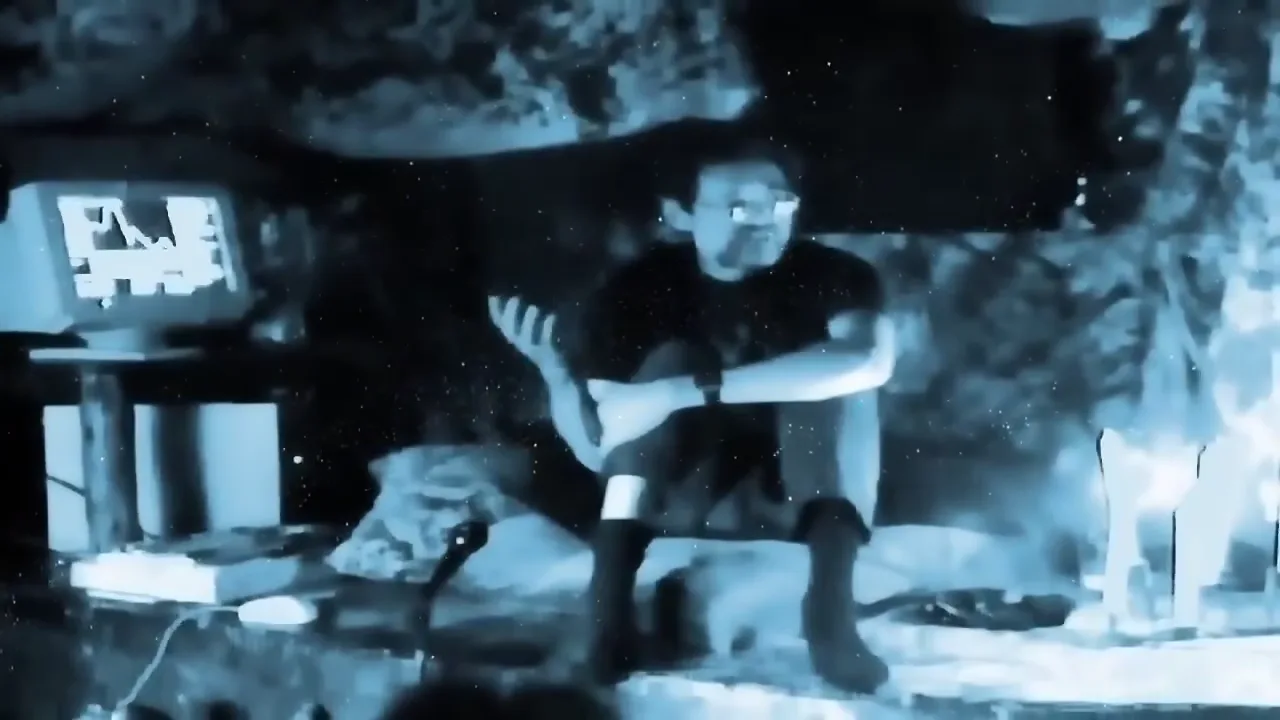
terence mckenna explores the origin of consciousness and why humans emerged from millions of years of simpler biology
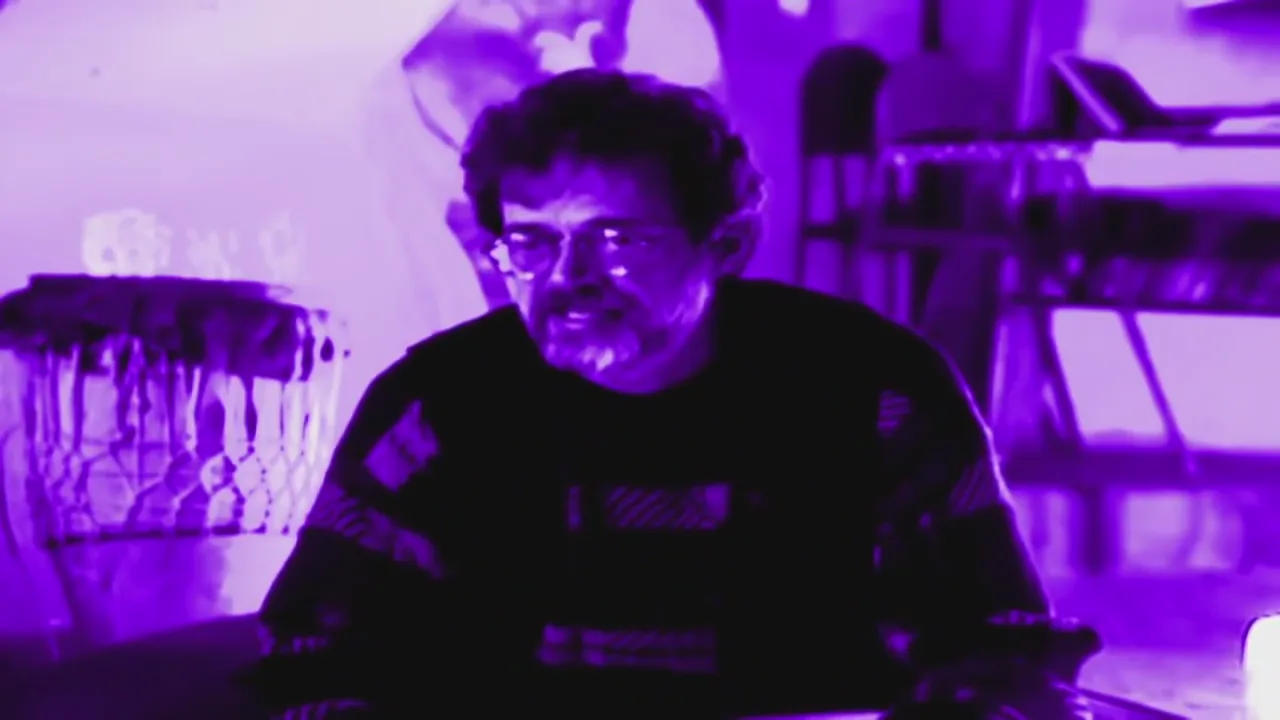
terence mckenna presents his theory that psilocybin mushrooms catalyzed human evolution by enhancing visual acuity for hunting, increasing sexual arousal to boost reproduction, and
mike kawitzky's 2009 documentary. some twenty thinkers, framed by terence mckenna's archive recordings, on five questions about evolution, consciousness, god, science and death.