Techno Pagans
This lecture traces Terence McKenna's realization that virtual reality technology and psychedelic experience reveal the same truth - that mind forms reality. Drawing on his 1990 immersion in both domains, McKenna proposes techno-paganism as a framework for navigating a world where simulation and consensus reality have become indistinguishable. He argues that shamanic understanding of will and magic - the knowledge that perception shapes what we see - becomes essential precisely at this technological moment. The talk bridges ancient mystical traditions with digital futures, finding in the old technologies of consciousness unexpected solutions for a fluid and paradoxical world.
transcriptmachine-transcribed, unedited
...cosmic trigger, probably on the influence of some psychedelic drugs, but we'll come to that.
And in it, he summarizes yours and your brother's work on the time wave.
And he, in fact, charts out history into three major sections, the 67-year section,
which will comprise the bulk of my life, an interesting 13-month section, which will happen in 2011,
and then an interesting six-day section, which will happen immediately preceding the winter solstice in 2012,
in which, I believe, during the last six-day session, there will be more novelty than has existed on the planet since ever.
And I looked at this, and I had been reading.
I'd started off easy, so I'd read Alvin Toffler, and then I could take a little bit more,
so I worked myself up into Pierre-Théard de Chardin, and then I came across that, and I said,
well, this appears to be the case.
It was confirmed to me internally in a way that I could not particularly argue with, I could not argue out of.
It was simply a foundational fact, and all of my work thereafter was based on a premise
that the universe is seeking a type of closure, that, in fact, things are converging.
And so my own life study had been perhaps an exploration of what those avenues of convergence were,
and it ended up over a period of years that my own life story became a search to create the forms of that convergence.
So we'll now flash forward to my first experience of virtual reality, which happened in 1990,
and required absolutely no technology except about 500 micrograms of LSD-25.
I'd been thinking, I'd been reading, and all of a sudden I drop acid after several years,
and of course if you've taken several years' break, and all of a sudden flush yourself back into that realm,
you can find that things really pop up.
And I found myself in a virtual world.
And what I found in this virtual world, the thing that I must have suspected that I would find in this virtual world,
wasn't an artificial Tron-like environment.
It wasn't something that was entirely artificial.
What I beheld in that environment was an image of the planet,
as if I was cruising above it in a spaceship.
And I knew that part of my own destiny, as connected with virtual reality,
wasn't to escape into another dimension,
but to find a way to make real to us the things that we can't always see,
because we exist at a level of scale, of experience, that hides them from us.
And at that point in my life,
I decided I needed to leave New England and come to California,
where everything was really going on.
This was 1990, and VR was the hot new thing.
And we forget now that VR was the hot new thing before the Internet became the hot new thing.
But for a while, it was the cheese.
And I moved to San Francisco,
which made it much easier to get good drugs.
And I started to explore, by working, by building systems,
what virtual reality was.
And this started to have a profound change
on my own understanding of how reality was constructed,
because my psychedelic description of reality,
which is that mind forms reality,
began to conflate or become identical with
my physical or scientific description of reality,
which is that mind forms reality.
And all of a sudden, I understood that
everything I used to understand about the way the universe works
wasn't as true as I had thought.
And so this began to inspire in me a search,
a search to get to some basic level of being
that would allow me to work in a world
that was manifest because of my own will.
And just as much as manifest because of your own will.
Because where we're going,
the simulated and the real
are going to get really blurry.
And we don't have any tools.
We don't have any tools of mind.
Western culture,
which is based on this idea of this objective,
external reality,
it's not hard.
It's all become very soft,
and it's all flowing together.
So we need to now start to find
ways of describing what's going on.
And so what we need to do,
I found in my own investigations,
is to take a look at cultures
that describe the world magically,
that understand that perception
shapes what you are,
and you shape what you see.
And that they're not separate areas,
they're not separate domains,
but you have to consider them as a whole.
So the four sort of prongs
that got talked about in the blurb
that was written for this piece
are techno-paganism.
And techno-paganism is maybe,
you could describe it a bunch of different ways,
and I certainly didn't make the word up,
and I certainly didn't apply the word to myself,
but it stuck,
because Wired Magazine published an article
two years ago,
with my face blazoned on it,
photoshopped, reversed, in color,
and said,
this is a techno-pagan.
And really what it was trying to do
was trying to articulate
my own experience of being thrust into this world
where everything was melting,
and nothing was solid,
and trying to come to grips with it
philosophically,
trying to come to grips with it ontologically.
And my own explorations
had led me to understand
that in fact in a world
where anything you want is true,
the only way you can deal with this
is by learning how to deal with your will.
Dealing with your will
is what magic has always,
in all cultures,
always been about.
This is why the shaman doesn't go insane
when the world just disappears.
He's ready for it.
They're ready because they understand
that where they are
isn't bound up in their view of the world.
The internet
is a connective layer.
And you were talking about this last night.
It's beautiful.
If you took a picture of this room in 1990,
and you took a picture of it today,
everything would look exactly the same,
and yet everything is completely different.
Because in 1990,
we didn't have this layer of bits
that's flowing seamlessly among all of us.
And it's changed us.
It's radically sped up the way
we deal with information in society.
And every bit of information
that passes through you
changes you.
You cannot be unaffected in any way
by any bit of information.
So the internet is acting
as this enormous accelerator.
It's acting as something
that's passing through all of us
and radically transforming us.
And part of what it's doing
is ripping us apart.
And that's dangerous.
If we don't approach that carefully,
and if we don't approach that
with a lot of heart,
we're going to find ourselves
and what we think of as ourselves
ripped away in that process.
One of the reasons why I think
it's very important
that this is happening at Esalen
is because if Esalen
were running a political campaign,
their slogan would be
It's the body, stupid.
Because it begins here
and it ends here.
And if we can stay in our bodies
even while we're projected
into cyberspace,
we have some zone for sanity.
We have some zone for being.
And psychedelics
can produce these
boundary dissolutions
where you flow into another thing.
What we're going to see,
and it's actually quite true,
that certain types of VR
can produce precisely
the same affect.
There are zones
where virtual reality
can be very dangerous
for that reason
or incredibly powerful
and meaningful
for that reason.
So where I would like
to work from this weekend
is I really want to work
from the heart.
I personally think
in my own philosophy
that to work in technology
you have to work
from the heart center
because otherwise
you'll create golems,
you'll create frankensteins,
your creations
will run away from you.
And that's the essence
of the story of the golem
is that this is a creature
that was created
with the breath of life
but without the light
of knowledge
or the heart,
the heart of God.
So we really have
to work from that.
And one of the things
that we'll be doing
this weekend for that
and we're inviting you,
I don't think we're requiring you
because that would just not
be in the center of this place,
but we're inviting you
at 7.30 in the morning
both tomorrow and Sunday
to come practice
kundalini yoga.
And kundalini yoga
works very much
on the heart center.
It's not strenuous.
I guarantee you
it will be fun.
We have a very good teacher,
James,
who will be teaching this.
And the idea is
that with these exercises
we can help to open up
our heart center
so that when we talk tomorrow,
when we meet tomorrow,
we can really be working
from that.
Even when we're talking
about these ideas
that may be very
technologically relevant,
they won't be isolated
in our minds.
That all said,
I also want to explore
the joyous nature
of what we can do.
And a lot of my work
has been around exploring
the joyous nature
of what we can do.
We have to,
if we're working
from our hearts
in these environments,
then a part of what
we want to do
is be joyous
in these environments.
One of my biggest gripes
about the Internet
is that it can't
as yet contain
the tenor
of human emotion
which is so important.
If we're building
this edifice
to be the global mind
and it can't laugh,
we've got a big problem.
If it can't sing,
we have a big problem.
And so one of the things
we'll be doing
probably in the evening
on Saturday
is doing something
we call voce,
which Paul and I
have been working on.
We call it
World Song or voce,
which is a singing
or a toning technique.
And it can produce
a quality of connection
in a group of people
which is,
the closest I've heard
it described
is almost like
instant ecstasy.
in the sense
of the drug.
And it's a temporary
sort of lowering
of interpersonal barriers
in a really,
really wonderful way.
And hopefully
at the end
of all of this
I will have been inspired
and Terence
will have been inspired
by what you had to say
and will be able
to bring that
heart-centeredness
which has to,
I believe,
remain at the heart
of how we work
when we're working
in the world
and with technology
in the world.
Isn't he a great guy?
If I had the
Timothy Leary laurels
with me,
I'd hand them all
up.
how the bad penny
could pass.
Well,
that's,
I love listening
to Mark
rap this stuff
and he really knows
where he's coming from
and it's exciting
stuff.
I've been into
this psychedelic thing
since the late 60s
and it's transformed
in different ways
and there's been
a strange
sort of literary
parallelism
or cloud
over my own life
so that as my
obsessions
evolved
society
obligingly
evolved
in the same
direction
and when I got
started with
psychedelics
it was because
I was
interested
in the mystical
experience
a la
Yakub Burma
and Thomas
Traherne
and all that
sort of thing
and I had read
Aldous Huxley's
book
The Doors of
Perception
so it was
a spiritual
intentionality
and as time
passed
I was completely
satisfied
in that
but I also
became interested
then in
what were
psychedelics
in terms of
their impacts
on large
numbers of
people
and on human
social and
cultural evolution
because to me
it was just
this incredible
power
this dimension
which my
own culture
completely
denied
and overlooked
but that
obviously
from the
first time
I had a
major trip
on
it was clear
to me
that this
had to have
evolutionary
implications
and it
seemed to me
as I read
my Darwin
and
Freud
that
there
had to be
some kind
of quickening
influence
in human
emergence
that
if not
outright
transcendental
was
certainly
unique
and out of
the ordinary
order of
nature
and so
that I
spent years
thinking about
psychedelics
implications
for human
evolution
and most
of you
if you're
interested
know my
theories about
all this
well then
the engagement
with it
extended
further
and I
began to
see it
as
a lens
for
coordinating
large amounts
of data
in order
to
essentially
prophesize
the future
that the
future
somehow
I had
the notion
that history
and the
individual
life
built around
the psychedelic
experience
were fractal
reflections
of each
other
and that
led to
the conclusion
that history
is a trip
and that
led to the
conclusion
that the
best was
yet to
come
or the
best was
bet to
come
I'm not
sure
so it
had this
sociopolitical
and historical
implication
and it
wasn't as
simple as
just imagining
what would
happen if
societies would
permit these
things
but I could
also see
that it
was a
catalyst
on
imagination
that
you know
whatever it
was that
psychedelics
were doing
it was
taking
anybody's
notion of
reality
anybody's
mindset
and radically
extending it
and if they
found that
comfortable
they were
ecstatic
and if they
found it
horrifying
they were
traumatized
but the
common thread
was
takes
ordinary
minds
makes them
bigger
stranger
more grotesque
less predictable
more bizarre
so
then
that was
not yet
the
outer
parameter
of the
issues
that this
phenomenon
the psychedelic
experience
seemed to
engage
it seemed
to me
that at
the personal
and experiential
level
the thing
that was
so astonishing
about it
was not
that it
led
at least
for me
directly
what it
led to
was
more
art
than I
conceived
of existing
how
was it
that you
know
in a
five hour
psilocybin
trip
an ordinary
person
lying in
darkness
sees more
art
than is
stored
and cataloged
in all
the museums
of Europe
I mean
this was
confounding
to me
and I
had a
Jungian
bias
too
so I
was
full of
the notion
of the
commonality
of the
unconscious
and all
that
and so
I was
puzzled
why don't
I see
these
motifs
in
Tibetan
paintings
shipibo
carving
how can
something
which is
so near
over a
very slight
energy
threshold
involved
in taking
these
substances
be so
distant
from our
cultural
values
and our
store
of
images
and it
was
around
this
time
roughly
that I
began to
hear the
first buzz
about virtual
reality
and I
knew
the minute
I understood
the concept
I knew
in the same
way that I
knew
when I
heard about
the first
Mac
and LSD
and
potassium
sugar
perchlorate
rocket fuels
that this
was going
to be
the next
great
thing
and
as a
tool
of art
as a
tool
for
leading
us
beyond
the notion
that we
are
a hive
society
of advanced
primates
because that's
how we
visually
appear
to the
empirical
point of
view
that's
an
out of
context
description
of what
we are
it's like
a schematic
or an
aerial map
what we
really are
is the
community
of mind
knitted
together
by codes
and symbols
intuitions
aspirations
histories
hopes
the
invisible
world
of the
human
experience
is far
more
real
to us
than the
visible
world
which is
little
more
than
a
kind
of
screen
or
stage
upon
which
we
move
so
this
thing
Mark
said
I
heard
it
for the
first
time
and
got
it
that
the
purpose
of
VR
is
to
show
us
aspects
of
reality
that are
not
artificial
but
that are
fields
of data
not
ordinarily
coordinated
by ordinary
perception
you know
Ralph Abraham
who's a
favorite
around here
has talked
about
how
mathematics
which has
been a
high priesthood
of arcane
formulae
and special
signifying
languages
is giving
way to
visual
understanding
if you
talk to
someone
about a
seven or
eight
dimensional
process
most people
completely
blur out
if you
show them
an animation
of an
ongoing
eight
dimensional
process
everybody
understands
without a
word being
said
exactly
what is
happening
so
I see
virtual
reality
as a
way
not of
escaping
any
notion
of
empirical
reality
but
as a
way
of
reportraying
invisible
levels
of the
given
world
that are
very
vital
and
important
to us
how we
see
flows
of
energy
how we
understand
complex
economies
how we
understand
the
fractal
hierarchies
of nature
everything
is about
to get
very much
more
complicated
much
larger
the
number
of
choices
are
about
to
exponentially
explode
in a
sense
these
technologies
point us
toward
if not
literal
godhood
than a
kind
of
fictional
godhood
we are
all going
to become
the masters
of the
narrative
in which
we are
embedded
our
separate
stories
are going
to take
on
dimensions
so
multifarous
that for
all practical
purposes
we will
each
move
into a
cosmos
of our
own
creation
and
control
in a
way
all that
is happening
is that
what is
already
co-present
with
three-dimensional
reality
is being
literalized
but
literalized
in
time
scales
that make
the nature
of the
game
apparent
to all
but the
dullest
among us
I mean
after all
we have
always lived
in virtual
realities
ever since
we abandoned
nomadism
and defined
a polis
and a
wilderness
and
you know
when
Hammarubi
set up
the first
codes
in Babylon
these were
operating
codes
these were
constraints
on the
human
system
that did
not
fully
implement
its
capabilities
but rather
defined
and limited
it
for purposes
of implementing
certain
design
goals
well now
we have
been in
the birth
canal
of the
design
process
for about
8000 years
now
and we can
see light
at the end
of the tunnel
the French
have a
notion
of
forward
escape
that means
when the
situation
gets so
crazy
then you
just
hit the
accelerator
and drive
straight up
the middle
and that's
the forward
escape
and technology
represents
this
for us
our ideologies
are probably
lethal
obviously
lethal
I would say
but they
are
fortunately
a kind
of
chrysalis
of
ideological
constraint
that technology
is in the
process
of dissolving
and you
know
William Butler
saw this
in the
19th century
Teilhard de
Chardin
reached it
in the
40s
and the
50s
McLuhan
expressly
articulated
this vision
in the
50s
and the
60s
this is
really
you know
as Ahab
tells the
crew
in Moby Dick
this is
what you
shipped
for
mate
this
was the
plan
you know
Plato
said
if God
does not
exist
man
will
create
such a
thing
and we
are
creating
a
simulacrum
of our
highest
hopes
and the
effort
to
define
the
actual
delimiting
architecture
of our
hope
is an
intellectual
exercise
that we
have
never
previously
submitted
to
and what
I mean
by that
is
when you
can do
anything
what do
you do
we've
always worked
within the
constraints
of mortar
glass
steel
our
economic
scales
our
physical
scales
VR
eliminates
all
of this
you know
the difference
between a
ten story
building
and a
hundred
story
building
in virtual
reality
is one
zero
in a
line
of code
well
with
that
kind
of
freedom
the
human
imagination
which has
been
defined
by
limitation
the
planet's
surface
the
needs
and wishes
of others
is going
to unfold
in these
super
spaces
and
you know
it's a
gnostic
epiphany
if you
believe
what it
really
comes down
to
in terms
of
the
politics
and
psychology
of it
is a
final
resolution
to my
mind
of the
question
is man
good
in other
words
with all
constraints
removed
do we
descend
into
a
world
of
you know
Freudian
nightmare
and
simulated
sadomasochism
or do
we
express
something
which
matter
always
mitigated
against
so that's
what I think
is
I'm sure
we will
do both
I mean
the essence
of choice
means
not only
will
we
collectively
do both
probably
each and
every one
of us
will do
both
you know
occasionally
you flop
on the
seamy
side
it
gives
a
literary
quality
to life
that's
lacking
among
the
tight
ass
so
well I
don't know
it's a
quarter of
ten
do you
want to
riff off
that
for a bit
and then
we'll
send
these
folks
packing
I've
been
piecing
together
an
essay
while I've
been here
which I'm
calling
West of
Esalen
which is
interesting
because if
you take a
look at
what's
west of
Esalen
you see
a gaping
cliff
which has
been growing
of late
and
Esalen
as is all
of California
is breaking
off and
falling into
the sea
and there
is no
safe land
anywhere
and that's
more than
a metaphor
for where we
are now
and it's
interesting
because
there's
talk about
what Esalen
has to do
with the
modern age
and yet
so much
of what
we think
of as
modern
language
has been
shaped by
what's
come out
of this
place
talking about
somebody's
vibes
or being
touchy-feely
or even
doing yoga
which is
now of course
all the rage
in late
millennial
culture
these are
all impulses
that came
out of this
place
so there's
something about
this space
and about
the body
which is
incredibly
right
and even
if Esalen
vanished
tomorrow
god
god is
forbid
even if
it did
the impact
of it
as an
institution
has been
profound
and I think
perhaps what
we're trying
to do here
this weekend
and tonight
is to extend
the franchise
of Esalen
into another
realm
to say
that the
values
that make
us human
the values
that make
us
good
are the
values
that come
out of
what's done
here
and maybe
they're values
that rely
on the body
in some way
that even
as we talk
about this
gnostic release
this uploading
of the soul
into some sort
of silicon
which we will
talk about
that there's
this body
that's behind
sort of bitching
saying
excuse me
I'm real
and I am
the potential
I am the
ground
in which
you work
because of
that
I hope
that we
will spend
some of
the weekend
not just
speculating
but constantly
looping
and bringing
it back
into the
body
and where
the body
is
the question
of the body
is one
of the largest
questions
in virtual
reality
that's a
curious
contradiction
and yet
it's true
where is
the body
in cyberspace
where are
you
when your
email is
flashing across
the net
when your
agents are
doing your
bidding
where are
you
and how
do you
maintain
yourself
and it was
interesting
because there
was a
comment
that was
made
earlier
about
psychedelics
as a
shortcut
versus
yoga
or one
of the
other
traditions
and I
know
that in
my
own
life
I
need
both
of
them
because I
need
the
psychedelics
in
to be
able
to
have
the
vision
but I
need
the
yoga
in
order
to
maintain
the
stability
to
express
the
vision
and so there's
both dials
there
it's as if
the internet
is some sort
of collective
psychedelic
we're going to
need the body
as we pass
through it
so that we can
explore the zones
within ourselves
that are the good
yeah it's great
what you say
about that we're
trying to
push the
definitions
of
Esalen's
relevance
because
you know
the entire
intellectual
and spiritual
effort here
over the past
thirty years
flies under
the flag
of the human
potential
movement
and that's
what it's
called
and certainly
what we're
talking about
here and
trying to
bring gently
onto the
stage
is an
enormous
frontier
of human
potential
we are
to some
degree
beginning to
design
ourselves
or beginning
to design
our potential
in the
service of
the idea
of a
perfected
humanity
of some
sort
and what we're
talking about
here is not
genetic
manipulation
or eugenics
or any of
these somewhat
dubious
enterprises
with a
clouded
history
but using
technological
prosthesis
to extend
and enrich
humanness
to enrich
communication
and it is
believe me
the want
of good
communication
that is
the thing
probably
if anything
undoes us
this will be
it
that our
languages
failed
that we
misread each
other's
intent
that we
could not
understand
each other
so the
project of
refining
language
is
the same
project as
the ending
of history
I mean
history is
the story
of languages
that failed
and when
language grows
perfect
history will
end
and language
may not
look
like it
looks today
or sound
like it
sounds today
the realization
that's flowered
in the wake
of the internet
and the rise
of cybernetics
is that
everything is
made of
information
is the primary
datum of
being
concepts like
time and
space and
energy
are orders
of magnitude
removed from
the present
at hand
when compared
with a
concept
like
information
and as
Mark said
every iota
every bit
of information
that passes
through us
that we
generate
that we
transmit
changes us
so I'm
seeing here
almost a
theosophical
epiphany
of language
trying to
bootstrap
itself
toward realms
of platonic
perfection
which as
organic beings
we experience
as love
love
beauty
truth
these are
the vectors
of human
becoming
they always
have been
they always
will be
and the
technologies
that open
these paths
for us
are
no more
and no less
powerful
than
the human
beings
that wield
them
and millennial
implication
and what
lies
as the
goal
is
true
humanness
in
sympathetic
symbiosis
with the
planet
and with
these
strange
children
that we
have brought
into the
world
our
machines
I mean
that is
the challenge
at the
end of
history
and that's
what we'll
be talking
about
this
some
sleep
Mark
I wanted
to ask
you
where
is
the
yoga
is
here
no
tomorrow
morning
they have
movements
here
in the
big room
in the
meeting room
in the
big house
everyone
familiar
where the
big house
is
it's
across
the
bridge
and
it's
the
big
house
as opposed
to the
little house
which it's
opposite
from
the
big
house
please
you'll
enjoy it
if you
have a
blanket
or something
bring it
it'll be
comfy
but if
not
don't
worry
about
it
terence mckenna and mark pesce's esalen institute workshop on the intersection of virtual reality, psychedelics, consciousness, and the future of techno-spiritual culture.
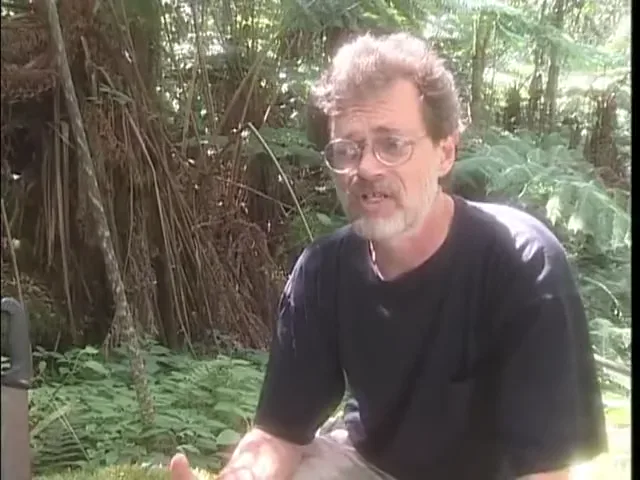
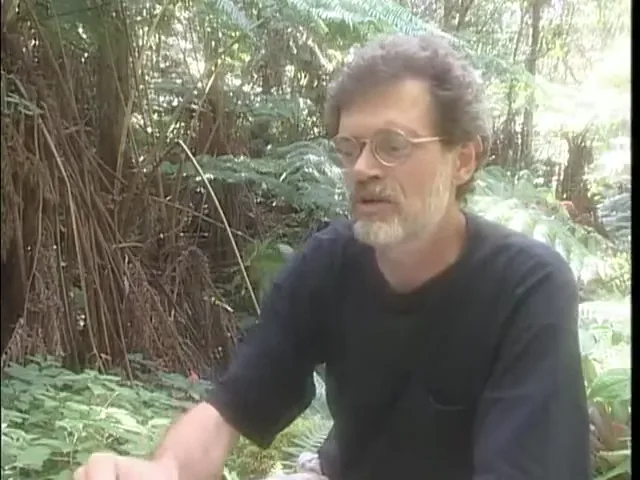
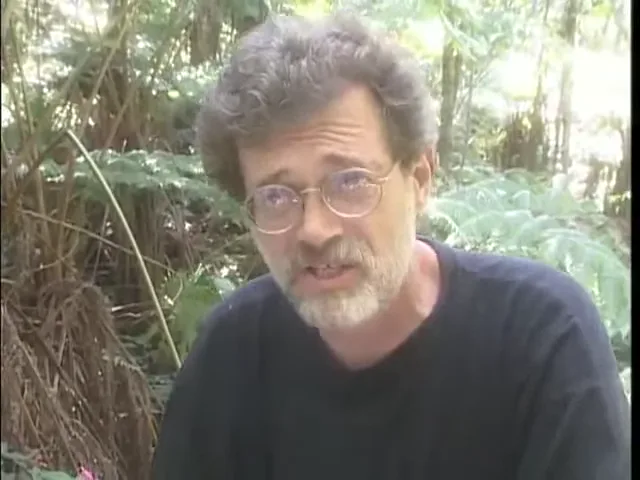
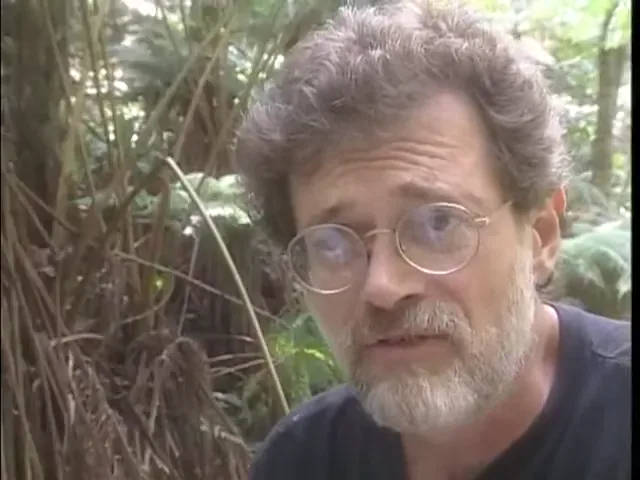
john hazard interviews terence mckenna in hawaii in october 1998, an hour on novelty theory, the omega point, and the i ching as a map of dna
terence mckenna explores the origin of consciousness and why humans emerged from millions of years of simpler biology
terence mckenna presents his theory that psilocybin mushrooms catalyzed human evolution by enhancing visual acuity for hunting, increasing sexual arousal to boost reproduction, and
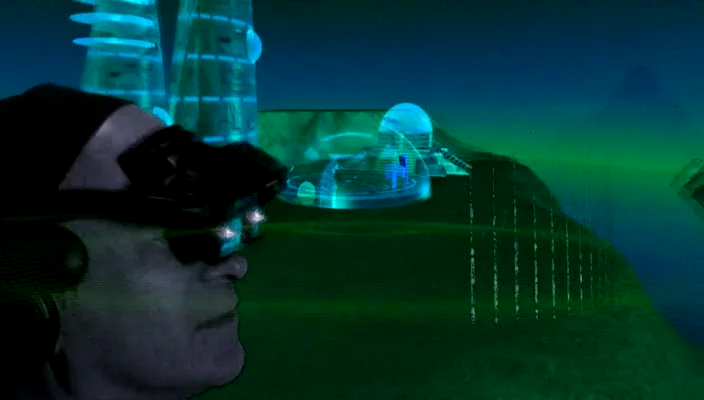
mike kawitzky's 2009 documentary. some twenty thinkers, framed by terence mckenna's archive recordings, on five questions about evolution, consciousness, god, science and death.