The Invisible Landscape
Recorded at California's Ojai Foundation in April 1985, this is the first of three sessions where Terence McKenna presents his investigations into the I Ching's underlying mathematical order and their implications for time and history. From detailed analysis of the King Wen sequence, he developed a theory of "novelty" - the notion that the universe undergoes accelerating phases of increased connectedness and complexity, culminating in a convergence point. He connects these patterns to astronomical cycles, the Mayan Long Count calendar, and historical periodization, proposing that we are in a final accelerating epoch ending on November 16, 2012. McKenna frames himself not as a believer but as a researcher offering hypotheses for peer review, inviting listeners to follow the logical chains from I Ching geometry through fractal mathematics to temporal structure. The work is essential for anyone exploring alternative understandings of history, consciousness, and the deep patterns of time.
transcriptmachine-transcribed, unedited
This is the first of three tapes of Terence McKenna at the Ojai Foundation under the teaching tree in April 1985.
I think of myself as a teacher primarily or at all.
I think of myself as a researcher who, because of the unorthodox nature of the research,
has to submit to this kind of situation for peer review.
That's what this is. This is peer review of my rap, not teaching in any sense of the word.
So before I get into it, I'll say a little bit about my attitude toward epistemology and system-making generally.
This is one of the slightly uncomfortable moments,
because I have to make distance between myself and large numbers of other people.
And say, I do not believe in the wars of Atlantis.
I do not believe in reincarnation.
I do not believe in the healing power of crystals.
And a whole string of alienating, I do not believe.
Fact of the matter is, I don't believe in belief.
I think belief is a tremendously stultifying force.
What I'm interested in is freedom.
And I noticed very early that a belief absolutely precludes the possibility of holding to its opposite.
And therefore, if you believe something, you have signed away its opposite and limited yourself.
This comes close to the ideal, but not the fact, of how science is supposed to be waged.
So I'm an impression and fact collector.
And I will propound a number of ideas that are very controversial, I guess.
And I want you to understand, they appear controversial to me.
And the controversy over their applicability to reality rages in me, at least as strongly as it will rage in any dialogue that I have with any of you.
The area that we're working in, at the fringe of science, at the frontier of psychology, is too chaotic and disorganized to be called a science at this point.
We're in the Baconian phase of it, where you merely collect facts, catalog facts, and wait for emergent patterns to be visible.
And this is what I've done.
And I did it.
I began as a skeptic, fairly confident that this kind of examination of reality and collection of facts would support the rationalist, reductionist, minimalist mapping of reality.
And I discovered, to my delight and amazement, that the world is quite a complex place.
Quite a large percentage of it goes on outside the descriptive power of any metaphor that we presently have a handle on.
And so I just want to put that out, that my attitude is one of a kind of skepticism that allows, and I am well known as the proponent of the notion that there is an extraterrestrial or transhuman intelligence accessible through certain psychedelic drugs.
I have that experience often, but I am not a believer in it.
I'm very puzzled by it.
I return again and again to reason as the measure against which all these things have to be played.
So peer review is very important, I think, because we're moving in an area where very little is known.
We're somewhat in the analogous position to the early explorers of the Amazon who would sail up the main flow of the Amazon and note in their logs past a river mouth at noon, two miles wide, origin unknown.
This is what we are charting, enormous unknown flows, of which we are only able to chart the most gross expression of these things.
Okay, so that's enough about method.
As I understand it, the matter around which this council is spun is the journey beyond history, and the notion in that implicit is that there is an end to history.
So what I want to talk about this morning, and it's the most difficult lecture that I give, because the goal is not to convey a feeling or an impression, but to actually convey an idea.
And ideas you either get or don't get. It isn't like you can halfway get how to factor a quadratic equation.
You either know how to do it, and it's trivial, or you don't know how to do it, and it's inconceivable.
What happened to me was a series of channeling, although I hate that word, so obnoxious.
I prefer maybe the word psychosis.
Anyway, a series of self-amplifying revelations springing from an interior source that appeared to my best judgment not to be me.
Right?
And it was an unusual example of this sort of thing.
Although I do not immerse myself, I have never read a word of what Seth has to say, or any of that.
But I gather these things are largely urging people.
They're moral teachings, is what they are.
Urging people to straighten themselves out, and fly right, and care for the earth, and be aware, and be decent.
And the thing which I received was more in the character of an unraveling of a mystery.
Somewhat analogous, if any of you are familiar with Robert Graves' book, The White Goddess,
where in a series of continuing revelations he gained great insight into early Celtic and Godelic poetic alphabets and encryption methods.
The object of my experience was the I Ching.
And I noticed, discovered a number of things about the I Ching, which led me to the conclusion that what we possess in the King Wen sequence is in fact a fragment,
an archeological chunk of a piece of broken cosmic machinery.
I concentrated entirely on the I Ching as a prehistorical artifact.
I unburdened myself completely of the necessity to be a sinologist by concentrating on the I Ching as it existed in the pre-Han period, that is before 400 BC, 200 BC.
All the commentaries on the I Ching, all the exegesis is Han or post-Han.
So I didn't deal with that at all.
I dealt with what's called the King Wen sequence.
How many of you are well familiar with the I Ching?
Good.
The rest of you?
Good luck.
The King Wen sequence is the oldest, if you give up Atlantis, Lemuria, etc.,
the oldest ordered human abstraction.
We find fragments of it on shoulder bones that are 4,000 to 5,000 years old.
So it's a human-generated abstraction that has been preserved through the millennia.
Now, the question is, is it an ordered sequence?
And this was the first koan that the interior voice posed to me.
What is the order of the King Wen sequence?
As you know, the King Wen sequence begins with the creative, which is all solid lines,
then the receptive, which is all broken lines, and then whatever it is.
I noticed immediately that it was obviously organized in pairs.
In other words, each hexagram, the subsequent hexagram can be generated by turning the first one upside down.
That's all that's happening.
Now, there are eight cases where turning a hexagram upside down effects no change in it.
In those eight cases, a second rule has been applied, which is, if turning the hexagram upside down causes no change, then all lines change.
You meet the first exception in the first two hexagrams.
Clearly, when you invert the creative, six solid lines, you obtain the creative again.
Therefore, all lines change, and you get the receptive.
So then, that solved a problem of partial ordering.
That showed that we were dealing not with 64 hexagrams, but with 32 pairs of hexagrams.
And the next question was, what is the order of the 32 pairs?
Now, this is a deeper question, and not so easily solved.
But it was easily solved for this interior voice that had my attention.
It said, look at the first order of difference.
Now, this is a very fancy way of saying, look at how many lines change as you move from one hexagram to the next.
Obviously, as you move from the first hexagram to the second, six lines change.
As you move from the second to the third, I forget how many it is, four, I believe, and so on.
So that you can make a linear graph of the first order of difference as you move through the King-Wen sequence.
And I rushed out and bought graph paper and did this, and looked at it.
And it's a sawtooth.
All of these figures, by the way, are in the book The Invisible Landscape.
It's a double challenge to give this lecture without visual aids, let me tell you.
But as you all are probably expert visualizers, why should have no problem here.
So when you graph the first order of difference in this way, an anomaly just jumps out at you.
This is clearly not a random stochastic process that you're graphing.
If it were a stochastic process, you would expect the possible values, which are one, two, three, four, five, six, to occur in more or less similar proportions.
However, you notice immediately there are no values of five.
There are no first order of different changes in the King-Wen sequence of five.
Now, what is the prohibition against five about?
I don't know, but it's worldwide and Neolithic.
A straggly are the knuckle bones of sheep that have been used since the late Neolithic inter-Roman times to gamble with by burning dots into the knuckle bones.
And, in fact, playing dice is called throwing the knuckle bones.
There are no Neolithic a straggly with five dots burned into them.
It's a number which is just strictly avoided.
So there is some curious thing going on with the number five.
You know, in the Timaeus, as people are coming in and sitting down for dinner, Plato turns to Timaeus and he says,
the one generates the two and the two the three.
But where, oh, where is the fourth, my dear Timaeus?
And this, the first four numbers seem to lie in a much more archetypically intense relation than the number five.
Five has been called the first human number.
In any case, that was not the anomaly which leaped out at my eye when I'd graphed this thing.
What I noticed was that there was a sawtooth stroke at the beginning and at the end such that if a reflection,
or to use the technical term, if a stereoisometric reflection were rotated 180 degrees,
the two ends would fit together perfectly.
They would dovetail like the joint of a cabinet maker.
And it would not fall into this kind of parallelism or congruence at any other point.
Only at the beginning and the end.
And only, I then noticed, if the hexagrams were paired across from each other in such a way that they always added to 64.
In other words, 64 is across from 64. That's the exception.
63 is across from 1, 62 is across from 2, 63 is across and so forth.
Okay, so that sums in all directions to 64.
And so I looked at that for a long, long time.
And then I saw that what I had done, that though there were these congruencies at the beginning and the end,
there were also approaches to parallelism at six points in this figure, rather evenly spaced.
And I realized then that what I had done is I had taken the entire King Wen sequence,
run it forward, run it backward against itself,
and created a kind of macro hexagram, a super hexagram,
which contained the entire sequence twice, running backward and forward.
And at that point I had insight into a curious passage in the Confucian commentaries
where it says of the I Ching,
the backward-running numbers refer to the future,
the forward-running numbers refer to the past.
This was an anagram which makes no sense whatsoever,
unless you posit the kind of structure that I'm talking about.
So then I wondered, what could this thing possibly be for?
And I experimented with, I said, okay, this thing I have built,
in accordance with the principle of hierarchy construction,
which is completely expressed at every point in Chinese history,
and must therefore be assumed to antedate Chinese history and be prehistoric,
this hierarchical principle can be used to manipulate this strange figure.
Now, the lines of a hexagram are called Yao,
and there are 384 Yao in the 64 hexagrams,
obviously six times 64.
So I said, I will take my figure and I will treat it as the Yao of a hexagram.
And so I made six of them, end to end.
And then I said, okay, now I have the six lines of a hexagram,
some kind of hyper or macro hexagram.
But a hexagram is composed of more than six lines.
It is composed of two trigrams.
So I took my figure and I multiplied it by a value of three,
and I laid those two over the six,
generating everything from a common point of origin.
So then I said, okay, now I have everything that is in a hexagram
except the hexagrammatic wholeness
that is embodied by the thing as a gestalt, as a whole nomic entity.
So I laid a big one over the six little ones and the two medium-sized ones,
generating everything from a common origin point
and having everything return to a common origin point.
So it looks, and it's figured in the invisible landscape,
like an oscilloscope tracing,
a multi-, a three-level tracing of lines,
a tremendous mish-mash.
And this was the problem.
The voice then was by this time saying,
this is the map, the fractal map of all space and all time.
It exists on many levels of resonance.
And I personally could feel that.
And I spent literally months, and it was madness.
Much of this was generated in the Amazon jungle.
You have to picture a man in a thatch house on stilts,
with the Amazon flowing by, the Indians, the drugs,
everything raging outside.
And me, with my slowly deteriorating pad of graph paper,
just drawing these lines, hours and hours a day,
and looking at them, and finally realizing, convincing myself,
that it did in fact map time in a certain way,
but realizing that it had the quality of a mystical doctrine.
The interpretation of these slashing, paralleling, intersecting lines
was impossible to convey to another person.
I had to have a method of reducing this compound complex wave
to a single wave, moving in a single direction, on a single level.
Fortunately for you, I'm going to skip over the mathematical details
of how this was accomplished.
But I assure you that it was accomplished.
And to me, it was like a series of revelations.
I didn't even care about the I Ching.
And the notion that out of myself, I could extract the techniques
to collapse this wave, and to produce something coherent out of it,
it was like a revelation.
And I don't even today know that much about the mathematical ways
of handling waves.
I'm sure that I reinvented the wheel in some sense,
but the point is that I did reinvent it all by myself.
And when it was over, I had something which I could show to people.
I had the notion that there is a factor in reality,
which we have previously missed, which is called novelty.
Right?
And novelty is something which comes and goes.
Taoism is talking about this.
In the Tao Te Ching it says,
the way that can be told of is not an unvarying way.
Way is clearly a mistranslation for wave.
And so then, okay, you have this thing, you've reduced it to one level.
You can, it is now an object of reasonable research.
But what are the periods?
What are the frequencies?
What are the harmonic resonances by which this thing expresses itself in time?
In other words, what I had generated up to this point was a wave unscaled against the world.
And the teaching voice said,
now we will show you how to scale this against the world.
Remember that there are 384 Yao in the complete sequence.
384 is a number that has not been well regarded by calendar makers.
It's 19 days longer than a solar year.
However, there have been lunar calendars at various times among the pre-exilic Jews and other people,
where 384 day lunar calendars were used.
I found out all this after the fact.
What the voice proposed was that I looked at lunations.
And I discovered what seemed to me an astonishing fact,
which is a lunation is 29.53 days long.
29.53 times 13 is 383.89.
So it comes very, very close to being exactly 13 lunations.
So I looked at that, and then I said,
well, I constructed this wave through application of these principles of hierarchical ordering
that are inimical to Chinese thinking.
I will now, using the same periodicities, apply the thing to time and see if I get astrological correlations at higher levels.
So I took 384 days, and I multiplied it times 64.
That's the obvious multiplicand.
You get 67 years, 104.25 days.
Now, if we think of that as a hexagram, it should have six lines embedded within it.
If you divide 67 years, 104.25 days by six, you get a number which is very, very close to the average duration of a sunspot cycle.
11 plus years.
However, people who study the sun know that there isn't only the famous 11 year sunspot cycle.
There is also a larger cycle of 33 years, where the peak reaches a greater height.
Well, that then would be the trigrammatic level of this hexagram.
So what I seem to have was a lunar calendar, which was also capable of keeping track of sunspot cycles.
Now, the earliest observation of sunspots occurs in China, and is a naked eye observation from around 12 AD.
So, obviously, and we don't know whether there was part of a tradition of observing these things or not.
So then I was very pleased with that.
And I said, well, that's interesting.
So what happens if you take 67 years, 104.25 days, and multiply it by 64, the same multiplicand used before?
And the answer is 4,306 years, something like that.
And I thought that was very interesting, because that is exactly two zodiacal ages.
It takes approximately 2,200 years.
And there's argument about the length of zodiacal ages, because there's argument about the width of the sign,
the number of degrees to be assigned to each sign.
So, but it was remarkably good correlation.
And then the voice said, now multiply that, not by 64, the previous multiplicand used, but by 6, the number of lines in a hexagram.
When you do this, you get 25,800 years within 1% of the value accepted for the precessional great year,
in which the zodiacal signs move around the earth in a 26, roughly 26,000 year cycle.
Well, you know, great thrills for the person who discovered it.
But so far, all we have is a Neolithic calendar constructed out of the I Ching.
The notions that then began to be put forth were that the ancient Chinese had assimilated this notion
through their early development of what are called stilling of the heart techniques,
which are this particular stripe of yoga that aims for complete suppression of bodily functions,
in order to contemplate the mind in its nakedness, you know,
uncontaminated by the gross attributes that are being reflected upon it by the body.
And the notion was that they were actually observing a fact in nature,
that this is not simply a calendar, it is the calendar.
It is some kind of previously unnoticed thing present in the world which is mitigating change.
Recall that I said that what we had was a figure which was together at the beginning,
flowed apart in a series of interference patterns,
and then flowed together at the end and restored the value of zero.
In other words, if you think of zero as parity, parity is conserved by this wave.
So the notion was that this hierarchical calendar is not an eternal calendar.
It's a calendar with a built-in closure.
And this is hard to visualize, so I won't spend too much time on it.
But the last three values in the wave are zero.
Consequently, as you approach the last three positions on the wave,
in any of these duration schemes I've mentioned, 384 days, 67 plus years, 4,300,
as you approach the last three positions,
the higher level in the hierarchy is given a value of zero,
and it ceases to contribute its valuation to the lower levels.
So you get a sudden drop in the mathematical value of the wave.
And these things, for a long time I called them passages, and I called them necks,
and I called them different things.
Jose calls them harmonic convergence, something like that.
And I saw them as places where novelty rushed into the world
at a much faster rate than it had done before.
And then I saw that the entire career of being in space-time,
is affected by this curious property of intensification of novelty
and acceleration of time.
And we have tended to, because we view the universe as fragmented,
we have tended not to connect this up to the universe.
We believe human history is an abomination unrelated to biology,
and modern times an abomination unrelated to sacral and mythical civilizations,
and so forth.
But what this notion was suggesting was...
we see a lot of, good questions, yes.
But it is the events of the earth.
We see floods, the Vocês are peaceful,
but it is assisted in Central Bay of the Republic of the Republic of the Republic of the Republic,
and so forth.
And the development of the U.S. is addressed.
that matter, I don't know how far back you care to go,
but that something is in the process of becoming,
and that this process of becoming is not gradual,
but proceeds in a series of telescoping leaps
into density of connectedness,
and that if you look at the history of the universe,
it was very active, the first 10 high 16 nanoseconds,
but then things settled down for a long, long time,
and there was just cooling,
until finally a point was passed in the cooling process
where electrons could maintain orbits around atomic nuclei
so that we were no longer in the era of free particles,
but we entered into the era of nuclear chemistry.
Further cooling of the universe
allowed a much more intensified form of novelty
to come into being through the molecular bond,
which then allows a fantastic variety
of structures and possible combinations.
You no longer now have free atoms
winging around in the void.
You have the complete cornucopia of molecular structure
that we're familiar with.
Physical chemistry, I'm talking now.
Life has not yet appeared.
But then further levels of order,
further inclusions of novelty
into the becomingness of being,
and you begin to get self-replicating molecules.
Then you get life in the seas.
Then life on the land.
Now each one of these phases of novelty
is taking less time than the previous phase.
Finally you get land animals.
Finally then you get higher mammals.
Then the pungi, the radiation of the primates.
And suddenly, 50,000 years ago,
you arrive at the threshold of self-reflecting consciousness.
Instantly, you have thermonuclear weapons,
parallel processing in computers,
superconducting colliding waves,
and all of the accoutrements of modern modernity.
This is a continuous process
that has been going on since the moment the universe was born.
Now, what is so interesting about it
and what boggled my imagination
and what caused me to wonder
if I wasn't in fact losing my marbles
and headed by some dark path toward Christianity
was the notion
that this process,
that we have now entered what I call the short epochs.
The epochs now do not last a billion years
or 18 million years
or 275,000 years.
The short epoch is history.
The first short epoch is history.
And we entered it around 2300 B.C.
See, this is why I'm not fond of pushing back-ism.
The amazing thing to me about humanity
is not how there are cities in the Bermuda Triangle
that are 50,000 years old,
but that how man emerged almost instantly
out of the background of a planet
covered by forests and populated by animals.
Something happened.
I mean, it is the thumbprint of God.
It does push you almost
to the notion of a deus ex machina intervention
in the course of nature.
We have entered the short epochs.
We entered the 4,306 year epoch,
as I say, around 2300 B.C.
You know, there is a hiatus.
Pre-dynastic Egypt is the Egypt
which built the pyramids.
That all closed down around 2400 B.C.
Then there's a period of about 350 years
where we have very little information.
I'm talking Egypt.
Then suddenly you get the rise of the dynasties
and the thing that we are familiar with
as the Egyptian stereotype.
So I believe that there was
a significant cultural change at that point.
It may be Julian Jayne's bicameral mind.
It may be the ability
to epigenetically code information
through writing
to no longer depend simply
on the genetic machinery
to carry information.
I see this whole process I'm describing
as the career of information.
It is information
that is loose on this planet.
When people say DNA,
they mean information.
DNA is the vehicle
of the information god.
and all nature
is the vehicle
of the information god
and so is all culture
and all individuality.
Okay.
Dividing 4,306 years by 64
you see the need
for a 67 year epoch.
The next short epoch.
And this occupied me
for a long, long time
trying to figure out
where it began.
And then finally
it hit me
where it began.
It began about 8.30
in the morning
on August the 6th, 1945
over the Japanese city
of Hiroshima.
And at that moment
the Big Bang
its tiny parallelism
its little self
in the world of history
was born
as a thermonuclear explosion
or not a thermonuclear
but a nuclear explosion.
Now living out
that last epoch.
Now why did this push me
toward Christianity
because the next short epoch
will only be
384 days in duration
and the one after that
will only be
six days in duration
and the one after that
will only be
an hour and a half
in duration
and the one after that
two and a half minutes.
So what I had done
is I had constructed
a cosmology
that five hours
before
its complete dissolution
it was only
halfway to completion.
Do you see?
Because these
rapid closures
mean that
half of the novelty
that the universal being
will express
in its career
of becoming
will occur
in the last
384 days
of time
and
and so this explains
to me
the chaos
at the end of history
which is what
we are living through
and the mushroom
has said
you know
many times
no big deal
this is what it's like
when a species
prepares to depart
for the stars
there is nothing wrong
nothing wrong
with H-bombs
and super colliding
this is all
part of the narrowing neck
you know
monkeys don't go
to the stars
and you must
go through
the monkey net
to find yourself
on the other side
but
what I'm not
I'm not talking about
a historical
transformation
in quite the same way
that I think
Jose
and perhaps
Peter
were indicating
I'm talking about
a change
in physics
not a change
in the human heart
or the human
political structure
I'm talking about
the collapse
of the entire
space-time continuum
as a necessary
consequence
of the laws
under which
it operates
and so we are
not responsible
and we have
no choice
and it's not
a question
of who wants it
and who doesn't
any more than
death
is open
to that kind
of fiddling
and in fact
death
is the reflection
in the macrocosm
of every individual
experience
of the wave
running down
to zero
into the ultimate
novelty
which you can
call a zero
or you can call
the concrescent
essence of everything
depending on your
ontological bent
now there's a funny
thing about this
which is
and to talk
about it
requires introducing
the notion
of fractals
fractals
are curves
of a peculiar
variety
because they seem
to have
fractional dimensions
they are
one and a half
dimensions
two and a half
dimensions
three and a half
dimensions
and the reason
for this
is that when
you take a portion
of a fractal
and blow it up
it looks exactly
like it looked
before
now this is easy
to visualize
in the simplest
version of a fractal
which is a circle
I mean think
of a segment
of a circle
if you blow it up
it looks just like
and then take a piece
of it
and blow it up
the two blow up
are given themes
and this is what
the hexagrams
are about
this was the genius
of the Chinese
to realize
that time
has elements
the orthodox
or let me put it
this way
western science
had to go through
a whole conceptual
reformulation
to realize
that space
is not simply
where you put things
that's how space
is treated
in Newtonian dynamics
and up until
Einstein
it's just
the necessary
dimension
for three-dimensional
description
but then Einstein
said well no
no
space
is a thing
affected by
magnetic fields
torqued
in the nearby
vicinity
of a star
and so then
this notion
that it was
a thing
and that it could
have various
properties of
curvature
became allowable
now what I'm
suggesting
is that time
has elements
64 of them
as a matter
of fact
and the
formulators
of the I Ching
simply
by stilling
the heart
by eliminating
noise
from the body
we're able to
see these states
which we could
call quantum
mechanical
but since they are
not material
we don't need
to invoke
the holy god
of quantum
mechanics
to bless
this effort
anyway
whatever these
things are
and in whatever
dimension they
exist
you could think
of them more
I think of them
more like
platonic
archetypes
they
the way
in which
they
interpenetrate
three-dimensional
being
is what
gives
three-dimensional
being
its primary
qualities
the qualities
of color
of tone
of emotion
of feeling
all of the
descriptive qualities
that science
has left out
and called
epiphenomenal
and
subjective
but which are
the things
we all experience
you know
what science
has achieved
is a tremendous
devaluation
of primary
experience
and what
this notion
is trying
to say
is that
there is
possible
a physics
of experience
an understanding
of history
that will
make it
coherent
so that
the coherency
which we know
must be
resident
in the universe
is no longer
a value
dark
dimension
to us
the order
becomes
visible
now how does
this work
I always
use this
rather
idiotic
example
but it
amuses me
it's that
if you find
yourself
in Hadrian's
hamburger joint
having
a burger
there is
a direct
causal
relationship
between
your doing
that
and the
campaigns
of the
Roman
emperor
Hadrian
you are
in fact
passing
through
the
Hadrian
analogic
moment
now I think
the only
person
who has
really
understood
this
to
bedrock
is probably
James Joyce
who realized
that a walk
to the store
is
the Trojan
War
it is
the Trojan
War
you cannot
pass through
a gate
without
passing
through
the gates
of Thermophila
you
cannot
we
and so
a notion
like
reincarnation
or past
lives
is seen
in a whole
different
light
what we
are
harmonic
adumbrations
of events
in the
past
now this
comes
fairly close
to Rupert
Sheldrake's
notion
and we've
talked a lot
about this
what is
absent
in Rupert's
scheme
is an
explanation
of novelty
what he
is saying
is that
the past
has a
tremendous
influence
on the
future
that the
very fact
that something
has happened
sets up
all
following
time
for a
higher
likelihood
of this
thing
happening
what I'm
suggesting
is that
that's
true
but that
then the
mystery
of why
there is
novelty
is solved
by realizing
that the
way in which
the morphogenetic
field impinges
upon reality
is through
a fractal
expression
and there
would be
nothing
surprising
about this
fractal
the
electromagnetic
waves
described
by Maxwell's
equation
that is
essentially
a fractal
transform
it is
how
waves
work
so
another way
of thinking
about this
notion
that we
are
adumbrations
of larger
historical epochs
is the
aphorism
Rome falls
nine times
an hour
this is the
idea
and it
does
I mean
I always
notice it
it's just
there
we are
very state
bounded
in our
self-observations
and we
only tend
to value
what is
relevant
to
profane
existence
and
communication
so the
fact that
as you
sweep
the house
you notice
Rome
falling
nine times
an hour
there's not
much to say
about it
it's just
I think
weird things
I wonder
if everybody
thinks weird
things
I think the
answer is
yes
and that not
only does
Rome fall
nine times
an hour
but the
Celts move
out of
Spain
and into
England
nine times
an hour
and so
forth
that really
the present
is a
an interference
pattern
caused
by
epochs
in the past
coming together
to create
a certain
particular
situation
so what
has been
happening
since 1945
since the
dawn moment
over Hiroshima
is that
the entire
history of
the universe
is
being
recapitulated
now
it has
many
cycle
levels
of cyclic
expression
on one
level
the first
land
animals
have yet
to appear
we are
truly
in the
inchoate
darkness
on the
level
of the
year cycle
we are
deep
in the
dark
ages
and on
the basis
of that
the
barbarians
the time
when the
barbarian
hordes
poured into
Europe
the sacking
of the
lucis
and all
that
I see
punk
culture
as the
harmonic
response
to the fact
of this
happening
and on the
basis of it
I would
predict
that in
the late
80s
the new
wave punk
phenomenon
will give
way to
an almost
gothic
religious
sensibility
which will
be in fact
a recapitulation
of the early
middle ages
and
feminine
well no
no
in the
mariological
cults that
found their
expression
at chart
and places
like that
in the
early 90s
we will
have a
a
a feminist
revival
which will
be slightly
wrongheaded
because it
will make
those same
mistakes
that those
gothic
people
made
we will
not even
reach
the threshold
of the
industrial
revolution
until about
to
zero
three
so you see
the notion
of us
sitting around
making sense
of things
is quite
preposterous
I mean
we are still
waiting for
Newton
let alone
for
Maxwell
and
Einstein
we are
not prehistory
except on
the highest
level
so this
intensification
will occur
now
what is it
leading to
this is
the part
you know
Christianity
insists that
the world
will end
and that
it will just
roll up
like a
scroll
and the
triumphant
Christ will
come to judge
the living
and the
dead
now why do
they believe
that
apocalypse
haunts
history
like a
ghost
in the
kind
of
cosmology
I'm
defining
there must
be
anticipations
of it
the death
of every
human being
is an
anticipation
of the
apocalypse
the collapse
of every
empire
the
any
cessation
is
a part
of
the
sensation
it
is
the
archetype
of
the
ending
so
this
knitting
together
this
compactification
of
novelty
and
connectedness
which is
emanating out
from the
most
densely
compactified
and connected
thing in
nature
which is
the human
cortex
this is an
interesting thing
we've worked
so hard
to move
ourselves
out of
the center
of the
mandala
but the
fact of
the matter
is the
most
complex
object
in
nature
is
the
human
brain
curious
this
knitting
together
that is
emanating
from the
human
brain
is
accelerating
at such
a rate
that we
are
rapidly
going to
become
unrecognizable
to
ourselves
the
end
point
which I
have
come
to feel
is
correct
is
the
end
point
years
104.5
days
after
the
Hiroshima
blast
and that
would be
dawn
of the
16th
day of
November
in 2012
now I
had worked
all this
out
and the
thin
thread
on which
I am
here
in a
conference
devoted to
the
Mayans
is that
after I
had worked
all this
out
I
discovered
that the
long count
of the
Mayan
the calendar
of which
you have
heard so
much
contains
Bakhtuns
now
the
emergence
of
Mayan
civilization
as we
currently
understand it
is around
late in
Bakhtun
and the
complete collapse
of the
Mayan
is in
around the
middle
of Bakhtun
but their
whole calendar
was generated
from the end
of Bakhtun
there is no
Bakhtun
they said
that's it
that's the
end
the end of
Bakhtun
is the
winter solstice
of 2012
34 days
later
than the
date I
reached
through this
series of
involvements
with the
I Ching
but then I
discovered
there is what's
called the
Thompson
Correction
the Thompson
Correction
is a different
reading on
certain
calendrical
material
which would
locate the
end of
Bakhtun
only four
days
after
the
date
that I
had
chosen
so the
question
seemed to
me
then
what is
it about
psilocybin
mushrooms
that
a
civilization
in Mesoamerica
in the
8th
and 9th
century
and an
individual
in California
in the
20th
century
would
both
through an
elaborate
series of
mathematical
contortions
different
mathematical
contortions
reach the
same point
in time
what is
happening
there
and
we were
talking
last night
about how
how the
my
little story
about what
happened to
the Mayans
to the Maya
and Peter
pretty much
agreed
was around
and probably
at Copan
which was
the Alexandria
of the Mayan
world
it's where the
mathematics
and this
you know
these things
were brought
to their
peak
they figured
it out
they figured
it out
and they
ended
the long
count
it was
obviously
ended
as a
an order
it took
about 20
years
to emanate
out from
Copan
and to
reach
the most
remote Mayan
centers
Quirigua
and Palenque
and so
forth
but within
30 years
the long
count
had been
ended
the
stela
had been
pushed
over
face
down
in the
grass
the
cities
emptied
and the
Maya
returned
to being
primitive
agricultural
pastoralists
I think it
was because
they figured
it out
they saw
what was
coming
and once
you have
figured
it out
the curious
thing
about
this
notion
I'm
propounding
is that
it
carries
no
obligation
it is
a way
of
making
you
free
by
admitting
you are
more
deterministically
bound
than you
ever
dreamed
you know
you had
to go
into
Hadrian's
hamburger
joint
it was
settled
when
Hadrian
invaded
Scotland
that you
had
to go
into
that
hamburger
joint
and so
we are
bearing
an
unnecessary
burden
of
guilt
and
responsibility
we are
living in
a cosmos
not a
chaos
the universe
is doing
what it
wants to
do
it is
calling
forth
the kind
of novelty
that it
wants to
call forth
the fact
that we
cannot
understand
its
purpose
is our
problem
you know
and we
are not
its
victims
the
in
these
short
epochs
what is
happening
is
something
that I
think
can only
be
understood
by
having
recourse
to the
metaphors
of
alchemy
and modern
science
these are
anticipations
of taking
control
of energy
of
binding
as James
Joyce
says
all space
in a
nutshell
it's
where
what the
concrescence
is
is the
flowing
together
of
everything
in a
higher
spatial
dimension
we
mentioned
last
night
the
saying
in the
I Ching
if this
sacrifice
is
correct
the person
who
correctly
understands
this
sacrifice
can hold
the
universe
in the
palm
of their
hand
like a
spinning
marble
this
is
absolutely
true
it's
a
statement
of
physics
it is
not
a
metaphor
an
analogy
or
anything
else
it is
that
reality
is being
knitted
together
into a
spinning
marble
everything
but that
spinning
marble
is an
illusion
it has
many
reflections
in
linear
history
which is
like the
shadow
cast
into
three
dimensional
space
time
by this
higher
dimensional
reality
it is
the
telos
at the
end
of
time
its
modern
manifestation
is
the
flying
saucer
the
flying
saucer
haunts
time
like a
ghost
it
only
exists
at the
end
of the
historical
process
yet
it
is
somehow
co-present
spread
throughout
the
historical
process
it
is
the
proof
that
the
apocalyptic
moment
exists
another
metaphor
for
this
compressence
this
spinning
marble
is
the
holy
grail
or
the
philosopher's
stone
the
philosopher's
stone
is an
object
which is
made out
of
mind
it
has
it's
called
the
one
gloss
on it
was
it
water
thought
stone
it
is
something
which
has
the
quality
of
mind
and
matter
and
this
is
what
the
human
function
is
I
think
is
through
technos
to
eliminate
the
distinction
between
mind
and
matter
to
free
us
into
the
imagination
that's
where
we're
going
when
the
novelty
wave
runs
to
zero
and
we
are
released
into
this
trans
historical
space
it
will
not
be
miraculous
it
will
be
created
by
us
through
us
through
a number
of
disciplines
technologies
ideas
and innate
abilities
that we
cannot
currently
hope to
do
more
than
glimpse
because
we
are
so
far
back
in
the
historical
continuum
from
where
this
thing
is
going
to
happen
this
is
a
funny
explanation
of
almost
everything
they
say
when
you
when
you
create
a
funny
explanation
of
almost
everything
you
have
to
be
careful
that
you
don't
unexplain
a
whole
bunch
of
things
and
I
it
says
nothing
about
particle
physics
or
quantum
mechanics
or
anything
that
it
talks
about
time
which
is
not
matter
we
have
been
obsessed
with
matter
for
millennia
and
thought
of
time
as
just
something
passing
by
couldn't
really
get
a
handle
on
it
but
maturity
will
mean
getting
a
handle
on
it
and
everything
I've
said
about
the
historical
process
and
how
puzzling
it
is
true
in
our
lives
for
instance
you
may
have
noticed
that
every
day
is
sort
of
like
every
other
day
and
yet
every
day
is
different
this
is
this
fractal
nature
of
things
working
and
there
are
days
of
great
advance
but
they
are
embedded
in
this
larger
matrix
of
a
pretty
steady
state
situation
I
studied
with
Wes
Churchman
who
was
a
futurist
and
he
used
to
like
to
say
that
most
of
the
future
is
already
present
in
the
present
and
it's
this
kind
of
idea
so
what I
was able
to do
with
this
I Ching
wave
and
what I
offer
as
the
proof
or
at
least
the
place
where
pressure
should
be
we
wrote
a
computer
program
which
very
rapidly
sorts
through
the
wave
on
many
levels
and
will
draw
the
graph
of
novelty
for
any
point
in
time
and
it
will
draw
it
on
different
scales
we
can
like
say
you
were
interested
in
the
French
revolution
we
this
line
fulfill
my
intuition of how a novelty curve descriptive of the French Revolution should look, but suppose
you're a specialist, you're interested only in the assassination of Marat, okay, then we can look at
the 19 days in 1789 surrounding his assassination on the 20th of July, and so forth, but where it is
really interesting is in application to our own lives, and there then you have a personal body of
information that you can try against the wave to see if in fact it fits your intuition of how your
life should work. There are a couple of people here who have counseled with me one-on-one where
we've actually looked at their life, and then on into the future. It goes right on into the future
to 2012, and of course 2012 is just my choice. After a lot of reflection, I chose that as the
apocalyptic zero date. The program is set up so early in the program you can enter any apocalyptic zero
date, and then you search for best fit, and the way I use it is I like to go to the scale where there
are nineteen years on the screen, or I mean three years on the screen, or even two hundred years on the
screen, and then I'll go way back, and then it has a continue function, and I just fly over the mountains
of time, and when I see a steep valley, I dive into it and blow up the fractal landscape, and then the
program has a function called NEAR, which is a historical data file, and you can just hit a button, and it will
tell you, um, Ascension, Nevada, Xerxes, 514 BC. There it is! Look! His son was an idiot, but then he came on, and the wave, it
fits, it works, this is it, it's all clear, and, uh, so it's a way of modeling history, and if I could contort
it into a video game, my life would be much easier.
Yeah, for the business, this moment of, uh, levity, what I'd like to suggest is that, um, we have a very short break.
I was about to suggest it. Joan has offered to moderate with me, and we'll see if we can't generate some fast-paced repartee.
Kihei has, uh, indicated a willing take part. So, Ralph, Peter, Kat, would you like to join?
Well, maybe I'm close enough. Yeah. I don't know what this will be, since I'm being reviewed, but I don't know.
What are the questions? Being reviewed? Oh, then don't say a word.
I think it's rave to re-rave.
Why don't you begin, Ralph?
Yeah, we should, uh, do that. Why don't we introduce ourselves, starting with...
Uh, my name's Adele Getty. And what do you do? I'm a ceremonialist.
I'm Francis Axley. I'm a visitor to Ojai.
Well, that says everything. When you see what Ojai consists of and who's here, to be a visitor here is a large honor and a peculiar onus.
Um, I'm Barbara Smith. And, um, I'm a performance artist and sort of ceremonialist as well.
Lloydina Arguelles, co-precipitator with Jose.
I'm Jose Arguelles. I'm a harmonic convergenist.
I'm Ralph Abraham. I'm a precipitate.
Unregenerate precipitate.
My name is Kat. I'm Terence's partner and mother of our children and, uh, an artist. When I have time.
And I'm, uh, Peter Ballen. I'm a painter of the Sutton Tower.
Terence McKenna.
And Joan Halifax, inciter.
Frenzy.
When you incite, do you make incisions?
Incisor.
Incisette.
Well, incisette.
Oh dear.
Terence, uh, introduced the pre-existing notion of peer review into council.
And since, um, the peers were assembled and it's not only been a, a view, but for some of us, a review of Terence's material.
But not only that, a review, interestingly enough, for quite a few of us, of our own epistemologies.
I thought it might be timely at this moment in our, uh, day to, um, hear from various of the council faculty, um, their perspective on what Terence has been saying this morning, which is, uh, what it has been, and what they might have to add by contrast or parallel.
So, um, I'd like to throw the gauntlet, straw dog, into the middle of council and, um, not move linearly, but just to see what cooks out in terms of reflections.
Who's got the nerve?
I would think someone would be outraged.
Well, I'm outlaid.
Good.
What is it you're outraged?
Well, I, I just really expected more from Terence, because, because obviously the mushroom must speak the truth.
So we have to take this seriously.
But yet, it's, uh, it's just another calendar.
As Terence said, well, we, we just have another calendar.
Isn't that what you said?
I said that at a moment.
At a moment.
Then I explained how that wasn't true.
So, but isn't it, um, this fantasy of time is based upon the certain, uh, linear image that one date follows another and so on.
And if time really existed, then calendars like this would be true.
Or they could be true or false.
They would be proposition.
We take the calendar.
And as your computer program does, hold up to the line of history, which you seem to have memorized.
That line of history.
Yeah.
Or it doesn't fit.
If it doesn't fit, move it.
Now, I, I find it amazing that you could fit, you know, uh, on the point of 1945 and then come up with 2012.
And then this turns out to concur with the other calendar of these other folks that probably never, in their worst shamanist nightmare, imagined 1945.
But.
You never know.
Right?
They said that's when they quit, right?
And left the cities.
But, I think that there is no such thing as time.
And that if you think there's time, then there will be.
So the illusion of time is created by the having of calendars.
Well, I agree.
What I've said about this theory is that if it were widely accepted, the future would cease to exist.
Isn't that the same thing that you're saying?
Exactly.
Yeah.
So that's rejected immediately.
Is that in time ahead?
No, because if you have a graph that shows you what the next five days of your life are going to be like, just in terms of novelty,
and you live through those five days, and it's true, and you do it again, and it's true, and you do it again, and it's true, you finally accept it.
And then a peculiar quality of the future has been eliminated.
And some people have said to me, but what would life be like without the future?
Well, this hinges on a misunderstanding.
The fact that we have excellent maps of South America is not an argument to never go there, you see.
All I am saying is that it will keep you from falling off cliffs if you have a map, and you will...
All that this novelty factor is is the novelty factor.
What goes into realizing the prediction is entirely undetermined.
All the wave says is that on a certain day there will be more or less novelty than on the day previous.
But it doesn't constrain it even as much as astrology does, which says, you know, expect money or a visit from a stranger.
But then, does this moment of high or low novelty, these moments do not correspond to hexagrams?
You can't read the face of the moment in a hexagramic fashion.
No, you can do that.
You can read across to a position number in the wave, which can then, the hexagrams which are causing this thing to happen, can be reconstructed.
That gives you so much information that it is like an astrological reading.
And I have just stayed away from that because I mistrust all that historical commentary on the I Ching.
But it's something...
Why do I mistrust it?
The Han Dynasty was just...
Well, how about just the image?
Ah, the image.
No, no.
The image is old, older than the commentary.
The image I trust, the commentary I don't trust.
But if you have a prediction that on a particular day in the future you're going to have a high degree of novelty...
Let's see.
It's like saying if...
I heard of somebody who would have premonitions of people's deaths, and there were degrees of premonition.
One would be that the person would certainly die regardless of what they did, and the other premonitions sometimes were that there were options.
So they found that they never told the person if there was...
Rather, they had the one experience of telling the person that they were going to die in an airplane.
So the person tried to avoid that by simply not flying in an airplane.
Or an airplane was going to be the cause of death.
What happened was that an airplane came out of the sky and fell onto the person's house.
Yeah.
So that, I mean, what if...
I mean, in fact it did.
So what we're seeing is there's a distinction between prediction and prophecy.
I mean, prediction says it's going to happen before it happens.
A prophecy indicates a tendency.
Right.
And with a tendency you can shape...
You can put A novelty or B novelty can come up or C novelty can come up.
But it indicates a tendency, not a particularity.
That's right.
I see.
Well, I didn't quite understand when you said what novelty was.
Is it a fractal?
I mean, is it just an enlarging of...
Novelty is the emergence of new states of connectedness.
This is Alfred North White there.
Novelty is the emergence of new states of connectedness.
And that's all that it predicts.
As an example, this past week I looked at it to check the program.
And for me, it's just going along.
And on the 10th I flew from Hawaii and traveled thousands of miles
and shepherded my children through all these changes.
And there's the blip.
And then I had two days of rest, and now I'm speaking here.
And there's the blip.
But I can look far off into time.
You give the blip the face of a hexagram.
Does it not tell you what the tendency, what the face of this blip is?
Yes, but it begins to add ambiguity as well.
The beauty of the novelty system is it's just a...
It's such a limited number of turns.
We achieve predictive accuracy by only attempting to predict something very modest.
Not what will happen, but only the level of novelty that the situation will fulfill.
The tendency toward increased or decreased novelty.
That's right.
Now, when you say, like, you're charting this and on the 10th there's a blip,
and then today there's a blip, is that...
I'm still trying to get this close.
Is that charting, like, for you?
Is that charting for all of reality?
Well, you can do it two ways.
When someone comes to me for counseling, we take their birth date as the point of generation
of the wave.
And I sort of...
My own understanding of it, the voice has never been clear on these kinds of questions.
But the way I explain it to myself is, it's like statistical probability.
All these people are having all these experiences, and the statistical average of the novelty
and lack of it in these experiences is the larger over wave.
Otherwise, we would all experience the same wave all the time, and that would be a weird world.
Well, we are.
We are.
To some...
Well, but we are all sharing a spatial locus.
But many people you know may say, my relationship for the past two months has been in chaos, and
someone else says it, and someone else says it, or everyone seems to get sick.
Many people seem to.
That's right.
We notice those kinds of things.
And similar insights happen to people worldwide, and similar questions.
Yes, it seems to have a global character.
That's the opposite of genetics, yeah.
As an example of its global character, the obvious question to ask about the 4,006-year cycle
is, where is the steepest dive into novelty in that 4,006-year cycle?
Well, it turns out it's about 460 BC.
Well, when you look into that date, you discover Mencius, Lao Tzu, Buddha, Ezekiel, Pythagoras.
All of these people were alive at a single moment in time.
That moment.
The moment which it indicates as this tremendous rush into the self-expression of the human spirit.
Then you can ask, well, what was the highest level of entropic organization then?
Well, it turns out it occurred around the Punic Wars, around 180 BC.
And certainly this was the height of Roman expansionism and the brutality of the ancient world and all these things.
And that you translate as the opposite of knowledge.
Yes, I think these things tear down connectedness when you have totalitarian control imposed from the top.
I'd be interested to hear from José and Francis about this particular line on history.
Well, I'm trying to get at it by saying that the ups and downs really should have faces given from the way in which it's all been constructed.
which are hexagramic faces.
Now, I have this feeling also, leading us ascending, that I see the framework and the items which go into the frame, but they have no faces for me anymore.
Faces?
Well, for instance, in the Mayan calendar, the Mayan calendar is made out of faces, quite literally faces.
And to think that most of the Mayan ideograms are made out of faces with big noses and small eyes, and big eyes and small ears, and big ears and small chins, and foreheads.
You know, 160 different faces with items of different kinds.
You have to visualize and understand, because this face is a meaning, and this meaning has its usual four extensions into the world, the literal, the metaphoric, the symbolic, and the one that leads home to you.
And they have to know all that.
Well, I can't see myself thinking in Mayan terms.
Maybe I didn't know that anyone could start thinking just with a face as being the meaning and the mathematics, the mathematics symbol of what you're doing.
Well, this is what I'd like to ask of Ralph, apropos of your question, because he's dealing with math in terms of what I perceive to be faces.
And is there something that you can say to what France is saying, as though, you know, your system and your system appear faceless to certain of us, but can the pure mathematics, the dance of the patterns in terms of mathematical forms, suddenly take on character?
I suppose so. You know, there are representations of reality on so many different levels.
But Terence is speaking of the representation on the most abstract level, when all of the quality of experience of the species on the plan, that single moment of time, is to be represented by a single number, the number of novelty.
So this is, as it were, the crudest possible representation.
That's right.
Now, you can wish to blow this up, to unfold this into representations with more and more and more details, so that perhaps eventually you would have a representation such as a face, which carried with it some emotional content, which could, upon regarding it,
and sight within a certain emotion or state of mind or something, and we could identify that as the face of history on that particular day.
But by adding all this detail, one loses the simplicity of the importance, the real functionality of the most abstract and simple representation.
I think one loses it.
One just sees it at work.
Yeah.
And it strikes me very deeply that you mistrust the Han and the post-Han who gave a face to that system.
Because this tells you that you can, by looking at the Chinese and looking at its etymological sense, because the Chinese are like the Maya, they sought in ideograms and faces.
They did not have an alphabet or the syllabary.
They sought in terms of the faces of things.
And you can begin to sense out how this, the I Ching and its original, its original texts, the image and the judgment, how that was thought of and what the kind of world it was in which this was necessary.
But then you see the Han coming in with kingdoms and empires and bronze-casting and smiths and shamans and all that.
And you begin to see how they put a face upon it which actually worked well enough for them.
Oh, the Maya did exactly the same thing on their level.
And this gives one that understanding of the innate evolving of the face out of its significance.
Because I don't see how you can have one without the other.
I think there is a place where there's a face and that's where the wave and the novelty drops off to zero, which Terence called death.
And death in a way is a face.
We all have it.
And there's an aspect of death while in the end being fatal, it's amenable to being fascinated.
Fascinated.
So there's that, so to speak, the creation of time within the extension of, where now is the moment to die but death is fascinated and it can be put off.
We all know cases in which this occurred.
And maybe that is the creation of shamanic time.
I don't know.
Perhaps between, in that bottleneck there, this may be what Jose and I feel that we're on about, is that there's sort of some way of extending that moment to make a bridge.
Is that clear what I want?
Yeah.
I was curious as to, I think that moment of the dropping off to zero, which of course is the moment that fascinates a lot of us in 2012.
This is the time when the face gets dropped.
Yes.
Death is, while in one aspect is faceless, it has a face to all of us.
If we were to talk about this last 67-year cycle in the way that I think you would like, then we would have to say it is all operating under the sign of after completion, which proceeds before completion.
And then underneath that, there are signs which apply to 11-year cycles and lesser cycles.
And if you draw a vertical line from the moment where you are up through all these hexagrams, you will get a unique set of influences from a limited set of hexagrams, which will give you the unique signature of the moment.
And the reason I didn't spend a lot of time on that is because that kind of thinking is the kind of intuitive, image-integrating thinking that you get in astrology and would not have been taken seriously by the kind of people that I wanted to take this seriously.
I wanted this, you see, the line graph, all scientists can appreciate and understand that.
And so I didn't want any interpretive factor to vitiate the starkness of the notion of novelty up, down, yes or no, as Ralph says, a point with an absolute number.
But what you're describing is certainly a way of using it, a way of thinking of it, I just didn't think it made good ideological strategy to push that as the way of thinking about it.
You see, the I Ching has faces, and the power of it, as a matter of fact, is in the abstraction of these symbols.
These symbols epitomize mathematics, the value of mathematics in our life.
The visual representations of faces, of friends, here the nose is missing, this hole here, the symmetry that you turn it upside down, you swap the upper and lower and so on.
And then the employment of these faces in prognostication, the faces were never particularly significant, only used to relate to the world, to apply the map, to do an application of the abstract map to the particulars of your life.
From which starting point one then looked at the changes, the prognostication was always in terms of two faces.
And the interesting information is in the changing lines between two faces.
And that's why Terence has used the number of lines changed from one hexagram to the next in the King Wen sequence in order to derive this wave.
That even the faces of the I Ching, abstract as they are, are still too detailed for Terence's theme.
So to further drop off that information, to make contact with the essence of the application of the I Ching in ancient times to the present,
to forget even those abstract faces and concentrate only on the changes.
From this comes the power of the I Ching and also of Terence's wave.
So one can then want to put the faces back in, and at the first level, you know, going down one level of abstraction hierarchy,
one then could try to simply put back in the faces of the I Ching, the hexagrams themselves.
I agree that, but still, if it is the understanding of changes, you can't just talk about changes without knowing what the dimension of the change is,
whether it's going to the south-east or the north-west, because, I mean, that's your oscillatory function, isn't it?
Well, there are different ways to think about that.
There are global changes where this entire dimension, set of dimensions, is described as a point,
or we could extrapolate the wave out over the Earth's surface and then have like a longitude and latitude,
a grid system where we would locate the changes, but there does seem to be this global character to change,
which has made me reluctant to look for a way to tie the wave into three-dimensional space.
I'd like to come in here, if I'm following this properly, a couple of things.
One, I think it's really quite extraordinary that in a period of ten years that Terence would have come up with his understanding of the arrangement of the,
the King Wen arrangement in particular, of the hexagrams of the I Ching as some type of historical contour map,
and that similarly would have happened with me within a very short period of time.
The readout that I'm working with in Earth Ascending differs from Terence's in that it's based on a program that is operating within a magic square of eight
that Ben Franklin came up with around 1750, but that doesn't invalidate Terence's contour reading at all.
It's just like we're dealing with two different levels or two different programs.
In fact, I think that as we get more of a study of the interfacings of these two,
I think we'll see the quality that we're both talking about of the understanding of history in terms of resonance factors and resonance patterns,
I think is what is really most significant.
It seems like we definitely represent some type of effort to get a global and non-biased, culturally non-biased perspective,
which I think then leads to the other part of it is like the seemingly faceless aspect of the interpretations that Terence and I have come up with.
I know speaking strictly for myself that the appearance of interpretation or presentation of the I Ching in the manner that it is done in Earth Ascending,
I think once I saw the process through, it definitely corresponded to a feeling on my part of trying to present a detoxified version,
a detoxified template of the evolutionary process that we have been involved in, particularly in this period of time, this epoch of history,
which is a brief evolutionary epoch.
I think we could at some point get into where you are with your 2,300 and where I go back a little farther,
but nonetheless I am in complete agreement that we are dealing with a particular evolutionary epoch and that it is very necessary at this point in time.
in order to have a proper and happy interface with the resonance of the future,
to have a detoxified understanding of the terrain that we have passed through,
the particular space-time interval that we have passed through,
which we refer to as history.
Would you tell me what you mean by detoxified?
Detoxified means, what I mean by that particular image there
is that this isn't a Christian history, this isn't a capitalist history,
this isn't a Marxist history.
This is like saying, you know, if we applied the same kind of so-called objectivity
that we deem important for a revelation of the truth
to an examination of who we are, what, and where we've been.
Okay, that's what I mean by...
So pattern recognition is not culture-bound.
Right. Pattern recognition is not culture-bound.
Is that possible, Francis?
Well, the matrices seem to exist.
I think not.
I think pattern recognition is culture-bound.
Whitehead said,
understanding is the recognition of pattern as such.
Yes, through the eyes of one's culture.
Well, inasmuch as we use numbers and we use conventional graphic representation,
I suppose it is culture-bound, but it is really an effort to at least indicate something which
is trans-cultural.
Well, numbers may be trans-cultural.
Yes, they well may be.
Although I've heard you suggest the honor.
To everyone but mathematicians.
The aim really is to, since there's no such thing as time, and it's created by the calendar,
one then is jitty-bound in seeing the calendar of past and creating future events, to create
a calendar which is as little bound by culture as possible, so that all cultures can put
their binding upon it.
But it would be very difficult, if you were a Navajo, to even get into that aspect.
You say to a Navajo, well, let's have a meeting, and they say, fine.
And you have around eight days, a bracket of eight days, where that meeting might unfold.
It's an indication of a relationship to time, which is so different from our relationship to
time or an African's relationship to time.
They have to what?
They just have to tighten it up.
Does this have any parallel in, like, the world of astronomy, have you worked with?
Well those resonances I mentioned, parallels to the zodiacal gray year, sunspot cycles,
and things like that.
I worked on the synodic cycles of Venus and Jupiter, and I just could never...
What I'm talking about is something like the creation and destruction of matter in the
star system.
There are certain astronomers, at least someone I know, who thinks that creation is going
on constantly.
It's not something that happened at one point in time.
Well, if what you're asking is, does this theory apply to the Earth, the solar system,
the galaxy?
Yeah.
It seems, I don't know, but I think probably Occam's razor would dictate that we just assume
it applies to the Earth until we have better information.
So we're kind of a hyper-novelty, whose brain is in the center of the particular mandala,
and then therefore our perception of these cycles external to us are simply in relation
to the mandala brain.
Yeah.
To the mandala brain.
Yeah.
The mandala brain.
Yeah.
Well, I mean, I love that notion that Terence introduced, sort of linking your two concepts,
and it also, you know, Buddhism dances right into the center of the whole thing.
I mean, we are seeing things fairly egocentrically, or mentopa-centrically.
Mm-hmm.
Yeah?
Mm-hmm.
You know, as mind is the center of this mandala.
What I would like to see happen as a way of testing this theory on a mass scale and for
people in their lives, which is the only arena of importance, is how about a cable television
channel which is simply the line and the values, and, you know, you realize your house is on
fire, you flip on the TV, and you see, my God, it is, it reflects it, it's insane.
And you could, at any time of the day or night, you could just flip this thing on and ask yourself,
does it agree with my intuition of what's going on?
If it never did, you could quickly dismiss it.
If it always did, you could immediately convert.
Talk quickly.
I'll tell you the story of, who was the inventor of biometrics?
Is that biorhythms?
Biorhythms.
Um, Darwin's friend.
Not Wallace.
Francis, somebody or other.
Oh, well, he was a wonderful mad guy who loved counting things, and he would, um, he made
experiments like finding out where the most beautiful women in, how many of the most beautiful
women in England lived where.
And he had a pocket full of little counters, and going through the streets, you could think,
and...
Francis Dalton?
Francis Dalton.
Right, Francis Dalton.
And one day he thought that he wanted to see what it was like being an idolater.
So he hunted around for the least likely thing to raise an idolatrous whim in himself.
He thought it was a copy of the old Punch magazine, which shows Puccinello, who's got
a great big nose, a duncey's cap, you know, fool's cap, a hump on his, um, big hump on his
back, like a half moon, and a great big belly, and he has a little dog, and around the cover,
there's a little, there's three, a little set of figures that had him on horseback.
Some, one of them doing a rather disgraceful thing, with a very large cylindrical organ
that he is carrying just between his legs.
This is a real couple of Punch.
So he, um, he tore it out, and he tacked it up on his mantelpiece, and every morning,
as he got up, he would go there and say, oh, he'd get on the floor, oh, great Punch,
he would say, you know, and do his pooja to Punch.
After a week, he discovered that the effect of Punch was getting much too strong for him,
and he wanted to get rid of it.
So he took it down, he stopped doing all this, but he said for at least a year afterwards,
whenever he went into his club and saw the copy of Punch magazine lying on the table,
a terrible feeling came over him.
Well, I don't know how one can actually wipe out, uh, the effect of what you're proposing,
because the, uh, the existence of the fortune-telling machine of any kind is so powerful in people's lives
that they touch them, uh, you know, with, um, fear to their future,
because once touched, there's a kind of superstition in it,
because it must be true, mustn't it?
And yet it isn't, and yet it is.
Yes, well, this raises a question which is very interesting to me,
which I tried to raise in criticizing your thing,
which is the innate ability of the human mind to extract meaning from chaos,
and just give somebody, you know, the dimensions of the great pyramid,
or whatever it is, and for some perverse reason,
they are able to extract cosmologies from it.
And, and yes, I, uh, you know, when I first had all these ideas,
I self-diagnosed myself as schizophrenic,
and went to see psychiatrists, and they agreed completely.
You know, this is what schizophrenia is,
is a runaway perception of inherent meaning.
You must know people who, who, the deepest they get into numerology,
is that they interpret license plates,
and, of course, California's a wonderful place to do this.
And one needs no I Ching, or anything else,
you must interpret license plates.
This is a perverse quality of language in the human mind,
that causes, this is why I withhold belief,
because I suspect that, uh, there's something,
there's a meta-level about language system building and meaning,
that if we had our hands on that,
we would just say, well, of course, Jose's right,
I'm right, everybody's right, it's all right,
but it's all at a level, which is not the highest level,
and that the highest level is something about linguistic analysis,
epistemology, and the nature of thought itself.
So, yes, I agree that this is a problem,
but nevertheless, as Whitehead said,
nevertheless, there are stubborn facts.
I mean, science isn't like that.
Science works.
Now, that's a belief.
A stubborn fact is a belief.
Yeah.
I...
There goes his system.
Well, there might be stubborn facts.
Okay.
The fact that you say the end of history
is the dive into the human imagination.
Right.
That's a good one, isn't it?
I mean, what do I mean?
How'd you like that one?
Yes, but, uh, is that...
What are you going to do with the human imagination?
It's full of facials.
Well, if wishes were horses, beggars would ride.
They do when...
There are horses around.
But they all...
They all will ride when we enter the imagination.
In other words, I see...
I am sort of...
One of the things people criticize me about
is they say you don't...
You don't value...
Or you have some kind of gnostic thing
where you're always ascending and transcending,
because I talk about shedding the monkey,
creating cybernetic, drug-induced group minds
to explore the stars,
and it doesn't resonate well with the Sierra Club.
You know?
But I really believe that we are not monkeys,
that there are angels struggling to be born,
and that the main thing we have to come to terms with
is that we are...
It can be summed up in an aphorism.
The planetary...
Now, how does it go?
Forget the aphorism.
We are transcending ourselves
through a process of metamorphosis
that will make us unrecognizable.
Humanness is not...
Pardon me?
Yes, but that's not exactly...
That's a thanatos, not a metamorphosis.
Thanatosis.
But I think, you know...
This is a creatosis.
James Joyce said,
Man will be dirigible.
I agree.
I mean dirigible, I don't know.
Dirigible?
You mean dirigible?
No, what he meant was a lens-shaped flying object,
which...
I heard it...
In terms of thanatosis.
Man is a dirigible phenomenon, no.
Therefore...
That idea...
Well, maybe that's what he meant.
I mean that's what could be meant.
Well, to take a clearer poetic example,
I think in Sailing to Byzantium,
William Butler Yeats says something about...
First of all, he mentions the artifice of eternity,
which is an interesting phrase.
But he says, after death, what he would like to be
is an enameled bird singing to the lords and ladies of Byzantium.
And it's this image of the soul as an enameled metal,
precious metal object.
And that's the philosopher's stone,
the enduring part of each of us
that is incorruptible, transcendent,
and strangely transhuman.
And I think that the natural...
See, this whole thing about saving the earth
and what we're doing to the earth
and this and that and the other,
I totally believe that everything is all right.
And that what we're going through are birth pains.
And naturally, when a pregnancy comes to term,
the baby must be expelled
or there is danger of toxemia.
And birth is an end to the stable, reinforcing environment of the womb.
We are being expelled from the planet.
It's very clear that human culture is too toxic a process
to be carried out on the surface of any planet.
We, to be who we are,
to be who we are,
we must leave the planet
because to be who we are wrecks planets.
But...
Planets must be sacrificed to the cause.
No, not sacrifice.
They need to be...
Cosmos must be sacrificed.
Do your mother a favor and be born.
You know, yes, the earth is the cradle of humanity,
but are we to remain in the cradle forever?
Do we have to take our body?
Messing it up?
You know?
The body, yes.
That's the real issue.
Well, that's if you see the earth as your mother.
Now, you can take another perspective
and see yourself as, you know,
one of the threads in the display of the earth.
Not as, you know, dominant or controlling or messing it up.
But, you know, in this unfolding spatiotemporal display.
Well, but isn't it clear that there is a crisis?
That we are faced with either extinction or transcendence?
You see, that's what's not...
I mean, it's clear, but then it's not clear.
I mean, it's absolutely clear.
Ralph and I have been walking up and down the hill feeling sorry.
But it's clearer if you're a Bangladeshi or...
Right.
I mean, this is where I, you know,
when the Sierra Club mentality of stewards of the earth,
the Native American mentality of earth mother,
all, you know, this concept of kinship,
when a slightly different perspective suddenly sees things
in a slightly more total point of view.
And the earth is us.
We are in the earth and of the earth and the earth is in us.
And it's not so much in terms of hierarchy or stewardship
or maternity or childhoodness or any of these relational definitions
that, you know, imply a quality of relationship which is confining.
But it's another thing.
It's this faceless dimension which I think is very threatening
why we've created religions to give definition to ourselves
in relation to ourselves and everything around us.
So, you know, why I'm sort of interested in, you know,
I sort of loathe...
I always speak hyperbole.
But the absence of poetry in your systems,
in these two systems is, you know,
I read them and have read about them or in mathematics
I've never been able to play with mathematics
because it's wonderful you introduced this notion of cadence,
of song earlier.
So I haven't been able to get the poetry in your systems per se
because I don't see things like that.
I'm a woman.
It's interesting.
Five men and five women up here.
I just happen to be talking a lot.
But actually it's the men who are holding the logos of the discussion
and...
Men like systems.
Systems almost always confining.
And I'm, you know, sort of incising,
sort of chopping up the system
and trying to play it from another point of view.
So I'm saying, you know,
it'd be interesting to entertain a non-logo system,
a sort of non-epistemology in trying to understand what the hell
we're doing in terms of, you know,
your epistemology.
Is there a sort of non-epistemological perspective?
Yes, I hear what you're saying.
What troubles me is that we are so privileged, you see.
And we talk...
And there are even people who presume to suggest things like zero growth.
You know, they have their half-acre and a maid.
So how about zero growth?
But if you're a Bangladeshi, or if you live in the Sahel of Africa,
it's clear that the momentum of history is unstoppable.
We are not going to all acquire ecosystemic sensitivity
and cultivate our gardens.
Maybe around 1400 or 1200,
if there had been sufficient understanding,
we could have swerved from this course.
But now I think the choice is departure from the planet
to save it and ourselves,
or complete destruction of it and ourselves.
See, I look at that as a choice, not the choice.
You know, it's just jumping into this Buddhist perspective.
This is a relative line that we're dealing with here,
and there are lots of relative lines.
But the criticism that is always made of Buddhism
is it's absolutely politically in the Stone Age.
Maybe this is a blessing.
Maybe.
Because if we think this is not the political Stone Age
or pre-Stone Age...
But surely it can sort of all run together.
I mean, I wouldn't mind getting into the space station
waving goodbye.
Yeah, yeah.
That's right.
That's it.
What do all of you make of this?
I'd like to...
By unrecognizable, are you talking about unseeable?
That we may become unrecognizable to ourselves?
Yeah, see.
No, I think that humanness is mostly a phenomenon of consciousness.
That we could be very different animals,
but that everything about us that is human is in our minds,
and in our ideas about our world, our bodies, ourselves,
and that as energy and technology and understanding deepened,
we will take control of the human form.
We will put a firm hand on the tiller of history.
One of the first things you figure out when you study biology,
and now I'm talking about a species,
is you discover the DNA code.
Well, it's hard for me to believe that within 200 or so years of discovering it,
you won't manipulate it.
We won't have, in fact, electric linotypes that write programs into DNA.
We are going to take control of our form.
What do we want to be?
There's no reason to be monkeys.
It just happened that we climbed up through the phylogeny by that route.
But once we can choose...
Now, that is a blasphemous heresy.
Yes.
Man...
Humanity...
I mean, in the Renaissance, they said,
man is the measure of all things.
Now, because that has a sexist connotation.
But what was meant was,
humanness must be the measure of all things.
What else, for heaven's sake?
Well, mushrooms.
Maybe it's just a little less than that.
Maybe man is the measurer of all things.
Oh.
That's it.
The ruler.
You see, I don't consider myself to be my body.
I stand outside of the body and see my body from an exterior viewpoint.
So, you know, but...
But you must agree that your body fits you remarkably well.
I mean, you put your touch and your hand into your fingers, you know, like that when you come back.
Your hearing goes into your ears, your sight goes into your eyes, your mouth takes in, that's what it has to.
It's a beautiful fit.
I should get some more questions too.
Listen, I'm just...
You know, when we said up here, man is the measure of all things, and then someone said, man is the measurer of all things, and then associating to you, yes, you, yes.
And, meaning man is the ruler of all things.
I just want to sort of drop that again into council because there are a couple of women who are practically hysterical out here.
You know, as we recognize what we're saying by, you know, in relation to mind at the center of the mandala.
And what you're saying in relation to, you know, suddenly DNA is manipulating DNA.
This is happening.
I mean, it's a kind of self-reflection.
There have been several stages where self-reflection has deepened the invention of language.
Certainly that was a, there was no turning back from what that meant, and it totally destroyed the entire set, mental set that preceded it.
This is something similar.
I was saying...
And the invention of written language, which then took cadence, took the song out of communication.
That's right.
More questions?
Yes.
Anyone?
I took Eve out of Adam's lib.
Yes.
Oh, well, thank you very much.
Yes.
He is definitely a mentor.
The story of the sect of the Phoenix in Labyrinth bears examination.
I'm getting the sense, Terence, that there's the possibility of something being born.
From the planet, which we can hardly conceive of.
So far, so good.
Yes, that's it.
I...
There is no...
I...
There is no end to it.
There is no end to what is possible, and to the levels of existence.
The story of the Phoenix in Labyrinth bears examination.
I'm getting the sense, Terence, that there's the possibility of something being born from the
planet, which we can hardly conceive of.
So far, so good.
Yes, that's it.
There is no end to it.
There is no end to what is possible, and to the levels of human transformation.
And I think, you know, when history is finally written of this era, it will be clear that
industrialism, colonialism, mercantilism, communism, capitalism, these were only means to lift
the species off the planet.
Ways of organizing that a tribe... to do something that no tribe could do.
You know?
And I don't have...
I'm not...
Dualism is the root of all evil, is what I'm trying to say.
So I try not to divide things.
I really believe it must all be all right.
And I really believe the historical process serves biology, just as much as biology serves
the inorganic.
And I believe that culture serves history, and modernity serves humanity.
And that it's okay.
We are on the right track.
It's a narrow neck.
It's a birth.
Nothing is easy.
A birth is a time of danger.
Don't kid yourself.
If something goes wrong, it's terrible.
But nevertheless, even if things go right, there's screaming, and moaning, and blood is
shed, and tissue is torn, and there is...
It's...
And that's if things go perfectly.
Yeah.
And it's...
And the courage and love to conceive.
That's right.
I wanted to throw a question out maybe to Jose, because I sense that the...
Well, I don't know.
I mean, Terence is talking about now this process leading up to leaving the planet.
I don't sense that particularly in your material.
No, that's correct.
Correct.
I don't think that there's any...
Certainly, from the voice that I've been listening to.
My voice.
None other than yours, Robin.
I have not at all been led to that particular conclusion.
I think, to put it in very simple terms, that...
To go back to the situation, the comment there about man the measure of all things.
I think that that's a dangerous place to be.
I think that it's dangerous to consider that mind is a human property, and it's dangerous
to consider that consciousness is a human property.
I think that we're ignoring the fact that we, ourselves, are members of a larger organism,
which is a member of a larger organism, and so on, and that rather than...
I agree that we're at this very rapidly approaching point, end of history, whatever
we wish to call it.
I believe that we can participate by tuning into the signals and messages of the larger
organism, which we could refer to as planet, that we could participate in a type of collectively
willed transformation, that would put us in what we might call a renewed condition of alignment
with the larger planetary field or planetary organism, which would not necessarily mean
that we have to leave it.
On the other hand, I would certainly leave open the option that if there are those who would
see that that is the direct logical thing to do, that, again, nothing should be stopping
that from happening.
But basically, as I said, where my voice has been leading to is to these propositions of
understanding, first of all, that we are members of a much larger organism, planet, and that
all the planet wants from us is some kind of signal that there are sufficient number of us
at this point in time who understand that and who can send a signal back to planet so that we can go
through this very, very, very narrow bottleneck or razor's edge without dropping the chalice.
I have a sneaking fear that heading for the stars may amount to exporting the plague.
Well, you're talking about, you know, when you say the launching pad, that's very, sort of,
and it's like the technological thing we were talking about before, it's a very primitive
notion of leaving for the stars.
Right.
So we can leave for the stars in ways which are inconceivable.
That's right.
I think that is really what the bottleneck is all about.
The method by which we leave and under what circumstances we leave, we either export the
plague or its right to leave.
That's why I say it's scary.
Freedom into the imagination.
To me, outer space and inner space are the same place, and it may not be necessary to
lift us off the planet.
There may be, I mean, psychedelic drugs, it looks to me, if you take them seriously, hold
out the possibility of leaving for the stars through inner space.
I think that we're in the childhood of our understanding of ways and means, and to what you say is
very true.
And is the launch pad being?
Yes.
In a way I am.
And you need to create that.
And is the experience on earth, the creation of that?
History is the story of a species leaving.
And this thing about how the earth will go.
If we go, everybody will go.
This isn't about the human species going into space.
We will take every species on this planet with us.
This planet is a very constrained environment, not only for human beings, but for all life.
Life aspires to radiate through the galaxy.
I don't see us, I see us as the trigger species.
Simply, we are the hands of Mother Nature.
There is no seam between us and the will of the planet.
We are the technological catalyst species that is going to carry DNA on this planet out into the universe.
Not human DNA, all DNA.
And long after this planet has collapsed into its star or been absorbed in the expanding shell of a nova,
the life that began here, all the life.
that began here will be spread throughout the universe.
I'm very... my vision is, I think, biological, not cultural.
And I even believe, you know, that the mushroom is the...
you can view the mushroom as the catalyst for this process.
That a hundred thousand years ago there were only monkeys and the mushroom.
And human history... human history is a genetic experiment
by an extraterrestrial resident in the environment.
I wonder, Terrence, that if life was not already radiant throughout the whole universe,
we would not possibly be here.
Yes, Terrence, don't you think... what is your picture of these other worlds?
Isn't space filled with DNA that's already established?
Life exists on many planets, most people feel sure.
This is the fate.
The mushroom itself, you have suggested, has come to us from another planet.
This is the fate.
So if life is already there, also consciousness,
and in many places evolve more than this,
are we departing to infect the galaxy?
Or are we simply connecting up somehow?
Yes.
Well, this is like asking the question, is nature good?
You want to debate the morality of the evolutionary drive
to expand into new territory.
Who knows whether it's good or bad?
It's just what biological systems do.
No, I'm looking for a less Earth-centered universe.
That life exists in many places.
But that is a fate.
That consciousness transcends space-time localization.
That our ignorance of what is going on in the rest of the cosmos
is because our connection to higher intelligence has been limited, self-limited perhaps.
That's right.
No, we don't know.
I live in the desert and I run into this all the time.
People come to the desert, it's a dead waste.
That's how they see it.
But if you live there, the life, you have to turn into the life.
And then you see it's teeming with life.
It's just different to what you expected.
That's right.
And I suspect...
Maybe we should come back to the rather humbling notion of not believing one's beliefs.
I personally have found that I couldn't understand much of what's been said,
but at the same time I don't believe my not understanding it.
I would encourage all those who think they're heavenless with it also to just believe them.
I would like to...
... enlighten distortion of linguistic progression that goes from face to face the nation to face
chism.
There we go.
Yay!
Okay.
I'm wondering when that issue would return.
Yay!
Eternal return.
Who is it directed to?
Probably you.
But I'm the no-face person.
I think there is this discussion that we have that we've seen systems that don't seem
to...
Or where it face doesn't seem to figure quite prominently.
And in very close proximity to this we've seen theta systems where the center of the journey
is made up by a face and identify the face that would be becoming the source of it.
And I wonder whether we might perhaps combine the two.
So that Earth ascending basically is a planetary fool ascending to a planetary sorcerer.
Where in reverse the face of the fool is not just the face of an individual person,
but it is the person that has become planetized.
Where the nervous system of the individual fool becomes the world's sensorium that Oliver
Reiser is talking about.
So in a way that raises Ed bottleneck well, the novelty system, is about how the fool in
its tumbling through the galaxy assumes a face that is then recognizable to us.
And I think it's basically when you say we become unrecognizable to us, it is that the Earth
recognizes our own face.
It's the same process.
Very well put.
Well said.
And I think that in your book there's a line in there where you talk about the harmonization
of the planet and that the next step will be the planetization of man.
And I think that's very, very key to the whole issue and that we really are developing,
we have developed as the organs of perception for the planet.
Yes.
And that we have this incredible ability through our joint DNA to do something.
Yeah.
I just come back to the linguistic progression.
My sense is that if you look at a system that you are fascinated by and the system doesn't
have a face, that results in facism.
Facism.
But if you reduce your fascination to a concern with a face, with a personalized face,
you lose the planetary perspective of that process.
The face is round and the fascia is linear.
I hope you are not being facetious.
Well, on that note of levity.
I think this is a bit multifaceted.
We should probably call a halt to our interfacing.
And when you hear the sound of the bell, that means that lunch will begin.
Thank you.
Self-maintaining over quite a long period of time until then it's overcome.
And it is in this period that I mentioned this morning that all these things happen.
Now, let me demonstrate some of the commands within the program.
These are the position numbers of the wave here.
And as I mentioned to Francis, we could take those position numbers and if you have a copy
of the invisible landscape, you could look at the drawing of the wave in there and derive
this set of hexagrams that would give you feeling toned rather than mathematical information
about what's going on.
Anyway, here are some of the commands.
Question mark and one of these numbers, such as, for instance, 157, gives you the absolute value.
It's 308 right there.
So this trough is riding along at about the 300 level.
Okay, now, if we query D157, we're asking a different question about this point.
And the answer is, the 11th day of the third month of 533 BC is right there.
So, and I, through long experience, happen to know that these blips are 11 years long.
So, I'll just save us the trouble and tell you that that flat area there runs then from the 11th day of the third month,
from early in 533 BC to, let's see, we subtract, to 511 BC, right in here.
Now, when I query 158, which is in there, with the command N, which stands for near, N15, let's make it N57,
it now goes to the history file and it searches.
Programmed all that history.
Yes, that's just a chore to enter a huge bunch of historical data.
I used the London's works of art, political activity, migrations, religions, artistic motifs, all that stuff.
Okay, what have we got?
Okay, at minus 540 was the restoration of Sestathus.
Deuteronomy is being worked, 539 is the fall of the Babylonian Empire.
Here, at 532, Pythagoras flourishes according to Apollodorus.
And in that same period, all these other things were happening.
C is the continued function and gives you more data.
And what it does is it blots out the nearest date.
It prints in reverse the nearest date and then prints all the other stuff around.
Now it's scrolling up more, okay.
Pythagoras, Persian conquest of Egypt, birth of Aeschylus, Buddha, Lao Tzu, Ezekiel, we'll scroll up next, and so forth.
So it is, or is it, confirming that this deep trough is in fact reflective of an incident of novelty.
Now if we hit to quit, we just go back to the beginning and we can look at something else.
Not rub zero, run zero, although rubbing zero might be more interesting.
Okay, and again the default date.
And what I want to show you now is the waves version of the 20th century, essentially.
Okay, let's just start with, well let's enter the Hiroshima date, which is the fifth day of the eighth month of 1945.
And let's look at this situation on the 200 year level.
I promise you this will end at three o'clock.
And yeah, I don't know, where's the sun coming from?
Is that better?
Almost.
Yeah?
Something from up there.
Oh, just put your shadow on it, it's really bad.
Oh.
Is that good?
Yeah.
Okay.
Now, the entirety of time from 1945, in other words, the 67 year period in which all of the historical themes will be recapitulated,
is contained in this center section.
And as you see, it's almost a flat line.
All that's there is like a tiny pimple.
All that lies between us and this completion that we are so hot for, is portrayed at this scale, is just the tiniest energy barrier.
That's why I think we can feel it so eminently.
But, remember that because the wave is fractal, also lying, that this is the same picture, if we think of this as the 4,306 years preceding the apocalypse.
Many times.
Or preceding the whatchamacallit.
So, all of that time period since 2300 BC has been imbued with this sense of the eminence of the transcendence, of the transcendent.
And that is what has given this period of time its peculiar character.
The bomb is right there.
The top of the pimple is early January 1967.
And that is where, if you will recall what was going on at that time, that's where the concatenation of the struggle of the opposites reached its most intense point.
That's when LSD was a mass phenomenon, when the hippie phenomenon.
It was in the quintessence of the sixties is spring, summer 1967.
That's the summer of love.
Twelve months later, we were in the streets fighting the police and so forth.
So, it was a brief, brief moment.
We have now come down off that high point.
And we're moving along now a kind of crenellated surface where there are many dips and many rises.
But the sum total of what's happening is that we're oscillating around a mean.
And I certainly, that for me describes the 1970s.
It was much oscillation around a mean.
And many people found that very ideologically corrosive because they expected the continuous deep descent ever faster into novelty that they had experienced in the sixties.
And the fact of the matter is, it just isn't happening.
Wasn't not 67 also the year that Mao released the Red Guard?
That's right.
The whole Red Guard phenomenon in China, all of these things were global phenomena.
Sort of an opposite to the summer of love.
Right.
Although, these things certainly represented chaotic forces each in the society in which they were happening.
Now, my reading of it is that at 2012 the wave disappears.
The reason the graph is shown as ascending rapidly into entropy is because the computer is stupid and it wraps it around and connects it to the beginning of the wave.
But you should view this last one as simply the blank unknown.
OK.
We know not about that.
Now, I want to change the date of interest.
And let's look at one, one, one, one, nine, eight, five.
In other words, the first of January of this year.
And let's look at it at a level which will give us approximately three years on the screen.
I say approximately because what is really being given on the screen are harmonic resonant increments of the other calendrical system that I outlined.
The one that uses the 384 day year, not the 365 and a quarter day year.
So what we're really seeing is three of these lunar years, these 13 month lunar years on the screen.
So we'll see, this will be 84 into 85 here.
It will pass into the future approximately mid screen.
Oh yeah, I remember this.
This is, here is the campaign.
Here is the election.
Here is the inauguration.
And here are we.
Well, if you read, we are down on, we are in a deeper, more novel situation.
This definitely was a long period in which everything was held in stasis.
And then the party of the right gained ascendancy, at least on this continent.
And you see this happening.
Now let's see, this line here at 228 is 167.
The 16th of July, 1985 is right there.
So we are in this small period here, coming down off this peak.
I can get it up in more detail.
Let's see.
Change the date of interest.
No.
Yes.
Change the date of interest.
To the present.
What is today?
The 14th.
The 14th day.
January, February, March, April of the fourth month.
After years of doing this.
And I'm going to show it so that we only have 19 days on the screen.
So this is like my notion of a preview of the next six weeks or so.
Or we can just look till we're bored.
But, you know.
Well, that period before the election was long.
It was more than a year in length.
I mean, in a vast historical span, there's one that doesn't seem to have much novelty.
Oh, well.
Is it in fact nothing happened?
Yes.
Like, remember how I said we were moving through, that we had just moved through the period of
the Dark Ages and the barbarian invasions when learning died out in Europe and they thought
that the circumference of a circle was twice its diameter and all this stuff.
Well, that is that same plateau.
And we are now slightly beyond it.
But only at the beginning of the proto-medieval period.
I mean, we've reached approximately, I think, AD 800, which is, of course, the coronation
of Charlemagne and the inauguration of the Carolingian kingdoms, which really do end the Dark Ages.
Although, where this is happening, I'm not sure.
Maybe in Brazil.
Oh.
Now, what have we got?
Oh, yes.
The 10th.
I think this is the 10th.
289 or 288.
It was the 11th.
That was...
When did I fly in from Hawaii?
Wait a minute.
He goes in.
Was it the 11th?
Well, we're all in it together.
How is the 11th for you?
Judging by this, see, it's giving a very clear indication that in all of those 19 days, unambiguously,
the 11th was the clincher.
What day of the week was it?
Thursday.
So, you know, it's not doing side of hand.
If you didn't have a big 11th, then this is wrong for you.
It was a full moon Friday.
Well, it's lunar, so it tends to keep track of that kind of thing.
Now we've...
It was a deep descent into novelty.
Now we're moving along this thing.
We are in this trough right here.
And I might say that because I have assumed the end date to be in 2012, even small drops
in novelty like that carry the entire planet into a new level.
We are now, every day, there is...
We are going more and more into it.
There are very few back washes enough to wipe out the impression that just everyday novelty
is intensifying and we're sinking into it.
Let's see, if that was the 11th, 12th, 13th, 14th, it must be 291.
Had you not determined that particular date because then it would only be...
Yes.
Had we given it at the very beginning of the program when it asked end date, we could give
it any date.
We could give it Jose's date.
Would you like to see?
Do you want to see Jose's date with my end date setting?
Yes.
Oh, okay.
Let's see, Jose's end date is the 16th of August...
No, but the date you're interested in is the...
Yes, it's the 16th day of the 8th month...
No, 87th.
What's curious to me, Terence, is does this also take into account like the Southern Hemisphere?
Yes, I believe so.
I think it's hyper-dimensional.
It's...
You mean because of the international date line and all that?
Yeah, 90% of the history you'll have stashed in there will be Northern...
Oh, yeah.
Although so much of the Southern Hemisphere is ocean and so recently colonized that there
really is an absence of historical...
It's the blank end of the wave, you see.
It's the blank...
There's certainly been major historical things there.
But we have no record.
We can only work with the data we have.
That's a value-dark dimension.
The history of, for instance, these African empires and stuff like that.
So we still have Northern Hemisphere chauvinism.
Planetary chauvinism.
Well, what we need is to recover the secret history of Kiwiland.
You have to understand, I have a sort of interest in that.
Oh, no, I know.
I'm sympathetic.
The marsupials.
Where do they fall?
Okay, level five.
I have original history.
Okay, now we'll see Jose's date embedded in the three lunar years of time around it.
There'll be three lunar years of thirteen months portrayed on the screen.
His date will fall somewhere in the second year, as close to the middle as the computer can locate it.
This program has both years.
Mm-hmm.
Okay, now see, this does not support his contention because what we have here is this situation of oscillation around a mean.
It goes up, it goes down, it goes up, it goes down.
But after three years of this, it is in fact exactly where it started out from.
Now let's get the dates on this, which means nothing as far as Jose's theory is concerned.
Listen, what this screen is saying is that from the 16th of July 1985 until the 10th of September 1988, you might as well go fishing.
Because it's all, it all amounts to very little, you see.
So what if that is your final end date?
Yeah, that's what I was saying.
That would be a more accurate test.
Oh, if we put, if we enter Jose's date as the end date and then look at another date.
Yeah.
Oh, okay.
Um, now I think that requires a queue in here.
Okay, now it asks zero date.
We are going to enter Jose's date.
16th day, the 8th month, 1, 9, 8, 7.
Now what date shall we look at to test Jose's theory?
Same dates we looked at.
The bomb.
I think the bomb is a good, concentrated, clearly major event that we can all agree is
some kind of a water ship.
Okay.
Is the end of the day you wish to look at?
It sort of would be hard not to.
What is it?
5, uh, 5, August, 1, 9, 4, 5.
Okay, now we'll, let's look at it, uh, if we look at it on the 200 year scale, it will
just say it's close to the end because his date is even earlier than the previous date.
Let's look at it on the 3 year scale.
3 lunar year.
It always tells you you are 15,351 days from the end.
A nice little touch there.
Yeah, shopping days.
Exactly.
How much were you consumed?
Whoa.
Now, now where is it?
It's at position 144.
Okay, look.
Look what's happening.
A long, flat, totally steady state at this level of clarification and then bingo and a
long, long, long slide that we could, by, well, well, before I change the screen, does
everyone understand the interpretation?
Yeah.
That that moment clearly initiated a long plunge into novelty.
Oh, you mean where is the date?
It's prior to.
It says it's at 144.
See, it says 5, 8, 45 is at position 144.
Right there.
Right at that point.
Right at the fall in.
Now, I'm going to shift the screen by using the command continue and we'll see how long this
descent into novelty went on before it was overwhelmed by the entropic backwash.
Okay.
There it is.
It's this thing here.
Until early November 1947.
Now, my guess would be that's an election day.
6-11-47?
Wouldn't someone have been inaugurated in January 48?
No.
Oh, I see.
So it's not an election day.
Okay.
It's something by this version and this long trough, it's like this long flow into novelty
which ends in a wide trough and then is mitigated and slides off.
So if we use Jose's end date, we get pretty good agreement with that particular piece of
data.
Now, let's see.
We have two minutes.
Shall we test him on the whole history thing?
Now, how can we do that?
Oh, I know.
Okay.
Let's see.
You should ask if you want to continue with this because it seems like everybody's interested.
We'll look again at January 1, minus 6, minus 800.
Let's give ourselves some room here.
Minus 800.
Yes.
At the 200 year level.
Well, I just want to get way back in B.C.
Yeah.
I just want to get way in front of that trough.
Then we'll cruise forward in the wave until we find the trough.
Then we'll get the date.
And then we'll...
Of that 600 trough.
With my city.
Yes, yes.
But from this perspective, there will be a difference in end date.
Well, there will only be, yes, whatever the difference between 87 and 2012 is.
So he'll hit the trough, too.
Let's see.
It's just the trough.
It's like surfing.
Sounds like surf is up.
The continue function pushes it up one shingle, these things are called.
Pushes it up one shingle.
Where is it?
We're looking for the trough.
I hope we didn't miss it.
There it is.
Okay, now by Jose's applying mind to his, here's what it is.
The most, the moment of greatest creative advance, concentrated creative advance in human history
history was from, yes, from December 559 BC until, what are we doing, friends?
December 5 to 547, so what would write in the middle of that be?
About 553.
So let's query near with his date on 158.
N158, and it goes to the history file.
Is there any other things?
Go to the history file.
It goes to the history file.
Go to the history file.
It goes to the history file.
This really seems like magic to people who don't know how computer. They say, is all of human history in the computer?
All we typed in, friends.
Sure, we, we.
Didn't edit that out.
From Hildegard von Bingen to Judy, Chicago, it's all.
Okay, Cyrus II of Persia defeats Medes, the Persian Empire.
Oh, he establishes the Persian Empire, the great counterfoil to Roman power, which held Zoroastrianism as made the official religion.
In 545, Persia conquered Assyria, restoration of Sistratus, so here we come then into my thing.
Although, look, he got Zoroaster, although my typist didn't apparently know who Zoroaster was.
Anyway, I think that's enough of that. It's three o'clock. I'll briefly entertain questions.
I'm sure now, I hope, get more of the gist of some of what was said this morning, because I think the program really makes it accessible to people.
And you can spend hours cruising these hills and valleys and dipping into the thing, if that's the kind of thing that interests you.
I'm a real bug about history. I think that people who don't know history are amnesic.
I agree with that.
There's nothing more important, really, in all these forms of self-cultivation and development than to read history.
It's no cliché that those who don't know it are doomed to repeat it.
It's true in individual lives as well.
And it's the story of who you are and how you got here.
And if you don't know it, it's a kind of a strange lacuna in your knowledge.
Are you going to correlate the I Ching with the DNA codons?
Well, no, I did that. That's not very interesting to me.
It's been done by a number of people, and I had a scheme for doing it, and it just didn't tell me anything.
Once I knew what hexagram was lysine and what hexagram was L-alanine,
I didn't know enough about lysine and L-alanine to know really what to do with that information.
This session will go, I believe, until 5 o'clock.
Are there any questions about this morning?
Or does anybody burning to take up any of that again?
If not, I'll go on to something related but different.
Related but different.
Okay, well, I guess what I'll talk about is just strains of thought that I see present in the world
that I think will eventually be seen to flow together and to provide facets of this question.
What is the nature of the transformation and what are the factors that go into it?
I mean, obviously all fronts of human knowledge are developing at a tremendous rate,
but certain strains of thought claim for themselves a kind of primacy.
And I know the new age, whatever that nebulous term means,
it has a connotation sometimes of an elite with an answer that is only...
All that's holding back the world is the fact that this answer is frustrated in making its appearance.
And I don't really hold with that.
I think that, by and large, the new age is a fairly minor phenomenon.
I've said many times, it's basically the search for a way to get high without drugs.
A way to advance yourself without putting yourself on the line.
You know, just anything is better than facing 25 milligrams of psilocybin.
And while all these things have merit, they don't seem to have transformative merit
in the sense that the great decade of the new age thinking, which was the 1970s,
is certainly one of the most stagnant decades that we've seen in a long, long time.
However, there are strains and things going on, and I sort of wanted to construct a mandala,
not very seriously, but a mandala of four human concerns that lead to what I will,
in my shorthand, call the flying saucer, which is this concrescent, alchemical union of humanness
humanness and otherness and humanness and technology that is to come, I think.
And inevitable, I think, whether on Jose's scheme or my scheme or some other scheme.
I think we all are articulating the inevitability of something.
And this game we play of prophesying the moment.
You know, William Blake said, there is only one moment in all eternity.
And Satan's watch fiends search through all eternity looking for that moment,
which is the way in to God's creation, but they can never find it.
It is the secret of the moment is well kept.
So, these fields, or these endeavors, I'm going to call psychedelics, cybernetics, space, and feminism.
But each one of them overflows its label and becomes many other things.
I mean, in other words, if someone said, but what about politics?
I would say, well, that's a subset of feminism.
And what about something else that goes somewhere else?
So, let me, there's no particular order in which to take them.
I think, maybe first I'll talk about cybernetics, because that's a good transition from this little beast.
Cybernetics is this epigenetic transformation of information going wild.
It begins with the notion of writing and number and develops up to the point where now 9 million computers a month are being connected into the global information grid.
And, you know, there are only 9 billion neurons in the human brain.
There is a school of self-organizational theory which holds that new properties simply emerge through the connecting up of large numbers of elements.
And that once you pass a critical level, whole new properties begin to emerge from what were before fairly well understood matrices and arrays.
The cybernetic thing is viewed as invasive and masculine and technological.
But I think that's only because we're seeing it in its most raw emergent phase.
We're actually seeing adding machines changed into these cybernetic devices.
All computers in the world are digital analyzers.
There is no, that we have yet to have an analytical machine.
And this is coming.
What we have so far are large adding machines.
And when we get the so-called thinking machine and it's coming, it's going to have an enormous impact on our self-image and our society.
You can imagine the impact that Darwinism had on the 19th century conception of man where, you know, the notion that man was descended from the primate line was just intolerable.
Well, the notion that machines can think, and you've noticed, it used to be very fashionable for cyberneticians to write articles saying the thinking machine is a complete misunderstanding of cybernetics, utterly impossible machines don't think.
That voice has grown quiet in the light of what has been learned about cybernetics and linguistics in the last five years, particularly in the last 18 months.
And it now seems very reasonable that this goal is within reach, an actual simulacrum of the human mind.
And what that will mean is very hard to gauge.
I had a mushroom trip recently in which the aphorism arose, to design computers is to be designed by computers.
And I saw very clearly that the keyboard is entirely an illusion, a convenience, and that the keyboard could be made to disappear very quickly.
And then you would not truly and clearly perceive where the interface stopped.
And people who spend hours and hours working on computers admit that this happens, that there's a kind of meshing and you're actually a part of the circuitry.
I think what holds this back from becoming an even more noticeable phenomenon is just our willingness to materialize these cybernetic objects as furniture.
But the day is coming, you know, when you will be able to reach the Library of Congress by tapping a certain tooth with your tongue.
And that is simply what the masculine engineering mentality is thinking about.
Obviously, the feminine matrix which supports these kinds of imaginative constructs exists already.
And it's simply that the engineers are catching up to these notions of integrated intuition and field perception and that sort of thing.
To me, the computer, not the computer so much as the cybernetic network, is actually a feminizing force.
It's like hardwiring the unconscious so that these oceans of information that beat against the human mind are not abstracted, not contained in libraries,
but made ubiquitous throughout consciousness and actually that we are beginning to create an extra genetic foundation of human understanding,
which will always be there in the form of these large data banks.
And as we learn to swim in this sea of information, the character of our understanding is going to change radically.
We are all confined by ignorance of all sorts, basically ignorance of simply the facts of the matter.
Leave alone what theories might organize the facts of the matter.
The other thing is the human-machine interface is becoming more and more subtle and miniaturized away.
And it's possible, you know, to imagine a world where you wander naked through Eden and there appears to be no technology on the planet
because the technology is all in a particular grain of sand lying on a particular beach in Madagascar.
We'll put it in the southern hemisphere too.
That's where it is now.
You're right.
The key is to actualize this thing, you know.
William Blake said to see, what, eternity in a grain of sand and to put it in there, if need be, in order for that to happen.
So that is cybernetics.
The transformation of cybernetics into something really exciting, I think, is going to happen through psychedelics,
which is the next of these quadrants of the mandala that I would mention.
Psychedelics is totally discounted as a transformative force by the powers that be.
It doesn't even rate much of a budgeting in the DEA budget.
It's just a dead issue.
And yet I believe, perhaps many of you believe, that it is some kind of overlooked factor, almost of the character of a taboo,
because it is totally corrosive to all paradigms.
It cannot be encompassed.
The measure of it cannot be taken.
Science is useless because it is a phenomenon of individual experience.
And there is no way that science can get a hold on that any more than it can get a hold on falling in love.
The problem is falling in love has not yet been shown to be completely dependent on a chemical substance,
a material molecule, an atomic arrangement in space and time.
And the psychedelic thing is the path to the origins.
The transformation that we want to see take place is essentially an ouroboric transformation,
a taking of its tail in its mouth by the snake of time.
And this cannot happen unless we are in contact with our origins.
This is why I think the shamanic strain of the new age mentality is probably the most enduring,
because there is something to be learned from primitive, so-called primitive, pre-literate people,
who are living in the dream time, who are living in the imagination,
and who never saw any need for technological constructs,
because the constructs of the imagination were so wonderfully satisfying.
We glimpse these constructs with psychedelic drugs,
and even upon our society, with all of its rationalism and all of its reductionism,
they have a tremendous impact which we respond to with prohibition and coercion and propaganda.
I don't think that they are static, in spite of the importance of shamanism.
I don't believe that it has always had the character that it has today,
because the psychedelic experience works with the cultural overlay,
works with the contents of your mind.
I could never have created the theory I created,
if I had not known about the I Ching and DNA and all of these things,
and yet the psychedelic intelligence was able to take that information
and whip it together into something which was astonishing even to me,
and yet I had been the source of the information.
Psychedelics show the relativity of these various mental dimensions and constructs that we inhabit,
and to this point I've been basically speaking of drugs like mescaline, LSD, that sort of thing.
Possibly, although it's not really exactly a psychedelic, but it is a synthetic for sure.
What I'm more interested in, and I think that Rupert Sheldrake's ideas open up a way to understand the difference,
is plant hallucinogens, which have existed in living systems for millions,
in some cases hundreds of millions of years,
and have been taken by human societies for untold millennia.
When a person takes a drug, the drug takes the person.
And so a drug like psilocybin, that has been used for thousands and thousands of years,
has a tremendous morphogenetic field about it,
garnered from the experiences of all the people who have taken it, that have flowed into it.
These things point the way toward engineering states of mind that we can hardly imagine.
The interesting drugs to me are the ones which occur in plants,
have a history of shamanic usage, and mimic brain chemistry in some way.
In other words, you're not interested in a massive disequilibrating intrusion into your brain chemistry.
You want something which is almost like what is present,
but which gives you a massive shift in cognitive apperception,
without any shift in the perception of how your body is operating.
You know, you don't want it to cause muscle tension, kidney, all of these things.
You want it to touch the mind and all else very lightly.
The curious thing about the mushrooms is, of course,
that they seem to have this logos-like entity locked up inside them,
a speaking voice, a teaching intellect,
that is somehow concerned to involve you in a personal exchange of information.
And at that point, when you reach that level,
you have totally cast off from any of the metaphors
that your society has prepared for you to understand that kind of thing.
It just appears to be delusion,
and yet it has a very healing and integrating quality on the person who is experiencing it.
Perhaps there is a life form long resident on the earth,
and so different from us that the main problem is one of recognition.
I mean, I vacillate between whether the mushroom is, you know,
whether we really can split off portions of our psyche so completely
that we cannot recognize them as parts of ourselves,
and then they can approach us to teach and torment us,
or whether that's an unnecessarily breast-beating attitude,
and that it would be much more reasonable to just say,
there's no reason to be in awe of the pronouncements of modern science.
Modern science knows nothing about the density of life in the universe,
or the constitution of consciousness,
or its probability of occurring in any planetary or physical regime
other than the one we're acquainted with.
We have no idea how densely life and intelligence is spread through the universe,
and what the strategies are that have evolved.
What I said this morning about taking control of the human form
by the act of understanding DNA, which got a ripple from people,
I'm sure that this is inevitable, and I'm sure it is inevitable for every species
which passes through that narrow neck, because knowledge is used and applied.
I mean, there may be Zen-like cultures that find out these things
and turn and move away from them.
Perhaps that's what the Maya were about.
But pastoral and romantic as the vision of the Maya turning away from technocratic civilization is,
still, if you take evolution seriously,
the goal of evolution is to keep the options open.
Many, most, creatures...
...ascended to the tropical veld and grassland.
We migrated across the deserts of the Near and Middle East,
which were not so desertous at that time, but we also were able to cross the Himalayas.
We exist in the Arctic, in the rainforest.
We exist at the level of the Witoto or the modern New Yorker.
We are adaptable.
And this is what has kept our options open.
And this is what I think we have to recognize and conserve.
And the psychedelics do that.
The psychedelics are, to my mind, although people have actually argued this with me,
although it seemed really incontrovertible to me,
that they are deconditioning agents.
That they make you question.
What Marxist, Mormon, whatever you are,
if you take psychedelics you will ask questions that cannot be answered within the paradigm
in which you were brought up.
And that's important because all of these social systems are only means to the next level of ascent.
What we see in the Soviet Union today is a hang-up.
They have an ideology which allows no means to the next level of ascent.
They are caught forever in the Hegelian dialectic.
There is no escape.
It's hopeless.
And so they have occupied an evolutionary niche very successfully.
But now what are they going to do?
And every society is confronted with this because every society erects institutions
which try to freeze the historical process.
It's almost as though we are continuously calcifying and yet we must not let that happen.
I think it was Ludwig von Bertalanffy who said,
human beings are not machines.
But in every situation, given their own will, they will behave like machines.
Fall into routines and just cease to examine what is in front of them.
So I think that the psychedelic thing is very important.
I'm sorry to see it.
It's clouded.
It's a murky picture.
I don't see...
I think people should do more of it and reflect.
And that there should be much less missionary work.
That the goal is not to get as many people stoned as possible.
The goal is to make sure that everybody who gets stoned gets really stoned.
So that we don't have a bunch of confusion about just exactly what we're talking about.
No nibblers.
I mean, I meet people who the only drug they have ever taken is MDMA.
And we're trying to have a conversation about the nature of the psychedelic cosmology.
It's weird sledding, you know.
Okay, cybernetics, psychedelics, space is the other one.
And I see all of these things as just completely one thing.
And as I said this morning, I think the difference between Jose and I,
one difference is that he is interested in creating a planetary consciousness out of the surrender of the ego of individuals to this higher vision of what should happen.
I think that there already is this superhuman organism and that our freedom is largely illusory.
We are all moving to the tune of what Freud called the superego, what I call the overmind.
Because I don't like the notion of superego as a little torchlight parades and that sort of thing.
But the overmind, the notion of simply a control mechanism which is almost cybernetic,
but which is leading everything forward and actually is orchestrating what is happening.
So that all of these human groups which aspire to hegemony, you know, Wall Street, the Communist Party, the Zionists, you name it,
they are all frustrated.
Because there seems to be an invisible impeding force against their machinations and their vision of how things should be.
And no matter how many guns they pile up, no matter how much propaganda they churn out,
the historical continuum has a way of stabbing them in the back and surprising them endlessly.
This is, I think, because they are fools playing with a master, which is the superego.
And what we as individuals can do is help that process by not participating in the projections of anxiety
that these various factions are pushing that arise out of their frustration with their inability to get a handle on things.
I don't want them to run things, Wall Street or the Communist Party or anybody.
I think that it works very nicely that it is run invisibly from the unconscious.
I think it was Charles Fort who said there comes steam engine time and then there will be steam engines.
And that is what is happening with modern technology.
Even to the point of the atomic bomb, I am willing to explore the notion that the atomic bomb has been a wonderful force,
force for cohering people's minds around the question of planetary survival.
that if we had come out of World War II with aerial bombing and mustard gas and nerve, but nothing quite horrifying enough to shock people awake,
I think it's remarkable that we have lived in such a stable world since 1945, that it has never, only once, was it used against a human population.
And my God, think of the hatred and the loathing that is loose on this planet.
And yet the bomb has sobered people.
And every political movement for social cohesion and enlightenment that is post-1945 has built its rhetoric around the bomb.
The peace movement, to some degree, the hippies, the existential response of the beat generation,
all of these rich cultural phenomena have been reflections on the bomb.
So the bomb is good, the thing that is important is not to use it.
Then it becomes a problem.
I think that this thing that has broken about nuclear winter is very interesting.
Capitalism is very interested in making money.
A decimated earth is not good real estate.
And I think that the nuclear winter issue is the beginning of the end of the nuclear log jam.
That because the Soviet Academy of Sciences conducted an independent study, they reached the same conclusion.
The people who were skeptical of Sagan and the others, they researched it, they reached the same conclusion.
War is obsolete.
And this is actually understood by the people who frighten us the most.
I really think that they have come to see it as a barrier.
deal and no money-maker and in that case there will be change. The novelty wave
is affecting all of these institutions. The strategies are changing at the very
topmost level because it's no good to have a no-win situation. So, and as far
as the space travel thing is concerned, I really think that inner and outer
space are the same thing, and that we will come to understand this through
research on psychedelics, that when the ayahuasquero in the Peruvian Amazon tells
you he goes to the Milky Way, he is not really kidding. You see, no matter how
radical we are in our assumptions, it's very hard to not assume that we don't
at least have 95% of the picture. I mean, for instance, we put you, we believe in
things like elementary particles and all, well, these things may be no closer to
the mark than the notion that the world was created when the Ant King got out of
his canoe at the second waterfall to take a leak, you know? These may be preposterous
notions. The polite approach that is usually taken is to say, well, everybody
has a bit of the piece. The Mayans had a bit of the piece. The Buddhas, they know
something. Those Sufis, they're pretty sharp. The mushrooms suggested that nobody has a
piece of the action, that it's all wrong. It's all completely 100% bullshit. You see? And
that's a very cleansing notion to begin to explore, to return to ground zero and start
out with how radical a deconstruction can we carry on with this world? What is the
real nature of language? This is what all of these fine theories leave out. It's what
mine leaves out. It's what Jose's leaves out. It's that, you know, what is this
phenomenon called language, where by making little mouth noises, we coax roughly congruent
notions into each other's brains and then gabble joyfully over this achievement, you know? Reality
is not made of electrons or quarks or any of these things. It is clearly made of language.
And all of these abstractions, the faceless myths that were mentioned this morning, are
totally naive about language. They just view it like a fish views water, you know? It's
good to speak clearly. That's important. But other than that, they haven't a word to say
about the epistemic basis of language. Science is most guilty of this because science is a
very old institution. Consequently, its most fundamental assumptions are, were carried out
in the atmosphere of greatest epistemological naivete. You know, things like that the universe
is knowable at all. Things like that induction is a good way to think. Induction is when you
say, well, if it happened 10 times, it'll probably happen the 11th time. Probably. There's a loaded
word that science is very big on. So the real revolution is to come, I think, in language. And the way in which
psychedelics and feminism and cybernetics all come together is that we each need to carry out a very basic
analysis of what we think about language and what we think it is and what we think it does. For instance,
I've noticed, and this may be because I'm male, but I've noticed that there are all these things flying
around which can't be discussed. And I finally realized that their emotions is what they are. And that we have a
very, very limited vocabulary of emotions. We experience an amazingly rich interior gradient of shifting
modalities of which we never can say, I mean, you say, I like you, I don't like you, I'm uncomfortable, I really feel
weird. I mean, this is just like, you know, petroglyphs about emotion. Ralph Metzner and I have been playing with the
idea that there is a, and certainly Robert Graves and other people have preceded us in this, but that there is
hardwired into the human brain a kind of er language that is older than agreed upon dictionaries that is in fact
to hear it is to understand it. The problem is the only thing it can convey are emotions. But the emotions that it can
convey are so finely graded and so rich in their adumbrations and resonances that it's like a form of magic.
And we call this glossolalia and classify it as a sub-psychotic or near-psychotic phenomenon, brain origin,
uncertain, cultural use, uncertain, so forth and so on. Ralph and I have even toyed with the notion of holding
weekends where we would insist that every rationally apprehendable utterance be followed by an utterance which
was not rationally apprehendable. The non-rationally apprehendable utterance would anchor you in the emotional
gestalt of the moment. And that would be like the carrier wave, which, do it? I thought you'd never ask.
I've had a conversation like this with a Sufi in the, in the Sudan and it was a
moment. I've had a conversation like this with a Sufi in the Sudan and it was a
amazing to me because there was a third person there who could translate exactly what it is.
What is being, what is being conveyed once you get used to it is the anchoring and the gestaltung of the emotional moment.
And this man was reading my emotions to a finer level, the one who was translating. Then, I mean, I
recognize in what he was saying that it was accurate about the mood that was being conveyed. That's right.
You discover these things on psychedelics, but they are clearly subject to cryodization, in other words, to being
learned, that you can lay down these pathways in the brain and it's marvelous.
I think this is fundamental to language learning anyway because this is how the child learns and how you learn when you're in a
foreign country and you don't study from a book. You understand long before you can speak. That's right.
And you don't know what's being said, but you do come to understand. You can pick it up.
And the child is always spoken to in terms which are way above anything of its verbal comprehension, but it understands what you want.
So we need to learn to be able to create these linguistic constructs which are not meaning tied, but which communicate.
One of the most interesting things about psilocybin is that on high doses this
a synesthesia takes place where when you articulate in this emotional glossolalia, you actually can condense objects
which are beheld. In other words, you take control of the mechanism of the hallucinations and you create these hyper, these
toy-like, jewel-like, self-transforming, grammatical complexes. You are speaking some kind of translinguistic language,
which is beheld rather than heard. And you know, Philo-Judeus talked about the more perfect logos. And he said the more
perfect logos will be beheld rather than heard, but it will pass from being heard to being beheld without ever crossing over a discernible barrier of transition.
And I have experienced this, and I think other people have, where you hear the glossolalia-like wave, and it comes closer and closer,
and then at a certain point it is manifest as a topology. And I think many of the psychedelics communicate in these visual languages.
After taking ayahuasca, you know, and sitting with these people in darkened huts in the Amazon,
after hours and hours of it, your eyes are just bugging out of your head.
You just have spent hours looking and looking and looking and drinking in this visual data.
And this is how really dense information is conveyed, not a linear string of little mouth noises,
where the brain rushes to the conventionalized dictionary and then grimly reconstructs the intention,
provided nothing too finely sculpted was intended.
And I think, you know, what's happening with the monitoring of brain states,
Ralph Abraham, who was here this morning, is the director of the visual mathematics project at Santa Cruz.
Glossolalia, language, drugs, cybernetics, all of these things are the means to transforming the human self-image.
It's almost impossible to imagine what a society would be like where this glossolalia held to sway equal with speech.
I think the pre-Celtic people, or I mean the Celts of Ireland, may have been into this,
because they rarely spoke without punning, and you were expected to pun on multiple levels.
And the pun, far from being trivial, is a step toward this hyper-dimensional linguistic construct.
It's almost like a fractal. A pun is a word with one and a half dimensions or more in it.
And it resonates. This historical, this vision that I conveyed this morning of the co-presence of resonant epochs in time,
could only be conveyed if someone could transform their language in such a way that it was implicit that this was happening,
and we were all noticing it and experiencing it the way we are noticing and experiencing the greenness of this tree,
the fall of the sunlight through the leaves.
We could also, also be experiencing the ebb and flow of Mesopotamian empires and Hellenistic religions and so forth and so on.
The fourth quadrant of the mandala, and then I will open it up for questions of which I hope there are many,
is feminism. And I feel very trepidatious wading into this.
But nevertheless, I really feel in some ways it is the most important of all of these,
because it is going to work the change that is going to go on between us as individuals.
What is happening, I think, is nothing less than an awareness that the most appropriate way to talk about the entelechy of this planet is to call it her,
and to admit that the goddess worship which was repressed by the rise of the patriarchal religions is now its return is necessary.
I don't want to say that the patriarchal interlude, which lasted to 3,000 years, was not necessary.
I think it was necessary. But the fear will go out of the bomb when the hand that rocks the cradle holds the bomb, essentially.
And all the bad little boys of the 19th and the 20th century who have been fiddling with their chemistry sets,
now need to recognize that this all has to be handed over to cooler heads,
who have not been scarred by the historical experience in the way that I think masculine intelligence has been.
And psychedelics I count as a feminizing force, because they introduce you to the unconscious.
Cybernetics I count as a feminizing force, because it hardwires that same unconsciousness and raises it into inaccessibility.
No longer are these things the theoretical constructs of psychologists.
They become, you know, living realities in our lives.
And the transformation of the species into a spacefaring, whether interior, exterior, or something else kind of space,
is only going to happen if this feminizing influence can now take the heat off the technological processes
which were necessary to move us here.
And feminism really, it has nothing to do with gender.
It's just an attitude toward being in the world that is open, I think, basically to the translinguistic.
If you had to strip it of all biological notions of what feminism is,
feminism is a kind of mentality which operates exterior to language.
And there's no, it's like the Nagual and the Tonal, there's no unifying those two things,
or encompassing one with the other.
It just is not like that.
These things are alchemical opposites.
And as such, the only way they can be unified is in a kind of coincidencia positorum,
a union of opposites where the identity of each element is still fully expressed.
This is not a rational concept.
It's like being in two places at one time.
Nevertheless, it is a concept that is psychologically and experientially very, very valuable.
And I see, as I say, all of these forms of self-exploration and technological expansion, and even space.
I mean, if the earth is our mother, then certainly outer space is our dark blue great-grandmother.
So, I sort of give this as a background on what was said this morning,
because I wanted to convey the one thing I have to convey which is uniquely mine,
which is this strange wave, and that's mine.
But it's difficult to understand, and its importance is open to debate.
It may be trivial in the extreme.
This afternoon, I sort of wanted to speak as a member of the culture
who is trying to figure it out like everybody else, using the same data banks
that everybody else is using.
And it was in Hawaii that I thought about this a lot.
And I think these are the four pillars, or the four quadrants of the mandala,
that lead in to the coincidencia oppositorum, which is the flying saucer,
the exteriorized soul of the human race at the end of time,
the transcendent object that will carry us all completely out of these concerns,
and into an entirely different set of concerns of which we have not the faintest inkling.
So, are there questions, or debate?
In the back, Dawn.
Oh, yes, there's a wonderful story, a Gordon Wasson story,
where he took, I think, 12 grams, or anyway, a lot in Oaxaca, up on a mountain.
And he sang all night long, and just this exultant, ecstatic singing.
And when he came down to the village the next morning, the people said,
I didn't know you spoke Mazatekin, you sing beautifully.
I had an experience which reflects on this, which is, in 75, when we first wrote the mushroom book,
and we were really doing it a lot, because we had a lot of batch testing to do, and that kind of thing.
I, uh, it would get into these, uh, poetic dialogues, where it would just be spieling off its vision of things,
at the end of each of these, um, sentences, it would say, says, says, blah, blah, blah, blah, says,
and again, and I thought, you know, strange, strange speech habit.
And then I read in Wasson that, uh, the word sin occurs at the end of these speech utterances of Maria Sabinas,
and that it is the Mazatec word for says.
So, it's just like, you know, the mushroom is uncanny.
Drugs, models of what drugs do, will not encompass it.
Uh, that's why the extraterrestrial thing is so compelling.
And I don't know whether the mushroom is a radio or the extraterrestrial itself.
When I said this morning that if you can, if you understand the DNA as a species,
you will take control of your form, I always have the notion that the mushroom has done this.
And that's why it touches matter so very lightly.
I mean, the mushroom is a very thinly spread mycelial network
through a field or a meadow somewhere.
The, the carpephor, what we call the mushroom, is a, uh, an appurtenance to the sexual process.
As Ralph Abraham said one time, it's for sex, thrills, and sunbathing.
And that's all it's for.
The mushroom is perfectly able to propagate itself by, uh, vegetatively growing through the soil.
But the mushroom, if we believe it is an entity, it lives in its own imagination.
It has gotten so rid of a physical form that all it is is a little bit of white stuff in the soil
and a raging trip in an unknown dimension, which you can only slice into by allowing it to translocate into your nervous system.
And then, it continues to give off its experience of itself, which is an immersion in pure imagination, you know.
For it, the thought is the fact of the matter.
It's as though the mushroom were made of pure light.
You know, if you think about what it would be like to be made of light, uh, light moves at relativistic speeds.
Therefore, if a photon has no perception of time, if a photon could think and thought,
I am now going to cross the galaxy, and then did cross the galaxy, the photon's perception of how long that took would be zero.
The photon is a particle which, in the physics we know, has the experience as though it were the imagination.
And I think that this inner outer space that we keep talking about, that we're headed into,
is like the inner outer space of the mushroom.
These things can be found to be, uh, contiguous and somehow two aspects of the same thing,
arising out of a misperception having to do with edges, that we're very interested in the inside and the outside,
the surface of my body and how, and the interior of my body.
And, uh, but these inside-outside distinctions are preposterous, obviously.
Infinite space is infinite space.
And then, we're only quibbling about how it's experienced by whether you send a thought,
or an instrumentated probe, obeying Newtonian ballistics.
Have you thought possibly of running a program next to the, the historical,
calendrical one you have there of, say, the advent of tea in English society,
and the advent of coffee in, say, American society, and the relationships, let's say, between Arab societies,
which are heavy copy drinkers, and, uh...
You mean to try and track the, the drug effect?
Yes, because obviously every society is bound together by a network of drugs.
I mentioned the other day that the change that's taken place in the United States
with the program to stop people from smoking cigarettes, tobacco being a leveler,
and then the rise in stress after that, and then the whole industry built upon stress.
There's obviously a relationship between the drugs used in the society...
That's right.
...and what the society does.
Well, we were talking last night.
My brother wants to say, and is in fact publicly lectured to this point,
that, uh, the missing link in the question of how did humanness emerge so quickly,
you know, there was basically a homonoid form, a human-like form, three million years ago,
but really it's in the last 50,000 years that the human brain size has undergone this immense expansion.
The human brain has grown more in the last 50,000 years than in the previous three million years,
and, uh, he wants to suggest that the catalyst for that was actually that when, when the,
when Africa turned drier and people started living on the ground and hunting in packs,
they encountered herds of ungulate animals, and they would track them for days,
and this tracking of herds of animals brings you through a lot of their manure naturally,
and so they would have noticed this very anomalous object in the world of natural objects,
which is the mushroom.
It's very large, it's very noticeable, and they would have eaten it,
and this would have conferred a sufficient adaptive advantage, the expansion of consciousness,
that they would have, uh, it would have been sufficient to prime the pump,
to develop consciousness.
I talked to Roland Fisher years ago about some of these ideas.
He did experiments, very interesting experiments at NIMH,
in which they could, um, impart, they had two parallel metal bars,
and they could, by turning a screw, deform one of the bars slightly,
so they were no longer parallel to each other,
and they would take straight people, and people who had been given small doses of psilocybin,
and they would sit them down in front of this thing, and they would say,
push the buzzer when the bars are no longer parallel.
And they discovered that people on small doses of psilocybin could pick this up,
much sooner than normal people.
And so, Roland's conclusion, he said, there, you see, here's perfect proof, scientific proof,
that taking drugs gives you a truer picture of the world.
Well, it's a joke, of course, but if we're talking about hunters,
looking, hurling spears, and trailing after animals,
a five percent increase in visual acuity is a staggering adaptive advantage,
and that's just one of the most trivial effects of the mushroom,
is this improvement of visual acuity.
What it does for language is totally unexplored.
What it does for memory, what it does for all kinds of things is unexplored.
If we, you know, before they were called psychedelics,
before they were called all the things,
entheogens and all these things,
they were simply given a phenomenological description,
consciousness expanding drugs.
Well, if you take that seriously,
consciousness is what it's all about.
Consciousness is what we certainly need.
It's what we're in short supply of.
We are not going to weather the cultural crises
that are bearing down on this planet
without a great deal of consciousness being generated.
So if there is any agent in the environment,
drug, teaching, practice, you name it,
that actually increases consciousness,
it is going to loom very important.
In my experience,
hallucinogenic drugs are pretty much unique
in the power and the efficacy
that they bring to the process of promoting consciousness.
Yeah, over here, was there somebody?
No?
Yeah, go ahead.
Well, my experience of it is not that it's no sweat,
it's the most terrifying thing I do in my life.
It makes you question...
Why it's not happening?
Well, a lot...
I think it has to do with the responsibility
that we as parents have to do it,
and I think that we can't have to do it.
Right.
But I think you have a valid point in that the problem in our society is that we have
no shamanic tradition, no schedule of initiation.
We don't know whether our kids should take these drugs at 14 or 8, and this is a real problem.
I've often, you know, if in an archaic society, it's all laid out for you.
The elders understand, they bring you into it, there's ritual, there's initiation.
It's amazing that we're all here, some of the things we've been through.
I mean, I've made the analogy to a person walking, that a psychedelic drug is like the
situation of a person walking along the beach, and they come up on a beautiful sailboat, and
they know nothing about sailing.
Well, what are the odds that they will be able to enjoy the thrill of sailing if they have
no teacher?
And I don't mean I'm loathe to buy into the notion that one human being has anything to
teach another, except things like close your eyes, be quiet, turn off the music.
These are teachings of great importance.
Right.
I think that there's a part in there too where we've got hold of the wrong end of the stick.
I don't think that consciousness can be expanded.
I think it's always at its maximum.
And that there are inhibitors around, let's say habit, and that these inhibitors can be released
by drugs or can be accentuated.
Obviously, tobacco is an accentuator of the inhibitor because it levels things out.
And there are other drugs which will release the inhibitor, so that consciousness seems to
be more, but it really isn't.
One is just released inhibitors.
Does that make any sense?
Well, yeah, but I want to make sure who gets inhibitors in this one.
Oh, yeah, but you see, yeah, yeah, yeah, but now you see, yeah, now it's random, you see.
Right.
It's just random.
Well, the mushroom is such a special case, you know.
It certainly draws your attention to an unusual part of reality if it's there all the time.
The fact that it seems to be a communicator is puzzling.
I still haven't made up my mind about it.
When people ask me what, how I choose drugs, I'm, I started out a radical.
Nobody else was talking about drugs.
Now, I find I'm the anchor dragging the ship because I say it should be a plant, number one.
It should have a history of shamanic usage, number two.
It should have a similarity to brain chemistry.
And I am extremely unenthusiastic about MDMA and all these things.
It's a plant with a history of shamanic usage.
I always say, if you can get two out of the three, let's go do it.
Sure.
It's simply that at four times the effective dose, it's approaching being toxic.
It has, there's this notion which, called the LD50, which is how much of a drug you have
to give to a, to 20 mice to kill 10 of them.
In other words, 50% of the sample dies, right?
The LD50 for MDMA is too close to the effective dose, absolutely, absolutely.
You see, LSD is the safest drug in terms of physical.
We're always speaking here of pure chemicals, not street stuff, because no one has ever figured
out the LD50 of LSD.
You can take 5,000 times the effective dose, and after 16 hours, you just shake your head
and walk away from it.
Psilocybin, the LD50, is 275 times the effective dose.
You have heart failure.
You die of acute coronary thrombosis.
This is not to put down MDMA.
Most drugs are toxic.
What...
Well, anyway, my point is that these shamanic drugs that are hallowed by millennia of usage
are much safer.
The other thing about them is that they're the strongest psychedelics that exist.
This is the great paradox.
The safest drugs are the strongest.
All it requires is courage.
Courage which I do not have all the time, and in fact quite rarely for the biggies.
And that's very interesting.
I've said many times, you know, the problem is not to...
With regard to psychedelics, the problem is not to find the answer.
The problem is to face the answer.
We've got the answer.
We don't...
Sasha doesn't have to do another thing.
We've got the answer.
The question now is, do you have the guts to do it?
Useful to you.
I mean, I have nothing against hedonism.
Don't get me wrong.
I just don't think...
I just want it clearly understood, you know, we're going to toot this up and have a good
time.
Not that this is part of the spiritual quest.
And the most terrifying drugs are the most harmless, specifically DMT.
DMT is so like what's already in your head that it clears within five minutes.
That's a very good measure of how toxic a compound is, is how fast can your body identify it, de-animate
or de-alkylate it, and return everything to equilibrium.
Psilocybin is...
You come back into focus after about six hours.
Ayahuasca, which uses DMT and an MAO inhibitor, you turn, it turns over in about four to six
hours.
So, uh, what bothers me about all these new drugs is that they are escapes from the obligation
to do strong drugs.
I think that the great popularity of cocaine is because nobody ever disgraced themselves
on it, you know?
Nobody ever starts babbling about how much they regretted what a jackass they were.
And that's what the psychedelics do.
They make you get down and grovel in the dirt.
God, I had this trip in Hawaii that was just horrible, you know, where it was saying, you
know, you think you're such hot stuff, you won't even get off your ass and go shit in
the field.
You know, I want to see you grovel, man.
You sit up in front of all these people and pontificate on how it's all put together.
Face me now in the darkness and tell me how it's all put together.
I just hate it, you know?
It puts me through the wringer.
But nothing else is really useful.
Adele
I feel very much.
Is that MPMA is done in the right setting with people, produces a socializing effect that
the other substances cannot do.
We've got a point right now, I think, because Mr. Oliver was talking about how we really
have to relate to other communities.
The family structure is going to be distracted and I don't think that's what we're doing.
And I see that the individual is not as the U.S.
popular.
It's also important.
In a proper way that people who want to work with them, it can socialize you in a way that
shows what you say is that the author needs to appear in these socialists.
Yes, I think you're right.
The problem is that it's very, in my experience, it's very prone to abuse.
The people who propose it are reluctant to tell you how much they do it because they
know how damning that information would be about their position.
I mean, I'm not talking about anybody in particular.
I've just observed this, that you say, well, you're telling me your patients respond wonderfully
to this and that you see the dissolution of neuroses and this sort of thing.
This is wonderful.
By the way, how often do you take it?
Oh, three times a day and you've been at it for a year and a half.
I see.
You must have your neuroses fairly well dissolved by this time.
It's a different issue, I think.
Therapeutic compounds in, as Adele says, the correct settings, the hands of skilled therapists,
God knows we all are neurotic and that's fine.
But this spiritual dimension, this ingression into these ancient, alien information fields
which orient you to the bones of the planet and the plan that has, you know, the galactic
plan, if you want, this is a whole different issue.
I use Rupert's theory to explain to myself why the organic psychedelics are so much richer.
It's just that with the new drugs, they haven't taken enough people yet.
And so, to speak to a drug which no one here has yet cared to defend, ketamine.
I've done ketamine a number of times and my impression is always of this marvelous skyscraper
filled with these vast kerastan carpeted rooms and water coolers every twenty doorways.
But where is the stuff?
Where is anything?
No one has moved in.
Apparently they're finding it hard to let because it's just empty.
And you move from room to room and the emptiness is a kind of ecstasy and exaltation.
I love those angularities and, you know, the ketamine bit.
But the final thing, the final conclusion is too heavy a physical impact, too heavy an impact
on the immune system, clings to you too long and too state bounded.
And by state bounded I mean how much can you bring out of it?
How much can you bring out of it, not that you have to communicate it to your friends or your lover,
but how much of it can you communicate to yourself twenty-four hours after it's happened?
The whole goal, it's a shamanic thing.
It's to go to the well at the center of the world and recover the pearl and return with the pearl.
If you can't return with the pearl, you're not a good shaman.
I mean, it was a good try and nobody makes it every time.
But that's the bottom line, yes.
I wonder, what's the idea, as a database,
that's a name-based, that's a name-based, that's developed for reason, or rich?
Well, this is just a part of the history of the development of science.
Right now, the hottest thing going in phytochemistry and plant product chemistry is marine biochemistry,
which includes marine hallucinogens.
None, so far as I know, are known from seaweeds or things like that,
but there are a number of fish that are psychedelic and can be cooked and eaten,
and there are amazing descriptions in the literature.
There's a fish off Norfolk Island, down your way,
that this amazing account in Hoffer and Osmond's book,
hallucinogens, was written about 1960,
and this person had this vision.
They visited a bronze plaque commemorating the first moon flight,
and it just sounded like an off-the-wall experience.
Yes, the ocean is a very rich, and part of your question is a good foil for me,
to talk about what we're trying to do,
what Kat and I are trying to do in our day-to-day lives,
and how we've responded to the imperative of all this.
We've basically responded to it all with the faith that the drugs of the future are in the forest primeval,
that the Faustian scientists, the demonic artificers of the laboratory,
the bad little boys of science,
will eventually understand that nature has outsmarted them,
and that with these now super refined analytical techniques that can pick up just a few molecules of an anomalous compound in a substance,
we're seeing that plants are far richer than we supposed based on the data derived from late 19th century and early 20th century studies of plants.
Also, there are amazing hallucinogens about which very, very little is known,
and even hallucinogens which are considered relatively well-explored,
how can you say a hallucinogen is well-explored?
The ayahuasca complex in the Amazon is fascinating,
appears to be not only a hallucinogen but a curing force regardless of the visionary effect,
and people are taking it as a purgative and generating states of equilibrium and good health from it.
So we have some land in Hawaii and are working with my brother Dennis
and trying to bring as many psychoactive plants together there as we possibly can to grow them,
to have sufficient biomass so that we can both experiment with them and also provide living plants to researchers
who otherwise would have to foot the expense of expeditions to Chile or the Amazon or the Himalayas.
And I think that, you see, what we found doing research in the Amazon was that it's just a tremendously difficult environment.
The people are spread thinly and consequently you arrive with seven people at a village of 20 people
and the food supply, the psychics, everything is thrown into wild confusion.
And then when they hear that you're there to learn about the secret, unmentionable drug
which the old men used to communicate with the spirits, it's very tricky.
And the notion of being able to take drugs in that situation is almost impossible.
So we've taken the time and the effort to transport cuttings and seeds and rootstock to a place like Hawaii.
Where these things can be worked with.
And if any of you have any contribution, financial, physical or simply in the form of encouragement for this kind of a project,
we would appreciate it.
We want to set up a data bank that links a number of botanical gardens throughout the world
and then search the herbarium data and actually get a grip on what is claimed to be hallucinogenic
and then to separate these things out, cultivate them, provide a setting for people to take them in.
I scoured India, I submitted myself to a number of different disciplines
and I think they are just the dimmest reflections of what is possible on psychedelics.
I had an Indian acquaintance last year who took mushrooms for the first time.
He had been practicing yoga for years and years and years.
And he said, now I understand why they call yoga practice.
Don, oh I think morning glory seeds are fascinating.
You know, there are two kinds that were involved in the Mayan thing.
Ipomea purpura is the one with the black crescent-shaped seeds and you have to take a lot of those, about 200 or more.
And that's the one that you can find actually sold as an ornamental seed in seed things,
although it's covered with poison, but you can grow them out and get clean ones.
But that was the one that they took when they couldn't get the one they were really into,
which is called Silt Liltzen and is Rivia Coriombosa.
It's been recently reclassified to Turbina Coriombosa.
And there they only take 13 seeds.
Another one is Argyria Nervosa, which is a Polynesian morning glory with no known history of human usage,
but actually in terms of per gram weight effectiveness is the strongest plant hallucinogen known.
I mean, it only takes 8 seeds of Argyria Nervosa.
And if you do 10, there's a cardio active glycoside that will really make you think that you've tied onto a rattlesnake.
So it's not one to push.
Yes, when we were in Mexico last winter at the Cenote of Sacrifice at Chichen Itza,
there were blue morning glories growing.
And I collected a number of seeds and we're growing it out in Hawaii
because Rupert and I have an experiment going to see if in fact the morphogenetic field,
that the Mayan consciousness as expressed in the glyphs and the art and the architecture,
is actually resident in the thing, which you would certainly expect it to be.
Many people have told me that on peyote you just can't stop the flow of Aztec imagery and that sort of thing.
I haven't experienced that, but it certainly is what you would expect if you take Rupert's ideas seriously.
So yeah, the morning glories are a very rich field for research.
Wouldn't there be some response from the earth or the dirt or where you put the seed?
In other words, you take it out of one...
Yes, but as I understand Rupert's theory, repetition is everything.
So having grown 50,000 generations at Chichen Itza and one generation at Hawaii,
it'll definitely be more Quetzalcoatl than Pele.
Sometimes I see methods that have real thick stems and almost all kinds of tiny little pots
and sometimes caps and sticky bottoms and I'm just wondering if they have different properties
or whether they're all rounded together, it's the same trick.
Nobody knows.
See, chemical analysis is not done at that level, certainly.
Do you notice any difference when you take stems and pots or the thick ones?
No, there are strains.
There are strains.
You can notice differences, but I've never correlated it to physical size and things like that.
And also, when you're saying the properties of marijuana and Russia,
which are the psychological side, you don't have to say two other things that you've got.
Oh, the three criteria for a drug.
It should come from a plant.
It should have a history of shamanic usage.
It should be closely related to brain chemistry chemically.
Yeah.
See, serotonin is 5-hydroxytryptamine and your brain is full of serotonin.
And interestingly, the human brain has more serotonin than any other.
Serotonin increases as you ascend the mammalian phylogeny.
And psilocybin is 4-phosphoroxy and endymethyltryptamine.
So when the phosphorus group comes off at the blood-brain barrier,
and then it's a very close analog of serotonin.
And it's probably antagonistic to serotonin.
When you take ayahuasca with an MAO inhibitor, the MA, it's serotonin that is being inhibited.
So it's almost a healthy thing to do right?
Well, no.
The mushroom gets it on being from a plant and having millennia of usage behind it.
And then it's sort of murky on the like brain chemistry thing.
No, there have been claims.
Claims that it made you age quickly.
Some people find it difficult to take because of stomach cramps.
All I can say about that is that next to your brain,
your stomach is your most heavily innervated organ of your body.
And if we're going to stimulate the central nervous system,
there's no way we can't stimulate,
we can avoid stimulating the nerves in the wall of the stomach.
So people who have this problem,
basically they just have to have a little talk with themselves and try and work it out.
There are no contraindications to psilocybin physically.
However, you know,
well, there's even argument about that now.
The only known case of death from a psilocybin mushroom was a child who ate it.
But the original sample was preserved and has since been gone back to.
And it is a paneolus, but it doesn't appear to be a psilocybin containing one.
However, that's good enough for me, that one murky case.
And I tell my kids, you know, you've got to be 12 or 13 years old.
In the Amazon, the shaman, he was giving his child small doses of ayahuasca and he was five.
Yes, they give it to newborn babies.
Although it's not clear that they give an effective dose.
They sort of moisten their mouth with it.
Yeah.
Uh-huh.
Behivara.
Yeah.
Right.
Well, that's really my brother's area.
He had this idea which was not a traditional idea.
He had a sort of a ideological conniption fit in which he had this notion at a very nuts and bolts level
of how you could lock in to the earth signal, if you want to put it that way,
or the information channel that is coming through psilocybin.
And it had to do with using your voice to harmonically cancel the interiorized tone that is generated sometimes on psilocybin,
which he interpreted to be actually the sound of the electron spin resonance of the molecules.
Sound is an imprecise term, but the waveform phenomenon given off by the electron spin resonance of the molecules
as they intercalated into their bond sites.
He thought he could use his voice to lock it in.
And, in fact, if any of you know True Hallucinations, which is a talking book of eight tapes that we have produced,
it tells the story of that expedition and everything that went into it.
And the results were ambiguous but so terrifying that we didn't care to continue.
It did appear that you could use self-generated sound to synergize and prolong these drug states,
but it also appeared that you were putting your sanity right out on the line,
and that we need more data before we plunge into an effort to recreate that kind of an experiment.
But that was the dream, you know, to lock in the high, to get the voice and hold it,
and to have all the physiological effects fade away but keep the connection.
In a way that Socrates said he had a daemon of a teaching voice which he could refer to any time.
Julian Jayne's book on the Origin of Consciousness and the Bicameral Mind goes into this whole thing
about how early primitive people may have had interiorized voices which directed them and their lives,
and that it was the incorporation of that function that created the modern psychic function which we call the ego.
The ego is a trapped god, is what it is.
We grew so blasé in the face of it that it became a part of ourselves.
At least this is Jane's theory. Yes?
How do you do it, you mean?
It's easy to tell you how to do it and it's amazing how few people do it right.
You do it in darkness, on an empty stomach, in silence, and alone.
Doesn't sound like much fun, does it?
It isn't.
Yes, although to really see, psilocybin works in darkness.
The visions, I mean a full moon night is absolutely stunning on us.
psychedelic, no question about it, but the Mazatecans and Zapotecan Indians, all the
ayahuasqueros we ever dealt with in the Amazon, it was all about getting into the
hut, closing the door, blankets over the windows, dousing the light. They didn't do
it alone. They did it in large groups and it's all for himself, yeah, but if you
did it alone, you were considered a shaman, I think. I think that's a lower dose. Most
people who take mushrooms and claim knowledge of what mushrooms are about are
talking about the two to three gram level. The game doesn't begin till you
reach five grams and the thing to remember when you're calculating dose and
also once you're loaded is that it can't kill you, it can only convince you
that it can kill you. So, you know, to take five grams, to take six or eight grams is
pretty terrifying. There's no reason why you couldn't take 50, 60, 70 grams. I'm not
advocating it, I would never do it, but it's because of your mind, not your body.
It isn't a danger to your body. In the controversy about MDMA that has gone back
and forth in many different ways, I said of psilocybin, here's a drug that's
perfectly safe and makes you think you're dying every time you take it. MDMA, on the
other hand, it never enters anybody's mind that there might be a problem and
actually they're brushing right up against the Grim Reaper. So, that's a funny, and when
it convinces you, when psilocybin convinces you that you're dying, there is not one
iota of doubt left. It doesn't partially convince you, it entirely convinces you, and
then you just go through it, you know. It doesn't always do that, but it's good to
expect it to do that because you don't want to be caught by surprise by that
particular deal of the deck, you know.
Well, no, it's very, it's real alarming to me if somebody doesn't recover their baseline
of consciousness in a pretty big hurry. This is an unknown area. No one knows what schizophrenia
is. People may have unusual metabolisms, they may have unusual food habits, they may simply
be delicately balanced. If somebody tells me that they have visions on the natch and have
all their life dealt with elves and flying saucers, and I don't urge a heavy program of psychedelic
involvement, it seems superfluous and maybe destructive. I am just a stone, you know. It
takes, it's just, I just cling to the baseline of consciousness. It takes a great deal to move
me off it, and to, like, I never hallucinated on LSD unless I would smoke a lot of hash and
do a bunch of exercises, and it was just very elusive. And so, I don't advocate, in fact, drug-taking. I
think that what we lack is a professional shaman class. And, you know, I won't speak to audiences
more larger than this, because I don't want to even be perceived as leading some kind of crusade. I don't think that we should
convince people who haven't taken drugs to take them. I think if we think drugs are a good thing,
we should take more of them. The real problem is to get people to take enough. The number of people
who are running around, passing themselves off as experts on the psychedelic experience, who have never
in fact, you know, it's like sex and orgasm. Everybody can have sex and talk about it, but the question is,
you know, did you get off? And it's totally subjective and elusive, very hard to talk about. Unless you
watch somebody who's stoned, you can't tell whether they got off or not. So, we need to build a consensus
about what the psychedelic experience is. If we had a more tightly shared consensus, these questions
about ketamine and MDMA and all this couldn't even arise. They are clearly a different branch of the tree
and not directly related to shamanism, which is about plants. Why try to do it without recourse to the
plants' spirits. That's what they're for. So, Adele. Early psychedelic trips for most people tend to be
about the junk of your life and, you know, the people you've wronged and just the junk of your life.
But if you can get through that, it begins to take on a less personal character and to be more
like an invisible landscape, a place that you wander through and that you gain impressions of,
but it's only in the early phase. And then once those knots have been untied, then you can voyage
and see clearly the invisible landscape rather than only see the knotted skein of your own hang-ups.
Marty, did you want to say something? Yeah, I want to address the fact that taking a lot
and doing it by yourself. I think the cosmic psyche is changing so fast that that scares me some too.
I think in moving from the patriarchal to the matriarchal, we go through what the Buddhists say,
not that, not that, not that, not that, and finally we find out who we are. And from the feminine point
of view, it's, I am that, I am that, I am that. And if you're willing to take a large dose and meet death,
and if you know that death is the invisible landscape, and that you don't know what it is,
and do that by yourself, and know that you will stay in the darkness and contain as the feminine
stays contained, then do it by yourself. It often is good to have a guy for somebody who would sit
outside your door if you don't want them in there, but somebody that would remind you that you decided
you want to do this and you don't need to tell the world that death is wonderful or something.
That's good advice. What you have to arrange is that the other person is not distracting you. That's all,
and that's what I mean by taking it alone. It's just very, like I almost never take psychedelics
with anyone other than Cat, because I just worry too much about the other person. I just cannot stop
myself from worrying and listening to their breathing, and it just totally hangs me up. And some people
don't have that problem. I have friends who are therapists, and I just say, you know, how do you do
it? How can you do it? How can you watch somebody go through these things and not be drawn in? So I'm the
kind of personality that's subject to the transference, and I don't expose myself to those situations. This trip that I had in Hawaii,
I thanked God that somebody was there, that Cat was there specifically, because just the sound of her voice
is completely ameliorated a whole spectrum of hard to describe, but very icky things that I was, that were
threatening to overwhelm me. And I don't have trips like that very much, where I have to, where I need
somebody there. So it was fortunate that it was like that. But no, I'm not advocating that if you've never
taken mushrooms, you go up on a mountain in the dark and take eight grams. I mean, it might be good for you,
but I'm not advocating it, because it might not be good for you, you know. But eventually, you know,
Plotinus called the mystical experience the flight of the alone to the alone, and there is something
about that. The last dance you do, you do alone, and it can't be otherwise. The main point out of all these
statements about drugs and this and that is, you know, if it doesn't scare you,
it's not worth doing. And it certainly scares me every time. I mean, I don't want you to think.
There's nothing heroic about it. It's just terrifying. And it's the only form of terror I will submit to.
I will not jump from airplanes. I do not shoot the rapids. I do not rock climb. I'm a bookish person.
But I will submit to that terror because it seems to make sense. But it isn't
un-terrifying. It is exceedingly terrifying. That's where I think it lies. And that's why these questions
of abuse and all that can't arise. God, nobody abuses these drugs, as far as I can find out,
unless they do too little, unless they are one-grammars or something. Well, it's 4.44.
Um, are there any more questions? We'll... Kath, would you like to... please. That's right.
It's about the setting and the feeling of the moment. Yes, what you bring to it.
And what the way it is, what it brings to it. Yes.
It's the... the great unknown.
Uh, the thing that is so troubling about our culture is that everything is canned, you know?
And even like the UFO issue, most people want to go down to the grocery store and see that both
Time and Newsweek have a cover. They've landed. The Secretary General of the United Nations is meeting with them three times a day.
And it's all coming down and you wait to hear what it's all about. The fact of the matter is,
it's just between you and it, you know? It's not going to come through the Secretary General of the United Nations. It's between you and it. And psychedelics are about the immediacy of experience, not the dull humdrum or the
repetitive daily routine of meditation and yoga and all of these things, but the immediacy of experience at a white hot level, just the very unresolved magma of being and the notion that millions, billions of people go from birth to the grave without ever touching that, unless they touch it in those last few moments of life,
is heart-rending. That's an affront to humanness. If we are going to be human and to experience the modalities of being, and experience is the key word, if we're going to experience the modalities of being, then you have to write these things into your script somewhere.
And we, you know, this is obvious to everyone who's deeply involved with these things. We would meet ayahuasqueros off in the bush, and the guy would say,
Senors, you're great doctores, great scientists, but the primary thing is the experience. And we said, yes, we know. We'll sit at your feet as you show us how to make it. We have no illusions. We know that the primary thing is the experience.
And so, it's your own life. It's a dialogue between you and being. It's authentic being, not canned being. It's not an ideology. It's not a teaching that comes from some august being that you can never hope to be like, who's handing it down to you.
It's you. You must recognize yourself as the primary focus, the primary vehicle for unraveling what's going on. And then the psychedelics emerge as having major, paramount importance in your life.
And this, if we could authenticate being, if we could insist on pushing back the canned stuff, more and more, we would begin to recapture the tremendous authenticity that we sense in these archaic people, like the Maya, and the Tibetans, and the Witoto, and the Hivaro.
It's that they do not, to the degree that they are not involved in 20th century culture, they do not have canned experience.
They have real experience, moment to moment in the now. And I said at some point in this lecture, the psychedelics return us to origins.
Our origin is in this primary datum of self-experienced being. Civilization has clouded and occluded this. But if you don't recover it, by some means, authentic being will elude you.
And authentic being is what the inner health and dynamic harmony that we're all working for is about.
Well, thank you very much for your attention and for your peer review. And good luck to all of you.
And whether we meet again or not, I hope that you all remain true to the impulse which brought you here today, because I think it is a true one and a good one.
I think this is a path with heart that we have all met at this particular campfire site. And the paths may go off into the bush in many directions, but they're all paths with heart if we can recall that we've shared this kind of moment where there's a search for an authentic understanding of being. So thank you very much.
Thank you.
Thank you very much.
Thank you.
terence mckenna narrates the experiment at la chorrera, a psychedelic expedition involving psilocybin, ayahuasca, and ritualized vocalization. the account explores altered consciou
terence mckenna's final interview recorded at his hawaii home in december 1999 four months before his death from a brain tumor
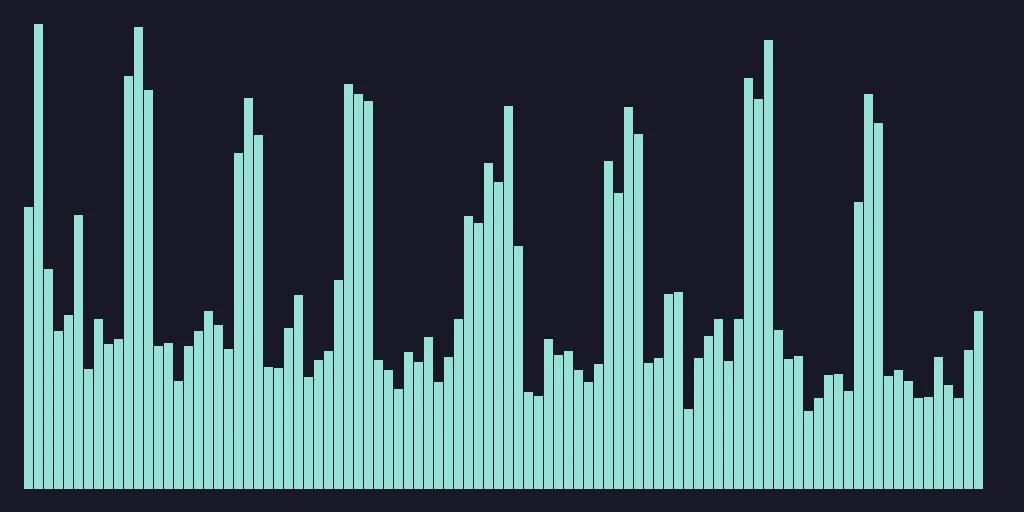
terence mckenna on coast to coast am april 1 1999, discussing consciousness, technology and novelty theory as a pahrump valley blackout unfolds amid y2k tensions
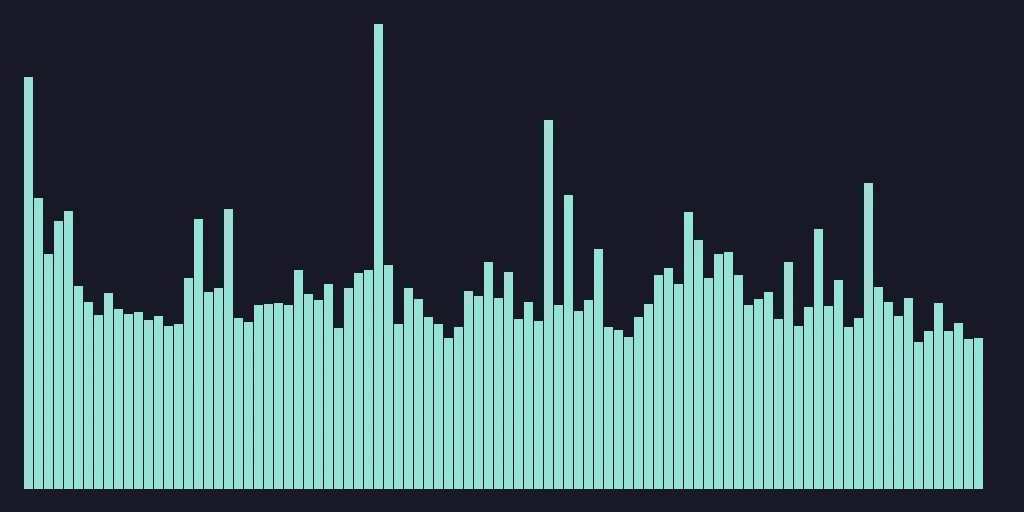
terence mckenna's 1999 lecture on linear societies and non-linear drugs. an exploration of psychedelics as philosophical tools and the role of consciousness in cosmic evolution.
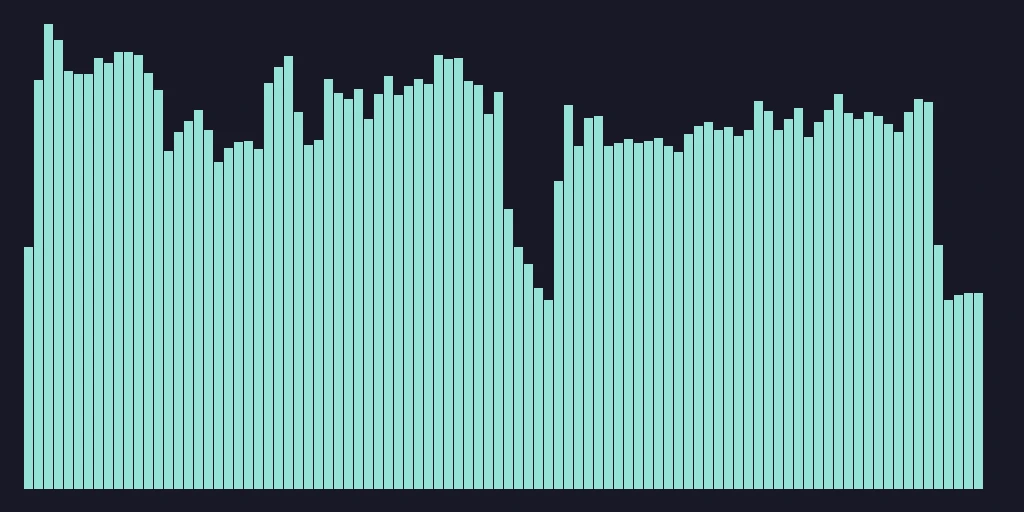
terence mckenna, ralph abraham, and rupert sheldrake recorded in santa cruz in june 1998, discussing skepticism, epistemology, and the crisis of statistical methodology in modern s