Open Doors
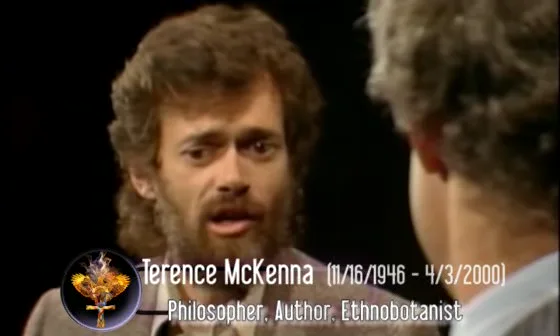
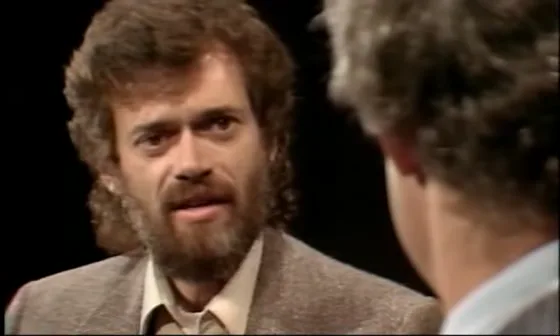
This is a live lecture by Terence McKenna on creativity and the shamanic function of the artist. McKenna traces creativity from nature itself through human artistic expression, arguing that the artist's role is fundamentally shamanic - a journey into the transcendent and a return bearing new images for culture. The lecture explores psychedelic experience as both a tool for understanding consciousness and a source of artistic vision, examining how artists can guide human cultural evolution toward transcendence. McKenna contends that contemporary art has lost its shamanic roots and moral vision, and that reconnection with these archaic functions is essential for addressing our historical moment. A profound meditation on imagination, language, and humanity's potential to evolve through artistic creativity.
transcriptmachine-transcribed, unedited
With this, and without any further ado, I am most pleased and most happy to introduce our very special guest speaker tonight, Mr. Harris McKenna.
It's a pleasure to be here. It's wonderful to see so many familiar faces and so many faces, period.
I've never been to Port Wainimi before. Probably some of you feel the same way.
But I've been doing a lot of traveling recently. I was in New York last weekend at the Open Center and in Prague two weeks before that.
So this is the end of a long season of traveling. I'm not home yet, but at least I'm in my own time zone.
I want to especially thank Andy Voth and the Carnegie Museum of Art in Oxnard for inviting me to participate.
It represents a real commitment to free speech and First Amendment rights, I think, for an art museum.
Art museums have been taking some knocks recently, and so I think they doubly should be commended for their courage.
And I want to explain, as Andy mentioned, this is a benefit for botanical dimensions, which explains the double price over the ticket.
All of this money will go to the preservation of medicinal plants with a history of shamanic usage.
That is the special focus of our botanical garden in Hawaii.
And before I start the formal lecture, I'd like to just say a little bit about that.
As you know, the rainforests of the world are being cleared at a very frightening rate, and perhaps voices are beginning to be heard to halt this destruction of the natural environment.
But whether it's halted or not, the destruction of the knowledge of native peoples concerning the uses of the plants in the rainforest, this is disappearing without doubt in the next 30 years.
Because these people are moving into cities, taking jobs in the ordinary market economy, and thousands of years of accumulated folk medical knowledge is being lost.
So the real world political work that Kath and I do is associated with botanical dimensions.
We conceived it together many, many years ago, and then about six years ago, Kath took it over, put it on its official feet, made it a non-profit foundation, and has run it day to day since then with tremendous energy and efficiency.
So I'd like to acknowledge Kat McKenna here, my better half, in fact, my only good half.
Yes, and then I wanted to underscore what Andy said, a very special event two weeks from now at the Carnegie Museum.
Roy Tuckman, Roy of Hollywood, bon vivant, countercultural figure, informational ferret of our time.
Will be recast as an experimental composer of great energy and imagination.
And I hope you'll all turn out for Roy.
He's been a wonderful force in my life and I think in the cultural life of Southern California.
Both Roy and Diane have done a wonderful job in raising the quality of public dialogue in Southern California, which I think is a precondition for any kind of clear thinking about our future or our political situation.
So, here's to Roy and Diane.
Okay, well, the theme that unites these lectures is creativity and the techniques by which the artist can refine his or her vision, expand the vision, communicate the vision.
And before I get into that issue, I thought I would talk just a little bit about my notion of creativity per se.
What is it in and of itself?
And when I think like that, of course, I cast my mind back to nature.
Nature is the great visible engine of creativity against which all other creative efforts are measured.
And creativity in nature has a curious distribution.
It's something which accumulates through time.
If we stand back and look at the universe, we see that at its earliest moments, it was very simple.
It was a plenum.
It was without characters or characteristics.
It was what in Hindu mythology is called the Turaya, which is described as attributeless.
And naturally, if something is without attribution, you can't say much about it.
It takes a while for it to undergo a declension into more creative realms.
And these creative realms are distinguished as domains of difference.
The precondition for creativity is, I think, disequilibrium, what mathematicians now call chaos.
And through the life of the universe, as temperatures have fallen, more and more complex compound structures have arisen.
And though there's been, you know, many a slipping back in this process,
over very large spans of time, we can say that creativity is conserved,
that the universe becomes more creative.
And out of that state of creative fecundity, more creativity is manifest.
So that, from that point of view, the universe is almost what we would have to call an art-making machine,
an engine for the production of ever more novel forms of connectedness,
ever more exotic juxtapositions of disparate elements.
And out of this, I believe, arises implicitly a set of principles that we can then apply to the human artist in the human world.
Nature's creativity is obviously the wellspring of human creativity.
We emerge out of nature, almost, and this idea, I think, was fairly present close to the surface of the medieval mind.
We emerge out of nature almost as its finest work of art.
The medieval mind spoke of the productions of nature.
This is a phrase you hear as late as the 18th century, the productions of nature.
And human creativity emerges out of that, whether you have a model of the Aristotelian great ladder of being,
or a more modern evolutionary view, where we actually consolidate emergent properties
and somehow bring them to a focus of self-reflection.
Now, I'm sure that we couldn't carry out a discussion of this sort
without observing that the prototypic figure for the artist, as well as for the scientist, is the shaman.
The shaman is the figure at the beginning of human history that unites the doctor, the scientist, and the artist
into a single notion of caregiving and creativity.
And I think that, you know, to whatever degree art over the past several centuries has wandered in the desert,
it is because this shamanic function has been either suppressed or forgotten.
And we've, different images of the artist have been held up at different times.
The artist as artisan, the artist as handmaiden of a ruling class or family,
the artist as designer for the production of integrated objects into a civilization.
This notion of the artist as mystical journeyer, as one who goes into a world unseen by others
and then returns to tell them of it, was pretty much lost in the post-medieval and renaissance conception of art
up until the late 19th century or early 20th century, where, beginning with the romantics,
there is a new permission to explore the irrational.
This really is the bridge back to the archaic shamanic function of the artist.
Permission to explore the irrational.
The romantics did it with their elevation of titanic emotion,
romantic love specifically.
The symbolists in the mid 19th century did it by a re-emphasis on the emotional content of the image
and a rejection of the previous rationalism.
And that emphasis on the image and on the emotions
set the stage then for what I take to be the truly shamanic movements in art
which begin really with Alfred Jarry in the late 1880s and early 1890s.
Jarry, you may remember, was the founder of something called the Ecole du Pataphysique,
the pataphysical college.
Jarry announced, pataphysics is the science.
The problem was nobody could understand what it meant or what it stood for,
including Jarry.
Jarry was tight with L'Entremont, who, you may recall, said,
I am fascinated with that kind of beauty that arises
when a sewing machine meets a bicycle on an operating table.
See, this was a true effort to bend the boundaries of art,
to create new permission, permission really for the unthinkable.
And this, again, reinforces the shamanic function.
What do we mean when we say the unthinkable?
The envelope of that which can be conceived.
At least 200 years, the ostensible mission of the artist
has been to test the conceptual and imagistic envelope
of what the society is willing to tolerate.
And this has taken many forms.
The deconstruction of imagery that we get with abstract expressionism,
going back into impressionism and the pointillism.
Permission for the irrational imagery of the unconscious
and the German expression of this purpose
to somehow destroy the idols of the tribe,
dissolve the conceptual boundary of ordinary expectation.
Well, in order to do this, it seems to me
there is a precondition for the creation of art,
which I call understanding.
And I don't mean this in an intellectual sense.
I mean it in the sense that Alfred North Whitehead intended
when he defined understanding
as the apperception of pattern as such.
As such, there's nothing more to it than that.
You see, if we were to look at this room
and we were to squint our eyes
and I'm doing this right now
and I see that the room divides itself
into people dressed in red
and people dressed in blue.
This is a pattern
and it tells me something about what I'm looking at.
Now I shift my depth of field.
Now I'm looking at where men are sitting
and where women are sitting.
This is a different pattern
and it tells me more about what I am looking at.
The number of these patterns
theoretically present in any construction
is infinite.
That says to me then
that the depth of understanding
cannot be known.
It cannot be known.
Everything is imminent.
William Blake makes this point, you know,
that you can see infinity in a grain of sand.
So understanding then
is the precondition for creativity.
And this understanding
is not so much intellectual
as it is visual.
Visual.
And in thinking about this
I realized
what an influence upon my own ideas
in this area
Aldous Huxley was.
not the Huxley
that we might ordinarily associate
with my concerns
the Huxley of the doors of perception
and heaven and hell
but the Huxley
of a very modest book
that he wrote in the early 50s
called
The Art of Seeing.
And in that book
he makes the point
that a good art education
begins with a good drawing hand
that to be able to coordinate
the hand and eye
and to see
into nature
to see
into the patterns
present
as such
is
the precondition
for a kind of approach
to the absolute.
Now out of this process
of seeing
which I'm calling
understanding
the creative process
ushers in
novelty
and many of you have heard me speak of novelty
in another context
in the context of
nature
as a novelty producing
engine
of some sort
and ourselves
almost as
the hand
the handiwork
of nature
but this same
handiwork of nature
which we
represent
we also
internalize
and re-express
through the novelty
of the human world.
well now
if we take
seriously
the
shamanic model
as a basis
for our
authentic art
then
certainly
in the modern context
what we see
missing
from the repertoire
of the artist
are
shamanic techniques
and
it's for the discussion
of these shamanic techniques
I believe
that I was brought here
this evening
so
I want you to cast your mind back
to a great
seminal moment
germinal moment
in the history
of human thought
which was
about 25,000 years ago
the great glaciers
that had covered most of the Eurasian landmass
began to melt
and human populations
that had been islanded
from each other
for about
15 millennia
began to
re-contact each other
and reconnect
and out of this
comes what is called
the Magdalenean revolution
from 18,000
to 22,000 years ago
and what it is
is nothing less
than
a tremendous
explosion
of
creativity
and
aesthetic
self-expression
on the part
of the human species
we find
for the first time
bone and antler
technology
takes its place
along with
stone
technology
musical instruments
appear
over a wide
area
and
cave paintings
some paintings
in areas
and recesses
so remote
from the surface
of the ground
that
it takes
several hours
to reach them
are painted
and
set up
in
dramatic
tableaus
specifically
designed
to bring
together
sound
light
and
dance
in
hierophanies
extravaganzas
of aesthetic
output
that
invoke
a kind
of
transcendent
other
that human
beings
for the first
time
are trying
to come
to grips
with
and make
some kind
of cultural
statement
about
and this
pulling
into matter
of the
ideas
of human
beings
first
you know
in the forms
of
beadwork
and
chipped stone
and carved
bone
within
twenty thousand
years
ushers into
the kinds
of high
civilizations
that we
see
around us
and points
us toward
the kind
of
extraplanetary
mega
civilization
that we
can feel
operating
on our
own
present
like a
kind
of
great
attractor
now
this
only a
secondary
consideration
the
real
notion
is a
kind
of
seizure
by the
tremendum
by the
other
which
then
forces
us
to
take up
matter
clay
bone
flint
and put it
through a
mental process
where we
then
excrete
it
as
objects
that have
lodged
within them
ideas
this
seems
to be
the
special
unique
transcendental
function
of the
human
animal
is
the
production
and
condensation
of
ideas
and
what
made
it
possible
for
the
human
animal
is
language
if
you're
seeking
the
thumb
of
the
transcendental
on
the
myriad
phenomena
that
compose
life
on
this
planet
to
my
mind
the
place
to
look
is
human
language
human
language
represents
an
ontological
break
of
major
magnitude
with
anything
else
going
on
this
planet
I
mean
yes
bees
dance
and
dolphins
squeak
and
chimpanzees
do
what
they
do
but
it's
a
hell
of
a
step
from
there
to
Wallace
Stevens
let
alone
William
Shakespeare
language
is the
unique
province
of
human
beings
and
language
is
the
unique
tool
of
the
artist
the
artist
is
the
person
of
language
and
I've
you know
given a lot
of thought
to this
because
the work
that I've
done
with
psilocybin
mushrooms
and the
observations
of
psychedelic
plant
use
in the
Amazon
centered
around
ayahuasca
lead me
to the
conclusion
that it
is the
synergy
and
catalysis
of
language
that lies
behind
not only
the
normal
organization
but
then
its
ability
to
set
a
course
for
a
transcendental
dimension
and
pursue
that
course
against
all
the
vicissitudes
of
biology
and
history
over
or
thousand
years
language
has
made us
more
than a
group
of
pack
hunting
monkeys
it's
made us
a group
of
pack
hunting
monkeys
with
a
and
the
fallout
from
that
dream
has
given
us
our
glory
and
our
shame
our
weaponry
our
technology
our
art
our
hopes
our
fears
all
of this
arises
out of
our own
ability
to articulate
and to
communicate
with each
other
and I
use this
in the
broad
sense
I mean
for me
the glory
of the
human
animal
is
cognitive
activity
song
dance
sculpture
poetry
all of
these
cognitive
activities
when we
participate
in them
we cross
out of
the domain
of animal
organization
and into
the domain
of a genuine
relationship
to the
transcendent
as you know
shamans
in all times
and places
gain their power
through
relationships
with helping
spirits
which they
sometimes call
ancestors
sometimes call
nature spirits
but somehow
the acquisition
of a
relationship
to a
disincarnate
intelligence
is the
precondition
for authentic
shamanism
now
nowhere
in our
world
do we have
an institution
like that
that we do not
consider
pathological
except
in the
now
very
thinly
spread
tradition
of the
muse
that
artists
alone
among
human beings
are given
permission
to talk
in terms
of
my
inspiration
or
a voice
which told me
to do this
or
a vision
that must
be realized
the
thin
the thin
line
the thin
thread
of
shamanic
descent
into
our
profane
world
leads
through
the office
of the
artist
and so
if
society
is to
somehow
take hold
of itself
at this
penultimate
moment
as we
literally
waver
on the
brink
of planetary
extinction
then the
artist
like
Ariadne
following
her
thread
out of
the
labyrinth
is going
to have
to follow
this
shamanic
thread
back
through
time
and you
know
one of the
most
disempowering
things that
has been
done to
us
by the
male
dominant
culture
is to
brush
out
our
footprints
into
the
past
we
don't
have
a
clue
as to
how
we
got
here
most
people
can't
think
further
back
than
the
first
Nixon
administration
let alone
you know
the arrival
of the
Vikings
the fall
of
the melting
of the
glaciers
so forth
and so
on
we
have
been
disempowered
by
a
rational
tendency
to
deny
our
irrational
roots
which
are
a
kind
of
embarrassment
to
science
because
science
is
the
special
province
of
the
ego
and
magic
and
art
are
the
special
province
of
something
else
I
could
name
it
but
I
won't
it
I
think
so
how
seriously
then
are we
to
take
this
I'll
call it
an
obligation
to
follow
the
shamanic
thread
back
into
time
well
I
I think that it is a matter of saving our own souls, that this is the real challenge.
You know, I love to dig at the yogans by saying nobody ever went into an ashram with their knees knocking in fear over the tremendous dimension they know they were about to enter through meditation.
Still truer and more sad, still more true and more sad, is the notion that very few of us pick up our sculpting tools or our airbrush with our knees knocking with fear because we know we are invoking and acting with the muse at our elbow.
And somehow I think the artists need to recover this sense of mystery.
One of the most depressing things to me about the art scene, and I had a chance to reconnect with this because I was just in New York, is it now has a kind of directionless quality.
You can go into a gallery and you cannot tell whether it is 1990, 1980, 1970, or 1960 because a kind of eschatological malaise has settled over art.
All notion of any forward movement toward a transcendental ideal has been put aside for the exploration of idiosyncratic vision.
And I grant you this is a tension, and perhaps in the question period we can talk about this.
There is a tension between the individual vision and the notion of an attractor or a collective vision which wants to be expressed.
But to my mind, this is the same dichotomous tension that haunts the individual in his or her relationship to Tao.
You know, we don't want to be lost in ego, but on the other hand, if we completely express the Tao, we have no sense of self.
The ideal seems to be a kind of coincidencia appositorum, a kind of literalizing of a paradox where what we have is Tao, but we perceive it as ego.
And in the application of this notion to the art problem, I would say what we need is a situation where schooling, if you want to put it that way,
or a tendency toward a coherent vision expressed by many artists, is spontaneous.
Each artist imagines that they are pursuing their own vision, yet obviously they are in the grip of an archetype,
which is rising through the medium of the unconscious.
Now, the last time we saw this in American art was in abstract expressionism,
which was probably in terms of the values, in terms of tension and the amount of emotional gain between one artistic moment and another.
The break between abstract expressionism and what preceded it was the most radical break in American art in this century.
Abstract expressionism actually carried us in to a confrontation with what the quantum physicists were telling us,
that the universe is field upon field of integrated vibration, that there is no top level, there is no bottom level,
that the ordinary structures of provisional space-time are simply that,
that if we can rise out of the human dimension,
then we discover these larger, more integrated dimensions where mind and nature somehow interpenetrate each other.
A vision like that, a coherent vision, has yet to announce itself here in the post-history, pre-apocalypse phase of things.
Well, I guess I have a kind of reactionary side when I think about the creative endeavor.
I believe that the psychedelic experience,
as encountered by each of you in the privacy of your own mind,
or as encountered by a pre-literate society somewhere in the world,
that that psychedelic experience is, in a way, the Rosetta Stone,
not only for understanding the encryption that our own lives represent each to ourselves,
but it's also a Rosetta Stone for uncoding the historical experience.
Art is this endeavor to leave the animal domain behind,
to create another dimension, orthogonal to the concerns of ordinary history.
And this orthogonal domain, to my mind, is glimpsed most clearly in the psychedelic experience.
The psychedelic experience shows you more art in an hour and a half
than the human species has produced in 15 or 20,000 years.
Now, this is an incredible claim.
This is why I make it.
The energy barrier which separates us from this tremendous repository of transcendental imagery is very low.
You know, it's a matter of a little personal commitment
and the substances which make the transition possible.
The perturbation of brain chemistry is easily done.
What is not so easily done is the assimilation of the consequences of this act.
Ordinarily, we assume that consciousness is channeled between tremendously deep walls.
That there is no way to force a confrontation with the other or the transcendent or the unconscious.
We tend to assume that, you know, we're going to have to do double duty at the ashram for three decades
before you're vouchsafed even a glimpse into these places.
This is not true.
Culture, and this is my message to artists and to anybody else who cares to notice,
culture is a plot against the expansion of consciousness.
And this plot prosecutes its goals through a limiting of language.
Language is the battleground over which the fight will take place.
Because what we cannot say, we cannot communicate.
And by say, I mean dance, paint, sing, meme.
What we cannot say, we cannot communicate.
We can conceive of things that we cannot communicate.
But, and I think every one of us here has done that.
And that's a thrilling thing.
That is the deep homework.
The psychedelic inner astronaut sees things which no human being has ever seen before.
And no human being will ever see again.
But in fact, this has no meaning unless it is possible to carry it back into the collectivity.
And what motivates me to talk to groups like this is the belief that we do not have centuries of gently unfolding time ahead of us
in which to, you know, gently tease apart the threads of the human endeavor and create a bright new world.
And that's not our circumstance.
This is a fire in a madhouse.
And to get a hold on the situation, I think we are going to have to force the issue.
Well, one way of forcing the issue or a chemical definition of forcing the issue when you're talking about a chemical reaction is catalysis.
We want to catalyze consciousness.
We want to move it faster toward its goals, whatever those goals are.
Well, I believe that to the present moment, language, again, in the broadest sense, speech, dance, musical composition,
language has just been allowed to grow like topsy.
It's been a kind of every man for himself situation.
Now, what we really need as we see ourselves moving from one species among tens of thousands of species on this planet,
over the past 10,000 years, we have redefined ourselves.
And now, like it or not, we are the custodians of the destiny of this planet.
Our decisions affect every life form on the planet.
And yet, we are still communicating with each other with the extremely precise medium of small mouth noises mediated by ignorance and hate.
This doesn't seem like the way to do business as we approach the third millennium.
So, what I'm hopeful for and what I actually see happening, I mean, I think that we're on the right track.
The birth of a new kind of humanity is going to take place.
But there are still a lot of decisions to be made.
How violent shall this birth be?
What toll shall it take upon our mother, the earth?
What shape shall the baby be in when it finally is delivered?
These are the decisions that artists can mediate and control.
Most people are afraid of the unconscious.
This is why, you know, you can have a psychedelic compound like DMT,
which is very much like ordinary brain chemistry,
appears completely physiologically harmless,
only lasts 10 minutes,
extremely powerful,
and generally in this society, you have no takers.
This is because there has been a failure of moral courage.
And the failure of moral courage is perhaps most evident in our own community,
the community of the artists.
In a way, it's the poets that have failed us
because they have not provided a song or sung a vision
that we could all move in concert to.
So now we are in the absurd position
of being able to do anything.
And what we are doing is fouling our own nest
and pushing ourselves toward planetary toxification and extinction.
This is because the poets, the artists,
have not articulated a moral vision.
The moral vision must come from the unconscious.
It doesn't have to do, I believe,
with these post-meaning movements in art,
deconstructionism and this sort of thing.
That art's task is to save the soul of mankind
and that anything less is a dithering while Rome burns.
Because if the artists who are self-selected
for being able to journey into the other,
if the artist cannot find the way,
then the way cannot be found.
And ideology is extremely alien to art.
Political ideology, I mean.
And if you will but notice,
it is political ideology that has been calling the shots
for the last seven or eight hundred years.
We can transcend politics
if we can put some other program in place.
You cannot transcend politics into a void.
And I believe that a world without ideology
could be created
if what were put in place of ideology
were the notion of the realization
of the good, the true, and the beautiful.
You know, the three-tiered canon
of the platonic aesthetic.
The reconnect, the notion of the good,
the true, and the beautiful.
Then use psychedelics
to empower the artist
to go into this vast dimension
that surrounds human history
on all sides to an infinite depth
and return from that world
with the transcendental images
that can lift us to a new cultural level.
The muse is there.
The dull maps that rationalism has given us
are nothing more than whistling past the graveyard
by the bad little boys of science.
You only have to avail yourselves
of these shamanic tools
to rediscover a nature
which is not mute,
as Sartre said
in a kind of culmination of the modern viewpoint.
Nature is not mute.
It is man who is deaf
and the way to open our ears,
open our eyes,
and reconnect with the intent
of a living world
is through the psychedelics.
Now, as you know,
biology runs on genes
and genes are the units of meaning
of heredity.
But we could make a model
of the informational environment
that is represented by culture
and in fact this is done.
A word has been invented,
meme, M-E-M-E, meme.
A meme is not the smallest unit of heredity.
A meme is the smallest unit
of meaning, of an idea.
Ideas are made of memes.
And I think the art community
might function with more efficiency
in the production of visionary
aesthetic breakthroughs
if we would think of ourselves
as an environment
modeled after the natural environment
where we as artists
are attempting to create memes
which enter an environment
of other memes
that are in competition with each other
and out of this competition of memes
ever more appropriate,
adapted,
and suitable ideas
can gather
and link themselves together
into higher and higher organisms.
Now, in order for this to happen
there is an obligation
upon each one of us
to carry our ideas clearly
because in the same way
that a gene must be copied correctly
to be replicated
or it will cause
some pathological mutation
a meme must be correctly replicated
or it will cause
a pathological mutation.
For instance,
I would say
what the Nazis did
to Friedrich Nietzsche's philosophy
was a bad cop,
a miscopied meme
became a toxic mutation
inside a culture.
So,
I would suggest
to the people in this room tonight
that you take a good look around
at who's here.
Artistic people,
psychedelic people
look pretty much like everybody else
out in society.
But we have come here tonight
self-selected
for our interest
in the empowering capacity
of psychedelic plants
and the empowering capacity of art.
So,
we represent
an affinity group,
a population
with a potential
for
mutagenic impact
on the ideological structures
of the rest of society.
So,
look around.
Someone here
has what you need.
And if you can only figure out
who it is,
you can make a novel connection
to move them
into a new level
of creativity.
Well,
what is this new level
of creativity?
Some of you may be familiar
with a theme
that was very big
in medieval religious art
which was
the apocalypse
of St. John
or of somebody.
There are a number
of these apocalypses.
And I think that
many of us
may come out
of a kind of secular background
or have not given
this kind of
a religious idea
too much consideration.
but
my
idiosyncratic conclusion
based simply
on trying to be honest
about the content
of the psychedelic experience
is that
human history
really is
on a collision course
with a
transcendental
object
of some sort.
it is not going
to be business
as usual
into the endless
unfolding
confines
of the future.
The very fact
that human history
is occurring
on this planet,
the very fact
that a primate
has left
the ordinary
pattern
of primate activity
and gone
into the business
of running
stock markets
and molecular
biology labs
and art museums
indicates to me
the nearby presence
in another dimension
of a kind
of hyper
organizing
force
or what I call
the transcendental
object.
And I believe
that this
transcendental
object
is casting
an enormous
shadow
over the human
historical
landscape
so that
if you're back
in
ancient Judea
you have
an anticipation
of the Messiah.
If you are
at Eleusis
at the height
of the practice
of the Eleusinian
mysteries
you have
an anticipation
of
the dark
God.
These
anticipations
of an
unspeakable
transcendent
reality
that are
always
clothed
in the
assumptions
of the
individual
artist
and the
society
in which
he or she
is working
are in fact
genuine
and that
you don't
have to
give yourself
over to
fundamentalist
religion
to
connect
with the
fact
that human
history
is
an adventure
and this
adventure
has a number
of
startling
reverses
and sudden
plot
shifts
that are
very difficult
to anticipate
and that
we are
coming up
on one
of those
the
civilization
that was
created
out of
the
collapse
of the
medieval
world
has
now
shown
its
contradictions
to be
unbearable
and though
no one
of us
knows
what the
shape
of the
new
civilization
will be
somehow
in the
singing
of the
ayahuasca
songs
in the
rainforest
in the
tremendous
hypermetallic
transcendental
off-planetary
flash
of psilocybin
in the
teaching
of the
self-transforming
machine elves
that seem
to dwell
in the
DMT
dimension
we see
that the
ordinary
linear
expectations
of history
are breaking
down
and that
the
truth
of
the
eminence
of the
mystery
is breaking
through
all the
structures
of denial
of
the male
dominator
paradigm
that has
been
in place
so long
the way
to make
this birth
process
smooth
the way
to bring
it to a
conclusion
that will
not betray
the
thousands
and thousands
of generations
of people
who
suffered
birth
and disease
and migration
and starvation
and lonely
death
so that we
could sit
here this
evening
the redeeming
of the human
enterprise
all lies
then
in helping
this thing
come to birth
and each
artist
is an
antenna
to the
transcendental
other
and as
we go
with our
own
history
into that
thing
and then
create
a unique
confluence
of our
uniqueness
and
its
uniqueness
we
collectively
create
an arrow
out of
history
out of
time
perhaps
even out
of matter
that will
redeem then
the idea
that man
is good
redeem
the idea
that man
is good
this is
the promise
of art
and its
fulfillment
is never
more near
than the
present
moment
thank you
very much
we'll
I think
we'll take
I'm happy
to take
questions
here
being in
the realm
of the ego
and art
and shamanism
being in
some
other realm
that's
defined
the name
my own
psychedelic
experience
convinced me
of the
existence
of that
other realm
but I
felt
not enough
sense of
personal
power
to be
that
antenna
that you're
saying
that artists
can be
or bringing
that
other
until I
became
convinced
that the
existence
not only
of me
within
that other
realm
but that
other realm
within me
and perhaps
the psychedelic
experience
prepared me
for that
second
awareness
but
perhaps you
could comment
on how
if
possible
that
second
awareness
could be
become
more easily
accessible
what do
you mean
by the
second
awareness
say a
little
more
about
it
of being
aware
that
other realm
is something
that's also
very personal
and
well
yes
I mean
it seems
it's
it's a
landscape
that begins
within the
self
and seems
to extend
into the
world
I mean
one of the
very puzzling
things about
the psychedelic
experience
is
that it
argues
that we
are not
atomic
individuals
running around
in some
kind of
society
but that
if you
actually
drain
the
psychic
water
away
you'll
discover
that we're
all
connected
at the
roots
that
it
isn't
a
journey
to
another
world
it's
a
journey
inward
to
a
world
that
is
already
present
and
there
the
astonishing
thing
is
how
alienated
we
are
from
our
own
interior
from
the
interior
world
to
the
alien
nature
of
the
psychedelic
experience
and
how
it
seems
to
be
mappable
over
something
as
radical
as
the
UFO
experience
this
is
because
we
truly
do
not
know
who
we
are
the
past
10,000
years
have
been
so
disempowering
to
us
we
are
really
like
the
children
of
a
dysfunctional
relationship
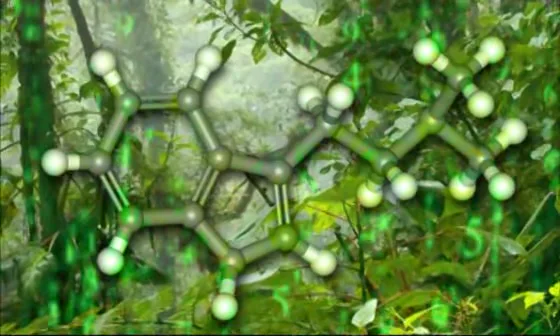
terence mckenna describing the dmt experience from ingestion through breakthrough and encounter with entities.
terence mckenna on art, consciousness, and psychedelics as a gateway to transcendent creativity and the moral imperative of vision
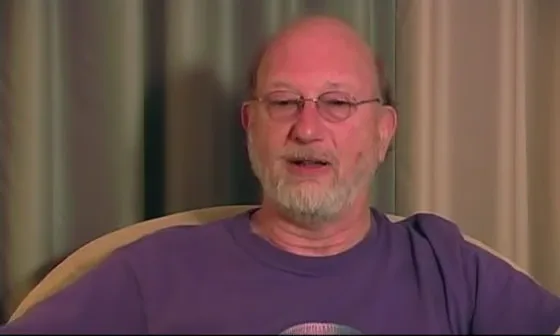
dennis mckenna explains ethnobotany and ethnopharmacology, the role of the shaman as a specialist in plant-induced altered states, and his critique of fundamentalist religion, in a
a 2009 documentary exploring shamanism and psychedelics as tools for accessing transpersonal realms through altered states of consciousness. covers ancient practices, sacred plants
dennis mckenna's 2008 talk at the fourth annual amazonian shamanism conference. speaking without prepared remarks, he explores ayahuasca as a planetary teacher, the scientific stud