Radiovalve Interview

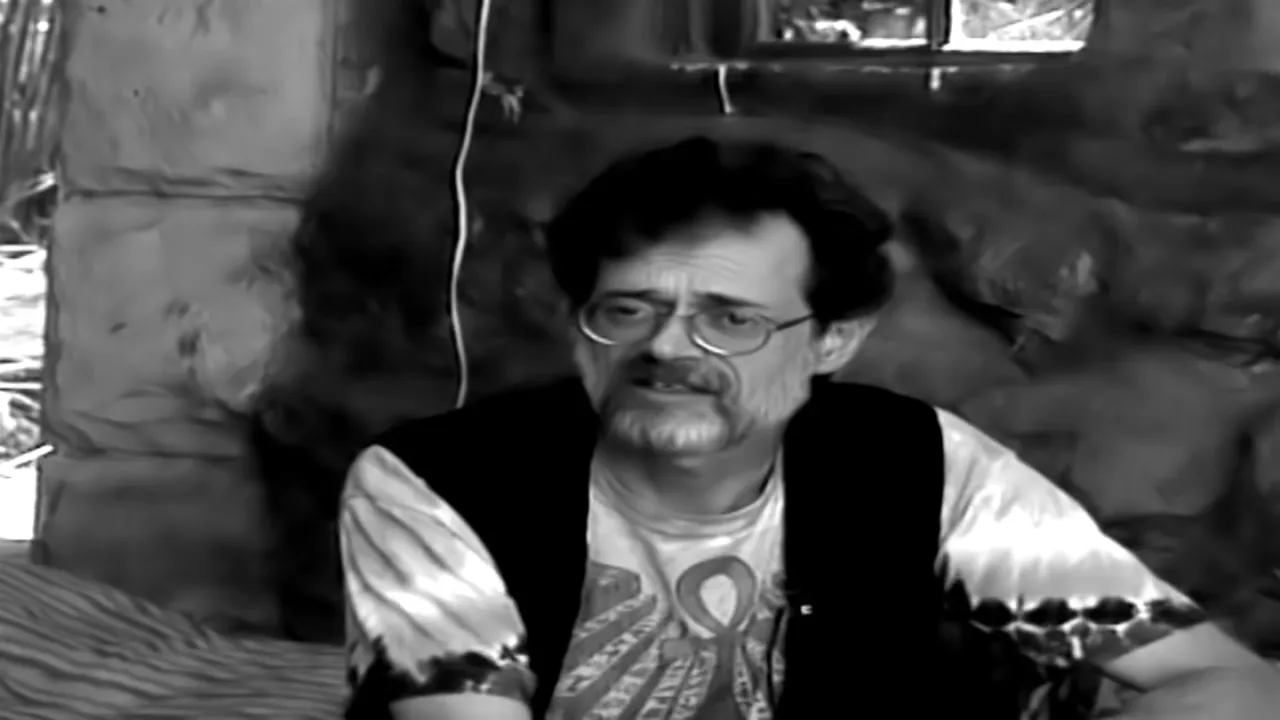
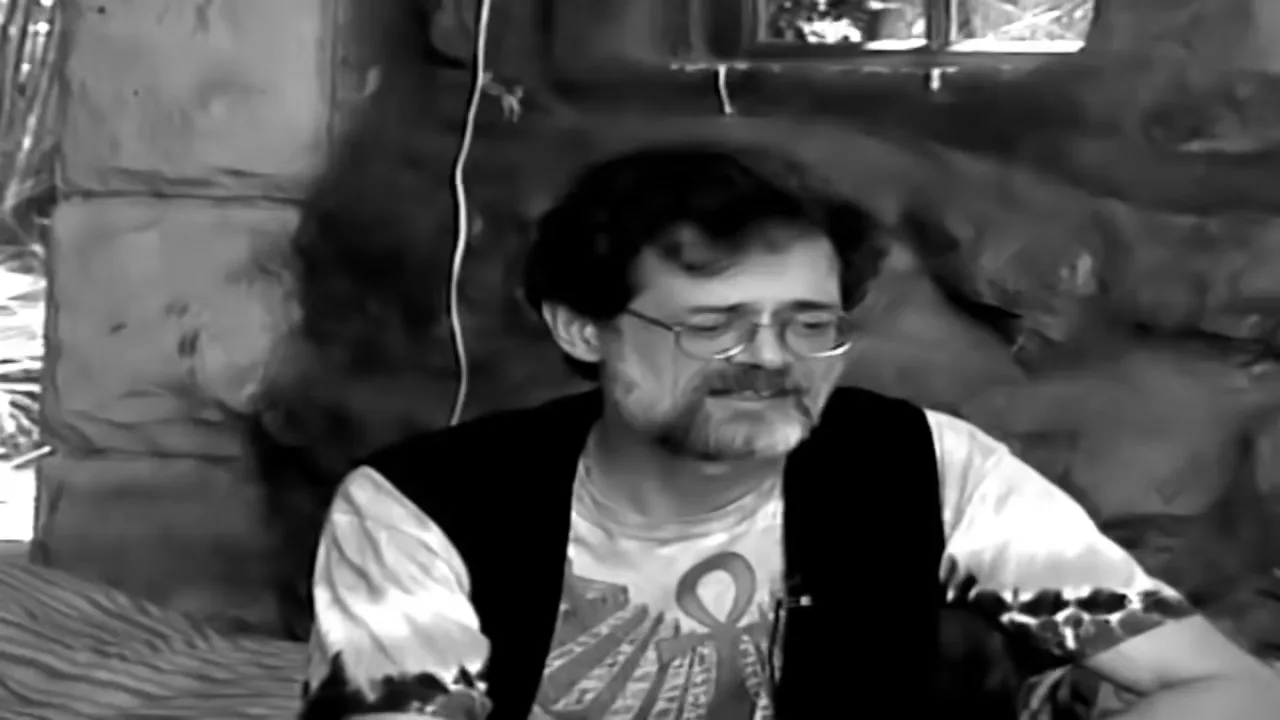
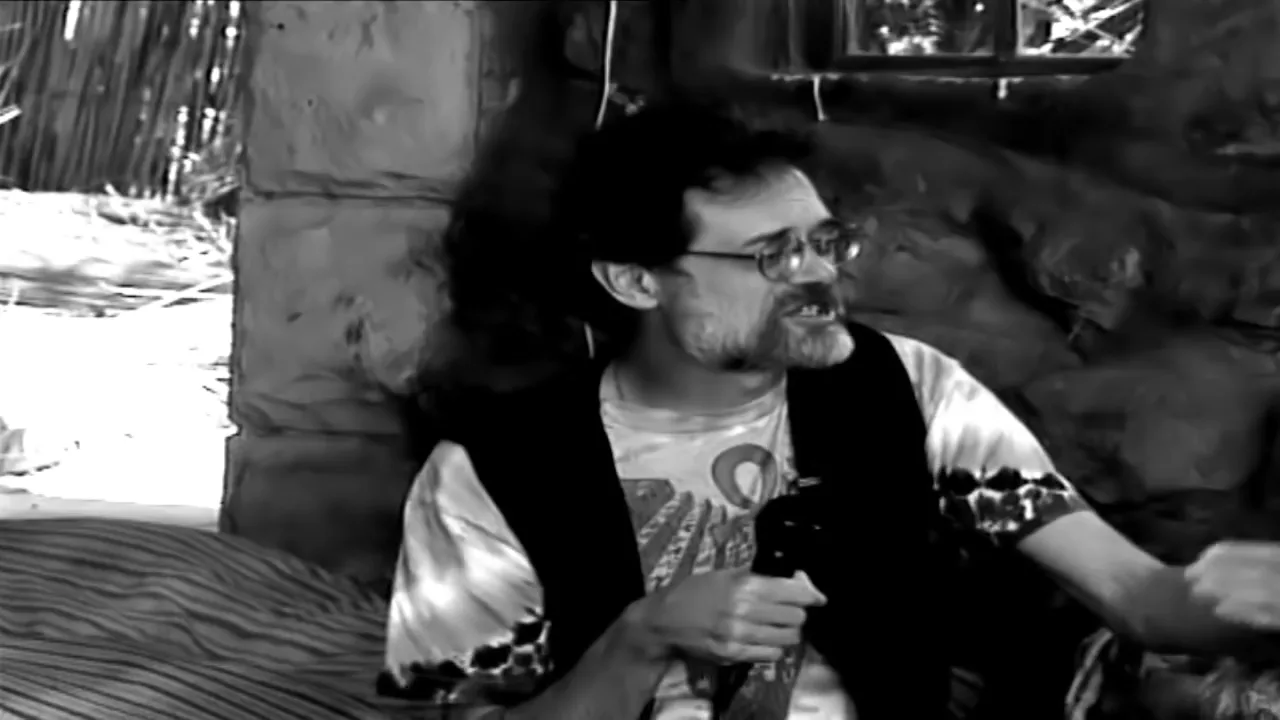
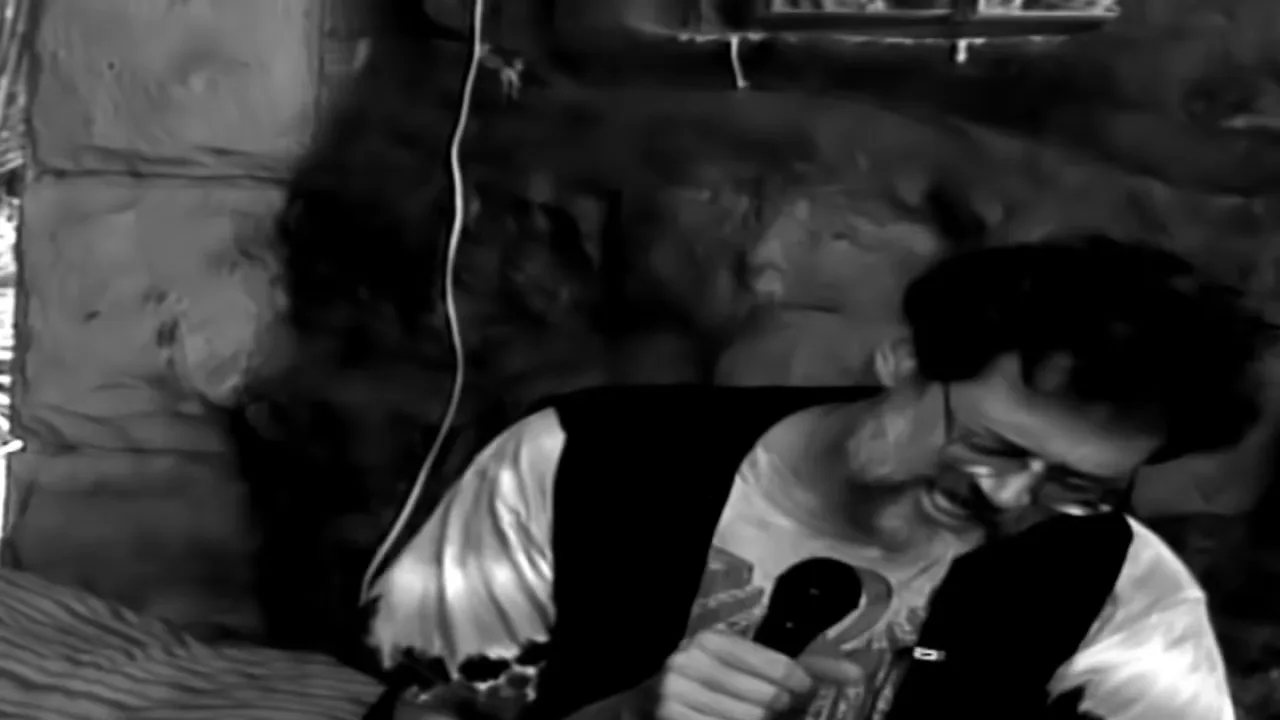
A radio interview with Terence McKenna on psychedelics and consciousness. McKenna argues that psychedelics are experiences, not ideologies, and that their suppression constitutes a human rights abuse - they reveal the brain's function unconstrained by cultural norms and conditioning. He situates psychedelic exploration as an athletic, challenging undertaking, akin to ocean kayaking or rock climbing, and advocates for learning through camaraderie and co-exploration rather than hierarchical guru-based systems. Central to the interview is McKenna's claim that psychedelics are political dynamite to every cultural and political system, because they relativize cultural assumptions and values in ways that no ideology can tolerate. For those seeking McKenna's core arguments about consciousness, cultural transformation, and why the exploration of human neurology should be a right, this interview distills his essential philosophy.
transcriptmachine-transcribed, unedited
You know, I found that many of your ideas and presentations were very challenging
and dangerous to the limits that I felt on my mind,
but I don't feel especially terrified sitting across from you talking with you.
I don't feel like you're any danger to me.
No, no, I'm a nice man.
That's part of the strategy.
I'm the doorkeeper to deep, dark water that everybody explores on their own.
I am not a guru.
I have no particular axe of my own to grind, or at least not with great vigor.
The point to be made here is that psychedelics are not an ideology or a position.
They are an experience, and an experience is something that we have very intimately ourselves,
so it's not something you can teach people or draw too many general conclusions from.
It's an experience, but it's an experience that I feel people should have,
and when I see a political system or a set of cultural values that are denying people this experience,
then I feel like some kind of human rights abuse is taking place.
In principle, there's nothing wrong with drugs coming out of the laboratory,
but in fact, we don't have a large body of experience with these things,
where if you go to a tribal situation and they are using a plant in a traditional fashion,
then you have your medical data, which tells you that these plant substances don't cause mental retardation,
birth defects, Parkinson's syndrome.
In other words, these human populations that have used these things shamanically
have use-tested a number of these substances,
and they are among the most powerful of all the psychedelics known.
So you're not limiting the depth of your experience
by concentrating on the traditional botanically derived substances.
Any culture is a kind of hallucination,
a kind of self-limiting group assumption about reality,
and we all are adapted to living within one or several cultures.
What psychedelics do is they address a deeper level of human neurological organization.
They reveal the brain and its function unconfined by cultural norms and expectations.
And this can be exalting, exhilarating, dizzying, terrifying,
depending on the personality and the circumstance.
The tension between so-called straight culture and psychedelic culture
is a tension over values.
Psychedelics challenge the assumptions of any cultural or political system,
and that makes them dangerous to every cultural and political system.
So if there's anything, a Marxist dictatorship,
a high-tech industrial democracy, or a theocracy,
they can all get together on one thing,
which is psychedelic drugs are a knife poised at the heart of community values.
Well, this is just simply nonsense.
And then all the reasons brought forth are, in a sense, a red herring.
The psychedelics are among the safest substances known for human ingestion.
Considering the depth of their impact on human mental functioning,
the fact that you pick yourself up six, seven, eight hours later
and go on about your business with an expanded point of view is quite remarkable.
People have a right to get stoned.
They have a right to think and explore their own minds.
This is as intimate a part of their being as their sexuality.
And any culture which mitigates that is clearly afraid of a full and fair and open dialogue
about what reality is and what real human values ought to be.
I think anybody who takes a number of psychedelic trips will eventually earn their oak leaves.
I mean, you can spend difficult evenings.
People who dismiss this as recreational drugs or hedonism or escapism
absolutely do not know what they're talking about.
This can be very challenging and difficult work.
The ocean kayaking metaphor is more appropriate, I think.
Don't think meditation and yoga are the same enterprise as taking psychedelics.
They are often sold as the same enterprise.
But in fact, nobody goes to the ashram with their knees knocking in terror
over what is about to sweep over them.
On the other hand, if you're taking high doses of psilocybin or DMT,
this would be a perfectly reasonable response.
All kinds of areas of human knowledge are experiencing exponential growth.
And what the future is going to be about is the integrating of these growth surges
across the surface of the rising wave of change and knowledge expansion.
We're going to see more change in the next 15 years
than we've seen in the last 500 years of the evolution of global culture.
And it's going to be a challenge and a wild ride, I dare say,
for every man, woman, and child on the planet.
Those who keep cultural values in place are always interested in mitigating
controversy, exploration, and criticism.
As I said earlier, all cultures are involved in the culture game.
And psychedelics transcend the culture game.
And whether you're a Hasid in Jerusalem or a Tokyo stockbroker or an Andaman Islander,
if you take psychedelic substances, your cultural values will suddenly be much more relativistically revealed to you.
And that is political dynamite.
The tension between so-called straight culture and psychedelic culture is a tension over values.
Psychedelics challenge the assumptions of any cultural or political system.
And that makes them dangerous to every cultural and political system.
So if there's anything, a Marxist dictatorship, a high-tech industrial democracy, or a theocracy,
they can all get together on one thing, which is psychedelic drugs are a knife poised at the heart of community values.
Well, this is just simply nonsense.
And then all the reasons brought forth are, in a sense, a red herring.
The psychedelics are among the safest substances known for human ingestion.
Considering the depth of their impact on human mental functioning,
the fact that you pick yourself up six, seven, eight hours later
and go on about your business with an expanded point of view is quite remarkable.
If life is not to be experienced, what is it for?
It certainly can't be to go each day to the paper box factory
and then come home and consume junk television.
I'm interested in everything.
To my mind, the psychedelic agenda means visiting the most remote parts of the world,
reading the most forgotten and obscure literatures,
and having the most extreme experiences that one can enjoy safely.
And I view taking psychedelic substances in a category with ocean kayaking, rock climbing, hiking the Andean Trail.
It's an athletic, challenging undertaking for people who are interested in limits,
their own limits and the limits that the world offers them.
For one person to seek enlightenment from another is like a grain of sand on the beach
to seek enlightenment from another grain of sand.
And I think that's a very powerful message.
It says we're all human, we're all in this dilemma together,
and our levels of accomplishment and knowledge are so similar
that there is no reason to assume superiority
and to then submit to a guru or a lineage.
Not that there are not things to be learned,
but I think the richer style of learning is a kind of camaraderie
and co-exploration of reality with an open mind.
Anybody who claims they have answers is automatically suspect.
I mean, where is it writ that talking primates
should have perfect models of the universe at large?
If you met a termite who told you he was seeking enlightenment,
I think it would provoke a small smile.
Well, on the galactic scale, the difference between us and that termite
is hardly worth mentioning.
I look forward to the global transformation of human culture.
I think it's been a long, bloody slog
from the plains of Africa to the surface of the moon.
And the cultural models that we've used are worn out.
And transformation is now inevitable.
We know that we're at the limits that the planet as a resource can tolerate.
We have technologies that could transform the world.
We have enormous creative abilities.
What we seem to lack is mental discipline.
We need to change our minds about issues like class, race, gender, resource extraction.
If we do not change our minds,
we're going to push this entire planetary system into some state of fibrillation
from which it will be very difficult to rescue it and ourselves.
So the great challenge is to change our minds.
And I know of nothing that does that in the time frames that we have to operate as effectively as psychedelics.
If hortatory preaching did it, then we would have turned the corner with the Sermon on the Mount
or with the Sermon at the Deer Park at Sarnoth or something like that.
But we need direct neurological intervention at the meat level in order to turn this monkey
into a planetary gardener, ecologist, and a caring force in nature and the human world.
Bilbo Baggins said it, the greatest adventure still lies ahead.
And so let's be up and about it.
Is he the one who said that?
He's one of the ones he said it.

terence mckenna's 1982 esalen workshop on psilocybin as a path to altered consciousness and human evolution. explores how tryptamine experience anticipates the future development o

terence mckenna explores the nature of psychedelic experience, particularly dmt, describing decades of shamanic exploration and the entities encountered in altered states
part 3 of 12 from terence mckenna's 2012 omnibus series where he argues culture is not your friend but an intrusion on identity that demands conformity in exchange for unsatisfying

dennis mckenna discusses ufos, psychedelic experiences and his research on dmt and psilocybin mushrooms on the paratopia podcast
a 2009 documentary exploring shamanism and psychedelics as tools for accessing transpersonal realms through altered states of consciousness. covers ancient practices, sacred plants