Visionplants

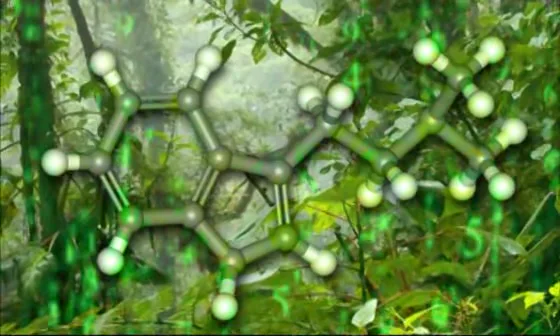
Recorded live at the International Transpersonal Conference, this is Terence McKenna's extended exploration of shamanism, vision plants, and their role in human consciousness and evolution. McKenna argues that psychoactive compounds like psilocybin played a central role in human development, enabling the visual acuity and numinous experiences that shaped self-reflection and language. He traces these plants across human history and cultures, from Amazonian ayahuasca to African mushrooms, while critiquing the West's abandonment of these symbiotic relationships and the existential neurosis that has followed. For McKenna, reconnecting with psychoactive substances is not a fringe issue but a civil rights matter essential to the expanded consciousness our planetary future requires. A dense, far-reaching talk on the biochemistry and spirituality of human origins.
transcriptmachine-transcribed, unedited
And now recorded live at the International Transpersonal Conference, Vision Plants, Transpersonal Challenge, with Terence McKenna.
This presentation will explore the model that shamanic use of vision plants provides for transpersonal psychology,
particular attention given to the role such plants play in personal integration,
deeper implications of shamanic use of plants, role of mind in the natural order, and the planetary future.
Basically for myself, my involvement with shamanism has been a deepening meditation over now about 20 years.
And it seems to me very fruitful because it continues to change and integrate itself ever more deeply into the meaning of reality at large.
So that, for me, shamanism has become a kind of overarching metaphor for not only personal being in the world,
but the historical adventure, the being of the species in the world.
So, I want to talk about it today, and as an advocate, I want to make it seem indispensable to living a life of right reason in the world.
I want to show that without shamanism, the notion of humanism itself is in a kind of jeopardy.
And probably most of us can find ourselves in agreement with that.
But then I want to leave most of us behind and go further and suggest that this humanness rooted in shamanism
is a humanness ultimately rooted in very complex, symbiotic relationships with plants and chemicals in the environment.
I want to argue, in fact, that people without plants are in a state of potential neurosis,
a state of existential wanting, and that, in fact, part of the Western dilemma is the sense of abandonment
that followed with the breaking off of these symbiotic relations with vision-producing plants
that characterized the rise of Western monotheism and even more characterized the rise of modern society.
Let me return then to the origins, because this is where I think the case can be made.
My interpretation of the time we're living through and this amorphous movement that we all somehow in some way are a part of,
which calls itself the New Age or what have you, I call it the Archaic Revival.
And the reason I call it the Archaic Revival is rooted in my conviction that it is, in fact,
a revivifying of the models and energy forms of Archaism.
And shamanism, then, is suddenly centrally highlighted.
Shamanism was the profession ni plus ultra of the upper Neolithic era.
And what was this profession precisely about?
Well, it was about exploring the envelope of cognition,
pushing against the linguistic membrane of what it was possible to say, symbolize, conceive, and communicate.
Now, why should one species out of all those competing on the earth attain somehow a kind of mega-adaptive ability
that causes a kind of compression of biological time into the phenomenon that we call history?
Is it simply, as our theologians have always been forced to conceive,
that divine agency entered into the mechanism of the world and somehow set a spark in motion
that kindled and grew into humanity?
Or is it, as the 19th century explored so exhaustively,
the possibility that incremental change can eventually initiate and insinuate into a situation
new states of higher order,
including even possibly the state of higher order that we call self-reflecting consciousness?
But somehow, this is no more than a gradual refinement out of previous states of nature.
Well, what I want to suggest is that it is a bit of both of these points of view,
the divine intervention and the evolutionary.
I think what evolutionary biologists have missed
in looking at the emergence of human beings out of the primate phylogeny
is, generally speaking, the mutagenic influence of foods.
The fact that a fruit-eating arboreal primate,
because of a situation of spreading dryness in the environment,
evolved into a pack-hunting creature of the grasslands with an omnivorous diet.
And omnivores, by their very nature, expose themselves
to a very large number of mutagenic influences.
I'm speaking now chemically.
Mutagenic influences that interfere with the correct copying of protein,
interfere with spacing of children, lactation,
interfere with mentation,
psychoactive compounds in the food chain.
And it's very interesting that as human beings transform themselves
into omnivorous pack-hunting omnivores,
you begin to see the first faint stirrings of self-reflection.
You begin to get the fire pits,
and later the chipped flint leavings of earliest Neolithic human tool-making.
What this says to me is
that there was a unique confluence of factors present in the evolutionary situation
that were capable of kindling
this ontological transformation
of what had previously been the animal mind.
And what I suggest this factor is, or was,
psychoactive plants in the environment,
specifically psychoactive plants in the grasslands environment
in which human pastoralism evolved in Africa over a million years ago.
So the plant must be African.
It must be extraordinarily noticeable in the environment.
It must not be a deep forest endemic,
because this is not where human evolution was taking place.
The only plant which fits this description
is a mushroom of the psilocybin-containing variety.
And it's very easy to see, I think,
that the presence then of psychoactive compounds of this sort
in the early human diet
set the stage for a number of structural and psychological changes.
Psilocybin ingested in low doses increases visual acuity.
Now, it's not difficult to see that in an animal
under evolutionary pressure in a pack-hunting environment,
increased visual acuity
will mean a more successful reproductive strategy.
This means that those animals,
not including the psychoactive substance in their diet,
will be mitigated against and fade from the scene.
And by this process,
a steady bootstrapping process,
self-reflection was born in our species.
How do we get from visual acuity to self-reflection?
Low doses of psilocybin give increased visual acuity.
Medium-range doses of psilocybin give an increased interest in erotic activity.
You should laugh.
There may not be too many laughs with this one.
Slightly higher doses of psilocybin
give an experience of the numinosum,
an actual contact with a mystery in the human psyche,
which is no less mysterious to us today
than it was to our ancestors
when the last glaciation was retreating against Canada.
I mean, don't kid yourself.
In the face of this,
the content of this symbiotic relationship,
modernism, rationalism, positivism,
all is exposed as just whistling past the graveyard
because the numinous depth of the mystery
that seems to have called us out of the animal mind
is completely impenetrable to modern analysis.
That's why even discussing its presence
is mitigated against so intensely.
Well, I don't want to spend too much time
on this early facet of the emergence thing.
I want to move ahead and show
that as pastoralism developed,
as the domestic relationship between cattle,
human beings and mushrooms
settled down into a self-reinforcing cycle of consciousness,
language arose, religion arose
of the goddess-oriented variety
and the connection of the cow to the goddess
is there at the dawn time.
There is no question about it.
Language seems to have been
the particular prerogative of women
in the early emergent phases.
This is possibly because
men were involved in hunting activities
where a great premium is placed
on silent stealthiness.
While women were engaged as gatherers
in the hunting-gathering phase,
women were engaged in gathering plants.
And as all botanists can tell you,
gathering plants involves an extensive taxonomic language
so that the difference,
the minute differences between cereal grains
and insects and all of these things
need to be linguistically defined
and characterized and characterized.
And to this day,
a taxonomic description of a plant
is a joyce and thrill to read
because, you know,
sub-apically glabrous
with lanceolate trifolium
and so on for many, many lines.
But in a strange way
that is a law repeated over and over again
through history,
each advance somehow outsmarts itself.
And the wonderful linguistic depth
which women attained as gatherers
through the production of folk taxonomy
eventually led them
to a terrible discovery,
the discovery of agriculture
because they learned that
rather than maintain this vast library
of shifting information
about seasonal plants
randomly distributed
or distributed according to the whims of nature,
they could in fact focus
on a very small number of plants,
learn how to grow these plants,
learn their needs alone
and at that point,
the retreat was on
and the dualism was fully in place
and there was that which was domesticated,
that which was of the hearth
and that which was of the ausland,
the howling unknown,
that which was beyond the pale.
I think it was Weston Labar,
great old anthropologist,
who felt,
he said,
hallucinogens can only be used
in hunting and gathering cultures
because when agriculturalists use them,
it makes it impossible
to get up at dawn
and go hoe the fields
and so suddenly the gods
become the corn gods
and the wheat gods,
gods of symbolizing domesticity
and hard labor
and that sort of thing.
And at this moment of agriculture,
which led to overproduction,
which led to trade,
which led to cities and so forth,
there is a beginning of the breaking away
of this symbiotic relationship
which had bound human beings
to nature to this time.
And I don't mean this metaphorically.
I mean, I want to be taken seriously
as proposing that the all we of modernity
is the consequences
of a disrupted symbiotic relationship
between ourselves
and vegetable nature
and that only a restoration of this
in some form
is going to carry us
into a full inheritance
of our birthright
as human beings.
Now, what did this symbiotic relationship
consist of?
What was the effect
of this psychedelic use,
this embeddedness
of language using,
cognition using,
but stoned primates
in the natural order?
Well, I submit to you
that what it was
or how it acted operationally
was as a feminizing pheromone
that the continuous exposure
to this tremendum
represented by the hallucinogenically
induced ecstasy
acted to continuously dissolve
that portion of the psyche
which as moderns
we call the male ego.
And I don't mean
that it only worked on men.
I mean that wherever
in human personalities
this certain catch
began to form
and build
like a calcareous tumor
in the personality,
the psycholytic presence
of the undeniable fact
of the tremendum
tended to dissolve this
back into Tao,
psychic hell,
however you wish to style it.
And that the evolution
of language then
setting up this movement
off into specialization
and the movement
away from nature
set up the consequences
of the ennui
which permeates
western civilization.
It is only in western civilization
that you get
this steady focus
on this monotheistic ideal
and working out
the implications
of what is
essentially
a pathological
personality pattern.
The pattern
of the omniscient,
omnipresent,
all-knowing,
wrathful,
male deity.
No one you would invite
to your garden party.
It's very interesting
that this ideal
is the only instance,
the only hypothetization
of deity
that I know of
that has no congress
with woman
at any point
in the theological myth.
The god of western civilization
has nothing to do
with women
and the presence
of the Sophia
and the presence
of the Mater Dolorosa
and all of these things
have only been tolerated
as heresies
in the western tradition
and it is the western tradition
that has
the most continuous break
with this symbiotic relationship.
In other words,
we have wandered
into a state
of prolonged neurosis
because of
the absence
of a direct pipeline
to the unconscious
and we have then
fallen victim
to priestcraft
of every conceivable sort.
A similar situation
which may give us
some objective perspective
on our own
haunts
the fate
of those portions
of Indo-European humanity
that went east
instead of west.
In other words,
the whole story
of Indian civilization
is the story
of
a masculine,
static,
hierarchically organized
system
coming into place
in the wake
of the loss
of the secret
of Soma,
the loss
of the portal
to another kind
of vegetable gnosis.
Well,
so,
provided then
that I have
made my case
and convinced you
that this is all
gospel,
what kind
of options
are there
to someone
who believes
this?
Well,
what that means
is a brief survey
of the anthropological
opportunities
to explore
hallucinogenesis
presently afforded
by societies
living throughout
the world.
There are,
of course,
the psilocybin
complex
discovered
by Gordon
Wasson,
the magic mushrooms
of central Mexico
which may have
played a role
in the Mayan
and Toltec
civilizations
and the wider
ranging
pantropical
stropharia cubensis
psilocybin
cubensis
which
originated
in Thailand
but is distributed
throughout
the warm
tropics.
Interesting,
all of these
shamanically
sanctioned
hallucinogens
are in the
Indole
family
a very
narrow
family
of compounds
with the
exception
I almost
blew it
with the
exception
of mescaline
which is
in a different
family
a kind
of
amphetamine
but all
the others
including
the morning
glory
complex
with its
LSD
like
alkaloids
chenoclavine
and
ergonamine
the
psilocybin
complex
which involves
as I said
several
pandemic
species
and many
highly
indemnicized
species
especially
in the
pacific
northwest
the
Iboka
cult
of
Gabon
and
western
Africa
which is
sort of
the exotic
cousin
of all of
these
things
but nevertheless
structurally
an indole
and then
the short
acting
tryptamines
and the
beta
carbolines
the short
acting
tryptamines
can be
used
separately
the
beta
carbolines
though
hallucinogenic
in themselves
are usually
used as
monoamine
oxidase
inhibitors
to enhance
the effect
of short
acting
tryptamines
this is a
highly
evolved
pharmacology
and
shamanic
complex
in South
America
one of the
peculiar
puzzles
of
shamanic
anthropology
and
ethnobotany
is
the
clustering
of
hallucinogenic
plants
in South
America
why are
the old
world
tropics
the
tropics
of the
Malukas
in Indonesia
not equally
rich
in
hallucinogenic
flora
no one
can answer
this question
but certainly
Mesoamerica
and the
new world
seems to
be
the great
home
of these
things
you notice
that I
don't
mention
any
synthetics
in the
list
this is
because
I would
sort of
like
to
peel
away
the
vision
producing
plants
from the
whole
straw
mundang
of the
drug
problem
and the
drug
issue
which is
a whole
other
kettle
of fish
and
has to
do
with
the
fates
of
nations
and
trillion
dollars
scamola
and
who knows
what else
I
prefer
the
organic
hallucinogens
and recommend
them to
other
people
because I
think
their long
history
of
shamanic
usage
is
the first
seal of
approval
that you
must look
for
I mean
if these
things have
been used
for thousands
of years
then you can
be fairly
confident
that they
do not
cause
tumors
or
miscarriages
or
that
this
has
because
nature
is far
richer
in exotic
and poisonous
and mutagenic
and psychoactive
chemicals
than the
human
pharmacopoeia
I
mean
many
things
are
avoided
there
are
many
potential
hallucinogens
that are
not
utilized
by
human
beings
so
there
has
been
a
certain
trial and
error
selectivity
applied
to
these
things
I
think
it's
important
to
confine
oneself
to
compounds
which
are
least
insulting
to
the
physical
brain
not
because
the
physical
brain
has
anything
to
do
with
the
mind
particularly
but
because
it
certainly
has
to
the
brain
should
probably
not
be
introduced
into
it
one
way
of
judging
how
long
a
relationship
between
a human
population
and a
plant
has
been
in
place
is
to
see
how
benign
the
compound
is
in
human
metabolism
and
if
you
take
some
plant
and
your
knees
are
feeling
rubbery
three
days
later
or
your
eyes
aren't
in
focus
hours
later
then
this
is
not
a
benign
compound
this
is
not
a
compound
where
there
has
been
a
primary
hallucinogen
involved
in
human
origins
because
these
things
bear
a
weird
resemblance
to
human
neurochemistry
the
human
brain
and
indeed
all
nervous
systems
run
on
5-hydroxytryptamine
serotonin
nn-dimethyltryptamine
is
the
hallucinogenic
compound
of this
amazonian
complex
is
the most
powerful
of all
hallucinogens
in the
human
system
and yet
clears
your system
in a matter
of minutes
this argues
for a great
antiquity
of the
relationship
between
these
things
so
then
having
discussed
options
it
would
remain
it
seems
to
discuss
techniques
since
it's
almost
what
Huxley
called
the
gratuitous
grace
all
conditions
for
success
can
be
present
and
one
can
still
fail
although
not
if
all
conditions
for
success
are
present
and
one
does
it
over
and
over
again
maybe
there's
a
maybe
there's
a
temporal
variable
there
I'm
not
sure
but
technique
to me
is a
kind
of
I'm
reluctant
to
talk
about
it
because
it
seems
so
obvious
to
me
what
good
technique
is
I
mean
you
sit
down
you
shut
up
and
you
pay
attention
is
basically
the
good
technique
and
then
the
footnotes
add
on
an
empty
stomach
in
a
dark
room
feeling
comfortable
and
then
sit
down
shut
up
pay
attention
it's
something
which
happens
behind
the
eyelids
it
is
not
eudetic
hallucination
although
it
begins
like
eudetic
hallucination
I've been
talking about
this kind
of stuff
now
for about
ten years
publicly
like
this
and
one
of
the
major
things
the
major
conceptual
and
linguistic
problem
to
get
over
is
to
actually
convey
to
people
what's
being
talked
about
because
probably
I would
assume
95%
of the
people
in this
room
have
something
under
their
belt
which
they
else's
and
that
these
things
range
from
mild
tingling
in the
feet
to
language
fails
and
the
thing
to
put
across
is
the
reality
of
the
presence
of
this
thing
and
this
is
the
importance
in
talking
to
a
group
with
an
interest
in
transpersonal
psychology
the
not one
of
seeking
the
answer
but
facing
the
answer
the
answer
has
been
found
it
just
happens
to
lie
on
the
wrong
side
of
the
fence
of
social
toleration
and
legality
And so we're just forced into this strange little war dance where everybody knows
that psychedelics are the most powerful instrument for the study of the mind conceivable.
And yet, you know, a lot of people are still ratomorphically involved in the academic and
university system trying to ignore the fact that the tool has been placed in our hands
like the 16th century when the telescope has invented.
We have proven that we are not large enough to take the tool into our own hands without
a social and intellectual transformation.
And I think it must begin in the field of psychology by acknowledging that if
if what we are involved in, if what this paradigm transform is, is the archaic revival and
that we really can create a caring, re-feminized, eco-sensitive, global world by going back to
these very, very old models, then it isn't going to be possible to do it on the strength
of political exhortation and rap alone.
It's going to have to rest on an experience that just shakes you to your roots, that is
real and that is generalized and that can then be talked about and dissected.
We need to acknowledge the depth of our dilemma and the real truth, I think, that we know about
our options out.
I mean, we're playing with half the deck as long as we tolerate that the cardinals of government
and science should dictate where human curiosity can legitimately send its attention and where
it cannot.
I mean, it's a, it's a essentially preposterous situation.
It is essentially a civil rights issue because what we're talking about here is the repression
of a religious sensibility.
In fact, not a religious sensibility, the religious sensibility.
not built on some con game spun out by eunuchs, but based on the symbiotic relationship that
was in place for our species for 50,000 years before the advent of history, writing, priest
craft, and propaganda.
So, it's a clarion call to recover a birthright, however uncomfortable that may make us, a call
to realize that life lived in the absence of the psychedelic experience that primordial shamanism
is based on, is life trivialized, life denied, life enslaved to the ego, and its fear of dissolution
in this mysterious mama matrix which is all around us and which apparently extends to infinity,
and where our historical future actually lies.
This is the other thing, it is now very clear that techniques of mind-human interfacing, pharmacology
of the synthetic variety, all kinds of manipulative techniques, all kinds of data storage imaging
and retrieval techniques, all of this is coalescing toward the potential of a truly demonic or angelic
kind of self-imaging of our culture.
And the people who are on the demonic side are fully aware of this and hurrying full tilt
forward with their plans to capture everyone as a 100 percent believing consumer inside some kind of
beige-furnished fascism that won't even raise a ripple.
So, so the shamanic response in this situation, I think, is to push the art pedal through the floor.
This is again one of the primary functions of shamanism and the function that is tremendously
synergized by the psychedelics. They are in fact, if, as I spoke of them earlier, pheromones which
dissolve the male ego, then they are also pheromones which synergize the human imagination,
cause us to connect and reconnect the contents of the collective mind in ever more architectonic,
implausible, and yet self-fulfilling ways. That I really think that the only escape from
the trap which post-industrial, male-dominated, politically manipulative, drug-running,
urban technocracy has in store for us, the only escape is a forward escape,
a kind of rushing past it and brushing it aside by virtue of an immense expansion of unpredictable
creativity. But what shamanizing means in the ordinary folkloric level is healing and the art
function is somewhat in the shadow. But in the face of the need for a planetary healing, the art-making
function of the shaman is going to stand front and center. Because what this art-making function
is, is generating a new guiding image of ourselves. This is why it relates so fundamentally to psychology.
We need a new paradigmatic image that can take us forward through the narrow neck of historical forces
that we can feel impeding and resisting this more expansive, more at ease, more human,
more caring dimension that is insisting on being born. And so, in terms of political obligation,
in terms of reforming and trying to save the soul of psychology, in terms of trying to goose along,
connecting up the end of history with the beginning of history, all of this impels us, I think,
to look at shamanism as the paradigmatic model, to take its techniques seriously,
even those which challenge the divinely ordained covenants of the constabulary.
Because if, if we don't do that, as I said, we're not playing with a full deck.
You know, years and years ago, before the term psychedelic was settled on,
there was just a phenomenological description. These things were called consciousness-expanding drugs.
Well, I think that's a very good term. Think about our dilemma on this planet.
If the expansion of consciousness does not loom large in the human future,
what kind of future is it going to be? Now, to my mind, the psychedelic position
is most fundamentally threatening when fully logically thought out because it is an anti-drug
position. And make no mistake about it, the issue is drugged. How drugged shall you be?
Or, to put it another way, consciousness. How conscious shall you be? Who shall be conscious? Who shall
be unconscious? And imagine if the Japanese had won World War II, taken over America, and introduced an
insidious drug, which caused the average American to spend six and a half hours a day consuming enemy
propaganda. But this is what was done, not by the Japanese, by ourselves. This is television.
Six and a half hours a day. Average. That's the average. So there must be people out there hooked on
24 hours a day. Or I visit people in LA who have one set on in every room. So they're racking up a lot of
time for the rest of us. You see, what is needed is an operational awareness of what we mean by drug.
A drug is something which causes unexamined, obsessive, habituated behavior.
You don't examine your behavior. You just do it. You do it obsessively. You let nothing get in the way of it.
This is the kind of life we're being sold on every level. To watch, to consume, to buy. The psychedelic
thing is off in this tiny corner, never mentioned. And yet it represents the only counterflow toward a
tendency to just leave people in designer states of consciousness. Not their designers, but the
designers of Madison Avenue, the Pentagon, so forth and so on. This is really happening. I mean,
it's only a matter of how tight you draw the metaphor that you realize, you know,
I've been coming and going from Los Angeles recently a lot. And when the plane swings out over the
eastern part of the city, looking down, it's like looking at a printed circuit.
All these curved driveways and cul-de-sacs with the same little modules installed on each end of them. And you
realize, you know, that as long as the Reader's Digest stays subscribed to and the TV stays on,
these are all interchangeable parts. This is this nightmarish thing which McLuhan and Wyndham Lewis and
others foresaw the creation of the public. The public has no history, has no future,
lives in a golden moment created by credit which binds them ineluctably to a fascist system that is
never criticized. This is the ultimate consequence. This is the ultimate consequence of having broken off
this symbiotic relationship with the vegetable, feminine, maternal matrix of the planet. This is what ended
partnership. This is what ended balance between the sexes. This is what set us on the long slide.
We can now examine the options available and put in place archaic options which will restore this
balance. And to the good credit of people like Dick Schultes and Gordon Wasson and Albert Hoffman,
we have, in this century, taken into our hands the tools, the information, and the means to do this. But psychology,
there had better not be a Nuremberg because not enough people have stood up for this. People have
contented themselves with ratomorphism for 25 years when they knew in their hearts that it was wrong.
Feeling guilty out there?
You could cheer to show that it wasn't you.
So now I think, you know, the culture crisis grows ever more intense. The stakes rise ever higher.
If there were ever a time to be heard and be counted and try and clarify thinking on these issues,
it would be now. Because, you know, there is a major attack on the Bill of Rights underway in the guise of a so-called drug bill.
And somehow the drug issue is even more frightening than communism, even more insidious. McCarthy told
America that communism was under the bed. He was wrong. Ronald Reagan and George Bush tell America
that drugs are in the living room. And they're right. It is here. It is real. It is the hydrogen bomb of the third world.
And the quality of rhetoric, the quality of rhetoric emanating from therapists and psychologists and psychoanalysts
is going to have to radically improve. Or we are going to have happen to us what happened to genetics in the Soviet Union. We're going to be
lysenkoized. We're going to be made lily white. And all opportunity for exploring this dimension
is going to be closed off. Almost as a footnote to the suppression of these synthetic poisonous narcotics,
which are mostly dealt by governments anyway. But the psychedelic issue, as I said,
it's a civil rights issue. It's a civil liberties issue. The reason women couldn't be given the vote
in the 19th century. There was a very simple overpowering reason that was always given. It would destroy society.
And that's the reason given. This was also the reason why the king could not give up a divine right,
the right of consequentity. Chaos would result. And this is why we're told drugs cannot be legalized,
because society would disintegrate. This is just nonsense. Most societies have always operated in the light of various
habits based on plants. The whole history of mankind could be written as a series of made and broken
relationships with plants. Think about the influence of tobacco on mercantilism in 17th and 18th century
Europe. Think about the influence of coffee on the modern office worker, or the way the British
influenced opium policy in the Far East to rule China, or the way the CIA used heroin in the American
ghettos in the 1960s to choke off black dissent and black dissatisfaction with the war. History is about
these plant relationships. They can be raised into consciousness, integrated into social policy,
and used to create a more caring, meaningful world. Or they can be denied the way sexuality was denied
until the force of the work of Freud and others just made it impossible to maintain the fiction any longer.
This choice of how quickly we develop into a mature community able to address this issue is entirely with us, I think.
And certainly people like Stan Grof and others have worked valiantly to keep this kind of thing alive,
but my god, you can count them on the fingers of one hand. So that's really all I wanted to say.
I left a half an hour for questions.
At this point, Vision Plant's Transpersonal Challenge continues with an informal question and answer period.
To make it easier for you, the listener, to follow along with this segment,
Sounds True will repeat the questions from the audience.
The first question, why don't you mention that DMT is an endogenous neurotransmitter and a Schedule 1 drug?
Yes, DMT, the most powerful of all hallucinogens, occurs in the human brain as a normal part of metabolism.
It also is a Schedule 1 drug, so you're all holding and this might be the basis for some kind of case to just show what absolute poppycock all this nonsense is.
People have been made illegal. Probably they should have thought of that sooner as a solution to the drug problem.
It seems to me that often psychedelic insights are co-opted by the larger society and perverted.
Don't you think that this is what happened in the 1960s?
And my other question is, can you say anything about people who experience difficulties with mushrooms in terms of electrical storms and seizures?
You know, understanding passeth everywhere.
The information is really neutral.
These things, how they work, the information they carry back to us, how we apply it, sort of depends on the moral order that we're embedded in.
To a large degree, I think the 60s were probably misplayed, but on the other hand, it seems to be the last decade when anything happened.
The lid has been utterly on ever since. It's an illusion, all this change. There is no change.
I mean, we're living in some kind of weird eschatological hiatus while the people who rig the game try to send out for new batteries or something.
I don't know what's going on, but there's a sense of an immense, there's energy for change, change building.
When it comes, which I don't think will be before this election, but when it ultimately comes, I think it will probably be fairly spectacular.
It's astonishing, actually, the way in which change has been halted.
Everyone is running around saying, change, change, change, but on the other hand, there is a curious sense in which things have become eerily dreamlike and still,
while we just teeter on the edge of the end of history, and the same personalities, the same design elements, everything has looked the same in the galleries for 20 years.
Perhaps there is an eerie suspension, perhaps because the 60s did anticipate so much that it took 20 years to live them out.
As to your other question about physical difficulties with mushrooms, the literature is not large.
It's generally considered fairly safe.
That doesn't mean it isn't strange, and it doesn't mean people don't become alarmed.
A friend of mine recently thought he was having a heart attack, and after he'd been taken to the emergency room and put on 10 machines and all this stuff,
he said to the doctor on duty, he said, is the mushroom doing this to me?
And he said, no, no, you're having an anxiety attack.
We get these all the time from people who haven't taken mushrooms.
So, this is an oasis of liberalism I didn't expect to find.
Sir.
How would you explain the widespread use of sacred substances as party drugs in our culture?
Why doesn't this occur in native cultures, this use of sacred substances as party drugs?
Well, I think it took place in our culture because there was no one to guide us,
and that the real truth about it is the real experience is so deep and so boundary-dissolving that it's frightening.
And a lot of people took these things only in order to be able to say that they had done so.
And if they had a light trip, they just said to themselves, thank God, it didn't work for me.
And now I can say I know about it and pretend to be an expert, but I saved my ass.
The feeling I got in the 60s from the people who didn't want to take it was they knew damn well they were crazy.
You know, they just mentioned to them accessing the unconscious and they just froze in mid-step.
In the traditional shamanic situation, there are elder shamans who know what you're shooting for
and they won't let you out of the box until they're satisfied that you've gotten the whammy.
So there's no evading it. So, yes, I think that's a good point.
The way it should be taken is reverently, in a calm, quiet, empty, clear situation.
And then the question of the sitter, certainly there should be no more than one other person there.
And, you know, I outrage people and give probably bad medical advice by saying, you know,
it is very good to do it by yourself.
But, you know, it just can't be beat because then there's no game.
You know, there is no surface. There is nothing to maintain.
But that's not for the beginner, I think.
But nobody should do therapy who hasn't had these experiences
because this is where you see the full spectrum of what the human organism is capable of.
And it's astonishing. I mean, yes, sir.
Do you feel the awareness or enlightenment of the sitter is a powerful factor in the nature of a psychedelic session?
Absolutely. That's why having a sitter is no casual decision.
It would almost be better not to have a sitter than to have a bad one, you know,
because then they're going to become your problem here.
Would you comment on the difference between having a psychedelic session in a dark room
compared to being in a natural outdoor setting?
To me, this really revolves around pharmacological issues.
I have a, I guess it's a prejudice.
It's so strong in me that I think it's a piece of revealed gnosis.
But I have a prejudice in favor of outlandish visual hallucinations.
To me, that is the sine qua non of the experience.
That, for me, always defines success.
Well, the kind of hallucinations that I'm talking about actually require silent darkness in order to form.
Now, if you take something like psilocybin or one of these that I mentioned out in nature,
nature is, you know, wonderful, filled with light,
extremely affirmative, complex, and you can dissolve into it.
And I guess there's something of the scientist in me, I guess.
And I wanted to see what it was, the ding-on-si-sh, the thing in itself,
with no music, no pretty scenery, no tactile sensation.
Just what can it do with pure velvet darkness behind closed eyelids?
And the reward is, that's where it works best.
Because then there is nothing for it to interfere with it or to set it thematically in one direction or another.
Finally, you can see what is this bird on its own, you know.
And so that's why I recommend darkness and isolation.
As a person who has never taken psychedelics,
could you describe for me what a typical psychedelic trip is like?
Let me begin by saying each one is different, but I won't stop there.
In the case of psilocybin, like most of these indoles, they vary,
but you take it on an empty stomach.
I do not fast elaborately, maybe six hours of not eating.
And then you take it on an empty stomach in silent darkness.
And I always basically calm down and ritualize the space as soon as I've taken whatever it is.
I mean, we were amazed in South America with these ayahuasqueros.
They would stop everybody talking, everybody would knock back their hit of ayahuasca,
and then the party would continue as though nothing had happened for 30 minutes.
And then they would call the meeting to order.
Then it would happen 10 minutes later.
But the way I do it is I sit for the hour or hour or 20 minutes leading up to it,
and I carry out what Catholics call an examination of conscience.
This is where you think of the commandments, whatever they may be,
one by one and decide if you've violated any of them since the last time you did this.
And I do this not in a planned fashion or out of piety, but more out of fear.
Because if I were to discover a huge violation, I might, well, I don't know what I would do.
The purpose seems to be to anticipate any bad trip in the hour and 20 minutes before it actually comes on.
And then at about the hour or hour and 20 minute mark, with your eyes closed,
you begin to see what is called streaming, just streaming lights.
And it's sort of what you see when you press on your eyelids.
These things you see when you press on your eyelids,
don't do it if you're wearing contact lenses,
are called phosphine imagery.
And there can be a wave of that.
And then there's a feeling, a full-body feeling as these.
You can almost see thousands of these drug molecules
fitting into their receptors in the synaptic cleft and the electrical energy beginning to rise and then there is
what Mersilliard brilliantly named the rupture of plane and
The rupture plane is fairly rapid. Well, then once the plane is ruptured you're in some other plane
and it is
then
Then it is what it is and this is what you don't find out till you get there. It's some kind of x-ray of your
self
but you're unrecognizable to yourself and
there is
information the most startling thing about these indole
hallucinogens is the information that we're not talking here about geometric
Patterns and and whirling
Fizz gigs and stuff like that. We're talking about
scenes
songs
strings of imagery
Bursts of poetic flight that hover between being felt seen and tasted that go on for minutes on end as though
Meaning itself has somehow taken on a self-replicatory life in the visible surface of the mind and
Then it's all about you know how you come to terms with this
If you are very have always been a very tight-ass
denying
rational
fearful
Sort of person
Well, then you're just completely
completely
Appalled
Because boundary has dissolved
You don't know whether you're Agnes or Angus
You don't know whether it's up or down and you know
It it looks to you. It's like the E.B. White cartoon. It looks like a megalomania
megalomania to me Martha
so
And you know the old style model was that you're supposed to swing from heaven states to hell states and that the Tibetans have something to say about this
Well, I don't know. I think it's pretty much up for grabs. It's I don't know it
Builds in a fugue of images and meaning that finally leave the realm of the sayable
And then it just goes off into what Wittgenstein called the unspeakable
And there you know, it's the peace that passeth
Understanding and all things are made right, but you can't say very much about that when you come down
Could you comment on your experience with the personality of the mushroom with the mushroom as an entity?
Oh, yeah, how could I have gotten this far?
Yes
I would have been remiss not to mention it because I think it's the central conundrum
At least for me personally, and I would think for any rational
Person dealing with these things
We're not just talking about
passive agents of
Transformation and slideshows of alien worlds and stuff like that
The central mystery is that the thing is animate
That that there is at the center of these experiences
An organized intellect key an ally a spirit and other and then I vow
Relationship is possible
And this is just now this leads us to the to the edge of simply
Wild hyperbole and out into the realm of the utterly improbable
We have no place in our world view for something like this
I mean is it an extraterrestrial
Is it Gaia?
Is it as some unions have said
Merely autonomous fragments of the personality of that have slipped from the reins of the ego's control
And now return to haunt us as gnomes, kibiri, water spirits, and sylphs of the air?
Well, I don't know
but
Who does know?
The point not to be lost sight of is that again, this is real
This is not rare. This is common
on psilocybin
What the what you don't get with I don't believe anyway
But what you don't get with yoga
What you certainly don't get with mystical experience
Is any degree of on-command repeatability
Of these bizarre mental and physical states
And yet with something like DMT
If you get somebody who who is transported into a realm of self-transforming
Chattering machine elves
Chances are they will get elves every time
Well imagine the impact of this on the rational mind
That you can be swept into a space where you
You have to entertain the possibility that
Is this a ufo abduction or am I dead or am I just simply
God forbid totally insane now
Or what is happening
The animate
Intellecti at the center of the experience is I think the greatest challenge
For psychology for historical assimilation of this phenomenon generally
Because what is it I mean our science
Is trained to allow the slim possibility of extraterrestrials
And so our electro I mean our radio telescopes
Point to the stars shifting millions of signals at a time
Searching for a radio civilization
But what is it going to do to the forward thrust of historical continuity
If right next door in the human mind
There is an other so other that it cannot be
Assimilated and yet so accessible
That it's only a matter of choice to stand in its awesome presence
I don't have the answer to this question
I think it's amazing that I'm able to articulate the question
Because it is
You know it is it is against 500 years of
of expectation and programming that we are finally able to
To wake up almost as from a fever
And say my God nature is alive
It's talking to us it's alive
No you know this is not a metaphor
I am not a romantic
This is not an artistic or aesthetic stance
Nature is alive
Someone is on the line
Well and then you know
As far as who
I don't rush in to say
I mean I'm very wary of anyone who claims to know who
Because the the problem seems to me one of great subtlety and depth
How can we know who is the other until we know who is the self
And perhaps one problem will cast significance on the other
Speaking of the self isn't any discipline or spiritual path
Ultimately the threshold looking into the light of the one who sees
And if one can do that without physical substances influencing the body
Look through that window and experience that luminous beingness
Isn't that sufficient without the use of physical substances?
Well, I think that's the challenge that the temporary encounter with this thing sets us
That yes, if we can encounter it temporarily
Through these shamanic means
Then must it not become the historical arrow of our becoming
What must we not then recognize that this numinosum
Must rise into history as a fact of realizing the eschaton
That's what I think that actually that the shamans are seeing and have always seen
Some kind of trans-historical object
Some kind of vast
Hypostatization of ourselves as deity
That is casting a shadow back through time
And that all magic all religion all vision is an anticipation of this future state
What excites me is the notion that we may have reached the point in this process
Where we can consciously know that that is what we are doing
That that is what we are about
That our task is the architectonic expression of the divine other
And then set about it without any more haggling and tail dragging
In other words to realize what our destiny is will cause us to move toward it with much greater
Facility and smoothness this woman at the door
I have a son who was in a fog for two years using dope
What do we say to our children about this?
Well
This this is a real problem
I think it goes to the general state of the drug problem
Which is it is one of utter ignorance and victimization
When the government whines and yaps about education
But they're not doing any education
I mean the what do you mean by dope?
I mean they have so linguistically impoverished us
That we can't even make a distinction between
Marijuana, methamphetamine, cocaine, LSD, what have you
A whole new vocabulary of consequences
Has to be created
That's what I said earlier
What we don't want is
Habitual, obsessive, unexamined activity
We don't want it in commerce
We don't want it in drug use
We don't want it in social relations
We don't want unexamined habitual forms of activity
That are obsessively expressed
What we do want is conscious, caring, self-examining, inquisitive
We don't want to survive thinking people and institutions
So whatever mitigates against that
Has to be seen as a drug
And things like television, money, propaganda
All of these things then are seen as great evils
Which they may not have been seen that way before
We have to get smart
You have to be smart to use drugs
You have to be smart to survive a planetary catastrophe
Now our ancestors were smart
They got us this far
It wasn't easy
Five times the ice moved south from the poles
Five times the human family was islanded
And divided by walls of moving ice
It hasn't been easy all the way along
Until a hundred years ago
There were no inoculations for infectious diseases
Most women died in childbirth
Many children died in childbirth
The average lifespan even in western societies was 35 years old
So it's going to be tough until we get to heaven
There has to be intelligence
And you know one way to be intelligent is to decondition
Our lives are not going to make sense
If we tolerate propaganda in our lives
You cannot be half slave and half free
You cannot be half hip and half yup
You know
So the main thing with the drug thing is to get smart
Get real smart fast
Or you will lose your children and your mind and your freedom
Because all this is at stake
This audience is has supposedly a stake in psychology
In transpersonal psychology which means the destiny and fate of the human mind
So getting smart about the the natures and opportunities of chemistry
Archaic and modern should be right at the top of the agenda
We're going to have to end this
Thank you for your tolerance

terence mckenna at wfmu. a lecture on whether intelligent people can hope, developed through novelty theory, psychedelics, and shamanism as counter to existential materialism.

terence mckenna on a sixteenth-century mystery, the voynich manuscript - its undeciphered script, its cryptographic resistance, and the scholars who have failed to crack it.
part 3 of 12 from terence mckenna's 2012 omnibus series where he argues culture is not your friend but an intrusion on identity that demands conformity in exchange for unsatisfying

dennis mckenna discusses ufos, psychedelic experiences and his research on dmt and psilocybin mushrooms on the paratopia podcast
a 2009 documentary exploring shamanism and psychedelics as tools for accessing transpersonal realms through altered states of consciousness. covers ancient practices, sacred plants