Mc Green 2-6

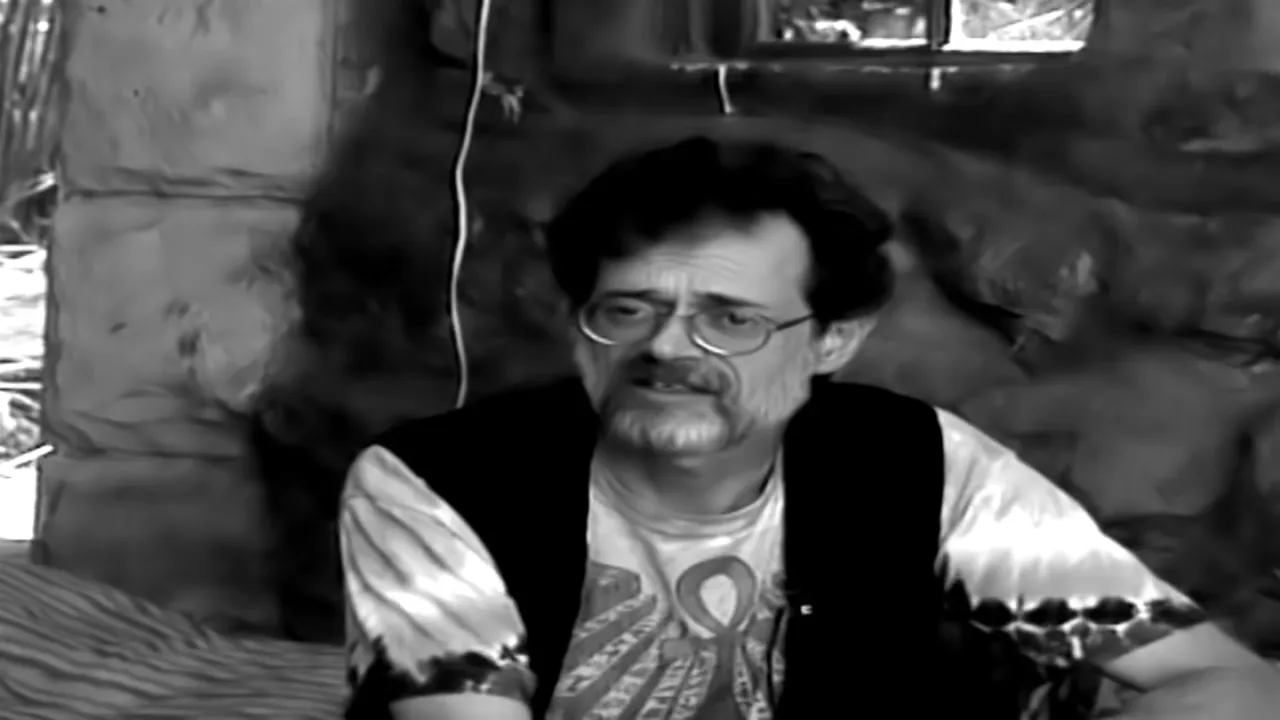
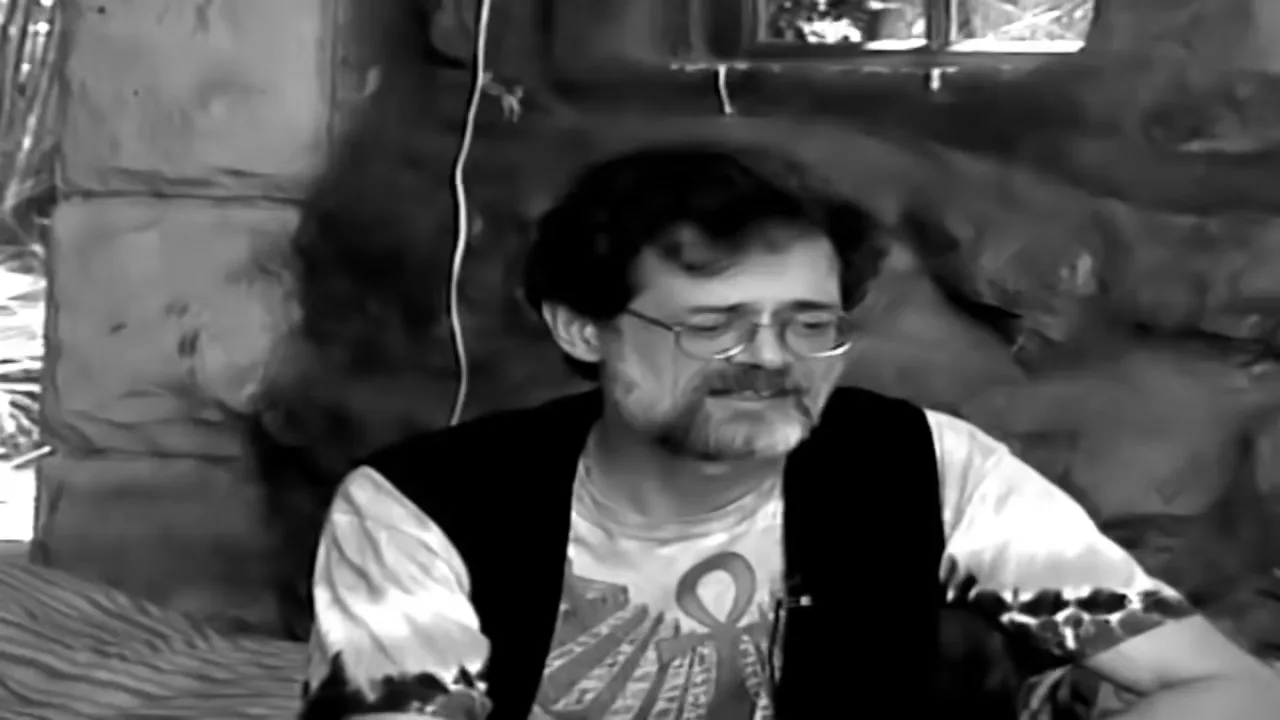
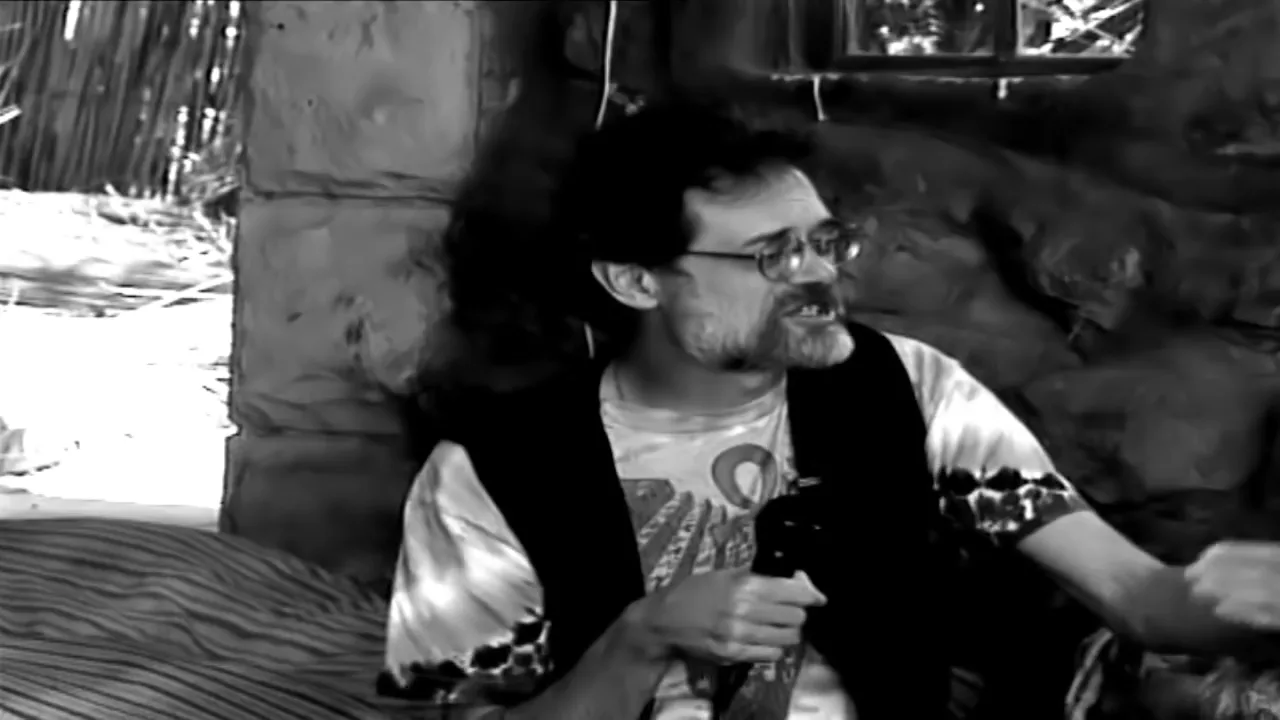
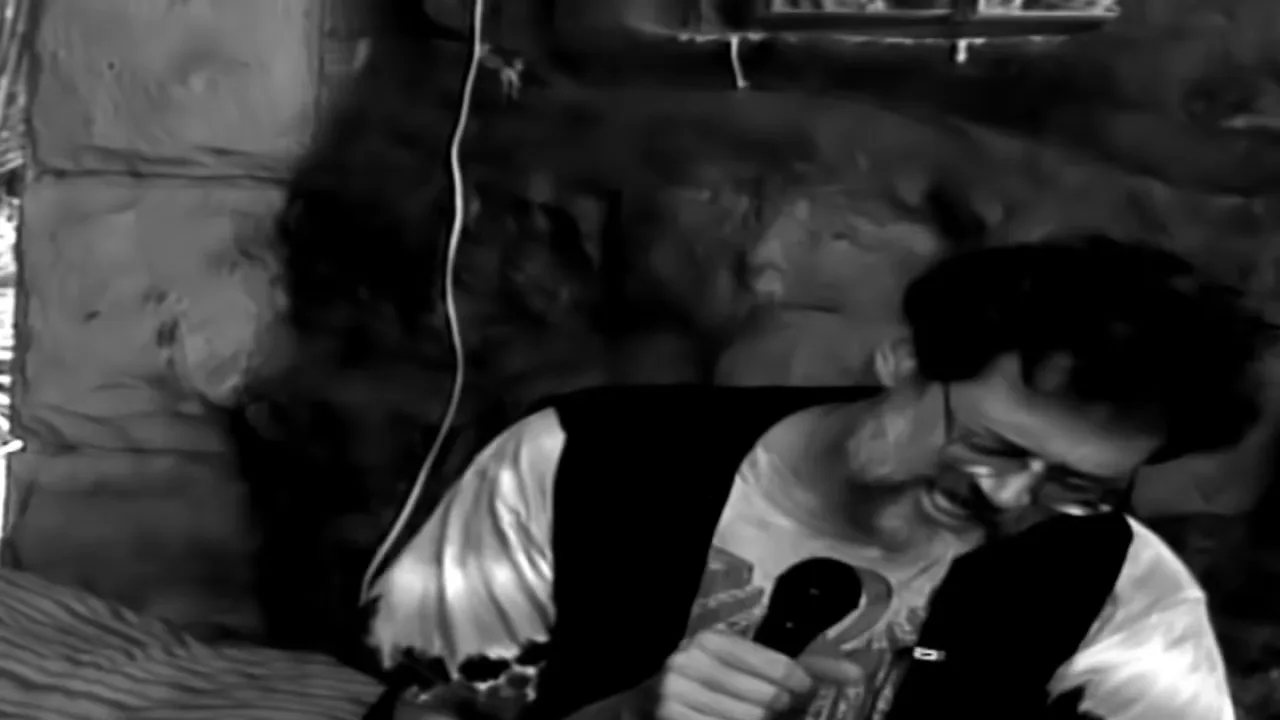
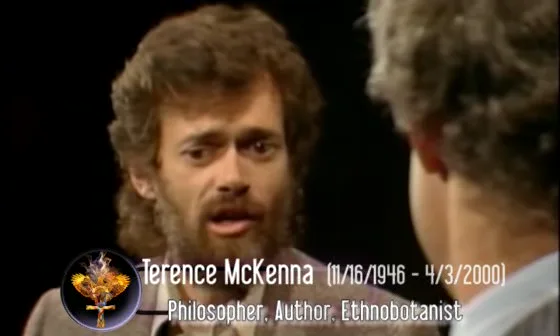
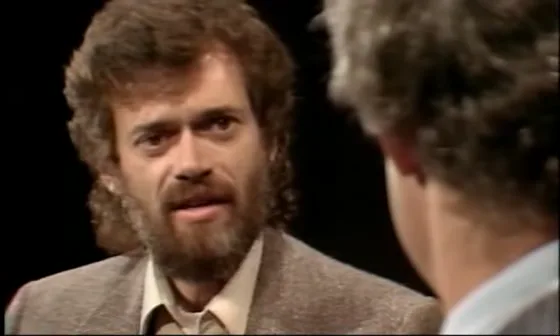
This is the second tape in Terence McKenna's "History Ends in Green" series, recorded for Mystic Fire. McKenna develops his theory of psilocybin's central role in human evolution, arguing that mushroom consumption increased visual acuity and drove hand-eye coordination, while also inhibiting ego formation through boundary-dissolution in group ritual settings. He traces the transition from nomadic, psilocybin-using cultures to hierarchical, mead-drinking civilizations, locating the origins of neurotic human consciousness in this historical shift. The talk culminates in McKenna's vision of language as the substrate of reality itself, suggesting that consciousness and technology are steering toward the recovery of direct, transcendental experience. This is essential listening for understanding the relationship between psychoactive plants, consciousness, and the arc of human history.
transcriptmachine-transcribed, unedited
Mystic Fire, video and audio, proudly presents Terence McKenna.
History ends in green.
This is tape two of a six-cassette series.
Well, psilocybin once encountered in the diet
acts very quickly to outbreed non-psilocybin-using individuals
because, like many indels,
if there's a small amount of psilocybin in the diet,
visual acuity is measurably increased.
And Roland Fisher did work on this in the early 60s.
Well, you can see that if an animal that is living by predation
and also it's thought by the people who disagree with this theory,
the people who do not think that mushrooms played a major role in human evolution,
believe that the throwing arm is the unique human capability
and that when you see a pitcher get a ball across a plate,
what is it to, how far is it from the pitcher's mound to the plate?
Sixty feet.
That kind of control on an object hurled at that speed,
no other animal can do anything, even approaching that.
And that this hand-eye coordination gave us our leg up, literally,
or our arm up to be able to knock out large animals at a distance.
Well, even if you believe that theory,
you see it too depends on a very close coordination of hand and eye.
Well, if you bring into this a chemical factor in the diet
which increases visual acuity,
animals that are allowing this item in the diet
will very quickly outbreed the non-mushroom users.
And I submit that this happened.
Then further accelerating the tendency toward preferential use of mushrooms
is the fact that at higher doses, but still sub-psychedelic doses,
these same mushrooms will trigger arousal,
general CNS, central nervous system arousal.
But this also includes then sexual arousal and erection in males.
Well, so what does this mean?
It means that it's a party drug at that dose.
It means that there is this impetus to copulation
in a situation in which the better hunters
have been more successful at getting food.
So this increased copulatory activity
and subsequent increased number of births
is happening in an environment with an increased food supply.
So you see, all these factors are converging
to outbreed the non-mushroom-using individuals.
Well, then the final culminating factor in this
is at yet higher doses,
the mushroom ushers into the boundary-dissolving ecstasy
that we call the psychedelic experience
and that in that kind of a social small group situation
would have led, I think, to primitive religious observance,
ritual, group sexuality, food sharing, mate sharing,
so forth and so on.
And I really believe that this lifestyle, if you will,
of nomadic pastoralism,
god-disoriented religion driven by psychedelic indoles in the diet,
that for 50,000 approaching 75,000 years,
this is how people lived.
And they were fully realized people.
I mean, there was tremendous oral poetry,
epic works of art and theater,
a complete realization of human potential
in the dynamic context of this nomadic relationship to nature.
I mean, this was Eden.
This was when we were at peace with our humanness.
Well, then, you know, what happened?
Is there a search for scapegoats?
Who's to blame?
And the answer is nobody is to blame.
The very process which brought this paradise into being,
which was the drying up of the African continent
and the forcing of our proto-human ancestors
onto the veldt and into the bipedal nomadic tribal language-using mode,
the very forces which created that destroyed it
because eventually the great grasslands of the Sahara,
the huge water holes,
the vast herds of game
gave way to encroaching dunes,
shrinking water holes.
The mushroom festivals,
which I imagine at one point were probably lunar festivals,
became then yearly festivals
because of scarcity of the mushroom.
And there became then anxiety about availability of mushrooms
and therefore a certain cultural pressure
to find methods of preserving them.
And this need turned naturally
to the preserving powers of honey.
And so there was a transitional phase
of not fresh mushroom festivals
but preserved mushrooms in honey.
The problem is honey itself
has the capacity to turn into a psychotropic substance.
Through fermentation, it becomes mead.
But the imprinting that takes place in a mead culture.
Mead cultures are cultures of male dominance,
repression of female sexuality,
hierarchy,
warfare, wheel chariots,
the whole shtick.
And so, you know,
there was,
and this all happened over thousands of years,
this very gradual transition.
There was never a conscious moment of tragedy.
But, you see,
what was happening was
a new psychic function
was taking hold in the human animal.
In the situation of the monthly
boundary-dissolving group mushroom festivals,
ego was not allowed to form.
And I really view psilocybin as
almost an inoculation
against the formation of ego.
It is an ego-lytic compound.
So, notions of male dominance,
of possession of property,
children, domesticated animals,
or women,
none of this went on
in this situation
where the boundary-dissolution
was reinforced by frequent mushroom use.
But as soon as
the mushrooms become less available,
this thing begins to grow
in the human personality,
literally like a cancer
or a tumor.
It's a calcareous growth
on the psyche
that if we do not have
this embeddedness
in the vegetable matrix of Gaia,
then anxiety arises,
a lot of it sexual
and related to self-identity.
And I don't have to discuss this with you,
just refer you to Freud
and the whole gang.
Everybody understands
how bent we are.
The question is why?
And I think this is why.
Because we have been
in a permanent state
of neurotic disequilibrium
for 15,000 years.
And every move
to attempt to correct this
has pushed us further away
from the goal
that we want to have.
So now we arrive
at the late 20th century
nuclear arsenals
fully in hand.
We have made,
since the 15th century,
a demonic pact
with matter
that has allowed us
great insight
into the destructive properties
of matter,
made us, you know,
handmaiden
to the devil.
And yet we are still
completely dark
about our own motivations,
how to educate
our children,
how to put in place
a set of values
that don't loot
the future.
And all of these problems
appear to be
getting worse.
So,
you know,
I don't know.
well,
my response to this
is to advocate
the only thing
that I think
will work,
but it's not
a political position,
because a political position
always implies
willingness
to compromise
and negotiate
with the other side.
And there really
is no willingness
to negotiate
on the part
of the psychedelic position,
because it's pretty
non-negotiable.
We're at the end
of a process,
call it 2,000,
5,000,
you know,
choose your date,
but a long process
of denial
of human nature
first,
and then war
against human nature.
And it goes
so deep
into our culture
that we don't
even know
where the
basement level
is.
I mean,
for instance,
to my mind,
monotheism,
which is the
great intellectual
edifice of the
West,
touches the
three major
religions of the
West that have
developed in a
continuous strain
since Abraham.
Monotheism
is the
institutionalized
of this
egocentric
model.
And it has
a certain
philosophical appeal
in one God,
you know,
everything,
all roads
lead to Rome.
You can trace
everything back
to the Ur-Source,
the Ur-Cvella.
But that
anal retentive
appeal in itself
takes place
within a context
of values
of male
dominance,
print-created
linearity,
uniformity,
so forth,
and so on.
And I think
what we have
to get into
is a real
permission
for sloppiness,
for loose-endedness,
for the abandonment
of any myth
of closure,
that there is
no closure.
There are models
and there are
questions,
but all models
are provisional.
And anybody
who says they
have answers
is highly,
highly suspect.
Too many people
claim answers.
What's being
claimed here
is a technique.
And then you
figure out
your own
questions
and your own
answers.
And it's
different for
everybody.
There really is
no ideology
associated with
psychedelics.
I mean,
if you look at
the people
who've been
involved with it,
they've said
completely different
things and
contradictory.
and some
are rationalists
and behaviorists
to this day
and others
are, you know,
spiritual visionaries,
hierarchical,
shamanic types.
The main
thing
is
to reclaim
the experience
as the first
step
toward being
politically
empowered
in order
to act.
In other words,
we're in,
and I
indicated this
last night,
although more
gently,
that we're in
a state of
enforced
infantilism
about the
capacity of
our minds,
that the
culture we are
living in
is an
infantile
culture.
Now,
we look back
at the
Victorians
putting pants
on the
piano legs
and we just
shake our
heads
and say,
you know,
those poor
misguided
people.
Well,
but that's
only four
generations ago.
We have
similar
weirdness
going on
in our
own culture
but about
the mind.
I mean,
we look
askance
at the
mind
the same
way
that a
Victorian
nanny
is
uncomfortable
in the
presence
of
bare
furniture.
We
fear it.
We
don't want
to look
at it
and to
my
mind
many
most
of the
techniques
that come
out of
the
new
age
are
based
on a
guaranteed
lack
of
success.
That's
what they
offer
because the
last thing
anybody wants
is real
change
because real
change
is
uncontrolled
change.
The issue
that hovers
around the
psychedelic
experience,
it was mentioned
last night,
it's strong
in my
life.
I haven't
found any
real solution
other than
hold your
nose and
jump.
But the
issue is
surrender.
This is
something
real.
You don't
find people
going into
the ashram
in the
morning to
meditate
with their
knees
knocking
in fear
because of
how terrifying
and profound
they know
that meditation
is going
to be.
But if
they were
going in
there to
smoke
DMT,
you know,
they would
be fully
riveted on
the modalities
of what
was about
to happen.
I mean,
we can
tell shit
from Shinola.
It's just
that we
don't always
prefer Shinola.
And I'm
not like,
I don't
advocate it,
you know,
people,
like sometimes
there are people
who are
disappointed
because they
say,
well,
how often
do you
do it?
Well,
the answer
is not
very often.
I mean,
if I can
get it in
a couple
or three
times a
year,
I feel
like I'm
hitting it
pretty hard.
And the
more successful
it is,
the less
often you
have to
do it.
I mean,
I know
people who
say DMT
is their
most favorite
drug.
And when
you say,
well,
when was the
last time
you did
it?
They say,
well,
1967.
It only
lasted
four minutes.
They're still
processing it.
And they
are still
processing it.
They're not
just
whistling
Dixie.
I mean,
it is,
to my
mind,
just the
most,
well,
I mentioned
this earlier,
the question,
how do
they keep
the lid
on this
stuff?
And I
suppose here
I'm preaching
to the
converted,
because many
people last
night said
they had an
interest in
this kind
of thing,
but they
don't keep
the lid
on sexuality.
No society
has ever
had it
so under
control
that people
didn't have
sex.
I mean,
they may
have had
sex under
weird conditions
and under,
you know,
ritual strictures
and this and
that,
but we
are like
this salamander
that has
the option
of never
developing
into its
mature
form.
And to
my mind,
that's a
tragedy,
because this
is our
birthright,
and somehow
our inability
to get
a grip
on our
global
problems
has to
do with
this
immaturity
about our
mental state.
The two
I feel
very strongly
are linked
and that
of course
we can't
get
control
of the
world
because we
are children
in some
profound
way.
And we
don't like
being
culture
has
reinforced
a form
of
infantilism
and the
way I
explain it
to
myself
is
it's a
kind of
unwillingness
to go
it alone
on a
certain
level.
I don't
know how
many of
you remember
in Brave
New World
Huxley's
brilliant
dystopia
but there's
a scene
in there
where
Bernard
who is
the guy
who's
out of
it
in the
novel
because
in his
fetal
fluid
they got
an
alcohol
contaminant
and so
he's
different
from
everybody
else
in this
society
and he
occasionally
has
original
thoughts
and he
and his
assigned
girlfriend
for the
evening
or whatever
she is
are in
a helicopter
and they
sweep
out
past
the
crematoria
where they're
recollecting
elements
for
reuse
and he
suspends
the
helicopter
over
the
black
bay
and
she
immediately
becomes
very
agitated
restless
anxious
and pleads
with him
to return
to the
city
and what
it is
is it's
her
anxiety
over being
alone
in the
presence
of
nature
she
literally
can't
take it
and
I
think
there
are
a lot
of
people
in
our
society
and
each
of
us
in
our
own
way
at
different
times
who
have
within
us
this
neurotic
and
infantile
creature
that
can't
face
it
alone
and
that
this
going
it
alone
thing
is
very
important
you know
Plotinus
the great
neoplatonic
philosopher
he spoke
of the
mystical
experience
as the
flight
of the
alone
to the
alone
and
in the
psychedelic
experience
there is
this
issue
of
surrender
because
a lot
of
people
want
to
diddle
with
it
they
want
to
be
able
to
say
they
did
it
but
they
don't
ever
and
yet
the
whole
issue
with
this
stuff
is
to
let
it
lead
to
let
it
show
what
it
wants
to
show
so
somehow
individually
we
have
to
reclaim
our
experience
the
real
message
more
important
even
than
the
psychedelic
experience
the
real
message
that
I
try
to
leave
with
people
in
these
weekends
is
the
primacy
of
direct
experience
that
as
people
the
real
universe
is
you
know
within
your
reach
always
everything
not within
your reach
is basically
unconfirmed
rumor
and
we
insert
ourselves
like
ants
or
honeybees
into
monarchies
of
knowledge
so
we
say
well
what's
going
on
in
the
world
well
turn
on
CNN
you
know
and
then
somehow
we
are
ordered
then
we
say
aha
okay
it's
85 degrees
in
Baghdad
and
the
wind
is
out
of
the
northeast
at
miles
an
hour
and
we
feel
somehow
better
now
because
we're
getting
the
information
but
what
we
have
done
is
sold
out
direct
experience
and all
institutions
require
this
of us
that we
somehow
redefine
ourselves
for the
convenience
of the
institution
and this
redefinition
always
involves
a
narrowing
a
denial
so that
you know
if you want to be
in Marxist
society
if you want to
function in
Marxist
society
you have to
define yourself
as a
Marxist
human
being
well
it turns out
in a
Marxist
society
there are
no
homosexuals
because
that just
happens
in decadent
societies
so
then
you know
if you
happen to
notice
any
tendency
like this
in yourself
you have to
deny
its existence
because
this just
doesn't
happen
in a
Marxist
society
and
similarly
every
society
has
this
in our
society
if you
hear
voices
we have
mental
hospitals
for you
if you
have
vast
visions
of the
future
you know
we have
drugs
that can
help
you
and
make
this
go
away
so
we
so
then
somehow
in
modern
society
the
discovery
of
psychedelics
is
the
discovery
that
all
of
this
cultural
machinery
is
just
wizard
of
oz
stuff
you
remember
the
scene
in
the
wizard
of
oz
where
the
curtain
is
swept
back
and
they
see
the
little
guy
there
and
he
says
booming
out
over
the
loud
speaker
ignore
the
little
man
pulling
the
levers
ignore
the
little
man
pulling
you
know
whether
we
have
nine
wives
or
three
whether
we
tattoo
ourselves
blue
whether
we
eat
insects
or
not
all
of
these
things
are
just
decisions
that we
make
and then
we
congratulate
ourselves
on our
wisdom
and we
live
within
that
and we
hunt
down
and kill
all the
people
who disagree
with us
and
that's
called
having
a
culture
having
a
way
of
life
being
somebody
but
with
you know
I don't
see
history
as a
wrong
turning
I see
it
the
metaphor
that I
like
is
that
of
the
prodigal
son
that
there
was
a
reason
for
this
long
descent
into
matter
this
peregrination
it
goes
into
the
world
pool
or
ascends
the
world
tree
to
go
to the
center
of
the
axis
of
the
cosmos
to
recover
the
pearl
the
pearl
or
the
gift
or
the
lost
soul
and
then
return
with
it
and
this
is
what
history
was
I
purpose
of
recovering
something
that
was
lost
it
wasn't
lost
by
us
it
was
lost
by
the
breathing
the
deistole
of the
planet
just
climax
of
climate
moved
us
into
paradise
and
then
moved
us
out
of
paradise
I
mean
you
know
that
the
story
of
Eden
is
the
story
of
history's
first
story
of
a
whole
lot
of
tension
over
who's
going
to
take
or
not
take
a
certain
plant
which
confers
knowledge
and
Yahweh
wandering
in the
garden
says
to
himself
if
the
man
and
the
woman
eat
of
the
fruit
they
will
become
as
we
are
the
issue
was
co-equality
co-knowledge
with
the
creator
well
where
do
we
how
does
that
work
can
we
always
accept
the
subservient
infantile
position
I mean
is
knowledge
to be
dispensed
by
gods
and
if
not
gods
then
the
institutions
that
appoint
themselves
as
gods
over
us
or
is
it
actually
that
maturity
begins
with
somehow
claiming
this
birthright
and
it
is
a
no
if
a
society
can
survive
the
claiming
of
this
birthright
by
a
large
number
of
people
certainly
in
the
1960s
when
this
was
attempted
everything
everybody
got very
agitated
and then
it was
frozen
out
in
so-called
primitive
or pre-literate
societies
there is
the office
of the
shaman
and
the
shaman
is
deputized
to act
for all
of us
in the
same way
that we
have
airplane
mechanics
to fix
jet
engines
we
have
shamans
to
explore
these
hidden
and
fairly
terrifying
other
dimensions
the
people
who
self-select
themselves
into
a group
like
this
in a
society
like
that
would
be
the
candidates
for
this
kind
of
shamanic
voyaging
well
so then
what is it
finally
all
for
or
is it
for
anything
is it
just
maybe
my
problem
that I
think
it's
for
something
well
it is
and it
isn't
I mean
see
we have
real
problems
we could
perish
from this
planet
in some
kind
radioactive
petroleum
war
or
what
have
you
and
it
wouldn't
change
the
fact
that
shamanism
did
exist
that
these
dimensions
were there
and
were
explored
by
courageous
high-minded
people
for thousands
of years
but
I
think
that
the
scientific
mind
and
maybe
even
the
American
mind
can
bring
something
special
to it
that
somehow
technology
has a
role
to play
and
I
think
maybe
what
this
has
to
do
with
is
I've
talked
a bit
in the
past
a lot
in the
past
about
what I
call
visible
language
visible
language
is
something
that I
encountered
in
psychedelic
states
could
never
have
dreamed
it
up
by
myself
encountered
it
then
had
to
sort
of
reason
backward
from
it
to
what
would
it
be
good
for
well
what
is
it
what
is
visible
language
well
it's
very
simply
it's
language
which
you
look at
rather than
hear
and
don't ask
me
how
this
can
happen
it
obviously
has
something
to do
with
synesthesias
in the
brain
with
swapping
neural
processing
units
and
somehow
shunting
a stream
of data
which would
normally
be
audially
interpreted
instead
it goes
to the
visual
cortex
and
this
occurs
often
in
DMT
intoxication
and it
has a
long
and noble
history
in the
Amazon
in
ayahuasca
shamanism
ayahuasca
as you
probably
know
is a
combinatory
drug
made of
a vine
combined
with the
leaves
of another
plant
and it
makes
DMT
orally
active
normally
DMT
is destroyed
in the
gut
but
you
take
it
in
combo
with
this
other
thing
beta
carbilene
and
then
it's
active
well
in
the
Amazon
these
people
sing
what
they
call
Icaros
magical
songs
and
these
magical
songs
are
given
to
them
by
the
spirits
whatever
those
are
invisible
entities
but
the
magical
songs
are
invariably
criticized
pictorially
and
sculpturally
rather
than
musically
nobody
ever
talks
about
how
these
things
sound
people
only
talk
about
how
they
look
and
I
had
read
about
this
and
heard
about
it
and
went
down
there
and
spent
time
again
curiosity
is
the
only
method
poking
around
finally
got
somebody
who
knew
how
to
brew
this
stuff
to
make
this
happen
and
you
know
I
had
seen
it
before
on
DMT
but
on
DMT
it's
somewhat
out
of
control
it
system
though your entire syntactical engine has sprung out of your chest and is
rattling around on the floor in front of you this concludes side a well first of
all notice language ordinary language what a weird thing it is and yet we do
it with such facility we almost all of us can do it it's a very severe
impairment on your humanness if you are language deficient in any very serious
way blindness is as nothing to being seriously language deficient so forth
and so on so it's really the defining thing for us and yet you know it's it's
almost like a half miracle I mean you can study it there's no problem with
getting vast samples of tape recordings we can analyze it syntactically there
have been many theories of syntax philosophies of syntax and yet what is
it how can we make meaning with such facility when the rest of nature seems
totally unconcerned with this and what is meaning anyway why is it so important to
us we say if there is no meaning if life has no meaning it's not worth living well
how do ants and bees and and scallops stack up on that opinion do they also feel that
meaning is the quintessential aspect of reality and yet we make it we make it out
of ourselves and then we get together with somebody else and we try to make meaning
we say you know you and I could have an affair or you and I could start a business this will
have a lot of meaning for us and you know we'll make money and buy more meaning well whatever it is and
C.B. Broad wrote a book called the meaning of meaning which deals with it in about 400 pages but
whatever it is it's very important to us and it seems to have different modalities for
instance dance can have meaning painting can have meaning spoken or textual words have meaning but
because of biases in ourselves as an organism what seems to have the most meaning is what we can see
our our visual we have a tremendously rich sense of visual input well for some reason under the influence of the
psychedelic drugs and certain exercises and who knows what else it takes to shake you out of your cage but
suddenly syntactical organization which has been invisible in the background of the program of meaning
becomes visible and you actually see the engines of syntax you actually behold the machinery of meaning itself and for some reason this is very satisfying
it's like an ecstasy it's like an affirmation of some sort that is transcendental there is a recognition in it that transcends
the felt
apperception of ordinary meaning you know in other words that you're gazing somehow on the naked face of truth and beauty
well it seems to me that what all this suggests by all this I mean the human capacity for the psychedelic experience
the human facility for switching these linguistic channels from the beheld to the scene what all this must mean is
is that history is nothing more that the transition phase from felt intuition the mute intuition of the animal body to fully expressible three-dimensional meaning and that the descent into matter that technology represents is because you can't do this entirely on the match there has to be a certain augmentation of the
human organism in order to do this it may be pharmacological it may be neurological it may be
it may be nanotechnological and then some part of the other two whatever it is and we are coming up under the underbelly of meaning boring from beneath and that you know we're just about to hit the jackpot and this is what the historical process is and the proliferation of the
of meaning, boring from beneath, and that we're just about to hit the jackpot.
And this is what the historical process is, and the proliferation of media,
of the discovery of perspective 500 years ago, oil painting, airbrushing, digital sound,
all of these techniques are this summoning of the image.
So we are actually moving toward a kind of self-fulfilling process.
It's something that we're defining for ourselves as it approaches,
and it is defining itself for itself as it approaches.
You actually experience this on psychedelics sometimes.
I mean, the way it works for me on mushrooms or sometimes DMT is there is a black space,
and then I hear what I call the elf music, or the Irish band, and it's far away.
And as it comes closer, I like see light, and as it comes closer, it both gets louder and the light fills the stage of awareness,
until finally the sound is subsumed under the visual impression of the thing, and then it's all around you.
And it is, you know, this domain of self-transforming language.
I mean, I call them language elves, but what they may be is nothing more than self-reflexive, compound, complex sentences.
It's hard to tell what they are, because we're not used to having our sentences stand up and embrace us.
But nevertheless, the nature of reality is fractal, and it can't have been lost upon any of you,
that in a fractal universe, text is composed of characters.
The characters of a given alphabet, but reality is also composed of characters.
The characters like you and me, who live out some kind of plot.
Well, when you get characters into a text, in other words, characters made of characters,
then you begin to feel the textual richness and the linguistic richness that seems to be not in the forefront of reality,
but actually to lie behind it.
I mean, the final conclusion, not the final conclusion, that would be preposterous,
but the most recent conclusion that I'm coming to, looking at the psychedelic experience,
is how phenomenally text-like reality is.
I mean, it's more text-like than one should decently say.
We are much, this is much more like a work of art than anything recognizable from my physics class.
I mean, my physics class was about atoms and electrons and momentum and conservation of energy.
My literature class, on the other hand, was all about personality, motivation, history,
precursive active, anticipation of action, willful suspension of disbelief.
These are the things that I see actually going on around me.
And so it's strange as we decondition from the being sold from the top worldview of Time Magazine
and Scientific American and The Wall Street Journal.
What we discover is ourselves active as art in a work of art.
This is what the reclamation of experience seems to give back to us,
is ourselves as very complex objects.
You see, in the institutionalized world, we are defined always in ways that stress our similarity.
We hear about voters, and I'm a voter.
And we hear about women, and many of you are women.
And we hear about yuppies, and we hear about the middle class,
and we hear about those with liquidity in their portfolios.
But everything is presented as a member of a class.
We are always presented to ourselves as members of some class.
And yet we experience ourselves as unique objects.
But there is no reinforcement for that experience of uniqueness.
I mean, you have a lover, and they say, you know, I think you're wonderful and very special.
That's about all the reinforcement for your uniqueness you get.
And your mother also tells you this.
But then you take a psychedelic plant, and you discover, you know, hey, you know, I'm Christopher Columbus.
I'm Magellan.
I could be anybody.
I'm not defined in these narrow ways.
There are doorways in my reality to areas of experience as large as the area of experience that Christopher Columbus or Magellan took as their province.
But it's all this new freedom is achieved by directing attention back at the individual.
So, you know, a lot of the debate and talk that I hear is about saving and restructuring institutions and that sort of thing.
I'm not very much interested in saving and restructuring very many institutions.
I think institutions have done us about all the good we can stand at this point.
And, you know, but then they wave the black flag of anarchy in front of you and say, oh, you're just an apostle of chaos and madness.
Chaos, yes.
Madness, maybe.
But disorder, never.
You know, this surrender issue, when translated out of the realm of the individual and into the realm of the collectivity,
we all, as a society, must also surrender to what is happening to us.
Because I think history is some kind of psychedelic experience.
And it isn't...
There's nobody around who has the right plan.
So it isn't about how we need to locate the people with the right plan and then give them a lot of money and get out of their way.
It doesn't work like that.
The right plan will emerge almost simultaneously in everybody's mind at the same moment.
And in the meantime, we all are going to have this sort of half-baked plan that we can't articulate, that we can't quite bring out.
It's a quality of the time.
I'm going to talk this afternoon more about the quality of the time.
But we can't think any more clearly than we're thinking at the moment when we're thinking at our best.
Part of what history is, is a clarification of the human situation.
And I think you have to press the envelope.
You have to keep your nose against the glass, forcing the definitions into ever-new territory.
But not anxiously.
It's just, it's like a growth process.
We can't evolve any faster than our language evolves.
The language is the thing in which we're embedded.
So the use of technologies like virtual reality, or drugs like psilocybin and DMT,
or practices of various sorts, if they prove effective, to put pressure on the evolution of language.
All spiritual disciplines properly analyzed can be seen to be language courses.
You know, to get you to think a certain way, to get you to carve out of the background of undifferentiated data,
certain things which you previously couldn't see.
Auras, or acupuncture meridians, or, you know, states of disease.
I mean, it can be anything.
But the mind sensitizes itself to phenomena by following language into the forest, into the forest of the unknown.
And most people have no stomach for this kind of thing.
I prefer to stay back in the village and just kill time grinding wheat and drying meat around the fire.
But, you know, you can almost make a kind of a fractal quasi-reductionist argument and say that people are like electrons.
And you don't learn what electrons really are until you get just one of them off by itself somewhere in a magnetic field, in a vacuum.
And then you see what electrons are.
If you have millions of electrons, then you have an electrical current.
And an electrical current operates according to laws and rules and constraints completely different from an electron.
And what we have done very perversely as a society is taken the laws of large numbers,
how a million people act, how ten million people act,
and then we have applied it back to ourselves as individuals.
Said, well, why am I not happy?
You know, seventy percent of everybody does X and I don't and I'm not happy then.
You know, trying to redefine yourself as against a very large body of statistical data.
All of this is dehumanizing.
All of this is bad mental hygiene, usually quickly cleared away by psychedelics.
Because what they show you is, you know, that you are unique.
That you are unique and that the confluence of space and time that you are operating in is unique.
And that any model that is put forward is, number one, provisional.
Provisional means it can be abandoned at any moment.
And then the second and most important thing is any model you can't understand is useless.
So, you know, most of us can't understand most of the models.
I mean, who here would care to walk to the blackboard and begin to describe the first stage of quantum electrodynamics to us?
And yet we all know that our world is supposedly hung on this very well thought out theory that experts are in charge of.
But notice, no pun intended, but notice that if experts are in charge of it, you're not.
It's absolutely useless to you.
You know nothing about it.
Well, so when you start peeling away and saying, well, what do I know?
You know, it turns out it gets into thin soup rather quickly.
This is no cause for despair.
This doesn't mean you should go back to night school and study quantum physics.
That's the wrong conclusion.
It means that all of this stuff that you thought were the high walls of reality are just smoke blown by somebody else.
These constraints are not binding upon you at all.
Somebody said to me once their father had been a professional scientist and he said once,
I never would have seen it if I hadn't known it was there.
And we all are in the habit of seeing all kinds of things because we know that they're there.
And in many cases, they're not there and you just walk through and you discover all kinds of things.
I mean, I am convinced that anybody who has a major psychedelic trip, at some point in that trip,
their eye falls on things no human eye has ever seen before or ever will see again.
You know, it's that big in there.
It's not at all clear that we're mapping a generalizable reality.
It may be that it's just so huge in there that never do we pass through the same matrix twice.
Well, that means you can give up on closure.
You can give up on any theory that will ever give you very much of a more than provisional handle on what's going on.
And I think this is probably a good step to take.
To open ourselves to the freedom that lies beyond culture.
Culture is a kind of prison.
And the only way that we know to get beyond it is to dissolve its boundaries.
Now, you can do that with psychedelics and then you really explore the baseline of being.
Or you can dissolve it with travel.
But then you dissolve your own cultural programming only to discover you fitted yourself into somebody else's cultural programming.
And this, while, you know, definitely educational is like a psychedelic drug I'm not that fond of.
I do a lot of traveling.
But it's not the same thing as replacing space and time with some kind of alternative.
And that comes from, you know, doing the hard work on five grams in silent darkness.
And really what you see, I think, is the morphogenetic field, the invisible world that holds everything together, the knit of it all.
Not the knit of matter and light, but the knit of casuistry, of intentionality, of caring, of hope, of dream, of thought.
And that all is there.
But it's been hidden from us for centuries because of the exorcism of the spirit that took place in order to allow science to do business.
And that, you know, momentous and ill-considered choice then has made us the inheritors of a tradition of existential emptiness, really.
But that has impelled us to go back to the jungles and to recover this thing.
It's all of a piece, you see.
I mean, these people in the Amazon and whatnot were keeping this cultural flame burning.
But these cultures are now all dead.
They are either dead or in a state of advanced, suspended animation.
I mean, the best anyone hopes for when they go to a rainforest culture
is that it be somehow resisting the change all around it.
There's no rainforest culture that is elaborating new forms and thriving on its own terms.
So all the things that were learned, the legacy of the ancestors, is now laid basically at the feet of this high-tech electronic society.
And the question is, you know, can we dream a dream sufficiently noble that we give meaning to the sacrifices that have been made to allow the 20th century to exist?
I mean, my God, the amount of blood shed and, you know, infectious diseases spread around, metals ripped out of the earth,
mountains moved, railroads laid across continents, all of this stuff as the means to reclaiming the human birthright that science hides from us.
It's a very strange enterprise.
I mean, it's hard to put it across because the thing is, it's real, you know?
And we're in the effort or in the habit of thinking that the mind can move unobstructed from one edge of the universe to the other,
that there are no secrets, but actually there are secrets.
At least these are secrets.
And hard to tell.
I mean, I tell them, and you hear them, and we seem to have been allowed a cosmic dispensation.
But why that is, is very hard for me to understand.
I would have thought that this would have been headline news 20,000 years ago, right up until the present.
Instead, you know, it's very tentative.
Apparently, this is very threatening to us.
We are not as eager to sail over the edge collectively as we think we are.
So then it becomes the function of the shaman, the gadfly, the go-between, to carry information back and forth between these worlds.
I'm convinced that if there were no shamanic pipeline, there would be no human life as we know it on this planet.
I mean, that could be climaxed animal life.
There is no need for this higher order linguistic style of self-reflection to come into being.
It's that something is plotted.
Something is working itself out in us.
We are the cells of a much larger body, and like the cells of our own body, it's very hard for us to glimpse the whole pattern, the whole of what is happening.
And yet we can sense that there is a purpose, and there is a pattern.
Well, the way you connect the pattern with the lower level is by dissolving the boundaries of the ego and the self into this larger thing.
And then it's found to be there, reflective on many levels.
It doesn't require a mechanism.
Everything is obvious.
If things don't appear simple to us, I think it's because we haven't thought about it long enough.
Well, so that's sort of a survey of some of this stuff.
Thank you very much.
Please continue to take three.
Thank you very much.

the first cassette from terence mckenna's six-part 'history ends in green' series, exploring psychedelics' role in twentieth-century consciousness, the archaic revival, and the pla

tape six of a six-cassette mystic fire series featuring terence mckenna exploring shamanic healing, psychedelics, consciousness, language and humanity's evolutionary prospects.
part 3 of 12 from terence mckenna's 2012 omnibus series where he argues culture is not your friend but an intrusion on identity that demands conformity in exchange for unsatisfying

dennis mckenna discusses ufos, psychedelic experiences and his research on dmt and psilocybin mushrooms on the paratopia podcast
a 2009 documentary exploring shamanism and psychedelics as tools for accessing transpersonal realms through altered states of consciousness. covers ancient practices, sacred plants