Mc Green 6-6

This is the final cassette in Mystic Fire's six-part series featuring Terence McKenna addressing themes central to his work. The discussion ranges from shamanic healing practices and psychedelic neuroscience to language design, cultural responsibility, and visions of humanity's future. McKenna considers whether our destiny lies in technological transcendence or environmental stewardship, tracing how institutions and linguistic systems shape consciousness. He argues that psychedelics offer tools for redesigning human culture and reclaiming agency from systems that profit from our compliance. The breadth and philosophical depth make this a comprehensive late-career statement on consciousness, power, and the possibilities of human transformation.
transcriptmachine-transcribed, unedited
Mystic Fire, video and audio, proudly presents Terence McKenna.
History ends in green.
This is tape six of a six-cassette series.
Well, what else is hanging for anybody this morning?
How about healing using mushrooms?
Well, shamanism, we tend to lose sight of the fact that for the people who actually practice shamanism as a day-to-day thing,
healing is what it's always all about.
And the shaman isn't making these journeys for his own education or so forth.
It's always to heal.
So, I don't really see the mushrooms as specifically a cure in the ordinary sense for X, Y, or Z condition.
It's more that in the psychedelic state, this is kind of hard to articulate and sounds like mumbo-jumbo, and maybe it is.
But I've noticed that in the psychedelic state, it's as though within the parameters of the body, the ordinary laws of physics are somewhat in suspension.
And there is a great deal to be learned by somebody about touch and light and sound, especially sound, I think.
Sound, to me, is the key to understanding and going deeper with the psychedelic thing, not only in the healing modality, and in that case it's about sound directed into the body.
Because we do have extraordinary senses on psilocybin and on these other tryptamines.
And I'm not mystical or woolly-eyed about this, and I don't make any claims about what senses.
But if you sit down with a person or a watermelon, for that matter, when you're stoned and sing into it, the quality of the hallucination is such that there is a way of thinking about it where you could say this is an acoustical hologram of the interior of their body.
I don't say that. I just say, my goodness, isn't it strange that I seem to be able to see the inside of the watermelon when I'm doing this?
Touch. I'm not an aura man under ordinary circumstances. I'm not sensitive to these things that you have to be sensitive to.
If you have to be sensitive to something, that's not for me, because I'm basically insensitive.
But nevertheless, there do seem to be qualities of density to the energy around the body.
And I suppose, see, I'm not really an experimentalist in these areas.
Like, I don't immediately grab somebody and start kneading them and working them over.
I tend to just sit and watch. But I do see all these possibilities.
Sound has such, I mean, sound does pierce, you know, non-dense objects and return an echo.
And we may have neurological processing capacity that we're unaware of or that is ordinarily suppressed.
For instance, I am very able, I have quite a good ability to navigate in darkness.
I always have been able to do this. It doesn't seem that strange to me.
I mean, I'm pretty good at it to the point where there have been times in the Amazon when I've gone for water at night
and literally forgotten to take the flashlight and gotten there and gotten halfway back before I noticed that, you know.
And it's a combination of projective memory, so forth and so on.
I noticed in the Amazon when I was quite keyed up that I had a sense that I've never heard anybody talk about.
It was a kind of geometric sense that told me the shortest distance between any two points in terms of energy expenditure.
And it was something which I could see that Aboriginal people would just absolutely have to have.
It's a whole thing about following the edges of ridges and never descending unless you have to and always keeping to the high ground.
And my mind would just tell me this stuff, draw these lines through space.
The fact that ayahuasca, which makes possible, you know, this visual language that seems to me the evolutionary compass for language and culture,
the fact that the compounds which allow that occur in the ordinary brain suggest, you know,
that we're just, we could be as much, as close as a one gene mutation away from different styles of neural processes,
and, you know, we don't know to what degree technology pushes these things around.
Did the people of manuscript culture have the same serotonin ratios as we have?
How much, to what degree, is culture a chemical feedback mechanism operating on us as a species?
I mean, we're like fish trying to discover water.
These are fairly, fairly subtle issues.
But the payoff is being able to design our way toward a more humane culture.
Because what the psychedelics are teaching on one level, I think, is that we are, that our prison and our palace is language.
And that today, we have just allowed it to grow like topsy, because it was like an unconscious function.
But it no longer need be an unconscious function.
After all, we are now writing languages like crazy for computers, defining for them what concepts they can and can't think,
what forms of logic, what algebras shall and shall not be permitted.
We need to also think about, you know, taking control of the design process of language.
Up to this point, the only people who have gotten onto this principle have been fascists of one sort or another.
Either Joseph Goebbels and his crowd, or advertising weasels, or people like that.
But everyone else has been sort of the victim of the linguistic agenda of those cliques.
You know, it's like the Bob Dylan song, the strong men make the rules for the wise men and the fools.
Well, if the rules are syntactical rules, then nobody even realized, acted and held up.
It's just that, you know, you can't think any other way, so why do you have this itch that you can't seem to ever scratch?
Well, it's because, you know, it's freedom calling out to you from the unconscious.
I'm not, I don't really talk about all this with any sense of urgency.
One of the issues that sometimes comes up, often comes up in these groups is, you know, am I saying it's all okay?
Is it all okay?
Is there a political agenda?
What should be done?
And, you know, it was Mahatma Gandhi who said,
And what you do has very little importance, and it's very important that you do it.
And I think that's how we have to act.
We have to each choose a small area,
and then act in that limited area with all the existential commitment we can muster,
but not with anxiety, you know, anxiety.
The Wee Po Yang, the Chinese Taoist alchemist, said,
worry is preposterous.
Worry is preposterous.
You don't know enough to worry, you know.
Do liver cells worry?
Do skin cells worry?
It's just a complete waste of metabolic energy.
The better thing is to function well in place, and then to wonder, you know.
Wonder is sort of worry without animal anxiety,
but it's living in the light of non-closure.
That, you know, we're not going to get this thing wrestled into a box.
Not positivism, not Islam, not the Kabbalah, no, no.
All these things are very good tries, nice efforts.
We set them on their pedestals in a long row in the Museum of Noetic.
Good tries.
But it isn't in that.
It's in the moment, in the recapturing of direct experience.
My publisher in New York for this new line of books he's bringing out
has coined the battle cry,
take back your mind.
And I think that's a pretty good way of putting it.
Take back your mind.
Because we have transferred our loyalty to mythical structures,
you know, structures about sexual politics,
about what a man is supposed to be,
what a woman is supposed to be,
how much money a person is supposed to have,
how much art they're supposed to produce,
how many times a week they're supposed to get laid.
We have all these images that we're supposed to live up to.
Very complex, all being sold down to us
through a culture whose motivations are very murky and highly suspect.
I mean, culture is not your friend.
You know, all these people who want you to smell good
and drive the right car
and have your extra facial hair removed and all that,
these are not your friends, these people.
And it pays to remember that, you know,
that there's a struggle on for loyalty,
that you are much more,
you look much better to the institutional structure
if you work hard, consume quietly,
choose from the political menu without a lot of fuss
and that sort of thing.
But, in fact, you know,
this kind of business as usual
has led to the sort of lethal crisis we're in.
Our real problem,
well, it's two things
which are two sides of the same coin.
It's ego
and an inability
to emotionally connect
with the true outline of the situation
because the true outline of the situation
is fairly horrendous.
It's that
somewhere around 1945,
or you name it,
but that seems all right,
we began to loot the future
as a strategy
for survival.
Some kind of ethical norm
was shattered
in the same way
that in late,
well,
in early mercantile civilization,
there was this horrifying moment
when even though slavery
had been dead for a thousand years,
they realized
that if they brought back
this wholesale
sale and transport
of human beings,
they could make millions
in sugar.
And it was like
the heart of darkness
reared up
and
they went for it.
And
our circumstances
is somewhat similar.
We have embarked
on
a similar
kind
of
descent
into an ethical
dark dimension
by
looting
the future.
And this is going on
at a faster
and faster rate.
I mean,
this current situation
in the Middle East,
much could be said
about it,
but
you know,
any moral justification
seems preposterous.
I mean,
what's happening is
8% of the world's people
use 35%
of the world's petroleum
and are ready
to blow
everybody off the map
to keep it that way.
I mean,
this is nothing more
than a manifestation
of junkie psychology
on a mass scale.
It's,
you know,
we're addicted,
they've got it,
we're happy to pay for it,
but if they won't sell it,
we'll break into their house
and take it
because by God,
it will go into
our good right arm.
That's the plan
and,
you know,
it's,
it's the culmination
of the,
the whole machine age
metaphor.
I mean,
this is the golem
of metropolis.
This is the robot
mind run amok.
This is Frankenstein.
This is brave new world.
It's a world
where lethal,
habitual activities
can nevertheless
not be controlled
and it's a perfect example
of a culture
with lockjaw
of the mind.
I mean,
we're just going to march
off the edge of a cliff
apparently.
Three days ago
in the New York Times
the American estimates
of casualties
in the first 30 days
of successfully invading
Kuwait and Baghdad
were published.
50,000 American casualties
in the first 30 days
if we win.
This is the number
of people
who died
in the Vietnam War
over the whole stretch
of the war.
Well,
so then,
if you win
means,
you know,
standing in the middle
of a sea of fire
with 550 million
enraged Arabs
looking to cut you down.
It's a,
it's a complete,
it's a complete
misunderstanding
and I mention it
not only because
it looms large
in our future.
I mean,
I think,
you know,
we're arranging
the deck chairs
of the Titanic
sitting here
talking about this.
It's basically
June of 1939
and everyone's
planning their
summer vacation
in the Catskills.
But it's also
an example
of how these
institutions
can't save themselves.
I mean,
everybody knew
in 1973
that this moment
would come,
that policies
needed to be put
in place,
a dollar a barrel
tax on oil,
some minor,
minor thing.
But no,
it's just a mindset
that is self-destructive.
And,
you know,
the fundamentalists
are in anticipation
of
the end of the world
and so forth
and so on.
There isn't going
to be any end
of the world.
There's no easy way
out like that.
even,
and you're hearing
this from
the prophet
of 2012,
all of these
fantasies,
all of these
infantile fantasies
will be acted out.
So,
you know,
if you want
your mini apocalypse,
you know,
you can have it
and we can
bomb Baghdad
and gas Tel Aviv
and fire the oil sands
and kill millions
of people
on both sides.
And you know what?
It ain't going
to bring the guy
from Galilee
and it ain't going
to bring friendly
flying saucers
from our tourists.
All it's just going
to bring is a deeper,
bigger mess
for the human race
to try and clean up.
Anybody who thinks
that,
you know,
you're going to
save the world
by setting it on fire
is going to be sadly
did,
uh,
it's a,
it's a rare moment
for the collectivity
to try to anchor itself
in larger,
uh,
visions.
You know,
the reason
human society
is haunted
by messiahs
and tin horn visionaries
preaching
on every corner
and people waving
little books
of different colors
is because
there is no,
uh,
there is no,
uh,
full development
of the individual
there's this kind
of arrested
prolonged adolescence
and it's,
it's created
through institutions.
Institutions are
a demonic force
in human life
because they give
permission
for us
to cease developing
and to put
our loyalty
behind some
weird
creed
that has been
worked out
usually by a bunch
of guys
wearing dresses.
and then
they,
you know,
hand it down
to the rest
of us.
Anarchy
and chaos,
you know,
anarchy is always
just,
that's,
you know,
surely not,
my dear fellow.
That's so awful
to contemplate.
But,
what it's coming
down to
is,
uh,
a real
make-or-break
revelation
on what is
human nature.
You know,
the French cartoonist
Mobius
asks the question
in one of his books,
is man good?
And he answers it,
sufficiently seasoned
and marinated,
yes.
But,
you know,
we're actually going
to get the chance
to answer
this question
because all barriers
to the expression
of our will,
our vision,
our dream
is falling away.
And,
you know,
are we
some kind
of,
uh,
of,
uh,
anti-life,
sadomasochistic,
suicidal
contradiction?
Or,
you know,
can we break
through
the millions
of years
of primate
programming
and alpha-male
hierarchical
dominance
and so forth
to actually
uncover
the angelic
force
that we glimpse
within ourselves,
that we glimpse
with high definition.
I mean,
it's really there.
There,
if there is a demon
in human nature,
there is surely
equally
an angel
of equal power.
Uh,
so then it's just
about breaking
this free.
And I don't think
it can happen,
uh,
in the monkey body
on the surface
of this planet.
Somehow
there has to be
an act of
surrender
to our own
nature
and,
and then
concomitant
with that
a kind of,
uh,
a kind of
making of a
peace
with nature
as it is.
And I don't
know how to
envision the future.
In the past year,
you know,
there's been a lot
of flack
about virtual reality.
And does this
hold any hope?
And,
you know,
if we think of
the virtual reality
thing as a wave,
six months ago,
I would say it was
very up.
Now enough people
have done it
to be disappointed.
And a bunch of
people are saying,
holy shit,
you must be
kidding.
This is going
to save us?
Because it is
hokey
and,
and crude
and mechanistic
and,
you know,
surrounded by
a clique
of visionary
weirdos
with a strange
light in their
eyes that
you probably
wouldn't want
to leave alone
with your chickens.
But nevertheless,
I count myself
one of these
people,
so.
But,
um,
still,
there are some
interesting ideas.
the,
the thing is,
there is going
to be some
kind of fusion
of technology,
spirit,
and mind.
I mean,
the drugs of the
future will be
more like computers.
The computers of
the future will be
much more like
drugs.
And we're
beginning to see
this.
When you crawl
inside a virtual
reality rig
and discover,
you know,
that it's taken
$200,000
worth of equipment
to make you
think that
you're walking
around in an
unfurnished office
of a third-rate
bureaucrat
somewhere,
it looks pretty
grim.
But on the other
hand,
when Henry Ford
built his
automobile,
the main
objection people
have as to
why it would
never catch on
was,
there are no
roads,
you know.
and he admitted
this was a barrier
but clearly had
a grander vision
than everybody
else he was
talking to.
Maybe this is
where we should
sort of lead the
discussion and
then leave it
because I think
this is the
toughest issue
for groups like
this.
This is where
we sort of
divide and it's
not easy to hold
it all together.
And that is,
you know,
is the
psychedelic agenda
somehow the
preservation,
nurturing,
caring for,
and completion,
and even
reconstruction and
recovery of what
we have destroyed
and ravaged and
mauled to get
where we are at
this moment?
Or are we
stuff of a
different nature?
And is our
destiny to
weave webs,
you know,
that hang between
the stars and
leave forever
behind this
small, wet,
humble, life
infested place
and go and
live in the
constructs of
our imagination
forever in
silicon and so
forth and so
on?
And this is,
you know,
at least in my
personality,
these things are
almost equally
balanced.
I mean,
I feel very
torn.
I don't like
the Gnostic,
Manichaean need
to say,
well,
there must be a
total split,
that man and
nature cannot
coexist.
Man,
for the sake
of humanity
and for the
sake of
nature,
must go
into our
own dimension,
that the
imagination is
our cosmos
and we are
to inhabit it.
I don't know,
I'd be interested
in what people
think.
The psychedelics
go both ways.
There seem to
be psychedelics
that vote one
way, like the
mushroom, which
has a vast
extraplanetary,
almost galactic
scale vision of
interrelated
intelligences and
information transfer
between species
and a scale
of time
where the
coming and
going of
suns is
just something
which is
going on.
Ayahuasca, on
the other
hand, like
claims you
for your
humanness,
pours you into
your body and
puts an oar in
your hand and
sets you out on
a black river in
the middle of the
night to hunt
catfish, you
know, and you
just feel
life, human
life, what
it is to be
born, to
die, to
have
relationships
with people,
to make
and lose
fortunes, to
have and
lose dreams,
all of this
tremendously
emotional stuff,
and then
there's a
gradient in
between.
So, the
psychedelic
quest then, or
the psychedelic
life, becomes
ultimately a
meditation on
what is human
nature, you
know, is it
these titanic
aspirations to
the
techno, organo,
metallo, immortal
kind of
existence, or is
it some kind of
Tao-like, zen-like
acceptance of
place and
position and
destiny, or can
it be both, you
know, I mean, I
have fantasies
where I see a
world, and I
don't know how we
get there, I
mean, don't ask
me how we get
there, but a
world of many, many
fewer people, and
people live
basically as
people lived
25,000 years
ago, basically
naked, except
that everybody
has a little
thread, like
Brahmins have
in India, a
little thread that
goes around your
shoulder and
around your
waist, and on
this thread are
you could get
maybe a couple
of thousand small
beads on this
thread, well, each
one is essentially
a menu, an
interface into a
piece of software
which is hidden
in hyperspace, and
by just moving
this thread around
and touching these
beads, you
navigate into
mental dimensions,
I mean, I can
imagine the
person of the
future would look
like a rainforest
primitive, but
when they closed
their eyes, there
would be menus
hanging in
space, and
you select and
navigate and
move through
these things, but
you know, then
there are issues,
different aspects
of the same
issue of the
human split with
nature, you
know, what do
we do with the
human body, monkey
body, is it a
monkey animal body
that drags us
down into
territoriality and
violence, or is
it somehow, you
know, the glory
and the
purpose, how
do you, where
do you put the
body in a
psychedelic value
system, if we're
talking about more
and more
ephemeralization,
depersonalization,
decentralization,
electronic
diffuseness, well
then where is
sexuality in all
that, still
more where is
biology in all
that, it's
very, you
know, we are
the generation
of people who
actually will
take the
reins of the
human dream in
a way that it's
never been taken
before, as
recently as a
single generation
ago, there
were like
insoluble
problems of a
technological and
resource delivery
type, now it's
basically, I
think I began
this weekend by
saying this, it's
all dimension, all
problems have
become problems of
human psychology,
everything can be
done, it's all
about how do you
convince people in
a democracy to
pay for it, how
do you convince
people in a, you
know, whatever to
follow along, it's
all problems have
achieved a human
dimension, the
state of the
atmosphere, it's a
human problem, you
know, the
temperature of the
ocean, human
problem, everything
has to do with
changing and
re-engineering the
human mind, now
the real barrier to
doing this, as I
see it, is the
cultural momentum
of the past, and
that's a very nice
and sanitized way
way of saying
fundamentalist
religion, fundamentalist
religion goes into a
tizzy when you
start to, they
would say, tamper
with human nature,
this is why drugs,
abortion, homosexuality,
notice that what
these things all have
in common is they
slightly seek to
tweak or define
human nature, and
you know, this is
extremely unwelcome,
but, you know, if
we're all God's
chillin', how come
we've rigged the
earth with dynamite
and are, you know,
flipping coins to
see who gets to
set it off?
This concludes
Side A.
We have been
infected with the
idea of original
sin, and this is
part of what keeps
us infantile.
We actually
believe, I think,
every single one
of us at some
level, that we
are flawed, unfit,
and this is
paralyzing, because
if we start
talking about
redesigning human
nature, people
say, oh, wow,
you know, this is
what Hitler was
talking about.
As soon as you
start redefining
human nature, you
redefine it worse, the
beast returns, it
means, you know, we
have no faith
whatsoever, and we
believe, you know,
that the given
situation is the best
of all possible
worlds, is what
that's saying, and I
don't believe that.
I agree there have
been horrendous
misapplications of
the wish to
redesign human
nature, but on the
other hand, the
style which lets it
just develop like
an untended
weedy lot, has
produced a fairly
weedy lot of
leaders, with no
great apparent
commitment to the
salvation of the
human race, either.
What it comes down
to is responsibility.
Politics without
responsibility is
fascism, and
politics responsibly
practiced is, you
know, the only
other option
available.
All this goes
back to this
theme of the
primacy of
experience,
recapturing the
primary importance
of yourself,
first of all,
and then your
affinity group,
the people
around you.
McLuhan said that
this would happen
naturally, and
I, from what I
see over the past
few years, it
seems to me this
is so, that he
called it electronic
feudalism, and
said that the
nation-state would
dissolve under the
impact of electronic
media.
His timetable was a
little too short.
This is really a
problem for
profits.
But he was
perfectly right.
I mean, what
happened in
Tiananmen Square,
what happened in
Eastern Europe, was
entirely the
product of
information
technology, just
conveying images,
just conveying
images from the
West, dissolved
the whole myth of
Marxism, which
relied on, you
know, a false
view of reality.
The thing is, these
images are value
neutral.
They're corrosive
wherever they move.
The same forces that
destroyed the
Communist Party in
Eastern Europe will
destroy the ruling
families of the
Arabian Peninsula with
equal ease, because
what it is, is it's
an anti-oligarchic
virus that has
gotten loose in the
language ocean of
the planet.
I mean, the thing
that happened in
Tiananmen Square,
you could feel
every government on
Earth heave a
sigh of relief when
they got that under
control, because the
nightmare of every
government on
Earth is a million
peaceable people
assembled in the
main square of
your capital city
demanding that you
pack up for
Switzerland.
I mean, that is
it.
And if it happens, if
it happens in
Bucharest, you go.
If it happens in
Tehrania, you go.
If it happens in
Washington, you go.
Nobody says no to
a million people in
the streets.
That's what the
Shah of Iran found
out.
I mean, he made a
decree that if more
than three people
gathered in any
place, they would
be shot dead.
The next day, two
and a half million
people marched
screaming beneath his
window for his
head.
So let's go.
Next is the

terence mckenna on psilocybin's central role in human evolution, ego formation, and consciousness. the second installment of his six-cassette 'history ends in green' series.

read by kathleen harrison mckenna and terence mckenna, produced by sound photosynthesis. four victorian-era literary accounts of hashish intoxication by bayard taylor, fitzhugh lud
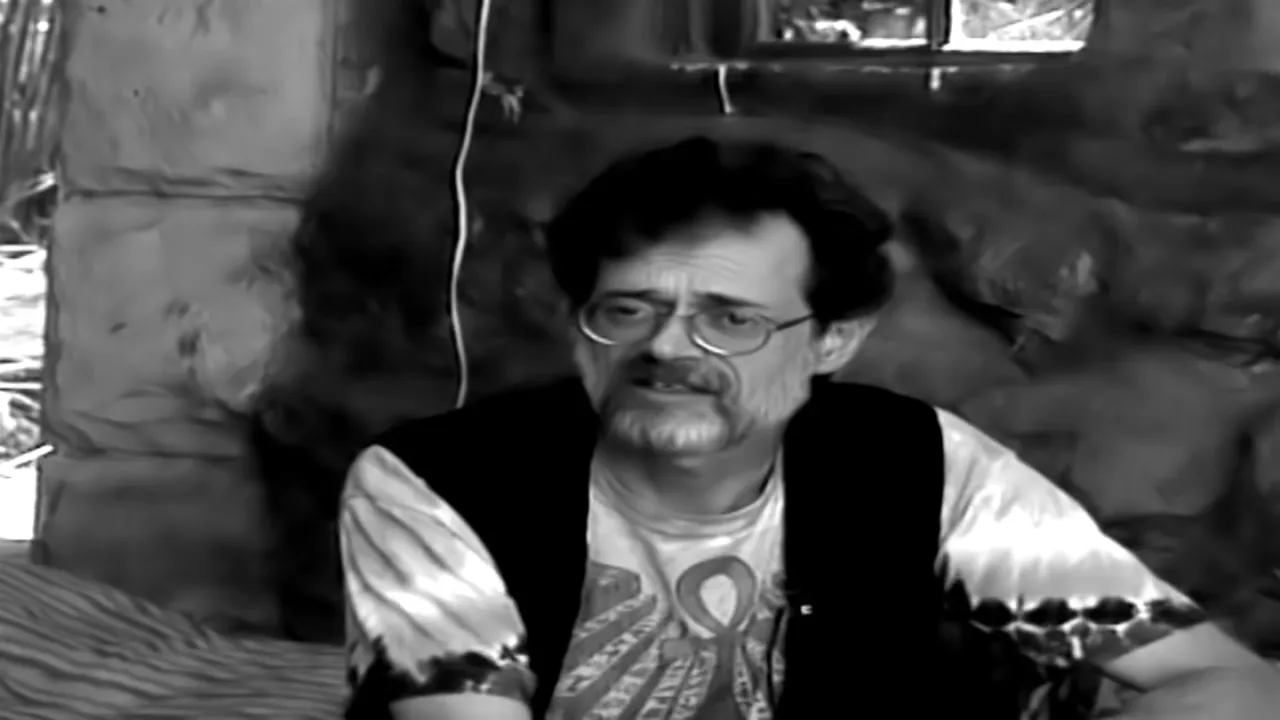
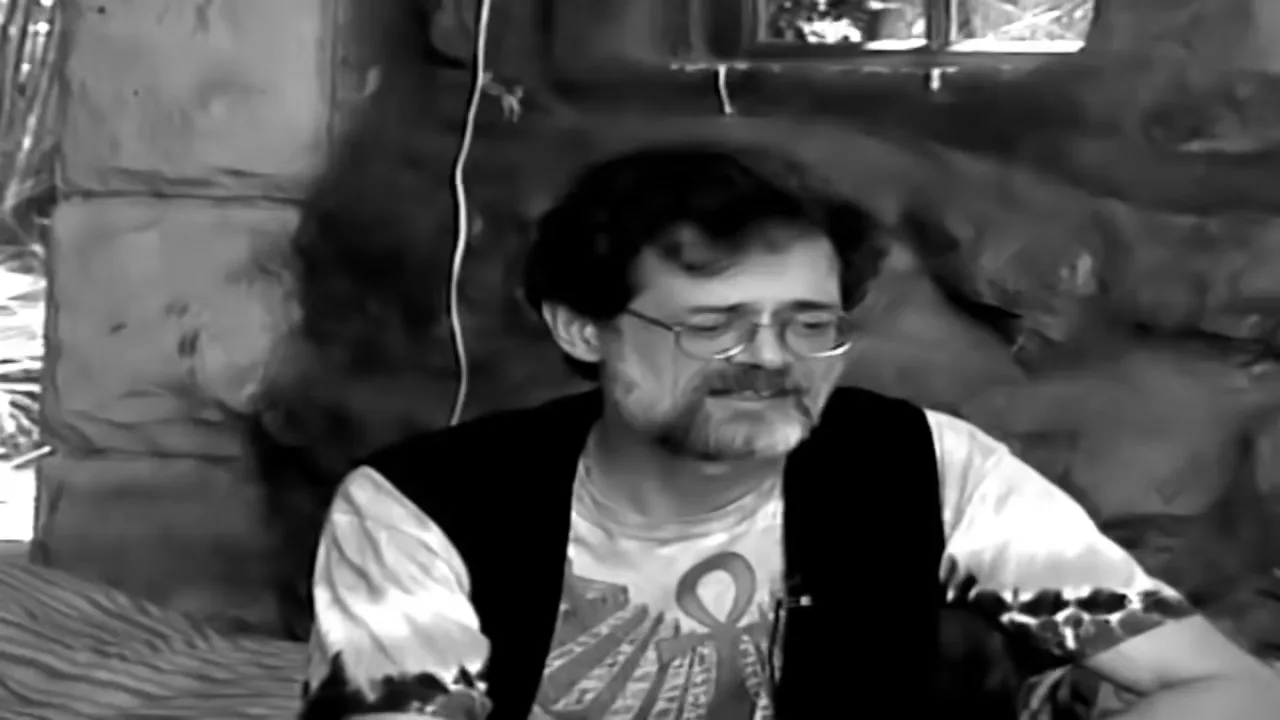
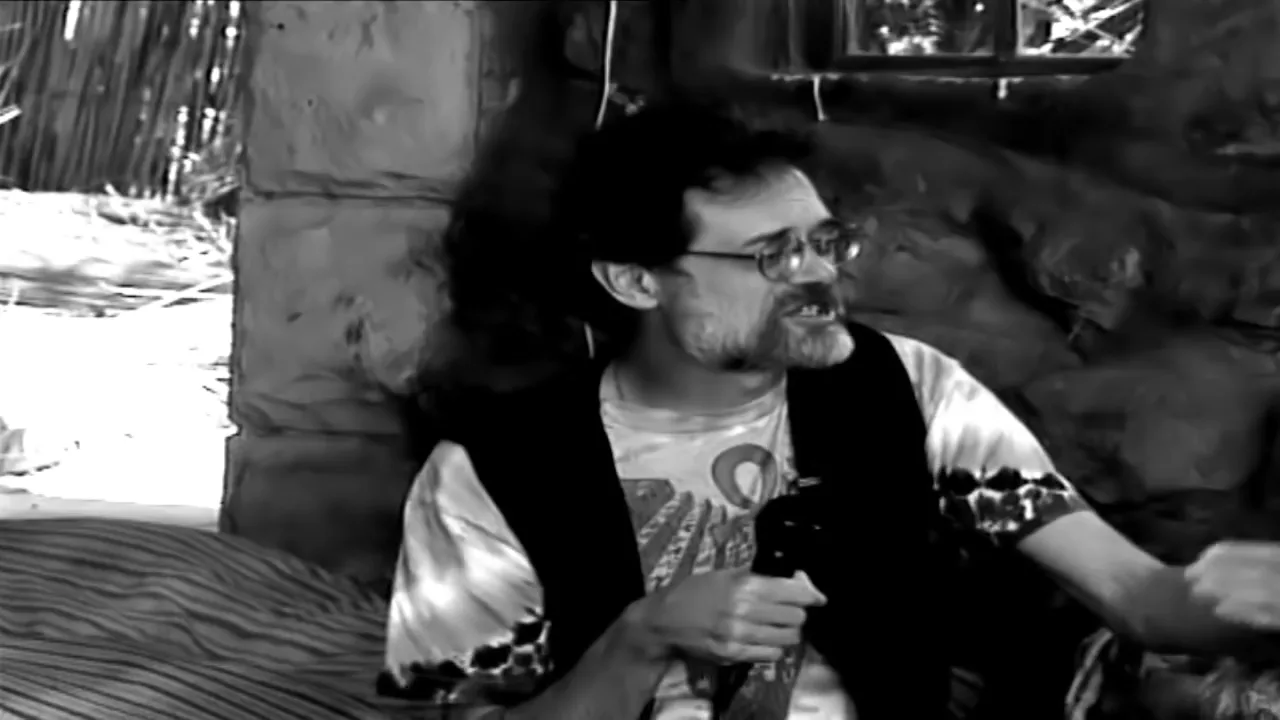
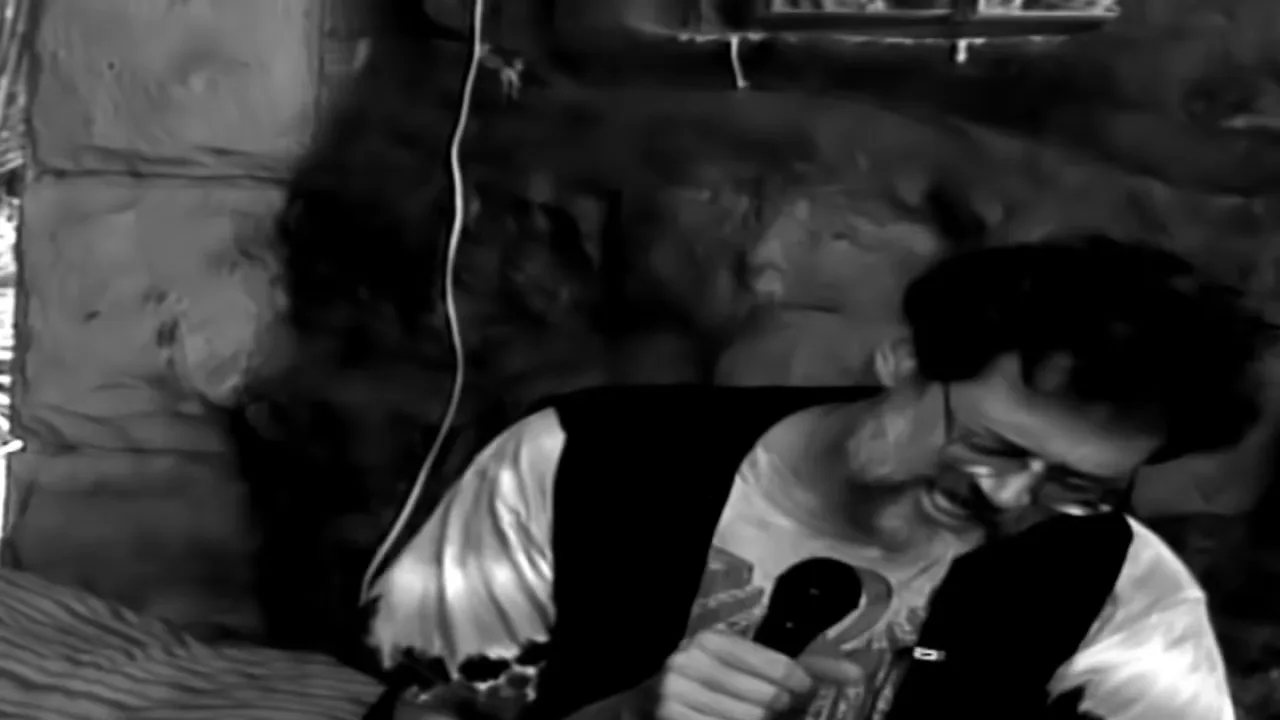
part 3 of 12 from terence mckenna's 2012 omnibus series where he argues culture is not your friend but an intrusion on identity that demands conformity in exchange for unsatisfying
dennis mckenna discusses ufos, psychedelic experiences and his research on dmt and psilocybin mushrooms on the paratopia podcast
a 2009 documentary exploring shamanism and psychedelics as tools for accessing transpersonal realms through altered states of consciousness. covers ancient practices, sacred plants