Sacred Plants As Guides

Terence McKenna addresses the Jung Society in Claremont on ethnobotany and the spiritual role of psychoactive plants in shamanic traditions. He recounts his path from art history through conservation science to discovering the sacred plant knowledge of Amazonian peoples, and describes the botanical preservation work he and his partner Kat undertook in Hawaii to protect these traditions from extinction. McKenna draws parallels between Jung's mapping of the collective unconscious and the visionary dimensions accessed through psychoactive plant medicines, suggesting both traditions map the same archetypal territories. He emphasizes the urgency of preserving these botanical and shamanic practices as they face destruction from global economic forces indifferent to their existence. A conversation that weaves together Jungian psychology, ethnobotany, and the question of what is lost when ancient knowledge systems disappear.
transcriptmachine-transcribed, unedited
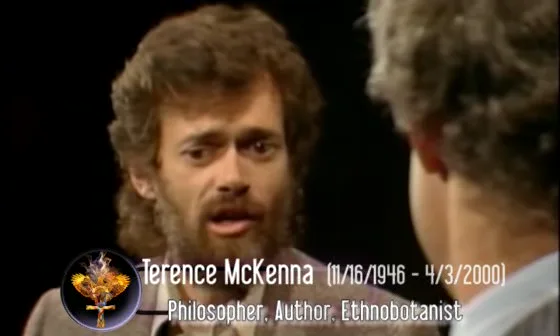
So without further ado, I want you to welcome ethnobotanist, shamanologist, and visionary Terence McKenna.
It's a pleasure to be in Southern California and in Claremont addressing the Jung Society.
Before we get into the main body of all this, I will personally introduce myself to some of you who may not know me.
I started out my academic career as an art historian with a major in Asian languages, and that took me to Asia and sort of disillusioned me with traditional spiritual approaches in the Asian style.
And I reconnected then with my childhood love of nature and pretty much abandoned the humanities and went into the sciences.
But by then it was too late to become a real scientist, and I was too tainted by my time, again, among the poets and the artists.
So I had to become a very soft, hard scientist.
So I got a degree in conservation of natural resources, about as soft a science as you'll ever hope to touch.
And I did a lot of traveling around looking for a viable, vibrant, numinous approach to spiritual reality.
And the only place I found it was in the Amazon basin, where, as you know, there are extremely archaic groups of people,
people who never submitted themselves to the historical process the way the peoples of the Middle East and Europe did.
And there, there flourishes through the use of chemically complex plants, techniques and traditions for accessing a world invisible to the rest of us,
a world of forces and information that is transhuman, supernatural, if the word means anything.
But this, this supernatural dimension is anchored in the plants that live in our world.
And my brother was a botanist, and I had botanical training as we studied the psychoactive plants of the world,
especially the New World tropics, where they seem to be concentrated.
We were simultaneously exalted by the realization that we had found a doorway, a real doorway into hyperspace.
And at the same time, tremendously upset and alarmed by the fact that this doorway is in the process of being dismantled
by the forces of human ignorance that are not even aware of its existence.
So, this was the impulse behind the decision on the part of my partner, Kat, and I, that these plants must be saved.
They must be preserved in germplasm repositories or botanical gardens or something like that,
toward a day when they can be studied and the power, the dimensions within them, can be given their real weight.
So, to this end, we founded a botanical garden in Hawaii that is specifically dedicated to preserving plants
with a history of shamanic importance.
And I mention this because this is the real-world political work that we do,
and everything else I will say today will be barely anchored in any world familiar to most of us.
But there is a political anchoring.
There is a place where it all comes tangential to the World Bank and the IMF and the host governments and so forth and so on.
It is tremendously important to preserve this shamanic option if for no other reason than we do not know what it is.
We do not know what it is.
Well, so at the break, if you come up, the newsletter of our botanical garden is the large stack of beige paper,
and there are 300 copies of that, so I hope there's enough for everyone.
We do exist on donations, so if any of you are philanthropists, we can certainly tell you how to spend your money.
We have many plans for your money.
Okay, I wasn't kidding about what an honor I think it is to address the Jung Society.
At one point in my life, my greatest desire was to become a Jungian analyst.
And I had the good fortune of coming upon Jung very young.
I was about 15 when a very precocious friend of mine brought psychology and alchemy in the Cary F. Baines translation.
I think it had just been brought out.
And we were stunned.
And we read it from cover to cover and then went on to Mysterium Cununctionis, Ion, the studies in the Phenomenology of the Self.
I said to someone yesterday, we read all the books of Jung that the Jungians never read.
They seem to stop up there toward the front of the line with the archetypes of the collective unconscious and the personality type.
But to my mind, it was the late stuff that was fascinating.
And I am slightly puzzled, and we were talking about it last night, at the distance between the Jungian community and the psychedelic community.
Because they seem to me, the unschooled observer, to be definitely sharing the same concerns.
And strangely enough, they share much of the same history and geography.
Basel was, of course, Jung's hometown.
It was Albert Hoffman's hometown.
Did one half of town know what the other half was doing?
I'm not sure.
The relationship of Jung to the collective unconscious as its discoverer has been always somewhat puzzling to me.
Because, of course, if you know the history of 20th century art, you know that Dada,
which was the great prefigurative movement for surrealism, rose in Zurich.
So, you know, we've got LSD, the schools of modern art that laid great stress on the irrational,
and the great schools of psychology that extended the boundaries of the unconscious,
all raffling around in these little Swiss towns.
And it's interesting to imagine conversations or meetings that might have taken place
when people slightly left their ordinary habits and wandered into bars they didn't know
and drank with people they'd never met before.
Because Jung provided maps of the unconscious.
And at 16, when we were beginning to experiment with this,
and let me stress, this was before the great social waves of LSD taking of the 1960s,
just preceding that, from about 1963 to 65,
we were frantic for maps of the unconscious.
And Freud was useless.
I mean, the notion that the contents of the psychedelic experience could be reduced
to what Freud called day residues,
and repressed sexual desires, and stuff like that, didn't wash.
Within 10 minutes, you could tell that was not a serviceable metaphor.
Jung, on the other hand, offered a vast pantheon of gods and archetypes and psychic complexes
forgotten or abandoned.
I mean, I thought of Jung basically as what I call a noetic archaeologist,
someone who goes with toothbrush and nutpick to dig away the detritus
from the bones of vanished idea systems.
And if any of you have ever read the works of Jung in the Bollingen set,
you know that the richness of it is all in the footnotes.
I mean, here was a man who raised the footnote to a high art
and who was aware of a literature
that nobody else, to my mind, seemed to know about.
That Jung's references reach a thousand years deep into the past
with great density of reference.
I mean, this is where I learned about Macrobius and Docetheus
and Dionysius, the Pseudo Areopagus and all those folks
that you just never hear about.
It was my introduction to the underbelly of Western civilization
was through Jung.
Well, to my mind,
and now I'll theme this in to today's theme.
I think Maria mentioned that
Jung did not have a lot to say about shamanism.
He came to it late in his life
and he had already worked through the massive,
the exegesis of the symbol systems of the European mind.
And so he was sort of content to indicate shamanism
as an area of where more work was to be done.
And then the great follow-on scholar was Mersiliad,
who then actually studied shamanism,
showed what its archetypal underpinnings were
in all times and places.
And the combination of Jung and Iliad,
I think, pretty much delivered us
as firm a map of the psyche,
as dependable a map of the psychic geography
as we can expect to have
until we make the trip ourselves
and, you know, readjust the landscape
with our own notes and observations.
For Jung, the great path into the unconscious
was alchemy.
And alchemy is an interesting, pivotal domain
because I think we could, in a way,
say it lies halfway between the concerns
of an archaic shamanism
and halfway between the concerns
of a quasi-scientific, psychedelic attempt
to explore consciousness.
Mersiliad wrote a brilliant book on alchemy
called The Forge and the Crucible,
which is the bridge to show you
how you go from Jungian psychology
into an understanding of alchemy
that approximates Iliad.
The notion for the alchemists
that Jung brought forth very strongly
was the idea of projection of psychic contents,
projection of the active imagination
onto processes and objects
in the exterior world.
In the case of the alchemists,
it was the swirling chemical processes
in their alembics,
in their alchemical vessels,
that they projected the great round
of the archetypes
onto these chemical processes.
They saw crystallization,
sublimation, separation
as statements about the contents
of the psyche
as much as statements
about the exterior world
because for them,
the firm division
between mind and matter,
the firm ontological division
between mind and matter
that is built into Western thinking now
did not exist.
That comes with René Descartes
with the invention
of what's called
the res extensa,
the extended world,
and the resverens,
the interior world,
which has no spatial extension.
So for the alchemists,
mind and matter
were two terms
whose mutual exclusivity
could be blurred
under certain circumstances
and the terms of one
could migrate toward the other.
Well, now we as moderns
ordinarily only experience this state
when we are intoxicated
by hallucinogenic drugs
or when we are in a state
of severe psychic weakness
when there is then
overwhelmment from the unconscious
that is not with the permission
of the ego
as happens in the psychedelic experience.
Well, all of these various ways
of approaching the psyche
seem fairly abstract
and bloodless
and removed from daily existence
unless the psychedelic experience
is present.
And then it vivifies
these metaphors.
It makes clear
what these various perennial traditions
are talking about.
So what I thought
I would try to do today
and you're welcome
to try and steer it
other directions
in the question and answer period
is the workshop is
Sacred Plants as Guides.
A lot of information
has to be imparted
if we're going to satisfy
my pedagogical urge here
because I would really like
to leave you with information
that you didn't have before
some of which may have
practical efficacy
in your own life.
So in thinking about
this very large issue
Sacred Plants as Guides
I basically break it down
into three categories
for ease of handling
in a context like this.
And they are
a kind of survey
how many of these plants
are there
what are the chemicals
that drive them
and what is their
geographical distribution.
In other words
just what are the
botanical facts
of the matter.
And then
secondly
I think in order
to understand
what these things mean
for spiritual growth
and psychic development
you have to place
them in the context.
and the context
is chronological
and historical.
Have these things
always been around?
Have shamans
always been taking them?
How do they relate
to the synthetic drugs
that have been developed
in the last couple
of centuries?
So the history
of our relationship
to the pharmacologically
induced ecstasy
and then finally
and probably we'll get
to this
this afternoon
the phenomenology
of the experience
and the techniques
for achieving
and controlling it
because this is
a practical
there is a practicum
here.
This is not
a course
in Mongolian philology
or something like that.
The ultimate idea
is to get
those
who feel called
to the task
sufficiently informed
and psychically empowered
that they can push off
into the oceans
of mind
in the interior
with some fair amount
of confidence
that they'll return
to port
with all hands.
Let's start
sort of with a survey.
Let me see.
I'm going to talk
until 11.30.
So let's start
with the survey then
and just talk about
what the options are
and this will be
sort of unstructured
and conversational
with forays
into other areas.
First of all,
the striking thing
when you want
to study
psychoactive drugs
and plants
and their impact
on human culture
and that's really
what interests me
is how drugs
affect culture.
After I went
through Jung
and Iliad,
my next port of call
was McLuhan
and I absorbed
very deeply
the notion
that media
structure
civilizations
in ways
that the civilizations
are never aware of
and Jung of course
talked about print
and manuscript
and electronic culture.
He did not talk
about drugs
but drugs
are a form
of media
because
information
travels
through the drug
to the mind.
That's a medium
of communication
and various societies
wear drugs
like clothing
with no awareness
of their existence
at all
somewhat in the way
that a fish
relates to water
so that for instance
if you're in Dublin
you are swimming
in the ambiance
of an alcohol culture.
You don't have to be drunk
to be in Dublin
although it helps
but the entire society
is premised
on the possibility.
The entire society
is premised
on the possibility.
In India
the entire society
is premised
on the possibility
of hashish
intoxication
and social
mores
building
design
everything
takes account
of this.
Cultures
don't see this.
We do not
think of ourselves
as a meat
sugar
alcohol culture.
People do not
walk around
saying
oh wow
I'm so high
on meat
alcohol
and sugar
you know
I can hardly
stand it
but they are
and certain
consequences
flow from that.
So as I make
my way
through this survey
you need to
bear in mind
that a culture
takes its tone
its clothing
from the drugs
that it admits
and you can
know a great deal
about a culture
from the drugs
that it excludes
the drugs
that it excoriates
and fears
because various
drugs
accentuate
and suppress
different parts
of the psyche
so these are
statements
about anxiety
about various
parts of the psyche.
The striking
thing when you
set out
to do a cultural
survey like
this
is you discover
that our
culture
the culture
of Europe
for most of us
some of us
are black
some of us
are Asian
but largely
the roots
of American culture
lie in Europe
this is the most
pharmacologically
impoverished
cultural area
on the entire
planet.
It has the
longest history
of
disconnection
from any kind
of ecstatic
intoxication
and the
cultural forms
of Europe
linear
abstract
narcissistic
and promoting
of male
dominance
are to my
mind
exactly what
you would expect
in a culture
long deprived
of the
boundary
dissolving
numinous
encounter
with the
vegetable
mind
so
a lot
of the
cultural problems
we're dealing
with are based
on the fact
that we as
Europeans
have no place
for drugs
we don't really
know
quite
what to do
with that
as you move
south from
Europe
into the
continent
of human
origins
Africa
you discover
that while
Africa supports
a tropical
ecosystem
which because
that means
increased speciation
of plants
you would think
would indicate
an increased
number of
hallucinogens
Africa is
surprisingly poor
in
hallucinogens
this is not
well understood
as we go
through this
survey I will
make reference
to numerous
unsolved mysteries
in the field
and I always try
to do this
because I'm hoping
that there are
graduate students
listening
who are looking
for research
topics
and there are
numerous research
areas where
important work
can be done
one of them
is
this question
of the poverty
of hallucinogens
in Africa
why
does it have
something to do
with the extreme
length of time
that Africa
has been subject
to human impact
probably
because Africa
is species
poor generally
for a tropical
continent
however
in the interest
of thoroughness
there is one
hallucinogenic
drug complex
that should be
mentioned
because it
raises issues
that are important
for the broader
context
and that is
Ibogaine
or Tabernantha Iboga
the so-called
Bawiti cults
of Zaire and Gabon
now this is
the psychedelic
about which
we in the West
probably know
the least
it has spawned
no waves
of social hysteria
it has not
been the subject
of pogroms
or media
freakout
but it's
and it's
a powerful
hallucinogen
and it's not only
a powerful
hallucinogen
but it has
a component
of sexual
excitation
which is
ancillary
and unusual
if you actually
have ever looked
into the
aphrodisiac
there are
things that cause
genital chaining
and prolonged
erection
and so forth
but a true
aphrodisiac
a chemical
which would
impel you
to want
to have
sex
there's nothing
quite like
that
except
this
Tabernantha Iboga
is
very interesting
we tend
to think
of an
aphrodisiac
because we
tend to
break our
heart
away from
our genitals
as a kind
of a
as a kind
of a
cold
thing
I think
but when you
talk to these
people who are
taking Ibogaine
they don't talk
about aphrodisiac
they say
this causes
open heartedness
one heartedness
they call it
and one heartedness
is what they
are striving
for in the
Bawiti cult
and they
achieve it
and they
achieve it
and it
allows them
to resist
cultural incursions
by Christian
missionaries
Bawiti
is the main
cultural
force
that is
holding back
conversion
to Christianity
by these
this Ibogaine
it's an
interesting
culture
there's a
great deal
of anxiety
in
Fang
culture
about
divorce
because
and
relationships
between men
and women
divorce
is very
easily
obtained
among
the Fang
but
it's always
followed
by
extremely
lengthy
and
protracted
negotiations
with the
family
of the
divorced
partner
about
return
of dowry
and
a huge
amount
of
neurosis
and
agony
and
murder
and
violence
goes on
over
these
dowry
return
negotiations
the
Ibogaine
stands
right in
the middle
of this
as a
source
of
one-heartedness
making
divorce
less
likely
so
it's
very
important
as a
force
for
social
cohesion
and I
mention
this
because
when we
reach
ayahuasca
we will
see
I mean
when we
reach
South
America
we
will
see
ayahuasca
functioning
not as
an
aphrodisiac
or a
thing
to
unify
couples
but
as
a
kind
of
telepathic
pheromone
that
unifies
whole
small
tribal
groups
together
into
a
one-hearted
one-minded
modality
and
if
we
get
into
a
discussion
of
the
possible
evolutionary
impact
of
hallucinogens
we'll
see
that
it
always
lies
in
the
direction
of
these
collectivized
states
of
mind
and
dissolution
of
boundaries
between
people
other than
Tabernanthia
Boga
Africa's
hallucinogens
are trivial
and I won't mention
them in the time
we have
cannabis
is in Africa
as well
but cannabis
is worldwide
now and probably
has been
for quite some
time
cannabis
cannabis is a
special case
chemically
and culturally
we tend
to think
of cannabis
as a
recreational
drug
but that's
because in
the 20th century
we always
smoke our
cannabis
in the
18th and
19th century
cannabis
was eaten
and
jellied
forms of
cannabis
that were
eaten
judging by
the pros
of people
like
Theodore
Gautier
Baudelaire
Fitzhugh
Ludlow
and people
like that
it was as
powerful
as LSD
without doubt
I mean
these people
were being
swept
into
titanically
alien
dimensions
well
when we
cross
from
Africa
to
India
interestingly
of course
as you
all know
tremendous
depth
of
at least
concern
with the
spiritual
dimension
if not
realization
of it
that's
a tougher
call
India
would be
a likely
place
to look
for
indigenous
hallucinogenic
plant cult
simply because
of the
spiritual
obsession
that characterizes
Indian
thought
when we
look at
the
historical
foundations
of Indian
thought
we find
that it
all rests
on
a group
of texts
composed
between
4,500
and 2,000
years ago
called
the Vedas
and the
Vedas
are nothing
less
but the
world's
longest
continuing
advertisement
for
a
hallucinogenic
plant
the problem
is we
don't know
what this
plant is
this is the
mysterious
Soma
of the
Rick Vedas
and
Mandala
of the
Rick Veda
is
entirely
a hymn
to Soma
Soma
held
Hinduism
of the
Vedic
phase
together
later
it
was
repressed
and
again
graduate
students
pay
attention
one
of the
very
interesting
problems
to be
looked at
by sociologists
social
psychologists
and
anthropologists
is
how
if a
drug
once
discovered
or a
plant
once
discovered
is
so
wonderful
how
can
these
things
ever
be
lost
lost or forgotten. And yet in several instances we deal with literatures
which sing the praises of some plant or drug, the identity of which we cannot
figure out, or it becomes a big arm wrestle between various competing schools of
scholarship. We do not to this day know what SOMA was.
Gordon Wasson, who some of you may know as the discoverer, the modern discoverer of the mushroom cults of Mexico,
founder of the science of ethno-mycology,
believed to his dying breath that SOMA was Amanita muscaria, the red-topped white
speckled Amanita.
This is a mushroom which has a major role in Tungusic and Arctic
shamanism, but to say, as Wasson did, that this is the supreme entheogen of all time
is not supported by the evidence, I think.
Wasson's own efforts to become intoxicated on Amanita muscaria were not successful.
My efforts have not been successful.
Occasionally you will hear anecdotal evidence.
Someone will tell a story about eating Amanita muscaria that obviously they had a
staggering breakthrough to a rupture of plane, as Mersilia in his wonderful phrase, but it's
extremely
dependable. And when you look at the botany of Amanita muscaria, you discover that its chemical constituency is
seasonally variant,
genetically
variant,
geographically
variant, and so forth. So often, I think, as we gain
understanding of a given
shamanism, we will see that it depended on an extremely deep local knowledge, and if you take what a
Yakut shaman says about Amanita muscaria and attempt to apply it in the National Forests of New Mexico,
you know, you could end up with a tag on your toe.
These things, this kind of information doesn't travel well.
One of the, one of the, you know, there are old shamans and bold shamans, but there are no old, bold shamans.
In looking at the Indian subcontinent for other hallucinogens
that may have made a contribution,
the obvious one, to my mind, is
stropharia cubensis, the mushroom which grows in the dung of cows, and that the book my brother and I was
wrote, was about.
Other possibilities, some of you may know that there are a family of the Argyria family of
morning glories, an Asian family of morning glories, distributed from India to Micronesia.
Thirteen species, all containing psychoactive ergot alkaloids,
none
with an
history of human usage.
Now, this is another area which really fascinates me.
Why do some plants become discovered by human beings and become the objects of
cults which last millennia and others are
are never discovered at all in societies absolutely obsessed with spiritual
advancement. This Argyria nervosa is a perfect example because you take the seeds, the seeds are the active part, and
you don't need much of this thing. You need
four or five seeds, less than a tablespoon of
plant material, which I would bet would make it per unit volume, probably one of the most powerful
hallucinogens in nature, and
the hallucinations are absolutely stunning, and
nobody has ever claimed this. It's free
for the taking. This means you can cut a deal with an ally
that doesn't belong to the Hindus, the Mayans, or the somebody else. It's an unoccupied parking space
In hyperspace, in hyperspace, and
it's very interesting. The discoveries are continuous.
Just a year ago,
some phytochemists in the Midwest
discovered a new plant. It's always been there. Nobody's ever taken it very seriously. Treated it like a weed.
Desmanthus
Illinoisensis, the Illinois bundleweed. This is suggestive that it's called bundleweed, because a medicine bundle is, of course, a shaman's mojo bag, you know.
But, so, bundleweed,
six percent by dry weight, NN-dimethyltryptamine, the largest concentration of DMT in any plant, and
unclaimed by native peoples, unknown to the folk medicine of the North American Indians, as far as
we can tell. Well, so this is very interesting.
Continuing our survey, since we're now somewhere on the Eurasian continent, we should mention
Papavar Somoniforum, the opium poppy,
with cannabis. This is probably the oldest
human
narcotic.
NN-noan civilization was entirely based on
opium, on the use of opium. And in fact, when Michael Ventress
translated the tablets, the Linear B tablets,
they got these tallies, and they thought at first that the symbol for opium must be the symbol for wheat,
because the tallies were so huge, of the stuff being moved and sold. And then when they sorted out, they realized, no, in the, for the last thousand years of its existence,
the Minoan civilization
drifted deeper and deeper into an opium narcosis, that was its way, I think, of
anesthetizing
the pain of the death of this last outpost of the goddess religion, because that's what it was. It was a cultural anachronism.
While Asia Minor had gone over to God-Kings,
city-states, and bronze-tipped spears,
the people of Minoan Crete had kept the old, old,
archaic religion that came out of Africa. And then in the last
gasp of that Minoan culture, those mysteries were handed on to the mainland of Greece, and became the mysteries at
at Eleusis and
and other cult sites. It was said by the
commentators, contemporary commentators of the Hellenistic world, the sites, the rites practiced in secret at Eleusis are practiced in
public, at Knossos. And this, this was the difference, you know, the going underground of the old
proto-Minoan
mother religion.
In modern times, we have a horror of opium.
I mean, people are amazed that I even mention it in the same breath, but it doesn't hurt to remind ourselves that
this virulently addictive substance, opium, was not even noticed to be addictive by
anybody until 1627, when the English physician John Playfair, for the first time,
commented that
opium, once taken over a long period of time, then there would be a requirement that it be taken
throughout life.
We're right in the middle of a drug war at the moment, and it's interesting in that context to
notice how the goals of drug wars can change. A hundred years ago,
the British Navy was involved in what we've called the Opium Wars in China.
Very few people in the modern world
have bothered to inform themselves to find out that the Opium Wars
were about the right of the British government to deal opium.
The Emperor of China did not want opium dealt in the ports of China, and
the British government used cannon to enforce their desire to
sell opium in the ports of China. Why were the English trying to sell opium in the ports of China?
Because the tea trade had collapsed through overproduction, and they were stuck with all these tea ships.
They had created a whole global infrastructure for the sale of tea.
When the market fell out on tea, they just turned to opium.
They grew it in Goa, and they sold it in China.
This was government policy less than 120 years ago.
Okay, well, moving on then from Eurasia, and I'm sure I'm missing different things,
but if I missed your favorite thing, bring it up in the question period,
to the North American continent. And the North American continent is,
I almost said similarly cursed like Europe,
but that's just my prejudice. The North American continent is similarly poor in
hallucinogens.
There are no
very interesting
hallucinogens in North America, and North American Indians, North American culture, did not avail itself of this
ecstatic plant-induced shamanism. It tended more to go for what's called ordeal shamanism,
the Sundance thing, where you hang yourself by your pectorals on hooks, and stuff like that.
I mean, there are other ways to attain these visions, but you see that absence of good
hallucinogens in North America just reinforced that whole
beer and woolen and uptight thing that came from Europe.
The only major
hallucinogen to have a role in Native American culture is
of course, peyote. And many people, without informing themselves,
imagine that peyote is something which goes
millennia into the past, and that it, and this is absolutely not true.
Peyote use may well be less than a thousand years old among Native Americans.
When you go back into the old graves and the old
burial sites in the Rio Grande Valley and South, you don't find peyote.
What you find are the beans of Sephora secundifolia.
You all probably know this plant, though you may not know its name.
It's the plant that produces the very hard red and black bean that they can constrain.
If you all know what colorines are, these are erythrinas, which are related to these things.
Okay, that stuff contains cytosine and cysteine.
These are what are called ordeal poisons, and it might be worthwhile to just talk for a minute about ordeal poisons.
I said there's more than one way to skin a cat. There's more than one way to have this experience
that shoves you through to an awareness of the numinous.
That's what we're trying to do, is have an awareness of the numinous.
Well, in certain parts of the world where hallucinogens were not present in the biome,
people concentrated on ordeal poisons.
And what an ordeal poison is, is it's a chemical compound that you take it
and you think you're going to die and you beg for death and you do not die.
You get better, you're fine, and you're so damn glad to be alive
that you undergo an ab reaction, you get straight, you shed some of your complexes,
and you turn over a new leaf, is what it is.
Well, in Madagascar, these ordeal poisons have been brought to a high state of perfection.
Also in Malaya, there's a poison complex that replaces a hallucinogenic drug complex,
and these are horrific poisons.
So, what apparently was going on in the Rio Grande Valley was,
after centuries of this Sephora secundifolia cult,
someone discovered peyote and said,
my god, you know, thank god.
And then the other plant which was big in the southern California,
northern Mexico, and across the southwest,
were the tropane containing detourus,
the so-called tolach religion of southern California.
Well, these are deliriant confusions that are,
unless you have a psychic constitution that is not like mine,
you can't take these things.
They're too, I just found them confusing.
It was like a kind of madness, and also physically very difficult to handle.
I experimented, I had a phase with these things when I was in Nepal,
because there are sadhus, holy men in the Kathmandu Valley,
who swear by this stuff.
And if you're in Kathmandu, you may notice in the gutter,
well, you'll notice plenty in the gutter,
but you may also notice these detouripods, empty detouripods,
and I noticed them and started asking questions,
and then out at the King's Game Preserve,
past Pashupatinath, I found a bunch of these things,
and laid in a supply.
But it is an occult, watery,
it's a dimension of confusion, not a dimension of high awareness.
And I think some of you have heard me tell the story about
the reason I gave it up was an Englishman,
a friend of mine who lived in this little village in Nepal where I lived,
he was also experimenting with this stuff.
One day I was buying potatoes and tomatoes in the market,
and I ran into him, and we started having a conversation.
And in the course of the conversation,
he revealed that he believed we were in his apartment.
And then I knew that we were losing hold on our grounding.
So I don't recommend that.
I don't have a whole lot to say about it.
Apparently, it's a thing for magic, power magic.
And I've never been particularly interested in that,
because I'm afraid of it.
I'm a watcher.
I like to look.
I like to get very close to it and watch it.
But I'm not into grabbing it or doing anything with it.
I have a feeling that would lead to catastrophe for me personally.
Okay, where are we now?
Northern Mexico.
Now we've gone all around.
We started in Europe.
We went down into Africa, across the Eurasian continent,
North America, Northern Mexico.
Now things get interesting.
Because as you leave the Sonoran uplands and go south,
in the Sierra Mazateca is this mushroom complex,
which Valentina and Gordon Wasson discovered in the 1953s.
17 to 22 species, it depends on who's counting,
of extremely endemic, meaning very localized species of mushrooms,
all producing psilocybin, coincident with the Mayan,
the cultural side of the Mayan Mixtec and Mazatecan civilizations.
And this is psilocybin,
an extraordinarily powerful, visionary,
and benign hallucinogenic metabolite.
Once the Wassons had nailed down this Mexican mushroom complex,
then people started checking and they discovered these mushrooms
or conspecific species in many localities.
Two that are worth mentioning are the Pacific Northwest,
Oregon, Washington and British Columbia,
which appears to be the world's center for species density of the psilocybin gene.
And strangely enough, very good ethnographic research turns up no hint
that these Kwakutl, Shimsham, Tlingit, and other people had any hint of this.
They lived in the center of the psilocybin distribution complex,
and as far as we can tell, their shamanism, which was highly evolved,
never discovered or made use of this.
Not so these civilizations of Mesoamerica.
The other place where these mushrooms have now been discovered,
and the range seems to be extending every year, is Europe.
The tragedy of European civilization is that the Logos was apparently there all the time.
The English countryside, I understand, is now practically a scene of annual mushroom runs
that are not unlike the lemming runs of Scandinavia,
and everybody pours out to collect the semi-lanciata mushrooms.
I've been told, I haven't been to these sites, but I've been told that Ionia,
where the Book of Kells was composed, and where St. Columba went,
is covered with mushrooms. It's very clearly a mushroom ecology.
Attention graduate students.
The tracing of mushroom motifs in European art and civilization and culture
is an extremely rich, untapped field.
If you need some clues, look at family escutcheons.
Look at family crests. In France and the Italian parts of France,
the Morelle family has the Morelle on their escutcheon.
There are other mushroom families and mushroom names.
So there may have been, you know, this may have been the struggle between
paganism and Christianity may have revolved around a mushroom.
We know druids were into plants. We know they were into oak groves.
But the plant that is always mentioned as the druidic, psychedelic, psychic plant of choice
is mistletoe. But mistletoe is chemically very disappointing.
And I've wondered if mistletoe is not, it wasn't the plant they wanted to symbolize.
They wanted to symbolize the symbiosis of one plant upon another.
It's that the mistletoe symbolizes epiphytic existence.
Anyway, this is an untapped area.
Once you get into the New World tropics, then you are in the great domain
of the hallucinogenic plants.
And no one knows why it is that the tropics of the New World are tremendously rich in hallucinogens.
I mean, I don't know how many of you are botanists or biologists, but try to imagine
figuring out a set of evolutionary constraints that were operating on one side of the planet,
but not on the other.
When we take, for instance, the jungles of Southern Columbia
and compare them with, let us say, the jungles of New Guinea,
these are both continental floras, both equatorial,
both climaxed at a species-rich climax, and one has dozens of hallucinogens in it,
and the other has none.
None.
This is not well understood.
I mean, theories range as wildly as, obviously, that South America must be where the flying saucer landed.
And, you know, that's where the genes were seeded.
I confess, I'm not sure why it is.
It is, at first I thought that it had to do with the extremely primitive state,
so-called primitive, the extremely archaic state of culture in the South American jungles,
that they represent a real Stone Age culture, where when you go into Indonesia,
it may look primitive to you, but the Dutch were there before the English arrived in North America.
It is, it has had centuries and centuries in which these things could be forgotten.
But, of course, then come the botanists who care nothing for ethnographic data
and who simply carry out plant surveys and chemical analysis of plants.
They can't find these hallucinogens either.
So this is a great mystery.
In the tropics of Mesoamerica and the equatorial tropics of the New World,
there's a vast panoply of hallucinogens, not only the mushroom complex,
but then also this Ayahuasca or Yah-He complex that we've referred to several times.
This is a huge jungle vine.
And as we cross into the Yah-He area,
we also cross, we cross an interesting barrier because we move from plants, single plants,
which are hallucinogenically active, into the realm of preparations.
We're on the threshold of the concept drug here, because what Ayahuasca is, is two plants,
which are not active unless brought into combination with each other.
One plant contains a monoamine oxidase inhibitor,
and the other plant contains DMT, which would be destroyed in the gut if taken orally,
unless it were taken orally in the presence of an MAO inhibitor.
This was not understood by Western pharmacology until 1956,
but it was understood by Amazonian shamans millennia ago.
So they bring these two things together,
and by varying the ratio between the plant containing the beta-carbolines that inhibit MAO,
and the plants that contain DMT, they can intensify or de-emphasize the vision.
Well, most of the hallucinogens in the Amazon basin run on tryptamine of some sort,
usually DMT. In the upper basin of Colombia, Ecuador, Peru, like that,
you get these yahe ayahuasca beverages. These are things you drink,
and then it comes on. You have these outlandish trips. As you go down into the lower basin,
the Banisteriopsis cult gives way to these snuff cults, Ibina and Neopo, depending on the languages.
These don't depend on an MAO inhibitor for their activity because they're absorbed through the subnasal
mucosa, which is an extremely effective way for getting drugs into the system.
The problem with that complex, the snuff complex, is that we are just physically such delicate
and wimpy people that we can't stand that route of drug administration.
Because what they do is they toast these seeds of Anadonanthera peregrina,
this huge leguminous tree, which is the source of the seeds.
They toast these seeds and powder them, so what you get is a kind of rough
cross between sawdust and charcoal, and then they have a hollow tube about this long,
and they load it up with this stuff, and you squat down and put the nostril, the tube into your nostril,
and your friend, your friend, not you, because you would not do it hard enough,
your friend then takes a huge breath of air, and
and it's just like being hit in the face with a two by four. I mean, it's like being hit in the face,
and you fall over backwards, you scream, you salivate, and you squirm around there in the dirt for a minute or two,
and then you sit back up, and by that time, the tube has been reloaded for the other nostril,
and then, you know, and your eyes, your sinuses can't believe what's happening to you.
So you have to sort out this whole sinus shock, which is going on in parallel with then an evolving,
strange state of mind, which is beginning to take over and clarify everything,
and then there are numerous minor variations on these things.
Might talk just a little bit about the chemistry of these things,
and the chemistry of hallucinogens generally.
My attitude toward this question of plants, compounds, drugs,
should these things be used for spiritual growth?
both, if the answer is no, then that finishes, you don't have to go any further. If the answer is maybe,
or yes, then other questions arise. Which compounds out of this whole survey,
survey, and at what frequency, and at what dosage, and under what circumstances.
And over the years, I've sort of evolved a three-way test that I will share with you,
because I think it's maybe the operationally the most useful thing you'll hear this weekend.
And that is, if you are contemplating some, some compound, some plant, then the first thing to ask
yourself is, does it occur in nature? Does it have some tangentiality to what is already existing?
Because obviously, what exists, that's nature, has undergone some vast winnowing process
out of the set of all things which might exist. In that wonderful phrase of Alfred North Whitehead's,
certain things have undergone the formality of actually occurring, you know? And so certain
certain compounds have undergone the formality of actually occurring in the biological matrix. And so
they should be, they should be our pool out of which our experimental compound should be drawn.
But this is thousands of compounds. How can we further narrow it? Well, an excellent way of narrowing
it further is to ask the question of this compound, does it have a history of human usage?
Does it have a history of human usage? That is your FDA approval.
Because if you can point to a tribe of people who have been taking this plant or mushroom or whatever it
is for millennia, and they don't have miscarriages, tumors, cataracts, blindness, Down syndrome, eight
fingers on the left hand, or whatever it is, then you can be fairly confident that this thing is benign,
that these people have
Observed its action on pregnant women the elderly the those with you know, and and that it has passed
that test
Then finally the most the narrowest gate through which a compound has to go to
to intersect my precious body is it has to have an affinity to
To ordinary brain chemistry it has to have an affinity to ordinary brain chemistry
We don't want to launch something on your brain that it can't recognize at all that it has no
Biosynthetic pathways to degrade that it has no receptors for just some crazy thing, you know
5-amino-3-triethyl-finthio-anaxidine or something we don't want that there's not
The spirit that we're acting in here
So if the compound can get through those three barriers, then it's an excellent candidate for
Providing spiritual gain at low
physiological
Impact well now some people may say oh well you've taken all the fun out of it
All the good things have been tossed aside in this mad rush to purity or something
Not at all
The very best stuff was retained in this process because
In terms of relative strength and
Bizarreness of effect and so forth the strangest the most powerful the most
transformative of all
Halicinogens in nature or out is dimethyltryptamine
DMT and
It's worth talking about DMT for a moment because it will raise
certain issues and distinctions
That you may not have been aware of
First of all
DMT is hands down the most powerful of all halicinogens
I mean it is so powerful that whatever is in second place is lost over the horizon
Yet
Yet it is the most benign of all
halicinogens
Because it occurs as an endogenous
neurotransmitter in the normal human brain
We every single one of us at this moment have NN dimethyltryptamine being synthesized activated and degraded in our
synaptic
Membrane so this is almost a paradox the most benign of all halicinogens the most fast-acting
I should also add is also the most
Harmless the the easiest to take it sort of remove it sort of puts a certain obligation
Obligation on the experience because there is no reason to hold back
Except that there is this question
Does it drive you mad and then the more serious version of that question?
What about the possibility of death by astonishment?
This is no joke
Death by astonishment is I think probably the major risk who we run
uh with this stuff because the impact of the breakthrough is
uh is so total so complete so
Unexpected and in a way this sort of brings me back around to my theme because I
Encountered DMT LSD all of these things in that very period when I was getting set to
take flight as a union
analyst and
What completely blew my mind about DMT and I mentioned it and then again
Here's an opportunity for research is
How Tran here's a heretical construction how trans
Archetypal the content of the flash
Seemed I was appalled
Because not only had I a certain amount of interest in young and proclivity along those lines
But my original major had been art history art historians
What we're trained to do is to be able to look at a motif and say oh, yes
I'm familiar from with this from ceramic from second millennia Peru and also men dying
Embroidery work
I mean we know motifs we're trained to recognize and connect disparate
aesthetic domains well when I smoked DMT and came down I said you know this is not on the map
I can't believe it that this doesn't connect up to anything how can there be domains of the human mind that do not
announce themselves in folklore
fairy tales
dreams or mandala painting that are so
Removed from the van of what is human that they are apparently not accessible in
Structuring our
Maps of our self and our psyche and that for me was the contact with what I call and I didn't call it this
Rudolf Otto called it this and this term influenced young Otto proceeded young was it is the holy
other and
If there is an archetype of the holy other then this is it but perhaps the whole the other
transcends the archetypes this may
explain to some degree young's interest in Gnosticism
Especially the Valentinian school of Gnosticism which holds you know that there is a higher and hidden
Father all God who is outside the machinery of
Cosmic fate and it seemed to me that in those extremely profound
DMT flashes I was actually witnessing a domain
outside the machinery of the archetypes which is for us as moderns that's what the machinery of fate is
It's not zodiacal machinery. It's
Hardwiring in our psychology and our genes that gives us our fate
Well, so having said that I've not only made the the
Survey, but also brought us to by ending with DMT
the
Subject matter of this quest and I want to make it clear I
Speak about the power of the psychedelic experience
Because I think people should be informed of their birthright and I feel very antsy
Around the notion that someone might go from birth to the grave
without ever having a
Psychedelic experience it makes me as antsy as the notion that somebody might go from birth to the grave without having a sexual
experience it's a strange kind of
Protective denial or a kind of expression of fear
This is our birthright
This is part of what it means to be human these altered states of consciousness
I think are pretty much scripted in to the existence of women because they
Most of them will give birth
Which is an organically scripted psychedelic experience from which there is no escape unless of course you go for the
Drug knockout the spinal and then you miss
Everything but biologically physiologically women are set up for
This experience men are not it's possible to
Build such barriers against
Overwhelmment that it never happens in your whole life, and I believe that if we psychologically analyze
the effects of these
Psychedelics what they do is they dissolve boundaries
That's all I mean if you interview 10,000 people who've had the psychedelic trip each one has their own
Herophany their own heroes gamos that unfolded for them, but the sum total of it is
Boundaries dissolve and then whatever is on the other side of your boundary
comes flooding in to claim you and
To and to reshape and remake your psyche. Well, I see the entire
illness of our civilization as an as an ego
Inflationary illness
We have gone so sick with ego that we are literally
murdering the planet rather than
confronting the consequences of our
psychic imbalance and
The psychedelics act to redress this they are almost an inoculation
against the ego and I I see the ego as a
phenomenon arising in historical time or
Rather actually history is caused by the ego, but the ego is a component of the psyche
that arose in the post
Archaic phase in the post psychedelic phase
It's entirely a modern invention
It's less than 15,000 years old and the assumptions of the ego are the source of our
Neurosis our
disequilibrium why did the ego arise it arose because of the
The climatologically enforced abandonment of these
Psychedelic religions of the archaic period
In other words, here is the scenario as I see it
Primates even primitive even
I don't
Non-advanced primates like squirrel monkeys howler monkeys these kinds of primates all
All have male dominance
Hierarchies the whole thing with primates is about male dominance
But a lot of things about human beings
Mark us as the most unique member of the primate group
Obviously we look
Different from any other monkeys even the stranger monkeys
Look more like the normal monkeys than then we look like them or they like look like thus us our upright posture
The other thing about us is our suppressed estrus cycle
We cannot tell at a glance whether a woman is
In heat or not and yet obviously that had a tremendous
shaping force on the social psychology of
of
Of the primates I believe that
Everything about us that is noble and worth saving
occurs against the grain
That if we had followed the grain we would still be
competing with jackals for the carcasses left by lions of
of
large game kills on the plains of africa
But when the african continent began to dry up and we were forced out of the trees where we had an arboreal
vegetarian lifestyle we came under great pressure to expand our diet and
the I believe that the great
Unstudied factor in human evolution and human emergence is the effect of a complex diet on our emerging species and
It's not only the presence of halucinogens such as
Psilocybin in the in the diet but other things as well
Psilocybin is the most spectacular case and you know if you came to see Darwin you'd have to hear about evolution
So you came to see me so you have to hear this little theory about human emergence
that most of you can probably recite it by heart now
But it's a three-step
It's a three-step feedback loop from a fairly bright monkey to a fairly stupid human being and
The way it works like this these monkeys come down out of the trees. They're
They're predating on on kills of
Ungulate mammals made by lions. They're competing with jackals
They're testing all the foods in the environment
and
Lo and behold in the manure of these ungulate mammals that are
radiating across the african continent
There are what are called coprophytic mushrooms and the
The presence of large amounts of tryptophan in manure as a substrate means that these coprophytic mushrooms elaborate
psilocybin
So here in this new grassland environment are the psilocybin mushrooms. Well
these proto-hominid creatures
Testing foods for their diet would reach the psilocybin and would test it
Well, then this three-part feedback loop to humanness then comes into play and it works like this
very
very light
doses of psilocybin so light that you cannot an hour and a half or two hours later
Tell you've taken anything you say I don't feel it. I feel completely normal
I must not have taken enough that dose if you would submit yourself to being tested by an
optometric
Apparatus we could show you that your vision has improved slightly
This is an effect of eating small amounts of psychoactive amines
Increase of visual acuity. Well, you don't have to be a rocket scientist to know that if you're a hunting animal
Competing in a highly competitive environment and suddenly somebody hands you a pair of chemical binoculars
You are going to be a more successful hunter than other members of your
Species who are not availing themselves of this food item
So there was reinforcement there aha if we eat these mushrooms in small amounts
We will be more successful hunters or maybe it was never raised to consciousness as an if-then
Relationship it was just we eat mushrooms. We hunt well kind of thing
Then
If you eat slightly more of the psilocybin if you bring slightly more of it into your diet
It's what's called a CNS stimulator central nervous system
Stimulant an effect of all CNS stimulants is what's called
arousal and
Arousal means simply that you can't sit still you're very restless
You're very energetic and often in the male animal you have an erection. It's an overall
systemic arousal
arousal and
if you if you
Give if you witness this situation in monkeys monkeys are very hang loose kind of characters
And so then they just all fall together in a heap and make love
and this
Increases what anthropologists and primatologists like to call successful instances of copulation
This means that this increased in interest in sex in combination with an increased success in obtaining food
is
Creating the perfect situation in which there will be a population boom of these creatures
They're eating better and they're enjoying themselves more and they have better relationships with each other
So population boom is on the way
Well, then the next and final level is when you raise the dose higher
So you're no longer restless or interested in sex or any of that
But you're flattened with the ecstatic unfolding of the full numinous
hallucinogenic rupture of plane
Then and this occurs, you know in the tribal context. Then there is boundary dissolution
Group sexual activity and group bonding and identification and this is where
This telepathic coherence this inner dynamic of
Of cohesion and caring that we see in primitive people to some small degree and that we imagine
What must once have been our birthright?
This is where it came to be and at those higher levels of psilocybin
Most of you probably know language is formed by an organ on one side of the brain called Broca's area
Broca's area the brain being always
Symmetrically constructed Broca's area has a twin on the opposite side of the brain, but no one knows what's going on there
It's apparently a silent area of the brain. Well, when you take psilocybin there is spontaneous
linguistic activity
Glossolalia Henry Munn has written about this in his essay the mushrooms of language. It's almost as though
So psilocybin is a pheromone that promotes
linguistic activity and effort to take
Verbal intentionality and connect it up to the ontos of being in some way
And then it's almost as though words are born out of you. You give birth to words and
These concrescences of meaning then create a kind of unitary ambiance, which we call
understanding
Language is a miracle. I mean make no mistake about it. I don't think any amount of dissection of
monkeys or human cadavers will give you any insight into
Language language is a behavior of some sort
So bizarre so many orders of magnitude more complex than anything else we do
That for all practical purposes. This is the thumbprint of God upon creation
Human language and it's a self
Transforming thing it keeps bootstrapping itself to higher and higher levels and it creates for us
The entire ambiance of reality once we had words we quickly replaced
Reality with them and so I'm I believe that what psilocybin promotes is cognitive
activity the coordination of visual input with
Plans and strategies for hunting or acquisition or whatever
It promotes this increased arousal which really in a way we as moderns are
Absolutely as in awe of as our mushroom munching ancestors
25,000 years ago. We can't reduce it. We don't know what it is
You know young was always so concerned that people say it's only
Psychological it's only the psyche. I've got news for you
It may only be the psyche, but the psyche is all there is and
as as we came into a relationship with the mushroom
humanist
Emerged on the African belt and was able to stabilize itself for a few millennia and then
We fell into history because of climatological change for many reasons
But we literally fell into history and now we operate in this lower domain a domain of limitation of
misunderstanding of low-grade languages
But the and and we are neurotic we are unhappy we are
Dysfunctional and I believe this is because our connection to the logos to the informing voice that gives meaning to being
Has been broken over 10,000 years
It's fallen away and all we're left with is our spiritual yearnings our nostalgia for paradise and
our our pathologies and
Miraculously we are left with the time capsule of preservation represented by the rain forest
Shamanic cultures that use hallucinogens
There lies our answer, but it's like the Ouroboric serpent taking its tail in its mouth
The the salvation of the super future of the planet lies in a recovery of the values
modalities and religious practices of
25 to 50,000 years ago
Break break break break

terence mckenna examines marshall mcluhan's radical media theory, tracing how print and communication technologies reshaped human consciousness and built the foundations of western

terence mckenna's 1984 mill valley workshop on shamanism and plant psychedelics. drawing from his 1982 amazon fieldwork, he traces ayahuasca's chemistry, ethnobotany, and role in a

dennis mckenna explains ethnobotany and ethnopharmacology, the role of the shaman as a specialist in plant-induced altered states, and his critique of fundamentalist religion, in a

a 2009 documentary exploring shamanism and psychedelics as tools for accessing transpersonal realms through altered states of consciousness. covers ancient practices, sacred plants

dennis mckenna's 2008 talk at the fourth annual amazonian shamanism conference. speaking without prepared remarks, he explores ayahuasca as a planetary teacher, the scientific stud