Shamanology Mill Valley

Recorded in 1984 from a personal cassette tape archived by Diana Slattery, this early workshop captures Terence McKenna introducing himself as a "philosophical gadfly and shamanologist" at a time when he was becoming the voice of psychedelic knowledge in the pre-Internet era. The talk ranges from the global distribution of plant psychogens (eighty percent concentrated in the Amazon basin) through the detailed chemistry of ayahuasca - how the shaman combines a woody vine with DMT-containing plants to create a preparatory drug whose efficacy depends on monoamine oxidase inhibition. McKenna draws on his own 1982 Amazon research with his brother Dennis, describing weeks spent with shamans in Peru and Colombia, taking ayahuasca weekly despite recurring illness, collecting specimens for laboratory analysis, and observing the shaman's role as healer - using magical songs to direct the flow of visionary experience and address psychological and somatic disorders. The work stands as foundational documentation of how a sophisticated ethnomedical system approaches consciousness and healing through botanical knowledge and embodied practice.
transcriptmachine-transcribed, unedited
Greetings from Cyberdelic Space.
This is Lorenzo, and I'm your host here in the Psychedelic Salon.
And today we have William C. to thank for his donation to help pay some of the expenses here in the salon.
So, hey, thank you very much, William. I really appreciate your support.
Now, where are we?
Well, after last week's podcast, with what was, for me, a new Terrence McKenna talk,
I just couldn't resist the temptation to begin listening to one of the tapes in the box of McKenna material
that my friend Diana Slattery sent to me a couple of months back.
Now, Diana and I had reconnected at the Psychedelic Science Conference after having not seen one another for a while.
And, in fact, I can't even remember if we were last together at Burning Man or at a salon or another conference.
Seems like we've known each other for a long time.
But, anyway, after talking with Diana, she said she had all these tapes of Terrence McKenna that she'd be happy to give to me.
And so I got this big box filled with tapes from her.
And some of them are talks that we've already heard.
And there were a few professional recordings that were copyrighted that I didn't want to use here.
But there were also a lot of old cassette tapes that she'd obviously recorded herself over the years.
And it's one of those tapes that I'm going to begin the Diana Slattery phase of the McKenna material, for lack of a better description.
So, hey, thanks again, Diana.
Your years of recording and hauling these tapes around the country are finally going to pay off
by you knowing that, quite literally, thousands of others of us are now the beneficiaries of your labors.
Now, the first set of tapes that I digitized and will be playing this week
is a three-tapes set that's simply labeled Shamanology, Mill Valley, 1984.
Now, considering that this was recorded on a personal cassette player back in 1984,
I think the sound quality cleaned up pretty well.
Well enough to use here in the salon, and hopefully you'll agree.
Now, one of my favorite things about this particular recording, by the way,
comes right at the beginning when Terence actually had to introduce himself
and said that he was a philosophical gadfly and a shamanologist.
But as you'll hear in just a moment, back in the early days of his workshops,
and this is one of those times before, or it's right about the time he was becoming the persona
that we now think of as Terence McKenna.
But back in the 80s, when there was really no World Wide Web,
very little information on the net about psychedelics,
well, he was probably the world's main source of information about psychedelic substances in general
and ayahuasca in particular.
And so you'll hear now how there were a lot of questions about the nuts and bolts
of the psychedelic experience back then.
But these are things, of course, you can find answers to now at arrowid.org.
Anyway, now let's join an intimate little group of early Terence McKenna fans
and hear the great bard for ourselves at a time when he was just beginning to become
a well-known personality on the psychedelic scene.
And keep in mind as we listen to this talk that there weren't all that many people
who were as experienced and knowledgeable about psychedelics back then as you are today.
You know, back in 1984,
all of a sudden I'm thinking of the George Orwell book, too.
It's funny to say back in 1984, but in a way, doesn't it feel like we are back in 1984?
Anyhow, back then, Terence's workshops were probably the main source of information.
Now compare that state of affairs to the spread of this information today,
and I think you may agree that it was a combination of Terence McKenna and the Internet,
maybe, that we have to thank for the resurgence of knowledge about the role of sacred medicines
in the formation of human civilization.
At least that's my take on it, but enough of me.
Now here's Terence McKenna.
I'm a dad fly and shamanologist, writer and lecturer.
Ruth assured me that you were so familiar with my work
that probably we could handle this meeting as a dialogue
after a short introduction to some of the things that I'm interested in,
that I'll talk for a few minutes and then we just can't stop staying in our conversation
about the aspects of these things, that if any of you have read The Invisible Landscape,
which I am the co-author of with my brother,
you know that it ranges over fairly hardcore chemistry and neurophysiology
through the phenomenology of shamanism
and on into a fairly extensive discussion of principles of ordering in the yi qing.
But what I seem to find myself publicly lecturing about
is the relationship of palestinogens, especially planned palestinogens,
to shamanic healing in the context where use of palestinogens is associated with shamanism.
If you look at the worldwide distribution of palestinogens,
you immediately notice that there are several unexplained anomalies.
Why is it that fully 80% of the world's known plant palestinogens
are concentrated in the Amazon basin,
even though the flora of the old world jungle of Indonesia is equally rich?
And Weston Labar and a number of people have written about this,
trying to say that perhaps it is because the people of the Amazon
are closer to the hunting and gathering pre-agricultural mode
than anywhere else in the world.
But for whatever reason, the peoples of the Amazon
have developed the use of palestinogens and curing and shamanism
to a very high degree.
And while a number of plant species are involved
in the production of these various drugs,
the chemistry of them is more simple than the botany.
In other words, almost all of the halitinogens in use in the Amazon
rely on a monoaminoxidase inhibition to potentiate dimethyltryptamine.
Now, in other words, monoaminoxidase is the enzyme system in the body
which degrades monoamines, which would be serotonin,
but also any introduced monoamines, which would be all alkaloids.
And to many drugs.
When the monoaminoxidase is inhibited chemically,
it can no longer do its job of deactivating these compounds
and consequently you get an accumulation of them at the cimax.
And this is thought to be the mechanic
by which the hallucinogenic experience is induced with these drugs.
Since so many people here seem interested in curing,
I think this morning I will, in these brief remarks,
concentrate on one ethnomedical system
and then if your questions range out beyond that,
that's fine.
But I want to concentrate on this one ethnomedical system
because part of what I am trying to do
is to get researchers like yourselves
to look more closely at this.
There are a number of unanswered questions.
In fact, I would say more is not known than known.
The system that I refer to is the endemic use of ayahuasca
throughout Bolivia, Peru, southern Colombia,
portions of Ecuador and Brazil.
Very briefly, ayahuasca is a combinatory drug
made out of the boiled leaves and stems
of a malthagaceous woody climber
called Banisteriopsis cathares,
a huge woody vine
that sometimes reaches 200 meters in length in the jungle.
And it is boiled to make a hot water infusion
and then to this is added a small amount
of the DMT-containing leaves of some other plant,
either Banisteriop, either Diploteras tabarena
or Cicotria viridis.
Now, my brother has just finished his work
toward the PhD at the University of British Columbia
and much of what his thesis consisted of
was looking at drug and plant samples
that we collected in the Amazon in 1982
when we went down there.
For over 10 years,
Schultes and Bo Holmstedt of the Karolinska Institute
had published theories of the activity of ayahuasca
which stated that they believed it worked
through monoimmune upspace inhibition,
but this had never really been tested.
Now it has been looked at in the laboratory
and essentially confirmed
that this is precisely what's happening.
And it's a very interesting comment on ethnomedicine
because unlike peyote
or Amanita muscaria
or the psilocybin mushrooms of Mexico,
ayahuasca is a combinatory drug.
It is prepared.
It is not simply picked and eaten.
So as a consequence of this,
it can be made either well or badly.
And as a consequence of that,
the personality of the shaman
becomes far more important
in the ayahuasca cult
than in the cults that revolve around
the use of plant drugs
where no preparation is involved.
Now, at the beginning of this,
I mentioned that
all the hallucinogenic drugs
of the Amazon
are based on this
tryptamine-betacarboline interaction.
What we were doing in 1982
was looking at a much more endemic
and restricted drug complex,
which is, for over 30 years,
there have been persistent reports
in the ethnographic literature
that there was an orally active DMT drug,
which was very interesting to pharmacologists
because there is large amounts
of monoamine oxidase
in the human gut
assumed by evolutionary biologists
to be there to degrade
potentially dangerous or toxic monoamines
that might be taken in through the diet.
So it's very interesting to pharmacologists
to hear that there is an orally active DMT drug
because it flies in the face
of pharmacological theory.
It should be impossible.
And the pharmacologists
said that if there was
an orally active DMT drug,
then it must be complexed
with an MAO inhibitor
to make it work.
So what we were doing
was going down there
and visiting various shamans
in various places,
persuading them to make
the paste for us
making voucher specimens
of the plants
that went into it
and then taking
the voucher specimens,
the pickled material,
the air-dried material,
all of this stuff
back to Canada.
And our assumption was
that we would pretty much confirm
Homestead and Schulke's
assertion
that this drug also worked
by monoamine-oxidase inhibition.
It now appears
not to be so.
It also appears to be...
There are questions
about the composition
of the drug.
The people who used
this drug
were disrupted
in the 1930s.
There was a dispute
between Colombia
and Peru.
and when the new
boundary was drawn,
these people felt
they were in the wrong country.
They felt Peruvian,
but they ended up
on the Colombian side
of the line.
The Putumayo River
was set
as the new border.
And they undertook
then a kind of exodus
in which 10 to 15,000
of them
moved about 100 miles
across the Putumayo River
to the present center
where they're located.
And in that process,
we believe
that the knowledge
of the drug
was severely compromised.
The reason for this
is because samples
of the drug
that we collected
north of the Putumayo River
in 1971
actually did show
the presence
of beta-carbolines
in them.
But samples
prepared below
the Putumayo River
had no trace
of beta-carbolines
in them.
And in fact,
in bile assay
seemed,
that means
when we took it,
seemed
either inactive
or toxic.
And it's well known
that the trees
from which
this drug
is prepared
is also
the source
of an arrow poison.
And in fact,
among the Yanuamo,
if they are,
if the men
are on a hunting expedition
and they run out
of the supply
of the drug,
they are persistently
reported
to scrape
the arrow poison
off their quill arrows
and to sniff that.
So,
what exactly
is going on
is not clear.
I think we took turns
doing the bioassays
with the drugs
in Peru
and I think
my brother got
the most powerful
and frightening
sample
and it sounded
from his account
like a paralytic poison.
He felt numbing
which began
around the lips
and proceeded
down his throat.
His breathing
became very shallowed
and labored.
His mind
was racing
but he couldn't move.
There were no,
there was no
eidetic
or hypnagogic
imagery.
There was simply
a massive
sense of
respiratory
depression.
And when he
recovered from this
and questioned
the shaman
who had made
the drug
who saw
my comment
was
that it does
take getting
used to it.
But I'm not sure
that we'll
repeat the experiment.
So I mention
that because
here is an
unsolved problem.
We took
the best
suggestion
of a generation
of researchers
ahead of us
and went
to the Amazon
and ran
their suggestion
to ground
and it appears
not to
their conjecture
was incorrect.
These
varolapace
drugs don't
work through
MAO inhibition.
So here is
the continuing
unsolved
pharmacological
problem
which if any
of you
find yourselves
doing field
work in the
Amazon
this is the
one to
bear in
mind.
The
ayahuasca
complex that
I mentioned
earlier is
much more
accessible
and in
fact is
perhaps the
most widely
distributed
psychedelic
drug-taking
complex in
the world.
It involves
millions and
millions of
people who
on a regular
basis
approximately
weekly
gather
together
usually in
windowless
corrugated
roofed
sheds
and the
local
ayahuasca
and in
these areas
ayahuasca
and shaman
mean the
same thing
he leads
the group
in the
taking
of this
drug
and
a number
of people
come to
these
sessions
because
they
have
medical
or
psychological
problems
either
there is
no
distinction
made
many
people
come to
these
sessions
out
of
curiosity
a
certain
percentage
come
with the
attitude
that
they're
going to
take
a
psychedelic
drug
in
other
words
that
this
is
a
visionary
experience
and
this
phenomenon
of taking
the
drug
is
completely
embedded
in
the
people's
lives
and
very
efficaciously
so
they call
it
la purga
and in
fact
harming
the main
monoamine
oxidase
inhibiting
constituent
of
ayahuasca
actually
is
a
strong
anti-worm
remedy
and
this
is
important
and
definitely
gives
the
people
taking
ayahuasca
an
adaptive
leg
up
on
everybody
else
because
intestinal
wounds
are an
endemic
problem
in
these
areas
and
I
believe
there's
no
question
that
if
you're
taking
ayahuasca
every
couple
of
weeks
you're
probably
staying
fairly
free
of
this
scenario
of the
ayahuascaro
is
easily
identified
to the
curing
scenario
of
shamans
worldwide
in other
words
it
consists
of
magical
songs
the
blowing
of
tobacco
smoke
over
the
body
of
the
patient
the
laying
on
of
hands
the
sucking
on
the
afflicted
part
of
the
body
to
remove
a
magical
object
which may
or may
not
be
visible
the
interpreting
of
visions
and
this
sort
thing
the
ayahuascaro
really
functions
as the
hierophant
for these
groups
of
country
people
and I
might say
a word
about the
context
in which
all this
is
happening
though
ayahuasca
is used
by deep
forest
indians
and they
have
their
own
folk
ways
about
it
it's
really
a
mass
phenomenon
of
displaced
indian
and
mixed
mestizo
population
what you
have
relatively
new
cities
new
if we
mean
by
new
built
within
this
century
Iquitos
in
Peru
arose
first
as a
consequence
of
the
rubber
boom
any
of
you
who
saw
Herzog's
film
Burden
of
Dreams
or
not
Fitzcarraldo
got a
good
idea
of
what
Iquitos
is
like
Pucallpa
is a
much
newer
city
in
the
south
of
Peru
and
is
essentially
50,000
Indians
have
come
out
of
the
jungle
to
work
in
the
sawmills
and
to
create
a
tremendous
of
syncretic
foment
where
folk
believe
shamanistic
practices
languages
are
all
in a
state
of
homogination
and
very
rich
very
rich
for
those
people
to
live
in
very
that
we
found
the
Iowoc
Scaro
who
seemed
to
us
to
have
the
most
as they
say
in
Hebrew
he
was
Mimash
he
was
real
he
was
had
a
sense
of
existential
authenticity
about
him
and
then
in
the
laboratory
we
backed
that
up
his
stuff
was
consistently
stronger
and
better
made
than
anyone
else
so
Kat
and
I
spent
six
or
seven
weeks
with
these
people
we
just
moved
in
with
them
and
we
took
ayahuasca
as
often
as
we
could
arrange
to
do
which
was
at
least
once
a
week
and
sometimes
twice
a
each
time
we
got
salmonella
we
would
ask
the
common
to
move
up
the
next
ayahuasca
and
that
would
give
us
about
three
days
grace
before
the
next
bout
of
salmonella
it
was a
terrific
problem
if
you
know
what
it
is
you
know
what
I
mean
if
you
don't
you're
lucky
so
we
can
I
can
answer
questions
about
this
on
many
different
levels
I
guess
before
then
maybe
Kat
can
help
with
this
our
impression
of
what
is
going
on
in
the
curing
naturally
well
you have to
talk about
psychedelic
drugs
I
think
the
word
psychedelic
is
maybe
too
broad
because
it
includes
things
which
are
very
different
from
each
the
tryptamine
if we
can
use
that
word
advisedly
is
very
distinct
from
the
intoxication
or
the
immersion
in
the
phenomenology
of
LSD
or
mescaline
something
like
that
in
our
cultural
context
DMT
is
almost
never
encountered
and
when
it
is
encountered
it
seconds
it
lasts
to
seconds
and
then
it
fades
in
a
few
minutes
and
it
is
tremendously
intense
visual
hallucinogen
very difficult
in fact
to imagine
anything
more
intense
than
that
now
psilocybin
which is
the active
hallucinogen
in
mushrooms
is
4-phosphoroxy
NN-dimethyltryptamine
it's
well
understood
that
the
phosphoro
group
is
removed
as it
crosses
the
blood-brain
barrier
this
turns
it
into
silicin
5-hydroxy
NN-dimethyltryptamine
I mean
4-hydroxy
NN-dimethyltryptamine
and
this
is
very
close
to
serotonin
so
close
that
it's
reasonable
to
assume
that
these
compounds
are
competing
for
the
same
sites
of
activity
at
the
synapse
now
though
psilocybin
cannot be
directly
changed
into
DMT
it's a
two-step
process
the
structural
affinities
of them
are very
clear
what seems
to be
happening
in
ayahuasca
is
a very
small
amount
of
DMT
and
a lot
of
MAO
inhibitors
being used
to
activate
it
and
I should
talk about
these
MAO
inhibitors
in
ayahuasca
they
are
harmine
harmiline
tetrahydroharman
the
family
of
compounds
known
as
beta-carbolines
now
beta-carbolines
are
psychoactive
in their
own
right
but
not
hallucinogenic
some of
you may
know
the
work
of
Claudio
Naranjo
who
used
harmine
and harmiline
in
therapy
but
if
you
study
his
work
on
the
subject
very
of
all
the
human
descriptions
of
the
psycho
activity
of
beta-carbolines
come
from
one
subject
and
massive
doses
had to
be
given
they
were
given
milligrams
per
kilogram
in
some
cases
to
elucid
even
low
ebethic
activity
behind
closed
eyelids
so
to
call it
a
halucinogen
is
perhaps
a
misnomer
one
of
the
things
that
my
brother
discovered
that
seems
fascinating
to
me
is
that
in
vitro
system
meaning
in
test
tubes
ayahuasca
bruise
that we
brought
from
the
Amazon
were
found
to
be
a
million
times
stronger
for
MAO
inhibition
than
who
still
getting
80%
MAO
inhibition
so
what
seems
to
be
happening
if
we
can
extrapolate
from
in vitro
to
in vivo
is
that
they
are
way
overdoing
the
amount
of
MAO
inhibitor
you
need
and
just
barely
sidling
up
to
enough
tryptamine
to
potentiate
the
hallucinogenic
activity
when
you
take
ayahuasca
first
after
about
minutes
you
feel
a
kind
of
comedy
effect
which
if
you
have
taken
a
large
amount
of
it
can
actually
become
almost
the
beginnings
of
a
light
anesthesia
and
then
in
darkness
under
the
influence
of
these
magical
songs
the
hypnagogia
begins
to
bright
geometric
kinds
of
hallucinations
it's
much
more
as
he
says
in
his
thesis
the
colors
of
the
forest
floor
rich
ochres
olive
drabs
warm
browns
dusky
oranges
all
very
impressionistically
put
together
and
very
tools
for
controlling
the
fabric
of
the
hallucination
and
this
is
very
interesting
to
me
because
as
some
of
you
may
know
who
have
heard
me
lecture
before
I'm
interested
in
the
effect
of
these
things
on
the
language
centers
and
the
relationship
of
visual
modalities
to
spoken
modalities
and
definitely
this
is
what's
happening
in
ayahuasca
the
songs
are
circles
as
well
I
don't
have
great
familiarity
with
that
but
I
do
know
that
there's
great
stress
on
attaining
these
magical
songs
which
are
not
produced
from
the
ego
they
are
spontaneous
outbursts
of
linguistic
order
that
affect
the
visual
cortex
and
control
the
fabric
of
the
hallucinations
and
the
shaman
can
look
into
the
body
he
can
see
into
the
body
and
I
would
say
of
ayahuasca
it's
the
most
I
don't
want
to
say
health
oriented
but
it's
definitely
somatically
oriented
you
feel
how
you
feel
on
it
and
you
see
into
yourself
and
you
can
actually
direct
energy
in a
visual
way
that
can
imagine
someone
who's
given
their
life
to
manipulating
these
states
how
intense
it
must
be
and
they
see
into
the
body
and
they
direct
sound
into
the
body
and
by
this
means
energy
blockages
can
be
broken
up
diseases
guys
I know psychological conditions addressed, all kinds of things go on.
And our attitude in looking at this was not the attitude of representatives of a superior culture
studying the coint folk way, the proliferate people.
It seems very clear that this health care delivery system is very effective,
perhaps more effective than our own, especially in the treating of psychological disorders,
of which there are a number in Peru that only these populations are subject to.
I am not an anthropologist or a sociologist and not particularly interested in phenomenological descriptions of these things.
I really believe that there is a potential impact on our own society from all of this,
that if we could understand what was happening,
we would have a much better chance of being able to orient our own health care delivery systems
to be more effective.
A friend of ours, an anthropologist who lives in Finland, Louis Luna,
who showed his film in Vancouver last year,
he is completely convinced that the real mastery of ayahuasca
lays in following a very rigorous diet,
which the deep forest ayahuascaros use.
And this may be true.
I mean, definitely, beta-carbolines are endogenously produced in human metabolism.
So are beta-carbolines.
I mean, so are tryptamines.
And the peculiar diet in the Amazon anyway,
which is high starch, low protein, high sugar,
very few green vegetables kind of diet,
may predispose these people to accessing ayahuasca more easily.
Kat had no trouble getting off when we were being dosed down there.
I had more trouble,
and I think it was simply a matter of the ratio of the compound to body weight.
I was definitely the largest person in any of these sessions.
And the same amount is doled out to each person.
And you're not in a context where you can say,
I'd like to take more, please.
You just have to go with what's going on.
But we also, our informant prepared several bottles of ayahuasca for us.
And in a series of experiments in the United States,
when we got back,
we verified that it is not only a hallucinogen,
but it can be a terrifyingly intense hallucinogen
if errors in dosage are made.
It can be, well, I said after I made my error in dosage,
I never hoped to be more stoned than that.
So, that's what I offer to you as interesting,
perhaps to you in your own field.
You must be aware that I have other wrinkles,
the extraterrestrial angle,
the end of history angle,
several different things.
But all of these things were inspired by our belief
that these Amazon peoples have a technology
for exploring the modalities of the unconscious
that is centuries ahead of us.
I mean, we are at the very beginning
of exploring the unconscious.
The Freudian and Jungian models,
which you can think of the Freudian model
as embedded like a black dot
in the center of the Jungian bullseye.
Each theory of the unconscious claims
more and more territory as its own.
But what I have become convinced of
from using these hallucinogenic drugs
is that the major portion of the unconscious
has very little to do with human beings.
It is simply a modality,
an interior landscape,
and large portions of it
are not human.
You could almost make the cybernetic metaphor
of ROM portions of the unconscious.
ROM stands for read-only memory.
This means that if you have a computer
with read-only memory,
you can read what is in that section of memory,
but you cannot change it
or input into it.
And I believe there are read-only portions
of memory that no human being
has ever inputted into.
So they bear no trace
of humanness,
but they can be contemplated.
And this is the idea
of the alien other,
a tension that appears
in modern society.
It has appeared before,
for instance, in Hellenistic.
As techniques are developed
for exploring consciousness,
these transhuman,
non-human dimensions
slowly come into view,
it appears to be
a co-equal dimension
of existential validity,
which our cultural
and linguistic programming
has blinded us to
rather severely.
Now, of course,
we're returning
to look at it
again
in the larger context
of the entire
intellectual thrust
of the 20th century
being an effort
to recapture
and understand
our tailored
forms of thought.
This is why
our fascination
with the unconscious,
with drugs,
with shamanism,
with the forms of art
like tubism
and this sort of thing,
because we are trying
to give ourselves
cultural balance
by harking back
to a time
in ilio tempore,
a sacral time,
a time before history.
And these drugs
are the means
to do that
properly understood.
Our problems
on this end
are simply
the baggage
of cultural
and legal
and conventional
assumptions
about what
these things are.
I think there's
a great deal
to be learned
from these
shamanic
societies
and conventions.
however I'm not
I call myself
a shamanologist
to set myself
aside
from the people
who claim
to be shaman.
Shamans.
I don't
I think that
there's a great deal
to be learned
from shamanism
but that there is
a great deal
that can be
extrapolated
from it
that we need
to create
our own shamanism
and that we will
when you're sitting
in these cult
huts
in utter darkness
with people
vomiting
and singing
and undergoing
these things
and you are still
trying to perform
the edetic reduction
still thinking
about Husserl
and Heidegger
if you realize
that your
mental insides
are too different
to ever stand
in their shoes
you have to make
your own shoes
so let's talk
about Aldo
but then you said
that mushrooms
are metabolized
into a chyptamine
type substance
so I wasn't clear
as to
no well either
I wasn't clear
or you misunderstood
me
mescaline
which is the active
constituent
of peyote
is not a tryptamine
it's a kind
of anaphetamine
mushrooms
psilocybin
is an interesting
compound
it is the only
four substituted
indolephthalamine
that occurs
in nature
so it's
it's unique
and
in another
context
this is one
of the reasons
we were led
to suggest
that it might
be an extraterrestrial
gene
inserted
from the outside
because you just
don't get
single instances
of a compound
occurring
in organic nature
serotonin
for instance
which is very
closely related
to psilocybin
occurs in everything
from planaria
to man
it occurs virtually
in all known
living systems
psilocybin
only is known
to occur
in a very limited
number of fungi
it is a
phosphorylated
tryptamine
the tryptamines
then that occur
in the varolas
in these trees
used to make
the paste
or in the
admixture
plants
of ayahuasca
these are not
phosphorylated
tryptamines
these are things
like
NN-dimethyltryptamine
itself
and five
methoxy
in the
DMP
no it was never
there in those
cases
no no I mean
in the case of
yes
it's stripped off
it's mechabolized
so is the end
result of
subjective experience
similar
between
psilocybin
and ayahuasca
yes
they are very
very similar
with one
exception
I think
maybe more
the major
difference
is
that unlike
psilocybin
has one
very curious
property
which is
that it
seems
animate
you contact
an organized
infilecky
of some
sort
very easily
it speaks
to you
I've compared
it to the
logos
of
Hellenistic
syncretism
it seems
to be
a
psychic
component
not under
the control
of the
ego
and this
is very
curious
frightening
to some
people
when I was
with Albert
Hoffman
at that
entheogen
conference
in Santa
Barbara
I asked
him
you know
he
discovered
LSD
and he
characterized
psilocybin
and I
asked him
which he
preferred
to take
and he
said
he preferred
LSD
and I
said
why
psilocybin
and
closer
questioning
showed
that
this
was
unsettling
to him
it's
too much
like
the
orthodox
notion
of
madness
having a
dialogue
with an
independent
voice
in your
head
is
quite
unsettling
to a
certain
sort
of
person
I
think
and you
don't
have
the
same
experience
with
ayahuasca
it
teaches
do you
want to
say
something
about
ayahuasca
has
the
feeling
of
some
kind
of
energy
in
it
as
well
but
it
doesn't
particularize
like
the
little
creatures
who
can
come
at
you
or
bombard
you
or
whatever
and
psilocybin
is
sort
of
more
and
more
it's
very
large
and
very
gentle
and
so
it
might
have
experiences
where
I
was
led
through
the
forest
by
someone
so
much
bigger
than
me
that
I
couldn't
see
him
or
her
you
know
but
taught
about
the
plants
along
the
and
you
quake
and
they
seem
to
encourage
that
for
instance
this
shed
where
we
would
do
it
had
a
corrugated
roof
and
no
windows
but
it
was
up
on
short
stilts
the
shaman
would
stand
up
and
put
his
hands
in
front
of
him
and
tremble
and
he
would
transmit
this
trembling
into
the
floor
and
shake
the
entire
building
and
several
times
the
protocol
is
when
you
feel
that
you're
going
to
vomit
you
just
go
outside
and
vomit
and
people
are
coming
and
going
all
the
time
we
didn't
vomit
that
much
which
was
very
puzzling
to
them
they
really
stress
vomiting
and
they
identify
the
vomiting
with
the
purgative
effects
of it
and
when
we
would
not
vomit
they
say
oh
you
must
live
very
cleanly
you
must
be
in
very
good
shape
but
actually
all
that
was
happening
i think
was
that
we
were
following
the
rules
they
laid
down
and
they
were
not
like
they
would
say
you
know
never
eat
pork
before
doing
it
don't
eat
anything
for
six
hours
before
doing
it
by
showing
the
visions
teach
the
thing
in
psilocybin
is
much
more
puzzling
i mean
it's
a
harangue
you
actually
have
you
know
psychic
arm
wrestling
with
somebody
who
wants
to
who
loves
controversy
and
rhetoric
and
is
well
able
to
express
itself
and
present
itself
that's
a
very
puzzling
thing
that
could
lead
one
far
afield
if
you
sought
a
reasonable
explanation
so
those
are
the
major
differences
I think
I also
lends itself
to be
a
better
feeling
drug
in
psilocybin
because
it
is
gentler
because
you
can
still
communicate
with
the
other
people
it's
very
close
it's
like
this
number
of
people
in
your
smaller
space
you
know
and
you
can
it
can
flow
back
and
forth
where
psilocybin
is
experience
that
blast
soft
so
maybe
you can
do
personal
healing
on
psilocybin
but
collective
healing
I think
ayahuasca
too
it's
very
earth
centered
I mean
even
taking
ayahuasca
up where
we live
in
Sonoma
County
immediately
as it
comes
on
it's
about
sunlight
on
brown
water
huge
twining
in other
words
it creates
the jungle
it is
the jungle
in some
strange
way
the
psilocybin
entity
is
gnostic
it
points
to the
center
of the
galaxy
it
talks
about
ending
history
it's
full
of
a
sense
of
crisis
and
the
need
for
activity
and
humor
but
this
intense
desire
for
change
it is
not
a drug
of
acceptance
you know
it wants
transformation
of a
very
radical
sort
the
ayahuasca
seems
to
create
to
integrate
especially
into that
environment
you know
the major
alkaloid
fraction
of
ayahuasca
is
harmine
which
was
beta
carboine
which
was
first
isolated
from
syrian
rue
the
giant
syrian
rue
pergammon
harmala
and that's
why it's
called
harmine
before
enough
was known
about the
compound
to realize
the compound
in ayahuasca
to realize
that it was
the same
as the
compound
in
pergammon
harmala
it was
called
telepathy
because
the early
explorers
via
vicencio
and
cochrinberg
in the
early years
of the
century
reported
that the
people
were
inducing
states
of mass
telepathy
and there
is
some
reason
to think
that this
might be
true
in some
sense
in other
words
these people
live in a
state of
semi-telepathy
anyway
if you can
imagine
a hunting
gathering
tribe
of 30
people
moving
through a
vast
rainforest
with their
children
and their
elders
the notion
of the
super
expressed
individual
that we
take for
granted
is not
really there
there is
more a
sense of
the unity
of the
group
then
when the
elders
get together
and take
ayahuasca
there is
a kind
of melding
together
to obtain
consensus
and also
information
impossible
to obtain
any other
way
for instance
weather
information
shamanism
is always
related to
weather
prophecy
and it's
always been
assumed
that this
was just
a wing
and a
prayer
or that
they had
subtle
that they
were super
sensitized
to environmental
clues about
weather change
but also
things like
game movement
this is very
important to
know
and for all
of these
things
ayahuasca
was invoked
and used
I want to go
back to
something you
said about
the personality
of mushrooms
I think it's
an interesting
political comment
that mushrooms
should be
growing here
in this country
which is so
apathetic
and really needs
to kick in the
ass
and that's
and also
we don't have
a collective
format to use
it in there
so people have
to experiment
individually
and graduate
to get
precision
to learn
two things
let's see
first is
you're describing
your brother's
experience
reminds me of
Michael Harner's
description
of his
ayahuasca
experience
and he said
after I guess
going through
a kind of
death-like
experience
but that's
why he called
it the
way to death
and the other
thing was
that he said
that in their
preparation of
ayahuasca
there was
some new
tree doctor
did you find
that?
tree deturus
arboreal deturus
in the
subfamily
burgmuncia
are used
in certain
areas
rarely
and not
in these
not in
these
public
gatherings
of people
tropane
alkaloids
are notoriously
difficult
to control
and that
would be
more
within a
context
of
brujeria
of real
sorcery
and witchcraft
and generally
tends to be
more
montane
a phenomenon
of the
mountains
especially
around
the valley
of the
Sibundoy
and those
places
we never
we grew
burgmuncias
and have
them
but we
never
combined
it with
ayahuasca
because
knowing
just what
the tropanes
are like
on their
own
it seemed
very
dangerous
you know
some
tropanes
make you
sweat
and your
heart
race
other
tropanes
make you
fall asleep
and your
body temperature
drops
and your
respiration
falls
and it
just seemed
like a
dangerous
area
there are
a number
one of the
interesting
chemical
frontiers
of all
this
is
these
admixtures
in other
words you have
the basic
ayahuasca
the boiled
stems
of banisteriopsis
capi
normally what's
added to that
are the leaves
of
cicotria
viridis
a rubiaceous
bush
related to
coffee
which has a
great deal
of DMT
in the leaves
in the
northern part
of the range
where this drug
is being made
where it is
called
not ayahuasca
but
yah
hey
brunfelsias
which are
also
solanaceous
plants with
very high
molecular weight
tropanes
that have
defied
characterization
they are
sometimes
used
but we knew
Tim Plowman
and he's
the only
non-Indian
person
ever to
take
brunfelsia
and his
description of
it sounded
like
you know
his life
hung in the
balance
for 36
hours
and he
didn't know
whether he
would make
it or not
so we
didn't go
too deeply
into that
what we
did do
was we
always
asked our
informants
what other
plants are
sometimes
used
in
ayahuasca
and they
would usually
name them
and we
would collect
vouchers
of nine
unusual
admixture
plants that
we collected
only one
a
which
is
this
very
small
family
of
plants
amenosperm
Arbuta
grandifolia
was definitely
alkaloid
positive
and there's
more work
to be
done
there
but
this
technology
of
admixtures
is very
interesting
and not
well understood
and
that kind
of thing
could be
worked out
up here
in the
laboratory
if you
could get
and grow
all these
things
that's right
well Andy
while was
saying that
he felt
the significance
of the
admixtures
had to do
with the
synergistic
effect
of the
multiple
afterwards
and it
made an
incredible
amount of
difference
to the
person who
weaker way
of saying
what I
said
I mean
ayahuasca
is not
effective
without an
admixture
it's an
odd
experience
but it's
not an
effective
trance
inducing
compound
or visionary
compound
without an
admixture
you have
to have
it
could you
contrast
what you've
been saying
with
Amanita
Muscaria
well
that's an
entirely
for those
of you
who aren't
familiar
with it
I'll
review it
briefly
Amanita
Muscaria
is a
mushroom
that has
a
mycorrhizal
relationship
to birch
trees
that is
distributed
throughout
the world
at altitudes
above
5,000
well no
actually
it occurs
at sea level
too
but anyway
it is
highly
variable
both
geographically
and seasonally
and in
Siberia
in the
Amur
river
basin
the
Yakut
shamans
and a
couple
of other
tribes
have
utilized
this
for a
long
time
Gordon
Wasson
wrote a
book
in which
he tried
to
suggest
that
Amanita
Muscaria
may have
been
the
basis
of the
Vedic
hallucinogen
soma
the
problem
with
Amanita
Muscaria
which
he
freely
admitted
is
it is
very
you
can
it
is
not
consistent
and we
don't
know
there
have
been
various
suggestions
made
that
you
must
roast
it
over
a
fire
to
create
a
change
in
its
chemistry
that
it
must
be
pounded
with
milk
curd
apparently
readings
of the
Vedas
seem
to
suggest
that
whatever
soma
was
it
was
pounded
with
milk
curd
people
have
Amanita
Muscaria
which
is
muscamole
is
very
closely
related
to
the
active
toxin
in
Amanita
Muscaria
muscarine
you
can
decarboxylate
muscarine
to
muscamole
using
the
enzymes
in
sour
milk
so
it
might
be
possible
to
incubate
Amanita
Muscaria
in
sour
milk
and
well
any
I mean
sure
you have
with
any
alkaloid
or
what's
called
an
LD50
which
is
the
horrifying
concept
that
I
don't
need
to
go
into
that
one
thing
on
other
mushrooms
often
in
the
specific
reaction
of a
person
relates
to
their
own
biochemistry
and
especially
what
they've
eaten
within
the
last
hours
before
you
ingest
it
you
can
get
a
semi-toxic
effects
from
certain
mushrooms
for
example
if
you
drink
wine
even
very
common
ones
like
morels
that
varies
from
person
to
person
so
that
could
be
an
additional
factor
too
that's
right
there's
a
lepiotis
species
which
if
you
eat
in
inhibitors
that
occur
in
foods
certain
foods
are
high
in
these
things
and
for
instance
soft
cheeses
breeze
and
camembert
are
just
loaded
with
tyramine
which is
a monoamine
oxidase
inhibitor
this is
why
certain
anti-psychotic
drugs
this is
an admonition
that they must
not be
given
and
and I
think
it would
be
murder
to
take
ayahuasca
on top
of a
typical
diet
of
camembert
and
breathe
fortunately
these
things
are
unknown
in
the
amazon
yes
in
berkeley
it would
be
tricky
you
have to
keep
track
of
yourself
but
I
definitely
felt
when
we
were
in
the
amazon
the
diet
is
so
strange
and
you
cannot
avoid
it
because
you
can
everything
you
carry
in
goes
on
your
back
or
on
the
back
of
an
indian
who
you
are
paying
and
it
may
not
seem
like
much
but
over
days
and
days
so
there's
always
an
effort
to
eat
off
the
land
and
my
god
you
know
if
you've
never
been
in
a
tropical
jungle
people
have
amazon
has
been
above
water
million
years
that's
million
years
of
uninterrupted
evolution
of a
tropical
ecosystem
with
ample
water
supply
so that
means
every
ecological
niche
is
occupied
protein
is at
such a
premium
that there
is no
protein
you
could
starve
to
death
in
the
amazon
there
is
no
protein
chambers
who's
the
world's
expert
on
the
tropical
rainforest
estimates
that
in
the
amazon
96%
of
all
utilizable
organic
material
at
any
one
at
any
given
moment
is
in
a
living
system
in
other
words
only
4%
of
the
organic
material
is
not
at
any
one
given
time
in
an
organic
system
what
that
means
in
practical
terms
is
that
a
leaf
falls
ten
minutes
later
it's
gone
the
leaf
cutting
ends
the
this
the
that
it
just
sucks
it
right
up
you
know
and
minerals
in
free
suspension
in
rainwater
they
estimate
the
average
flow
distance
of
an
ion
in
rainwater
is
something
like
a
centimeter
before
it's
uptaken
into
a
living
system
so
there
is
no
food
in
the
amazon
and
this
is
one
of
the
reasons
why
coca
is
so
popular
coca
in
the
amazon
is
not
a
drug
it's
one
a
food
and
two
an
appetite
depressant
and
this
and
people
no
matter
how
deeply
you
go
into
the
amazon
people
are
outraged
at
the
notion
that
coca
could
be
thought
a
drug
a
drug
is
something
bad
coca
is
wonderful
you know
so
it's a
very
tight
ecosystem
with
very
little
elaboration
of
protein
and
that's
why
the
search
for food
plants
has been
so
intense
and
perhaps
why
so many
drug
plants
have
been
discovered
because
every
single
thing
has
been
tested
again
and
again
for
its
effect
as
a
food
a
poison
a
hallucinogen
because
everything
is
language
do
you
think
that
it
the
linguistics
per se
or
do
you
think
it's
sound
as in
frequency
versus
linguistics
in terms
of
semantics
that
has
the
guiding
power
and
do you
have
a feeling
for that
distinction
well
is it
possible
for a
human
being
to make
sounds
which
do
not
reflect
syntactical
deep
structure
of
language
I mean
in other
words
we're
so
hardwired
for
language
that
in
any
extended
verpa
of vocalizing, a Chomskyite would be able to come and find the linguistic structure
of it.
I'm not sure.
I think this is a really interesting question because you have input through the senses.
You have one sense perceptor which is geared to transduce audio input and one which is
set to transduce visual input.
But it's probably something about the way these perceptual systems have evolved that they
divide the incoming input.
Actually all that's happening is that you're moving through a multileveled wave system
of various kinds of inputs which you are transducing into tactility, vision, and sound.
I think this is a very interesting area for research.
Just recently someone sent me an article which I thought was very, very suggestive.
It occurred in no less respectable a place than Martin Gardner's or the amateur scientist
column in Scientific American.
that they were pointing out in there that if you can sustain a 100 hertz hum with your
voice, you can actually make an electric fan appear to slow down and stop.
You can also cause roll lines to appear on a TV set.
Now, what exactly is happening here?
It isn't that the fan slows down or that the roll lines appear on the TV.
The scientific explanation which they put forth was that a well-sustained 100 hertz hum actually
vibrates your eyeballs so that they become like strobes and you can freeze motion and you
can slow things down and start them up again.
So other people aren't able to perceive it?
No, other people don't perceive it.
But you perceive it.
There were anecdotes about airplane mechanics who can look at a spinning propeller and tell
if it's flawed by jerking their head back and forth very quickly.
And this is very interesting because here is a way to use your voice to control your visual
input and to actually gain secret information.
If we had written a secret word on that propeller, you could win bets in a bar by...
So I think this needs to be looked into.
What can we learn about the world by subjecting our bodies to different kinds of self-generated
vibrations?
And, you know, without the backup of someone like Martin Gardner, I'm sure people would
dismiss a rap like that as pure fancy, utterly preposterous.
The guy who wrote the article said it was very hard for him.
He didn't have perfect pitch.
It was very hard for him to maintain this 100 hertz hum.
So what he did was he got a wave generator, which would perfectly generate the hum, and
then he modified a football helmet so that he could strap it to his stereo speaker so he
would rest his chin on his speaker and run this thing up to 100 hertz and then pop the
motion of the fan.
Well, this is just an example of peripheral human abilities that we have not explored.
I'm sure you all on LSD have experienced the time-smearing effect of motion where you move
your hand and it just leaves it hanging there in all of its stages.
And people will say, well, your retinas are simply not quenching the previous image of some problem
in the something or other.
But the effect is to smear the psyche in time because the psyche is defined largely by the
way the sensory inputs are interpreted.
So, I think these linguistic phenomena are very suggestive of special abilities.
I've said many times, you've probably all heard me say it, Philo-Judeus, who was an exact
contemporary of Christ, born before, died after, was on a bug about what he called the more
perfect logos, and he said the more perfect logos will be beheld rather than heard, but
it will go from being heard to being seen without ever crossing over a quantized point of division.
Now that suggests that hearing and seeing are just two ends of the continuum and that your
eyes slot you into part of that spectrum, your ears slot you into another, but that it's really
a continuing spectrum.
And this, the evolution of this more perfect logos is my hope for psilocybin, that this can
become an experience for people, a kind of ursprach.
You may be aware of Robert Graves' book, The White Goddess, where he talks about a perfect
poetic language that predates history, a language of poetry so intense that to hear it was
to understand it, it required no conventionalizing of cultural context and dictionary.
It was so laden with existential validity that to hear it was to understand it.
We have very few articulations like that left, perhaps moans, screams, and howls are the
only words.
I think the Icaros.
Icaros.
The Icaros.
And they're in varied Peruvian, Indian dialects, and yet when you're taking ayahuasca and they're
taking it and seeing them, you can understand them even though you've never heard the language
before.
Do you get a validation from that, from the other people later?
Yes, all of us who couldn't understand the language all felt very deeply that we were having
images which jived with each other that we were getting.
And did they then jive with the images of the people?
That's harder, it's harder for them to talk about that, those people, because they are
magical times.
They don't analyze them in a non-magical time.
Did you get any cross-valley?
Yes.
Yes, we did.
We had, back to you talking about the telepathic moments that had to do with the songs and
it had to do with the visions, but we all recognized at one point.
We and the environment outside all recognized the encroaching presence of death, some kind
of death element.
It was just outside the building.
A baby cried, a dog howled, a cloud went over the moon.
And everybody got a big chill, you know.
I just did.
And the shaman jumped up and like commanded all of us in a way to go with him and then
began hooting it away, you know.
And it took some minutes.
And then it was gone and all in one moment, everyone just laid back and hoot beside me.
That was a very telepathic moment that was not conducted in any language common to everyone
there, you know.
What was your experience when you took it after having salmonella?
Yeah.
And what experience it will connect to having had salmonella?
I mean, just what could it feel like when you'd have salmonella and then take ayahuasca?
Yeah.
I'm wondering if there were things that you experienced during the ayahuasca trance that
were you definitely connected to having salmonella and resulting in the...
Oh, yes.
traveling through your organs, traveling through your bloodstream, being in your stomach and
in your guts, recognizing like on a tiny level, being a molecule, traveling through,
you know, seeing the little yellow enemies or whatever, all of those things happen, you
know, the healing on that level.
you can do it to yourself very well.
And it just felt like it just flushed it all out.
Like the awareness, the deep awareness that you got on ayahuasca made all the bad invaders
go away.
And then they would be gone until we ate before we did it.
Yeah.
Right.
It's very much like what palaturas do in their behavioral medicine clinic.
But they're not using any drug-induced transducers as medication.
Yeah.
That's right.
Yeah.
I wonder if you would comment on the relationship of what you're talking about to psychedelic synesthesia,
let's say, things like LSD.
You mean by psychedelic synesthesia, you mean fusing of the sensorium under psychedelic drugs?
No, the initiation of visual phenomena by sound.
You mean do I think that happens on LSD?
Yes, pretty much, except that it's controllable, you know.
And in fact, that's almost too restrictive a term.
It isn't that the sound controls the visions.
It's that the sound is the vision.
And if you want to change the vision, you must change the sound.
And so you actually can take control.
Ayahuasca is wonderfully suggestive and can be led in a way that these other things sometimes
can't be.
For instance, one of the most puzzling things that it can do is that you can suggest a motif,
for instance, Art Deco, and it will just go to that and flood you with millions and millions
of objects, all perfectly exemplifying this very constrained artistic style.
And then you can say, no, attic vases.
Let's do attic vases.
Thousands of them, more than there must be, you know.
And then you can say, okay, now do one, now surprise me.
And it will produce an equally aesthetically coherent stream of images that are not referent
to any historical period.
So then this raises questions, you know, what is fashion?
What is style?
What are these collective image systems which come out of nowhere, gain great power, and
then fade away?
And how is it that a drug can command them out of the single human mind?
What does it mean that on a psychedelic drug one person can see more art in an hour than
the species has produced in 10,000 years?
What does that say about how effectively we are accessing our souls?
It means, I mean, the potential then is so great.
I mean, you prove it to yourself, you know.
I mean, it's very frustrating to imagine that that kind of beauty, those depths of ecstatic
revelation are that accessible to the individual and so totally hidden from us as a group.
How can your potential be set in our time?
By evolving language, by recognizing that reality is created by language and no longer
accepting the natural evolution of language, but actually going to work to evolve language
ever more rapidly so that we can communicate these modalities.
I think that's a lot of what's happening here and the kind of meaning of trying to put together
someone expressing these experiences that doesn't totally violate them and rip them apart.
It's a very long process creating a new language.
You mentioned at one point transcending the ego, what some of these people experience,
whether it's a specific healing event for each person, or is it a collective event that happens when you get off?
I ask this because I think it's very intimately connected with what is this mentioned here of the evolution of language,
and the tapping of our potential has to do with transcendence.
Transcending the ego and its expectations, and its linguistic set, mainly.
And its control of what we experience.
Yes, language has not been examined enough, it seems to me.
All the argument over man's place in nature, and that sort of thing,
doesn't take cognizance of the fact that if you want to, if you want a miracle,
then language is the thing to look at.
Because we know that our genetic component is only 3% or something removed from chimpanzees,
and this and that, but this thing that we do with sound and meaning is of an ontologically different order.
And I am not sympathetic with the people who want to blur the distinctions,
and say that dolphins talk, ants talk, bees talk.
They may communicate, but this is a very different thing what man is able to do,
because for 50,000 years or so, the species has not been evolving in the somatype.
The somatype is relatively steady.
What is evolving is culture, and what culture is, really, is language.
Culture is merely the epiphenomenal accompaniment of language.
So, it is the evolution of language that is changing.
And all our ontological, all our religious ontologies in the Western tradition,
the insistence on the coming of the word into the world,
the word becoming flesh, in a sense man is the word become flesh.
And what all this leads to, I'm not sure.
I often like to think that our map of the world is so wrong that where we have centered physics,
we should actually place literature as the central metaphor that we want to work out from,
because I think literature occupies the same relationship to life that life occupies to death.
And I don't think very many people have thought of it in those.
Do you mind elaborating things on that one?
True testimony of a word freak.
Well, in the sense that a book is life with one dimension pulled out of it.
And life is something which lacks a dimension which death will give it.
I imagine death to be a kind of release into the imagination in the sense that for characters in a book,
what we experience is an unimaginable dimension of freedom.
And this is why people like James Joyce, though arcane and difficult to pierce, seem to me central to understanding this,
because they're saying something about the relationship of books, reality, and death,
that this is a cycle of expansion and understanding that is happening through language.
At one time there were no books.
I think what you're saying is, assuming Persephone, at the same time I think there's a meta-problem with it,
which is that if you take a metaphor of literature, what you've done is you do the same thing that we're doing all the time,
which is trying to abstract one element that is the central metaphor.
It seems to me the central problem we're in is that it's very difficult for us to give equal emphasis to all possible metaphors,
all possible physical metaphor, biological metaphor, psychological, literary metaphor.
The problem is that we focus too much on one thing.
We're unable to express, well, not unable, but having great difficulty in expressing a totality.
Well, see, what you want is a theory of being true to experience,
and what we have by centering in physics is a theory of being true to itself,
meaning physics doesn't contradict itself.
They go to great pains to make sure that doesn't happen.
On the other hand, the models that it offers bear no relationship to anything.
Anybody can see, experience, know, or understand.
So, somehow, an explanatory vehicle was chosen, which explains something, but nothing with any immediacy.
Well, what I'm saying is to draw anything, but not to put out the quantum physics model,
but to integrate all of them so that you've got a more comprehensive view
and not trying to select one over the other.
Yes, but you want it to be true to experience.
And the entire set of objects manipulated by physics are unseen, unknown.
I mean, to take as simple an object in physics as the electron,
it seems more remote than the resurrected Christ to me.
And yet by invoking those notions, we then created them.
We don't want to try and find further and further particles.
We created them.
More and more.
Right.
But do these new creations then reflect back on experience?
Do we learn then to be better people or more at ease with ourselves?
And it seems the answer is no.
We just unlock more and more demonic levels of power.
But that's the contradiction that physics produces in itself.
You know, how they're trying to find a unified theory for it.
But what we need is a unified social theory so that we don't cause our extinction.
You're listening to the psychedelic salon where people are changing their lives one thought at a time.
A uniform social theory so that we don't cause our extinction.
Now, hey, that's something that, as Terrence said, we should have our best people working on.
And I guess that is exactly what you are doing right now.
So press on.
Just be sure that it includes having some fun because sometimes these head trips can wear us out, don't you think?
Now, since you may not remember it from one of my earlier podcasts, but at least once before I've mentioned the story that Paul Stamets told about the Amanita muscaria mushrooms.
I wish I had permission to tell the whole story of how he learned this fact because it's one of the funniest mushroom stories I've heard.
But the bottom line is that apparently the active ingredient in the Amanita is not always equally distributed in the cap.
As I remember the story, you could have three quarters of a mushroom cap be totally inactive, but the other one quarter could knock your socks off.
And, of course, you can find a lot more about this at Erowid.org, should you be interested. E-R-O-W-I-D.org.
Now, rather than add any more of my own comments right now, I'm going to first pass along a couple of announcements
and then get on with the editing of the next tape in this series and see if I can get it out before another week passes.
But here is part of an email I received from Brian Duffy, and I think it may be of interest to some of our fellow salonners, maybe even to you.
Here's part of what Brian had to say.
I am an avid follower of the Psychedelic Salon podcast and a big fan of Terence McKenna.
After listening to dozens of hours of tapes and reading all of his books,
I started to wonder why none of his fellow scholars had attempted any sort of big Terence McKenna biography.
There's plenty to piece together from his talks and books, but only small paragraphs of actual biographical material out there.
Are you aware of anything more substantial?
Well, as I told Brian, I'm not personally aware of any efforts like that at this time, but I'm passing this request along
to see if maybe some of our fellow salonners or even you know something like that might be in the works.
Now, my final announcement is one that I hope you take action on.
This is my 240th podcast from here in the Psychedelic Salon, and on each and every one of them,
there's been another person whose voice you've heard in the background.
And that's my dear friend, Jacques Oliver.
And as you know, Jacques is the man behind the musical group Chateau Hayouk,
whose song El Alien is our theme song here in the salon.
Now, what you may not know is that Jacques is also the caretaker gardener at Terence McKenna's old house on Hawaii.
And along with Finn, they're restoring the garden to its original condition.
However, due to a stroke of bad luck, Jacques now needs to raise some money in a hurry
and is trying to do so by selling his new CD titled Nature Loves Courage.
And that's all one word, by the way, Nature Loves Courage.
And it's available as an MP3 download at www.cdbaby.com, which is the musician's site there.
And I'll put a link directly through to the CD with the program notes for this podcast.
But over the years, I've had a lot of requests about Jacques's music,
and his Chateau Hayouk CD that our theme music came from is out of print.
But at last, now you have a chance to hear what he's been up to these past few years.
And by the way, there's even a trance mix of our theme song on his new CD.
So if you can, it would be really cool if you can give Jacques a helping hand,
and I'm also sure that you're going to enjoy his new music.
And as soon as I can get my own act together, I hope to do an interview with Jacques from Terence's house
and also get a preview of his music for you as well.
Well, that's going to have to do it for today.
And so I'll close today's podcast by reminding you once again that this and most of the podcasts from the Psychedelic Salon
are freely available for you to use in your own audio projects under the Creative Commons Attribution Non-Commercial Sharealike 3.0 license.
And if you have any questions about that, just click the Creative Commons link at the bottom of the Psychedelic Salon webpage,
which you can get to via psychedelicsalon.org.
And if you're interested in the philosophy behind the salon, you can hear a lot about it in my novel,
The Genesis Generation, which is available as an audio book that you can download at GenesisGeneration.us.
And for now, this is Lorenzo signing off from Cyberdelic Space.
Be well, my friends.
Greetings from Cyberdelic Space.
This is Lorenzo and I'm your host here in the Psychedelic Salon.
And can you believe it?
I'm getting this part of the 1984 McKenna Workshop out to you just, I guess, about two days after our podcast part one.
There are a couple reasons for it, including a somewhat timely announcement that I forgot to make two days ago.
And the fact that I think there's really some interesting material here that I just listened to.
And I think you might want to hear it right now yourself.
Also, I want to send a big thank you out to David M., who just now sent in a generous donation to help with the expenses here in the salon.
So, hey, thank you very much, David.
Your help is most appreciated.
Now, if you can remember where we left off in the last podcast, Terence McKenna was leading a small workshop sometime in 1984 and somewhere in Northern California.
When we left him, he was just commenting on the need to integrate the scientific research with ayahuasca with the spiritual dimensions of the work.
But you probably aren't expecting what he's about to come out with right now.
A dialectical process where both the ayahuasca experience and the scientific experience can be integrated.
Yeah, I don't regard, I'm not one of the noble savage people.
I mean, I spent too much time in the Amazon and things go on that would curl your hair.
I mean, there are people whose idea of a hilarious joke is to toss a dog in the fire.
But I think there is something to be learned, you know.
I mean, you can stand off and watch somebody tossing a dog in the fire for their own amusement and say,
well, these people are barbarians.
On the other hand, we carpet bomb Asian cities from 30,000 feet in the air.
In the name of policy, we don't even call it fun.
We're so alienated from what we're doing.
So, you know, what's to make of it?
Good point.
There are a couple of things that interest me and they follow very nicely on this.
One is that I would like to hear you talk very briefly perhaps about the highlights of what you've called the invisible landscape.
What are some of the things that stand out in that?
And the other is that I get the impression that you have a very distinct idea of where we, of the direction in which we can evolve.
And I wonder if you would say something about that direction and perhaps those two topics converge.
Well, without trying to solve the problem once and forever, let's just say man has a very strong Gnostic bent.
And, you know, Gnosticism, dualism, the idea that you don't belong where you are, that you belong somewhere else, that this is not your world, that you're a stranger in it, is symptomatic in modern parlance of what's called alienation.
You're supposed to like where you are, you're supposed to see yourself as part of the seamless fabric of being and that sort of thing.
However, the people who take that position, that alienation is symptomatic of neurosis, don't realize that the cultural momentum of the last 500 years has made the Gnostic myth a reality.
In other words, we have become a menace, not only to ourselves, but to the planet.
And the only way that both parties can save themselves is by a separation.
And this, on one level, is the greatest crisis that biology has faced since animals left the ocean for the land.
On another level, it appears inevitable in the present social context that we are going to go to space.
But we are, the birth pains of doing this are very destructive.
For instance, and I'm sure you've heard me say this, that civilization is a 10,000 year dash to space with the potential to destroy yourselves.
History is the departure of a species for the stars, but it takes 10,000 to 15,000 years, a moment of biological and geological time.
But in that 10,000 to 15,000 year period, if you happen to be unlucky enough to be born somewhere in there, it's going to look like it's all up for grabs.
We are creatures of information and the imagination.
The monkey, we are already beginning to transform and shed.
We don't look like the other monkeys, and we look less like them all the time.
We are, humanness may not even be a monkey quality.
It may be something that was synergized in the monkeys, but that is taking...
has an inner life of its own in other words we since the early 1950s have had
a notion of the structure of DNA and this sort of thing well it's perfectly
obvious that within a century of the discovery of DNA any species which makes
that discovery takes possession of its own form and we are going to do that in
the next 50 years we are going to design but we are going to design the kind of
people that we want to be and if we don't want to be people we will design that
out of the picture I think of the picture that the mushroom has of the
human species is much more like a coral reef in other words it sees our
artifactria as contiguous with our flesh we make a distinction but what it sees is
an animal which takes in raw material and excretes it in ideological moles that's
what we do we turn ideas into facts on all levels and this cannot go on any longer
on the surface of the planet with the levels of energy and control that we have
brought to bear because we are now in a position to destroy the whole earth or to
sculpt to turn it into a Disneyland which is a kind of destroying of the earth so we
have become a toxic force in planetary biology we feel it and the planet feels
that what must happen is there has to be a cleavage and it a birth is a good
metaphor because an infant being born can hardly face the experience with anything
other than trepidation the weightless state the effortless nurturing the
complete immersion in a support system all that is ending in earthquakes and
spasms and pain and anguish which looks it must look like a death process and yet
it's a life process it is necessary for the mother and the child that this cleavage
take place this is now happening on a mass cultural level for us we to be who we want
to be we have to leave the planet as Joyce says in Finnegan's wake up in the end
prospector you sprout all your worth and woof your wings then can you say that all of
the higher forms are in all of the lower forms simultaneously yes what's the word for that implicate
they are implicate in the lower forms that's right but I don't know it's it's a great it's a great
challenge to us to fulfill the things that we can imagine we are capable of our imagination is really
the sale of the soul and the question is you know where will that sale take us if we will but let it
well what is the imagination or what is its relationship to the unconscious of which you have spoken well its
relationship to the unconscious I suppose it is the unconscious made conscious in other words
the all all the mythology I think it's my silly odd in Miss dreams and mysteries he talks about the
evolution of human flight and says it talks about first about shamanic flight and then the notion of the
dirigible and the right flyer and the spaceship and he says these ontologically self-transforming images of
flight say far more about the nature of the human soul than they do about technology this is again this
idea of James Joyce's that man would become dirigible I haven't mentioned the flying saucer here this morning
but this is one of the things that I think is very interesting I think flying saucers have been the
province of very dubious intellectual cadres for probably long enough and that it really should
be looked at as a totality symbol which haunts human history in the same way that Alfred North Whitehead
thought that the color dove gray haunted human history in other words it's a it's a thing always
present it is the symbol of the ontological transformation of the human species and always takes upon itself the
the accoutrements of the current cultural myth so that it can be seen as the intercession of the immaculate
conception or the descent of an angel or that the current myth is that there are probably advanced civilization
somewhere in the universe and so that this is what it is it's really nothing so trivial you know it is the
alchemical object it is the blind spot in the in the consciousness of the race and it has to be the blind spot
because it is a mystery all appetition for the future is an appetition for this modality of super
freedom that comes from transcending the limitations of dimension that's why we have that's why our we
are so riddled with apocalyptic mythology because we really do have a prescience about what is going to
happen to us we really do sense at a very deep level that the linear extrapolation of our historical and
cultural tendencies does not give a true picture of the future that the major factor which will shape the
future is uncertainty and that we have never yet created a method for integrating that uncertainty and
planning on planning for it novelty is the thing that continually overturns all efforts to project toward a given
end state so is it correct to say then that our evolution will be or can be seen as a reclaiming more of the
landscape of the unconscious yes absolutely that's what it is that is our world our world is in our minds you know the
kingdom of the kingdom of god is within you that's the wrap but the point is then you know to get a lease nailed down
somewhere in the world of the imagination so that you can be part of it yes the planet is simply a precursor of what we
will project outward when we have the ability to do so and this is coming soon how can we how would you propose to accelerate the evolution of language
I think that we have to make a very reasoned case to the establishment that the that the psychedelic drugs have to be looked at in a non hysterical manner by
experts and we don't know who the experts are they may not be pharmacologists they may turn out to be linguists or they may turn out to be jugglers but we have to
recognize that what we're talking about when we're talking about the advancement of human evolution is the evolution of the human mind
and these drugs and do it you know before the argument was whether it should be called a hallucinogen or a psychedelic or an endocrine
theogen they were just called consciousness expanding drugs and that really as a phenomenological description is more useful than these other things they expand consciousness
well therefore we should be really bearing down on them because the problem is we don't have enough consciousness and we don't know how to direct it and sculpt it and orient it toward our own salvation
so we can't just take our mental states as given as somehow sacrosanct and therefore not to be tampered with we have to actually begin to engineer them and Arthur Kessler has made this point this is not big news
but there's some resistance to it again I think a recursion of dualism in a more dangerous form the dualism of the natural and the unnatural yoga is natural drugs are unnatural all these dichotomies I mean who can argue with the notion that dualism is the root of all evil
how could it be otherwise a question relating to this is that there's something we have all this choice we have all this power and yet we are also prone to a great many powerful mistakes and there's the element of that which happens spontaneously through us and this is part of that dichotomy too
where do we leave off engineering and let that which is beyond us do it through
you mean the thing which is leading
yes
well we need to open a more coherent dialogue with the thing which is leading
again the reason I don't I am somewhat immune to political anxiety and that sort of thing is because I really do believe there is a control system
that is larger than any human institution I don't believe that the evolution of faith on this planet is in the hands of the communist party the catholic church the jews wall street it isn't it no one is in charge what is in charge is the most intelligent life form on the planet which happens to be transhuman
not human not human we have had for some time now the concept of the collective unconscious but we need now to think in terms of the collective consciousness of the race which is not passive it's not just the storage place of old memories and myths and that kind of thing it is more like an intellect key it guides it opens avenues to certain choices and precludes
precludes avenues to other choices you know I think it was in mysterious that Jung said the unconscious has a thousand ways of terminating a life that has become meaningless a chilling notion and what he mantles you know you'll step off a curb and be hit by a bus because you didn't look but the real analysis is that a decision had been made at a higher control level to just fling you away well how much more
disturbingest absorbing is to think that that could be possible jako
notion. And what he mantled is, you know, you'll step off a curb and be hit by a bus
because you didn't look. But the real analysis is that a decision had been made at a higher
control level to just fling you away. Well, how much more disturbing it is to think that
that could be possible on a global level. So we have to open a dialogue and no longer,
you know, all these words, intuition, artistic vision, trance, means like poetry, these are all
ways of trying to have a dialogue with the control mechanism. And the psychedelic drugs,
especially psilocybin, I think lay that open. We need to have professional facilitators of dialogue.
We need to understand who is speaking. We only now have possibilities, you know,
that the voice that speaks on psilocybin is an out and out extraterrestrial, you know,
with its own history, its own evolutionary standards, etc., that it is what Jung would
call an autonomous portion of the psyche that has slipped beyond the ego's control, meaning
that you're crazy, or at least that you are experiencing a form of consciousness not validated
by this society. I want to stick something in there. I agree with your analysis, but I don't
share the same faith that we will inevitably make it as a species, because what I see happening in the
collective conscious unconsciousness, or that unconscious becoming conscious, is a struggle
over whether to live or to die. And although I believe and hope certainly it decides, or we decide,
for life, I don't see that as inevitable. Well, this is the question, is God mad?
You know, are we living in a universe run by a mad God, where the choice for death could be made as
easily as the choice for life? This is what the Gnostics of the Hellenistic here have feared.
That's not quite what I'm saying, though, really, because I think that a subordinate consciousness
was made up of all of us, so our individual decisions in consciousness I don't think are irrelevant
to the totality. Well, is it built up, is it a bottom-up thing, or a top-down thing?
I think it's a both. I don't see how, in this level of talking about it, it can really separate out
all the elements. Um, and if you're talking about cells in your body, uh, yeah, they don't go off
and live a life of their own. It's all coordinated, but it isn't coordinated by one thing in the body.
The whole body coordinates itself, and each cell is part of their coordination, and you see the same thing.
Yes, that's right. Yes, I see what you're saying.
How do we find a local Iowa spiral?
Aha! These are not the ones.
Well, I'll tell you, uh, a few years ago, we bought, uh, 10 acres in Hawaii,
and moved as many of these Peruvian drug plants as we could get, uh, in there.
So, that was four or five years ago. Now, those plants are grown, and hopefully the next time we
go back to Hawaii, we'll be able to produce ayahuasca. We're calling it Hawaii-a-wasca.
Oh, no!
Other than that, I don't know what to tell you.
These things, the botanists don't think in terms of live plants. They always make voucher specimens.
So, we were, in 1982 or 1, whenever it was, we were really the first expedition looking at
Amazonian psychobotany that really put emphasis on live plants. And we got out hundreds of them,
you know, but then growing them, they can only be grown in greenhouses or in a subtropical environment.
But eventually, we're hoping that, uh, researchers who need, who want to grow the plants, can buy stock
from a place like that, and not have the expense of having to send an, an expedition to the Amazon.
I was trying to get a harness as well, but a shamanic institute in Ecuador.
And it was just an interesting idea that we were passing back and forth.
Well, when we originally conceived this idea of a psychobotanical farm,
we bought land, um, near Florencia, in the state of Coqueta, in Colombia.
And then it became politically unfriendly to foreign scientists, and, and so we stayed away for
years. And then I just read last week, 13 tons of cocaine was busted in Colombia, and it was all in
Kaketa, so I assume it'll be years before it's cooled down enough to do it there. And I like the idea
of doing it in Hawaii. The Amazon is so difficult an environment to carry out even minimal field studies
in, that it's very hard to do much other than interview the informants, collect the vouchers,
collect the drugs, and get out. Because after two or three weeks, you're really beginning to show the
strain. I mean, it's hard to sleep in hammocks, so you go into a kind of never asleep, never awake,
and the strange diet, and the intestinal problems, insect toxins. Uh, people are not always a hundred
percent cooperative and honest, um, numerous problems, and since we were not ethnographers or
anthropologists per se, our real focus was on the plants and the drugs. So hopefully in Hawaii, a more, uh,
commodious and low-key atmosphere can be created for experimenting with these things. This relates to
your question, which is, how can a group of people create an experimental context for doing these
drugs with an eye toward making some kind of progress or getting something out of it? And it's
a real challenge. We were amazed when we went to Peru and began taking ayahuasca. We had never taken
drugs with groups of 30 people, you know. We had either taken them, uh, alone or one or two people,
or occasionally with a hundred thousand other people at a rock concert. But the notion of 30 or 40,
it's very intense. And without a tradition, uh, it will be even more demanding. But it's important to do.
The whole problem in psychedelic research is the, um, reluctance to have human subjects in the picture.
You know, as soon as that begins happening, the institutions and the government and people's wish
to make careers rather than to actually do original work, a whole bunch of factors come into play that
make it very, very frustrating. And yet, the LD50 and rats, the absolute structural determinations,
the botany, the chemistry, the linguistic studies, you can only go so far with this stuff. The real thing
is, what does it do? I think that's partly because in the sciences, um, human experience is
considered a valid subject of study. And so, you know, so people don't ask those questions because,
well, we can't quantitate it when we can't. That's right. Well, why don't you get both
and get the mental health ground to do it? Well, I think this is Dennis's notion. What,
what he wants to do really, and I think he has Frank Barr interested and some other people, is
uh, return one more time at least to the Amazon and study them taking it and actually take blood
samples and study diet and get a real, a full biomedical study of what's going on. And that
should be sufficient data then that you could, could get a grant for human experimentation in this
country. All this remains to be done, but the work is just beginning to be done on psychedelics.
Essentially, the botany is now well in hand. There are only botanical details now, but the chemistry,
the pharmacology, the neurophysiology, the psychology, these are just wide open areas.
I'd like to take the opportunity to thank you for, uh, doing what you're doing.
Yeah, I can't remember since, sitting like this in India, being so enlivened by what's going on today.
Oh, thank you very much. I would like to hear from some of you who have been so silent.
People who have, are either appalled that we're this deep thing today, or so.
Let me preface the question, all right? Um, from my own meditative experience,
I feel like I'm just beginning to get to a point where I can feel how energy and stillness are both
necessary. And in like the existential phenomenological sense, they co-constitute one another.
They cannot be one without the other. And by energy, I mean all its forms, too, including mind, as you,
uh, for me, it was good to hear another way of saying that mind, the idea of mindfulness,
or citta in the yoga philosophy, that is a reality to someone else, too, is comforting.
Um, including the intellectual stuff, all that form. In your experience with these cultures,
these different cultures, is there a, I hear a lot about the energy side, the form, et cetera.
Is there any stillness work? Is there any, uh, is stillness sacred? Is there, is there a meditative
quote-unquote tradition or, or in this culture? Oh yeah, for sure. Yes, it doesn't call itself that,
it calls itself trance. But trance is, is not a state of unconsciousness. It's in fact a state of
full alertness, but you can't move. And you don't experience this as paralysis because you don't care
to move. But yes, I think that you, that there must be stillness for these things to manifest.
One of the most puzzling things about psychedelic drugs is trying to teach people how to invoke the
modality. People have the attitude toward drugs that, uh, if you take them they will work. And this
is not true at all, especially with drugs where a modality like mind is what you're attempting to
conjure. So that, you know, a drug will potentiate you for a vision state. But a number of other things
have to be present. Energy and stillness being, I think, the two most important ones. And then
a third factor which is, uh, the invocation. You must invoke it in some way. And it's hard to explain
what that is. It's sort of like, you know, the, it, the difference between being alone and with
someone. You, though you are alone taking the drug, you have to assume the I-thou tension.
And then you will discover the thou on the other end of the equation.
Yes.
And so the stilling will allow this. And it's almost, um, sensory deprivation
thing is what's required. Not in the formal sense of a tank or anything like that. But you must sit
still in darkness. And you must look at your closed eyelids with the expectation of seeing something.
And then you will.
Within the culture, uh, a spoken discipline about mental stillness and the importance of that, or
talking about the, the drugs or plants in terms that that would be a positive thing, or I'm just curious.
I think that the context is isolation. That's what they would say about this. They say, well,
we go into isolation. We put ourselves away. We put ourselves into a tree or a cult hut
or something like that, and do not move around a lot.
I think it could be compared to a completely different culture and actually not
uh, technically working with this hallucinogen.
Well, this question, though, of the role of hallucinogens in, in Dallas practice is not, uh, not well
understood. If you know James Ware's book, the number, the attention given to fungi is out of all
proportion. I mean, their pharmacopoeia was largely fungal. The, there are no known
psilocybin mushrooms from China reported. However, this is a place for somebody to make a quick
reputation, I bet. Uh, if you chose carefully where you went to look, I'll bet you would find it. Because
we know Strafary Cubensis is in Thailand, Laos, and there is no reason at all that it shouldn't be
in southern China. And it was in southern China that the Taoist pharmacopoeia was evolved and
elaborated. In the arts. Strickman is working on it and he wrote a couple of papers. I have a copy.
Strickman. Strickman. Yes. Oh, yes. Yes. He's doing very interesting work in all of this.
I think that, uh, hallucinogens are basic to humanness and always have been. You know,
Carl Ruck and Wasson wrote a very convincing book to show that the Ellicinian mysteries were an ergot,
a cult of ergot intoxication. I thought that sounded totally crazy before I read the book. I thought that
it was going to be some flung together case that would convince nobody. Actually, I can't believe that
it's anything else. Having read the book, the evidence is overwhelming. Well, Eleusis was the
central wellspring of mystery for the Western mind for 2000 years. Everybody who was anybody went to
Eleusis and had the experience. And there were times when the mystery was profaned to the point that
uh, writers can speak of wealthy Athenians who had the mystery in their house, were able to offer it to
their guests, uh, after dinner. Well, what kind of mystery is this? And, um, John Allegro wrote a much less
convincing book, uh, The Sacred Mushroom and the Cross, trying to say that Christianity itself
was a mushroom cult. In fact, going much further than that, saying that Christ himself was, in fact,
no person at all, but a code, a system of coded epigrams for a mushroom. His case is harder to judge,
because it depends on a knowledge of, uh, of Aramaic philology. But, uh, my brother has suggested to me,
and in fact has, uh, set an outline for a book. He believes that consciousness itself arose in the
higher primates in a feedback relationship with hallucinogenic plants. In other words,
he would go much further than Wasson, who's saying religion was caused by a relation. He's saying
thought itself was caused by monkeys relating to these plants. And we know from laboratory experiments
that if you set, uh, monkeys in a situation where they can, uh, smoke DMT by just walking up to a, uh,
pipette and taking a hit, that 20% of the monkeys will refuse food and water in preference to that.
Well, now, so, yes, that thought. We'd rather be stoned. And so, having this predilection,
apparently it's simply the shift is what they like. They like the thrill, the shift of modality from
down to up and up to down. But you stretch that out over a hundred thousand years, and the next thing
you know, you have the integral calculus, and the 384-byte chip, and all the rest of it. So it may be
that humanness is a symbiotic relationship between certain plants and certain monkeys,
and that you don't have humanness unless you have the plants and the monkeys together. This is why we
may be the heirs of an inhuman culture. In, in Colombia, once I saw a graffiti,
and in my Spanish, I can't get it right, but what it was, there was a picture of a mushroom,
and it said, without this, you are not yourself.
So this is, you know, Arthur Kessler, I think it was in The Ghost in the Machine,
said very clearly that he felt there was no hope for the human species without chemical intervention,
it's in the way.
So this is the film here, that we do with the human being.
And it says that we do that.
That we do it.
Because it's in The Ghost in the Machine and the Fire of the Machine
because it's in the format, I think it could be the piece that we do,
and it says that we can look for the human being.
And so we keep doing it.
And so we can look for the human being.
But now it's 조, and I think it's a real thing,
and I think we do it.
cannot be the sharp fanged monkey and the possessor of atomic weapons and that we're
going to have to chemically intervene to mute the monkey the monkey proclivities and it may be true
that the the depth of their influence upon us our thought systems language i hold the
peculiar opinion that language preceded meaning by millennia that long before people could
communicate they discovered how interesting the small mouth noises were and made them for each
other as a form of entertainment which then bifurcated into chanting and singing but it was
very late in this experimenting with small mouth noises that someone got the idea that you could
assign a meaning to a certain mouth noise and everybody would agree that that's what that
noise meant and then you could discuss things so you know we are creatures of language and thought
and probably because these drugs these plants first kicked that over in us i'd like to go back to the
drugs and consciousness idea i'll just stop right there for a minute um are you there's a couple
ways that a person could take that notion really and several different directions that you go in with
it and on one hand you could be suggesting that the experience itself of the hallucinatory state is
such a um uh different experience from normal waking consciousness that it demands thought
to come to terms with it i don't think that's a very tenable line because the dream state itself would
have similar experiences and we know that chimpanzees and lower primates are dreaming so that doesn't
seem to be too far um the other way would be to say it's the actual communication with more developed
intelligence that is inducing thought in our species the way we're doing that now with chimpanzees and
teaching them sign language they're starting to develop humor and things like that if you want
to go that way too then you have to then get to how did that being itself develop consciousness and start
to it's an interesting line but i don't think it would stop there wondering where you wanted to
the way i think of it is a third possibility a kind of a geometric model which is just to say here you
have a grid called experience of the world and then we have waking so that's a dot on the grid then we
have dreaming that's another dot on the grid but you can't construct a three-dimensional reality till
you have a third dot and this is what the psychedelic experience is providing it's providing a reference
point for the production of new metaphor so that it isn't really it isn't and you really notice this
with acid it isn't the taking of lsd that is so important it's the talking about it but having
in other words the reference point remember when we were all freaks and all we talked about was how
how in the light of acid everything was thus and so and thus and so and thus and so and it took about
five years longer for some of us to assimilate that so we no longer had to run around saying how
everything was in the light of lsd we had integrated that point on the grid and i think that's what it
is is we tap into it worlds of experience and each world of experience taps uh caught stretches our
metaphors is a boot in the tail for further evolution of language and that's all the evolution we have now
i said this earlier but it's a point worth making again it isn't culture that's changing and carrying
everything with it it's language that's changing and it carries culture with it culture lags far behind
but the evolution of language is the evolution of reality and this is a cliche but we the challenge
of the cliche is to make it operational so that like god when you utter a word it becomes so you know
um do you see what what do you reflect on in terms of the origins of the use of of hallucinogens and
that whole you know scheme sort of the negative for the you know that literally the we were you talking
a great deal about the sort of evolutionary potentials and i'm curious about you know the example
negative potential negative potentials and how we deal with those and foresee them well the only answer
i can give is probably not a very good one the forces of uh let me put it a different way the government
gets to everything first and they have been at the problem you ask for 20 years with an amazing
little success i worked for the department of interior for a while i can tell you why
well there are many reasons why but it doesn't seem very pervertible they were very excited at first
you know but then and i think what they got into although perhaps you can say more about this because
you probably follow the literature they like to give the psychedelic drugs to people and then hypnotize
them and then get them to do terrible things which they wouldn't remember later and claims were made that this was
possible or being done but it certainly didn't seem to come into wide application they also looked at
during the vietnam war they want they built artillery shells which would deliver aerosol dmt
they envisioned dropping one of these aerosol dmt bombs on a vietnamese town everyone falling into this
intense hallucinogenic state and they could just roll right in but like plans in the 1960s radicals
there was the fantasy of poisoning water supplies with lsd well it just turns out that there are chemical
factors and buffering and buffering problems and it just is not very easy to do these things i suppose
maybe i'm too sanguine about it and irrationally so because when i asked this question of the mushroom entity
the perversion of this i was told to
uh that uh that it was good in such a platonic sense that you could only approach it if you
were good so that it was like ethical mercury the grasping hand would find that it flowed right through
it and there was nothing left but i may be god's fool you know that you may be i mean certainly we
know the nazis used scopalamine as a truth serum although now when you look at the down scopalamine
it's not very impressive people don't they lie as much as they tell the truth so it's a little puzzling as to why
but it definitely
language it's called the truth serum
that's right
i'm also asking you with what um james calls the cognitive imperative that things happen because
we believe yeah that's right and so a lot of the use of of all these things may depend a great deal
on what people believe what happened and also technology is the production is the uh you could
think of it as the residue of the workings of the imagination and the imagination is not is under the
control of the the super ego or the over mind so that i think technology has a weird way of always
escaping the intentions of those who are working with it a perfect example would be the the chip which
makes possible the personal computer that thing was developed under contract to the air force
by i think sperry rand and when it was finally finished it didn't work right it was far too slow
they wanted it for guidance systems of missiles and this kind of thing said this thing is a thousand
times too slow it's just baloney it's worthless toss it in the waste basket but somebody said but wait a
minute you know what you could do with this and created you know an information revolution that must be
absolutely absolutely appalling to the forces that wish to control i have an apple 2 computer and a 350
dollar modem and i can access the defense department databases i can access all the complete shelf list of
the library of congress all chemical abstracts in short all information in the world i can access from my
living room in sonoma county and so can anyone else who buys a thousand dollars worth of equipment this
was not part of the plan this is in fact a terrifying thing and my god these computer networks where as an
example a few years ago someone invented a device this is an anecdote that will give you the idea someone
invented a little device which looked like a ballpoint pen and it was a small cybernetic device that could be
programmed with a category like let's say stamp collector or sadomasacre when you wore this pen if
you got near anyone else who was wearing a similar device programmed with the same word your pen would
begin flashing a little light the notion was that these things could be sold to people who hang out in
singles bars and would create a dimension neither public nor private a new dimension where people of
similar interests could get together completely so isn't that interesting and this thing had a range of 20 feet
okay so now comes a thousand dollars worth of cybernetic equipment and the telephone and it's the same device it doesn't clip into your shirt pocket but we've extended the range to include the entire planet
or you can have a search program on it too oh you do you go into these you go into these computer networks and you say you know who listed who listed that they were interested in mushrooms psychedelics psilocybin consciousness alder
all during drugs hallucinogens and then out of seventy thousand users on the network in four and a half seconds it tells you that twelve people listed one or some of those words you immediately type a little letter to each one shoot it off through the system and you're in contact with the
with those people this makes conspiracy on a level almost impossible to conceive a form of liberation and these kinds of hardwired technologies are simply patriarchal follow-on to the feminizing of consciousness that is happening in drugs in other words the you can almost think of drugs as the software
and cybernetics as the hardware and cybernetics as the hardware of what is being done but vast areas are being opened up for human interaction completely unregulated by any kind of institution and these will create new kinds of social realities
and a computer have a psychedelic experience
right
it is a psychedelic it's a hardwired psychedelic experience you are people think tend to think of computers as masculine i guess because the first generation of people who built them were male but what they actually are are the mysterious mama matrix of information it is like the unconscious made conscious the unconscious is
all information is ceasing to be unconscious all information is rising into this dimension of accessibility so that you need not wonder how many people died of tuberculosis in western nepal last year you just key into the biomedical index and you find out
so and this seems to me you know the word psychedelic has been attached to the drugs and confined but many things are psychedelic anything which expands adambrates aids and to and supports consciousness is psychedelic if we take the word down to the greek roots so this is this is very exciting
you're listening to the psychedelic salon where people are changing their lives one thought at a time
while i realized that there was a wealth of interesting ideas in this talk that i could comment on
the geek in me just has to go back to when terence was describing an internet experience back in 1984
and i know that there are quite a few of our fellow slaughters who were also hacking their way around the net back then as well
with high-definition streaming of videos to an iphone these days though to hear an old-timer talk about the days before the web came around are like my stories of walking to school every day in blizzards and uphill both ways right
i actually do still have a very vivid memory of one night that doesn't seem like it was actually over 20 years ago but around 2 o'clock in the morning i remember waking up my then girlfriend to show her what it was
what a spectacular thing i just accomplished and there on my 15-inch black-and-white screen was the login screen for trinity library in dublin and then i proceeded to show her that i could access the card catalog as words filled the screen one letter at a time over my little 300 baud dial-up modem and like you right now i suspect that she was less than impressed but if you were there back then when the net was just coming along with the net
the net was just coming alive you know exactly how exciting those days and late nights were
there is one thing i feel the need to comment about however and that is when terence said to be who we have to be we have to leave the planet
now a few years ago i was on board with the space migration people but i no longer hold any hope that we humans are going to be able to physically populate other planets
and i can already hear some of our fellow salonners screaming that i'm wrong but once you spend some time studying the problem it becomes pretty obvious that the requirements for human life support are simply too massive to be practical
but i have another problem with space migration as well
you see when i think of going on a holiday i dream of a pacific island not taking a long ride in a metal tube hurling through space and in my wildest dreams i can't conceive of a planet i could travel to that would be more desirable than a trip to new zealand
so uh... at least for me any thoughts of leaving the planet will be confined to uh... trips into entheospace
uh... psychedelic voyages if you will
which uh... by the way can be as harrowing and chanting and captivating as uh... any physical space adventures could be
and i do find it interesting though that uh... both terence and timothy leary had dreams and fantasies about space migration
which is why i think that uh... solid uh... down-to-earth minds like those of bruce damer are so important right now because
they fuse the reality of hard-nosed science with uh... the flights of poetic fancy of people like terence mckenna
and uh... in case you weren't able to attend one of bruce's recent talks in the uk you'll still be able to hear him here in podcast land uh... first of all in september when
shamanic freedom radio returns i believe now i'll be playing uh... the october gallery talk
and uh... later this fall in the salon here i plan on playing uh... bruce's buddha field festival talk
also uh... some of our eu salonners will have a chance to uh... catch bruce live where
he will be presenting uh... the opening keynote of the cognitive intelligence and games conference in copenhagen denmark on the 18th of august
uh... uh... following that he'll be co-chairing sessions on the origin of life and the evo grid at the uh...
uh... afterlife twelve conference in uh... odenz denmark on the 19th through the 23rd of august
so uh... if you'd like to meet up with bruce in denmark uh... you can reach him through his website uh... www.damer.com d-a-m-e-r
or on facebook and uh... make some arrangements to get together
so uh... if you want to debate the possibilities and the hows and whys of human spaceflight
uh... you ought to get in touch with bruce and uh... cause he spent a lot of time working with nasa and uh... even some former moonwalking astronauts and uh... they've had a big influence on his thinking about these things
uh...
and uh... talking about how we see things in this world uh... i want to mention the work of one of our fellow slaughters
effects
and uh... i hope i'm pronouncing that right he spells it
e-h-p-h-e-x
and uh... he has a new cd of his poetry out that's titled
life dreams and poetic beats which is uh... i think just now being released today
and fx has uh... posted a link to one of the tracks titled liberation uh... to listen to for free and uh... i highly recommend it
when you hear this piece you may think it's the short mckenna rap at the end that caught my attention
but that's not uh... really what drew me into the piece
you see uh... effects uh... at least i think uh... when he wrote and recorded this poem and maybe right now today is 33 years old
and even though he and i have had completely different lives different backgrounds
i'm struck at how very similar our emotional lives were at age 33
i uh... still have some things that uh... i wrote when i was 33 and they sound very much like uh... fx's work
my point being that uh... underlying the cultures we're embedded in here uh...
there are some very fundamental human values or emotions or states of mind that are really universal
uh... there there really is no difference between us at our most basic selves and uh... i find that very encouraging
so if you go to the program notes for this podcast you'll find a link to liberation by effects
and uh... i hope you get a chance to check it out
finally uh... i want to once again mention the new album by chateau hayuk
whose song el alien is our theme song here in the salon
as i mentioned in my last podcast uh... my dear friend jacques oliver is the man behind the chateau hayuk uh... music
and uh... due to some bad luck shock has to raise some money in a hurry and uh...
is trying to do so by selling his new cd titled nature loves courage
that's all one word
and uh... just now we heard terence mckenna talking about his botanical preserve in hawaii and
his hope for it to be a place where some of these rare and exotic plant species could be grown
and propagate it
and for a while uh... after terence died the garden uh... wasn't tended as well as it should have been
but now uh... shock is working with terence's family to restore it to its pristine state and uh...
uh... so he's become a caretaker gardener at terence mckenna's old house in hawaii
so if you can it would be really cool uh... if you can give jock a helping hand
and uh... i'm sure you'll enjoy his music as well
uh... and i'll link to all that on the program notes for this podcast as well
well that's going to do it for today
and uh... so again i'll close by reminding you that uh... this and most of the podcasts from the salon are
freely available for you to use in your own audio projects under the creative commons attribution
non-commercial share-alike 3.0 license
and if you have any questions about that just uh... click the creative commons link at the bottom of the psychedelic salon web page
which you can find at psychedelics salon dot org
uh... at least that'll transfer you to the to the blog
and uh... if you're interested in the philosophy behind the salon uh... you can hear about it in my novel the genesis generation
which is available as an audio book that you can download at genesis generation dot us
and for now this is lorenzo signing off from cyberdelic space
be well my friends
greetings from cyberdelic space
this is lorenzo and i'm your host here in the psychedelic salon
and uh... yes you are correct in thinking that it's now been two weeks since i've posted a podcast
and the reason you ask
well uh...
i guess it can be summed up by a single word
sloth
i was uh... just goofing off more or less
and uh... i hope you had a little time this summer to do the same
but uh... while i was goofing off uh... some of our fellow salonters went out of their way to provide some funding here to help keep these podcasts winging your way
so uh... huge thank you goes out to
zach m
eric s
brian k
andy w
jeffrey s
and jason h
and uh...
jason along with a very generous donation
sent a note that read in part
been meaning to donate for a while
so nice to have such a wealth of mckenna talks
and others readily available
he along with robert anton wilson leave me in awe with their insights as well as chuckling with their great humor
thanks again jason
and uh... a huge thank you to you jason as well as to uh... zach eric brian andy and jeffrey
and uh... i also want to thank fellow slaughters like jason who have encouraged me to keep posting terence mckenna talks
but you should know that uh... there are others who seem to have had enough of the bard for awhile and uh... i promise to take their wishes into account too
so uh... just as soon as i play today's talk that is uh...
which is the last in the uh... series that i began two weeks ago
and uh... now for uh... this uh... final session of this workshop today we're going to hear terence mckenna waxing eloquent
about topics that range from
Marshall McLuhan to the i-ching uh... in a workshop that was uh... recorded sometime in 1984
i'm curious to know how you see the role of i-ching
and all of that
ha ha ha
such a question so late in the game
well
the i-ching you asked about stillness concepts
the i-ching is uh... a very old system of something
that uh... was created out of a combination of uh... daoist yoga techniques
and uh... mathematical curiosity
what was happening i think was that in states of deep meditation
modalities were observed
you know it says in the siddharapundarika tantra uh... sutra
that uh... when the buddha attained enlightenment
through the night
he-he watched the causal uprising and down flowing
and this is what you see in these deep states of
uh... the-it's called stilling the heart meditations
you see the passage of modalities of some kind
their elements
and the chinese
noted that there were sixty-seemed to be sixty-four of them
or you only needed sixty-four terms to describe them
and they sensed that it was something about time
but they-they had their
linguistical
and categorical imperatives were such
that they didn't see it the way we would
they uh...
they assumed these things to be uh...
like archetypes
what i suggested was that they were actually varieties of time
and actually there was a sixteenth century chinese uh... philosopher who pulled this all together
out of the ancient sources
and said you know
the hexagrams are descriptive of time
they're hierarchically structured at many levels
so that on one level
hexagrams are-are influencing a situation and passing away at a rate of many a second
and on another level at a rate of many a minute
and on another level at a rate of many an hour
and on another rate at-
on another level at a rate of-
a few per century
and it is the um...
the interpenetration
of these
modalities on various levels
that finally
issues into what we call the here and now situation
and um...
it's too complicated to go into here
but there is a way of looking at the sequence
and structuring it
that allows you then to draw maps of novelties and gression into time
to create a completely non-scientific theory of time
that is nevertheless not occult
meaning has no hidden elements
and is completely mathematical
and predictable
and self-consistent
this was more my question
in the-
you're talking about information structures being generated
in new ways through computers
and the effect of the I Ching in our culture
as it enters our culture
and restructuring our perception of time
and if there's a conflict
because of the-
you know the computer structure
the logically generated internally consistent structure
and the I Ching is an illogical
but also internal consistent structure
well like DNA
these very large systems with very large numbers of elements
can have irrational inputs
and still have everything end up in the right place
at the end
I mean if you read Pregosian's work
where you discover that global rules govern situations
which when analyzed very locally appear highly chaotic
and this is what the I Ching is saying
I mean here we have a world which appears highly chaotic
but which when analyzed at higher levels
turns out to be describable by very rigorous methods
so the converse is true too
that what seems to be very orderly structure
in a computer network is on a higher level
actually chaotic
that's right
this problem of order and constraint
is a very difficult one
for instance a sociologist can tell you
that in the next twelve months
I don't know what the number would be
but let's say thirty people
are going to jump off the Golden Gate Bridge
well now
does that
so then someone jumps off the Golden Gate Bridge
well that's because they're despondent
they've lost their job
they just don't want to live any longer
are they free?
how free are they
if at the end of the year
we look at the wreck and say
yes it certainly is true
thirty people jumped off the bridge
just like you said they would
so apparently there was almost no freedom
in the total system
it came in right on the dot
yet every one of the people
who jumped off the bridge
felt they were making a
completely independent choice
exercising free will
were they free?
which goes back to what we're talking about
about truth drugs and things like that
and are we creating that through our beliefs
which is the same sort of thing
we're doing when we predict statistically
perhaps
or it may be something else
it may have something to do
with how probability works
yeah
you know
it's not clear that probability
is a good way of describing nature
the only time we get randomness
is when you examine the output of a random number generator
there is no other process in nature
that can be
upon to produce random numbers yet we use the notion of randomness our entire
physics is probabilistic and statistical with the notion of randomness a very
unexamined philosophically notion centered right in the middle of things and
it may be a kind of fudging what we think is an explanation that things are
probabilistic is actually a statement of complete ignorance that we don't know how
things work so we say they're probabilistic but if the other extreme is that well there's a pattern
or there's a norm but nothing is really nothing really fits the norm and so you always have to
describe it by approximation that's right and so that's where the probability of getting close to
this approximation you know here's a useful tool because everything is a dynamic state and so you
can't define it in terms of except on a moment by moment basis by a static model and so you need
the probabilities to describe the transition but it's created all kinds of consequences that were
not expected like the notion of the the citizen and the way democracy is and the way power is apportioned
because we have these probabilistic and statistical notions about human beings politically we atomize
ourselves we say you know we live in the fiction that all citizens are equal which is
an absolute pumpy cock it's simply that how else can we have the kind of social system we have and have
it function so the tools you have to be aware of the tool of what the tool does to you as well as yes
McLuhan should be looked at more carefully i think McLuhan was never correctly centered vis-a-vis the
psychedelic phenomena the way he should have been people thought he was talking about the impact of
television and print and this sort of thing what he was really talking about is how cultural
uh inputs to sensory modalities change self-definition and the drugs have done that to a great extent
and so that's the exchange i used it for seven years and expected because i found that it was
i was starting to live two weeks well i was living for a long time two weeks or two months in the future
and not being right here because i was pre-structuring what was happening although this abolition of the
future is a controversial thing for instance i try to produce maps of the future with the ching on my
computer and people say you want to destroy the future you want to take the surprise out of being
well that seems to me rather silly i mean if you tell me you're going to south america and i give
you a national geographic map of south america have i destroyed the trip for you now there's no point in
going you know where every capital city is where the rivers run how the mountains lay it's i just ruined
it for you you know um i don't think so because what we are interested in is the details maps
don't uh don't make it unnecessary to go to the places they portray there's a secret here though
in your friend's comment i mean somehow the rational conceptualization will somehow interfere with the
intuitive flow of them i mean that's what i think of i didn't pick up yes people don't want to feel
that uh freedom has been compromised you know but i my theory of time is not a predictive theory of
events i've just quantified one one quality which i call novelty and following alfred northwayhead and talk
about how history is the career of novelty ingressing into time and sometimes novelty comes fast and
sometimes it comes slow consequently its ingression rate can be portrayed as a line graph and in some
periods uh there's very little novelty there is disorganization and and compromise of connection
and then in other periods of history we'll say periclean athens or
uh uh mogul delhi or the 20th century or the nara period in japan there is great cohesiveness but then
there is this ebb and flow of something which physics will not uh will not be found to describe in other
words i like to make the analogy that science describes what is possible what is possible and what
we need is a theory that tells us out of what is possible what is it that will undergo the formality
of actually occurring we have no theory of what is out of possible sets of things why certain things
will undergo the formality of occurring and this is what we need science as as the way of looking at
the world we've decided that that is what will come about but science only describes the most trivial
kinds oh whether or not whether or not it's the word most worthy and worthwhile way of performing our
reality well it's a good first try because what it's the simplest case what science tells you is what
science is interested in is those situations where if the initial conditions are re-established exactly
the process will occur exactly as it occurred every other time the initial conditions are the same
the end state will be the same but in all experience this isn't true i mean if i say that i'm falling in
love and you once fell in love it doesn't mean that the way your love affair ended is how mine will end
and so there is no guidance for understanding by extrapolation of past cases and this is where we need
help because this is where we feel and bleed is in the realm of these uh processes where initial
conditions are no guarantee of final end states but i wonder if we have that ability to predict that
then if we wouldn't avoid feeling and avoid uh suffering at the moment and avoid a certain
dimension of life you mean we would fear to be victims well of our own desire to escape unpleasant
feelings by saying what is going to happen and without staying with the uncertainty i don't think it's
well presumably if you have a theory which will tell you how a situation will evolve then you steer it
the way you want it you know it isn't rote it isn't like a ball rolling downhill then of course you have
to take you're steering it consciously into account with the prediction of selling well there's no escaping
the input the fact that it is that there is a hand on the tiller the uncertainty principle has to be
expanded to include everything and to actually the notion of certainty is a uh culturally naive
and unexamined uh notion see the problem with western thinking and science especially is that
it's a historical phenomenon the oldest scientists were people like thales and these people
two thousand years in the past this means that the most epistemologically fundamental assumptions of
science are the least examined for uh flaws in their sophistication in the light of experience
the fact that we rely on an intellectual method two thousand years old uh almost precludes our
understanding anything interesting that's why people like ralph abraham with his theory of dynamics and
ilia prigogine with his non-equilibrium thermal dynamics and manfred eigen with his autocatalytic hyper
cycles these are interesting new approaches because they uh they don't predict end states from initial
conditions they only predict broad target areas where processes can be expected
to come to rest i think a great deal of anxiety would would leave human society if we had this grip
on the future it's uh you can make a biological argument that what life does leaving aside what it is
what it does is it conquers dimensionality the earliest life forms
were um had no impression of the world except that portion of the world which physically impinged upon
them in other words they had a tactile sense and then very slowly light sensitive melon melanin chemistries
were entrapped and light sensitive cells arose so that light and darkness could be distinguished
and then following upon that uh motility so that a third dimension was claimed the dimension of of space
and then as higher animals evolved with binocular vision and the ability to walk into the space perceived
three dimensions were gained intelligence the unique human property of being able to command past experience
as though it were present through memory is like extending this dimension conquering faculty to time
and i think that the psychedelic drug shows that that's the way the evolutionary arrow is pointing in man
again marsiliad's uh statement about how the images of flight spoke volumes about the internal aspirations of
the human psyche we want to conquer dimensions life wants to conquer dimensions and first it conquers the
tactile then the immediate two-dimensional space then the immediate three-dimensional space and finally
through memory the dimension of time is added in and then theories of the sort that the i-ching represents and
that my own ideas represent whether or not they're true they represent an effort to do for the future
what the faculty called memory does for the past well if they work at all in some sense they're true
adequately mapping something and as you're talking i'm realizing that what i was saying underneath it is
that um i have used uh and the uh for a long time and what i realize now i was dissatisfied with is that they are
to a certain extent alien philosophic systems to me and that as i stopped using them um what's happening
is that i start to dream more and more what's going to be happening you know one step two steps whatever
down the road and that's much more congenial to me and the problem really isn't do you look ahead in time
but in what way do you look ahead in that uh if you do it through your own dreams then you have a
a philosophy inherent in those systems which is utterly congenial to your own way of being
yes well sometimes you're trying to understand your own life and sometimes you're trying to create a
general theory of being and these things will issue into different sorts of stances
uh-huh uh-huh do you uh say that uh intuition or the imaginal mind is to the future what memory is
to the past essentially yes i mean i believe that uh eschatological objects if you want to put it that way
cast shadows backwards over the landscape of history and that we are we are drawn towards these things
they're what ch waddington called creodes they are narrow canalized pathways of development that it would
take an enormous amount of energy to lift you out of that channel and drop you somewhere else it isn't
impossible but it's highly highly improbable this is why religion cannot be dismissed because religion is
like this the mass intuition about fate and the religious ontology for the human species is generally
eschatological not always not in buddhism or well there are exceptions but it generally is eschatological
in that we are seen to be in the grip of a backward-flowing kazua street that there is something pulling us
forward the telos so unwelcome in science science insists on operating without teleology and and so
its explanatory power is in proportion to that but the sense of the telos is very great and i think that
it's physically there that the re that what is really happening is that there is there are forward moving
meaning from the past to the present causal um chains and there are causal chains which operate the other
way from the future into the past the present is the interference pattern caused by the backward and flow the
forward and backward flowing kazua street is inherent in time where they meet they form an interference
pattern a standing wave if you will which is what a hologram is and it's that which is experienced as
the now and it is half of the past and half of the future one of the interesting things i've noticed about
the future i want to stop there because i disagree and i think that that interface pattern uh requires
operation of consciousness that i know notice while i'm doing uh therapy with someone that it's the
reinterpretation of the past that changes causal lines in the past that's not simply something to lay down the past
comes to the future into the present but it's our interpretation of what the past was that makes it real
but in that sense the past is a part of the present yeah it was proof to said the past can never be understood
until it is remembered yeah and it's that and it's remembered each way in a different way it's restructured
each time like you remember yes nothing nothing is fixed this is for sure and in some ways it seems to
me working with my clients that isn't the past they're really talking about but they're symbolizing
certain aspects of their perception of present reality in terms of certain memories in terms of
a certain way of seeing the past well the past is constantly constantly changing i mean one could
study yeah the changing past did you know that the renaissance was invented in the 1850s it didn't
exist before a german historian decided that's what had happened and now we live in the light of the
renaissance you know it's just we don't question any nobody was running around florence talking about
how great it is that we're living in the renaissance now you know history is fiction history is fiction
or stephen dedalus said history is the nightmare i am trying to awaken from i was wondering in terms of
tell us the uh this the psychotrophics to get back to the plants would be uh could they be analogous to
an intellitude at the end of time that is uh drawing us to the future yes i
think so i mean i'm basically on this issue fairly platonic i mean i think that uh you know plato
said time is the moving image of eternity and that i think is probably true that the that eternity is
all time and when you and it somehow exists in a higher dimensional matrix than what we experience
so that we can only section that dimension to create the three or four dimensional world that we live in
but that there is this this platonic completedness at least in essence whatever that means and that sort
of carries me back to my time maps they don't say what will happen they only say that certain levels of
novelty and its lack will be fulfilled at certain points in time by some set of events
you see the difference so you can't have an absolute determinism if you have an absolute
determinism you preclude the possibility of thought meaning anything it just means i'm saying what i'm
saying because i have to say it you're thinking what you're thinking because you must think it so an
absolute determinism is hopeless and indefensible and destroys the intellectual enterprise entirely
so we have to have a free future but how free you know looking at the case of the golden gate bridge and
the number of people who will jump off it and certain things are very uh bound the time of sunrise tomorrow
morning you wouldn't feel great trepidation about making a prophecy about that but nevertheless forces
could be invoked which would make it rise earlier or later but it is very much embedded in the matrix
of inertia but everything interesting is not is much more up for grabs what psychedelics do and i begin this
as a kind of summation is they enrich experience which sounds trivial except that experience is all that we have
one of the things if i if my career or whatever it is could be said to be about one thing it's the notion
that your understanding depends upon yourself in other words no myth of the tribe will satisfy these myths
like science and religion and politics they do not satisfy uh when i talk about this i usually mention the
notion of the notion of the flying saucer people who believe in flying saucers as alien spacecraft nevertheless
so undervalue their own identity that they believe that it will that contact will come to the secretary
general of the united nations he will assemble time newsweek and the reporters from the economist they will
get together with carl sagan and whoever and they will all explain it to all of us and then we will
understand what's going on this is a um a sold out point of view you have accepted their definition of you
as a citizen the real fact of the matter is an anarchy of the imagination where each one of us is our own
magellan we are not living in the age when all frontiers have disappeared when all things have
been tamed and made mundane we are living in uh the most exciting era that has ever been because we are about
to turn to the real terra incognito which is the terra incognito in our minds and it is for us to do
and this is why the drugs are so controversial because they free you from the myth of the tribe
and that single fact the fact that they decondition you they don't decondition you at the chemical level
like make you forget everything you believe so you have to start over they decondition you at the
ideological level so you just look around at the society you're in and its contradictions
and preposterous assumptions are perfectly visible to you and that frees you then to create a new world
through self-experience not by taking heidegger's word for it or somebody else's word for it but
creating it through your own experience and this is what we should all be involved in and this would
carry us to psychological balance it's trying to make sense of our intuitions in the light of the
enormous pressure to accept prepackaged ideologies that makes neurotics of us all
and the only the only way out of that is to step back from it and to say i will only believe what i
know i will be like someone from missouri you know show me and i'll believe it this is why i always my
favorite person in the new testament is uh is thomas the doubter because if you will recall uh christ
uh returned to the apostles were gathered in the upper room and christ came to them i think on the
fortieth day but thomas was not there so then later and then christ went away and so then thomas came
and they said the master was with us and he said you know you guys have been smoking too many of those
little brown cigarettes the master has gone from the plane unless i put my hand into the wound i will not
believe it so then a few days later thomas was with them and christ came again and he said to him thomas
put your hand into the wound that you might believe and he did and he believed okay so what what
conclusion do we draw from this story the conclusion is that of all of the people of all of the disciples
the only person in all of human history recorded to have actually touched the incorporeal body of the
risen christ was thomas the doubter and he was allowed that he was vouchsafed that unique
uh um blessing because he doubted and that's yes he insisted on experiencing it himself and so he
touched the incorporeal body the white stone at the end of time and this is what we are trying to do
because you know if you can get your hand on the doorknob you can turn it and walk through and the
secretary general of the united nations need not be at your elbow nobody need be at your elbow and this
is what shaman know they have touched the doorknob turned it and walk through and they are out of time
and out of history and their immense personal presence or at least the immense personal presence that i
have experienced uh among the ones who were genuine is because they have taken responsibility for their
model of the world and have modeled the world based entirely on their own experience yes one question
i mean i was never exposed to any drugs never trying drugs you know anything and the way you're talking
feels to me like this is the only way to um be aware to become awareness of our own being our own
and uh to me the experience uh came to me uh with the near-death experience which without any drugs
without anything my life changed after this because i became aware of a different dimension that i never
was aware before but it was without drugs without anything so how can you explain this no i don't
think drugs are the only way i think that they are the most effective way when you're talking about
transforming an entire society or a planet but there is you know many shaman are not drug users we've here
spoken because we spoke mostly of amazonian shamanism as though the use of hallucinogens and shamanism are
always co-present not necessarily true uh i have often people say you mean you don't believe in yoga you
don't believe in well i think that these ways may be efficacious but i think we are caught in a culture
crisis where there is real uh immediacy to the notion that we have to get on with it but yes near-death
experiences how do you compare the two experiences because to me i became very i became very aware
new dimension and my own food stem i didn't have to learn but nobody teaches you my home food and the
world looked at me like it was supposed to be and never changed since then but i'd like to know
how could you compare the two experiences is it in any way well i guess you can compare them
in their results you can't compare them in their content that's the thing yes some people think you
can compare them in their chemistry that's true so i think that um there might be more similarities
than her when you first consider the point i'd like to get back from your one of your concluding
statements on how the use of the psychedelics will um decondition a society to its mythology now that
doesn't seem to have happened to the amazonians it really seems to reinforce their mythology
well we have no record we find them using this drug we have no notion of what ideological
transformations may have brought them to that point there are tribes in the amazon right next door to
the people we're talking about who don't use drugs and so we can't know what upheavals of ideology
they have been through when there is a tradition which um supports the notion of the deconditioned
individual then you get the institution of shamanism we don't have any comparable institution so that
there if you are of a shamanic temperament you will be selected out and put in that position
but we we do but we don't give a credence we're in a total unitive sort of context we have sports for
example there's ample evidence for athletes entering into all sorts of shamanic experiences and
experiencing sitting and everything else and not knowing what the world's going on with them you
know and they that just happens i mean marathon runners and droves have these kinds of experiences
distance swimmers anyone who gets into hyperventilating tremendous physical activity
we do have that in our culture it's a warrior type ethic as opposed to more of a healing one
it does exist it's also a question of how much you can decondition yourself in the absence of any other
example in other words if you're part of a nomadic amazonian tribe there is no model there is the social
model of the tribe and the only thing you can decondition yourself into is acceptance of the secret
non-public aspects of the ideology in the men's societies or something like that well and we have
we have pharmacological means for intervening where and we need them because we're at such a terminal
state with this problem it's a personal response to it but also on a social level
That's right. We need to talk about it. And it isn't necessary for everybody to go out and get loaded. It's more about participating in a new language of self-reflection. This is what we need to do. Some of us should take drugs. It's a professional kind of obligation.
You know, that's what a shaman is. He's the guy whose professional obligation is to take drugs. But we all have an obligation to create a language that values us and the people around us. And this begins with a language that values the self. And our experiences. Experience. This is the central thing above and beyond all else.
I wanted to come back to something that you were saying a while ago. And that was the deconditioning of the culture. And I just have a couple of observations. And I'd like to know if you have any reaction to this. It's always been a curious fact to me that during the 60s, as we were beginning to move out into space, we were also taking drugs at a very heavy rate. There was an inner and outer exploration that was going on there simultaneously.
Out of that experience, out of that experience, I think we have in some ways reconditioned the society specifically in regards to the psychedelic experience and the ecology movement and beginning to see things in more whole patterns. And I wonder if you have any comments about anything about that.
Well, I think all of these things like the ecology movements, the hippies, the dietary sensitivity, all of this stuff arises out of the awareness of the culture crisis, basically traceable back to the bomb.
I think the bomb has had a wonderful effect in focusing people's attention wonderfully on problems that before they just tended to fly off in all directions behind.
The thing I might say about space, I don't believe that, you know, we will go to space as we are so that we're going to create, you know, a South Bronx on Mars and to slavery and the moons of Jupiter and this kind of thing.
I think space is too much like the imagination, this unfolding velvet darkness that stretches to infinity, that cries out to have artistic objects dropped into it.
It's like it's like going into the mind, going into the unconscious, the same thing that we must do here on Earth before we go to space.
We must, we cannot afford the unconscious anymore.
This is a concept that has to take its place with the high button shoe.
We must be entirely conscious because we have the power to shatter the Earth like a rotten apple with a stick of dynamite inside of it.
So there can be no more talk of the unconscious or the fate of the primate body or anything like that.
We have to get our act together because nature is very ruthless and we cannot have, you cannot rest on the notion that there's some kind of deus ex machina, denou ma,
which is going to make it all right even though we blundered endlessly.
So it's basically, strangely enough, a call to responsibility, which is always, what is always charged against psychedelic drug use is its flagrant irresponsibility.
So it's a pretty, the lines are drawn.
Sounds like we've done a pretty big job ahead.
I think so.
Thank you all very, very much for helping me think about all of this.
You're listening to the Psychedelic Salon, where people are changing their lives one thought at a time.
So what do you think?
Is it true that we can't afford the unconscious anymore?
I'm not so sure about that myself, but I do see how the Internet today is providing a great deal of information that was largely unavailable before, at least easily.
But framing it in terms of us being entirely conscious does have a nice ring to it, even though it may be a bit too intense for me personally to be entirely conscious, but whatever that may actually mean, of course.
But the concept may also fit the observation of Dr. Spock in Star Trek when he said,
It sounds good, Captain, but it's not logical.
Anyway, I guess I'm going to have to let you decide these things for yourself, just as you have had to do with everything else in this life, I might add.
And, of course, how each of us answers what Terrence just now said is a call to responsibility.
Well, that may well determine our destiny.
And my guess is that you and I are going to answer that call appropriately, whatever that means for each of us.
Now, I have another, I guess you'd call it a call, that I'd like to pass along.
Hopefully it won't be a call into the void.
I have a longtime friend who is a researcher and cataloger of music inspired by the painter Paul Klee.
And, by the way, if you were a geeky engineering student like me, you may be pronouncing his name Klee, K-L-E-E, just as it's spelled.
However, I have it on very good authority that Klee is a proper pronunciation.
In any event, my friend has compiled an amazing list of musical works inspired by Klee, significantly more than have been inspired by any other painter, it appears.
But when I asked him about how much electronic music has been inspired by Klee, he said that it was a genre he hadn't yet researched.
And so, where better to put the word out to a wide range of highly musical and artistic people than right here in the salon?
So, if you have created any music, or know of any music, and it doesn't have to be only electronic, I should add,
but if you know of any music inspired by one of Paul Klee's paintings, I'd love to know about it and pass it along to my friend.
Maybe the best way to let me know is through a comment on the program notes for this podcast.
Or, you can try sending it to Lorenzo at MatrixMasters.com, or through my Facebook account.
But, I should warn you that email and Facebook mail are both kind of hit and miss things for me.
Otherwise, I wouldn't have time for anything else.
Which brings me to one last thing I'd like to mention today,
and that is the perpetual problem we have of how to find the others.
For example, here's part of an email that actually did make it through to me the other day.
Lorenzo, I know you are quite busy these days from listening to the salon, but hopefully you can help me.
My fiancé and I are planning on moving to Beijing next year,
and I'm a little worried that I won't be able to connect with anyone from the tribe.
I was wondering if you know of any tribe members who live in Beijing, or just China in general.
If so, could you put me in contact with them?
It would be very nice to connect with some kindred spirits during our time there.
If not, I understand.
Peace be with you, my not-yet-met-in-person friend, Brian.
And, here's another message I received on Facebook.
Hello, Lorenzo.
If you're eyeing my profile and wondering why I sent you a friend request,
it's because I'm here looking for the others.
My fellow Chad and I have been silent salon visitors for years and years.
Thank you for all your hard work.
We're better people for having your podcasts available to us.
Namaste.
Well, thank you for your kind words, Brian and Jennifer,
and I want you to know that you bring up something that's bothering a lot of us here in the salon,
over on the Grow Report forums, too, and all over the net, for that matter.
However, as I look out over this little valley where I'm living right now,
there are probably 50,000 people here in this valley, maybe more, maybe 100,000 even.
But I'm sure that there are at least 100 or more people who are also trying to find the others.
Yet, we don't know quite how to go about it.
I don't know them.
They don't know me.
And this isn't true just here in California, as far as the number of people.
People who think like you and I do are everywhere.
You know, you can't go to any public space in the world
without having been within shouting distance of another member of the tribe.
Yet, we are fearful, and with very good reason, I should add,
but we're fearful of making our ideas too public
because of the harsh surveillance states that we all live in.
Even here in the U.S., we have to be careful about what we say and who we say it to.
But, at least if we're only exchanging ideas and stories about psychedelic experiences
and not exchanging any drugs themselves, we're not breaking a law.
Well, at least not yet.
And so I'm going to suggest that maybe we should, while we still can,
think about getting together more in full public view
so the world will know that we're not trying to hide anything.
And maybe we could even use a public technology like Meetup
to schedule regular get-togethers in various cities.
I remember when my wife and I were living in the L.A. area,
we regularly attended a monthly Timothy Leary Meetup somewhere near Hollywood.
And, if I remember correctly, at the time,
there were dozens of Leary Meetups all around the country each month.
But just now I checked and found that they now only showed two groups
that come up when searching for Timothy Leary.
One of them is in Washington, D.C. with 57 members,
and the other is in New York City and has 395 members.
And my guess is that if you attended one of those two meetups,
you might begin finding one or more of the others.
However, be sure to keep in mind that just because someone sounds cool,
they may not be your best friend, after all.
No matter what, I would never accept any kind of illegal substance,
even as a gift from somebody that you don't already know quite well.
That was one of the secrets of Kathleen's long-running salon.
No talk about buying, selling prices,
or anything else about exchanging illegal substances was allowed.
It's ideas that these salons are about.
Psychedelic ideas, to be sure, but just ideas, after all.
Well, so how do we get more of us together to share those ideas?
Well, even though I'm basically a hermit by temperament,
I found when thinking about it,
even I would attend a meetup here in North San Diego County area.
And then I got to thinking that if even somebody like me would maybe attend one,
that the idea isn't so far out of line after all.
But if we are going to do something like this on a large scale
to where you knew ahead of time that the meetup was being organized by a fellow salonner,
then my opinion is that they should have some nondescript kind of name for the meetup group.
Definitely don't use any words that raise flags,
words like psychedelic, for example.
So if anybody is interested in working on a project like this
and would want to start a discussion in the comments section of this podcast,
I'll be sure to pass the ideas along here in the salon and see what we can come up with.
You know, in the lockdown societies that we seem to be heading into,
maybe it would do us well to begin to make more local contacts.
For, as you know, locals always survive empires.
Well, that's all for now,
and so I'll close today's podcast by reminding you that
this and most of the podcasts from the Psychedelic Salon
are freely available for you to use in your own audio projects
under the Creative Commons Attribution Non-Commercial Sharealike 3.0 License.
And if you have any questions about that,
just click the Creative Commons link at the bottom of the Psychedelic Salon webpage,
which you can find through psychedelicsalon.org.
And that's also where you'll find the program notes for today's podcast.
And for now, this is Lorenzo signing off from Cyberdelic Space.
Be well, my friends.

terence mckenna addressing the jung society on ethnobotany, shamanism, and psychoactive plants as doorways to transpersonal consciousness
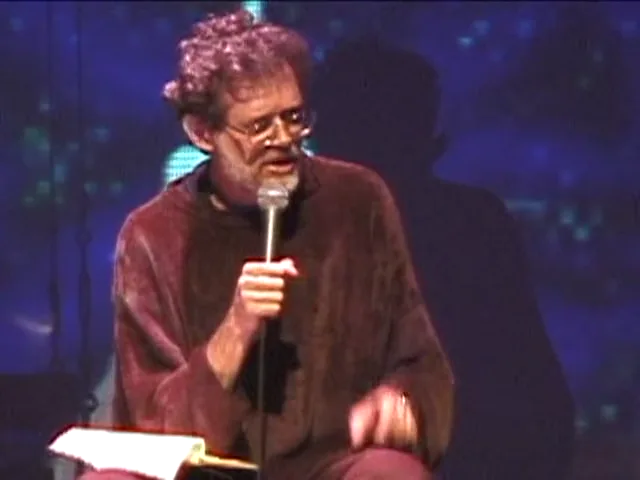
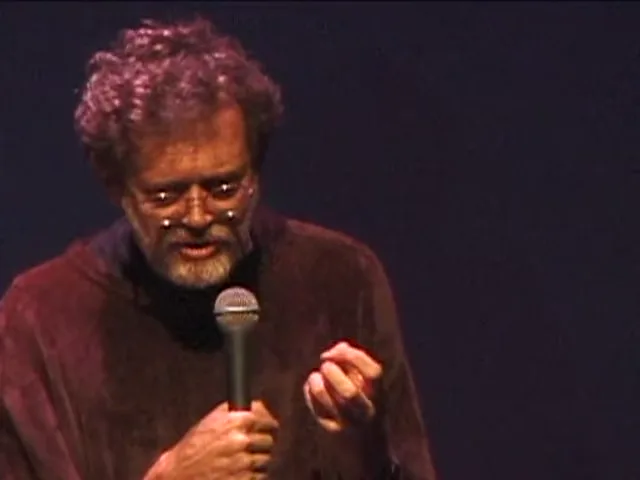
terence mckenna explores psychedelics and intelligent machines as complementary consciousness expanding technologies

dennis mckenna explains ethnobotany and ethnopharmacology, the role of the shaman as a specialist in plant-induced altered states, and his critique of fundamentalist religion, in a
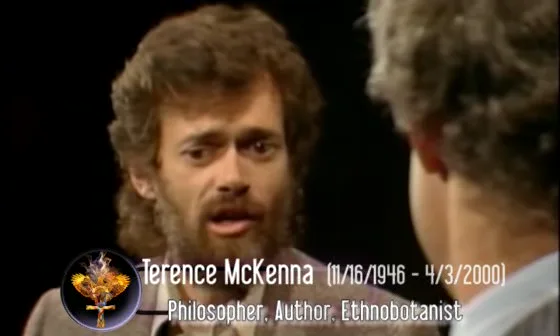
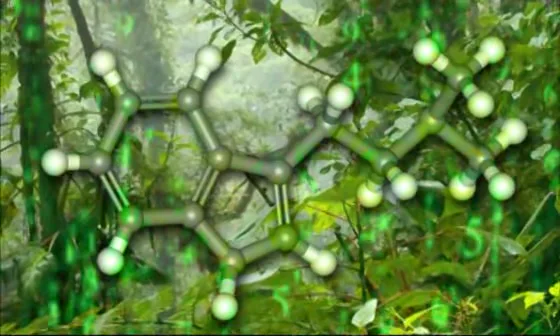
a 2009 documentary exploring shamanism and psychedelics as tools for accessing transpersonal realms through altered states of consciousness. covers ancient practices, sacred plants

dennis mckenna's 2008 talk at the fourth annual amazonian shamanism conference. speaking without prepared remarks, he explores ayahuasca as a planetary teacher, the scientific stud