Tmckenna-npr-mar 99

Recorded for KQED-FM's Forum in March 1999, this call-in radio episode features ethnobotanist Terence McKenna discussing psychedelics, plant medicine, and consciousness with host Michael Krasny and listeners. Topics range from Shaman Pharmaceuticals and the newly discovered Salvia divinorum to the role of altered states in accessing extraordinary experience, language as the foundation of reality, and the failures of both prohibition and New Age thinking. McKenna's live responses, grounded and articulate, engage callers' questions about meditation versus drugs, cultural anxiety, and the integration of visionary insight into ordinary life. His arguments weave ethnobotany, philosophy, and consciousness studies together, offering a rational counterpoint to both drug hysteria and spiritual naivety. The episode captures McKenna at his most accessible and thought-provoking.
transcriptmachine-transcribed, unedited
From KQED-FM in San Francisco, this is Forum. I'm Michael Krasny. Welcome.
Terrence McKenna is an author, scholar, and ethnobotanist who has become nationally and internationally known
and singularly identified with, among other things, psychedelics.
In fact, Timothy Leary called him the Timothy Leary of the 90s.
And he has once compared his own vacation to Darwin's cataloging of nature
as trying to catalog the productions of psychedelic nature.
His books include Food of the Gods, The Archaic Revival, Time Hallucinations,
a recently published book in which he had conversations, it's called The Trialogue,
with Rupert Sheldrake and Ralph Abraham.
It's called The Evolutionary Mind, Trialogues at the Edge of the Unthinkable.
And we always enjoy having Terrence with us to talk about all kinds of things.
Welcome to the program. Good morning.
Pleasure to be with you.
Well, actually, let me begin with something that just came up the other night.
I was at an event, an environmental fundraising event, down the peninsula.
And a few years ago, I had done something with Mark Plotkin,
ethnobotanist who wrote all about the rainforest and finding shamanistic roots
and actually started a company to go pursue pharmaceuticals in the jungle
and all that sort of thing.
Somebody said to me, you know, Mark Plotkin's shaman pharmaceuticals has gone belly up,
and I hadn't known that.
And suddenly, I started reflecting on that,
that maybe it might have something to do with all these inflated expectations
about the medicinal power of plants that Americans have perhaps bought into too strong.
Is that, do you think, operative here?
Well, my brother worked for shaman pharmaceuticals for a while.
I'm not sure it's accurate to call it Mark Plotkin's company.
We're probably sending several people through the roof.
Mark was one of the...
He was one of the...
Prototypical thing.
Yeah, right.
I think that a number of problems converged on their desire to make money,
one of which was the startling evolution of sampling technology
so that now it's possible to look at slurries of potentially drug-like material
produced synthetically in the laboratory
and identify thousands and thousands of compounds in a matter of hours.
And this technology didn't exist ten years ago when shaman was getting going.
So another company put out of business by technology?
Exactly.
Not keeping up with what the other guy was doing.
But has there been, in your judgment,
maybe a bit of overzeal with respect to the press
and the inflated expectations about what can be done for all?
I mean, the notion that there are panaceas out there,
cures to AIDS, etc., we just haven't found them.
Well, I think you have to understand,
if you're talking to tribal people
and they tell you that they have a plant that causes visions,
they're probably right.
But if they tell you they have a plant which cures diabetes,
diabetes is a set of syndromes defined by modern medical science.
How can Aboriginal people have those kinds of insights
into physiological functioning?
So the search for psychoactive drugs was very successful
based on interviewing Aboriginal people.
But the search for drugs applicable to other areas of modern medicine,
I think target-based drug design is much more effective.
Well, I kept thinking that our language is very revealing.
We have notions of magic mushrooms
and we talk medicinally about magic bullets.
I mean, what you've been in quest of in some respects is this magic.
I mean, that's what you've been looking for in a way, hasn't it?
Well, if you're looking for magical, psychoactive plants,
nature is full of them.
In every environment, in every ecosystem,
there are plants that either singly or in combination with nearby plants
will deliver powerful, mind-altering experiences.
Naturally, the jungles are most rich
because the jungles are most species-rich in plants generally.
But the chemistry of plants seems to have a place in it
for the production of compounds
which are very active in mammalian nervous systems.
And, of course, that includes ourselves.
Still much to be discovered in that whole realm?
Much to be discovered in terms of sites of activity,
characterization of receptors,
cross-indexing the effects of various drugs.
As an example of new discoveries,
Salvia divinorum is a Mexican mint plant
that has been discovered to have a compound in it,
microgram for microgram, as powerful as LSD.
It's completely disorientingly psychedelic.
This is not a plant that has been made illegal or scheduled.
And the compound, when studied,
revealed itself to be from a chemical family
never known to contain psychoactive substances.
So the analytical tools are getting more subtle.
The ability to detect nanogram amounts of material is now standard.
And, as it were, we're going back through the tailings.
And getting the gold out that was overlooked
by cruder methods used in the past.
You've never really, particularly in recent history,
advocated illegal drug use, right?
You mean somehow protesting the current legal situation?
Or suggesting or countenancing in some way
that those who want these kinds of experience
should avail themselves of them in defiance of the law?
No, I've always had the political attitude
that this was not something that you wanted to turn into a mass movement.
I came up through the 60s and saw the fallacy of that.
I think if people want to pursue these experiences,
they can go to countries where they're available
or they can grow these plants.
And, for example, this plant I just mentioned,
in Salvia Divinorum,
there is no more powerful psychedelic
and there is no more legal object in all of nature.
This is as legal as lawn cuttings.
So for the person who does their homework,
there is no conflict between the wish to experience these things
and their legal status.
Can we do the homework to the extent that we really know such things as...
I mean, Chris, you've written about the acid scare in the 60s
and all that sense of flashbacks
and, you know, Art Linkletter's daughter jumping out of a window.
I mean, a lot of people are very frightened by psychedelics
and frightened by hallucinogens
and with, some might say, good reason.
Do we really know, in other words, the overall effects?
Well, Tim Leary once said,
he said,
LSD is a psychoactive compound
that occasionally causes psychotic behavior
in people who haven't taken it.
And this occurs quite often.
Drugs often have more effect on the people who don't take them
than on the people who do take them.
Drugs are...
They have to begin somewhere, though.
Although you've said science fiction is the gateway drug, right?
I believe science fiction is the gateway drug.
Paleontology for seven-year-olds
is also a serious gateway drug.
I think that society,
rather than dealing with this as it should,
has dealt with it
with the heavy hand of the courts and the prisons,
when what we should be doing
is educating ourselves and our children.
Drugs are here to stay.
They're a part of post-modern life.
There will be more and more of them.
Wherever they are illegal,
they will spawn criminal syndicalism.
We need to sit down with our children
and explain to them how you take drugs,
how you evaluate their effect on you,
how you make decisions
absent social pressure and hype,
and how you come to terms
with this particular aspect of modern life.
Most parents would just want to steer their children
away from drugs altogether, though, I would think.
Well, but that sends a message
that these things are bad,
and then, of course, indiscriminately,
children will involve themselves in these things,
and the results are not happy.
Knowledge is the only way to come to terms with this.
It's a bit like sexuality.
The battle for sex education
is, I suppose, more or less won now,
but that was a huge issue as I was growing up.
Now, drugs, the response is the hammer of imprisonment,
and yet, as I said, the number of drugs,
the opportunities to take drugs,
endlessly proliferate.
If we don't educate people,
we are going to produce a continuous supply of victims
for the courts and the prisons to make their grist.
Some might argue that sex education
has only marginally affected,
and perhaps because of our culture,
the problem of sexual excess
and I suppose what could come under categories
of misuse of sexuality or abuse of sexuality
have been, if anything, exacerbated through the years.
Well, I suppose it's absent statistics,
it's everybody's opinion.
I certainly think people are having more and better sex
than they were having in the 50s.
Terrence McKenna, our guest,
and we can talk to him, as I said,
about a whole range of things here.
You know, when you...
You've always struck me,
and you've struck many people,
and you describe yourself as a very rational man,
and you certainly are an omnivorous thinker,
reader, scholar, and so forth,
and yet, sometimes when you talk about some things
that you have talked about,
aliens, UFOs, intergalactic stuff, and so forth,
it makes rational, skeptical people's skin
begin to, you know, percolate in many ways.
What do you say to that kind of response?
Well, I think they're not listening carefully.
My method, if you want to call it that,
has been to explore the weird, the bizarre, the marginal
with a rational mind, not with a will to believe.
The truth doesn't need your cooperation to exist.
The truth, you can kick the tires,
they'll let you take it for a spin.
All forms of cult, all forms of hype,
all forms of delusion,
do require your participation in order to exist.
So, I've looked into marginal areas of human experience,
historical and otherwise,
with a rational mind.
And what I have found is doorways into the miraculous
are far fewer than the publicists of the new age
would have us believe.
On the other hand, they are not as rare
as the proponents of radical reductionism
and materialism would have us believe.
There are doorways out of the mundane human condition.
I explored all candidates with an open mind
and came to the conclusion that psychedelic drugs
are the most accessible, the most efficient,
the least dangerous.
Now, there may be other ways to access the miraculous,
flagellation, prayer, wilderness abandonment,
what have you.
I'm not interested in cataloging the varieties
of the doorways to the secret.
I'm interested in finding one doorway that worked.
How does the rational mind determine
what is miraculous as opposed to what may be induced
or may be some sort of delirium
or some kind of hallucinatory experience
that has no basis in rationality?
Well, I think Heidegger said
we measure our relationship to reality
by the depth of the call.
And I think one of the chief justices said
he couldn't define pornography,
but he knew it when he saw it.
The miraculous is self-evidently the miraculous.
And it's certainly possible to take many drugs
and have many kinds of experiences
without coming near it.
On the other hand,
these psychoactive substances
seem to be the most direct path to the miraculous.
Now, what do I mean by that?
I mean the dissolving of cultural constructs,
the reality that is ever-present
outside who you are,
who your culture is,
what language you speak,
your expectations.
You know, we could disagree
about the worth and the efficacy of psychedelics,
but I think if we had shared the experience,
we could agree
that it is characterized by boundary dissolution.
You're talking about something universal,
something that suggests spirituality
or aesthetics
or maybe even theology,
but not necessarily intergalactic communication,
let's say,
or exobiology.
No, I don't think that the culture
at the end of the 20th century
is penetrated by dozens
or hundreds of alien cultures
seeking to trade high technology
for fetal body parts
or all of that.
In fact, I consider all that pop culture
to be indicative of the hysteria
that is engendered by science
moving beyond the range
of the understanding of ordinary people.
People will always generate explanations
for what they see around them,
and if they lack education,
their explanations will be bizarre,
quirky, primitive,
and I take all this New Age channeling
and all these extraterrestrial revelations
and so forth
to signify a profound
dichotomy
between officially sanctioned models of reality
and then what people are saying to each other
on the buses
and in the dime stores.
There have been some very telling studies,
in fact,
about those who had UFO close encounters
and who were taken aboard ships
and often various parts of the anatomy
are penetrated
or these kinds of things happen,
and in most cases,
the proliferation of these things occurred
almost exclusively,
especially the same kinds of descriptions
of alien forms and so forth
occurred after the spate of movies
about these things.
Pro bono proctologists
from other star systems
are not making unannounced
free house calls in our homes.
I mean,
this could almost be a litmus test
for sanity.
If you believe that,
then I want to sell you
a bridge over the Hudson River
quite cheaply.
Then what is out there?
How do we begin to even assume
a kind of cosmic consciousness
or awareness
of what might be alive
beyond this planet?
Well, Michael,
imagine if there were a force
in the water
or in the air
or in the advertising
that was causing
a certain significant percentage
of people
here at the end
of the 20th century
to simply lose the ability
to distinguish
between memory and dream.
Then people wouldn't know
whether that image
in their mind
of a flying saucer
came from close encounters
or from that weekend
at Uncle Tom's farm
when they were 11.
And I think something like this
is happening.
We as tribal people
with aboriginal roots
are set up to handle
about 10 stories
and one long epic poem
intellectually,
the machinery of our brains.
And yet modern media
has exposed each of us
to thousands of movies,
hundreds of thousands
of sitcoms,
endless clips of film
and audio data.
And I think people
are losing the ability
to distinguish
their own past
from a kind of media-created
collective past
that has more the character
of the Jungian unconscious
about it
than it has
the character
of the warm
and friendly world
of physics.
A collective filmic unconscious
or something like that?
Yes, a kind of collective dream
on which we draw
and out of it
comes the Bigfoot,
the flying saucers,
the proctologists
from nearby star systems.
And people who have not
been trained
to deconstruct data
or think rationally
are completely victim
of these media-spread,
meme-like viruses
that distort
ordinary thinking,
balkanize epistemology,
and make social
and political consensus
on anything
that much harder to reach.
It just reminded me
of Doug Rushkoff's work
we were talking about
before we went on the air
and the allusion to memes.
I wanted to allude
to something else
and that is
the 1971 trip
that you made
to South America
and you were out,
it's been written
about a number of times
with your brother
and your brother
experienced
as a result
of ingesting a plant
hearing a conversation
his mother had
on the telephone,
your mother had
on the telephone
in 1953,
and you can correct me
in the details of this,
but Dizzy Dean
was pitching a game
that was being broadcast
on the radio.
He could hear all this.
He believed
he could hear all this.
And at the same time,
he was a three-year-old
at the time.
Now presumably
your mother would
have remembered this
or maybe not
if it actually happened,
but this is the realm
we're talking about.
Your brother said
it was all inner,
he thought,
but this realm
between dream
and memory
and the indecipherability
of the two?
Well, it is certainly
true that in the presence
of certain forms
of schizophrenia,
ordinary reality
seems to dissolve
into a stew
of coincidences,
laden facts,
side glances
from reality
if you will.
I think
that time
and space
is generally
pretty firm,
but that there
are conditions
and it always
seems to have to do
with perturbation
of mental states,
whether achieved
through some
yogic
or quasi-religious
technique
or through the use
of drugs.
But when we perturb
our mental machinery,
time and space
comes apart
and reweaves itself
in unexpected ways.
To me,
this is not surprising
because it seems
to me
we obviously
create time
and space.
These are mental
constructs.
They're not
given from Mount Sinai.
They're conventions
that the animal body
brings together
in order to organize
data about its place
in the world.
To borrow a little
from Cartesian thought,
I think time and space
therefore time and space
exists?
Something like that,
absolutely.
The world is made
of language, Michael.
That's the insight
of psychedelics.
What we expect
to see,
we see.
What we say
is there,
is there.
And this is
really what
the 20th century
has contributed
to philosophy,
I think.
The understanding
that language
is primary.
Concepts like space,
time, matter, energy.
These are culture-bound,
linguistically defined
concepts.
What is primary
is the word.
And it's very interesting
to me
that this psychedelic
insight
is restated
by the cyber revolution,
which says it
slightly differently.
it says the world
is code.
Everything is code.
Your DNA
creates you
as its code unfolds.
The world around us
is defined
by legal codes.
The world inside
our machines
are defined
by what we call
computer languages.
More code.
Code
is the primary
reality.
And in ordinary
experience,
code is language.
Now,
this creates
opportunities
for relativism.
It creates
opportunities
for all kinds
of dangerous
and sloppy
thinking.
Nevertheless,
we have to go
down that route
because it is clear
this is a deeper
understanding
than what we
inherited
from the philosophies
of the 19th century.
Talking to Terence McKenna
about a whole range
of things,
including
changing philosophy,
his newest book,
actually,
Trial Logs
with Rupert Sheldrake
and Ralph Abraham
is called
The Evolutionary Mind.
It's a feast
of all kinds
of stuff
on visual math
and factals
and psychic pets
and the millennium,
which brings up
another interesting point.
A number of years ago
you talked about
December 22nd,
as the date of,
I guess,
what would be
characterized as
the secular apocalypse.
Are you still
with that date?
Yes,
it's nice now
to have it all
to myself
since everyone's
rushing the gun
and piled on
to Y2K.
I was accused
of being too crazy
to suppose
the world
could transform
in 2012.
Now no one
will wait.
I represent
an extremely
conservative position.
You're not that
concerned about
Y2K, though.
I really am not.
I live in Hawaii
off-grid.
It may be because
I'm already
prepared for it,
but I suspect
problems from
Y2K will be
local,
confined in time,
and fairly manageable.
Of course,
it's simply
a projection
for opinion.
No one knows.
Let me give
a phone number
here if you'd like
to join us
with Terrence McKenna.
You're cordially
invited to do so
with questions
or comments.
You can reach us
now at
415-863-2476.
I'm going to open
up the phone lines
and invite you
to jump aboard
here.
Again,
the number
in the 415-area
code is
863-2476.
Often called
the guru
as psychedelics,
but a man
who has lived
quite an amazing
life studying
in Tibetan
Nepal,
doing lepidopterous
work in Indonesia,
smuggling hashish.
The list goes on.
I'm cataloging
my own work
here for you,
Terrence,
and we'll take
some calls
when we return
on forum.
Local underwriting
is provided
by Harper,
San Francisco,
publishing books
dedicated to
women's spirituality
and feminist
scholarship,
presenting
Reanne Eisler's
The Chalice
and the Blade,
harpercollins.com,
and by
Brainstorm Networks
offering DSL,
ISDN,
and T1
Internet Connections
exclusively to
Bay Area businesses,
877-2-GET-DSL,
or on the web
at brainstorm.net.
Friday on forum,
Jeffrey Klein
will be the guest host
and the topic
up for discussion
and the opening
hour will be
the Microsoft trial.
Then we'll have
a look at longevity
and you're invited
to join us
for forum.
We're talking
with Terrence McKenna
and I want to go
to your phone calls
and we'll do
that momentarily.
Just a quick question
though,
when you talk
about the miraculous
and certainly
getting a sense
of the visionary
power of plants
and all of that,
psychedelics,
etc.,
is there a sense
of your,
as a Westerner
and as a serious
thinker
and rationalist,
being able
to feel
the kind
of sacred
and divine
power that is
often attached
to many of these
plants by other
cultures.
Can you absorb
that?
Can you internalize
that?
Yes, absolutely
you can.
I mean,
it comes in the
form of awe
and astonishment,
but awe
has always been
spoken of
as an appropriate
emotion in the
presence of the
supernatural.
And when you
finally grab on
to the 100,000
volt psychedelic
experience,
it's absolutely
confounding
because it seems
to be the thing
which our culture
has been most
at pains to
deny the existence
of.
And so it's as
though you come
around the corner
and there's
Santa Claus,
Bugs Bunny,
and the Easter
Bunny all
playing poker
together,
and you realize
you were given
the wrong story
all the way
down the line.
And the
appropriate response
to that is
humility and awe
and a kind of
redirecting of
one's energies
to try and get
in line with
this very large
reality suddenly
to be revealed
outside the
confines of our
cultural agenda
or our cultural
concern.
But you know,
it's interesting
because you speak
with this kind
of derogation
about New Age
and yet at the
same time when
you talk about
the direct
results and
consequences of
many of your
experiences with
these sacred
plants, it
suggests a
sense of awe
and mystery
but also a
sense of the
oneness and
unity of life
and a feeling
of spiritual
transformation,
of feminism
and ecology
coming to the
fore in terms
of your political
consciousness,
all things which
are very much
a part of,
the zeitgeist
and the New
Age movement
as well.
Well, I've
always felt that
in a way the
New Age was
a flight from
the psychedelic
experience,
that the New
Age was saying
its invisible
agenda was
we'll try
anything as long
as we're sure
it doesn't work
and that
automatically
exempts
psychedelics.
All talk of
spiritual advancement
is always talk
of pushing,
trying,
practice,
concentration,
attention.
Once you find
psychedelics,
you're not looking
for the accelerator
anymore,
you're looking
for the brakes
on your
spiritual vehicle,
you have suddenly
found the means
to achieve
the stated goal
which is union
with the divine
or oneness
or something
like that.
Now the game
becomes a very
grown-up game.
How are you
going to integrate
this into
your ordinary life?
You're no longer
a seeker,
you're no longer
an ingenue,
now you're an
insider,
now you can
come and go
from these
transcendental
places at will.
Now how do you
use that
to make yourself
a better person,
better parent,
better citizen
of your community?
You mean as a
result of the
opening up
of your consciousness
through the sorts
of experiences
you've had,
you can become
transcendental
at will?
Well, you can
have recourse
to the effective
method at will
because the
substances work.
The substances
work, yes.
Lee is our
first caller
from Pine Grove.
Good morning.
Good morning,
Michael.
I'd like to
ask Mr. McKenna
if he can direct
me to references
in the botanical
literature regarding
Salvia dividorum.
I grow 15 or
16 different
species of
salvia and
have a fair
library and I'm
unable to locate
it.
You should
simply search
on the internet
Salvia dividorum.
There are several
pages with
dozens of
links and
there are active
lists on the
internet.
If you run
an excite
search on
Salvia dividorum
you will have
more than you
know what to
do.
All right,
that's D-I-V-A
or D-I-V-I?
D-I-V-I-N-O-R-U-M.
I've got it.
All right, Lee.
Thank you for
your call.
To Santa Cruz
we go to
BJ.
Good morning.
Oh, thanks for
taking my call.
Hello, Terrence.
Hi, Barry.
How are you this
morning?
Great.
Yes, I just
wanted to comment
on a misunderstanding
of the New
Age.
I heard Mr.
Krasny say,
isn't this New
Age?
The misunderstanding
as far as the New
Age is concerned
is that we can't
arrive at truth or
whatever it's going
by these days by
transcendence.
And I think what
has occurred is
that when the
psychedelic movement
was crushed in
the 60s, the
failure of the
psychedelic revolution
brought on the
New Age.
In other words,
we replaced the
vision and
imagination with
visualization.
And it's
concomitant
techniques,
crystals,
and all that.
It is the
New Age
stands for
really, it's
disguised as
a visionary
movement, but it
really is all
about the lack of
vision and
keeping the same
structure, but
changing the
content of
traditional
patriarchal
religion.
As a matter of
fact, there have
been quite a number
of feminists who
have commented
on the deep
patriarchal character
of the New
Age, and I
think that centers
in the idea of
transcendence,
where you
transcend the
Earth and
your body and
all this, and
instead, I think
psychedelics brings
you to the
depth ecology
vision of the
Earth, which I
think Terence
calls Gaya.
It brings you to
the mind of the
Earth and not
transcending.
So I think
that...
That...
But I think
that...
That...
We need a real alternative to the New Age, and I think Terence is quite right, metaphorically,
because Terence rejected going up to the high Himalayas,
and he instead went down south to the depths of the Amazon,
and I think that is a signal of the way to go.
Go south, young man.
All right, BJ, thank you for that call.
I mean, it's an important distinction he's making here, at least as he sees the differences between New Age
and what Terence McKenna is all about.
Let me get more of your calls on in the meantime.
Chris from Inverness is next.
Yes, yes, Terence, I was intrigued by your emphasis on language.
It long seemed to me, and I'm sure it's not an original thought,
that a lot of the spiritual realm, religions, the I Ching, the Tarot,
astrology, the UFO thing, all of that are forms of metaphor for something that we have coming up
or that we're engaging in evolutionarily that our languages cope with and express, in other words.
And I wonder if the whole psychedelic thing and your descriptions of the places that you've gone on DMT,
I wonder to what degree those are metaphoric, and what kind of metaphor is it?
Is it a synecdoche?
Is it part for a whole?
Is it next to something?
Do you see what I mean?
Well, I think I understand what you mean.
As far as reality and its relationship to language is concerned,
this is a fundamental split in the Western mind.
Magic, which we haven't heard much about seriously since the 16th century,
magic is the idea that the world is made of language
and that you can control the world through language,
through spells, through the power of letters, so forth and so on.
And that idea gave way to modern science's idea
that there were stubborn facts in the world
that language couldn't either eradicate or ameliorate.
Now with the rise of cyberspace and virtual reality,
language is becoming again re-empowered.
I mean, in a sense, computer code is magical language.
It's language which, when executed, causes something to actually happen.
Now, as far as to what degree descriptions of these psychedelic states are metaphors,
they have to be metaphors.
Because what is not often mentioned,
but always experienced with high-dose psychedelics,
is an actual alteration of the language-producing machinery itself.
You know, some people have the idea you take a psychedelic drug or substance
and the world transforms itself and you watch this happen.
That's true to some degree,
but the person, the watcher, is themselves transformed.
This is not a clean process.
And when you actually see the machinery of language melt, involute, fractalize,
crystallize, and transform itself before you,
you get a tremendous sense of the malleability of reality
and how it rests on a platform of stable physiological functioning.
I also suggest, thank you, Chris,
that if reality is shifting and perception is shifting all the time
in this cyber revolution with all this information technology,
then we're evolving in different ways that we don't even understand yet.
We're perceiving time in ways that we don't even understand yet.
Well, yes.
I spent last week with Bruce Dahmer,
who's one of the great mavens of interactive virtual worlds,
and we were dressing in avatars,
meeting people in cyberspace,
but occasionally we would open...
Dressing in avatars?
This means an avatar is how you appear to other people in cyberspace,
so you choose to be a mini-skirted girl.
I know it mainly as a Hindu word.
Oh, no, it's been appropriated and trademarked,
and the Hindus are now out.
But anyway, being in your avatar in a virtual world,
talking to other people in a virtual world,
and then opening several virtual worlds at once on your screen,
so you actually have the experience of being in more than one place at one time,
after a couple of hours of that,
you leave the keyboard,
and you can practically feel the McLuhan-esque reprogramming
of your communication-based categories
based on this bizarre informational environment
that you've been spending time in.
So, yes, I think we're evolving.
Knowing the shift in media is changing human beings
at least as much as the introduction of print did in the 1440s.
And the good news about all of this
is that no one is in control,
and no one understands enough about it
to direct or sculpt it to some secular end.
You read Leonard Schlein's book?
I did read Leonard Schlein's.
I mean, he's on this program.
You put much credence in that,
that the whole nature of our brain is changing,
and that's the result of the goddess and feminism
becoming more preeminent in our lives and so forth?
Well, he worked off an earlier book by Ivan Illich
called The ABC-dization of Culture,
who was also then cribbing from Marshall McLuhan,
who talked about how sensory ratios changed cultures from hot to cool.
You've got the genealogy and the derivations right.
I mean, do you believe the premise?
No, I do believe it.
I think print created not only the modern notion of the citizen,
it created the modern assembly line,
it created all kinds of things
which we assume are basic to humanness
that are, in fact, artifacts of the technologies
accepted by Europe some 400 years ago
and then spread throughout the world.
And misogyny, too?
Misogyny probably has an older history.
Phyllis from Menlo Park, join us, please.
Good morning.
Wow, my mind is spinning.
Hi, Terrence.
I was at the conference at Esalen
where you and Mr. Abraham and, pardon me,
Rupert Sheldrake, I think, first developed some of these ideas.
Is this the book that's come out of that?
Well, there were two of those books of dialogues
or trilogues with Rupert and Ralph.
The first one was called
Trialogues at the Edge of the West,
and the new one is called The Evolutionary Mind.
And we just simply take up where we left off with that first book.
It's fabulous ideas, and the mind spins.
Could you explain a little more the year 2012,
what it is you envision as happening?
Not only the year, Phyllis, we've got the date,
December 22nd, 2012.
Yeah, well, that's the nice thing about mathematics.
If you do it right, there's not much of a fudge factor.
The idea about 2012 was simply,
from studying the structure of the I Ching,
specifically the structure of the sequence of the hexagrams,
way back in the middle 70s,
I discovered a curve there,
which is a fractal curve
with the property of damping its own oscillation.
Now, what that means
is that it eventually runs down and disappears,
and it looks somewhat like a stock market.
And I discovered that if you went at history
with the concept that it was an ebb and flow
between two polar forces,
which I named habit and novelty,
that you could actually get a conformational fit
between this abstract mathematical algorithm,
this curve,
and the vicissitudes of invention, migration,
warfare, political advance, and so forth,
the factors that...
All of our global up and downs.
Exactly.
And this was very satisfying to see history
so well described by a mathematical algorithm.
There was just one minor problem,
which was the algorithm predicted
that the quality I called novelty
would reach infinity in our lifetimes.
And when the calculation was finally done,
December 22, 2012 A.D.
But what do you think will happen?
Are we all going to dissolve
into subatomic particles?
Well, there are two ways to answer that question.
The honest answer is it's too early to tell.
It's like asking a man facing east at 2 a.m.
to describe the coming sunrise.
He can't do it because the sunrise
is over the curvature of the event horizon of the Earth.
That's the honest answer.
Then the more fun answer is
to pretend we do know what's going on
based on looking at what novelty has been in the past.
Novelty seems to be definable as density of connectivity.
So what is going to happen in 2012
is that all points in this universe
will be what mathematicians call cotangent.
In other words,
all points will be connected to all other points.
Now, I dreamed this up in the early 70s, early 80s,
where talking about all points being connected
seemed pie in the sky.
Although the New Age people did it
with harmonic convergence, didn't they?
To some degree.
But now the Internet appears on the scene,
and lo and behold,
what is the Internet
but a global connection machine,
knitting everything together,
and everything we want from the Internet,
higher speed, greater flexibility,
more intelligent searches,
so forth and so on,
tend to push the Internet
toward ever greater states
of complexification and connectivity.
So I would say on this 2012 thing,
we can now see the light
at the end of the tunnel.
Well, human history ends
in human-machine prosthesis,
and machine history begins
in human-machine prosthesis.
So mark it on your calendar, Phyllis.
Okay, one more question.
Is there an evolutionary intention in this?
I mean, we want to get back
to whatever state we're going to be in in 2012,
so we have somehow managed
to invent things like cyberspace?
Well, evolution and intent
are words which evolutionary thinkers
don't like to see on the same page
because they believe
that evolution is essentially purposeless,
driven by random mutation.
Very capricious facts, yeah.
Right.
That isn't what I believe.
Well, no, it isn't what most people believe.
There does seem to be
a discernible morphogenetic unfolding
toward a higher state
of unity and connectivity,
and that's what we're riffing on.
Phyllis, thank you,
and let's riff a little
with Lawrence from Berkeley.
Hi, Lawrence.
Yes, I wanted to speak up
for traditional meditation
and traditional methods,
you know,
of meditative discipline
and mysticism
as opposed to drugs.
Now, I know
that everything I'm going to say
is going to be
anathema to your guest,
but I think it's important
that the audience hear it.
I wanted to,
you know,
what happens with drugs
is what happens
with St. John of the Cross,
writing in the 16th century,
talks about as the dark night
of the soul,
and this is something
that happens
with any kind of meditative
or mystical high.
It goes away,
and you get into,
and when it goes away,
the contrast between
the incredible light
and joy that you were feeling
and the absence of it
produces great depression,
dark night.
In traditional mysticism,
what happens
when this,
when the dark night
of the soul occurs,
when the mystical light
goes away,
is that you have
to do some work.
You have to do some work
that is required by faith
to say,
okay,
I remember this state
even though
I'm not feeling it now,
and to get back to it,
exhibit love.
I have to exhibit humility.
I have to exhibit
harmony between myself
and others,
not in my imagination,
but in reality,
you know,
by working to create
this harmony with others.
The problem with taking
any form of drugs,
or, you know,
whether it's a pill
or a natural plant,
is that when that
dark night comes,
when the light goes away,
you don't have to do
the required work.
All you have to do
is pop a pill again,
or pop another drug again,
so that instead of
getting a condition of love,
which is produced
by actually serving
people and by trying
to produce a condition
in which their needs
are in reality
as great or as important
as your own personal needs,
you simply assume
that what feels,
you go for a kind of
a unity through the back door.
You say,
what feels good to me
must therefore be good to you,
and you get a unity
of fantasy rather than
a unity of love and work.
All right.
You're listening to Forum.
I'm Michael Krasny.
Terence McKenna,
let's go to you on that.
Well, this is a standard argument,
meditation versus drugs.
I think there's a misconception
about how people
who use drugs
for self-exploration do it.
It's not a matter
of combating coming down
by taking the drug again.
I think the dark night
of the soul
is a natural
and unavoidable part
of any psychological
growth process.
Jung called it
the negredo,
taking a term
from alchemy.
My idea of the way
to use psychedelics
is very similar
to how the caller
described using
ordinary spiritual techniques.
It takes about
seven or eight hours
to have a psilocybin trip.
I would think
it would take
30 or 40 days
to assimilate
the messages
of that trip
and integrate them
into your life.
Certainly,
the visions
which you obtain
are an inspiration
to community,
to love,
to striving
to return
to these places.
Now,
the perils of drugs
are the perils
of overdose
or underdose.
The perils
of the traditional
spiritual methods
are the malevolence
of the guru,
the potential
for being manipulated
on somebody else's
schedule and agenda.
No path
of spiritual advance
can be said
to be without risk.
I looked into yoga.
I've studied Zen.
I've studied
a number of these
so-called spiritual disciplines
and I find
more backbiting,
more human frailty
on display
than I find
in the solitary practice
of taking drugs
with an exploring
attitude.
Let me thank Lawrence
for the call.
Do you find
that there's sometimes
a kind of
expectation
that someone
who has experimented
with drugs
as much as you have
should be much more
wiggy
and out of it
and less rational
than you are?
Oh, yes.
You should be ravaged
by these drugs?
Yes.
Well, my public image
I think is
as a kind of wild man
halfway between
William Burroughs
and Tim Leary.
But that's not
who you are.
No, it's not
who I am at all.
I'm a somewhat
stodgy,
logical Irish scholar.
Yes,
drug-taking
and drug-using people
have been hideously
stereotyped.
If a racial
or religious minority
had had to put up
with the crap
that we've had
to put up with
we would have gotten
some kind of remediation
from the Justice Department.
I mean,
the idea that potheads
are stupid,
the idea that
acid makes it impossible
for you to think straight.
You know,
the dirty little secret
of Northern California's
vast economic success
down at Silicon Valley
is the creativity
that was injected
into this area
in the 1960s
through the LSD revolution
in many,
many significant cases.
But you do see
people who are
wigged out
as a result of...
I mean,
like you say,
it's individual cases perhaps,
but you see them
and you see people
who use marijuana
chronically
who seem to slow down.
I mean,
I've seen it.
It's an evolution
or a trajectory
that I've seen
all too frequently
with people
who are very heavy pot users.
Well,
you see it
with alcohol,
you see it with tobacco.
Exactly.
Good point.
Life is not user safe.
You know,
Whitehead said
it's the business
of the future
to be dangerous.
On the other hand,
it's good to get
an education,
it's good to know
the classics,
it's good to be able
to do a quadratic equation,
and it's very good
to understand
what LSD is all about.
I mean,
these are aspects of life.
You don't want to go
to the yawning grave
without having been exposed to.
Troy is our next caller
from Pacific Grove.
Good morning.
Good morning, Michael.
Thank you very much for this.
This has been one of the best
in a long time.
And I'd like to get my fingers
on this big, huge door
of perception
that we're trying
to ease open.
The thing with drugs,
an analogy that I use
with many people,
you know,
it's like when you use drugs
and you get to that place
that's like a mansion
inside your own mind,
there's something that
two things.
One,
you know then
that you are the son
of the king
and that this is your mansion
and it's in your mind
and you were right
all along.
The only thing is
is that there's a policeman
that comes around.
It's the rules.
You break in
through the window,
then you must get tossed out.
I think Freud would call
that super ego.
But the truth is
is that it is your house.
The only thing is
is you've just got
to find the key
to get in the front door
the way you're supposed
to enter it
and then it becomes
your own home.
Well, don't you think
the disenfranchising
of people
from their own bodies
has been a major
cultural agenda
for the past
three or four hundred years?
It's incredibly so.
You know,
I'd like to...
Except I must confess
when you started talking
using your castle metaphor
I thought right away
of Kafka.
That's my own proclivities.
In a sense,
it is just a metaphor.
Again,
because we're really
struggling with this
to get back
to the beginning premise
of the show
of how language
constructs our world
and how the visual
experience now
is somehow seemingly
a bit disconnected
from our lexicological order
and we're able
to vision things
that don't necessarily
always fall into
an ability to communicate.
Vision is the key word here.
I thank you.
I mean,
for much of what
Terence McKenna's
whole thinking career
and search
has been about,
I mean,
where do we get vision
from?
From what part of nature
does...
Where do the ideas
come from?
You know,
people who don't
take psychedelics
think it's all
moving lights
and little concentric circles.
They don't understand
that these are
tremendously emotionally
moving dramatic scenarios
that one could not
possibly generate
out of one's own mind
or if one could,
then every single
one of us
is a Beethoven,
is a Gilbert and Sullivan,
is a Shakespeare
and maybe that's true
but if that's true,
that is empowering
and worth knowing.
I remember once,
many years ago,
interviewing Ram Dass
and he said,
I honor what psychedelics
have done for me
and there was a storm
of protest
because he seemed
to be countenancing
the use of psychedelics
and that was during
part of the whole
scary era.
I think many people
still are,
particularly where
children are concerned,
scared about psychedelics
and scared about drugs
in general,
even in terms of
frontiers of consciousness.
You honor
what psychedelics
have done for you,
obviously,
don't you?
Oh, absolutely.
To me,
they opened my mind
to realms of beauty
and understanding
that would never
have been accessible
otherwise.
I read the mystical literature,
I knew what
I was shooting for,
that's what I mean
by doing your homework
but for me,
it fell upon me
with the force
of a transforming miracle
and it's always been
my motivation publicly
to speak about that
for that reason.
I'm always delighted
to have you
and to engage with you.
Thank you so much
for being with us.
The newest book
is The Evolutionary Mind,
Trialogues at the Edge
of the Unthinkable
with Rupert Sheldrake,
Ralph Abraham
and Terrence McKenna.
Thank you all
for being with us
this hour.
We'll be with you
on the morrow
and Jeffrey Klein
will be sitting
in the seat tomorrow.
Our progress producers
are Robin Giannatasio-Mahl,
David Minko
and Holly Kernan-Waitala.
Executive producer
of Forum
is Raul Ramirez.
From KQED-FM
in San Francisco,
I'm Michael Krasti.
I'm Peter Sagal.
Imagine this scenario.
You're at a swank
cocktail party.
You spot an incredibly
attractive person.
You know from
the ineffable expression
on his or her face
that they're lonely,
bored with a sycophantic
attention extreme
physical beauty brings.
They want something
more from a companion,
something deeper.
You sidle closer.
You say,
did you know
that in Hong Kong
the film as good
as it gets
is called
Mr. Cat Poop?
The extremely attractive
person turns to you.
No one has ever
said anything like this
to her or him
before he or she
says,
how did you know that?
You say,
I heard it on
Wait, Wait, Don't Tell Me,
the NPR news quiz.
He or she smiles.
Tell me more.
Hey, it could happen.
Wait, Wait, Don't Tell Me,
you can hear that
Saturday at 11 a.m.
here on KQED radio.
The Bay Area's
weather forecast
for today is calling
for sunny skies
and cool temperatures
you can expect
highs from the mid
to upper 50s today.
Patchy late night
valley fog tonight,
otherwise mostly
clear and cool.
Lows in the 30s.
The Friday forecast,
mostly sunny tomorrow
except for some
patchy morning valley fog
with highs tomorrow
55 to 60 degrees.
It's time now
for Talk of the Nation.
It's 11 o'clock.
You're listening to
member-supported
KQED-FM San Francisco
at 88.5 FM.
From NPR News
in Washington,
I'm Ray Suarez
and this is
Talk of the Nation.
Lines out the door
at $150 a head
to hear this.
I was told that
there were some
who thought that
I might have an
announcement to make,
but I don't.
Hillary Rodham Clinton
in New York
not announcing
she's running
for the U.S. Senate.
We're not doing
tax cuts as planned
this hour on the program.
It's time for open phones.
Call us at
800-989-8255
with your comments
on the week's news
or other editions
of the program.
You have the floor.
You set the agenda.
800-989-8255
Open phones
on Talk of the Nation
after the news.
From National Public Radio News
in Washington,
I'm Corva Coleman.
A military jury
in Camp Lejeune,
North Carolina
has acquitted
a Marine pilot
of all charges
connected to an accident
in the Italian Alps
last year.
More than 20 people
died when
Captain Richard Ashby's
jet cut the cable
from the air.

timothy leary on dying with dignity, designed as life's most important decision and exercise of conscious will.

terence mckenna's sounds true workshop on shamanism and psilocybin's role in human evolution, recorded live in boulder colorado.
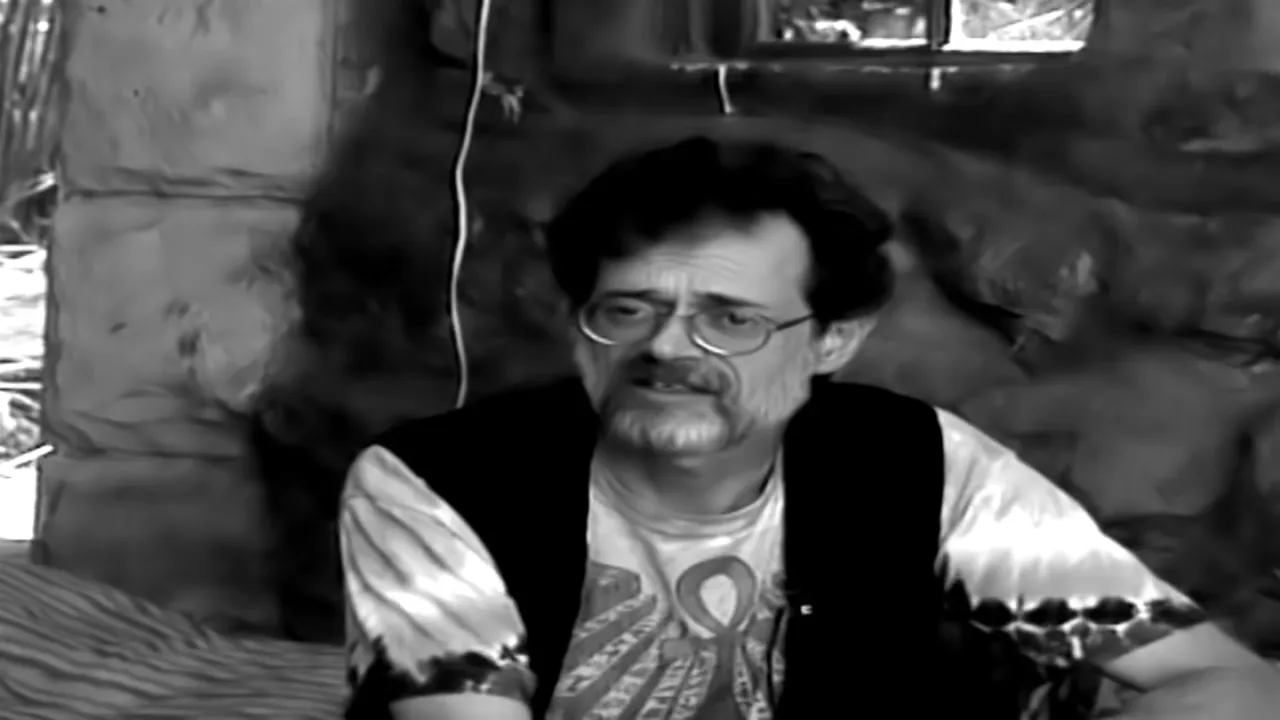
part 3 of 12 from terence mckenna's 2012 omnibus series where he argues culture is not your friend but an intrusion on identity that demands conformity in exchange for unsatisfying

dennis mckenna discusses ufos, psychedelic experiences and his research on dmt and psilocybin mushrooms on the paratopia podcast
a 2009 documentary exploring shamanism and psychedelics as tools for accessing transpersonal realms through altered states of consciousness. covers ancient practices, sacred plants