Trialogue 1992

This 1992 trialogue from Lorenzo's Psychedelic Salon features Terence McKenna and mathematician Ralph Abraham in conversation about psychedelics and mathematical vision. They explore the possibility of expressing the visual mathematics of the psychedelic experience through media ranging from traditional painting to computer graphics and supercomputers. The dialogue touches on shamanism, the role of visionary experience in culture, and how feeble models and representations can nonetheless resonate with and awaken profound understanding. At over six hours, this extended recording captures the full exploratory depth of two remarkable thinkers at the height of their intellectual power.
transcriptmachine-transcribed, unedited
Greetings from Cyberdelic Space.
This is Lorenzo, and I'm your host here in the Psychedelic Salon.
Well, I'm sorry about being so late getting this podcast out again,
but there's been a lot going on around here this week.
Primarily a Plylogue Salon that Bruce Dahmer and Galen Brandt led here in San Diego last Monday night.
And in a few weeks, I hope to play a few selections from that salon for you.
But today we're going to hear the rest of the Plylogue that we began listening to last week
when Ralph Abraham presented his introduction to today's topic,
which seemed to morph into a contemplation of visual psychedelic language,
something our visionary artists are working on feverishly every day.
But first, I want to thank two people who have sent in donations this week to help keep the salon going.
And they are Aiden L. and RPC Services.
So, thank you very much, RPC and Aiden.
I really appreciate your help getting these podcasts out each week.
And I hope that life is treating you well these days.
In just a minute, I'm going to play today's talk for us.
But first, I want to say a little something about Ralph Abraham,
because most of our fellow saloners primarily know Ralph as one of Terrence McKenna's best friends and intellectual peers.
But it is the mathematician side of Ralph that I want to mention right now.
Before I went to law school, I did my undergraduate work in electrical engineering.
And as a result, I took quite a few advanced math courses.
Now, over 40 years later, I have to admit that all of those long hours of studying math seem to have been wasted
because I don't remember a thing about them anymore.
And maybe that wouldn't have been the case if I'd had Ralph as my teacher.
Because from what I've heard, Ralph not only is a world-class mathematician,
he also excels in his ability to teach math.
And my good friend Michael Shields and I were exchanging a few emails about Ralph the other day.
And here's part of what he had to say.
I moved to Santa Cruz in 1981
and took the Beginning Calculus I class taught by Ralph Abraham at UCSC.
It was the third or fourth time I had tried to learn calculus since 1965.
Ralph taught the math algorithms, or equations,
by drawing with colored chalks and making visual simulated moving graphs.
And I could see for the first time
that all the equations were moving visual events.
Earlier math teachers had always emphasized the numerical and symbolic algorithms
rather than the visual movement.
I finally got it.
Ralph is an amazing teacher, and he's still going strong, as his schedule shows below.
And then Michael listed a few of the items on Ralph's current schedule,
like speaking engagements in the States, as well as in Greece, Italy, India, and Japan.
And you can find out more about these events by going to www.ralph-abraham.org
and click on the Upcoming Events link.
Hopefully, a few of our fellow salonners will attend one of Ralph's lectures and send us a report.
So now let's pick up with the last minute or so from the end of last week's podcast,
where Ralph Abraham posed the question on which this trialogue was to proceed.
I should warn you that there is a brief break about halfway through this trialogue.
Just as Terrence McKenna was in the middle of something, one tape ended,
and the next tape apparently didn't begin recording immediately.
However, I don't think too much was lost,
so I hope you don't get too confused when there seems to be a little disconnect in one of Terrence's thoughts.
Now, here is Ralph Abraham speaking just where last week's podcast left off.
I call down, then, the trialogue mode.
Psychedelics and mathematical vision.
Well, the question that you posed in all of that,
the nuts and bolts question, is,
can it be visualized with technologies ranging from paint and brush to supercomputers?
I think it can.
I think it is not in principle mysterious
that it's a domain to be explored.
It may be fleeting,
like the situation that follows upon the splitting of the atom or something like that.
It may be remote,
but it is, in principle, describable.
And it's simply a matter of paying attention,
gaining inspiration,
and gaining skill of technical execution.
I think you think that, don't you?
Well, I think that any models that we can build,
verbal, visual, or mathematical,
are really, really feeble compared to the experience itself.
On the other hand,
this experience is within all and without all,
and we are immersed in this spiritual world.
So, the tiniest resonance from the most feeble model may suffice
to excite,
as poetry excites emotion,
to excite spirit.
And this is the essence of communication,
is to have a compact representation.
So, the experience is infinitely complex.
And the representations have to be really simple.
But the verbal,
the representation restricted to verbal mode alone
might be too feeble,
not similar enough
to excite by resonance
the similar state.
I mean, we have the situation
where we agree that
not every person
is going to become a cephalopod.
Not every person
has the time to become a shaman.
But we need a certain number of shamans in our culture
to help to reconnect
human society
and the planet in the sky.
So, we need some kind of amplifying
and communicating device
between the few people
who are real shamans,
let's say,
sacred artists of the future,
and the mass society watching MTV.
And so, the question is,
can these means
be of use
to the clarion call
that you've given in your book?
Yeah, I mean, I think that
what makes it confusing
is when you go into these domains,
the encounter
is an emotionally powerful one.
And the situation
is so novel
that the experience
tends to assume
that this emotional power
is coming from
the input.
it's not.
It's coming from the encounter
with the input.
I mean, it's like posing the question,
can you make
a stirring record
of the Grand Canyon?
Yes, you can
with helicopter-mounted cameras
and this sort of thing,
but the emotion you have
watching that
you bring to it.
So, the psychedelic dimension
is objective,
but it's also so awesome
and so different
from what we know
that it encourages
and promotes
and triggers awe
in us
and so
we bring something to it
which we can never image
or reduce
to a verbal description
or a piece of film,
but in principle,
I think the thing itself
is just more of reality.
It's like the heart of the cell,
the radar maps
of the Venusian surface,
the center of the atom.
I mean, these are real places.
But this kind of reality,
we don't need more of this.
We've already got so much.
No, we need more of this mental
logos world.
It's the logos world
that we've lost the connection with.
And so these computer programs,
psychedelic drugs,
dynamic modeling schemes
are the equivalent of probes
like Voyager,
but they're sent
not to an alien planet,
but to an alien face space
of some sort,
but one that we need connection to.
I agree with Terence.
The problem is one of the
emotional intensity
of a psychedelic experience
is totally different
from seeing
the computer graphic display
of the kind we saw.
And it's possible
to get something
a bit like that
just by shaking
a kaleidoscope
and looking into it.
And in these expensive
novelty shops
that dot California,
one can find fancy
kaleidoscopes
beautifully made
and people buy them,
I suppose,
and you look through them
and within a few seconds
you're just bored.
Nobody ever really looks
at them for very long.
You can see
a dazzling series
of displays
of pattern and color,
but somehow
they have no meaning
and don't engage one.
And I think the difference
between a representation
of the state
and being in the state itself
is this sense of meaning,
engagement,
and intensity.
And that, I think,
is the problem
because I don't think
it's just the graphic
representation.
I think it's that
meaning and intensity
that we can find
in many areas.
I, for one,
being a botanist,
am very drawn to flowers.
I love looking at flowers.
And sometimes
you can look at
a whole garden full of flowers
like here in Esalen
and it's quite meaningless.
At other times
you can look at
a single flower
for a long time
and you can go into it.
It's like a mandala.
You enter into this realm
and it takes on
incredible meaning,
beauty, and significance.
And the realm of flowers
is one that's explored
these mandala-type,
almost psychedelic spaces,
if you like.
And one can sometimes
enter into it
and sometimes one doesn't.
The same with butterflies
and many other
natural creations.
So it seems to me
the problem is
how to enter into
that engagement,
intensity,
and sense of meaning
rather than representation
of the pattern itself
because there's plenty
of patterns around
in the natural world.
No, but these are
space-time patterns.
And whereas we can say
the words
space-time pattern,
we nevertheless
have no language
for individual
space-time patterns.
Within space-time pattern
as experienced by us,
as perceived by us,
there is a kind of
resonance between
different patterns
that we see,
let us say,
the bobbing kelp forest
in the ocean out here.
that somehow makes
different elements
of that space-time pattern
make a resonance
with different
space-time patterns
of neurotransmitters
in the visual cortex
or something.
So some aspects
are perceived
and other aspects
are not.
They remain invisible
to us.
And yet we don't have
any language
for what we perceive.
So we can't,
as Rupert suggested,
have data storage
and retrieval
on this level.
We don't have
language for that.
You've been,
say, speaking of
the flowers in the garden
or the images
in the kaleidoscope.
These are static patterns.
We have an extensive
verbal language
for that.
So what I'm suggesting
is an expansion
of our visual
linguistic capability
in the direction
of a universal language
for space-time patterns
such that
we could then
speak of our experience.
we could remember
space-time pattern
experiences,
call them by name.
We could mention
to each other
the mere drop
of a word
or a code,
an I-75,
a highway 1,
a highway 0,
and then we would
be transmitting
a huge image
of a space-time pattern
along with
whatever emotion
you remember
from the time
when you experienced that,
awakening this
in the mind
of the listener
and therefore
able to
converse,
intellectualize,
understand,
and reconnect
with
the space-time
pattern
and feeling
of the spiritual world.
I mean,
let's face it,
we have had
the most extensive
experience
of this world
through visual
metaphors
of, well,
movies.
We experience
the logos
as movies.
We don't experience
this at words,
although there
are sounds
and there are
words pop up
from them.
Sometimes there's
writing on the wall
like graffiti.
Basically,
it's an infinite
field of
consciousness,
of vibration,
of waves
moving,
of intelligence
which may be
disconnected
in different parts.
And when we
travel in this realm,
we go somewhere
we've been before
and we recognize it
and that excites
in us memory
which is reinforced,
which is extended,
upon which we can
do further experiment
because we do
remember that somehow
our mental faculty
individually
and within
it has data
storage and retrieval
and it has a language
or something
and yet
we can't share it.
even let us
just say
us three
we had
many experiences
which I trust,
I have great faith
are similar
that are universal
experience
and yet we
are absolutely
speechless
in verbalizing
them to each other
so we could see
whether we had
or didn't have
any similarity
in this
certain
I'm sorry
words fail me.
well I don't know
it seems to me
that art
or that mind
responds
it has an affinity
for itself
and if it's universal
then it has an affinity
for the universal mind
what's interesting
about the example
of the kaleidoscope
is it's boring
after a few minutes
we all agree on that
if you analyze
how it works
and take it apart
the base units
in most kaleidoscopes
are pieces of broken glass
pebbles
things like this
detritus
junk
and somehow
splitting this
into six sections
with a mirror
and putting it
in heavy oil
is supposed to
bring you
to the realm
of something
watchable
and interesting
but it isn't
the brain machines
being produced
in Germany
are the same way
all pattern
seems to be
to quickly
lose its charm
unless
it's pattern
that has been
put through
the sieve
of mind
any mind
so that when
so that we enjoy
looking at ruins
and the artifacts
of vanished civilizations
a lot more
than random
arrangements
of natural objects
so it seems to me
what we're looking for
when we say
it's like a DMT trip
the MPPI data
on chaos
then what we're saying
is aha
here in this pattern
there is the footstep
the footprint
of meaning
it's as though
an architect
passed through here
and so we can
appreciate it
so we're always looking
for the
betraying
presence
of an
order
that is more
than an order
of
I don't know
even how to say it
economy
I guess
we look for
an aesthetic
order
and when we find
that
then we have
this reciprocal
sense
of recognition
and transcendence
and this is what
the psychedelic
experience provides
in spades
now a critic
of the psychedelic
experience
would object
of course
it's made of mind
it's made of your mind
but for the psychedelic
voyager
this does not seem
to be obvious
the intuition
is
it is made of mind
but it is not made
of my mind
so then either
there's an identity
problem
or
a real frontier
of communication
is being crossed
but I think
when we say
we look for
living pattern
or aesthetically
satisfying order
what we really mean
is we look for
the sign
that mind
has somehow
touched
the stochastic
processes
of nature
yes
but still
the limiting factor
seems to be
neither the richness
of display
we find in nature
nor even the language
that we can communicate
with
but rather
the ability
to go into something
with intensity
of vision
because
I don't think
language is a limiting
problem
I mean
for example
music
can be written
done
in a language
you can get
a score
of Beethoven
symphonies
or Mozart
piano concertos
I mean
I can read music
but for me
it doesn't come
to life
from this language
I have to hear it
for it to come
to life
the language
is indeed
a kind of
communication
but it has
to come to life
presumably
mathematical notation
is a form
of notating
things in the
mathematical landscape
which mathematicians
can see
and take
the realm
of plants
again
if you look
at the
incredible
richness
of botany
of flower
forms
this is
or there
is a language
for this
it's used
by botanists
in floras
you've got books
you know
about
there are words
for these different
kinds of flowers
and for a botanist
the whole thing
can be written down
in this specialized
language
but even so
it doesn't mean
that most botanists
spend most of their
time contemplating
the beauty of flowers
they're sort of
rushing to the next
committee meeting
or getting their
paper ready
for the next
public journal
or something
that somehow
there isn't much
time spent
in actually
entering into
these realms
even for people
whose profession
it is to be
concerned with them
so we're neither
short of images
nor of languages
in many realms
but rather of the
time
the space
and the
inclination
to enter into
these realms
to be within them
well this is a good
metaphor
I think the musical
metaphor
let's just think
of this for a minute
I don't propose
that a mathematical
model
of a brain
or a plant
or something
would be as wonderful
as a brain
or a plant
life will not be
replaced by
language
we never demand
that much
of ordinary language
or poetry
or of the graphic
arts
nevertheless
the evolution
of music
has been greatly
aided by musical
notation
because we wouldn't
have liked music
to end
and simply be left
with a library
of musical scores
nevertheless
the evolution
of music
the evolution
of culture
has been enormously
facilitated
by having a graphic
language
that can
to some extent
recall the actual
musical experience
and this is the role
that I'm proposing
for mathematics
not to replace
the earth
or the heavenly realms
but just somehow
to facilitate
the traffic
through
let us say
simply
an analog
on the same level
of musical staff
notation
that pertains
to the visual
experience
of space-time
patterns
whether
a flowering
garden
or the waving
sea
or the psychedelic
vision
maybe I need
to tell you
of last week
in Denmark
I attended
a conference
about chaos
theory
and it applications
and I showed
this video
and there was
in the audience
another speaker
who is the world
expert on algorithmic
information theory
this is
a way of telling
the difference
between chaos
and randomness
and as Terence
was saying
there is
in verbal
representation
a kind
of economy
that there's
a simple formula
that calls
forth a complex
experience
and this economy
is the reason
that language
is interesting
algorithmic
information theory
gives a way
of measuring
randomness
and what seems
to us
as random
sometimes
can be
generated
by a very
small code
or musical
staff notation
for example
and when
data
from
a scientific
experiment
looks random
one can try
to test it
as to whether
there is
or isn't
a compact
economical
model for it
and if there is
it's more chaotic
and less random
so there's a measure
for this
a truly
according to
their definition
a truly
random process
which would
provide data
which could not
be represented
by any formula
shorter than
itself
but it turns out
that the weirdest
most random
looking data
from the natural
world
for example
earthquakes
sunspots
and so on
always
seems to have
a very compact
mathematical model
therefore
it's not truly
random
it only
looks random
and this is
what is called
deep data
so what I'm
suggesting
is an increase
in our
encyclopedia
of models
extending
language
so that we
can name
store
retrieve
and recreate
not the experience
itself
but the data
of it
as it were
for the sake
of communication
with something
which is very
small
so that many
of these models
can be put
in the closet
and this is
exactly what
musical staff
notation did
for music
it pertains
not only to
the spiritual
experience
but also
to fundamental
questions
on the future
of human
societies
environmental
problems
can we
understand
the
space
time
nature
of the
planet
well
enough
since it's
so complex
to even be
sensitive
to it
and cooperate
with it
I mean if we
can't even
understand what
we're seeing
when we look
at the planet
then there's not
much we can
do to cooperate
biogeography
for example
is a botanical
field that
could be
revolutionized
by a staff
notation
for space
time pattern
which it
doesn't have
but surely
what we're
looking for
is meaning
that seems
to us
somehow
full of
significance
I mean
in terms
of information
even patterns
we've got
libraries full
you go into
any bookshop
and you're just
overwhelmed
by the quantity
of stuff
there
and the idea
of just
having more
even more
models on
the shelf
even more
somehow
doesn't seem
very exciting
to me
I mean
what would
be exciting
would be
to see
some deep
meaning
in all
of this
and maybe
mathematics
is one way
to find
the deep
meaning
in things
but if so
I'm not
quite sure
how
well
the taxonomy
of plants
is not
full of
meaning
and nevertheless
vocabulary
has evolved
so the
exfoliate
and all
these words
are put
on a page
and then
another
botanist
can read
this
and actually
tell
well
yes
this is
the plant
therefore
it's safe
to eat
it
and have
an experience
so I think
a further
development
in evolution
from the stage
of having language
may be
the generation
of meaning
meaning is not
given in the data
we have to
grok things
we have to
struggle
and evolve
understanding
by some
hermeneutical
process
so
well
our
language
as
people said
when
printing
began
that would
be the
end of
memory
when writing
began
that would
be
the end
of history
well
in both
cases
they were
correct
I think
yes
but when
language
began
we actually
that's when
we lost
our connection
with the
natural
world
well
maybe
it was
a kind
of
language
yeah
spoken
language
maybe
language
processed
acoustically
that it's
not in
the generation
of it
that you
want to
put your
attention
but in
the reception
and decoding
of it
that when
language
became
something
acoustically
processed
it became
so bloodless
that it
became
then
the
willing
servant
of
and little
explored
branch
of
linguistic
activity
that suddenly
burgeoned
into the
major
concern
of a lot
of people
that
language
processed
visually
is
here
and now
stuff
of great
density
and acoustical
language
permits
a level
of abstraction
that
creates
a higher
inclusiveness
but
that's
popping
out
of
detail
I'm
glad
to hear
you
say
so
since
it
always
sounds
that
you
think
the
logos
itself
is
speech
but
I'm
astonished
at the
resistance
I'm getting
here to
the idea
of visual
language
I think
that
when I
travel
in
France
I'm riding
in the
train
or something
and I'm
really bothered
by all the
gossip
going around
because I
understand
French
and then I
realize
it's having
trouble
and the
train
is not
stopping
in the
station
that I
expected
and so
on
when I
travel
in Japan
I don't
understand
anything
so it
seems to
me
it's
really
silent
there
it's
very
quiet
I
just
don't
hear
then
we
deal
with
in
a
different
way
and
these
visions
space-time
patterns
which we
can't
recognize
for which
we have
no
visual
language
they are
essentially
unconscious
to us
so therefore
we can't
interact
with them
and this
might be
a fundamental
reason
that
the
planet
is
dying
either
we
shouldn't
have
verbal
language
or
we
should
have
verbal
language
and
visual
language
as
well
I'm
not
sure
which
but since
verbal
language
is so
poorly
adapted
to
space-time
patterns
I mean
we don't
describe
music
in
verbal
language
we
have
staff
notation
a
visual
language
for
music
and
I
think
that
our
intellectual
relationship
to the
sky
and
agree
to
this
no
I
agree
I
agree
I
think
you're
right
that
seeing
language
I
regard
language
as
some
kind
of
project
that
is
uncompleted
as
we
sit
here
that
it
isn't
the
transfer
of
thought
and
intention
into
speech
that
doesn't
do
it
I
mean
clearly
you know
the whole
world
is held
together
by small
mouth
noises
and
it's
only
barely
held
together
by small
mouth
noises
if we
could
have
a tighter
network
of
communication
we would
in a sense
be
a less
diffuse
species
communication
the lack
of it
is what's
shoving us
over the
brink
into
possible
planetary
catastrophe
of the
psychedelic
experience
because then
you see
that
if you
buy in
to the
idea
that
psychedelics
somehow
are
showing
you
the
evolutionary
path
of it
and
you
yet to be followed, then it seems obvious that what it entails is a further
completion of the project of language. Maybe what all this technology is about
is actually a more explicit condensation of the word. I mean it is interesting
that modernity is characterized by an ever more explicit evocation of the image.
I mean you just have to go back a hundred years and the best anything could do was
an albumen tint photograph. Now we have, you know, color lithography, HDTV,
high-speed printing, virtual reality. It's as though, you know, language is becoming,
the word is becoming flesh and condensing into the visual realm would make it, would
be almost a kind of telepathy compared to the kind of linguistic reality we're
living in now. I mean. Glad to hear it. Yeah, no, no argument on that. Well I think, I
mean, what we may be doing is returning after a detour of centuries into the realm
of literacy. See, I think it's interesting that in most of human history and still
today for more than half the people alive on this planet, the literacy is not the
big thing about language. It's spoken language. Most cultures are originally
by oral cultures. Still the majority of people can't read and write. If you can't
read and write, it means that the visual cortex in the left hemisphere of your
brain has not been hijacked by the speech centers. As soon as you learn to read and
write, the visual part of the left-hand side of the brain gets taken over by the
speech centers, which are to do with sound and the processing of sound, and becomes
adapted to reading and writing letters, language. And this knocks out one half or a large part
of half of one's brain's visual processing capacity. It gets into the habit of dealing
with linear print. Now you're afraid I'm going to knock out the other half.
Well, I think that this, this, I think that the, as far as I know, there's been very few
studies of the difference in thought patterns between people who can't read and
write and those who can. And I'm not now talking about people in our, in our society
who can't read and write because they're dyslexic or dropped out of school, but whole
cultures, like many traditional cultures where nobody reads and writes, or very few
do. And there, language has a different role. It, in, in India, when I lived there, I found
it for illiterate people. There was an extremely power, language is a very powerful medium and
it conjures up metaphors, images in a quite different way that it does for people who are
literate. So you yourself are complaining that you find new generations of students at Santa
Cruz can't read or write anymore. And it may be that this process of short-circuiting
out literacy is already well advanced, and that a new kind of visual language is developing.
But, but it, I think that there's been actually a huge amount of discussion about this difference
between so-called print linear cultures and oral aboriginal cultures. This is what McLuhan's
whole work was about, and saying that somehow the symbolic signification of language, first
through writing and then through printing, has created, has had all kinds of effects on the
evolution of the Western mind that we, until McLuhan, were totally unaware of. I mean, he believes
that the linear uniform quality of print creates the intellectual preconditions for the acceptance of an
idea like democracy, that you would never get that notion. The Greeks invented it, they had a phonetic
alphabet. Modern industrial methods of production based on interchangeable parts, he felt that was
inconceivable except by a print culture that had the notion of movable type. The idea of the citizen is
a uniformitarian impulse laid over the biological diversity of our individuality that could never have occurred in a
culture without print. So, the bottom line in the McLuhanist analysis is that we tend to be incredibly naive about the
information processing technologies we put in place, because all we care about is input and output, and what we don't
understand is it's the plumbing between the input and output that gives a culture its whole tone, its values, its implicit political
assumptions, its attitude toward nature, so forth and so on, and that what we are is a print culture, you know, linear,
hierarchical, what we were, what we were, yes, we're undergoing a transition in the 20th century, but the
intellectuals, unfortunately, at the top of the pyramid are the last to get the news. I mean, they're still
poring over Locke and Hegel when, you know, what's really happening is guns and roses and nirvana, and I don't mean the
Buddhist state of transcendence. So, culture tends to be ruled by the people who are the last to get the news in terms of new technologies which are reshaping the culture.
Like, I think all this beefing about the death of literacy, you might as well beef about the passing of the high-buttoned shoe or the beaver hat.
I mean, literacy is finished. It was a phase. It's not to be preserved by anyone other than curators.
The rest of us are going to live, obviously, in a culture shaped by new forms of media.
We haven't given out reading and writing books ourselves, have we?
Well, I think we're reactionaries, and it's true. It's the drugs we extol that get us called modern,
not or postmodern. Well, we'd like to abandon books and only make documentary videos for PBS and BBC.
It pays so much better.
It doesn't pay. It can support the process. So, that's at best for some time in the future.
Meanwhile, the reason that I complain that my students are illiterate is that history is unavailable to them.
There's no way to tap into it. All these fantastic books on the Middle Ages, the prehistoric, the archaeology, and so on,
this stuff is never going to be translated into documentary videos. It's not enough to just have
a few curators who are in touch with the Library of Congress and the British Museum.
I think that we need a large number of people who read as a hobby or something. Meanwhile...
But don't you think, Ralph, that that's actually a kind of amnesia? It's not that they're illiterate.
Illiterate is when you don't know the difference between Melville and Hawthorne. Amnesia is when you
don't know whether the Thirty Years' War came before or after the War of the Roses.
Well, if you're illiterate and you forgot, you could look it up in the Encyclopedia Britannica.
You could dial it up in a hypercard. I mean, there's going to be a CD-ROM for, in fact,
I think you're the manufacturer. True, true. Yes. So, these historical media, let us say,
they don't lose their importance just because new media are developed. Now, there's a further problem,
which you touch on extensively in your book, which relates television as a drug. And I think this is
interesting that we had, you know, we had botanical drugs, then we have chemical drugs,
now we have electronic drugs. What's coming next? So, the fact is that my students have watched
television nine, seven hours a day, six and a half, according to your book, since birth. And they
are unbelievably quick with images. And it's great because this is a fantastic advance in intelligence,
in human intelligence. And the way that information can be communicated in 25 seconds by the best of the
television commercials, I think, is truly astonishing. And not everybody can't show these commercials in the
African bush or something and get a response. You have to have people who have been trained up to it
by doing their visual calisthenics six and a half hours a day since birth. So, that's good. What's not
so good is that the material is available in the video store or from the Library of Congress after we get
FDDI and FDDI and so on. This material is unbelievably poor. And the fact is that if you make a PBS documentary
on Food of the Gods, for example, nobody will watch it because they're busy watching Dynasty or
I don't even know the names of them. And that somehow the drug abuse aspect of the new media
is uh has already dominated its future. So that this Creote is already so deep that it's unlikely we can
swerve um the video technology into an an interesting cultural resource. Well, that is my problem
with it with your approach, actually. The um these computer graphics use basically television-style
technologies. No, the computer graphics you see are going to be we're only five years away from having
supercomputers like that. That was made on a 200 mega flop machine which cost 13 million dollars
three years ago. And today you can buy them for 500,000 dollars. We're using a 500,000 dollar one
will be delivered to the Cathedral of St. John Devine in five years. That will be in the kitchen keeping
track of your recipes and running your microwave. So the possibility is to interact with this. You see
it already becomes almost as interesting as a psychedelic trip as long as you can interact.
What's wrong with this passive medium is it's dead and some idiot programmed it and made it available
and then it was distributed as a drug. And people are actually addicted to the passive process of
sitting there and knocked out and just like receiving somebody else's fantasy.
So I think that when um these supercomputers are available in kitchens and kindergarten playrooms
and people are brought up on this is an extension of life. This is an increase in the size of the
playroom. The thing is you can't underestimate the perversity of people in terms of their tendency to
prefer this passive thing. I remember in 1977 when I bought my first home computer you got a manual with
it called Basic Basic and the intent of this manual was to teach you how to program your computer. Well
six months of trying to peddle that to the American public and they realized they had to completely rethink
the product that only a vanishingly small number of people were ever going to program a computer. It's like
when you used to buy an automobile and you got a toolbox with it. Well that's not been true since the 20s.
So there's a certain responsibility on the consumer not to demand the prepackaged
the prepackaged stuff. It's the MPPI these big machines are to my mind like the psychedelic drug state
but then everybody's trip is like the software they bring to it and run and someone who goes to the MPPI
machine to keep track of their recipes is essentially trivializing it because they don't know what it could do
this is probably the equivalent of going to a psychedelic drug to solve your relationship
problems. It's that the question you framed was so stupid and mini-minded and perhaps the drug the
psychedelic can help but what a tremendous misappropriation. Well every tool will be misused as well
as used will be misused more than it's used and the most popular books are cookbooks and nevertheless we
write books and to some little extent they participate in the evolution of history. The fact that most books
are used for recipes doesn't uh totally destroy all value of books and so it is with the new media
whereas most people will use them to hyper card stack of recipes or sex postures or something there will
be a lot of arcane and important available material available in this medium which can't be accessed
any other way. Nevertheless, I must say you're kind of dragging me down here maybe it's time I need some
help from this group. I became very depressed this year when I realized that not only my students couldn't
read or write but also that their interest in computers was much less than the preceding generation
a year ago which was most likely for the last three or four years interesting computers has been on the
decline so along with the television medium the interactive capability I mean you're right about
the tool kit that comes with the car and basic and so on not even to use uh tools like adobe illustrator
or hypercard or or even mcwrite or any not to use any of those tools to be only interested in computer games
because the most brilliant kids in high school are doing nothing but play tetron game boy just think
that over I have my colleague brilliant professors of mathematics from China who do nothing but after
work they play tetron game boy think it over but 10 years ago it would have been heroin now it's just
game boy what do you mean just game boys much more dangerous
hasn't been made illegal yet true they can just do it unto death
but I mean just one final point I want to make the model you're suggesting takes us further into the
artificial world the man-made world of technology and the we've still got this incredible resource five
million species of beetles in the amazon I mean incredible diversity of the natural world that
hardly anyone's interested in any anymore there are these herbarium collections there are all these
different plants butterfly collections geological museums with rocks and crystals of every kind go into
them in London or Prague or anywhere they're completely deserted that there's an incredible diversity of
form in the natural world and we become more and more plugged into the entirely human world of technologies
and man-made patterns models and so on I mean how does this relate towards um how could it help
in a greater sense of connection with the living world well this will be maybe a good place to stop
I believe that our connection to the natural world will be enormously enhanced by the new media and this
is in spite of the fact that most people will relate to it as a new form of drug I don't feel personally
responsible for the habits of the human species I think that planetaria for example which are artificial
models of the sky which are um brighter and simpler and easier to understand especially along with special
programs that show only certain motions at one time that planetaria have an enormous potential to turn people
on to the real sky which after all is the is the ultimate source of our mind our intellect our mathematics
and language and so on so although the construction of planetaria in big cities around the world is an
expansion of the synthetic world at the expense of the natural the the whole idea of it is to
try to turn a switch in some few people that makes them aware of what was there all the time and I think
a hypercard stack with uh high speed high quality color pictures and sound um giving all the beetles
in the amazon jungle would enormously help me personally to understand what I'm seeing when I go there
so uh nevertheless nobody goes to planetaria nobody accesses these few school children will go
once and nobody will really be affected by them so somehow the habits of society are such that we can't
make good use what could be critical good use of technology and uh in the meanwhile there are these
elements that amplify infinitely the bad uses for some kind of uh piracy I guess
I don't think that it's really a journey deeper into artificiality I mean science has been
dependent on instrumentality for a long long time the natural world that Ralph's program would reveal
is the natural world of syntax that in other words language would become a much more accessible object for
study if it were visually explicit and I expect that this is happening I uh so it seems to me it's just a new
frontier in natural history it's this most complex and least understood of all behaviors
which is language and while the instrumentalities may be computers high-speed imaging and so forth it's no
more than using the Hubble telescope or something like that to to tease data out of a very distant part of the
universe and then make it explicit and if we could understand language we would understand something about our own
uh place in nature that eludes us because it's clearly the most complex thing we do
and we're the most complex thing we know and the feedback from it is culture the most anomalous phenomenon
in the natural world so I think it's pretty exciting to use these things to try and understand
I mean people say spirit cognition consciousness but ultimately just language is is what should come
out of this a much deeper understanding of language well it's the time is this okay yes yeah let's throw
a high time to uh open up for uh our interaction on the larger scale customarily we the uh
uh whoever does the induction also summarizes or concludes I I don't feel I have the wherewithal to
really conclude this I would like to um just end our trialogue with uh a kind of emotional reaction to
the synthesis of of all this uh what I see as negative feedback to not only my idea this morning
but also my life works I'm going to to to say that I um this was kind of a strategy that uh backfired I
chose to uh uh out of from an initial statement where I put mathematics on a fairly high pedestal there
as the um the marriage counselor of father sky and mother earth I uh then for the sake of
discussion with uh these guys for our own group mind I scaled down the image of mathematics to
an extension of language a kind of language of visual language and so on because we have to
actually discuss mathematics here without really knowing what it is it's a study of space-time
pattern or something I just want to end by saying this that mathematics is part of the natural world
it is not an extension it's just part of the natural world mathematics is a landscape which can be
explored it simply and directly and with much incredible uh pleasure delight and advancement
as the psychedelic logos or any other aspect of the intellect mathematical landscape does not
belong to the human species it belongs uh not to the earth but to the sky it's part of the infinite
universe we we live in and whatever microscopes telescopes chaoscopes and computer graphic tools
we can devise to enhance our vision of the mathematical universe is uh definitely advantageous
how that this will fit into society however we admit that we are in a problem we are in a cultural
problem we are in an evolutionary challenge from which the human species may not survive part of our
difficulty is the rejection I mean there's perhaps a small part but mathematics is essential in the
marriage of father sky and mother earth and our culture has totally rejected mathematics
uh so it's possible that that's part of the problem and uh that's what kind of what I've given my life
work to as it were so the uh answer to the question on the psychedelic and the mathematical vision
is that there is a relationship and is kind of abstract because we're stymied I guess uh to summarize our
discussion by bad habits of the human species present time so I'll leave it there you're listening to the
psychedelic salon where people are changing their lives one thought at a time so what did you think
about uh Ralph's idea that we develop a visual language a vocabulary if you will uh to describe psychedelic
journeys in more exact detail personally I think it's a great idea and uh in fact I'd be surprised if that
project wasn't already underway in more than one place right now I'm I'm really tempted to tell
a corny joke about the idea of uh giving numbers to various types of experiences but uh I'll spare you for
now ask me the next time we meet in person and I'll tell you it really does crack me up though
anyway uh I hope that if some of our fellow salonners come across the attempts to create a language of the
psychedelic experience that they'll post information about it on our notes from the psychedelic salon blog
which you can find at psychedelicsalon.org as you know and did you catch that part uh when Ralph and
Terrence were talking about looking up information in an encyclopedia or on a hyper card do you mac heads
remember the hyper card so uh I guess it's safe to assume that the date on this cassette tape we just
heard was correct 1992 shortly before the world wide web came on the scene and I have to give credit to
Ralph here and I guess uh to Terrence as well where they were comparing our evolving digital technology
to a drug it was almost eight years later when I wrote about uh the internet being a new psychoactive
drug in my book the spirit of the internet and as I have come to learn over and over again I still
haven't had the first original thought in my head it seems that uh maybe uh what all of us are doing is
putting ideas out that uh we're pulling out of the newest fear you know ideas uh that are floating all
around the world in some form of uh collective human holon maybe tealhard's prediction for humans to achieve
a form of uh super psychic ability is actually unfolding all around us who knows I've also got to give some
more thought to uh what they were just saying about the end of literacy while I applaud the evolution to
more condensed forms of communication like the ones that they were discussing the point that Ralph brought
up about history not being available to those who cannot read is a very serious problem one recent
example came a few months ago when the official spokeswoman for the man currently occupying the white house
had to admit that she had no idea at all about what the cuban missile crisis was all about
granted that happened while I was in college and so it's uh imprinted on my mind pretty clearly but
still uh it remains the closest the world has yet come to a full-on nuclear war and that my friends
is a little bit of history that one would hope that those surrounding the most ignorant president in
the united states's history would be able to at least fill him in on uh the five or six biggest
headlines of recent history but I don't want to get started on down this path right now uh you know
it just seems that not having a working grasp of at least recent history is a very serious problem
maybe uh some of our great youtube video makers will take up the challenge of producing some
interesting and fun to watch history lessons for us now as I was listening to Ralph and Terrence just now
when they first brought up the topic of the end of literacy
I first thought about some of my friends like Matt Palomary who earned their living by writing
let's hope that enough people remain literate and keep buying books long enough to keep Matt and my
other friends out of the poor house as they grow a little older but my guess is that it's still going
to be a while before books go away particularly great books like spirit matter which is the title of
matteo's new memoir and i'm very pleased to report that at last saturday's very prestigious san diego
book awards ceremony matt palomary's memoir won first place in the spiritual books category now to be
honest when matteo first told me that his book had been selected as a finalist in that category
i kind of groaned inside because i didn't think it had a prayer in that category pun intended by the way
after all matteo's story is one of transformation that had as one of its primary catalysts
our sacred ayahuasca ceremonies now just think about this for a minute here in san diego possibly the
most conservative city on the west coast home of a huge military and defense establishment along with
thousands of retired defense and military people you know the type cranky old geezers who think us
kids shouldn't be fooling around with that damn marijuana let alone things like ayahuasca well
politically uh this is a pretty button-down place and yet spirit matters beat out all of the
conventional spiritual books personally i think this is a very positive sign of the change in human
consciousness that is
now taking place just below the surface of our everyday affairs so a big well
done to Mateo you're doing a terrific job of moving these topics into the
mainstream Bravo and I have another bit of exciting news particularly for those
of you who live near Ojai California or can get there for an exciting workshop
that will be held June 13th through June 15th of this year which is 2008 in case
you aren't keeping up with trivia like that I first found out about this event
from at least a half a dozen of our fellow salonners including dr. Charlie
Grove and one of the presenters of that workshop Dale Pendell the title of this
workshop is visionary practice ritual and reshaping consciousness and it will
include both talks and hands-on work I'll put a link to the full details along
with the program notes for this podcast which you can find at psychedelicsalon.org
this really sounds like a fantastic weekend you already know three of the
presenters Dale and Laura Pendell and Eric Davis and they've all been with us here
in the salon through their appearances as featured speakers at our Planque Norte
lecture series at Burning Man and the fourth leader of that workshop happens to
be one of my heroes although we've never met and I'll bet many of our fellow
salonners also hold him in high regard the person I'm talking about is David
Presti the neurologist from UC Berkeley whose downloadable lectures have been
talked about here in the psychedelic salon and in several of the programs over on
the cannabis podcast network at dopefiend.co.uk the version of his course that I
got through iTunes is titled psych 119 fall 2006 drugs and behavior but the
poster for this event says that the title of his course now is brain mind and
behavior but if you go to the iTunes store and search on Presti P-R-E-S-T-I you'll
find his course under the iTunes U heading where it's still titled drugs and
behavior there are 29 lectures in this series and they are so packed with at
least for me new and interesting information in each week's lecture that
I've put them on a DVD so I can be sure they're still available for me to revisit
once in a while and if you've been with us here in the salon for a long time you
already know about those famous lectures but if you're new to the salon you might
want to check them out for yourself but I'm getting off track here the main thing I
want to once again stress is the fact that if you're really serious about
meeting people like yourself then eventually you're gonna have to attend a
few of these workshops gatherings conferences festivals and whatever it isn't
easy I know that even if you can afford to take some vacation time and travel to
one of these workshops it still isn't easy to do for some reason I know that I
was living alone and thinking about going to one of these events for over five
years before I finally did and that was in July of 1998 just ten years ago and
believe me it changed my life there is where I first met Terence McKenna who
suggested I come to his in Theo botany conference in Mexico the following
January I did and within six months I quit my job moved to California and began
doing whatever it is that I've been doing here until until now when we're having
this little chat along with tens of thousands of other close friends of
ours here in the psychedelic salon you never know what awaits you once you
finally step out of your self-imposed box and no I don't get a commission if you
attend this upcoming workshop that's not why I'm promoting it and it isn't
because three of the workshop leaders are friends of mine either but I'm really
passionate about all of us doing a better job at finding the others as
Terence so directed before I go I want to read part of an email I received from JJ he
says hey Lorenzo my name is JJ and recently listened to a podcast in which
you said that Burning Man was out of the picture for you I'm sorry to hear that
now I've never been to Burning Man but it seems like you had a lot to do with
setting up the ply logs so I was wondering what will happen to the Burning
Man lectures have you ever considered moving them I gave this little thought if
there were psychedelic talks given at a music festival like Bonnaroo or Lollapalooza
you could get your message to the people who are on the fence so to speak
regarding the responsible use of these medicines people who take these
substances at music festivals seem to be on the right path but sort of stumbling
towards spirituality empowerment and responsibility some are on the wrong path
altogether and stumbling toward burnout there's a lot of energy but it is
hedonistic and unfocused by giving lectures at the festivals the thousands of
people who attend these events may find the same reassuring sense of community
that the podcast provide my fellow slaughters and I well that's a great
idea JJ yeah I know that Daniel Pinchbeck Eric Davis and Bruce Dahmer among
others have all spoken at some of these other festivals but I've never given any
thought to taking the Planque Norte lectures to one and to tell the truth
it's it's a lot more work than I have time for until I finish this book that I've
been working on for several years but if any of you event organizers out there
would like me to help you connect with some of the past Planque Norte speakers
I'd be glad to help and if there are any talks held at some of these events that
anyone thinks might fit here in the salon I'd love to hear them and if you do
record them be sure to get permission from both the speaker and event organizer
before letting me know about them just so I know I could use them if I hear them
one last thing I want to mention from JJ's email is the tagline at the end which
reads you can never solve a problem with the same state of consciousness that
started the problem well said and a little note to Posh who just joined what I'm
sorry to report is the now defunct Planque Norte mailing list sorry everybody but I'm
no longer able to spend time on the two mailing lists that I once maintained
these these podcasts are now my only form of mailing list I guess anyway Posh asked
if I thought the Kabbalah was psychedelic well I've never studied the Kabbalah
myself but several of my friends tell me that in their opinions yes it does
contain a lot of psychedelic thinking and maybe somebody will start a thread on that
topic on our blog or on the psychedelic salon forum over at the grow report calm I
think that might evolve into a really interesting threat and one last thing I
want to mention before I close with my usual rap about the Creative Commons
license I've used for these podcasts for a long time the lawyer in me was saying
that these podcasts are protected under the Creative Commons license what I really
should have been saying of course is that these podcasts are available for your
use under this license basically yeah what that means is that you don't have to
ask permission to use sections or or even all of the any of these podcasts in your
own work as long as it isn't for commercial purposes over the last few years I've
been sent links to dozens of places where parts of these programs are being
used and I'm overjoyed each time that happens recently one of our fellow salonners
Murr I believe his name is posted a very brief comment on our notes from the
psychedelic salon blog and it had a link to his podcast which is named are you
ready for this it's called brain douche now I can't say I'm in love with the
name of his podcast but as a former marketing guy I have to admit that it's a
perfect name and that it's going to be almost impossible to forget once you hear
it anyway brain douche number nine titled birthright is to me a perfect example of
artistic ways that sound bites from these podcasts can be used he's taken a short
Terence McKenna piece and not just put it to music but he's also used some very
interesting audio techniques to emphasize the underlying theme that Terence is
presenting as we've all discovered on our own when listening to one of Terence's
talks there is so much information packed into them that they have to be listened to
several times before we can fully grok all that he's saying well the way Murr has
styled this little McKenna piece goes a long way toward remedying that situation
but rather than you listening to me talk about it I'm going to play it for you as
soon as I sign off and let you hear for yourself what I'm talking about and Murr I
apologize for not clearing this with you via email before posting this podcast but
recently someone hijacked my email address and now I'm getting thousands and
thousands of notices of undeliverable mail every time I open my email client so I'm
gonna have to give up on email for a little while until this spammer moves on
to some other target and so I hope you don't mind my playing your short podcast
number nine I haven't had a chance to listen to any of your other podcasts but as
you go forward I hope you do some more shows like number nine as you can tell
I like your work so once again I will close my portion of today's podcast by
saying that this and all of the podcasts from the psychedelic salon are available
for your use under the Creative Commons attribution non-commercial share like
3.0 license and if you have any questions about that just click the
Creative Commons link at the bottom of the psychedelic salon web page at
psychedelic salon org and that's where you'll also find the program notes for this
podcast and for now this is Lorenzo signing off from cyber delic space be
well my friends welcome to bring this tonight I'm trying a couple of new things
first of all first of all I'm going to try and sound like a podcast so God help me and
second of all I'm just sitting in my living room talking into my computer not up in the studio right now
this is just an experiment to see if this will work for recording little intros and
things like this so I can try and get stuff out a little more frequently for you we'll see how this
works tonight I have a piece for you called the birthright it's based on a series of short
lectures done by the bar Terence McKenna they were all posted at the psychedelic salon podcast a couple
of months ago there's a show number 120 I'll put the link in the show notes obviously and it's a
really excellent podcast you should really go listen to it I can't do it justice but it's outsider
philosophy it's psychedelic thinking it's all kinds of good stuff if you're at all interested in philosophy
or liminal art or anything like that drugs obviously go check them out they're excellent anyway Lorenzo the
host of the podcast posted show 120 which is just a series of short things he called it notes to
himself just little things that he never got around to doing anything else with and one of these talks
really really inspired me and I wasn't quite sure what to do with it but I just sat down and started
playing with it and I ended up with the following piece now the background music is a song Babaji by
the band and or artists stargarden magnitudes.com they've got all kinds of interesting other music
that you should also go listen to now sit back relax put your feet up it's kind of trippy enjoy if you want
to get in contact with me you can email me at podcast at brain douche net or you can leave comments on the
website I like feedback everybody likes feedback love to hear from you and hear what you think all right
I hope you enjoy
tequila takes you so
is
material
if it previously could not be imagined then there is no grounds for believing that you generated it out of
yourself god's sake you want to know what's in it this is coming from somewhere else the question
would become and the question would look like it would look like bright lights moving patterns
coloring that it would not weapons bits of uh of manufactured technological detritus these they're
objects in some kind of superstructure this was the revelation is as central to understanding your
humanness as having sex or having responsibilities this is about an experience not my experience your
experience it's about an experience which you have like getting laid or like going to Africa you must
do the experience otherwise it's just whistling past the graveyard and we're not talking about like
that we're good art it's something you have to make love you have to learn to speak english
any greetings from cyberdelic space this is lorenzo and i'm your host here in the psychedelic salon
well it's another week of uh getting this podcast out a little late sorry about that however uh since
we were last together here in the salon i traveled up to the high desert and spent some time with gene and
myron stoleroff and while i was there uh we called the shulguns and i got to hear sasha sounding like
his old self again and i'll tell you more about all of that uh after we uh hear today's trial log
first uh however i want to thank barry h for uh sending us a donation this week thanks a lot barry
uh i know that uh we all listen to uh podcasts while we're out and about and uh so it takes a little
extra effort to go to our website and make a donation but uh i want you to know that uh your
help in getting these podcasts out each week is very greatly appreciated now uh i have a feeling that
today's talk is uh going to become the basis for some interesting discussion in the program notes for
this podcast it's uh it's a trial log and is led by terence mckenna who establishes the topic as
shamanism as a forecasting tool but uh then he seems to uh or the whole discussion kind of seems to
drift off into a rethinking of society and uh the nation state as a tool of fascism before uh morphing
into a discussion of the then newly emerging uh rave phenomena did i mention that this was uh recorded in
1992 it's uh it's a really wide ranging discussion and uh i think it provides some interesting twists
and turns in addition to uh a few good laughs terence uh evokes the trial log by giving his forecast of
uh what may happen between 1992 and the year 2000 now uh if you are a strictly literal person the
change in the millennium uh has come and gone but if you're uh of a more poetic bent uh then uh you
understand that these numbered years are only approximations for the uh changes in consciousness
that seem to take place uh every thousand years or so and in a moment we're going to uh hear terence
talking about what went on or more accurately what uh didn't go on around the year 999 uh and then he
goes on to talk about managing our way through the millennium which uh i think suggests that uh maybe
we're still doing just that my take on uh all of this millennial stuff is that uh perhaps we're still
in the midst of a major change in our perceptions of the world not uh all that unlike the uh change
that took place around the year 1500 when it uh finally began to dawn on people that the earth wasn't
the center of the universe uh nor was it flat it seems to me that uh we humans are now undergoing a
similar change in consciousness and uh realizing that yes in fact uh there are dimensions beyond the
four we seem to be stuck in and uh that there may even be sentient life in those other dimensions as
well maybe the actual uh calendar date for the millennium turnover is uh 2012 and uh that the
significance of that date uh like the year 1500 a year that marked the approximate middle of a
multi-generational shift in consciousness or maybe it's just uh another number only time will tell i
guess anyway as we uh listen to terence right now you may find his comments more significant if you
aren't completely locked into uh thinking that the millennium consciousness uh changeover date was the
year 2000 so let's uh join terence mckenna ralph abraham and rupert sheldrake for an afternoon
trialogue on the campus of esalen sometime in 1992 and uh we'll see how close to the mark their
predictions were oh and uh one more thing as has uh been the case with all of the trialogues in this
series there's a short gap in the recording while a full tape was being replaced with a new one
this time it's uh ralph who has one of his uh thoughts truncated a bit but i think you'll be able
to uh piece it together as uh not much seems to have been lost now here's terence mckenna
have the same format as this morning and i guess i'll be up to bat this afternoon
the notion being to talk about uh the future not the future that i love so well which is the future
where the whole world disappears up its own kazoo in a kind of transcendental self-erasure sometime around
2012 but something more um immediate which is the immediate future and the situation surrounding
the millennium the idea being that shamanism if it's to make good on its claim of being a penetration
into a kind of higher mathematical uh space ought then to be a forecasting tool in any and all situations
and so i thought to evoke the future as i see it some of it being positive some of it being negative
and then just see what kind of a response it evokes recently i've seen the future somewhat differently i
think in the wake of the rio conference and then the large conference on aids that was held in amsterdam
because it seemed to me uh as a child i grew up near mesa verde in the four corners area of colorado and
we would always visit this as a family outing and the great mystery the rangers would tell us is why
these people died out why they left the maces after living there for a thousand years and this fascinated
me this concept of a culture dying out and it's sort of like these catchphrases like the end of the novel
or the end of the symphony you know you try to imagine how can such a thing end and recently i've i've had a
glimpse of how cultures um slip away from themselves and i think it's worth invoking so that it doesn't
happen to us it's hard for us to imagine our culture dying because it's a global culture i mean it seems to
have unlimited resources that it can call upon but um when you travel in the third world you encounter
what is referred to in united nations reports as deferred maintenance this is where you go to the
international airport and large pieces of plumbing are peeling out of the walls or as you motor into the
capital city you see uh gutter reconstruction projects that have obviously gone on uh for decades with
no uh conclusion and more and more you see this kind of thing in this country uh someone visited me from
england last week and said uh the apocalypse is already happening the the slow apocalypse is unraveling
all over the world i mean if you want apocalypse you only have to take an airplane
to yugoslavia to lebanon to somalia you know the list is far too long and there you find it
here among our prophets and seers from malibu to mendocino the thing is only dimly glimpsed as yet
with the aid of the mayan calendar and other suitable divinatory tools but that's because we live in an
incredible bubble of privilege well so i'm in my own life think a lot about both historical inevitability
and its paradoxical uh twin political responsibility you know if it's all on automatic if the world is
either undergoing some kind of mass extinction and soul migration into the elysium realms then very little
has to be done if on the other hand it isn't on automatic then what is the nature
of course
you
the political and social world that we should construct for ourselves and our
children. And I think for a long, long time, since the end of World War II,
basically, we have been living in a future-phobic society, where for all of
the baubles and technology that has been foisted upon us, no real change has been
tolerated. I mean, when you look back to the 1930s, you see that, for better or ill,
enormous social experiments were underway. The New Deal in the United
States and the Third Reich in Germany, which was a thousand-year plan
involving genetic purification of a race, highways from Vladivostok to Paris, so
forth and so on. That scale of planning has been banished since, well, for sixty
years, basically. And what we have instead is a future-phobic society that places a
great deal of stress on the preservation of a pseudo-tradition called family
values by some people. But it has many names. It is not an archaic social model or
anything rooted in long-term human organization. It's basically the 19th
century industrial model of the couple with some children fitted into an industrial economy.
Now, I think that the contradictions of these future-phobic attitudes have become
unbearable. And so the logjam that has been in place essentially since 1945 is
beginning to break up. It came first at the weak point, obviously, which was the Soviet Union. I mean, a system so built on contradiction
that, you know, the least breadth of reality, and it collapsed. And that spread a lot of joy in the murkier minds of the West, I think.
Because what was not understood initially was that what this
presaged was a crisis in values in our societies. Because the fact is, capitalism and democracy are
implacable foes. They can give no quarter. These are two utterly distinct theories of human worth. One which says you are what you own and control, preferably the means of production, and another which says all human beings have equal weight in the political process, and by implication in some metaphysical
scheme of values.
Well, now these two systems are nakedly exposed in their opposition to each other.
It seems to me, and it sort of comes out of what Ralph talked about this morning, that in trying to get a general overview of what these bifurcations are that loom in the future, they have to do with choice.
With choice on many, many levels. I mean, obviously what's up for a lot of people is reproductive choice. But there are also, you know, a lot of people in the world don't like being where they are. They would rather migrate somewhere else.
So, choice of travel, choice of location, reproductive choice, job choice, all of these things are values either to be preserved or to be consciously suppressed.
The global society is now an integrated unit in the sense that the data that it generates flows into central modeling institutions that then give a picture of it back.
But to date, we have not confronted the implications of this in terms of planning.
We have been essentially passively contemplating the buildup of an explosive situation very fatalistically.
And now, we at least, I think, should contemplate the possibility of intervening in our situation.
You know, I hear all kinds of fatalism. I hear people saying that our two main problems are population and epidemically transmitted sexual, social diseases, and that therefore no problem.
You see. But I find that a fairly horrifying way to manage human affairs simply by an appeal to nature to cut us down, to send the grim reaper among us because we can't manage our own destinies.
It seems to me that a whole rethinking of the notion of freedom has to come, and that it isn't strictly a matter of more freedom.
One of the things that I think the 20th century has secured but is reluctant to face is the toxic power of imagery.
That this is the century of the perfection on a scale previously undreamed of, of propaganda.
And propaganda has to do with the toxicity of images.
Now, here at a place like Esalen, we give lip service to the idea that images can heal, but it also means they can hurt.
And there are far more hurtful images around than healing images.
Now, a social polity coming out of John Locke and the English social philosophers would want to stay away from that in the John Stuart Mill tradition.
But I think we're going to have to go back to Plato.
Plato did not trust the poets.
And the heirs of the poets in our hell, Bardot, are Madison Avenue.
Because, you know, images are being manipulated to the point where democratic institutions become a joke.
Because they are simply referendums of, or rather exhibitions of conditioned behavior, which was not the notion in the first place.
I'm trying to stay away from the obvious things on the political agenda.
Reconstruction of the environment, advancement of women to positions of power, promotion of multiculturalism, this sort of thing.
Because these are, to my mind, basically cliches.
Not that I don't agree with them, but they're not particularly interesting.
The interesting ideas have to do with touching the taboos.
As we approach the millennium, it's going to become increasingly important to, if not control, certainly regulate and monitor the irrational element among us.
Which is a curious concept, because largely we are the irrational element.
However, we're not nearly as irrational as you might wish to be assured.
Just listen to what's on AM radio on Sunday morning and you'll discover that you ain't irrational.
Well, you represent an extremely high slice of rationality compared to the foment that builds in those that follow what we euphemistically call the way of cheeses.
And this is going to pose social problems as we manage our way through the millennium.
It did at the last millennium.
I mean, for the three years centered around 999, people simply stood slack-jawed in the streets of Europe with their eyes fixed on the sky.
No work got done.
Well, the consequences then were trivial.
Now, it's not so clear.
I mean, what we're really caught in is a clash of values that's getting an unhealth...
where the traditionalist side is getting an unhealthy handicap because of calendrical coincidence.
You know, just being born or living through the close of the second millennium poses all kinds of problems for societies that are trying to preserve humanist social values.
If the Renaissance had begun in 985, I dare say it would have failed.
Uh, let's see. Anything else? I guess I should just sum it up.
Um, the concept which lies behind this is the idea of guiding images.
Eric Yonch, who I think we all related to, used to talk about this, that a society has to be given guiding images.
Mike Lewin said the 20th century has navigated the way you drive a car using a rear-view mirror.
In other words, almost entirely without guiding images.
It's the disgrace of 20th century social philosophy that the only two innovative social ideas the 20th century can claim as its own are Freudian psychoanalysis,
which was put out of business last week by Woody Allen, and fascism.
These are the two authentic ideological contributions of the 20th century.
Socialism is a 19th century idea, fully worked out in the 19th century.
So, I think that, you know, I'm basically an optimist, but not because I have faith in human institutions,
but because I think there is a transcendental attractor that will eventually pull our chestnuts out of the fire.
But in the time which lies between then and now, and in the spirit of covering one's bets,
I think it's worthwhile talking about how society should seriously be reconstructed to make it a more livable place.
I think the recent election in England and the election we're enduring here prove that we cannot expect to hear any kind of meaningful reformist rhetoric from politicians
and have there be any hope of it actually being winning at the polls.
So then it behooves dissidents like ourselves to try and offer something other than, you know, UFO rescue or utter despair as the two polls of the political dialogue.
Well, gentlemen.
I missed a key word there. What is it that's going to pull our chestnuts out of the fire?
The transcendental object at the end of time. I mean, I still believe that, you know, that time is speeding up,
that history is an alchemical rarefaction, that at the end we'll all go off hand in hand with the sacred heart or something.
Do you agree with Ronnie Reagan?
Well, we've had this discussion before. In fact, it's in our other book.
Well, all these Christers got a piece of the action, but they didn't get the clear vision.
They just have a fairy tale about it, and I suppose so do we.
But I do believe that history is the proof of the presence of a hyperdimensional something or other which is acting on ordinary biology.
But what are we going to do until that final moment when it reveals itself to us?
I think it's only, you know, 20 years or so in the future.
But I also am going to have to live through that 20 years with a bunch of anxious and disturbed people.
Well, why don't we just take drugs? I mean, 20 years? I mean, the millennium...
He said it! Fox, what a brilliant suggestion!
Why shall we, you know, struggle to envision, or more than vision, to remake society in 10 years,
when in 20 years we're going to be carried off in chariots?
Well, I'm not sure. Maybe, I mean, I'm not sure. Maybe we shouldn't.
I think it's the whole idea. The eschaton might be one of those ideas working militantly most strongly against any social change.
Let's just hang on to our flying carpets.
Well, you may be right. So, if that were true, would you think it a good thing or a bad thing?
Well, just in case the eschaton doesn't snatch us from the fire.
Yeah, that's what I have. What to do if the end of time is postponed?
So, what would you suggest?
Well, let's say we're envisioning the year 2000. We got, let's say, seven years from today.
We'll be back here again for only our 11th trial hour.
And then we'll be looking backward on those magic three years which produced this.
Yes. And seven years is not such a long time. So, one reason we despair is that we can't achieve much in seven years.
I mean, look at the last seven years. Suppose we had 20 years or 30 years. That's not much better. History is a snail crawling down the trail.
So, I think we, just to inject a note of positivity, if that's allowed, let us think briefly of the years 1965 to 1968.
There in a short time. I mean, all of you were here, were somewhere nearby and experienced a fantastic social transformation, more than we could have dreamed.
Now, true, it died. It peaked and died. Nevertheless, what could be achieved, and it was kind of going in the direction we've been talking about.
There we had the total transformation of the family into the extended family of a prehistoric tribal life.
We had the re-sacralization of the world with new religions, some of them inherited from the pagan past, practiced on every mountain top in California and around the world.
There we had new forms of music, new forms of government, new schools, different ways of teaching, an entire new society, such as we feel we need now.
And, nevertheless, it failed. Furthermore, we experienced that it had faults in its structure.
And, also, the staff, some of the people involved, such as us, had faults, which we carried along from our history in this dominator society,
that we couldn't expunge sufficiently rapidly to function successfully in the new family structures and so on.
So, when, for example, we can dismiss revolutionary movements of the environment and women's rights,
on the other hand, the existence of these movements, which began with the failure of the 60s revolution and continue to this day,
when another social transformation of that rapidity should start, if that were a possibility,
then the progress made in the meanwhile might actually be the foundation for a success instead of a failure of that three-year miracle.
So, that's just for the sake of optimism to recall that a rapid change can take place,
and we have made big strides as a family in the intervening years.
So, if we could achieve even a fraction of what was achieved in the 60s, that might actually be enough.
Probably not, because, don't forget, there was the forces of opposition, right?
With their, as documented in the end of your book, with their insidious campaign of crack cocaine,
heroin from the Golden Triangle, and so on, destroying the heart of the revolutionary movement in urban America.
So, in any of this, I think we need to think of a trigger, what you call a clarion call in your book.
And, well, we want to avoid the use of the word revolution due to the fact that that always polarizes a equal and opposite reaction, which we don't want to trigger.
But, call it an evolution.
An evolution.
In the past, there had been all of these, you know, popular uprisings where actually the trigger came.
We don't care who's elected, really, on the 2nd of November for president of the United States,
because the government follows, it doesn't lead, we need leadership now.
Leadership comes from people, that's us.
So, we don't want a violent revolution and destroying all these buildings downtown.
But, somehow, we would like to see, within seven years, a kind of a wake-up, where a certain number of people just woke up and said,
that's enough of that.
That's all.
What we, the idea, and then, to start doing it, what, we don't even know, whatever triggered one of these major social transformations of the past,
such as, let's say, the Renaissance, or the one we actually lived through, the 1960s, what triggered it?
I know what you'd say.
It's too obvious.
It's what anyone would say.
Well.
Try and go for the Renaissance.
Something is.
Money.
Something is happening again.
And maybe Rupert should tell us about the raves going on in London.
Hmm.
But.
I don't know about that.
I certainly think that the year 2000 is a way of focusing our minds tremendously.
I find 2012 a kind of diversion from this exercise.
It does make it seem almost irrelevant.
2000 is very much a subsidiary thing, from the point of view of the 2012 scenario.
It's, at best, a kind of temporary holding operation.
I had hoped that we'd have a full-scale rehearsal for this revisioning exercise this year.
I've been sadly disappointed.
Since, as everybody knows, this is the 500th anniversary of the discovery of Columbus by the Native Americans.
And this is one of those historical moments which reaches popular consciousness everywhere.
These calendrical moments can affect the consciousness of everybody.
I mean, books that we write, or anybody in this room writes, or TV documentaries on public television reach a few.
But this Columbus thing, Columbus Day this year, there's not going to be a man, woman, or child in the Americas who's not going to know about it.
And the 500th anniversary could have been an opportunity for a tremendous revision of America, the new vision that America gave 500 years ago, and which still exerts a kind of fascination over the imagination of the world.
What these people in Russia and Georgia and everywhere else want, what they're aspiring to, is something to do with what's happening in the west coast of the USA.
So, America's still the source of vision for the whole world, but unfortunately, the vision that's coming out of Hollywood and TV productions here is not one, really, the first one with tremendous optimism.
So, it could have been a huge revisioning opportunity, the new vision of where America could go for the next 500 years, or just the next 100 years.
And I'd hope that there'd be a massive ferment of visionary activity in the Americas leading up to this year.
Maybe it's going on, and maybe I just haven't heard about it.
No, I don't think so.
But, so far, it's not given much hope for encouragement.
I'd hope this would be a rehearsal for the year 2000, when surely all of us will feel a need for some new vision to stumble into the next millennium,
with people like John Major and George Bush around, is not really going to be very inspiring for many.
Many people are going to want a greater inspiration than that.
And I find it very hard to see where it's going to come from, because it's not as if there are totally fascinating models of the future available at the moment.
Most of our, the only ones I find really exciting are the ecological ones, and those are largely negative.
Stop cutting down the rainforests, stop killing the whales, just limiting the destruction that we're bringing about.
In terms of positive visions, the ones that I find most exciting are ones that involve a return to local communities,
the people walking around, or cycling, and not travelling everywhere, huge distances, enormous consumption of fossil fuels, emissions of CO2, and so on.
But most forces are working against that at the moment.
And even our present, I don't know how many tons of carbon dioxide have been released by our gathering here this weekend.
A formidable amount.
So, we still haven't got that vision.
And for me, that's the thing we lack most, the vision of where we actually want to go.
Because the vision of local community, which is the one I find most attractive, is still far away from the lifestyle of myself or most people I know.
So, I myself don't quite see where this new vision is going to come from.
It hasn't emerged so far.
So, what you're saying is that the alternative vision that most, that is offered, is basically a steady state thing.
It's all about, stop cutting down the rainforests, stop releasing CFCs.
Nobody ever says, you know, but what about the future destiny of the human species? What's your plan for that?
Well, I think that most people, when they confront that question, find it so horrific, you know, overpopulation.
Well, there's been a total, as you say, a total failure in leadership.
How the Soviet Union could undergo collapse, and it's almost like there must be an official ban on suggesting a worldwide cutback in military expenditures.
I mean, why isn't there a 20% cutback by everybody?
How could that hurt anybody?
You know, all games could continue to be played, but just simply at a slightly lower level.
There's been another thing I don't understand, the collapse of the international military machine is creating mass joblessness.
But, at the same time, they decide to end all manned space flight and high-tech space exploration,
when this is clearly a perfect field in which to funnel high-tech military budgets,
and keep engineers employed, keep your technical base sharp, and not produce useless weapons,
and stuff that depreciates at a staggering rate.
So, it's bad management, even of their own stated goals.
I mean, we're not being led by evil people, we're being led by jackasses at this point.
Well, I don't know. I think it looks like we're being led by jackasses,
and I certainly don't want to suggest that there might be intelligent leaders somewhere,
but I think the situation is rather worse than that.
The leaders are pretending to lead, but as a matter of fact, the entire system is way out of control,
as of course it always has been, because it's evolving under essentially mathematical forces,
I mean a dynamical system,
inherent in the rules of the game,
the fundamental psychic equipment of the human species.
So, whereas it looks like there are nations with leaders and organizations of nations,
like NATO, the United Nations, and so on,
as a matter of fact, the whole system, I think, is simply out of control,
always was, and not necessarily always will be.
The collapse of the Soviet Union was inherent in the dynamic, the rules of the game of the Soviet Union,
in that it was over-controlled, and there was inadequate space for chaos to play.
It had to crash. No decision of a leader, or a popular movement of revolt, or minor change of the structure,
could make any change in this collapse, except possibly a year or two, one way or the other.
So, I don't want to sound pessimistic, because I think there might be some solution,
that an intervention, as Terence suggested, is possible, and may even take place,
resulting from meetings like Rio and Amsterdam,
where not the George Bushes of the world, but the native peoples of the world,
somehow get together and produce and implement a new idea.
So, this is in the category, bad news is good news.
It seems pretty certain that a real nightmare is coming. It's evident.
I don't mean the ozone hole and an increased rate of skin cancer.
I'm talking about an ice age, glaciation,
the inhabitability of most of the northern hemisphere,
the rapid flight of people from the northern cities, like London and Copenhagen,
leaving for Portugal and North Africa.
I'm talking about the collapse of the monetary system,
the increasing poverty of the United States,
and later other developed nations, especially Europe,
a process that would be accelerated by the unification of Europe,
as understood by the Danish voters and maybe a few other people in Europe.
Pretending that this catastrophe is not probable
will almost certainly guarantee that it takes place real soon.
So, I think what we want to do is to vision the magnitude of the problem,
and then to vision a few alternative miracles
by which this catastrophe would be averted.
and one of them i've been trying to advertise has to do with the incomprehensible complexity
of the combined system of the environment and the economy now we have so many people on earth
there's no way just by returning to local communities even if we could achieve that
within 12 months we could still not avert an economic catastrophe due to the fact that the
economic system there are so many people there has to be an economy it's highly unstable and it's
strongly coupled to the environment so if we evoke any apparently wise move intervention risky
experiment with regard to the environment like make it impossible for people to cut a single
additional tree in the amazon then the backlash of the uncontrollable unpredictable
backlash into the economy could actually be catastrophic and much faster than if we
made no intervention what we need in order to survive as a species is to increase our intelligence
beyond the cleverness of at presence of most clever people the most radical thinking the best artists
and so on we we need to advance our intelligence through coming to understand new mathematical
structures and ways of understanding the complexity of the most complicated systems so that if we were
going to do an intervention either with regard to the economic system such as the unification of europe or
the environment such as um making combustion of fossil fuel illegal or something like that
that this intervention that we plan to do although still not guaranteed to work would have its possibility
and for a lot of places around the world unfortunately we don't have 50 years
and the strategy that i'm recommending i guess i have already abandoned it because it takes too long it seems to me
this is the microstructure of my own pessimism that uh we don't even have 10 years really to avoid a really uh
terminal situation for uh society as we know it for the civilization of these past thousands of years
years so the the vision that i'm recommending in place of i mean the vision department here is empty i'm saying
let's avoid the disease of denial because if we don't admit a problem then there's no solution
and let's uh people always say oh doomsday this is you think like that then no i want to
um acknowledge the magnitude of the problem and simultaneously to
vision what would have to be essentially a miracle which averts the disaster for uh humans and the environment
so what's what i'm calling for well i i think that it's um possible for people to get together
and uh undertake a visioning process
that will produce a miracle we can't think up a miracle right now but it would take uh a clarion call
that means by all means we have to avoid practicing denial we have to admit that the environment is
threatened and the economy is threatened and what happened in the soviet union happened very rapidly
and was incontrovertible and this happened now it's history and yet they have a future that may be
happening here also don't i don't i think that the people who run the world are not in a state
nobody runs the world well i mean the people who think they own it in other words the fortune 500
corporations no but giving responsibility itself is part of the problem because they have nothing to do with
it there's nothing they can do i think that's their conclusion as well that there's a spreading did you
see this report from the vienna modeling group that was released two weeks ago where they said there's
nothing anybody can do it's too late the fail-safe point was passed i don't know 18 months ago or
something anyway their view of it is hang on no i think we can do better than that i think let's let's
just suppose for a moment that the doomsday people were right then although it's very rapid it proceeds
in steps so it would get to a certain step which is let's say the climate got three degrees warmer
well see i don't think you need these exotic scenarios you've got an epidemic disease going
that could kill seven-eighths of the earth's population in the next 40 years you don't need
planetary dynamics or any of this woo-woo stuff you've got a science fiction situation raging no people are
still completely denying that there's any problem most people i think certainly these big corporations
say the 500 top corporations i've had contact recently with one of them in britain shell the
international oil company and they have a think tank situated in london with the brightest people from
their offices all around the world and the job of this think tank is to think out future scenarios
because they're having their managers are having to invest 20 50 years ahead in some cases
and so they don't know what's going to happen so they've got this group together and this group
that's trying to write the scenarios for the top managers of show doesn't know what's going to
happen either so they asked me to come along and to try and tell them what i thought was going to
happen um well so i spent i've spent some interesting days with these scenario writers in just one such
company and they don't have any better clue than we do and the the main thing they've got though is
they have alternative scenarios and they the two alternatives they're working on are actually quite
interesting they systematize what we all know two major processes one is globalization one scenario
has more and more multinationals more and more media link-ups more and more integration of the world
economy more and more of this globalizing process of which the european common market is a political
expression you know the mega bureaucracy running europe then expansion of the western european common
market to include eastern europe and russia opening up siberia and so on as part of the greater european
new european empire with vast hinterlands and so it was hitler's plan i think it's hitler's plan
basically that the eec is inherited now that uh now that russia and and eastern europe those empires
have collapsed um anyway there's this globalization model but the alternative scenarios is the exact
opposite it's one of progressive fragmentation large units falling apart states decomposing as the
soviet union has and yugoslavia is petty nationalisms uh tin pot fascist states uh ethnic unrest and
conflict in the cities and so on that's all happening too and the interesting thing is that these
seemingly opposite processes are both happening in dramatic and lurid ways right now and one of their
models extrapolates one as the main tendency of the future the other model extrapolates the other
and they have of course an intermediate scenario that's a mixture of the two
um but they haven't a clue which of these models is going to happen all they do in their planning at
the moment is to consider that they have to work in a situation where it could go one way or the other
or be a mixture between the two but beyond that they don't seem to have any idea of the way things are
going and they'll i mean if you were around in london more or you tenants they'd probably ask you as well
to go along and tell them we don't know either so it is a matter of the blood we know we know we don't know
whether well do we yes i think we do well as far back as as 19 as the mechanical bride which was 1952
McLuhan was talking about what he called electronic feudalism and said the world will fragment and it
seemed completely unlikely because the united nations was on the rise these vast power blocks were
squared but i think it's clearly happening i think that federal europe is a dream it will never happen
it's dead the people reject it it's only in the glass ministries in brussels that the heart beats fast
for european federalism now it's finished but russia is already expanded but it's not a state
russia is falling apart russia will become what the soviet union was 15 separate warring factions
32 out of uh 36 northern california counties voted to separate from southern california canada
is falling apart and strangely enough meanwhile at the top in the world of george bush and john majors
there's a feverish uh enthusiasm for unity for great trade blocks and wide-flung negotiation this is
clearly a last-ditch effort to keep this globalism together and you know yugoslavia is a bad example
obviously but uh it was the inheritor of great power rivalry i think that czechoslovakia that dissolution
is the one to watch because here people simply want to rule their own turf and after all why shouldn't
they like one of the most suspect notions running around is uh free trade free trade is a notion that
people right-thinking people of decent upbringing are expected to stand up and salute
what free trade means is the right to sell crap everywhere the right to deal coca-cola in afghanistan
that's what free trade is the right to sell volvos in turkmenistan it's a bad idea free trade we
don't want to make trade easier we want to make the manufacture of objects an excruciatingly expensive
process and the moving them from one market to another damn near impossible because what we want
is the dematerialization of culture what free trade means is turning the entire world
into a marketplace for high-tech uh uh pre-obsolescent durable goods and yet you know nobody points this out
at all people what and what's going on in the american economy is that over the past 12 years under the
aegis of the crypto fascist republicrats an enormous transfer of wealth has gone on to the top
three percent in in 1980 six americans had more than a billion dollars in 1992 over 80 americans have
more than a billion dollars meanwhile most americans have gotten considerably poorer because the money
which was not transferred to the super rich was transferred to the third world the great leveling which
the left always called for has in fact taken place in part and that's why you have less money
because you when the leveling took place did you think it was going to kick back into your pocketbook
you haven't visited bangladesh recently so a whole bunch of manipulations have gone on which uh tend to
i think support the idea that nations are being looted and dissolved by ethnic factionalism
and corporate hegemony and that in the future these are the two things that will exist
and uh you know people will um it's a japanese model basically i mean in japan your corporation is your
identity if you're really embedded in the culture and the nation state i'm not sure whether this is a bad
thing or a good thing i mean the nation state has become a fascist tool all nation states what these
companies stand for is unbridled gangsterism but on the other hand that's what political revolution has
often meant in the past so it's a it's a complicated situation the world is futilizing
fractioning into uh interest blocks at the same time that technologically you mentioned mtv
technologically it's being knit into a single psychology so it's it's so i don't want to stand in
the way of such a pessimistic vision i don't consider it pessimistic i don't think it matters if there's a
political uh fractionation or uh the the unification of a single world government it doesn't matter
because it won't affect the religious observance the mythological base the family structure the
distribution of wealth or anything else all these problems will go one way or another totally
independent of political realities see we give too much credit to the political realities when
actually they they don't do anything essentially except collect taxes and give welfare so i i think
no matter which way it goes for the sake of the shell oil corporation we still need uh to consider some
interventions either way we need uh for example we need the empowerment of women worldwide without
delay without waiting a day i mean this has to be achieved uh because otherwise the overpopulation i
mean it it's it's irrelevant the political organization of the country it is neither good news nor bad news
if it goes this way or that we need to have a vision on another level let us say on the mythological
level we need to provoke um a resurgence of shamanic practice we need to uh make changes that everybody
desires changes that only need nucleation in order to i mean there's the the clouds are filling the sky
and yet there's no rain we just need to salt these clouds that somehow it needs social transformation
has to come up from below as the crop circles come from the the earth we need a totally unexpected
miraculous flattening of the the grain into new patterns and this is the way social transformation
has taken has come in the past and and will happen again in the future it doesn't matter if for example
there was okay the partition of india now we have pakistan before we didn't and there's still
there's hindus and muslims there there's his mother the proud the the birth rate didn't change by the
partition of india the birth rate in czechoslovakia or yugoslavia won't change and of course the war
will kill off millions of people well the only thing we've ever been able to come up with that has this
grassroots quality i don't know if we discussed it in trilogues but was this notion that every woman
should limit herself to conceiving one natural child and that then the population of the planet would fall
by 50 percent in 40 years without war migration etc etc it pushes responsibility on this previously
oppressed minority it's a personal thing it doesn't require governments but that can be expected of a
woman in a culture where they're normally uh tied tied down but we discussed the fact that it's in the
cultures where that isn't happening where this decision would have the greatest impact it's the
women of malibu and the upper east side who by making this decision would immediately have a huge impact
on the destruction of the earth because a child born to a woman in malibu uses about a thousand times
more resources than a child born to a woman in bangladesh so you know they present our problems as
insoluble but something as simple as that women have already zero population growth in malibu zero
population growth isn't what we're talking about we're talking about cutting the population rate in half
in one generation zero population growth perpetuates the rape keeps us at this unbearable level of
self-gnawing destruction but i don't i mean this is a long even if it would work it's a long-term solution
each of us has two children so we're not exactly setting an example um so you could get a vasectomy
that would set an example well no takers we're talking about a much more short-term need for
change i mean if we're talking about the millennium i mean even if every woman started doing this today
it's not going to affect things much within eight years well you'd have to model that but you may be
right so this miraculous thing that we're talking about clearly involves something of the scale of a
huge psychic transformation or religious revival i mean religious revivals have changed the face of
the world more quickly than those things the rise of islam for example the transformation of england in
the early 19th century by a massive religious revival which totally transformed england in general for the
better um the these things are fundamentalist islam is having a huge impact for good or ill over large
parts of the world and something of that kind seems to me necessary now one form that it could take is
is through the psychedelic revival and interestingly as you mentioned briefly earlier this is actually
happening in britain at the moment there's a massive psychedelic revival going on partly because britain
represents an extreme case of overdevelopment and collapse of the older order i mean the sense of
decadence of things falling apart in america is nothing compared with what we've lived with much longer
in britain a decline over decades from world power from economic domination um now uh through thatcher and
the successor conservative government uh an undoing of many of the better aspects of our social
institutions a sense of disempowerment and despair among many people economic recession deepening and
deepening uh with no light at the end of the tunnel all these things have combined to deprive most people
of any sense of faith in the democratic process in the normal political and economic mechanisms and as
people contemplate falling incomes and as children now expect to earn less than their parents rather
than more as has been the case for many generations um there's there's a situation where the old models the
old hopes don't really apply anymore socialism is no longer a hope for many and in this moral vacuum and in
this visionary vacuum what is happening but a massive psychedelic revival the rave scene which is sweeping
the youth of britain i should think probably i don't know what the percentage but my impression is about
fifty percent of the youth of britain's now caught up in this it's now swept the provinces it started in
london a few years ago it's now sweeping through even through through small towns and so on these huge
parties at which people dance wildly all night having consumed mdma and lsd
leading to a revival of interest in psychedelics um and in 60s type music and now of course as terence
knows full well but some of you may not the rave scene in britain has discovered terence mckenna
so there's this um this other direction this all normal kinds of means of hope and action have been
blocked and what's happening is an expression of of trying to find some way out or way forward or just
way sideways or just to have a good time um which is having a big effect at the moment but it's difficult
to see where that could go beyond itself you see although it's an expression of a desire for some
kind of spiritual renewal a kind of new tribalism dancing all night a sense of incredible unity with
everybody else through the mdma the shared beat the sense of new vision through psychedelics but so
far it has no political organization no expression it represents a need for a huge transformation in
vision but one which can't in itself actually go anywhere in my opinion yes i think in the 60s that
what gave the american thing a focus was people could unite around the notion of stopping the war
and in fact when the war was sort of stopped then the whole thing was more blunted and muddled
so in the in the in the absence of a clear vision or a clear task it is hard to know where it goes you're
right so then the question is there's no clear vision there right now as we seem fairly clear
there are little indications of one there are communities here and there doing things in a
different way it's not all bleak there are signs of hope shoots of spring and so on but basically
there is no really clear vision so how are we going to get one that seems the problem
now we've got maybe 20 minutes to think one up right now um or else we have to think of ways in
which we might be able to um come up with one what about some kind of collective vision quest
is that a way well i mean wasn't that what space flight was
it was the shamanic flight cast in a technological mold yes but it didn't work did it i mean the jet
travellers in a sense shamanic flight passed in a technological and commercial mold and most of the
dreams of modern civilization limitless mobility flying through the air seeing what's going on
somewhere else these are all the technological realizations of shamanic visions these things have
been envisaged for thousands of years by shaman's now we can all have them for you know just the
press of a credit card well it seems that a social transformation is imminent in in britain this if
successful would then be exported to the rest of the world here in the united states we're some years
behind we haven't reached uh 50 percent of youth in the rave movement but uh let's just say to put an
natural vision on the table that there was a social transformation took place this year in britain
that was something like and to a degree evolving upon the model of the 1960s in california and unlike
that one it sort of succeeded is this fantasy too much to hold but we need um religious mythological
ethical social political structures to emerge in this movement in britain well one thing that might
i mean we have to think of some idea and put it there not that we're going to do it but maybe
somebody would actually have an idea that would take hold so we'll try the um church attendance in
england i believe you told me is down to two percent whereas in the united states it's still 24
percent but of course declining rapidly well if you take all denominations in the u.s it's about 50 percent
and in britain about nine percent so nine percent is close to zero it's going fast again it's far
ahead of the united states where for some reason in the midwest things are really slow to i don't know
but yahoo is these churches in england i've seen this in the cathedral of saint john the divine in new
york that the budget problem in that church is actually destroying all its spectacularly innovative
programs so these churches in england are desperate for even maintenance funds the roof leaks the rain is
coming through pretty soon they'll just be a pile of rubble it'll look like glastonbury abbey so
perhaps what we need is that the raves would take over these vacant unused churches
and move the raves into the churches and try to psychedelicize them just slightly more because
i i well i i don't want to put down ecstasy but it's a little bit lacking when it comes to true vision
a little psilocybin poured in a little psilocybin poured in um if there was an international cartel
as greedy for the salvation of human life in the in the biosphere of planet earth as the current cartels
are greedy for totally meaningless and useless piles of money and arms then they would start you know
taking these piles of money and putting them into the churches now this year making attractive raves
with more availability of synthetic and natural psilocybin or dmt ayahuasca and and and well
what else let's think it up well actually there's an opportunity i mean there was an effort to do
something somewhat like what you're describing with somewhat different players you know that canary
wharf is the tallest building in europe and you know that it was canary wharf the tallest building in
europe it's in london it's in london on the docklands and it was built by olympia and york a company run
by idiots of such depth that they have managed to get themselves seven billion dollars in debt to go
figure so on the fourth of july there was an effort by the rave culture to seize the grand piazza at canary
wharf figuring that if they could hold it for 24 hours they could get a quarter of a million people to
come into london onto the docklands and they would liberate the tallest building in europe and just
and stone it no enter and live in it from top to bottom however scotland yard had intelligence on
all this and stopped all traffic moving into that area after there were only a thousand people in the
piazza so it's like a replay of the 1960s there's that old problem that the man gets there first it's no
good trying to steal the buildings we've been through that violent revolution only worked in
the 19th century what we need now that's a great in the conspiracy with the leaders of the church
they've got to understand that there's no other hope for the survival of the anglican church
establishment this is the last hope to maintain these buildings is to move young people in them i go
i went to the temple with my mother there wasn't anyone younger than 85 years old attending there
so it may still be 50 percent in the united states including all denominations well this 50 is all
older than 50 so i i think the the church i mean are they
beyond the possibility of understanding that this is an opportunity for the
future life of Christianity transformed young people in the church not only
having a good time but getting religion but how does this how does this plan
square up against Voltaire's observation that mankind will know no peace until the
last politician is strangled in the entrails of the last priest I give us
that here today and let's discuss this I think he will agree with me we are the
priests we are the polity who's this Voltaire he's one of us too but climbing
in bed with the dominator institution par excellence as the first move in trying to
create a sane society at the turn of the millennium sounds here we can't build all
these enormous and expensive buildings are gigantic fields well I'm into taking the
church but instead of negotiating all these people who claim ownership point
out that we're the original owners the lease is up they've had it two thousand
years and we're back talking about mom and dad ah it always comes down to that
Rupert maybe you should rescue us well I mean we don't deserve it I mean the
miraculous change is obviously going to have to involve this new vision it has to involve some
spreading through society it has to involve some kind of institutional framework because
otherwise it won't have any way of gearing in with the way people live and I don't
think that apparently and the the acid house scene at the moment is based on the Terence
McKenna model it's the anarchic model and we'll see what happens but I myself don't think it's
likely to have any bigger enduring effect so what about I mean visioning I mean do you spend
much time trying to vision what you would like the world to be like if you could actually write
down a feasible scenario for the year 2000 well I don't know we know what we don't want it to be
like 2000 is a little close but if you move away from the idea of some day of sex machina ending
then it seems to me that we could direct resources they publish these pies of the world output of
of GNP and 40 to 60 percent of it is going into military budgets the way money is being spent is
absolutely crazy in other words we could close the naked feed the hungry cure the sick probably with
30 percent of global GNP if we need to keep our technological skills honed then I would think you
know as achievable as building the super collider or a colony on Ganymede or some of these other things they
come up with why not unleash R&D toward the production of something which essentially looks like a contact lens
but which is surgically implanted in the inside of your eyelid at age three or something and that when
you then close your eyes there are menus hanging in space and you make your way into a virtual culture
that what we need to do is dematerialize our interfacing with nature if we want if we're going to keep
the body then we have to jettison material culture we cannot have both the body and material culture
so I can imagine a world where people appear naked and aboriginal and sacral and so forth but when they
close their eyes they step into a world of electronically sustained data banks sensory impressions virtual
realities so forth and so on and that is what culture comes to be to mean and the idea of actually
building something in three-dimensional space becomes just vulgar and barbarous why would you it's
like shitting on your doorstep or something it's just no sane person would ever do that that's it that technological
goal married to the empowerment of women and their full exercise of control over their reproductive capacity
along the lines i outlined would deliver us into a closer version of eden than i think most people dare
dream could be achieved within our lifetimes so it's a yeah stuff like that it's not inconceivable and
and i'm um this sounds not unlike ralph's vision uh this morning except you've got it miniaturized
further um yeah it should be completely it can be moving to the vanishing point i have the same contact
lens is sufficient smaller i have the same problem with it though because it involves a detachment from
the earth from nature from biology and i i'd like to move in exactly the opposite direction you see
but how is it a detachment if you're cooking your food over an open fire walking barefoot on the earth
living in restored ecosystems and fishing on the reef for breakfast you didn't mention that bit oh that
that's what i meant when i said living an aboriginal lifestyle i mean you look like a rainforest indian
it's just that if you step into this person's body you discover that they're browsing at the
bibliothèque national in paris they just appeared to be uh wandering along a river in brazil well we
don't have to do anything yet this is the vision because as a matter of fact this is what we're on
the way to the post catastrophic world society no there's still a lot of people into dealing stuff
the dematerialization of culture has not yet been announced as a goal i mean some people might not
voluntarily desist from the usual form of piracy so while we're back in the amazon fishing they'll be
flying overhead with helicopter gunships well i was my in my fantasy this that had all that was all in the
past i mean like you would not allow people to assemble objects in three-dimensional space the only
legally allowed object would be the inner lens and the inner lens would be a surgical implant
and the pilots would all be shamans well that's how it's always been yeah now you're back to the archaic
you know you're living in a in a mythological uh archetypal society ruled by magic
but nothing's going to happen you see with the within 30 years according to current predictions
two-thirds of the world's population will live in mega cities like mexico city or calcutta
at present the majority are still rural no i think that what we're not being told is that four-fifths of
the earth's population is headed for the early grave and that nobody wants to face it or understand it i could
not believe what was coming out of that conference in amsterdam absolutely apocalyptic statements where
you read the statement and you expect the last line to be and therefore experts conclude the human race will
become extinct sometime after 2035 but they never drew that conclusion but the data was horrendous i mean
we're kidding ourselves you know people think well science will deliver an aids cure science might
deliver an aids cure to the super wealthy and well-connected but the human heart will not deliver
a medical delivery system that will get the cure to the billions of infected people in the third world who
because of the color of their skin and the misfortune of their place of birth are going to be condemned to
death whether there's a cure or not i mean there are partial cures now and only the super rich are
getting them no matter what anybody says about who's getting them so uh you know i i don't understand the
denial about this epidemic you just draw the curves and there's no cure on the horizon and nobody knows how
many people are infected and nobody knows how virulent the mutational capacity of this thing is
if it's like flu and some of these other things then it's you know hell itself stalks the planet
and what we're all being asked to do is is hide ourselves in the skirts of science well by god they better be able to
deliver it's been a long time since they've delivered anything but uh nuclear weapons remote
lethal delivery systems mega death brainwashing and propaganda if science is the friend of suffering
mankind it's time to step forward yes sorry to raise well rant rant rant rant
i mean it's clear that the um all these crises problems etc are coming faster and faster the the
thing that um i think is important is to realize that if these if the social order does break down
if these crises do overwhelm us there's no longer going to be any place for rational deliberation
international agreements and you couldn't get someone in bosnia to sign an agreement to cut co2
emissions according to some rational plan the the the the the moment when we can still do that is perhaps
now but as things break down further it'll be less and less possible for any global vision or rational
planning chaotic models on computers and so on to be put into place because those all depend on intact
institutions functioning civil services and so forth um so a plunge into the not the kind of anarchy you
you would advocate but old-fashioned anarchy of the most unpleasant kind seems quite likely in many
parts of the world um so the the hope that we might have is something that can survive that and um somehow
grow up from out of that crisis and we're going to be forced to change by crisis like individuals are so
we are socially but uh at the moment we still hope we can do it by some kind of rational plan and
international agreement so we come back again to this question of where will the new vision come from
and i think at the moment we all seem to think we can only rely on miracles i suppose all we can do is
pray for it so when psychedelics are the only miracle we really can get on command but whether they're
adequate to the task remains to be seen i myself think they're not the psychedelics may help the coming
into being of the new vision psychedelic vision quests with the intention of finding or seeing this new
vision may be our best hope but how many people are undertaking them well let's hope it's like other
revolutions and that you can build it with somewhere between 10 and 15 percent let's hope we're not
about sustaining the plan i think we're about doing something else and and that's what we have to figure
out what it is what's how are we how are we being attracted by the same point and we have to align
ourselves with that it's a mystery but we all have to ask ourselves a question well i i stayed away from
that subject simply because for me it's slightly later than 2000 a.d but i agree with you i mean i think that
you know the earth is not our mother exactly it's more like the placenta and something is going on here
in this species it's been going on for a hundred thousand years long before history long before western
man long before greece long before christianity there has been something fomenting in this one species
and it seems that you know we are going to burst through into some kind of super dimension and we
don't really care what kind of mess we leave behind the planet groans in travail because the planet would like
to get back to business as usual coral atolls glaciers volcanoes the usual menu but it has to shed this
information infected technology producing virus that has taken hold of it and as soon as we part we will
feel much more relieved because our dreams which are the dreams of the imagination can be unfolded in
super space or outer space anyway they can't be unfolded on the ground of a planet when we unfold our
dreams on the surface of a planet you get los angeles or london this is not what we're striving for
it's a sorry symbol for you know the cities of the heart that we would build if we could
in some ways it is indicative of what we're striving for
oh you mean that these are like uh intimations of immortality and in wordsworth's phrase yes i think
that we're going to a grand destiny and that the planet will survive this but consciousness is the
flashlight to throw on the path and we will probably be pulled sucked hammered and pushed into this destiny if
we refuse to become conscious but why do that why not grease the slides why not get in on the on
the plan and help it forward it seems uh you know it's the only game in town
then what these people are talking about comes all to be kind to say wait a minute what did we do
wrong there well but there's another possibility
it may be out of our control but it may not be out of control the eschaton is the eschaton is there
the eschaton is the hyper object at the end of history that like an enormous magnet is organizing
the iron filings of societies messiahs housewives and day nurses and orienting it all toward an expression
of divinity which lies at the end of the historical process in other words history is an agitation in
biology that precedes the eschaton and it only takes it 25 000 years to rise out of the sea of chaos
but like we came here to play a game and we're playing it out and it's laid out maybe on
and on this hopefully it's almost over again the earth will survive without us and we'll be somewhere
else it was a it was a chance meant affair it was uh an alliance of the road it jim of loch
believes that the microbes will try again right would you speak rodent yeah exactly that notion so the
end product was we revolved to a higher state of consciousness and being connected to god yeah
okay i was a little more optimistic than terence no i don't think so it's the same idea i don't
understand why you think it's so pessimistic it is get this straight understand you when you talk
about the eschaton at the end of history are we talking about the end of history and the beginning of
post-history or we're just talking about the end well we're talking about the end of history and then
and what that is is the erasure of all boundary so the only thing i can imagine that to be
is pure pure love so how can that be pessimistic don't you get it men and women the boundaries
disappear life and death the boundaries disappear spirit and matter no boundary we get to carry on
our lives in a post-historical realm in the sky disembodied it's eternal and having graduated from the
destroyed uh it can't be described as disembodied because that would imply boundaries anything you can
say about it out of the language that it springs is necessarily unfaithful to it well i think that
taliard de chardin had in mind something more like what we've got except there was a change in
consciousness so that um practically every person was connected up into an infinite field of consciousness
that was basically love that was uh christ that was the messiah it wasn't in the sky it was on earth
we still had trees i'm not i think you read him wrong if he continues to go out of space
yeah some other realm the transcendent realm of the deity
we're going home home yeah he was an absolute eschatonic millenarian love is what lies at the
end of the historical descent into novelty it has to be now the reason there's a lot of freaking out
is because the trip gets rougher as you approach the zero point and that's the way that you know on an
airfoil approaching the speed of sound you get q forces build up along the cutting edge of the airfoil
and the q forces are at maximum immediately before you break the sound barrier so the history barrier
history the ride is going to get it's going to shake your teeth out in the last moments and then
you will touch the eschaton and break through that's grand that's a grand brand i hope this won't
seem too petty this one tiny little detail this number 2012 i mean um if it would be just postpone
20 30 40 years that would be okay with taylor de chardin but not with you you're fixed on this date i
mean wouldn't it be a completely different future if the eschaton at the end of time
was two or three centuries away sure it would yes it would but when you look at the curves of
population cfc release rising radiation toxification of the oceans spread of nuclear waste to spread of
a lot of other pessimists have given us 35 years well so i'm an optimist i say 20
it seems that the process of all religion and philosophy is to try and
guide us back to that oneness to that eschaton yeah that's you got it absolutely right that's
exactly what's going on religion is the anticipation and then different plans for recovering this thing
which caused our fall into this lower state and that what gives it cogency is to see that
uh the scenario we've reached the third act you know it has to be this way or it's hardly a play at
all it's just a mess as shakespeare said sound and fury signifying nothing that's your other children
maybe our bill will be forwarded to the to the future so that after the omega point we will look
up there and find that the bill has been forwarded that we still have to pay for this mess not only the
bill but the bobs and johns as well the big surprise is how we name this cosmology
well we should knock off thank you very much
you're listening to the psychedelic salon where people are changing their lives one thought at a time
okay uh when terence was uh just now talking about the fact that we humans couldn't uh unfold our
dreams on the surface of this planet was i the only one who was uh thinking about some of the things
bruce damer and uh others bring to the table about virtual worlds if you uh if you want to read a great
novel about the potential of a silicone-based consciousness you might want to read greg egan's
amazing book permutation city which is uh where i think terence got some of his ideas about uh cyberdelic
space and before i forget i want to remind you that uh when ralph and terence were uh talking about the
fact that our leaders are jackasses well the george bush they were talking about back then was the uh
father of the current jackass in the white house who could have uh guessed how much more ignorant a
family could get in just a single generation at least uh this current age of darkness is finally
coming to an end one of the uh things that struck me when rupert first began to speak uh and was
saying that he thought that 2012 was a distraction from the coming year 2000 was that uh maybe it's
actually the other way around you know if you think back the whole world was worrying about the
y2k problem and uh what would happen when the year rolled over but uh it went fut instead of boom and
uh we're all more or less uh forgot about the millennium fever so uh what if uh that was just a distraction
from the real changeover year which uh maybe 2012 or 2030 or 8731 who knows but in any event i i think
terence's initial point is well taken and that is that we shouldn't wait around for the uh ufos or jesus
or a meteor or anything else unpredictable to arrive it's uh what we do with what we've got where we're
at right now that is uh the only thing that uh seems to have any meaning in the here and now which uh by the
way is all we've got another uh interesting comment uh rupert made just before talking about a psychedelic
revival was about the fact that another one of the possibilities for a global change of consciousness
on a massive scale might involved a uh religious revival of some kind and he's correct of course
uh and historically that seems like a good bet but uh what i hope happens instead of a religious
revival is a spiritual revival a revival that has no hierarchy no dogma no required faith
uh but instead a revival of the spirit that is our uh essential life force i remember hearing terence
uh one time say that if the word spirit bothers you uh which it did me at the time then uh instead think
of it as the feeling of the indwelling of consciousness because uh that was what he meant by spirit at that
time and personally i i like that definition and by that definition what i mean by a spiritual revival
is a rekindling of the spirit that we all had within us on those warm summer days when we were
young children who were dreaming of uh what a wonderful world this would be once we were the ones making
the decisions if we could all only uh recapture our spirit of pre-adolescent youth i think uh we could
probably get things back on schedule and under budget in only a generation or two it can be done you know
if only we find the will well uh one good uh sign since this trialogue was held is the fact that ralph's
suggestion that raves be held in the old abandoned churches has uh actually materialized i know that
in uh just the past couple of months i've heard from several uh fellow salonners who were talking about
raves that were being held in old churches maybe if we uh evolutionaries do our jobs right then uh 20 000
years from now or so when they excavate the sites of these old churches maybe they uh might think
that the only thing they were used for was raves wouldn't that be a kick huh and speaking of dreams
uh you can help the uh good folks at arrowwood fulfill their dreams of serving our community now as a
certified non-profit organization and for those of you in the uh bay area and uh who are gainfully
employed with a little extra cash in your pocket i might add well there's going to be a big celebration
on june 21st the uh summer solstice in san francisco and it's billed as the uh arrowwood center benefit
gala a feast for the mind and for the senses an evening of celebration to honor arrowwood's newly
achieved non-profit status now uh this event is a charity fundraiser that costs 250 bucks a ticket
and a hundred dollars of that is a tax-deductible donation to the arrowwood center and to uh further
entice you to make such a generous donation arrowwood's arranged for some of their friends to be there as
well i'm not going to read all of the names of the celebrities who will be there but uh some of them
uh you already know from here in the salon i'm talking about allison and alex gray john hannah eric davis
and dale pendell among others who will be uh speaking to the event and mingling with the crowd
and i'll put a link on the uh website with program notes to uh that event but uh and if you can't
make this gathering i understand there's uh also going to be a fundraising event for arrowwood of some
kind uh uh this july in seattle so uh stay tuned for more about that and by the way uh if you've never
been to the arrowwood.org that's e-r-o-w-i-d by the way arrowwood.org site well uh what are you waiting
for without exception uh i think arrowwood is the primary source for drug education and information
on the net in a sense it's the uh web hub of the worldwide psychedelic community it has uh literally
tens and tens of thousands of people come there each day every day of the year i can't say enough
uh really for the work they do and i hope that even if it's just sending them uh 25 a year you'll
uh find a way to help and speaking of uh people who have gone uh above and beyond the call of duty to
help our community there are uh few people only a handful actually who have uh done even nearly as
much as gene and myron stolaroff and if you uh haven't already heard some of our podcasts with
the stolaroffs uh either one or both of them have been uh featured in podcasts uh number 13 60 83 84 92
uh a few others i think and you can also uh see myron in the film hoffman's potion which i think is up on
youtube now anyway uh i drove up to lone pine last week and uh spent some time with myron and gene and
while i was there uh we also got to call ann and sasha shulgin on the phone so uh i was able to hear
ann's lovely voice sounding confident that uh sasha
was well on the road to recovery but that wasn't actually necessary because
Sasha started cracking his corny jokes right away and I knew that all was well
up their way as for Jean and Myron well for two people in their 80s they are in
remarkably good health with one big exception I'm afraid that I must add and
that is a sad fact that Myron has lost much of his ability to recall things
acute memory loss I'm sad to say but he assures us that he isn't suffering or
in any way distressed about it his sense of humor is intact and and the love that
pours from his always smiling eyes is a true wonder to behold now in addition to
letting you know about Myron's condition Jean asked me to also let you know that
they've discontinued their internet service and so any email you may be
sending to Myron is no longer reaching them which brings me to something else
that I'd like to mention while I was visiting with the stroller offs I I
noticed that Myron really lit up when he received a card in the mail in a way
greeting cards are now the main way for Myron to realize that yes he actually was
a person who did his part to make this world a little better and so if you've
ever been inspired by Jean and Myron and all of the groundbreaking research work
they did on behalf of all of us back during the dark ages when only a very few
people were privy to the work that Sasha was doing in his little lab well if
you've ever wanted to do something to say thank you to these brave pioneers well
here's something you could do for them and for me it'd be a huge favor by sending
them a short note or a card to let them know that you're thinking about them their
address is Jean and Myron Stolaroff s-t-o-l-a-r-o-f-f post office box seven
four two Lone Pine California that's two words Lone Pine California nine three
five four five and it would really please me beyond measure to hear that a few of
our fellow slaughters actually took the time to send the stroller offs a short note
so thank you in advance for doing that now I'm going to sign off here in just a
minute but right after I do I'm going to play for you two short sound bites one is
of Terence McKenna and his poetic version of the naked high-tech ape of the future
and immediately following that I'm going to play a cut from our podcast number 45
where Fraser Clark gives his interpretation of Terence's rap and I think you'll find them both
interesting and fun to think about now as always I'll close this podcast by saying that this and all
of the podcasts from the psychedelic salon are available for your use under the Creative Commons
attribution non-commercial share alike 3.0 license and if you have any questions about that just click
the Creative Commons link at the bottom of the psychedelic salon web page which you can find
at psychedelics salon org and that's also where you'll find the program notes for these podcasts
and for now this is Lorenzo signing off from cyberdelic space be well my friends where we really want to be
he is naked singing in the rain forest stoned and exalted one with the souls of the ancestors one with the Gaian spirit of the planet
here okay this is a perfect place to end I think McKenna talked about this a couple of years with Terence McKenna and I used it last year as kind of what is the zippy vision of where we want to go to what is the balance between technology and organic okay
imagine a world in the future a planet where there isn't one inch of concrete is covered in rain forest completely 100% natural a naked couple walking across a clearing look pretty much like I was maybe a little bit hairier but naked yeah they pause she bends down
there's a flower without breaking it in her mouth thereby making an electronic connection menus drop down in their eyes they plug into a sort of global computerized brain they go into a virtual reality super city they make their deals they go to college they do you know they have all that whatever they're doing
we have meetings in virtual reality but in fact we're all living as naked apes back in the jungle in other words the whole of technology has been inhaled into virtual reality there's no more concrete no more physical buildings anywhere instead of being exhaled on the planet now this to me this is a zippy vision because I love nature and I love the super city the only thing I've got against the super city is that it's killing off the nature
it's killing off the ship
greetings from cyberdelic space this is Lorenzo and I'm your host here in the psychedelic salon
but I'm not the only one involved in producing these podcasts for you I've had a lot of help from quite a few generous donors who are helping to offset the expenses of producing and publishing these podcasts and this week I want to thank John a Deborah a and a long time listener and frequent
contributor Paul D I want to thank you for sending some money our way so John Deborah and Paul hey thanks again your generosity is greatly appreciated as promised today I'm going to pick up on the trial logs between Terence McKenna Ralph Abraham and Rupert Sheldrake that took place sometime in 1992 and if I'm not mistaken they were held at Esalen Institute on the California coast and I didn't think I'd ever say this but
by the end of today's trial log Terence McKenna comes away sounding like the conservative one of the three well first of all I guess I should warn you and particularly any new listeners to the salon that not only is today's podcast overly long there are a couple of points in this trial log that even get way too esoteric for me and the reason I'm mentioning this is that I don't want to scare you away from future programs that will be a little bit more down to earth
Of course that said I also have a hunch that parts of this conversation may really resonate with you and I have to admit that until now I haven't been all that keen on some of Rupert's ideas maybe because he was too grounded in reality or something like that I don't know but in this trial log he really hits me close to home when he states that he believes that our son is alive and has a mind of some kind associated with it
have aár you see I felt like this was true for quite a few years now in fact a couple years ago I enjoyed that we bring the person to a person to a different lifestyle
I don't lie and that's really true for a couple of years ago I think I'll just resonate with you and I have to admit that until now I haven't been all that keen on some of Rupert's ideas maybe because he was too grounded in reality or something like that I don't know but in this trial log he really hits me close to home when he states that he believes that our son is alive and has a mind of some kind associated with it
sun is alive and has a mind of some kind associated with it you see I felt like
this was true for quite a few years now in fact a couple years ago I was even
into solar gazing and gained some amazing intuitions about the Sun but
that's another story for another day anyway I too have felt some sort of
living kinship with the Sun enough about my strange belief system let's let's
join Rupert Sheldrake as he is setting up today's trial log by putting into
context what he means when he invokes as the topic of discussion the heavens this
evening the subject we're going to be discussing is the heavens the context for
this discussion is what I'd like to sketch now in the past in all traditional
cultures people have assumed taken it for granted that we live in a living
world not only is the earth Gaia mother earth a living organism but also the
entire heavens are alive pervaded with God's angels spirits and celestial beings
of every kind the ancient Greeks shared this traditional view and it pervaded
their view of the universe the whole universe was alive for them the whole
universe was like a great organism with a body a soul and spirit and the soul of the
entire universe was called the world soul the anima mundi in Latin anima being the
Latin word for soul the soul of the world not just the earth but the whole cosmos this was
the view that persisted through the Middle Ages and through the Renaissance but it was a view
that was shattered by the mechanistic revolution of the 17th century when the
universe simply became a great mechanical system consisting of matter in motion with
no spirit and no soul so the heavens became a great mechanical system and the earth just
became a misty ball of rock hurtling around the Sun in accordance with Newton's laws of motion we're
now undergoing a process whereby we're coming to see nature as alive again and this is the theme of my book the
rebirth of nature the aspect of this process that most people are most familiar with is the recovery of the
sense of the earth as a living organism the Gaia hypothesis of James lovelock puts
forward a scientific view of the living earth which in one respect is modern empirical scientific in
another respect reawakens an ancient archetype which in fact is so clearly suggested by the very name of the hypothesis Gaia the Greek name for mother earth
so for many people in the green movement and the ecological movement the idea of the earth as a living organism has become a powerful image and one which is already beginning to shape the way that people think about our relationship to the world in which we live this earth this planet
but this is part of a much wider move in science which I describe in detail in the rebirth of nature I'm not going to go into that now except to summarize some of the essential features
the mechanistic world view is being transcended by science and the mechanical
becainistic world view is being transcended by science itself it's still the dominant model within biology and medicine
except to summarize some of the essential features. The mechanistic
worldview is being transcended by science itself. It's still the dominant
model within biology and medicine, which are like living fossils of an earlier
mode of thought. But in the physical sciences, in many respects, we've gone
beyond old-style mechanism. The mechanistic worldview as originally
formulated was entirely deterministic. Everything was supposed to happen in a
completely fixed way. Everything was fixed in advance. There was no freedom or
spontaneity in nature. People couldn't predict it in detail, but that was
regarded as simply a limitation of scientific knowledge and technique.
However, this deterministic view has now softened and, in fact, been abandoned in
most respects, first through the quantum revolution in the 1920s, when indeterminism
was recognized at the quantum level. And more recently, the chaos revolution has
given us permission to recognize that almost all aspects of nature are, in fact,
chaotic, in the sense that they're not rigidly predictable. They can be modeled in
terms of chaotic dynamics. Well, at least some of them can be. But the old idea of
Newtonian determinism has been abandoned. The weather's not like that. The breaking of
waves is not like that. The way our brains work is not like that. At every level of
nature, there's a non-Newtonian quality which has now been recognized. Another way in which this
has been expressed is through Prigogine's idea of non-equilibrium thermodynamics, where far from
equilibrium, small fluctuations can be amplified to give pattern and order. So there's a kind of
resurgence of the sense of freedom and spontaneity in nature. From nature being bound into a rigid,
deterministic model, a freedom of spontaneity and an openness are emerging once again. It's now
recognized the future is open, not determined by the past. And this is true in many realms, the
astronomical realm, the human realm, the meteorological realm, in many ways. Then the
mechanistic view said the world was a machine created by God, conceived of as a divine machine maker.
And the machinery had no creativity within it. All that machines can do, at least machines of the old
kind, is go wrong. And God had to intervene from time to time in Newton's model to wind up the
machinery again. Laplace, at the beginning of the 19th century, perfected the equations of celestial
mechanics, and got rid of the need for this kind of maintenance man, God. And so, and in fact got rid of
the idea of God altogether by assuming that it was an eternal perpetual motion machine. No need for a
creator, no need for a maintenance crew. Everything just went on by itself forever. However, with the
development of thermodynamics in the 19th century, perpetual motion machines were outlawed. And it
was then thought that the universe was gradually running out of steam through an accumulation of
entropy. And so there was the idea of a devolving cosmos. But certainly not one that was creative. The
universe had either always been the way it was, or it was created in the beginning by God. There was no
creativity in nature. No freedom, spontaneity, creativity. With Darwin's theory of evolution,
creativity came back in the biological realm. It was recognized in the development of animals and plants
over the millennia, over millions of years, over billions of years. A creativity was recognized in biology.
But not in the rest of nature. The cosmologists held firm to a mechanistic universe.
It wasn't until the 1960s, with the cosmological revolution, the big bang theory, that the entire
universe was conceived of in evolutionary terms. We now have a model of the cosmos starting small,
with a big bang, which is a bit like the ancient myths of the creation of all things through the
hatching or cracking of the cosmic egg. And since then, the universe has been growing, and as it grows,
forming ever more complex structures and patterns within itself. In other words, it's far more like
a developing organism, or a growing embryo, than it is like any machinery with which we're familiar.
We've now effectively got a model of the cosmos as a developing organism.
And since we now have this radically evolutionary view, which puts creativity throughout the entire
developmental process of the cosmos, it becomes possible to challenge another of the great
assumptions of mechanistic science, namely the idea that everything is governed by eternal laws.
This is the basis of my own work on memory in nature, my hypothesis of morphic resonance or formative
causation. This is discussed in detail in my book, The New Science of Life and The Presence of the Past.
The basic idea I'm proposing is that the so-called laws of nature may be more like habits.
They may depend on what's happened before and on how often it's happened.
So, there may be a cumulative memory in nature, largely unconscious, which gives rise to habits
and things that accounts for the stability of nature as we know it. But this is not all governed by
eternal laws that were all there at the moment of the Big Bang. I don't think there was a kind of
cosmic Napoleonic code in place at that moment of origin. Habits have grown up. Creativity has given
rise to myriads of new forms and possibilities, only some of which survive, and through a natural
selection process, the surviving ones, the ones that are repeated, become increasingly habitual.
Well, that's the view that I've suggested. It's controversial within biology and the other sciences,
needless to say. It leads to many predictions. The idea, for example, of a collective memory
within each biological species. The best-known example being that if you train rats to learn a new trick
in one place, rats all around the world should learn the same trick quicker, just because the rats have
learned it here, for example. The more that learn it, the quicker it should get everywhere else.
So, an eternal memory, a collective memory, based on the process of morphic resonance,
the influence of like upon like. Similar things resonate across time, and this is the basis of the memory
process in nature. Well, this gives a sense of the cosmos as a living organism, once again. The earth is
alive, a living cosmos, and gives a new sense of the life of animals and plants. According to mechanistic
science, animals and plants are just machines, and so are we, except for the presence of some mysterious
rational mind located inside the brain, which interacts in a mysterious way with the machinery of the
nervous system. That is the current view still within our culture, and it's totally different from the
traditional view that all Europeans had until the scientific revolution. When the whole universe was
alive, the earth was alive, animals and plants had souls. The very word animal in English comes from
the Latin word anima, soul. Plants too were believed to have souls in the middle ages, and this was the
official teaching of the Roman church. The cosmos was a living organism, peopled by innumerable spirits.
So, this sense of de-animation, the de-animation of nature happened through science. The cosmos just
became matter in motion. Animals and plants became just machines. The soul was withdrawn from the whole
of nature, and from the whole of our bodies, until all that was left was the rational mind inside the
brain. Everything else in the world was inanimate, mechanical, lacking any meaning, sense, or purpose of
its own. The only beings in the universe, or at least on this earth, with true purpose, were human beings.
The only ends or goals that mattered were human goals, or human ends. The only values were human
values. Nature had no value in itself. This is the underlying philosophy that's given rise to the
ecological crisis.
Well, a recovery of the sense of the life of nature, which is going on for a variety of reasons in a
variety of ways, through the archaic revival, the revival of animistic modes of thought. Well, we're
talking now about the revival of animism, a new animism, a new sense of the life of nature. The archaic
revival and the shamanic revival is part of this. The Gaia hypothesis is another part. Deep ecology and
the ecology movement in general is another part. I'm suggesting that science itself is pointing us in this
direction, a recovery of the sense of the life of nature. And this, I think, is happening now all
around us. But there's a further step, which I think we need to take. That's not only to see the natural
world as alive, but to see it as sacred. In the past, the heavens were sacred, and so was the earth, and
especially the sacred places on the earth, which were the focuses of power, power points, which were
recognized in every land by every culture, by American Indians in America, by Europeans, both pre-Christian
and Christian within Europe. And these were by Australian Aborigines, by Africans, by Jews in the
Holy Land, the sacred places of the Holy Land, which we still, of course, call the Holy Land. This sense of
the sacredness of the sacredness of the land and the earth was found in all cultures. And in all cultures,
there was a way in which people related to it through journeying to places of power through pilgrimage.
Pilgrimage was suppressed for the first time in human history by the Protestant reformers in Northern
Europe at the Reformation, creating a void, a desacralization of nature, a loss of the sense of the
sacred out there. The sense of the sacred became focused entirely on man. The only sacred thing was man,
and most men were sinners, and most women too, perhaps even more so. But only the drama of religion
was the drama of fall and redemption played out between man and God. Nature had nothing to do with it,
except as a kind of backdrop or as a means of people enriching themselves, becoming prosperous as a sign of
God's grace and providence. Well, the English couldn't bear this void for long, caused by the suppression of pilgrimage,
and within a few generations had invented tourism, which is best seen as a form of secularized pilgrimage.
And I've suggested in The Rebirth of Nature, and something that's going on anyway,
is a recovery of the sense of pilgrimage, a paradigm shift from tourism back to pilgrimage.
I think this can go a long way to helping to re-sacralize the earth.
Another way in which the natural world was sacralized was through seasonal festivals,
through which the whole community, not just individuals, but the community,
participated in festivals that marked the changing seasons of the year. The solstices, the equinoxes,
the festivals associated with them, which we in the Christian world have inherited through,
from their pagan roots, through festivals like Christmas and Easter. And of course, the Jewish
religion is pervaded by a sense of festivals and sacred time. And these again were inherited from the
Canaanites, the inhabitants of Palestine, when the Jews moved in. They took over the old sacred festivals.
So seasonal festivals and pilgrimage are ways in which we can help to re-sacralize the earth.
And these are movements already, to some extent, underway, and probably many people here are aware of
a need to recover a sense of the sacred in the earth. What I want to move on to now is, although that's
only just begun, it's got a lot further to go, there's a sense in which this idea is established.
However, re-sacralizing the heavens is what I want to talk about this evening, and that involves
going considerably further than anyone I know has yet gone. It's one thing to recover a sense of the
life of the earth, and we are doing that to varying degrees. The awareness of the ecological crisis,
tropical rainforests being cut in British Columbia. This kind of thing is well known, widely lamented,
and many people, including myself, feel moved to various forms of activism in trying to do something
about it. But when we come to the heavens, we're still in a state of great ignorance. The vast majority
of modern people know almost nothing about the heavens. I mean, of course, lots of people have
books showing pictures of the earth from space, or children are given books about space travel fantasies.
My own children, I'm sad to say, learn more about the heavens from the idea of sitting inside
spaceships and pressing buttons than from actually looking at the sky. And this is the way that
children are raised now. The actual sky is something of which most people are abysmally ignorant.
In most traditional cultures, most people could tell the stars. Mariners had to know them. Shepherds
knew the sky. Ordinary people knew the basic constellations in the sky, could pick them out,
and knew the pattern of change of the stars. The Egyptians, for example, had special ceremonies at the
rising of Sirius when Sirius came into the sky. It was there for a certain season of the year,
and then it went invisible again. And so this awareness of stars, of the phases of the moon,
of the general movements and positions of the planets is widespread in traditional cultures.
And of course, the information is there in our culture, but it's hard to find someone who
actually knows it, who can point to the constellations in the sky. So first of all, we have a general
ignorance of the skies. Secondly, the skies are now regarded from a scientific point of view as just
matter, and that's the domain of astronomy. But oddly enough, astronomers don't know that much about
the sky as you actually experience it. They've got a lot of equations about the life cycle of stars,
about the nature of pulsars and other strange mysteries in the heavens. But very few know
about them. I was having dinner a couple of years ago with the professor of astronomy at Cambridge,
whose wife is the godmother of one of my sons. And he's head of the Institute of Astronomy there.
We went out after dinner. It was a beautiful starlit night. There was a particularly bright
star there. And I said, what's that one, Martin? And he said, oh, I haven't a clue. Don't ask me.
He said, I don't know what these stars, constellations are.
He really didn't know, because he learned astronomy from books, from computer models,
not from looking at the sky. And Steve Rook, who's here this evening, who's here with us in this
workshop, who's worked with astronomers in Arizona, and some big observatory there,
told me that going in there, they're looking in this telescope, they're focused on a particular star.
If you ask them what constellation is this in, they don't know. They punch in the computer to get to
that star. They don't know the bigger picture. They're not seeing the wood for the trees.
And Steve said that to find out, to go outside, look to see which way the telescope was pointed
through the dome, and work out which constellation it was in. So astronomers are not really leading us
in a true knowledge of the heavens as we experience them. Amateur astronomers are probably the only
people who still keep alive the sense of observation and relationship to the heavens. Astrologers
have retained a sense of the heavens as meaningful, and having a relation, an organic, meaningful
relationship between the heavens and the earth. This was part of the old cosmology that everybody
shared. But since the scientific revolution, these astrologers have continued with that sense of
meaning, which is very valuable. But it's become completely different.
detached from the actual heavens.
So it's no use asking your average astrologer
if you see a bright star in the sky or a planet,
what's that?
Because most of them don't look at the sky
any more than anyone else does.
It's all done from computer programs and books.
So that's become detached from astronomy.
I think a great move forward would happen
when astronomy and astrology link up again.
I was particularly struck in 1987.
There was a massive supernova in the southern hemisphere,
the biggest supernova since 1604,
an exploding star in the skies which Galileo and Kepler saw
and which played a major part in the scientific revolution.
All through history these supernovas,
exploding stars in the sky,
have been regarded as major omens of the greatest importance.
Here was the biggest one since 1604.
Now I asked my astrologer friends,
you know, well what do you make of this?
Well the answer is they didn't make anything whatever of it
because it wasn't in the ephemeris.
It wasn't in their Macintosh computer program.
It was just ignored.
The astronomers took a great interest in it
but saw no meaning in it.
So that's the state we're in today.
And I think that a lot of good will come
from recovering a sense of the life of the heavens.
And I'm just going to say a little bit more about that
to try and make it clearer what I mean.
Well, we know that Gaia is a living planet.
I think we also have to take seriously the idea that the Sun is alive.
I think myself that the Sun is conscious
or has a mind associated with it.
And if one wants a scientific rationale for thinking this,
one comes ready to hand through the discoveries of modern solar physics.
It's now known that the Sun has a complex system of magnetic fields.
It reverses its polarity every 11 years associated with the sunspot cycle.
And with this underlying rhythm of magnetic polar reversal,
there are a whole series of resonant and harmonic patterns
of magnetic and electromagnetic change,
global patterns over the surface of the Sun,
of a kind of fractal nature, patterns within patterns,
highly turbulent, highly chaotic.
showing extremely varied, highly subtle, sensitive,
changing electromagnetic patterns the whole time.
Now, if we believe that the electromagnetic patterns within our brains
are the interface between mind and the nervous system,
which is what most people do think a reasonable hypothesis,
then here we have a possible interface with the physical behaviour of the Sun
through these complex electromagnetic patterns that go far beyond anything our brains can do.
So, it's perfectly possible if you want to stay within the present scientific imagination
of thinking how the Sun could have a mind which interfaces with the activity that we can actually observe,
the electromagnetic patterns that go throughout the whole Sun.
Now, the solar system, of course, is an organism.
It's not just the Sun, the entire system around it,
the planets and the Sun constitute an entire system, which we call the solar system.
And this is largely what astrology has concerned itself with.
But we also recognize now that the Sun is part of a galaxy,
the Milky Way is part of our galaxy.
All the stars we see in the sky are within our own galaxy.
With the naked eye, we can see one or two other galaxies.
The Andromeda Nebula is the main one.
But that's all we can see with the naked eye.
All the stars we see are within this galaxy.
And this galaxy, like other galaxies, has a galactic centre.
And galactic centres often have things called quasars in them,
which may be gigantic black holes as a kind of nucleus to the whole galaxy.
And galaxies have structures, and we can think of them as organisms too.
And they seem to come in clusters called galactic clusters,
and those come in superclusters.
So if we think of each of these as an organism,
we have vast organisms of which our Earth is a tiny part,
a tiny part of the solar system,
which is part of a vastly greater organism.
And if the Sun has a kind of consciousness,
then what about the entire galaxy with this mysterious centre?
They all seem to have these cores that relate to the rest of the galaxy
in little understood ways.
What about galactic clusters?
And what about the cosmos as a whole?
We have levels of potential consciousness or awareness or mental activity
vastly beyond anything we experience ourselves,
of ever more inclusive natures.
When we turn to ancient traditions, we find that this has always been the general belief.
The entire cosmos is believed to be animate.
God has been seen as residing in the sky,
beyond the sky, but also in the sky,
our Father who art in heaven.
Now, of course, most modern people, including most modern Christians,
when they hear those words, our Father who art in heaven,
immediately respond,
oh, well, of course, that doesn't mean the actual sky.
Oh, no, no, no.
It means a state of mind, a metaphor, a state of being,
but certainly not the actual sky.
But what I'd like to entertain is the view that it does mean the sky,
that our Father, if we have the idea of a Father God,
then he is in heaven.
If God is omnipresent, then he must be present throughout the heavens.
And since the heavens are vastly greater than the earth,
about 99.99 recurring percent of the divine presence
must be in the sky rather than on the earth.
Now, if we take the same crudely quantitative approach,
we arrive at the same conclusions about the celestial goddess,
because, of course, the heavens can also be seen as the abode
or the being of the goddess.
In the Egyptian mythology, the sky was the abode of Nut,
the sky goddess, who was the womb of the heavens,
who gave birth to the sun and the moon and the stars.
She was the cosmic, the space of the night skies,
the womb from which these things come forth.
And that was the image, also, of Astarte,
and it's been assimilated into Christianity through the image of Mary,
Mother of God, as Queen of Heaven,
portrayed as in images of Our Lady of Guadalupe,
as wearing a blue robe, the sky blue robe,
studded with stars.
So this is also a Christian image of the goddess
and the image of Mary as Mother of God.
You see, it has this idea of this primordial womb of space
or the sky from which all things come.
The angels were believed to be celestial hierarchies of beings.
In Christian, Jewish, and Islamic belief,
there are nine hierarchies of angels,
perhaps corresponding to super clusters of galaxies, galaxies, solar systems, and so on.
And the planets and the stars were believed to be the abode of intelligences.
Even our English names for the planets are the Latin names of the gods and goddesses,
the Venus, Mercury, Mars, and so on.
We still preserve those days.
We name the days of our week after them.
Monday, Moon Day, Sunday, Sunday.
Friday, Freya's Day in English, corresponding to Venus's day.
It's the goddess day. Freya's the northern equivalent of Venus.
So there was this sense of all these angelic beings associated with the stars.
In the 16th century, there was a revival of ancient star magic.
This is something I know Ralph has studied, and I hope we can take up.
John Dee and others connected with particular stars
and invoked the spirit of that star to connect with that intelligence,
asking for its guidance, help, or inspiration.
So there's an attempt, actually, to contact these beings, these intelligences,
and communicate with them.
Well, since science, since the heavens have been secularized
and have become the domain of physical astronomy alone,
then the idea that they're peopled has never died.
There's still a search for extraterrestrial intelligence.
At present, I think, rather narrowly conceived.
You know, beam out the decimal points of pi,
and beings on other planets will pick it up
and realize that we're intelligent
because we know about these kinds of mathematical formulae.
That's the general kind of approach.
And meanwhile, the idea of the beings within the heavens,
this idea of the heavens as the abode of many kinds of beings,
has been left to the rather banal imaginations of science fiction writers.
It still lives on, but no longer in the form of angels,
but in the fantasies of science fiction.
I want to raise the possibility that we can indeed, once again,
link with the living heavens.
We have, first of all, to recognize there's a kind of life in the heavens beyond that.
Well, maybe as well as that,
there may be other technological civilizations like ours that think like we do,
and may indeed be beaming out the formula for pi through radio waves.
Maybe one day we'll pick it up.
But I think these would be the least interesting civilizations to contact, in a way.
They'd be far too like ourselves.
I think that if we are to contact beings on other planets,
that the way we're going to do it is not through hardware,
not through the NASA approach,
not through spacecraft that are going to take many, many years,
thousands of years to reach other stellar systems,
and billions of years or many millions to reach other galaxies,
to have astronauts on them who are drugged or into a kind of state of hibernation and wake up.
These are all far too clumsy.
They won't work.
If we're going to make contact,
it has to be through some kind of mental relationship.
Now, I think morphic resonance is not limited by distance.
Morphic resonance works on the basis of similarity
and provides a possible basis for a kind of resonant mental communication
with beings on other planets or other stellar solar systems.
There could be a kind of commerce,
a kind of communication between us and other beings,
which doesn't involve billion-dollar budgets or multi-billion-dollar budgets,
enormous expenditure on hardware and so on,
but relies on a completely different approach,
not one at present taken very seriously,
if considered at all, by the astronomical community,
but one which I propose we might consider here this evening.
Ralph, what was John Dee trying to do?
First, that's a historical fact.
Maybe you could fill us in on.
Yes.
Well, the star magic idea in Elizabethan England
preceded the nucleation of science as we know it
and represented a transmission from the ancient world
with a lot of changes, simplifications, and additions, and so on.
But the central idea of it, I would think,
is the ancient idea of the great chain of being,
and that's, I think, an idea which is represented in your view that you just described,
and a view that we, as soon as I describe it,
I think everybody here will have a certain amount of trouble with it.
Let me see.
The ancient model of the universe with the angels in it and everything
came down to us from pseudo-Dionysius.
So this was some kind of encapsulation of ancient wisdom that they liked to do in Alexandria,
and, like, wrap up a package and send it into the future,
and this one actually reached us through the world of Islam.
And there were these concentric spheres with, I think that there are 9, 10, or 11,
depending on the view whether the human mind will be the lowest, scummiest part,
might or might not be distinguished from the sphere of the Earth and so on.
But basically, the Earth is in the center even after the time of Copernicus,
and even for us, of course, when we sit in our hot tub and look at the sky,
of course, we are in the center, and the Earth is a sphere around us.
And outside the 9th, 10th, or 11th sphere was nothing.
The top sphere was the unmoving sphere of God,
and the other spheres of the planets and the Sun and the Moon,
of course, intermediated in a kind of a transmission.
That morphic resonance over such a long distance,
all the way from God to us,
would be too difficult without some midway stations.
And there were these radio amplifiers along the way,
which are these other spheres.
So the whole motive for this model is the great chain of being,
the transmission of God's will, as it were,
from the unmoving sphere of God to us.
And I see here is a book on Giordano Bruno,
who is just sitting here in front of me.
So I want to remind you why Giordano Bruno was burned at the stake
on Easter Sunday in the year 1600 in Rome.
And that was because, besides his many heresies,
very interesting to us, for example, his theory of comets,
which is a chaotic cosmic phenomenon,
probably as important as supernovae in the history of consciousness.
That's not why they burned him at the stake.
It's because he insisted, after Copernicus,
on the infinity of the universe.
That is, that the stars were not, you know,
they were the planetary spheres.
All the stars that we see occupied one sphere.
That's the celestial sphere.
And the sphere of God is the one outside that.
So Giordano Bruno believed the stars were not on one sphere,
but outside the sphere of Jupiter that they filled space.
And the reason that the Church objected to this
was that it left no space for God.
Our Father in Heaven had no place to go.
And that was very threatening to the entire system.
So as you presented, I'm seeing this cosmology
or an opportunity for us to construct a new cosmology of our own,
that this is upset if we don't have our God in Heaven
or our Goddess in Heaven to occupy the upper sphere.
Because what are the purpose of all these spheres?
What is the purpose of the angels, the nine choirs of angels,
the potentialities, the dominions, the cherubs, and the seraphs?
So I think that the idea of one God can't be resurrected,
that it's a casualty, that a religion of the future would have to have a whole pantheon of God's goddesses and so on.
But the geocentric picture has to be abandoned.
So this, it comes down to this question, what is the purpose of SETI?
I mean, do you think that because for 25,000 years of our evolution,
the evolution of our habits, that certain phantasmic mythical figures have been projected on the constellations of the sky,
that that's our sacred heritage, and because of these creodes in the morphic field, we can somehow make use of them,
and try to have a conversation with them or something?
Or is it that we have to rediscover our own cosmology in SETI,
where we try to find out what are the real intelligences in the sky, in the heavenly realms, by conversing with them?
SETI, in parenthesis, means search for, SETI is an abbreviation for, search for extraterrestrial intelligence, is that it?
That's right, yes, yes, SETI is extraterrestrial, and we've certainly given up any hope of finding terrestrial intelligence,
although corn circles are promising.
So, anyway, that's a general response, and I just want to put in a word for angels here,
and then I'll turn it over to Terence, that I think, personally, the SETI is of interest because of our own journeys,
where we depart the body, then we also have left sometimes earth far behind, reaching this realm so difficult to name,
the transcendent other, the logos, and so on, but a realm well-traveled by our forebears,
superb, brave travelers of the past, who've left all kind of written records of their journeys.
On these journeys of ours, we do have the experience of meeting extraterrestrial intelligence,
and conversing and learning and being taught, and indeed, our whole hope for the future,
little as that may seem, is based somehow on these travels, on the conviction that we have had Gnostic experience,
direct experience of extraterrestrial intelligence.
This is our interest, not because we need to search and find, but because we have searched and have found,
and what do we make of this experience?
So, I think the relationship between the, as above, as below, this is the idea,
the relationship between the experience of our own journeys and the evidence of our eyes,
in looking at the sky, the inner and the outer, what is the relationship?
That is the program of a setting, in our perspective.
And the, I think this overall idea of the great chain of being can actually be salvaged in our cosmology,
without reference to our Father God in heaven, or any, even the, see the ideas of gods and goddesses,
angels, and so on, is not exactly the right verbal equipment to describe our experience.
That's what I think. But extraterrestrial intelligence, that's better.
I mean, there may be a physical location in space and time, somewhere in the universe,
for this intelligence, and there may not. There may be no correlation as above, so below.
Nevertheless, it's the conversation with the intelligence which is most important to us,
not the identification with the physical matter, energy, and morphic fields of these.
I'm not sure if I could connect an intelligent being I've encountered in out-of-body travel
with the Milky Way or the planet Jupiter.
It makes sense to me when you say you believe that they're intelligent beings.
I can imagine the sunspots running across the face of the sun in this furious speed
as a kind of cephalopod communication between one sun and another.
I presume they can see each other, and Saturn is having a conversation with the sun that goes like this.
Saturn's got its rings, waves them like that.
And then the sun blinks, you know, and sends a sunspot whirling across
and has like a semaphoric conversation.
And in this way, the order of the universe is maintained by discourse, by consensus,
by voting and committee, and so on.
If this is so, whether there's a correlation between this intelligence,
which is associated with the universe, the cosmic structures like galaxies,
and the space of our inner experience, this possible correlation is an interesting question.
So I wonder, since, you know, in your travels, does this make sense to you, Terence,
on the basis of direct Gnostic experience?
Have we traveled in the universe or without it?
So are you saying, does it seem reasonable to connect up the entities
in the psychedelic experience to particular places in space and time?
Yeah, does Rupert's question pertain to direct experience we've already had,
or is SETI something we have yet to begin to make contact with these galactic intelligences?
So the Milky Way would be a good friend to make.
Well, we've had this discussion before.
I've always, it's hard for me, I can imagine that the sun is intelligent and an organism,
but only if I imagine it exists on that scale in some way that it's fairly hard to relate to.
In other words, it's like the Pacific Ocean.
I can imagine it to be intelligent, but I would imagine that its intelligence is of such a nature
that it and I probably don't have too much to do with each other.
Meanwhile, out in the universe, somewhere, these entities exist,
which we do contact in the psychedelic experience.
I've always sort of imagined, well, I'm never sure.
I mean, are they creatures of other levels or simply other places?
And then if other places, they seem to be places so far away that the laws of physics are different.
So it's not just like the difference between Chicago and Memphis,
it's like the difference between Chicago and Oz.
You know, there's an ontological thing going on of incommiserability.
Sometimes I think that perhaps, you know, we've talked about how the morphogenetic field is a necessary hypothesis,
but hard to detect the way you can detect an electromagnetic field.
Well, then the creative response to that is to say,
well, perhaps the imagination is the detection of the morphogenetic field,
that the imagination is somehow that the mind, the brain-mind system,
is a quantum mechanically delicate enough chemical system that incoming input from the morphogenetic field
can push these cascades of chemical activity one way or another,
and that in the act of daydreaming or psychedelic tripping or something,
you're actually scanning the morphogenetic field.
Well, in that case, it means that what we call the imagination is actually the universal library of what is real,
that you couldn't imagine it if it weren't real somewhere, sometime.
And that, to me, is very empowering,
because I think that's the truth that you learn at the center of the psychedelic experience
that's so mind-boggling that you can't really return to it with it,
that it's real.
And if thinking about the heavens in this way as organic, integrated, and animate makes that more probable,
then I'm all for it.
I think Rupert, you and I, and perhaps to some degree, Ralph,
are come out of the influence of the school called organismic philosophy
that Alfred North Whitehead and Joseph Needham and L.L. White put forth.
Clearly, the reason that organism, you know,
Rupert made the very eloquent case for organismic organization at every level,
clearly the reason that's been unwelcome in science
is because it raises questions about the signal systems which hold these organisms together,
and that is pointing back toward a theme that I know is dear to Rupert,
he touched on it this evening,
which is the systematic elimination of spirit from any explanation of what nature is.
I mean, a machine communicates mechanical force through direct contact, basically.
An organism operates through chemical systems of diffusion,
or color signal, or even language in some cases.
So it's these higher-order forms of function,
if called down to explain large chunks of nature,
that begin to look like a re-infusion of spirit into nature.
Strangely enough, this is, of course, exactly what we need,
but orthodoxy is fighting, you know, tooth and nail.
This is because it's still reacting to the 19th century battle where deism had such power
that it appeared potentially capable of frustrating Darwinian rationalism,
but that battle was won long ago.
Now it's time to realize that trying to reason upward from the laws of atomic physics
to organisms is not going to work,
that there are what David Bohm and other people, I suppose,
called emergent properties at every level.
There's nothing magical about that concept.
I mean, think of one molecule of water.
It's absurd.
To call it wet
You know wetness is something that you have when you have millions of molecules of water
It's an emergent property that comes out of millions of molecules of water and at every level in the
evolution of physical complexity
Complexity itself has permitted the emergence of new properties with
You know the iridescence of mind and culture emerging finally
At the top of this pyramid
I
Don't know I think it's interesting the way the culture has
Changed its attitude toward the heavens. I mean a
Revolution in our thinking that is fairly fundamental is that
No one at this point I think believes in the human
conquest of space
This has gone from a national commitment in the 50s in the 60s
To the chicest thing you could be into in the 70s on a par with virtual reality and MDMA today
To it isn't mentioned
Not by freaks like us not by presidential candidates not by right-wingers left-wingers middle of the roaders or anybody else
It's all over the heavy lift
Launched capacity that resided in the soviet military industrial complex has been allowed to drift into
Obsolescence they held the keys to reaching near-earth orbit and it's slipping away
So it I appreciate your attempt to animate the cosmos because apparently we're turning
Into the worm dimension. We're turning away from all that
It has become like so much a part of a past era of grandeur and glory
Seeming not to be repeated
We held a virtual reality conference here a year and a half ago and Howard
Rheingold had a revelation in the middle of the night down on the platform in front of the big house
When he said my god now, I understand what virtual reality is for it's to keep us from ever leaving the earth
and
You know it bears consideration
Your talk made me think of Olaf Stapleton's the star maker, which is a wonderfully eloquent
Statement of an animate cosmos which if you've not read it. It's a very up book
It seems to me in terms of what you said this in terms of communication with other planets probably
The seti the SETI program now which is based on radio telescopes
heavy
Technology and stuff is and it may be worth doing but I myself don't think we'll get very far if we take this other approach possibly involving psychedelics
There seem to be three points here firstly
Are we trying to communicate with beings of our own kind of level i.e., biological type organisms on planet somewhere else in the universe?
That would be a kind of peer
Conversation and it may be that psychedelics would help that it may be the shamanic journeyings into the heavens
Which are a long part of a very long tradition may have gone on for hundreds of thousands of years
Those may have been contacting beings of that kind of a similar order to ourselves
Then there's this thing that you rather dismissed the communication with a higher kind of mind or intelligence
The Pacific Ocean the Sun the solar system the galaxy
I
think you dismissed it too soon because in a sense the
The idea that our minds are very much smaller parts of a very much larger mental system
Incomprehensible to us because it's so much larger than our own
So much more inclusive and working on a different time scale and order of magnitude
This is of course a very traditional idea that our intelligence is
Lower in the scale than much higher ones, but we can communicate with these higher levels of intelligence through prayer
through
mystical insight or intuition and we don't have to stay at our own level that there are these
Possibilities most mystical insights are about contacting
Higher levels of being or higher levels of intelligence and
Most forms of mysticism today are extremely fuzzy because people
As soon as you get beyond the human level that we lack maps
I mean is it a sense of connection with a particular place?
You know the the earth of the California coast and the sea that we can the local locality extending maybe 20 or 30 miles around us
a sense of absorption into the nature of that place or the whole planet earth or the solar system or the galaxy or the cluster of galaxies or the cosmos or
Or God who may be a spirit pervading the entire cosmos the unifying spirit of everything
Most people don't quite know where one leaves off and the next begins all they know is that it's bigger than them and
It may be that we're not in the past people may have had a better sense of just how far they were going
I think these doctrines of hierarchies of angels
was an attempt to
Recognize that there are many different levels of intelligence or mind
beyond our own
So and there's a third point
Which is that in order to contact?
beings
Possibly with the help of psychedelics possibly in meditative or altered states of consciousness
Induced through chanting or possibly by a combination of all known means
All these together
To do it in a darkened room with one's eyes closed
Is one way
But then that's rather random there may be much more directional ways of doing it
If for example we follow the ancient law about the benefits of stars and take the idea of the star regulus for example
Is considered a star of good omen a good one
We have a stellarator a tube or a telescope fixed on regulus?
We then go into this altered state having invoked regulus and made appropriate prayers and preparations
Then go into this state connected by our eyes in the most direct way
We can be through the light coming from there to that star and go into that star and its associated solar system
This would be a form of directed mind travel that would go beyond possible random journeyings to care with closed eyes in darkened rooms
And it may be that very few people have actually started there may be some I don't know anyone who's doing this
but this seems to me a new frontier of space exploration that can be done on a very low budget and
And would
A great range of possibilities because it may be that some stars out there do have beings with whom we'd link through
For example DMT or psilocybin type experiences might resonate
I would say by morphic resonance you could say by telepathy
You could say by some kind of affinity doesn't matter about the terminology with beings either on either with that star itself or with
beings on planets within that solar system
And a channel of communication might be opened
Then there are stars that
Only the bravest would dare to look into such as algol
A variable star of ill repute in the ancient world believed to be an evil star
We now know that its variability is changing intensity every two or three days
It gets brighter and darker is owing to the fact it's part of a binary star system probably
Revolving rapidly around or is in association with a black hole or at least some other non-visible body
It might be that
communicating with algol would have
One would enter into a kind of dualistic a yin-yang type
Stellar system that might have a very peculiar quality of consciousness to communicate
Well, do you know anyone who's actually consciously undertaken this mode of space exploration?
No, but I think it's a wonderful idea. I can envision enormous
You know, why use a stellarator? Why not use the Keck telescope and just punch up
I'll go on the screen and then smoke DMT and
Sort of put your hand on the radio as they used to say
Hey, it could work
Don't doubt it for a moment
Well, I do know somebody who undertook a program something like this
It was me actually
My project involved
My technical equipment that made this possible that empowered me to travel to the stars my destination
Was my hot tub
This is an instrument that makes it comfortable to sit outdoors for a long time watching the sky
I explored primarily the polar constellations in the Milky Way
And some kind of conversation with the Milky Way is possible and and also
with the zodiac and the zodiacal constellations
But particularly the lunar constellations through the polar constellations
They have a lot to say about the morphic field
But
I forgot to answer your question about John Dee
And his conversations with angels and maybe now I think that might be appropriate here
Because
mathematics was interpreted by him as being a healing art
In which the stellar influences would be used for healing
He had in mind particularly human diseases
But in light of our current circle speculations we could also apply this on a larger scale where we feel
that our future and the biosphere's future is threatened somehow by the human infection
We might reach out here for a more radical solution to the problem following the ideas of John Dee
So this is sort of how he did it
traditional means
There are the nine celestial spheres and there are the nine choirs of angels
And they're associated each with one sphere although they can travel plus or minus one sphere
The more powerful ones can travel a little farther
But through their cooperative activity they can pass messages up and down and the disease
is called by imperfect resonance with these forces in the lowest
the lowest choir of angels which are just called
angels
They are particularly the messengers between the gods and the other spheres and people and the individual people have individual angel guardians and
and so on
So I mean this was the accepted world view of everybody in the time of John Dee and he was a major expert of
this view but his his intention was like ours to get in contact with these intelligences as seen through the world view of his time
The Elizabethan world view just as we're trying to do it in
What's our world view? Well, anyway
Hollywood science fiction
So through the aid of his pal Ed
over a period of eight years
explicit conversations in ordinary language took place
with the aid you know of the show stone
and the language they spoke was not an earth language
This was sort of the program that I had in mind in my
experiment so I don't have a pal Ed who can manipulate this stone around a board with letters of a mysterious alphabet and so on
So I was looking for following your idea for guidance in
in a visual form a vision in fact of my own of the sort that we are familiar
with having of the kind that I have struggled with machinery to reproduce
And I as you see I have not received received the solution of our
problems but I I do think this is a program that an individual can pursue
even without psychedelics but it requires a considerable commitment of of time
And I think that my experiments would have been enormously assisted by a computer-controlled stellarator
I do not think the Keck telescope would help
It's too indirect because
we have in mind
I don't know if this has come out in our recent trial
but we've had in mind
photons the electromagnetic field
as one aid in the materialization as it were
the communication of the morphic resonance actually to our minds and individual soul
so
the indirectness of the Keck telescope is such that
first of all there's the segmented pseudo-parabolic mirror
and that focuses the photons eventually
on a CCD this is a photosensitive plate
and finally the astronomer actually sits away downtown
in this one with the cafes around and so on looking at a video screen
so I think that the indirectness would defeat the program
better to have a stellarator which is a telescope without glass
an empty tube basically
but if you wanted to
study to communicate a particular star
then it would be nice to have this tube pointed at it
maybe a fairly large tube
so it just indicates what circle of sky
you know like where that is
so that you could focus on it for a long period of time
this is easy to do with the polar constellations
however any favorite one
beta cassiopeia for example is a star that everyone knows
and not only now but in earlier times
when the pole was actually located in the far away
galaxy is another another location in the polar
the polar constellations have always been polar constellations
so for a million years we've been looking at beta cassiopeia
and so on
so I'll recommend this to you and you and anyone else
as a program
even without a hot tub you can use a sleeping bag
but
of course you don't want to fall asleep during
just before an important communication is transmitted
so you have to keep awake
I mean we can start nearer home with the sun of course
and it's hard to look at the sun in midday
but in sunset for example
there was a wonderful one this evening
over the sea
at sunrise and sunset
in many traditions people have communicated with the sun
and our own civilization is based to a degree
to an extraordinary degree on what's often jocularly referred to as sun worship
as millions of the urban rich and middle class even working classes
spend their entire winter fantasizing about which beach they're going to go to for the summer
in England since it's usually rainy
people like going to Spain
the Costa del Sol and that kind of thing
and lying around on beaches in the sun
I mean it's referred to as sun worship
but we should perhaps take that a bit more seriously
there's this
the way in which people like to be in the sun
it's now known to be dangerous
bad for the skin and so on
it doesn't stop people
that's relatively recent
in the 19th century
very few people lay in the sun
so there's a curious movement of our whole civilization towards
this new relationship to the sun
through lying in it
in India
it's a traditional part of the daily ritual
of Indians to
greet the sun as it rises in the morning
the Surya Namaskar
a yogic practice
a prostration to the sun
which I actually
I've done it myself every day for maybe 15 years
I don't always get up and do it at dawn
pointing to the sun
but it's a greeting of the sun in the morning
that forms a conscious relationship to it
and this conscious awareness of the sun is probably
well and of the moon for that matter
the sun's more important in this respect
it's something we can start with
well I think maybe we should reconsider the moon
since it's hard to have visual contact with the sun
unless you get special glasses
which is a possibility
we could have instead of a stellarator
just these dark lenses
the moon however is quite interesting
it's a special
it has its own sphere of course
the lunar sphere
and among the nine spheres
the lunar sphere is somehow the most important one
it's the membrane
for our kind of life
everything inside the lunar sphere
decays and dies
and everything outside the lunar sphere is eternal
so the moon was somehow always
seen as the boundary of mortal life
furthermore it is visible at night
and you can look at it
and everyone loves to look at it
and you do get some kind of powerful
well I used to say that consciousness evolved by starlight
and probably love in the emotional
structure of the human and mammalian system
has evolved by moonlight
so it's it's very good for us to study the moon
a problem in learning to communicate with the moon
is that it moves so rapidly
it changes its phases
so if you have the habit for example
to observe in the evening
or you always do your observation in the morning
then there's only a few days a month
when you can actually do it
to communicate with the moon
and that makes it difficult
because after the lapse of almost a month
when you start again
and then you've sort of forgotten
nevertheless the moon has definite possibilities
and it might be the strongest experience
our likeliest possibility of actually having a conversation
and renewing our contact with the living and intelligent world
the universe would be through the moon
I don't myself expect the moon to have a great view of intelligence or life
I mean it's the most in that heavenly body we know I think
I mean Venus is a turbulent system with plenty of scope for chaotic perturbations
and shifting systems of order
Jupiter has this extraordinary vortical system on it
this flowing fluid flow system of an incredibly dynamical kind
Saturn has these delicately poised and no doubt oscillatory rings
and many of them have very sensitive
like membranes which could pick up fleeting changes
and so on which could be interfaces between the physical and the mental realm
the moon seems rather lacking in that respect
okay maybe the moon is dumb
I'm not willing to concede that
but I see that some people would rather put their money on a different number
so let me still recommend some alternative to the sun
and perhaps one of the brighter planets
Jupiter is probably the one that most people are familiar with
that this um Jupiter and Saturn are visible in the sky almost like stars
they stay in the same position for a long time
so it's easy to find them
without a computer-controlled stellarator
and to watch them I mean they're simply the brightest things around
so what about that contacting Jupiter or Saturn
what do you think Terence of some botanical trips should be devoted to this
form of seti
well I observed someone once who claimed that somewhere out between
Mars and Jupiter is an invisible topological twist
yet to be discovered by science
a new twist
yes a new twist and that Jupiter actually is the Earth in some
peculiar twisted reflection
a twisted reflection in another order of matter
well that would be okay
yeah that's hard to observe the Earth at night
and maybe Jupiter is that this twist is there in order to facilitate
well there's plenty of exotic chemistry on Jupiter
and even um I think can the current thinking is that uh Europa
is actually the most likely place in the solar system other than the Earth to have life
because Europa has very dense deep oceans
no you're open it has to be as dumb as our moon why would it be smarter than our moon
no it has it has oceans of liquid water which in fact may be
that the entire thing is a drop of liquid water in other words there may be no solid form
well is this is supporting life a sign of planetary intelligence is that
well there is a there is a school of thinking that holds to that
well then this Earth is dumb because it spawned us
but biological life is but one form
I mean if we're talking about life as the kind the sun may have or the solar system or the galaxy
we don't have to go straight for biological life
that would be equivalent to the sort of similar level
peer communication type system
yes I mean what you're talking about when you're talking about Jupiter or something like
that is superconducting life at high pressures
no we're talking fires of angels here we want to hear the song
but I'm wondering that the medium is Jovian where something like Europa
it's more a terrestrial thing these other kinds of life I dare say are
live mostly in our fevered imaginations at this point I mean the evidence for them is extraordinarily
underwhelming and but how many people have looked I mean this is
good point well a person who's going to disbelieve porn circles is certainly not going to have a
a clever conversation with Madimi
no Madimi is another thing
oh you'd be impressed by Madimi
I like Madimi I liked her act
but from there to the thinking sun is a long step although not an impossible one
but but I think the thing about the whole discussion about SETI and that is that the difficulty is not to
the difficulty is to recognize extraterrestrial intelligence or non-human intelligence
I think it's there on the sun on Jupiter but the very nature of its non-humanness makes it
either elusive or uninteresting or horrifying and that it's a probably a very narrow spectrum
that will be that we would have the experience of an I thou relationship with
I mean we can decide here and now that in fact the sun is alive and highly literate and so forth
it doesn't greatly change our experience in the way that an extraterrestrial with which we could
at least exchange information with would be I mean the creatures in the DMT place are pretty
non-human they're not made of matter they appear to be some kind of plastic energy either they're syntactical or
I don't know they're not made of matter they are cognizable as individuals in other words we can say there are many of them
and that they move through
a kind of space I don't know I think the the recognition of intelligence if it's not like yours
is going to be very difficult I mean we can't even have Croats and Serbs getting along together
so uh no but you've already encountered intelligence let's say we call it the transcendent other for the
moment suppose it turned out that the transcendent other was not in hyperdimensional space in other
words beyond space and time living on the other side of the eschaton but actually lived in a crater on on the moon
and that this uh became a personal conviction of yours after performing the experiment suggested by
Rupert that uh during your travels you devote a certain amount of time to peering through the
stellarator at different heavenly bodies and suddenly you find out that you always meet these beings and
get this kind of experience and information when looking there and other completely other when looking
there and that what you're looking at the vision actually and after a bunch of experiments you find
out yes indeed this is so I now think that the transcendent and other lives on the moon and then this other
green and purple one is sort of associated with Europa and then that would not only be an interesting
discovery but would completely change your whole idea about your uh shamanic experience throughout your
no I think that would be interesting so far in terms of locating these things the only locators we've been
able to find are drugs in other words we say this creature lives on the other side of 15 milligrams of
silicide it does not live on the other side of 75 milliliters of ayahuasca these are not satisfying
locators because we're not used to thinking of a molecule as standing for a spatial temporal locus well
morphic resonance gives us a mechanism to associate a given plant species with it with a particular planet
well morphic resonance too or or the doctrine of signatures I mean this is ancient herbals did this
the the the magic that D built on was the magic of Ficino and campanella and these people not only
plants but minerals everything that's right and perfumes and musical notes and metals and all that we build up
these attractor tableaus on the day of venus at the hour of venus you would burn the incense of venus
play the song of venus recite the poem of venus wrapped in the garment of venus in the color of venus and then
something associated with venus would in fact come to be
I think this is a fascinating research project and could be done
for next to nothing
and it could be done by networks of people working
you know sharing their results and so on and I think that the where it would really mesh with our
whole civilization is when this information through channeling from different stars and communicating in
this way can help to bring about a new synthesis of astrology and astronomy I mean astrology has a much
bigger popular following than astronomy does and but it's this tragic way it's got disconnected from the
actual heavens but this the popular belief there's a meaning in the heavens and a connection between the heavens and the earth
is very, very widespread. So I think this ingredient of communication with extraterrestrial
intelligence and connections with Jupiter, Venus, and so on, and the bringing together
of astrology and astronomy, a very elementary starting point would be something we thought
of a couple of weeks ago at Hollyhock Farm in British Columbia, the Esalen of the North.
They have a wonderful naturalist there, George Sirk, who gives talks at night on all the
stars, pointing out the constellations, the heavens, and so on. A weekend workshop of astronomy
for astrologers would be an elementary beginning. But I think that these elements could be brought
together. This is a project for the future. I think it would have some relevance to the
problems we were talking about this afternoon. If we are looking for guidance in what happens
in Earth, on Earth, and we certainly need it, then recognizing how we are embedded within
the heavens, within the solar system, the galaxy, the context in which we live, and the possibility
of intelligences at our level, below our level, and far above our level, throughout the heavens,
that could play a role in guiding us, could be an important clue. But this research project
has yet not even begun. I mean, the only pioneer so far has been Ralph and his hot tub. Do you
think we should now open this up?
Yes, that's something to do.
I'm not sure that I understood what Ralph said. Neither of you seem to have picked up on
Earth. Did you say you did communicate with some thing on the stars that you concentrated
on in your content? Well, yes. And what did they look like?
I'm not going to report a conversation. I invested a year, well more actually, but for one year,
practically every night, I did stare at these objects for a long time and simply make note
of my, you know, visual impressions. And there's nothing definite enough to tell you I didn't
take a psychedelic during that period or something like that. But I did have an intuitive feeling
that supported Rupert's program. And just recommend trying it yourself. I won't try to put it in words.
Just sort of a feeling that you can't express like many things.
Well, I think that if you followed a lot of ancient instructions, such as Jill is suggesting,
with the invocation by name and sound, wearing the clothes, and John Dee did all of these things.
And the invocations are recorded and there are many people now practicing this system of angel magic
in England and in the United States, where the invocations are written down in John Dee's notebooks.
There's the John Dee Society that publishes this material for anybody who wants to try it.
But do they do it while looking at particular stars? Yes.
Oh, do they? Yes. A typical group doing an Enochian invocation does have a so-called astrologer
who keeps track, who has the clock and keeps track of the exact positions with the ephemerides
and checks the position. And they're definitely communicating with stars.
So what do they have to say? Well, you have to experience it.
Have you been to one of these John Dee chapters? Yes.
Well, the experiences are extremely powerful. People are possessed by the intelligences.
Act out. We're not talking about some feeble writing in a mysterious alphabet here.
They're very powerful communications, including the waving of swords and self-protective devices,
including trying to exit the room which is forbidden. And it's very powerful.
So this is already going on then? Extensively.
You mentioned the document of signatures earlier. I didn't understand the reference.
Me? It was an idea in late medieval medicine that things that were similar could be used.
Well, that physical similarities indicated possible applications to disease.
So in other words, if you have a plant with leaves shaped like kidneys, this would obviously cure kidney infection.
So it's where you look in the physical world for...
It's a way of... It's an analogical form of thinking.
You look at the physical world and you try to bring things together that seem associated,
and then you use this medicinally. Do you see? So that like...
And how does that relate to...
Well, this form of angel magic that comes out of Ficino and then is perfected in Campanella,
it takes the idea that you...
It was basically Deccan magic. The zodiacal signs can be divided into thirds. This is now obsolete.
But these Deccans used to be very important. They ruled a third of each zodiacal sign.
And each Deccan had associations to it and an image.
So that a Deccan might be associated with the color black and large cats and certain fragrances, certain flowers.
So then if you were going to invoke this Deccan, you would know the hour of its rising,
and you would bring all these materials together, and then you would play music.
Certain notes were sanctioned for this so that people like Michael Meyer,
there's actually alchemical music extant to be performed at these invocations.
And through building up these sympathies and harmonies,
you would attempt to capture the power of this stellar entity.
Usually you would pull it down into a talisman,
something made of a certain metal with certain letters and figures inscribed on it.
It could be worn around the neck.
Or sometimes you would pull the power down into a filter, meaning P,
a filter with a P, a liquid that you could take as a medicine,
or apply on bed clothes, or it depended on what it was for.
This was very strong.
You see, all of the magical literature of the Middle Ages
was basically derived from a single work called Ticatrix
that was not lost in the West.
All the other magical literature of late Roman Hellenism
existed for centuries only in monasteries in Syria.
It was lost to the West.
And then, at the time of the Renaissance,
all these manuscripts were brought to Italy and translated,
and it created this huge flowering of magical thinking.
And this was the kind of magic they were talking about.
It became, it took the figure of the magician,
who was essentially previously imaged as a haggish, rural old woman,
who had spells and strange material,
and turned the magician into the Renaissance magus,
you know, the companion of princes, the co-ruler of the state
in a scheme of magical sympathy and resonances.
These popes were, you know, in the cover of the Giordano, Bruno,
and the Hermetic tradition.
There's a picture of the mosaic at Siena Cathedral
that shows Hermes Trismegistus co-equal with Moses.
So this is where the Renaissance thing came on this way.
You're listening to the Psychedelic Salon,
where people are changing their lives one thought at a time.
So, what do you think about Rupert's idea of directed mind travel,
or better described as psychonauts in space?
I like the idea myself.
During the period when I was solar-gazing every day,
I often spent that time thinking about the sun
as if it were a conscious entity,
and I've often thought about the consciousness of stars.
Now, I realize that this is a little far out
for some of our fellow saloners,
particularly for the newcomers to the salon,
so I don't often talk about some of these ideas,
but that doesn't mean that they aren't interesting to me.
So far, I haven't come to any conclusions one way or the other,
but I'm definitely going to reread Star Maker again.
I think it was about 25 minutes or so into his wrap,
when Rupert was describing organic solar systems in organic galaxies,
in organic superclusters, and so on,
that I was reminded of Olaf Stapleton's magnificent novel, Star Maker.
And then, a few minutes later, we heard Terence McKenna also comment about that book coming to mind.
And if you haven't read it, I think it would be worth your time and trouble to track down a copy.
But on the whole, without trying to,
Rupert does a great job of summing it up, at least in the abstract.
Interestingly, just yesterday I read a report about some new work that has been done,
which suggests that the entire universe is fractal in nature.
Until recently, this was thought to be true up to and through, I guess, structures as large as the superclusters.
But the latest research seems to indicate that the fractal nature of things holds true,
at least out to the 200 million plus light year range.
Now, why would I or anyone else care about this?
Well, I'm not sure to tell the truth,
but I do find it fascinating whenever some sacred corner of science is upended.
Here's a little bit about what this website article said about the fractal universe,
and I'll post a link to it in our program notes.
But this site said,
Many cosmologists find fault with their analysis,
talking about the analysis of the fractal nature at the large scale,
largely because a fractal matter distribution out to such huge scales
undermines the standard model of cosmology.
According to the accepted story of cosmic evolution,
there simply hasn't been enough time since the Big Bang,
nearly 14 billion years ago,
for gravity to build up such large structures.
What's more, the assumption that the distribution is homogeneous
has allowed cosmologists to model the universe fairly simply,
using Einstein's theory of general relativity,
which relates to the shape of space to the distribution of matter.
Modeling a fractal universe with general relativity
is possible in theory, but in reality it would be devilishly complicated.
That would leave cosmologists without a working model,
like acrobats without a net.
Now what does all of this have to do with us here in the Psychedelic Salon?
Well, I don't know, maybe nothing.
But it's interesting to think about these things every once in a while.
Don't you think?
However, these past few days I've had some other things to think about,
and thankfully I received an email from Janice,
who is a fellow saloner currently living in Denmark.
And he let me know that Google was reporting that our notes from the Psychedelic Salon website wasn't safe.
Well, it took a little digging, but I finally found some code that somehow had been slipped into our site
that Google and I both found offensive.
It appeared to be a tracker of some kind.
So I took down all of the external links and began rebuilding the site,
a project that isn't quite finished yet, but at least the problem has been solved,
and Google is no longer reporting us to be a hazard.
And I do apologize to anyone who got freaked out by that.
Actually, I freaked out a little myself at first when I saw Google saying bad things about us.
But now that I know what happened and possibly how it happened,
I'll be checking several times every day to see that it doesn't happen again.
Hopefully we can move on to our next crisis now.
But thank you, Janice, for letting me know about this little problem.
I'd like to go on and pass along some of the thoughts and comments that are coming in by email
and through our forum over at thegrillreport.com.
But this is already a little longer program than I normally like to do.
And the other reason I'm not going to get into some of these things
is that my little diversion with the hacker on our site has kept me away from the forum for a week.
And just now when I took a quick look to see if there's a few comments I could pass along,
I realized that it's going to take several hours just to catch up on all the great posts
that our fellow salonners have made on the Psychedelic Salon Forum.
And on top of that, every time I go to thegrillreport.com forums,
I also wind up spending a lot of time on the forums for the Sea Realm, the Dopecast,
BB's Bungalow, Lefty's Lounge, Max Freakout, Psychonautica Podcast.
All in all, Zandor and Mrs. Z have provided a terrific resource for our community on their Grow Report site.
And that's only the tip of the iceberg because this is also the place where the medical marijuana growing community
goes for cultivation help.
So I'm going to sign off for now, but maybe I'll bump into you over on one of the forums in a few minutes.
However, before I go, I want to mention that this and all of the podcasts from the Psychedelic Salon
are available for your use under the Creative Commons Attribution Non-Commercial Sharelike 3.0 license.
And if you have any questions about that, just click the Creative Commons link at the bottom of the Psychedelic Salon webpage,
which you can find at psychedelicsalon.org.
And that's also where you'll find the program notes for these podcasts.
And for now, this is Lorenzo signing off from Cyberdelic Space.
Be well, my friends.
Linguistic Archids.
Greetings from Cyberdelic Space.
This is Lorenzo, and I'm your host here in the Psychedelic Salon.
And even though I planned on cutting back to a podcast every other week,
I just couldn't stay away from you for that long.
You know, I got to thinking about that wonderful grant we received last week from the Magic Mutt Foundation.
And then in the past couple of days, we've also received very generous donations from Courtney M. and Carrie T.
And they have motivated me to get an extra podcast out to you today.
So, thank you again Magic Mutt, and thank you Courtney and Carrie.
I really appreciate you being such an important part of the Salon.
And I'm sure that all of our fellow Saloners send their thanks to you as well.
So, it was quite a day on Tuesday.
Normally, I wouldn't comment on a U.S. election because politics isn't the main focus for most of our fellow Saloners,
and that's not necessarily a bad thing.
But today, I thought it might be interesting to continue to mine the vein that we began last week,
when there was also a little 1960s politics involved.
As you know, last week we heard a radio interview with Dr. Timothy Leary that was recorded in 1966.
And that was essentially at the beginning of what we now think of as the 60s.
Now, fast forward about 26 years from that interview, and we get to 1992,
which is the year that the trialogue we are about to listen to was recorded.
And by an interesting coincidence, it happens to also be the final tape in the 1992 trialogue series that I started playing a few months back.
Technically, the title of this trialogue should be something like,
Utopian thinking, seeing ourselves in history.
Because that's how the discussion begins.
But instead, I'm calling today's podcast, Reality Check.
And partly in memory of a television program I produced back in Florida many years ago, but that's another story.
The reason I want to ask you to consider taking a reality check at this particular moment in time,
is something that I'll get into after we first hear today's program.
As I said, this is the final trialogue in a series that was held at Esalen Institute sometime in 1992.
The participants were Ralph Abraham, Rupert Sheldrake, and Terence McKenna.
And for those of you who aren't really big fans of Terence's thinking,
well, there's an added little treat for you in that Ralph and Rupert really beat up on him in this one,
as they point out a few inconsistencies in his thinking.
It's really one of their more interesting exchanges, I think, but I'll let you decide that for yourself.
So, now here is Ralph Abraham, sometime back in 1992, setting up the framework for this conversation.
Sunday morning it's appropriate for something special, something sacred.
We have a short meeting and a long agenda.
So, I'll try to exercise discipline.
Here, our project this morning is either a major breakthrough for ourselves in understanding our place in history,
or brazen egomania.
We want to try to see ourselves, or rather our self as a trinity,
and our self, this group, this kind of activity in the broader view of history, in the sweep of history,
in the line of some great idea, or bad habit, which has characterized the human spirit for a long time,
and to experiment with the idea of connecting with such traditions as are perceived by cultural historians.
There's two particular themes that I want to describe as just two possibilities for understanding ourselves in the historical tradition,
and they are utopianism and millenarianism.
So, in a nutshell, utopia is a word that, in our language, has become pretty much synonymous with nonsense,
and we may not want to see ourselves in this tradition.
But, as understood by cultural historians, utopianism is one of the major currents of the European mind, and not an old one.
According to the view of the specialists of the subject, utopianism, although it has ancient roots,
for example, any kind of idealistic fantasy of the future, we would call that utopian.
So, we have the concept of the ideal city in the ancient world,
most especially the ideal city of Plato's Republic.
So, casually, we might call that utopian fantasy,
although Plato did try to actually realize it in the political organization of a particular city.
He ended up in jail for that effort.
Another thing to kind of keep in the back of your mind as we choose whether or not to associate with this particular strand of the human endeavor.
But, according to these historians of the European mind, utopianism begins on a particular day, at a particular moment,
and is recent, less than 500 years old, and in that time became a main theme, a chief characteristic theme of the European mind.
And that day was the day of publication of a book called Utopia by Thomas More, M-O-R-E, in 1516.
And this word, utopian, the title is a translation into Latin of the Greek utopos, meaning nowhere.
And this was its initial chief characteristic feature, is that it was acknowledged to be nowhere.
This was a dream not to be made real.
Also, it was fiction. It had, you know, characters, and plot, and story, and kind of like a soap opera,
presenting in fictional form various themes of ideal achievement that our culture could strive for.
After 1516, there was a tremendous rise in popularity.
Well, this book sold real well, and had a lot of imitators.
So there was a huge genre, a body of fictional works, which became the foundation of the utopian trend.
But eventually branched into nonfiction as historians began writing literary criticism about this tendency.
And after nonfiction began to be realized, materialized in actual communities that tried to live up to the utopian ideals of some or another novel or nonfiction work in this genre.
For example, thinking of recent books in this type, we could think of Rian Eisler's book, The Chalice and the Blade,
one of the most popular books in our group in the world today.
This is a perfect example of the nonfiction utopian work.
And I imagine the specialists of this, well, I could name them.
There's a couple, a husband and wife team of historians who made their life work the chronicling of this particular trend.
And they're called Frank and Francie Manuel.
They worked 25 years and produced a book 900 pages long, and they plucked it down and said,
we just cannot carry this burden anymore.
We've hardly began, but somebody else has got to care.
And they plucked down this 900 page book in 1979.
In 1979, looking back on the history of utopianism since 1516, they said, well, the last chapter in their book is entitled Twilight of Utopia.
Twilight of Utopia.
They saw the trend ended 500 years.
That was it, probably under the influence of our common experience in the 1960s,
when the hippies of California, Paris and other places, Amsterdam, the provost, did try once again to materialize a new utopian ideal in actual practice.
And this even strove for a planetary society based on ideal lines, which completely and totally failed.
So at the time of their writing, they saw the utopian literary current dried up and ended.
Nevertheless, since then, since 1979 and the publication of the book, there are certain surges of renewal in this literature.
For example, Rhianna Eisler's book published in 87 or 88, I think.
Another nonfiction work of this type, we could look at Rupert's book, The Rebirth of Nature, a year ago.
This year, Terence's book, Food of the Gods.
And this is just, I'm not saying we must see ourselves in this tradition.
But I think certainly if the Mr. and Mrs. Manuel wrote a revised edition of their book,
they would definitely include these authors in their list.
My unpublished book, Chaos Gaia Eros, could be considered a kind of a chaos utopia.
Rupert's book, Scientific Utopia.
Terence's book, Psychedelic Utopia.
Rianne Eisler's book, Partnership Political Utopia.
I mean, there's different sorts.
And in this 900 page work, we have a catalog.
Every author, thousands of works, thousands of communities that started and then were stopped.
All are chronicled in temporal order in this work.
And Paul Tillich, writing about this trend in 1951, made an interesting identification with the Trinity of the prehistoric goddess,
manifest in Christianity, let's say, as the Holy Trinity, the Father, the Son, and the Holy Spirit.
He said that this particular Trinitarian utopian model was presented long before Thomas More in 1516 in the works of Joachim de Fiore in the 12th century.
So let me just read a few words of Tillich's understanding of the Trinitarian structure of the utopian genre, and I think this will help us to see ourselves in history.
The result is that the overwhelming majority of these utopias show a triadic movement, the original actualization, namely actualization of the essence, and then a falling away from this original actualization, namely the present condition.
And third, the restoration as an expectation that which has fallen away from its primordial condition is to be recovered.
One of the distinguishing characteristics of this triadic movement is the consciousness on the part of those who use this symbolism, almost without exception, is important,
that the lowest point of the falling away has been reached in their time, in the moment in which they themselves live.
It is always the last period that gives birth to utopia, illustrative of this and perhaps also the best form of it.
formula that has been given for it is Joachim de Fiore's idea that we live in the age of consummate
sinfulness. Also illustrative is Augustine's idea that the world empires that have come to an end
with the last one, the great Roman Empire, which he as a Roman loved, and that their sole successor
is to be the kingdom of God, which is in some measure actualized in the church, but whose final
actualization will take place only after the close of history. The same idea is found in India,
where it is always the last period in which the theologian who speaks of a succession of ages
finds himself. In Greece, where the Stoics speak about the Iron Age, the last, the most wicked.
In Marxism, where the class struggle running through the whole of history has seemed to have
reached a point where revolutionary change has become inevitable because without it, the human
situation would move beyond all hope of redemption. In the biologic fascistic ideologies, where decline,
decadence of Nietzsche, has reached its final stage, where a counter-movement must set in.
All of these instances show that the triadic progression is centered on the moment in which
the reversal is immediately imminent. This is characteristic of all utopian thought.
Now, another line, millionarianism. There are a lot of these, but millenarianism has roots in
the Jewish idea of the Messiah, that there will be a coming of God on earth to rescue humanity from a
fatal impasse. The version that this evolved into in the Christian tradition, the apocalypse that is
described in the New Testament, where there would be a third coming of Christ in a transformational period
lasting 1,000 years. So this was, I think, millionaire. It's not only the millennium as, for example, the year 1,000 or the year 2,000, but also the idea of a special period somewhere of 1,000 years that's transitional to our final salvation.
Salvation is an important aspect of the millennial idea.
But the millennial tradition actually begins after the year 1,000, when many people were disappointed that there wasn't, well, there were a lot of activities.
Terence has referred to this three-year period that centered on the year 999. Is that right?
So after that is the beginning of a new millennial hope and an extensive literature and an extensive actualization in, well, movements.
You can call them movements. These are characterized always by a prophet, the propheti, the charismatic leader of a movement,
a group of people, sometimes very extensive. So there is another magisterial,
historical work on this movement by Norman Cohn, published in 1950 and revised after New Discoveries in 1971.
In this book, an incredible catalog, profit after profit, movement after movement, the beginning, the middle, the end, the literature, the analysis,
the description of the similarities, and so on, all these movements, including the Quakers, the Shakers, I mean, there's so many.
They are, this also, like the utopian movement, is an aspect of the European mind.
It takes place within the context primarily of Christianity, and these millenarial groups are all heretical groups departing from one or another dogmatic aspect of the organized church.
So besides this Christian heretical tendency, they tried to organize communities which epitomized a certain ideal.
Almost invariably, they included sexual freedom as one of the similar tenets arising repeatedly in reaction to the idea of sin and sexual repression in the Christian tradition.
In the revised work of Norman Cohn of 1971, there is an extensive appendix in which is translated virtually all of the extant literature of one particular group,
which I think in the 17th century was, so coinciding with the rise of science in England, was very popular in England, and they are called the Ranters.
This group, I think, in particular, reading about it brought up certain similarities with our experience in the 1960s and today,
a movement in which the prophet obviously is Terence.
One of the chief and, to me, most mystifying aspects of the millenarian movement, as opposed to the utopian, is triadic.
We have before that was good, which we have now, which is the deepest depression that will ever be seen in human history,
and we have tomorrow, where the virtues of yesterday will be restored, together with new enhancements in designer drugs or something that will be even better.
On the other hand, the millenarians are dominated by the apocalyptic idea where human history will end at a certain moment with the eschaton,
the eschatology of Christianity culminating in some kind of final moment, which is not found in other religions.
And certainly two of the most outstanding exponents, I think, I think of this tendency today are Terence and José Arguelles,
who both agree not only on the eschaton, along with Teilhard de Chardin, but also they agree on the date,
the year 2012, based on, in different ways they came to this agreement.
Between these two tendencies of the European mind, in reaction to Christianity, the utopian and the millenarian,
there is a certain overlap, and there are important similarities and differences.
So somewhere in the neighborhood of this overlap, I think we could see our own trinity in our 10-year history of doing what we're doing now.
And maybe if this isn't too egoistic to try to consider ourselves in these historical trends,
at least we could say that these trends may have influenced us, perhaps unconsciously,
in coming to the positions that we've taken.
And in case that's so, we might want to consider the outcome of other people who were under the influence of these traditions
as they unconsciously responded to these deep runnels in the morphic field of our culture.
I think it's very illuminating, that model.
It makes a lot of sense to me.
And I think it clarifies a lot of things.
I mean, I can see in myself both tendencies at work.
The utopian tendency is something that's clearly expressed, for example, in socialism.
I spent many years as a socialist, and believing that there was this primal state of humanity living in brotherhood.
Then alienation caused by serfdom, the feudal system, the rise of capitalism, the industrial state, and so on, imperialism,
following a Marxist analysis.
And then the condition where that is overthrown, and one returns to a more primitive, non-alienated state, eventually,
of people living in communities, sharing their goods, and the state withering away.
This is the Marxist utopian model, with a millenarian aspect in it, because the revolution is the millennial.
For example, the idea of the revolution ushering in a new age.
I myself was much influenced by that.
I was also influenced by scientific utopianism, having been educated as a scientist.
And the primary scientific utopia is, of course, Sir Francis Bacon's book, New Atlantis, published in 1624,
in which he has this vision of an entirely new order in the world, where there's a scientific priesthood
that operate in this thing called Solomon's House, which is a college that rules this island kingdom.
Someone's shipwrecked on an island.
They find themselves in this kind of ideal state.
And it's ideal, everything's rationally ordered, and there's this scientific priesthood who run the show,
live in a kind of college where they have organized research.
They have gardens where they have plant breeding.
They keep animals to study the animals and for vivisection experiments.
They have wave machines to create tanks of water with waves in,
and so they can study how to make dams and harbors properly by studying artificial tides and storms on a small scale through models.
They study animals and plants.
They try to develop a universal language.
This was satirized by Jonathan Swift in the third book of Gulliver's Travels,
The Voyage to Laputa,
where there's this kind of mad academy with all these people with insane projects.
like it making sunbeams out of cucumbers and making things out of spiders' webs
and making incredibly strong fibers out of spiders' webs.
And a man there who's trying to develop a universal language,
which will overcome all divisions between human beings by having universal language,
which is a kind of sign language.
He goes around with this heavy knapsack on his back,
and when he wants to say anything, he fumbles around and brings out various signs,
which he shows to people.
But he ends up with such a heavy bag of stuff, he can hardly move around with it.
Anyway, there's a satire of this kind of scientific utopianism written by Jonathan Swift in the first half of the 18th century.
That scientific utopianism got built into the ideal of progress,
which was going to liberate mankind from the bondage of poverty, of disease, of enslavery to the elements of nature,
from fear of storm, fear of cold.
In fact, it's given rise to the ideology of the modern world.
Our modern world is based on a kind of scientific utopianism,
the whole ideology of development.
Go through the world, here are these people living fairly contentedly,
as they always have done in rainforests, but they haven't got a cash economy.
So to make a cash economy, make the economy grow,
to get development in place so they can buy video recorders and that kind of thing,
cut down the forest, mine the ground,
and to have the whole build roads, import trucks, have Coca-Cola on sale,
all this kind of thing which is now the dominant ideology of the modern world
is a transform of scientific utopianism.
Then there's the liberal political utopianism that has the idea that the socialists
and some of the liberals have the idea that you bring about this utopia,
not just through science and technology, but through economic and political reform.
So there are more just institutions, more truly democratic ways.
It's through social change as well as scientific and technological that this utopia will arise.
I believed all this for a long time, and I think most of us do,
because it's so deeply ingrained in our culture.
Then there's another transform of this, the New Age movement,
that there'll be a kind of new utopia brought about through discovery of ancient religious traditions,
through finding out about what oriental religions have done,
through holistic approaches, harmonious ways of doing things,
that a new age will dawn on Earth when everything will once again be in harmony.
This is another kind of utopianism which I've been strongly influenced by.
And I think Ralph's right in saying that my own book, The Rebirth of Nature,
is an example of a utopian book.
The essence of the argument that in the past people treated nature as alive,
the Earth and the heavens.
There was a harmonious relationship because a recognition of the life and sacredness of nature
gave a different way of relating to it
than this alienated mechanistic way of treating nature
as just a bunch of raw materials to exploit for profit.
So a restoration of the sense of the life of nature
could lead to a new society in which
Heaven and Earth are mediated through human beings.
Human beings would be the mediator of the marriage of Heaven and Earth
to bring about a harmonious relationship of the whole of nature on this Earth
and somehow bringing human society into a right relationship to the Earth and the heavens.
Well, that is indeed the vision that lies behind my book,
which Ralph rightly points out.
And of course, some of Terence is mixed in his thinking.
Half of Terence's thinking is utopian, the other half millenarian.
The utopian side is the psychedelic revival,
where there was this ancient society where people had a wonderful time
harmoniously living on the Earth
with tremendous vision of all these amazing realms
somehow related to botany and their ecology.
Psychedelic vision, collective orgies, dissolving ego boundaries.
Then it all went wrong.
The deserts dried up, the Earth dried up, the fungi retreated,
the psychedelic visions became less and less frequent,
became substituted by what was originally the medium for storing the mushroom,
namely a honey solution fermented, turned into alcohol.
And one then plumbed the bottom depths represented by modern society
to be restored, the original paradise to be restored
by the mass cultivation of mushrooms, the smoking of DMT,
and other psychedelic revival processes.
Thus would dawn the psychedelic utopia.
Well, and Ralph, of course, has another version of this,
the mathematical utopia,
where the great regulative, eternal, if not eternal at least,
objective mathematical structures, the mathematical landscape,
the underlying principles which unify the Earth and the heavens,
the fundamental principles reflected in all nature,
heavenly and terrestrial,
become visible,
not just to a few high priests of mathematics,
but visible to potentially anybody
through the medium of computer modeling.
And thus, a kind of,
there's a kind of democratization of Gnosis,
that direct knowledge of fundamentals,
which mathematics has had as its guiding light
through the centuries and the millennia.
And that this Gnostic seeing behind the scenes
into the roots of the way things are
becomes commonly available,
no longer just through psychedelic visions,
but through computer models,
which can be shared and entered into by many people.
This is what we talked about,
how long ago?
It seems like weeks ago.
It was actually about 36 hours ago, wasn't it?
When we were talking about computers
and the psychedelics,
yesterday morning,
24 hours ago.
And I think that what happened yesterday afternoon
in our rather unsatisfactory discussion
was that we,
Terence,
by the rules of that discussion,
was denied his usual millenarian way out
and was asked to consider
what would happen
if the millennium were postponed,
if it didn't all happen in 2012.
And this forced us
out of the field of millenarianism
into the field of utopianism.
Utopianism is to do not...
Millenarianism,
especially since millenarians
usually have the end conveniently close,
not too close,
but close enough
so that it could be in our lifetimes,
not too close
that it'll happen tomorrow
or next year.
2012 is a perfect date
from that point of view.
20 years away
it'll see us out
for quite a while.
It's not too close.
So here's this perfect date
and it really means
that one doesn't have to think too much
about what happens between then
now and then
because part of the millenarian scenario
as in the book of the apocalypse,
as in the book of Daniel,
which in this Jewish apocalyptic literature
of which the Christian apocalypse
is a derivative.
This is really a Jewish tradition.
It's also present in Islam
to some extent.
The end of history
involves appalling plagues.
It involves appalling diseases
that sweep the earth,
great earthquakes,
eruptions,
the seas turning to blood,
a whole series of disasters,
ecological, social catastrophes,
including plagues and diseases.
And of course,
it's only too easy
to see all these things
coming to bear on our society,
an inevitable collapse and catastrophe.
And this is always
the precondition for the millennium.
There has to be this sense of
not just things
that utopianism may have touched bottom now,
but millenarianism involves things
getting even worse
until the only way out
is this total miraculous transformation,
the coming of the Messiah,
the descent of angelic powers,
or in Terence's version,
well, he has many versions,
many ways of imagining
this end of history.
All of them resemble in some way
a kind of collective DMT trip.
And this,
or if you like,
a near-death or a birth experience
where one passes through
an appalling time of disturbance,
and then there's an emergence
into some totally new realm of being.
So,
the apocalyptic tradition
doesn't try to stop things
getting worse necessarily.
It regards it as inevitable,
as part of a process
being worked out.
And I think that this is the conflict
we all find ourselves in.
Certainly,
we got becalmed yesterday afternoon
in this area
between apocalypse
and millenarianism
and utopianism.
The utopian vision
nowadays is not very strong.
There are not many utopians around.
The old utopianisms,
the socialist one,
there's hardly anyone
who's into that anymore.
The scientific and technological utopia,
who believes the world
will be saved
by more science and technology,
just run by technocrats.
The idea,
the kind of United Nations social,
the world government type of utopias,
of which there have been
many proposed this century,
embodied in the United Nations
or the European Common Market,
represents a kind of
federalist ideal
which still has some vigor
and is still important.
And I mean,
I'm not knocking these.
I think they're very important.
But I don't meet many people
who are wildly enthusiastic
about the United Nations
or even the European Common Market
as the sole solution
to all our ills.
I mean,
they have a role to play.
So that isn't exactly something
that commands incredible
widespread popular enthusiasm.
So these utopian visions
that have guided so much
of humanistic and socialistic thinking
in the present century,
secular humanism and socialism,
have put their trust
in this kind of rational reform,
education, science and technology,
world government,
rational discussion.
The Rio summit
was an attempt
to bring that model
of world agreement
to bear on the ecological crisis.
And according to the old-style
utopian international
federalist dreams,
everyone would have agreed
this is the best thing to do,
gone back,
and all the countries
would have hammered out
to compromise,
put it in place,
and humanity,
guided by science,
would have rationally dealt
with the environmental problem.
As we know,
that's not what happened.
So, utopianism is still there,
it's still important,
it's still strong,
and an element of my thinking
is utopian,
an element of Ralph's thinking
is utopian,
an element of Terence's thinking
is utopian,
and probably an element
of all our thinking
is utopian.
But what became clear
yesterday afternoon
is that utopianism
is not enough.
We're in the field
of millenarianism,
whether we like it or not.
We're approaching
a millennium now.
All these apocalyptic-type
disasters are in place,
the AIDS plague,
the various,
the toxic waste,
the changing climate.
And these kinds of scenarios,
signs of the end,
are upon us,
overpopulation.
And this puts us very much
in the field
of this millenarian process.
And that is, of course,
part of the Christian view
of history,
which has become now spread
throughout the whole world.
Although many people
are no longer Christian,
this has created
a kind of morphic field,
a model of history
which has come to imbue
our whole society.
And, of course,
Terence is one of its
leading exponents.
What I'd like to do now
is ask Terence
how he sees these two strands
in his own thinking.
On the one hand,
the archaic revival,
you see,
is psychedelic utopianism.
On the other hand,
the time wave,
the end in 2012,
and a great deal
of his thinking
is millenarian.
And since he represents
both so eloquently,
I'd like to know
how you see them
connecting or linking
together.
Yes, well,
you're quite right
about analyzing
both strains of thought
in my thinking.
Utopianism is,
as you rightly say,
somewhat in discredit.
On the other hand,
if you restrict yourself
to the realm
of the rational,
then you only have
two choices,
utopia or more history.
And more history
is beginning to look
less and less likely.
A hundred years ago,
that would have been,
well, no,
probably these two things
have been balanced
in people's minds
for a long time.
At the beginning of
Ulysses,
Stephan Daedalus says,
history is the nightmare
from which I am
trying to awaken.
And I really feel that.
I can't imagine
a thousand more years
of human history,
more wars,
more discoveries,
more topless photos
of Fergie,
more and more and more,
endless to no meaning.
On the other hand,
utopia,
which the efforts
to build it
have become
more and more fierce
and the efforts
more and more horrifying.
I mean,
we've had in this century
two serious efforts
to build utopia.
Let's make it three.
The American,
the Nazi,
and the Soviet
attempts
to build utopias.
all ended very,
very badly,
I think.
The National Socialist
Utopia ended
in the Second World War
and in an utter discrediting
of fantasy fascism.
and the Soviet Union,
we know that story.
Our own story
is in the act
of unraveling
at the moment,
I think.
And so where does
that leave us then?
It leaves us facing
this most unlikely
of all scenarios,
which is the millenarian.
And it's irrational.
The other is rational,
you know,
out of human plans,
dreams,
and institutions,
some more humane order
might be fashioned.
That's the hope
of utopianism.
And the conflict
in my thinking
is,
I believe
in the millennium,
but I think
it's politically
a disempowering idea.
I see all these
Christian fundamentalists
running around.
They also believe
in the millennium.
And they are
the major
anti-progressive force
in most advanced societies.
So how can we,
what,
how should we react
to this dilemma?
Well,
in order to understand it,
I think it's worth
looking
slightly afield
for a moment.
What we're really
talking about here
are origins
and endpoints.
And we've really
been talking this morning
about endpoints.
But what about origins?
The dominant
and virtually unchallenged
myth
of our origin
is
either that
God created us
in seven days
along with
all the rest
of creation
or
that the universe
was born
out of nothingness
in a single moment
for no reason.
These are the two
choices on the menu.
Neither terribly compelling
to rationalists,
I dare say.
Interesting to note
that this scientific
explanation,
the universe sprang
from nothing
in a single instant.
However,
we may think of it
in terms of its veracity,
notice that it's
the limit case
for credulity.
You understand
what I mean?
I mean
that if you can
believe that,
hell,
you can believe anything.
Sit down
and try and think
of something
more improbable
than that contention.
So it's like
they open up
with the one-two punch
and say,
you know,
put that in front of them.
If they can swallow that,
then, you know,
the hydrogen bond,
gene segregation
and whatever
will follow hard apace
because the hard swallow
comes first.
Well,
now,
I maintain
that it's
a very odd place
to look for
what that's called
is a singularity
and many theories
require a singularity.
That means
in order to kickstart
the intellectual engine,
you have to go
outside the system
and you get one
and you have to
free hypothesis, and then once you've used that up, your system has to run very, very smoothly, clear down to the end.
So science uses up its one free hypothesis with the Big Bang, and it says, you know, give me the first
10 to the minus high 12 nanoseconds, and if I can do smoke and mirrors in that,
then the rest will proceed quite in an orderly fashion. Now that's orthodoxy, you've got to understand.
You know, that's what the straight people believe. So I think that if you get one free singularity in your model building,
a more likely place to put it would be not in a featureless, dimensionless, processless vacuum,
super vacuum, it isn't even a vacuum, at the beginning, but why not look toward a domain of many temperature regimes,
many forms of energy, many languages, many chemical systems, many different levels of energy exchange.
In other words, why not look for the singularity late in the life of the universe, instead of in the immediate moments of its birth?
Then what you have is a picture not of a process being pushed by causality toward some heat death, billions of years in the future,
but what you get is a picture of a universe that is flowing naturally toward a dwell point, or a low point in the energy landscape,
that's at the end, that organization transcends itself, produces more complex organization,
which transcends itself, which produces more complex organization, and conceivably,
out of a process of avalanching complexity like that, you might actually get a singularity of some sort.
And this singularity would have the character of an attractor.
Now, I grant you that it's irrational, but our little discussion of the birth of the universe should convince you that it's all irrational.
That doesn't get you tossed out of the game. That's the name of the game.
So, being hopefully a sane person, my own inner dialogue goes back and forth between the desire to preserve rationality,
and hence channel energy toward utopian hope, which is reasonable.
After all, we have the money, the scientific knowledge, the communication systems, and so forth, to solve any of our problems.
Feeding the hungry, curing disease, halting the destruction of the environment.
The problem is our minds, that we cannot change our minds as quickly as we can redesign harbors,
flatten mountains, cut rain forests, dam rivers, these things pose no problem.
Changing our minds is very difficult.
And because I see that, and because I see it from a psychedelic point of view,
and because I don't want to abandon myself to despair,
instead I see then this transcendental object at the end of time.
This is not part of the utopian schema.
This is part of the millenarian revelation.
But it's a very persistent idea in all times and all places.
This highly unlikely concept has been kept alive.
And I think that we are blinding ourselves to the intentionality present in our world.
I think you have to be carrying a lot of unusual intellectual baggage
to not see the last thousand years as a moving toward a maximizing of some kind of set of goals.
I mean, it's not the triumphal march into God's kingdom envisioned by Christianity,
but neither is it the trendless fluctuation that is taught in the academies.
I mean, if you go to a university and ask them what is history,
they will tell you it is a trendlessly fluctuating process.
What they mean is it isn't going anywhere.
Well, now that's interesting.
If it is a trendlessly fluctuating process,
then it is the only such process ever observed anywhere.
Processes are not trendless.
They always are under the aegis of some set of parameters which are being maximized.
If a desert is drying out, then water vapor levels are dropping.
That's what's being maximized is dryness.
To think of history, the very process in which mind is embedded
and through which it expresses itself as trendless is an existential...
Sorry to interrupt.
It's Lorenzo here just to let you know that I guess I didn't do too good of a job in digitizing this tape.
Apparently it came to an end and cut off, but after I turned the tape over and resumed the process,
well, I guess I screwed up somehow.
Somehow, of course, being the fact that we'd been up for several days and nights doing all of this digitizing
and my brain must have become a little digitized in the process.
Anyway, I apologize for cutting Terence off in mid-sentence just now,
and I apologize in advance for it just now more or less jumping into the middle of a thought
and at a different recording level at that.
I know there really isn't any good reason for this, but had you been there,
I'm sure you would understand completely.
And now back to Terence.
Going back to Plato to say that if God did not exist, human beings would create God.
We are creating God.
Our cultural machinery, our dreams of integration, balance, care for each other, care for the world,
these are God-like aspirations.
I mean, we really aspire to be God.
We talk about becoming the caretakers of the world.
We don't want to be Adam and Eve chewing on the fruit in the garden.
We want to be the gardener as in the original scenario.
I think that the power that we have in our possession means we will realize these dreams.
If not a real millennium, if not a real eschaton, then a virtual eschaton created with such care
and finesse and attention to detail that it becomes an alternative reality of some sort.
So I think, you know, people who say you set the scale too tight,
if you were saying this would happen in a thousand years or 500 years,
it would just be interesting table talk.
But by saying it's going to happen in 20 years, you present us with an impossible choice.
But the rates of closure, the speed of acceleration toward the omega point,
is exponentially accelerating.
We cannot imagine 2012 by looking backward 20 years
and then saying we have that much more time to go through before we reach this moment.
We have much more time because time is moving faster.
We are compressing more events into it.
And I think that, you know, this guy Jeremy Rifkin wrote a book
and he's what I would consider a secular humanist, a rationalist of some sort.
And yet the theme of the book is that time is speeding up.
And we all say this every time Russia shudders and a few more provinces are spun off into independence,
then cocktail party habitues bore each other for weeks by telling each other,
have you noticed the time is speeding up?
Well, I would like to take that seriously and say it is speeding up.
Not human time, but the time of physics is accelerating.
You know, we can imagine ourselves colliding with an asteroid
or being battered by earthquakes or something like that.
But what we can't conceive of is that we are on a collision course
with a kind of hyper-dimensional object of some sort.
What people always object to the millenarian intuition with is they say,
well, you say a transcendental object is coming parallel or orthogonal to history.
Don't you find it a little odd that it's going to occur in your lifetime?
How convenient?
Out of billions of years, it's going to occur in your lifetime.
Out of billions of years, this event is going to precisely come tangential to 20th century history.
That objection is not an objection at all.
It's an argument in favor of my position.
Because you see, history is the trumpet of judgment.
A million years ago there were only animals and plants and rivers and glaciers on this planet.
Human history announces the coming of the eschaton.
Human history, you know, when you open a door, first there's a crack of light that streams into the darkness.
That's human history.
We have cracked the door.
It only lasts about 25,000 years.
It creates an order in nature never before seen.
The order in nature represented by a technology using, language using, loving, dreaming species.
And then you push the door open.
And you see that, aha, history was the shock wave that preceded the eschaton.
This is pretty straight Christian dogma.
This is what all these people have been saying, you know, is that there is a covenant between human beings and God Almighty.
And that the contract will be kept.
The promise will be kept.
I think it will be kept.
And I think the challenge of science is to overcome the struggle with religion that characterized science's emergence.
And that now science must guide us into the presence of the eschaton using the tools and the descriptive approaches that science has perfected.
In other words, the proper attitude toward the eschaton is not prayer and sacrifice alone.
The proper attitude is inquisitive understanding, curiosity, and delighted anticipation.
It is an object in nature, like the electron, the spiral galaxy, and the human body.
The end of history is a complex, a nexus, to use Whitehead's word, of temporal complexity that accounts for our existence.
Without the eschaton, there would have been no human beings, no you, no me, no pyramids, no Stonehenge, no Catholic Church, no Hasidism.
None of these things would exist.
They are the precursive anticipations of the perfection that lies at the end of the morphogenetic process of self-expression
that history is and that we are a part of in the sense that we represent the individual atoms that are flowing together to make the transcendental object at the end of time.
I will put myself out of business long before 2012 if other people don't start seeing things my way because part of the prophecy, if you will, is that awareness that this is happening will spread,
not simply through those who take their inspiration from Gideon, but among those who study particle physics, temporal matrices, and general modeling of nature.
Nature cannot be made sense of without this kind of a singularity.
Science recognized that.
They just put the singularity out of reach and safely in the past, but they can't explain organism, intelligence, or history.
To do that, you have to take this mysterious moment of concrescent, involutional totality and put it in the end state.
It's a matter of simple logical necessity.
The fact that it was achieved by psychedelically driven visionary shamanizing only shows how similar these two methods are in their conclusion.
That's all.
Well, I'm really a little disappointed to you.
Oh, my God, I can't take any more disappointment.
I fully expect to be meeting for another trilogue in 2012.
I think it will be quite an important one.
I'll be 76.
I think that's not too old to get it on.
Guess what on?
Get this on.
I never wanted to be at 85 anyway.
I think that I try to challenge you both to leap to another level of discussion in the hermeneutical circle by considering ourselves in these traditions.
Rupert responded by doing that, and I think maybe when he, at the end, challenged you with a question, perhaps you felt defensive.
But I feel that rather than rewarding us with a consideration of yourself in the tradition, you instead just played another millenarian tape, agreed, an excellent one.
And it is an interesting idea, but it is not a consideration of this millennial obsession of yours in the context of a deep habit, a runnel in the morphic field of our civilization.
If one did, then I think it looks more like this.
We have habits.
We have habits of thinking about time.
We have philosophy of time, consideration of time, according to certain models.
The idea of time having a singularity at the beginning and singularity at the end is one model of time.
And as Rupert has observed in the past, when you believe in the Big Bang, which you correctly pointed out is extremely improbable.
If you can believe this, you can believe anything, you then contradict yourself by suggesting that if you can believe that, well, you gullible ones, believe this, that there's a singularity at the end.
There's more evidence to the singularity at the end.
It seems to me that the situation is quite symmetrical, and either the singularity at the end, the eschaton pole that explains the origin of life, for example, such miracles that confounds science, or the singularity at the beginning creates it.
What's the difference?
Then there's another model of time, the cyclical one, where we have this cycle of the four ages, which is repeated indefinitely, and not only the golden ages in the past, but the golden ages in the future, too.
And the utopian trinitarian model is a version of that laid down by Joachim when he changed the classical four-epic model into a three-epic model to agree with the Christian trinity.
Now, these two habits, which account basically for the utopian and the millennial obsessions of the human species over this historical period of 6,000 years,
these were enabled by certain mathematical models of time coming into existence, into consciousness.
We have a line, we understand a line, then we think of a linear model of time, and a circle.
Now we know circles, so our mathematical consciousness is growing.
Well, recently we have new models for time.
Even the greatest exponent of the fractal model of time, yourself, has, I think, contributed enormously to the history of the philosophy of time by giving a new model.
And chaos theory, likewise, has given many new models for transformation, which transcend the singularity concept.
There are transformations that we observe in nature that now that our mental apparatus, our mathematical cognitive capabilities,
has evolved to a certain point where we can recognize many other forms of transformation as being canonical things that nature does.
Rianne Eisler has very cleverly, I think, adapted this new development in mathematical consciousness in her own utopian vision by proposing that social transformations such as the Renaissance,
which is the ultimate New Age dream, the Aquarian Age, that when the pole star moves into a new constellation that will be enough because of the power of the heavenly realms to awaken a new level of consciousness in us.
There would be, in other words, the New Age expectation is for a social transformation, a future history which is not boring.
You said you're bored with life, the repetition, just another photograph of Fergie Stitz.
I think, actually, the dream of a social transformation has historical support.
You said what? History is the trumpet of the human experience.
We have to compare our fantasy of what is going on with the historical record.
The historical record does not support the eschaton. It just doesn't.
That is a particular interpretation based on a very archaic, a very old, the oldest model of time in the history of consciousness is one that you've implied to justify your millennial obsession.
Can you explain why it doesn't support the eschaton? I don't understand.
It doesn't support the eschaton in distinction to the other models. History is actually written according to a conceptual model.
At the beginning of what you were saying, you said that the two possibilities, the singularity at the beginning and at the end of the process of universal becoming, seemed co-equal.
Equally improbable as you pointed out.
No, I didn't say that. I said, I think it's much more probable to find it at the end of a process, when you have great complexity, than to believe it would spring from a state of utter nothing.
Why isn't the historical record compatible with the idea of our immediate future is an upcoming, amazing, difficult, and creative social transformation, such as the Renaissance?
That means we have a future, which is not boring. It may be boring until we get in the vicinity of a transformation.
The transformation will be a chaotic transient from one attraction to another, a period of destabilization when all constraint of history is lifted.
Novelty is empowered to actually do something instead of being constantly frustrated.
And then we wake up one morning and read in the paper that the sun is rising in a different way.
This has happened in the past. It's in the historical record of the people who wrote the history by whatever their model,
whether it's the cyclic model for history or the linear progressive model for history or whatever.
Here's a new model. It goes along boringly the same for a while.
Eventually there's a destabilization. You have a rapid change to a new equilibrium.
And among these different equilibria, there is perhaps a kind of progression in the long run.
In that model, these catastrophic transformations are announced by plagues, by the crash of Russia, the dissolution of the established structures,
out of which Phoenix from the ashes comes a new organization which might be glorious.
Now in this transformational model of history, we have the longest view written in a book is Jim Lovelock's History of the Earth called the Ages of Gaia.
And in the Ages of Gaia, he describes the whole history of life on the planet as a series of equilibria punctuated by these catastrophic transformations.
And he says, in the history of the planet, there are eight of them that are really major transformations.
The last one is 65 million BP.
Well, which shows the kind of attention he gives to human history.
So in that view, even the human species could disappear. And life may be boring for microbes, but they must go on.
The biosphere is not over. Life is over. Maybe the eschaton is there for the human species.
Well, I don't know. I'm feeling like slightly mauled in all this.
Because as you know, I'm the purveyor of a mathematically precise theory, which as you know, cannot be laid out in the time remaining before this group.
So I'm being thrashed because it's known that I will not bring up the big guns.
And so I have to sit and listen to this.
The reason I don't buy the idea that this is simply one more Renaissance or one more Gothic revival is because these processes have occurred faster and faster, these breakthroughs to novelty.
So it's just not that they happen. It's that they happen faster and faster.
And whatever James Lovelock's affinity for something happening 65 million years ago, a few things of high interest have happened since, like everything, having to do with the human world.
And when you look at human history and technology and the spread of peoples and genes and so forth and so on,
it's clear that we have reached some kind of limit.
Maybe you get one more Renaissance before you slam into the wall, but not a dozen, not a hundred.
This is not the Renaissance. This is not the rise of Rome.
This is the final global crisis, and the objective data supports that.
I know, but it's so provincial, Terence. I mean, there's a sense in which this millenarian vision is a product of a historical model that grew up within one branch of human consciousness, the Judeo-Christian Islamic branch.
There's a sense in which you could argue that all this is a kind of self-fulfilling prophecy.
Having unleashed these millenarian visions, our history has been driven by millenarian visions, which has actually empowered and directed the discovery of America, the opening up of the new world, the development of the atom bomb, the rise of science and technology.
Most of the things that are actually creating the crisis are man-made, and therefore there's a sense in which this is a self-fulfilling prophecy.
And even if we collide into this wall of history here on Earth, I find it quite incredible that the rest of the solar system is just going to shut up shop and go out of business.
Let alone the galaxy, let alone the clusters of galaxies.
And here's a man who thinks the sun is alive.
Well, all right. The sun could undergo a tremendous transformation.
I'll concede the entire solar system to you.
But that leaves an awful lot else, the rest of the galaxy.
I'll take it. The galaxy can take care of itself.
Well, no, it can't, you see, because we now move.
This is what I mean about provincial thinking.
First of all, it's limited to a tiny fraction of the cosmos.
And I see the same problem with Teil de Chardin.
Is the omega point just about human destiny on Earth or just the destiny of the Earth or even the solar system?
Or is it about the entire cosmos? Countless trillions of galaxies, stars everywhere, incredible.
I can't believe that the extinction of human life on Earth, the kind of transformation you're talking about,
even the implosion of the entire solar system is going to set up more than the most minute ripples throughout even our galaxy.
Well, but implicit in that objection is that you really think those galaxies are there.
You really believe that there are light, millions of light years of space and time filled with spiral galaxies.
That could all be scrim.
The true size of the cosmic stage is a hotly debated subject, even among the experts.
And when you say it's too local, then you attack it if one takes the other position and say,
but then how can you possibly believe that it's universal?
Well, you only have two choices, either what you disdainfully call provincialism or what you disdainfully call universalism.
It's got to be one or the other.
I am uncomfortable with the universal thing myself.
However, I also am uncomfortable with the idea that the universe, as described by Newtonian astronomers, should just be absolutely unchallenged.
This anthropocentric principle that they've begun to allow into their deliberations suggests that, you know, maybe the stars aren't as fixed in their courses as we imagine,
and that somehow events on the earth could have a kind of cosmic significance.
I mean, I'm just speculating, I'm not well-wended to be.
Well, let me...
First, I'll deal with my other objection to millenarianism, as proposed by you.
We have ten minutes remaining for...
Yeah, we have to get paid.
Okay, very quickly. The true millenarian vision and the apocalyptic tradition is more like what Ralph says.
It's a period. It's not a total, everything suddenly disappears in a blinding light.
It's a period of transformation followed by a millennium, a period of the kingdom of heaven on earth.
Now, that, I think, is something that's lacking from your vision.
At least you don't think beyond this 2012.
No, I wouldn't have heard the term eschatonic or something like that.
Yours is much more absolute.
Yes, right.
Now, I'm more inclined to traditional millenarianism, like Ralph is, a transitional period followed by some kind of kingdom of heaven on earth.
And what I think the kingdom of heaven on earth could involve is, first of all, psychedelics.
Secondly, the revival of animism.
Thirdly, mathematical objects visible to all through computers.
And, fourthly, communication with the stars, so that through conscious communication,
a network of consciousness begins to link up far beyond the earth to other stars, other galaxies, along the lines we were discussing last night.
A thousand years to effect this linking up of consciousness throughout the entire cosmos,
at the end of which, the true and absolute eschaton might be possible.
Right now, it would be confined to earth, or at least the solar system.
Well, the only difference you and I have on this is, I think that this thousand years will probably,
should be scaled back by two orders of magnitude.
It's ten years, from 2002 to 2012, and you will have your psychedelic legality, your cured AIDS, your orgies, your food for everyone.
The millennium will dawn, I think, sometime around 2002 or 2003 or something like that.
But it doesn't last a thousand years.
That was a naivete by virtue of the prophecy being made in a different era of the compression of time.
It will then build quite naturally toward the revelation of the eschaton sometime around 2012.
What do you think about that or anything else?
Well, we have had planned to, our aborted plan included a space for a response to the weekend from everyone.
And now we need a new plan, so let's consider this together.
We can quit now making extra space for final hugs, which I think are very appropriate in case Terence is right.
You're listening to the Psychedelic Salon, where people are changing their lives one thought at a time.
Save some time for final hugs.
Now, I like that thought.
There should always be a place for final hugs, even if Terence is wrong, which I believe he was.
I know, I know, you Daniel Pinchbeck fans and die-hard 2012ers are still expecting a singularity four years from now.
And, uh, maybe we'll experience it yet.
But, for sure, Terence's idea of a ten-year reign of peace from 2002 to 2012 seems, uh, pretty far off the mark to me,
uh, even with the rather remarkable election in the States just now.
But I do believe that there has been, uh, a slight cosmic shift in this corner of the planet,
and so I thought it might be worthwhile for us all to get our feet back on the ground before we let a much-needed transformation turn into dreams of a utopia that simply isn't going to arrive.
In other words, it's time for a reality check.
Now, don't get me wrong.
I, I do get it.
I really understand the magnitude of what happened in the U.S. elections two days ago.
I remember segregation.
I saw it in practice.
And so I really do know what an absolutely impossible thing just happened.
That it happened during my lifetime, I, I find almost beyond belief, because I know how much racism still exists in this land.
It remains very broad and very deep yet today.
But I now see a possibility for us to, to change, uh, even if ever so slightly.
Because we didn't just elect a president yesterday, we elected a first family.
And from what I've seen so far, this is going to be the finest first family this nation has ever had.
Now, I know that I've promised to keep politics out of the salon, and after today I'll get back to that policy.
But I've got a couple more things I want to say while I circle back to today's topic, which is reality check time.
Last spring was the only other recent time in which I mentioned politics.
And at the time I was very passionate about seeing Obama defeat Clinton.
And so I said something to the effect that even if I had to write in Obama's name, that I would still be voting for him in November.
Those words, uh, came back to haunt me this past July when he reversed himself on the FISA bill.
I won't go into all that right now, but for me it was treason.
He had betrayed me.
And by the way, I still feel that way.
And so, uh, when he did that, uh, I began telling my friends, relatives, and neighbors that I was going to vote for either the Green or Libertarian candidate instead of Obama.
Knowing full well that, uh, here in California my vote for Obama wasn't needed.
Well, needless to say, uh, many of them, uh, actually quit talking to me.
But in the back of my mind, I remembered what I said here in the Salon.
And so I knew that if I wasn't going to vote for him, I had to at least say something here in the Salon before the election.
Yet I, I didn't feel that I should be telling anyone how to vote.
Uh, but ultimately I, I knew that this was such a historic occasion that I'd kicked myself for not being a part of it.
And so I did give him my vote.
Now bear with me for just a moment more.
I guess you could say that I'm not as big a supporter.
And that is why I was so surprised at my own reaction on Tuesday night as my wife and I watched Barack Obama give his speech in Grant Park.
I still remember Grant Park as the scene of the police riot during the 1968 Democratic Convention when hundreds of students were attacked by the Chicago police.
Yet there was Barack Obama at the scene of the crime of one of the lowest points in American history.
And that old park was transformed into a scene of one of the greatest triumphs in American history.
As I watched and listened to Barack Obama give his speech that night, I'm not ashamed to admit I sat there and wept like a baby.
I truly didn't think I would live to experience that moment.
While I was an undergraduate at college, I watched John Kennedy give his inaugural address.
That was a thrilling moment for me back then, a callow youth of 19.
But I'm here to tell you that it was nothing, nothing in comparison to how I felt on election night.
And remember, I'm one of Obama's critics.
Yet the symbolism of that moment moved me to tears.
It was one of the most precious moments in my life.
That's how moved I was by these events.
And if you're a person of color or other minority, well, I can't even imagine how exhilarated you must have felt.
What a moment.
What a wonderful moment.
But, as we all know, moments pass us by, and very fleetingly at that.
So we've had our celebrations.
Now let's see where we are.
Well, to begin with, it does actually look as if there will be once again an orderly exchange of power in the U.S. Capitol next January.
And the new guy is so great and an improvement over the current occupant of the White House that there aren't even words for it.
That's the positive side.
The other side of the pancake isn't quite so appetizing, I'm afraid.
For starters, Obama now supports the new FISA law, which essentially establishes a secret police system in this country.
Search warrants are no longer required.
You know, it's a true constitutional abomination, and we're stuck with it for a long time now.
Then there's the number two guy, the new number two guy.
Granted, he's not an insane evil maniac like the current VP, but Biden's a jerk who came up with mandatory minimum sentences and is also the guy who came up with the concept of a drug czar.
On top of that, the last time I heard, he was still against P2P file sharing as well.
So, the faces have changed, but from where I stand, I don't see any significant changes in this nutty war on drugs, which is part of the culture wars, of course.
And on the culture front, Tuesday was not a very good day.
For example, here in California, where gay marriage is already a constitutional right, a bill may have passed that removes this right from the state constitution.
Now, the vote is close and still being counted, plus there are already court challenges to this proposition.
But how could this happen, you ask?
Isn't California the most progressive part of the country?
Yes, it is, but as is true elsewhere, a significant part of the population gets all of their election information from TV ads.
In the case of the anti-gay proposition, our television stations were clogged from morning to night with advertising in support of this anti-human proposition.
And where did those tens and tens and tens of millions of dollars in advertising fees come from?
Well, it seems that this polygamous cult from Utah has its members all over the world collecting money from the poor.
From poor, uneducated people who think that their donations might just buy them a ticket to heaven.
And then, these alms from the poor have been used to trick the California poor into voting against gay rights.
You can't make this stuff up, you know, but doesn't it seem strange to have a polygamous cult lecturing the good people of California about marriage etiquette?
And I don't want to pull any punches here.
The anti-gay proposal was overwhelmingly supported by the black and Latino communities in the LA area.
So I say to all of those bigots who voted against gay rights, shame on you.
How can you vote for a black man in the interest of ending oppression of your race and then turn around and oppress another group?
We have obviously a very long way to go if we're going to move our culture in a more human direction.
And then there was Proposition 5 here in California, which had to do with providing better treatment instead of prison for non-violent drug offenders.
Actually, I prefer to think of people arrested for violations of drug laws as resistors, members of the resistance, not criminal offenders.
But that isn't the way the ignorant masses see it.
Here is what Rob Campia of the Marijuana Policy Project had to say about Proposition 5.
We knew from early polling that a substantial majority of Californians favored this major reform of the state's prisons and drug sentencing policies.
But a sordid coalition of the Prison Guards Union, the Beer Distributors Association, gambling interests, fanatical anti-drug groups, and craven politicians
raised $3.5 million in the last few weeks of the campaign and ran deceitful TV ads across the state.
Ultimately, we could not compete with their lies and scare tactics.
And so, the state of California will now continue to close schools and libraries in order to use that money to expand their prison system.
Now, if that doesn't kill your election day buzz, I don't know what will.
And just to go back to the Mormon ad blitz against gays and lesbians for a moment,
they reportedly spent somewhere around $70 million in their attack ads.
So much for a separation of church and state.
And I realize that I'm stepping on some of our fellow slaughters' toes here,
because I know that there are a lot of our friends in Utah who listen to these podcasts.
But it's time for some tough love, I'm afraid.
I've actually read the Book of Mormon.
And to be honest, if you or I came up with a cockeyed story like that, we'd be laughed out of town.
Get a grip, and this goes for my friends who are Christians and Muslims, too.
Just sit down and read those books that you think were written by a god, and read them objectively.
Then do some research and dig into the backgrounds of the people who actually wrote these supposedly sacred books.
And if you have to, ingest one of our sacred medicines and see what you think about those wild tales
once you've broken the chains that were wrapped around your mind when you were a child.
Think for yourself.
Question authority.
All authority.
Particularly religious authorities.
Religion is a con game, and the sooner you figure that out on your own, the better off you're going to be.
But I'm getting way off track here.
My point is that we still have miles to go before we sleep.
A great victory was won on Tuesday.
A victory for all the people.
Even the Republicans.
Even though it'll take them a few years to come to that conclusion.
But now is not the time to sit back and rest.
Don't think that life on the ground is going to change for any of us anytime soon,
other than to get even more difficult for a bit, that is.
We're still in for some tough times ahead,
but this cynical old Vietnam vet is more optimistic and hopeful about the future of life on this planet
than I've ever been before at any time in my entire life.
So let's press on.
And I'd better press on with this podcast right now.
First of all, Rupert mentioned a trilogue that they'd held 36 hours before
and was about computers and psychedelics.
In case you're joining us for the first time today,
I should point out that you can hear that trilogue in our podcast number 126,
which I titled Psychedelics and the Computer Revolution.
Next, I want to mention that it was Symbiont on the Psychedelic Salon Forum
over at thegirlreport.com
who was the one that posted the information about the psychedelic conference in Australia
that I mentioned last week.
After finishing the recording of last week's podcast,
I realized that I didn't give him or her credit for the information.
So thanks again, Symbiont, and thanks also for participating in our forums.
And finally, I want to mention our friends over at ArrowID.
I'm sure that you've been to ArrowID.org, E-R-O-W-I-D.org,
but in case you haven't heard, it is without a doubt,
hands down, the very best source of drug information on the Internet.
And I know that Ann and Sasha Shulgin, among many others, agree with me on that.
I know most of the people involved in that project,
and in my opinion, they are all impeccable.
And I never say that lightly.
Anyway, the new edition of ArrowID Extracts is now at the printer.
And if you aren't already an ArrowID supporter,
now is the perfect time to become one and get a copy of their latest printed journal.
Here are some of the things that you're going to find in it.
Results of a 2CB fly survey,
an article on a novel smoking cessation therapy that uses scopolamine and atropine,
a report about the boom festival,
a look at on-site pill and substance testing,
information about Changa,
which is a DMT and MAOI containing smoking blend,
and more.
Now, ArrowID was having a membership drive in October,
but I'm sure that they would more than welcome you if you stopped by right now.
They're really a wonderful group of people doing some very important work.
My wife and I have been members for a long time now,
and we hope that you're also a part of this important project as well.
Well, that's about it for today.
But as always, I'll close this podcast by saying
that this and all of the podcasts from the Psychedelic Salon
are available for your use under the Creative Commons Attribution
Non-Commercial Share-Alike 3.0 License.
And if you have any questions about that,
just click the Creative Commons link at the bottom of the Psychedelic Salon webpage,
which you can find at psychedelicsalon.org.
And that's also where you'll find the program notes for these podcasts.
And for now, this is Lorenzo signing off from Cyberdelic Space.
Be well, my friends.
terence mckenna's 1993 berkeley lecture on classifying the various kinds of illusions that stand between us and truth
terence mckenna's 1991 talk seeking the stone distills thirty years of thinking about psychedelic shamanism into one comprehensive lecture
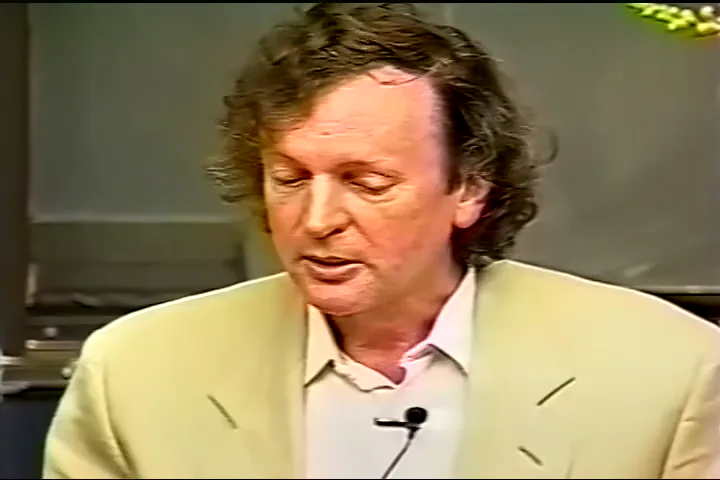
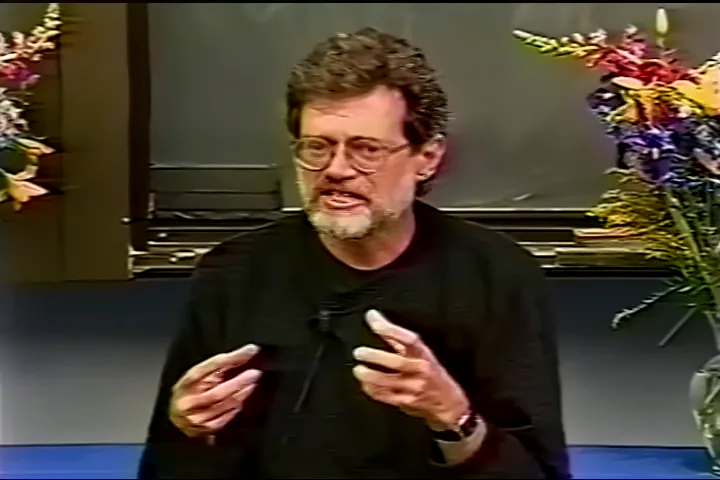
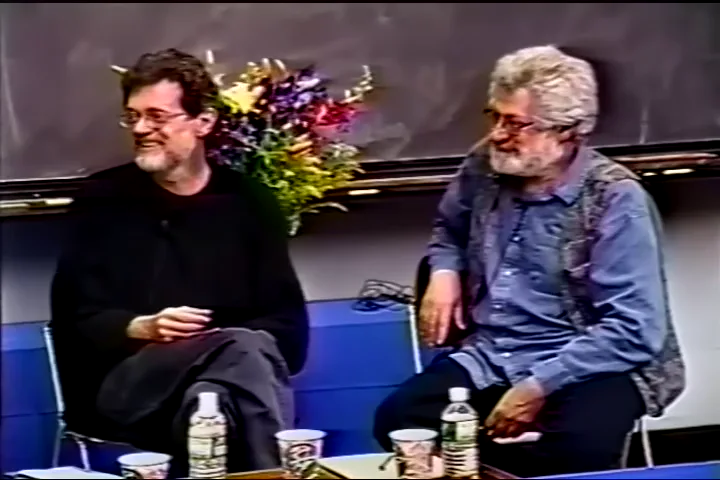
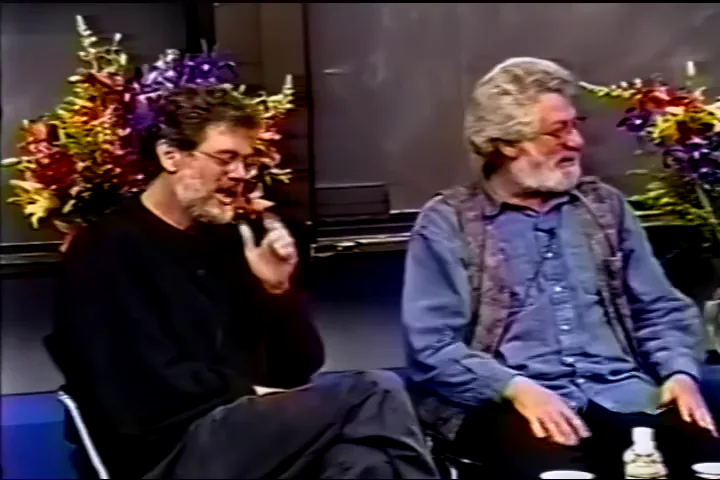
terence mckenna, ralph abraham, and rupert sheldrake's 1998 trialogue on evolutionary psychology, consciousness, and the mind's development through human prehistory.

a 1998 trialogue between terence mckenna, rupert sheldrake, and ralph abraham. three perspectives on the evolution of consciousness and the evolutionary mind.

terence mckenna, ralph abraham, and rupert sheldrake recorded in santa cruz in june 1998, discussing skepticism, epistemology, and the crisis of statistical methodology in modern s